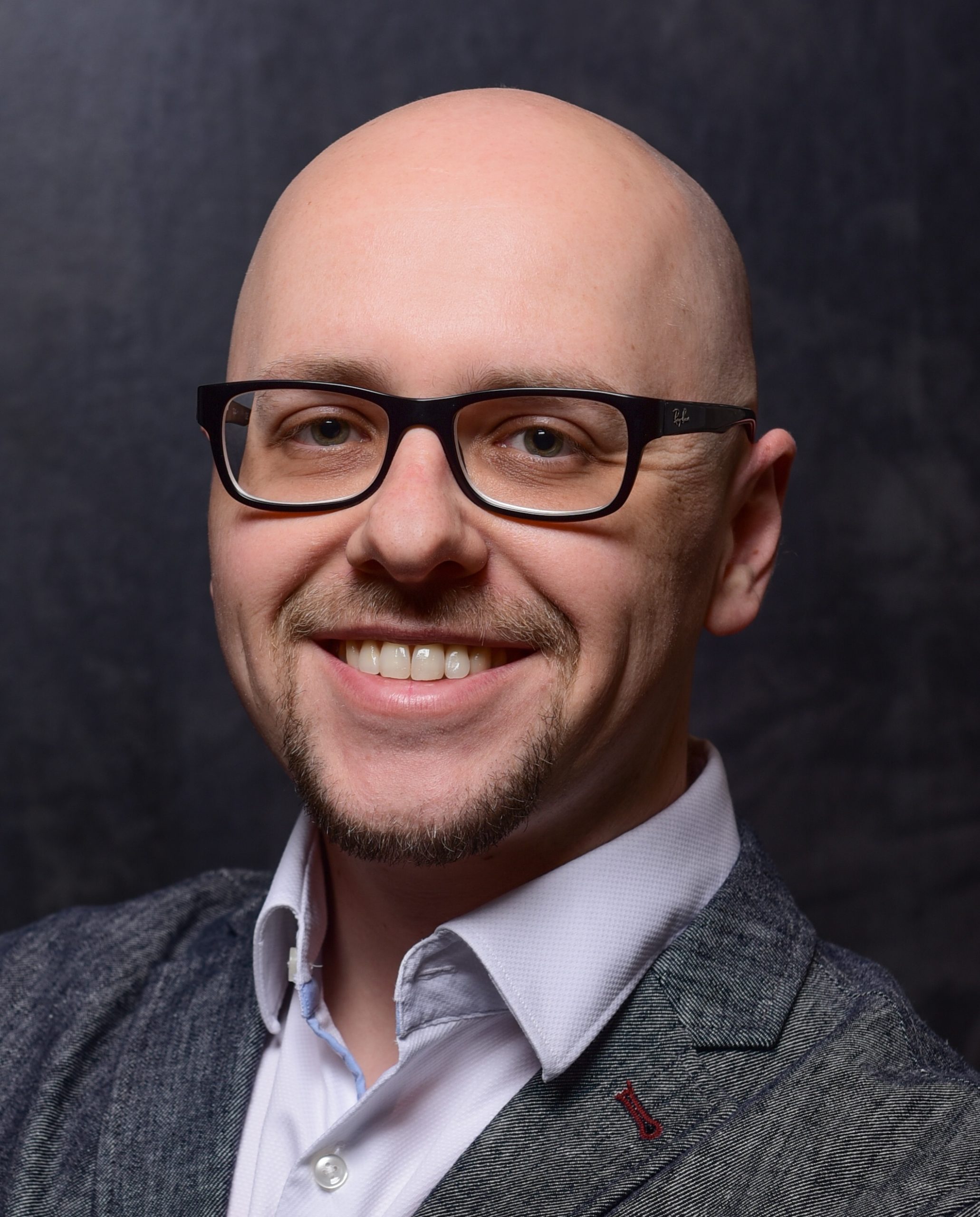
Arnold ReuskenView profile
Professor
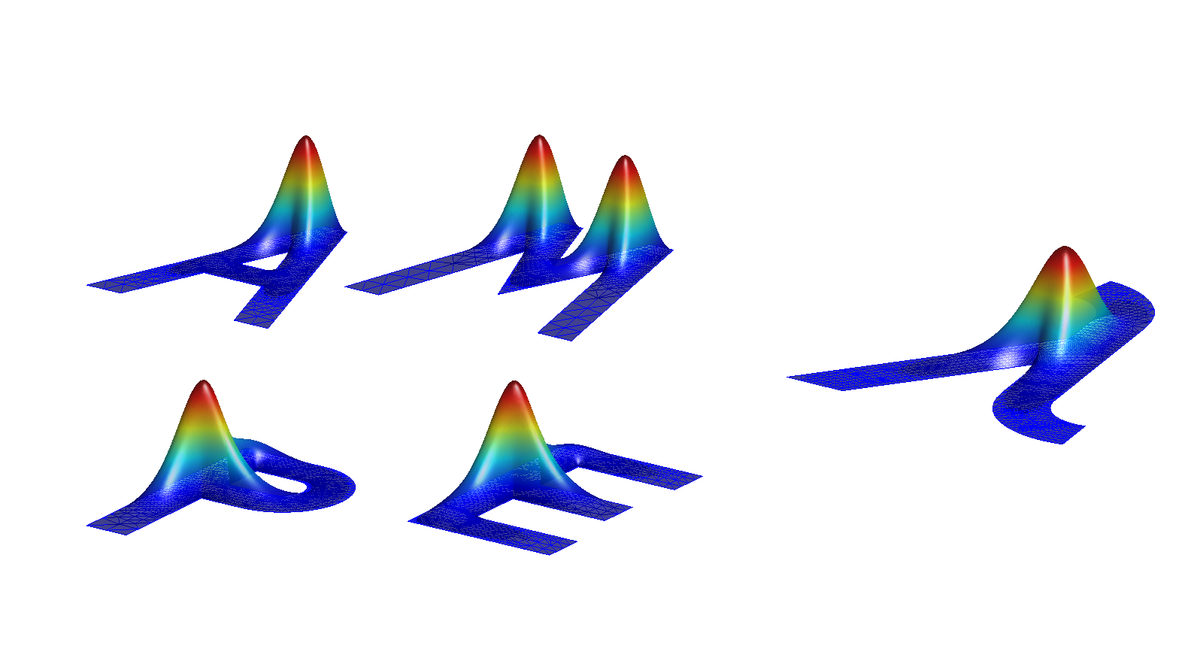
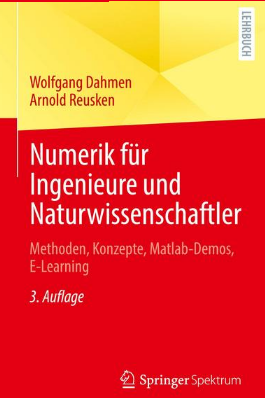
Prof. Dr. Arnold Reusken is a full Professor of Numerical Mathematics at RWTH Aachen University, affiliated with the Institute for Geometry and Practical Mathematics (IGPM). He has held the Chair for Numerical Mathematics since 1997 and maintains an active research and academic profile in computational mathematics. Education: Ph.D. in Mathematics, University of Utrecht (1988) M.Sc. in Mathematics, University of Utrecht (1984) His research focuses on the development and analysis of numerical methods for partial differential equations, with particular emphasis on finite element methods, multigrid solvers, and computational techniques for two-phase incompressible flows and PDEs on surfaces. His work bridges theoretical numerical analysis and practical scientific computing applications in fluid dynamics and interfacial phenomena. He has made significant contributions to trace finite element methods, surface Stokes equations, and unfitted discretizations. The recent publication trend shows sustained activity in numerical methods for evolving surfaces, surface fluid dynamics, and preconditioning techniques. His work often involves rigorous error and stability analysis, demonstrating a strong theoretical foundation. Editorial Roles: Associate Editor, Journal of Numerical Mathematics (2015–present) Associate Editor, IMA Journal of Numerical Analysis (2020–present) Former Associate Editor, SIAM Journal on Numerical Analysis (2016–2021) Former Associate Editor, SIAM Journal on Scientific Computing (2002–2008) Former Associate Editor, Computing & Visualization in Science (2010–2021) Member of Advisory Board, Computing (1997–2009) Prof. Reusken has advised numerous students and researchers, though specific names are not listed in the provided text. He has been involved in collaborative research projects and has secured funding for work in numerical simulation and computational fluid dynamics. He co-authored the influential textbook Numerik für Ingenieure und Naturwissenschaftler , now in its third edition, and has contributed to other key publications in the field. He leads a research group at IGPM focused on numerical methods for interface and surface problems, contributing to both fundamental algorithm development and practical implementation in scientific computing. His team works on cutting-edge methods for simulating complex fluid systems with moving boundaries and topological changes.