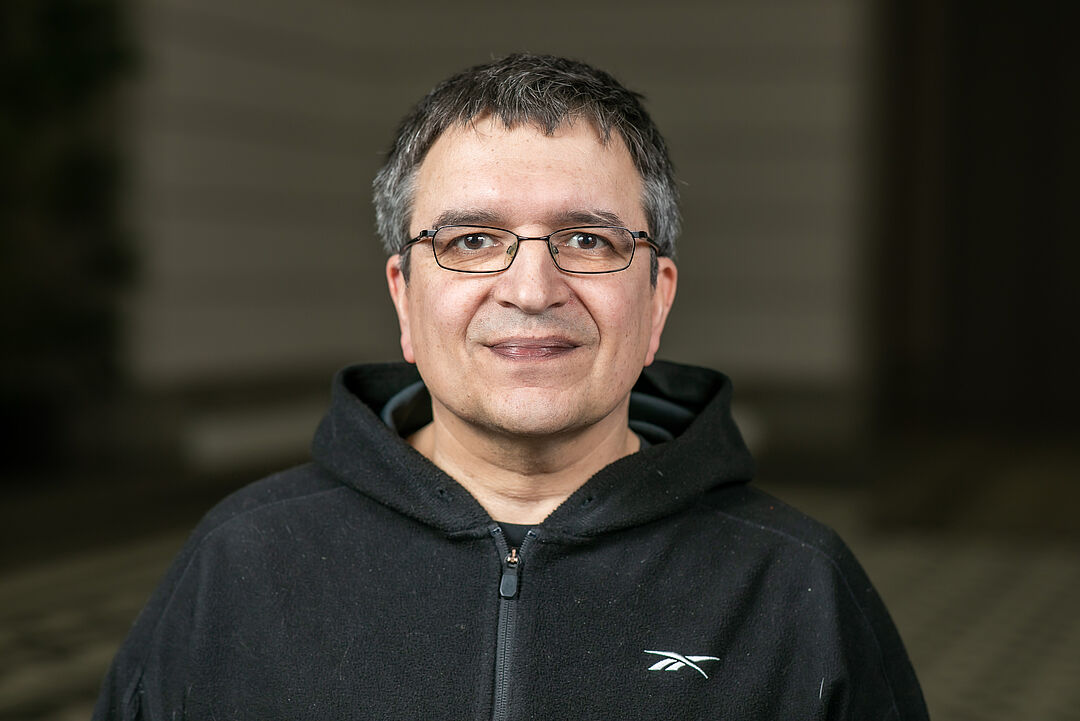
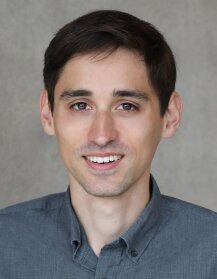
Michael Karow is a Researcher at the Institute of Mathematics , Technical University of Berlin , affiliated with the Faculty II - Mathematics and Natural Sciences . His research focuses on Numerical Linear Algebra , Control Theory , and Matrix Perturbation , with specific interests in Pseudospectra , Stability Radii , and Structured Eigenvalue Problems . Educational background includes a Ph.D. (2003) from the University of Bremen, titled " Geometry of Spectral Value Sets ," and a Habilitation (2009) at TU Berlin. His work spans collaborations with institutions like IIT Guwahati, EPFL Lausanne, and SUNY Utica. His research involves stabilizing discrete-time linear systems via matrix factorizations, structured matrix pencils with no spillover effects, and backward error analysis for palindromic polynomials. Publications highlight applications in finite element model updating , eigenvalue sensitivity , and geometric matrix theory . Teaching includes courses like Numerical Mathematics 1 for Engineering , Differential Equations and Numerics , and Calculus of Variations . He has led workshops in India, Italy, and the U.S., focusing on numerical methods and control theory.
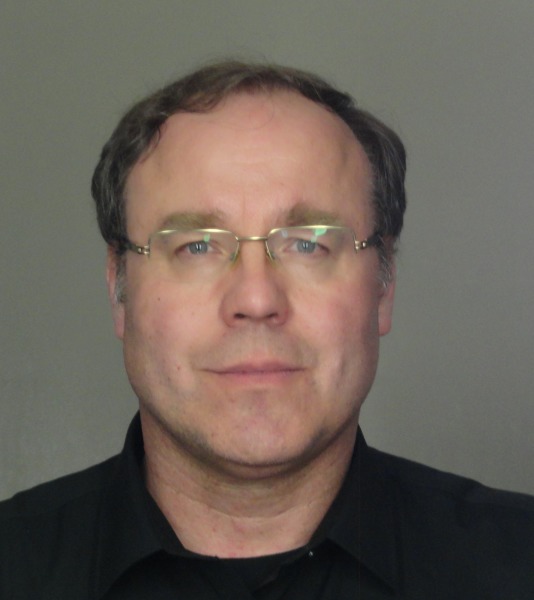
John van de Wetering is an Assistant Professor at the Theoretical Computer Science group of the Informatics Institute at the University of Amsterdam . He works with the QuSoft research center and co-develops the PyZX open-source quantum compiler. His research spans quantum computation, diagrammatic reasoning, and quantum foundations. Education: PhD in Computer Science (2022, Radboud University) Research: Focuses on ZX-calculus for quantum circuit optimization, verification, and simulation. Explores quantum foundations through algebraic and compositional methods. Recent work includes quantum circuit optimization with AlphaTensor, completeness proofs for ZH-calculus, and scalable spider nets for transversal non-Clifford gates. He directs the new Master's program in Quantum Computer Science at UvA and co-authored the book Picturing Quantum Software . Notable collaborations include PyZX development and EU Gender Equality Working Group participation. Supervision includes current PhD students Lia Yeh (Oxford), Sarah Li (UvA), and Marc Farreras (Leiden). Former students include Boldizsár Poór (Quantinuum), Julien Codsi (Princeton), and Yanbin Chen (TUM). Tools & Outreach: Maintains the ZX-calculus Wikipedia page, co-lectured courses like Quantum Processes and Computation , and develops the ZX-calculus educational website. Organized QPL2026 conference and contributed to open-access journal Quantum .
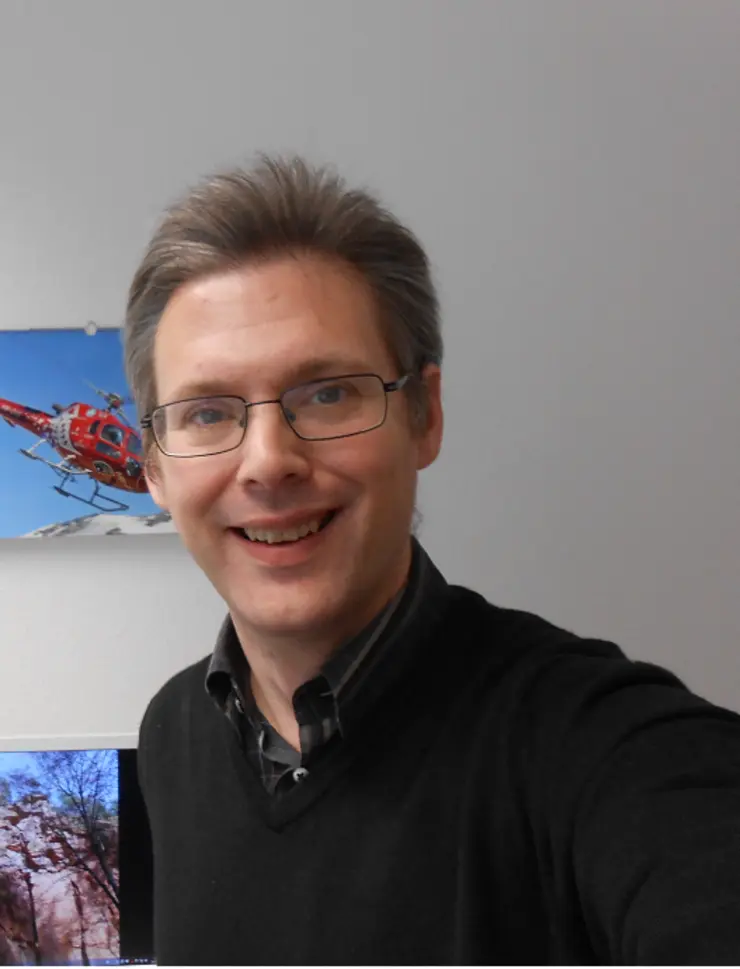
Bernhard Burgeth is an Associate Professor of Mathematics at Saarland University since 2009. He joined the Department of Mathematics in 2002 and has held positions at the University of Erlangen-Nürnberg, McGill University, the Karlsruhe Institute of Technology (KIT), and the Technical University Eindhoven. His research spans mathematical image processing, tensor field analysis, and numerical methods for PDEs. Education : BSc, MSc (Diplom), and PhD in Mathematics from the University of Erlangen-Nürnberg; Habilitation at Saarland University. Research Interests : Focus on model-theoretic aspects of image processing, visualization of multivalued images (e.g., tensor fields), mathematical morphology, matrix analysis, and numerical simulations for hydrogen combustion. His work bridges theoretical mathematics with computational applications. Grants : Includes a Ph.D. grant from the Bavarian State Government (1990-1992), a DFG research grant at McGill University (1997/98), and a research grant from the Saarland Ministry of Economy and Science (2012/13) for the TensorVis project. Scientific Awards : Recipient of the Landespreis Hochschullehre (2010) and the Department Teaching Award (WiSe 2016/17). Teaching Responsibilities : Courses on mathematical morphology, image processing, probabilistic methods, integral equations, calculus, linear algebra, geometry, and probability/statistics. Recent lectures include Lineare Algebra: Theorie und Anwendungen (4+2), Geometrie(n) (4+2), and Wahrscheinlichkeit und Statistik (4+2).
Prof. Dr. Sören Kraußhar is a Professor in the Department of Mathematics and Mathematics Education at the Faculty of Educational Science, University of Erfurt. His office is located in Teaching Building 2, Room 109b. He is actively involved in research and teaching in advanced mathematical analysis, with particular expertise in hypercomplex function theory and its applications to physics and engineering problems. Prof. Kraußhar's research spans Dirac and Laplace operators on manifolds, complex and hypercomplex analysis, slice monogenic functions, harmonic and hypercomplex automorphic forms, parabolic partial differential equations, and non-commutative geometry. His work represents a sophisticated integration of pure mathematical theory with practical applications in physics, particularly in magnetohydrodynamics and quantum mechanics. He has developed significant theoretical frameworks for octonionic and quaternionic analysis that extend traditional complex analysis to more complex algebraic structures. His publication record demonstrates a consistent progression from classical complex analysis toward more advanced hypercomplex analysis, with notable contributions to octonionic Bergman and Szegö kernels, Cauchy formulas in discrete settings, and variational principles with applications to magnetohydrodynamic equations. His recent work shows increasing focus on fractional calculus applications within hypercomplex settings and eigenvalue problems for slice functions. Prof. Kraußhar maintains active collaborations with researchers including F. Colombo, D. Legatiuk, and I. Sabadini, resulting in publications in high-impact journals such as Complex Analysis and Operator Theory, Journal of Geometry and Physics, and Mathematical Methods in the Applied Sciences. His work continues to push theoretical boundaries while maintaining relevance to physical applications, particularly in differential equations and mathematical physics.
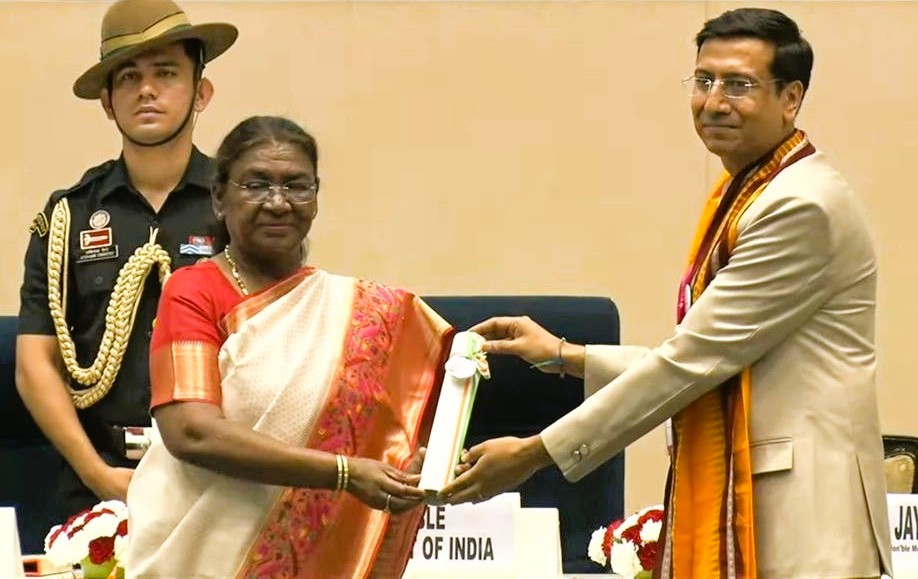
Prof. Kapil Ahuja is a Full Professor in the Department of Computer Science & Engineering at the Indian Institute of Technology Indore (IIT Indore), where he heads the Mathematics of Data Science and Simulation (MODSS) research lab. After completing dual Master's degrees and a Ph.D. from Virginia Tech (USA) followed by postdoctoral work at the Max Planck Institute in Germany, he has held visiting positions at UT Austin, IMT Atlantique, Sandia National Labs, TU Dresden, and TU Braunschweig. His administrative roles include founding Dean of International Affairs and former Head of Computer Science & Engineering at IIT Indore. Education: Ph.D. in Mathematics, Virginia Tech (2011) M.S. in Mathematics, Virginia Tech (2009) M.S. in Computer Science, Virginia Tech (2007) B.Tech. in Mechanical Engineering, IIT (BHU) Varanasi (2001) Research Focus: Prof. Ahuja's work bridges theoretical advances with real-world applications, emphasizing machine learning algorithms for plant/cancer studies, game-theoretic poverty reduction models, exascale climate modeling solvers, and drone trajectory optimization. His interdisciplinary approach integrates numerical linear algebra with network science to solve complex systems problems across healthcare, agriculture, and climate science, supported by 4.85 Crores INR in external funding. Publication Trends: Recent work demonstrates growing emphasis on AI-driven optimization for physical systems (drones, climate models) and biomedical applications (cancer classification). His publications increasingly feature cross-disciplinary collaborations between computer science, biology, and economics, with notable contributions in explainable AI for healthcare and resource allocation algorithms for social networks. Scientific Recognition: National Teacher's Award (2024) from the President of India Five-time recipient of IIT Indore's Best Teacher Award (2013-2023) Best Poster Award at International Workshop on Game Theory & Networks (2019) Steeneck Graduate Research Fellowship (Virginia Tech, 2011) Multiple SIAM travel awards for international conferences Mentorship & Service: Prof. Ahuja has graduated 5 Ph.D. and 4 M.S. (Research) students while mentoring 75 B.Tech. projects. He serves as Associate Editor for Applied Intelligence Journal (Springer Nature) and Knowledge and Information Systems, organizes international conferences, and reviews for 35+ academic sources. His administrative leadership significantly expanded IIT Indore's global partnerships through the Research Park initiative. Research Infrastructure: The MODSS lab maintains active collaborations with Oak Ridge National Lab, Sandia National Labs, and European institutions. Current projects include AI-optimized drone swarms for agricultural monitoring and game-theoretic models for poverty intervention, utilizing high-performance computing resources for large-scale simulations.
Dr. Thomas Bendokat is a researcher at the Max Planck Institute for Dynamics of Complex Technical Systems in Magdeburg, Germany. He specializes in computational methods for systems and control theory, with a focus on geometric approaches to dynamical systems and manifold structures. Research Interests: Hamiltonian systems, symplectic geometry, Grassmann and Stiefel manifolds, model reduction, geometric optimization, and data-driven identification of nonlinear systems. Contact: Email: bendokat@mpi-magdeburg.mpg.de His work bridges theoretical mathematics with practical applications in gas network modeling, computer vision, and structure-preserving computational methods. He has contributed to open-source software like phgasnets for port-Hamiltonian system simulations.
Tobias Kasper Skovborg Ritschel serves as Assistant Professor (Tenure Track) in the Department of Applied Mathematics and Computer Science (DTU Compute) at the Technical University of Denmark. His research bridges theoretical advances in control systems with practical implementation across energy systems, bioreactors, epidemiology, and medical applications. Ritschel directs a productive research program focusing on computational methods for complex dynamical systems with rigorous thermodynamic foundations. His educational background demonstrates deep technical training: PhD in Applied Mathematics (2015-2018), Technical University of Denmark MSc in Mathematical Modeling and Computation (2013-2015), Technical University of Denmark BSc in Mathematics and Technology (2010-2013), Technical University of Denmark Ritschel's research expertise spans multiple domains of control theory and mathematical modeling. His core competencies include stochastic adaptive control, model predictive control, and optimal control frameworks applied to nonlinear dynamical systems. He specializes in numerical methods for differential equations (stochastic, partial, delay, and differential-algebraic) with computational implementations in MATLAB, C/C++, and Python. His application areas demonstrate remarkable breadth: from oil reservoir management and nuclear power systems to bioreactor operations, epidemiological modeling, and diabetes management technologies. Analysis of his publication trajectory reveals a strategic evolution from foundational work on thermodynamically rigorous reservoir simulation toward increasingly diverse applications. Early publications (2017-2019) focused on oil and gas applications with rigorous phase equilibrium modeling, while recent work (2020-2024) addresses pressing societal challenges including pandemic response strategies, power grid flexibility for renewable integration, and biomedical control systems. This demonstrates his ability to transfer core methodological expertise across disparate application domains while maintaining mathematical rigor. Dr. Ritschel actively supervises numerous students across all academic levels, with recent BSc projects focusing on molten salt reactors and demand-side flexibility in power systems. His teaching portfolio includes advanced graduate courses in stochastic adaptive control, dynamical systems, and time series analysis. He maintains strong industry connections through EU-funded projects including COCOP (Horizon 2020) and OPTION (Innovation Fund Denmark).
Yao Yue is a postdoctoral researcher at the Max Planck Institute for Dynamics of Complex Technical Systems in Magdeburg, Germany. Their work focuses on computational methods in systems and control theory, including parametric model order reduction, design optimization, Krylov methods, and fast computation techniques for Simulated Moving Bed (SMB) models and vibration/structure simulations. Education : Bachelor of Electronic Science and Technology, Harbin Engineering University (2001–2005) Master of Integrated Circuit Design, Tsinghua University (2005–2008) PhD in Engineering (Applied Mathematics, Numerical Approximation, Linear Algebra) at KU Leuven, Belgium (2008–2012) Research Interests span both applied mathematics and philosophical foundations of cognition. In computational methods, they work on optimizing numerical algorithms and system modeling. In philosophy, they explore axiomatic frameworks for cognitive dispositions, negation tendencies, and the epistemological limits of logic and empirical observation. Additional Activities include maintaining a personal homepage where they develop philosophical works like Reconstruction of Philosophy , discussing topics such as multiverse theory, consciousness, and the role of negation in knowledge formation.
Rolf Drechsler is a Full Professor and Head of the Group of Computer Architecture at the University of Bremen's Institute of Computer Science since 2001, and Director of the Cyber-Physical Systems Group at DFKI Bremen since 2011. He holds an adjunct professorship at the Indian Statistical Institute and has been affiliated with Duke University. Education: Diploma (1992) and Dr. phil. nat. (1995) in Computer Science from Goethe University Frankfurt Academic Leadership: Dean of Mathematics and Computer Science Faculty (2018-2025), Vice Rector for Research (2008-2013) His research focuses on formal verification , RISC-V architectures , and quantum/in-memory computing . Recent work explores LLM integration in hardware testing and polynomial-based verification techniques. Publications from 2024-2025 span IEEE Transactions , DATE , and DAC , emphasizing automated verification , quantum circuit mapping , and LLM-driven testbench generation . Scientific Awards IEEE/ACM Best Paper Awards (2013, 2018) Berninghausen-Preis for Innovative Teaching (2018) IEEE Fellow (2015) Founder Award for Solvertec (2013) He has served on program committees for DAC, ICCAD, DATE, and founded graduate schools in Embedded Systems and System Design under Germany's Excellence Initiative.
Bin Gao is an Associate Professor at the Academy of Mathematics and Systems Science (AMSS), Chinese Academy of Sciences. He holds a Ph.D. in Applied Mathematics (2019, University of Chinese Academy of Sciences) and a B.Sc. in Mathematics (2014, Sichuan University). His postdoctoral experience includes positions at UCLouvain (2019-2021) and the University of Münster (2021-2022). Research Interests: Riemannian optimization, tensor computation, parallel/distributed algorithms for orthogonality constraints, machine learning applications. Key Contributions: Development of retraction-free methods on Stiefel manifolds, preconditioned Riemannian algorithms, and geometric frameworks for symplectic eigenvalue problems. Article Trends: Recent work focuses on overcoming the curse of dimensionality via manifold-based optimization, including distributed algorithms for Stiefel manifolds, graph-regularized tensor completion, and second-order methods for symplectic structures. Keywords span numerical analysis, quantum information, and machine learning. Scientific Awards: 2021 Zhong Jiaqing Mathematics Award 2018 Best Student Paper Award (CSIAM) 2018 CAS Special President Scholarship 2017 National Scholarship for Doctoral Students (China) 2016 Honor Student Award (International Workshop on Modern Optimization and Application) Advising & Collaborations: Collaborates with researchers from UCLouvain, University of Münster, and AMSS. Mentors students in Riemannian optimization and tensor computation. Leads the popman research group.
Alexandra Silva is a Professor of Computer Science at Cornell University with prior affiliations as a Royal Society Wolfson Fellow and Professor of Algebra, Semantics, and Computation at University College London . She leads a research group focusing on the modular development of specification languages and algorithms for models of computation, emphasizing coalgebra as a unifying mathematical framework. Research Interests Her work spans foundational and applied areas in theoretical computer science, including: Coalgebraic methods for formal verification Automata theory and learning algorithms Probabilistic programming and semantics Programming language design (e.g., NetKAT, Kleene Algebra with Tests) Concurrency theory and distributed systems Algebraic structures in computation Recent publications address network verification (StacKAT), symbolic automata learning, probabilistic regular expressions, and outcome logic for correctness/incorrectness reasoning. She is actively involved in organizing academic events like OPLSS 2025 and co-authoring foundational works in Formal Aspects of Computing and Theoretical Computer Science . Scientific Awards Distinguished Paper Award (ACM SIGPLAN POPL, 2020) Best Paper Award (RTA, 2015) She teaches courses on Kleene Algebra with Tests (KAT) and verification at summer schools like Marktoberdorf 2025 , and her research includes collaborations on probabilistic network verification (ProbNV) and stochastic system modeling.
Paolo G. Giarrusso is a researcher at the Institute for Programming Languages and Software Engineering within the Faculty of Informatics at the University of Tübingen . Previously, he was a Ph.D. student at the University of Marburg , where he defended his thesis Optimizing and Incrementalizing Collection Queries by AST Transformation in January 2018.
Maximilian Schüle serves as Assistant Professor in the Department of Data Engineering at the University of Bamberg's Faculty of Information Systems and Applied Computer Sciences since October 2022. Previously, he held research positions at Technical University of Munich (2017-2022). His research bridges database systems and machine learning through compiler-based approaches. His research focuses on in-database machine learning , GPU-accelerated query processing , and recursive SQL extensions . Key contributions include: Developing MLIR-based compilers for automatic differentiation in SQL (DuoLingo-AutoDiff) Creating GPU code generators for database kernels using NVRTC Designing higher-order lambda functions for expressive query languages Implementing end-to-end neural network training within database engines His recent publications (2023-2025) demonstrate consistent output in top venues including ICDE, VLDB workshops, and BTW conferences, with growing emphasis on hardware-aware optimization and compiler techniques for analytical workloads. He currently leads a DFG-funded project on elastic memory hierarchies for memory-intensive applications (2025-2028), supporting multiple PhD researchers. His supervision emphasizes open-source contributions to database systems like Umbra and practical implementation skills alongside theoretical foundations. As an active member of the database community, he serves as workshop chair for BTW 2025 and regularly reviews for ACM TODS, VLDB Journal, and Information Systems. His work on public transport analytics demonstrates real-world impact through collaborations with urban mobility initiatives in Bamberg.
Prof. Robert Freimann is a Professor at Munich University of Applied Sciences in Faculty 02 (Civil Engineering and Environmental Sciences). He serves as Representative for Study Plans and the Bachelor's program since 2007/08, Member of the Faculty Council since 2007/08, and Member of the HM Continuing Education Advisory Board since 2010/11. Professional affiliations include the Bavarian Chamber of Engineers, VDI, DWA, and Environmental Cluster Bavaria. His research spans Hydraulics, Urban Water Management, Hydraulic Engineering, and Mathematics. He teaches Bachelor courses in Urban Water Management (covering water supply, sewerage, and wastewater treatment), Hydraulic Foundations (hydrostatics, hydrodynamics, pipe/open channel flow), and Mathematics (statistics, calculus, differential equations), plus Master-level advanced urban water topics. Analysis of his 15 most recent publications (2002-2014) reveals concentrated expertise in wastewater treatment hydraulics, particularly secondary clarifier dynamics, solid measurements in aeration systems, and mathematical modeling of urban water networks. His work bridges theoretical fluid mechanics with practical civil engineering applications in water infrastructure. Prof. Freimann acts as an expert for the German Federal Environmental Foundation (DBU) and participates in Bavarian environmental initiatives. Administrative roles include study program governance and faculty representation, demonstrating institutional leadership beyond core academic duties.
Hannes Seifert is a Research Scientist and Doctoral Student at Friedrich Schiller University Jena's Department of Education within the Faculty of Mathematics and Computer Science, holding a concurrent position at the University of Erfurt's Department of Mathematics Education since 2025. His academic trajectory includes dual teacher certification in Mathematics/Computer Science (2021) and Spanish (2022), with ongoing doctoral research focused on digital competence development for mathematics educators. Seifert's research centers on the integration of digital mathematics tools in classroom instruction, with particular emphasis on assessment frameworks for measuring pre-service teachers' digital competence. His work investigates the application of Computer Algebra Systems (CAS) and Dynamic Geometry Software (DGS) in mathematics education, developing performance-based evaluation methods and reflection instruments to enhance teacher training programs. Current projects include longitudinal studies on technology's impact on professional knowledge development and validation of assessment instruments through the ProfJL² research initiative. Developed performance-based assessment frameworks for digital competence measurement Conducted pilot studies on self-regulation in digital competence acquisition Investigated teacher-student interactions with dynamic geometry systems Analyzed future scenarios for digital technology integration in mathematics education As an active academic contributor, Seifert serves on the Commission of Study Affairs at Jena's Faculty of Mathematics and Computer Science and provides academic advising for teacher training programs. His research outputs demonstrate consistent publication in leading mathematics education venues including the Journal for Didactics of Mathematics and proceedings of the International Group for the Psychology of Mathematics Education. Seifert's professional activities extend to public relations within his faculty and specialized training for dual mainstream school teaching programs at the University of Erfurt. His collaborative work with researchers like Anke Lindmeier demonstrates strong interdisciplinary connections within the mathematics education research community.