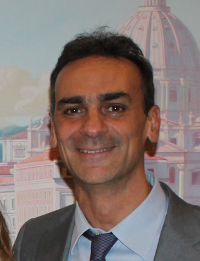
Vittorio Solina is a Researcher at the Department of Mechanical, Energy and Management Engineering (DIMEG) of the University of Calabria, specializing in industrial systems simulation and digital twin technologies. His work spans Industry 4.0/5.0 applications, supply chain optimization, and human-robot collaboration. Affiliation: University of Calabria Academic Role: Researcher (Legge 240/10) Research Focus: Digital twins, simulation modeling, sustainable manufacturing His research emphasizes advanced simulation tools for decision support, including applications in Industry 4.0 , Smart Manufacturing , and Agri-Food Supply Chains . Recent work explores adaptive simulation optimization for Industry 5.0 and 5G-enabled robotics. Key publication trends include: (1) Digital twin integration for supply chain resilience (2024-2025), (2) Simulation automation methodologies (2025), and (3) Human-robot collaboration frameworks (2024).
Elena Maria Baralis is a Full Professor at the Department of Control and Computer Science (DAUIN) at the Polytechnic University of Turin. She serves as Pro-Rector, member of the Board of Directors (without voting rights), member of the Academic Senate (without voting rights), and coordinator of the University's Permanent Observatory for Monitoring the Academic Sector. She chairs the Control and Computer Engineering Department and previously chaired the Computer Engineering School from October 2012 to October 2018. Her research interests focus on database systems and data mining, specifically explainable AI, bias detection in data analytics, and machine learning algorithms for big data. Her work spans various application domains including predictive maintenance, Industry 4.0, and healthcare. Recent publications demonstrate her expertise in speech processing, bias mitigation, and innovative neural network architectures like Kolmogorov-Arnold Networks. Her research output shows a clear trend toward addressing fairness and explainability in AI systems while exploring novel approaches to speech and language understanding. Professor Baralis has received significant recognition including becoming a Fellow of the Academy of Sciences of Turin in 2017. She has served as Editor-in-Chief for IEEE Internet of Things Journal (2016-2019) and Knowledge and Information Systems (2014-present). She actively mentors doctoral students including Claudio Savelli (researching Machine Unlearning), Eleonora Poeta, Giuseppe Gallipoli, Alkis Koudounas, and others. Her research is supported by numerous projects including AI4CTI (Artificial Intelligence for Cyber Threat Intelligence, 2025-2028), Smart manufacturing driven by Machine Learning in Industry 4.0 (2019-2020), and I-REACT (2016-2019).
Luca Iocchi is a Full Professor at Sapienza University of Rome, where he teaches in the Master in Artificial Intelligence and Robotics program. He is affiliated with the Department of Computer, Control, and Management Engineering and the Faculty of Engineering of Information, Computer Science and Statistics. Iocchi serves as an Associate Editor for Artificial Intelligence Journal and has been the scientific coordinator of Spoke of PNRR project FAIR (Future AI Research). His educational background includes: Master in Engineering in Computer Science (Laurea in Ingegneria Informatica) cum Laude, Sapienza Università di Roma, 1995 PhD in Engineering in Computer Science (Dottorato in Ingegneria Informatica), Sapienza Università di Roma, 1999 Professor Iocchi's research focuses on cognitive robotics, task planning, multi-robot coordination, robot perception, robot learning, human-robot interaction, and social robotics. His work has significant applications in security, surveillance, and environmental monitoring. He has published over 200 referred papers with an h-index of 46 (Google Scholar). His research bridges theoretical AI with practical robotic systems operating in real-world environments, with a particular emphasis on developing intelligent systems that can interact effectively with humans. His recent publications show a strong trend toward multi-agent reinforcement learning, trust modeling in human-AI teams, UAV coordination, and planning systems. There's a clear focus on making robotic systems more reliable, efficient, and capable of operating in complex real-world scenarios like healthcare facilities and smart cities. His work increasingly integrates formal planning approaches with machine learning techniques. Professor Iocchi has received numerous scientific awards: 1999 Top Paper Award WebNet'99 2006 Best Paper Award RoboCup 2006 2008 Best Robotics Demo Award AAMAS 2008 2014 Best Paper Award For Engineering Contribution RoboCup 2014 2017 RoboCup@Home SSPL 2017 - 3rd place 2018 Canada-Italy Innovation Award 2019 Best Paper Award For Engineering Contribution RoboCup 2019 As an academic advisor, Iocchi has directed the PhD Program in Engineering in Computer Science from 2020 to 2023. He has been Principal Investigator for numerous research projects including SciRoc (European Robotics League), AI4EU (European AI project), BUBBLES, AIPlan4EU, ROSITA, Trust Your Agents, and FAIR. His research has been supported by EU H2020 programs, national grants, and industry collaborations, demonstrating strong connections between academia and practical applications. Professor Iocchi is actively involved with the Cognitive Cooperating Robots Lab (LabRoCoCo) and is a key member of the RoboCup Federation, having served as Vice-President from 2019 to 2024. He has played a significant role in benchmarking domestic service robots through RoboCup@Home and the European Robotics League Service Robots (ERL-SR), which he helped establish. His leadership in organizing international scientific robot competitions has been instrumental in advancing the field of service robotics.
Matteo Bolner is a Post-Doctoral Research Fellow at the University of Bologna's Department of Agricultural and Food Sciences, specializing in livestock genomics and metabolomics. He holds a PhD in Agricultural and Food Sciences (defended March 2025) and an International Master in Bioinformatics from the University of Bologna. His research integrates genomic and metabolomic data to improve livestock sustainability, particularly in pig production systems. Key focuses include identifying metabolic pathways influencing production traits, analyzing pig viromes for disease outbreaks, and leveraging big data for One Health applications. His educational background includes a Biological Sciences degree (2018) and a bioinformatics master's (2021). He interned at CINECA's SCAI department, focusing on HPC software containerization. Current affiliations include membership in the Animal and Food Genomics group, where he explores genomic solutions for breed conservation and sustainable production. Research trends in his articles emphasize multi-omics integration to understand pig metabolism, stress responses, and breed-specific adaptations. He also applies genomics to authenticate food products and enhance conservation strategies for endangered livestock breeds like the Mora Romagnola pig. His work bridges animal science, computational biology, and agricultural sustainability. Notable contributions include developing genomic tools for honey bee population analysis and creating a catalog of mitochondrial insertions in pig genomes. Future directions involve advancing metabolomics-based precision livestock farming and applying big data analytics to livestock One Health challenges.
Luca Sebastiani is a Full Professor in Horticultural Sciences (AGR/03) at Scuola Superiore Sant'Anna in Pisa, Italy, since 2014. He currently coordinates the PhD Course in AgroBioSciences and has previously served as Director of the Institute of Life Sciences (2016-2021). His academic career includes roles as Associate Professor (2002-2014) and Assistant Professor (1998-2002) at the same institution. PhD in Plant Biology from Scuola Superiore Sant'Anna (1996) MSc in Agricultural Sciences from University of Pisa (cum laude, 1991) Postdoctoral research in agricultural biotechnology (1996-1998) Research Interests: Focus on plant-environment interactions, particularly abiotic and biotic stress responses in crops. Key areas include: Physiological and molecular responses to climate change stressors Nutraceutical enhancement of food crops Plant germplasm conservation using molecular markers Agriculture 4.0 integrating AI, IoT, and robotics Phytoremediation using poplar and Brassica species Scientific Contributions: His work bridges molecular mechanisms (aquaporin function, heavy metal transport) with ecosystem-level applications (precision irrigation, contaminant phytoremediation). Recent publications emphasize genome sequencing, stress tolerance modeling, and nutraceutical food development. ISHS Medal for SapFlow Workshop organization (2011) Giovanni Spitali Foundation Award for PhD dissertation (1998) Collaborations: Extensive international collaborations with institutions like Beijing Forestry University, Comenius University, and Purdue University. Currently supervises projects in plant phenotyping, omics technologies, and sustainable crop management.
Mario Artuso is an External Lecturer and Teaching Assistant at the Interuniversity Department of Territorial Sciences, Planning and Policies (DIST) under the College of Architecture and Design at Politecnico di Torino. He has been delivering courses since 2019/20 academic year, focusing on Urbanism, Sustainable Design, and Heritage Conservation modules. Teaching Roles: Course Lecturer for Urbanism (2024/25, 2023/24, 2022/23, 2019/20), Heritage Renovation (2021/22), Atelier Urban Design E (2020/21), and City and Territory Studio (2019/20). Email: mario.artuso@polito.it Research Interests: His work bridges urban planning with local policy analysis, emphasizing sustainable development and heritage conservation. Publications explore urban agriculture in Turin's metropolitan area, global urban prosperity metrics, taxation-driven sustainability in Sub-Saharan African cities, and academic cooperation frameworks. Publication Trends: 50% of his works focus on Sub-Saharan Africa urban challenges, 40% on European sustainable urban practices, and 30% on heritage integration in city planning. Keywords cluster around Urban Development , Policy Analysis , and International Cooperation .
Vera D'Urso is an Associate Professor of Zoology at the Department of Biological, Geological and Environmental Sciences, University of Catania, where she has been employed since 1994. Her academic career began with a CNR scholarship from 1977-1980, followed by work as a Confirmed Researcher at the Faculty of Natural and Mathematical Sciences, University of Catania from 1980-1994. She has received DAAD scholarships for research at the University of Marburg in Germany in 1984 and 1987. Dr. D'Urso earned her Degree in Biological Sciences from the University of Catania with a grade of 110 cum laude. She furthered her expertise with postgraduate courses in "Quantitative Methods in Ecology" at the International Center of Theoric Physics in Miramare, Trieste in 1980. Dr. D'Urso is a leading expert in several entomological fields, with primary research interests in: Insecta Homoptera Auchenorrhyncha (leafhoppers and related insects) Insecta Diptera Phlebotominae (sand flies) Systematics and biodiversity of Mediterranean insects Insect vectors of phytoplasmas affecting economically important plants Alien species and their ecological impact Tardigrades and their taxonomy Her extensive publication record spanning over 95 scientific papers demonstrates her expertise in insect systematics, morphology, and ecology. Recent research has focused on Mediterranean biodiversity, particularly examining alien species like Balclutha brevis and their impact on local ecosystems. She has also made significant contributions to understanding phytoplasma transmission in grapevines, sandfly vectors of leishmaniasis in Sicily, and tardigrade taxonomy in extreme environments including Antarctica. Dr. D'Urso has served on numerous scientific committees including the editorial board of Biodiversity Journal, and has been a referee for multiple prestigious journals. She has participated in research projects including "Morphology, Systematics, Biology and Biogeography of Rhynchota Insects" (1994-99) and studies on sandflies in areas with high canine leishmaniasis endemicity (2004-06). Her academic service includes membership on doctoral committees at the University of Catania, participation in national evaluation committees for associate professor positions in Zoology, and serving on the Department Board of the Department of Biological, Geological and Environmental Sciences (2018-2020). She has also conducted numerous entomological collection missions in Italy and abroad including Greece, Bulgaria, Macedonia, former Yugoslavia, Germany, Tunisia, Libya, and Malta.
Claudia Palestrini is a Professor at the Department of Life Sciences and Systems Biology , University of Turin. Her work focuses on dung beetles , ground beetles , and Alpine biodiversity conservation , with a strong emphasis on geometric morphometrics , zoogeography , and entomology . Her research integrates ecology , systematics , and phylogeny to study insect communities in Alpine and Mediterranean environments. Key themes include habitat use , species differentiation , and sustainable land management . She has contributed to over 400 publications, with recent work analyzing equine feeding devices and insect acoustic signals . Her teaching includes courses on Entomology for Cultural Heritage , Biological Sciences , and Environmental Education . She serves on academic committees like the Department Council and Interdisciplinary Sport Sciences program. Her work bridges entomology and sustainable sports practices , highlighting the importance of biodiversity in human-impacted ecosystems.
Alessandra Maria Paola Broccolini is an Associate Professor at the Department of Social and Economic Sciences (DISSE), Sapienza University of Rome. She specializes in cultural anthropology, with a focus on intangible cultural heritage, ecomuseums, and urban/rural territorial studies. Since 2016, she has led the Italian Society for Museography and Demo-Ethno-Anthropological Assets (SIMBDEA) and coordinates national research projects like PRIN 2022 on local museums and PRIN 2020 on marginal Italian territories. Current affiliations: Sapienza University of Rome, Ecole Française de Rome [2021-2026] Research themes: Identity politics, festivals/rituals, traditional knowledge, migration-heritage intersections Key projects: Ecomuseo Casilino Ad Duas Lauros, UNESCO cultural heritage nominations Fieldwork: 5-year study in Naples' Pallonetto district (1994-1999), Bolsena Lake fisheries, Irpinia carnivals Collaborations: ICCD, Regione Lazio, Universidad de Huancayo (Peru) Her publications address heritage regimes in Italy, UNESCO's 2003 Convention implementation, and ethnographic case studies on Mediterranean festivals, urban ecomuseums, and agricultural biodiversity. She teaches Cultural Anthropology and Anthropology of Territory at Sapienza's Faculty of Political Science, Sociology, and Communication.
Marco Letta is a Tenure-Track Assistant Professor at the Department of Social and Economic Sciences , Sapienza University of Rome. His research focuses on economic development , regional economics , policy evaluation , and applied econometrics , with a strong emphasis on climate change impacts, food security, and machine learning applications in economic policy. University: Sapienza University of Rome Department: Department of Social and Economic Sciences Email: marco.letta@uniroma1.it His recent work explores the climate migration nexus , household resilience , and policy targeting , often leveraging machine learning and empirical econometric methods . Publications span topics such as local inequalities during the COVID-19 crisis , temperature shocks in rural Tanzania , and machine learning applications in state aid regulation . Notable trends in his research include: Integration of machine learning with traditional econometric techniques Focus on climate resilience and migration patterns Analysis of policy impacts in developing economies Investigation of local mortality estimates during global crises Development of cross-country empirical frameworks Current projects include assessing agrifood system vulnerabilities and refining counterfactual policy evaluation methodologies.
Matteo Nardello is a researcher affiliated with the Department of Industrial Engineering at the University of Trento. His work focuses on embedded systems, IoT, and energy harvesting technologies for sustainable applications. Current academic affiliation: Department of Industrial Engineering, University of Trento Research interests: IoT, embedded systems, energy harvesting, machine learning, cyber-physical systems Contact: matteo.nardello@unitn.it His research integrates hardware-software co-design for batteryless IoT systems, with applications in smart agriculture, industrial monitoring, and autonomous vehicles. Recent work explores deep learning at the edge, energy-efficient sensor networks, and microbial fuel cells for self-powered devices. Key article trends highlight a focus on sustainable power solutions, wireless sensor networks, and machine learning optimization for constrained environments. He contributes to courses on embedded systems, IoT, and AI-powered industrial applications at the University of Trento.
Imran Rasul is a Professor of Economics at University College London (UCL) and Director of the ESRC Institute for the Microeconomic Analysis of Public Policy at the Institute for Fiscal Studies (IFS). He co-directs the James M. and Cathleen D. Stone Centre on Wealth Concentration, Inequality, and the Economy at UCL, and is Co-President of the Bureau for Research and Economic Analysis of Development (BREAD). His research focuses on labor economics, development economics, and public policy, with notable contributions to understanding inequality, tax compliance, and field experiments in development. He has held editorial roles at leading journals, including the Review of Economic Studies and the Journal of the European Economic Association. Rasul has received prestigious awards such as the Yrjö Jahnsson Award (2019), IZA Young Labour Economist Prize (2007), and an ERC Starter Grant (2012). He is a Fellow of the British Academy, the Academy of Social Sciences, and the Econometric Society. His work often combines rigorous empirical methods with policy relevance, addressing topics like gender empowerment, youth unemployment, and public service delivery in developing economies. Affiliations: UCL, IFS, BREAD Editorial Roles: Co-editor, Review of Economic Studies (2009-2017); Past Managing Editor, Journal of the European Economic Association (2016-2022) Leadership Roles: President-elect of the Royal Economic Society (2024), Vice-President of the European Economic Association (2024) His research interests span labor market dynamics, development interventions, and the design of effective public policies. He has advised on projects globally, including in Uganda, Nigeria, and Bangladesh, focusing on issues like job creation, tax compliance, and educational equity.
Lucia Aquilanti is a Full Professor in the Department of Agricultural, Food, and Environmental Sciences (D3A) at the Università Politecnica delle Marche (UNIVPM), Italy. She is affiliated with the Faculty of Agriculture and specializes in the scientific sector AGRI-08/A, focusing on Agricultural, Food, and Environmental Microbiology. Her research centers on microbial aspects related to food safety, agricultural systems, and environmental sustainability. Given her scientific sector and departmental affiliation, her work likely involves the study of microbial communities in food production, fermentation processes, and environmental monitoring, with applications in public health and sustainable agriculture. The available data does not include specific publications, but her research profile suggests a strong emphasis on applied microbiology in agrifood and environmental contexts, potentially involving molecular techniques, microbial ecology, and food safety assessments. There are no listed scientific awards or honors in the provided text. She advises students at various levels, though specific names of advisees are not listed in the current information. There is no mention of research grants or funding sources. She is involved in teaching and academic supervision within her department. Lucia Aquilanti is part of the research and academic team at D3A, contributing to the department's work in microbiology and food science, and is engaged in both teaching and research activities at UNIVPM.
Gaetano Siscaro serves as Associate Professor of General and Applied Entomology (AGRI-05/A) at the Department of Agriculture, Food and Environment (Di3A), University of Catania, where he has held a permanent position since 2002 within the Faculty of Agriculture. His academic career spans over three decades at the same institution, transitioning from researcher to associate professor while maintaining continuous research activity. Education: Master's Degree in Agricultural Sciences, University of Catania (1985) PhD in Agricultural Entomology, University of Naples Federico II (1992) Dr. Siscaro's research focuses on sustainable pest management in Mediterranean agroecosystems, with specialized expertise in citrus and protected crops. His work integrates biological control strategies through the enhancement of natural enemy biocenoses, particularly targeting whiteflies, scale insects, and leaf miners. He emphasizes field-applicable solutions for economically significant pests while maintaining ecological balance. As an active participant in international scientific networks, he contributes to the IOBC/wprs Working Groups on Citrus IPM and Protected Crops, having organized the 2007 Catania meeting on citrus integrated pest management. His teaching responsibilities include courses such as Applied Entomology and Parasitology for undergraduate agriculture programs. Professional Affiliations: Italian Entomological Society (SEI) - Agricultural Entomology Section (since 1991) IOBC/wprs (since 1992) International Society of Citriculture (since 2004) Italian National Academy of Entomology (since 2018) Gioenia Academy of Catania (Resident Correspondent since 2021)
Giuseppe Tipaldo is an Associate Professor at Politecnico di Torino's Department of Control and Computer Science (DAUIN), with affiliations to the SmartData@PoliTO Big Data and Data Science Laboratory and the DBDM Database and Data Mining Group. His interdisciplinary work bridges Sociology, Science and Technology Studies, and Digital Media Research. Research interests focus on epistemic instability, technoscientific conflicts (anti-vax, pseudoscience, infrastructure opposition), and methodological innovations in Computer-Assisted Text Analysis. He explores intersections between postmodern relativism and contemporary epistemic wars, examining truth negotiation in political decision-making and Gen-AI's impact on research methodologies. Recent publications analyze: 2024: Vaccine hesitancy trust dynamics in Europe 2023: Epistemic authority transitions in social media and science-society relations 2022: Xylella fastidiosa epidemics as epistemic wars and pandemic expert discourses He contributes to editorial boards (Italian Review of Sociology, Sinapsi) and serves on advisory panels for Circular Economy symposia. Teaching spans Master's and Doctoral programs in Management Engineering, Cybersecurity, and Communication Sciences.