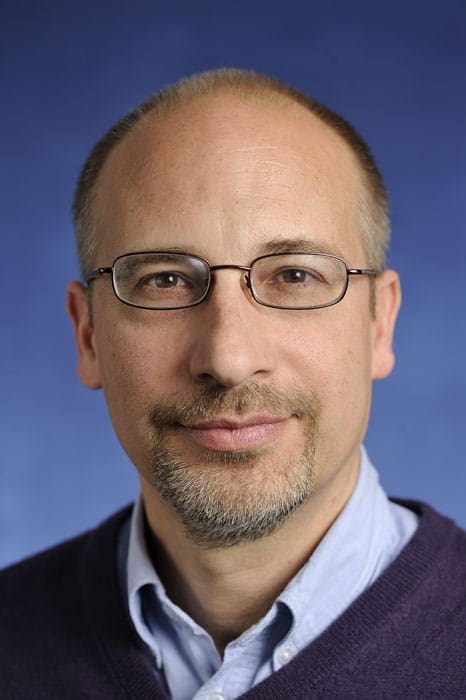
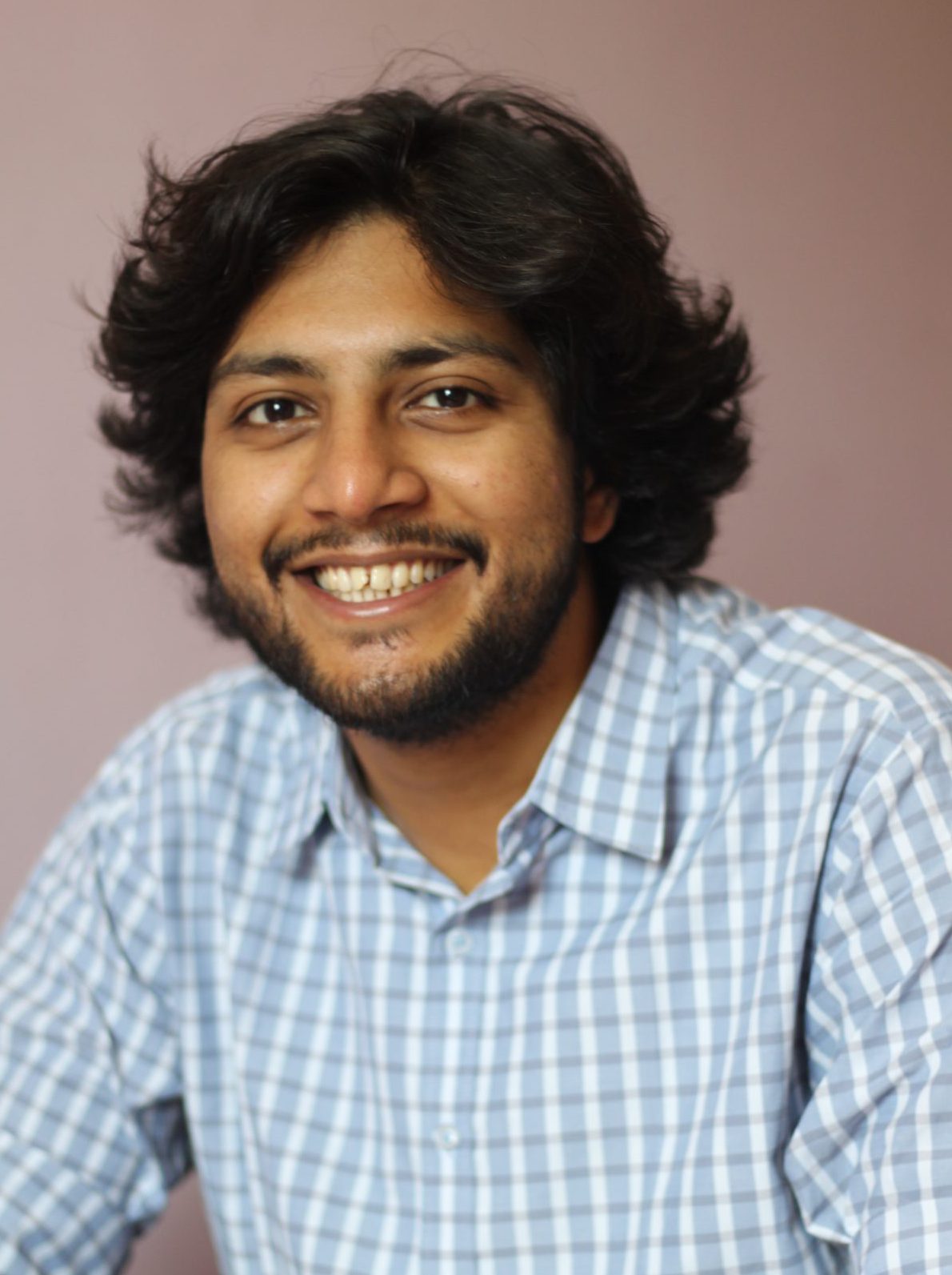
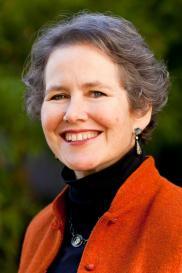
Joel Andreas is a Professor of Sociology at Johns Hopkins University since 2003, serving as Program Director of the East Asian Studies Program. His research focuses on political contention, social inequality, and social change in contemporary China. He holds a PhD in Sociology from UCLA and teaches social theory, political sociology, and courses on Chinese society. He has held visiting positions at universities including the University of Sydney, Hong Kong University, and Ningxia University. His work examines labor movements, rural land policies, and class dynamics in China. Recent research includes analyses of staff-worker congresses, rural land dispossession, and the persistence of militarism in U.S. policy. He critiques market reforms and explores the legacy of the Cultural Revolution. Andreas has contributed to debates on China’s transition to capitalism and the decline of socialist systems. His publications span topics from urbanization to state coercion in rural development. He maintains an active role in academic exchanges and policy-relevant research on China’s socio-political landscape.
Jacob Eyferth is an Associate Professor at the University of Chicago, jointly appointed in the Department of East Asian Languages and Civilizations, the Department of History, and the College. His research focuses on the social and cultural history of twentieth-century China, particularly rural communities, gender dynamics, and the intersection of technology and everyday life. Key research themes include the impact of industrialization, collectivization, and revolution on non-elite populations, with an emphasis on rural women's labor and cultural resistance. His current project explores cotton production, clothing, and gender during China's socialist era. Eating Rice from Bamboo Roots (2009) How China Works (2006) Rural Development in Transitional China (2004) He received the 2011 Joseph Levenson Prize for his first book. Eyferth has taught courses on topics such as class inequality, everyday life under socialism, and revolutionary China, and has held postdoctoral fellowships at Oxford, Harvard, and Rutgers.
Sigrid Schmalzer is a Professor of History at the University of Massachusetts Amherst, specializing in the history of science and modern China. She holds a Ph.D. in History and Science Studies from the University of California, San Diego (2004). Her research bridges the social, cultural, and political dimensions of science in China, with a focus on the intersections of agriculture, activism, and revolutionary movements. Schmalzer is the author of *Red Revolution, Green Revolution: Scientific Farming in Socialist China* (2016), winner of the Joseph Levenson Book Prize, and *The People's Peking Man: Popular Science and Human Identity in Twentieth-Century China* (2008), recipient of the Allan Sharlin Award. Her current projects include a book on agricultural heritage in the People’s Republic of China and leadership roles in organizations like the Critical China Scholars and Science for the People. She co-edits the *Activist Studies of Science and Technology* series for UMass Press, emphasizing socially engaged scholarship. Schmalzer also serves as Co-President of the MSP faculty union at UMass Amherst. Research interests span the history of science activism, transnational movements, and the legacy of Maoist science. Notable awards include the Freeman Book Award (2018) for her children’s book *Moth and Wasp, Soil and Ocean*, which integrates science education with historical narratives. Her work often critiques capitalist and authoritarian structures while advocating for science as a tool for justice and sustainability. Recent publications explore themes like agroecology, science policy, and the global dimensions of China’s scientific history. She teaches courses on modern China, science in society, and radical science movements, blending interdisciplinary approaches to engage students in critical analysis of historical and contemporary issues.
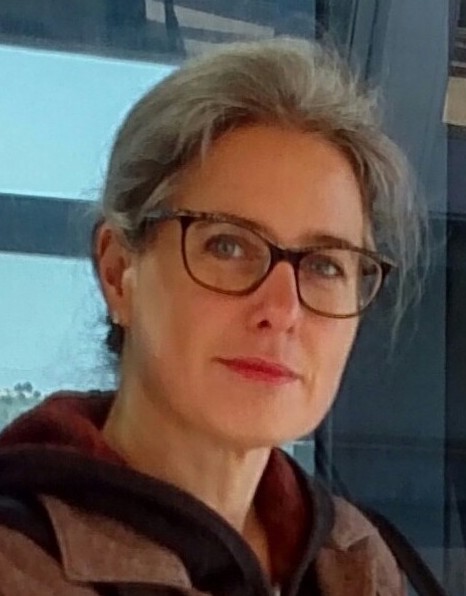
Eric Van Young is a distinguished Professor of History at the University of California, San Diego (UCSD), specializing in colonial and 19th-century Latin American history, particularly Mexico. He has held significant roles, including Chair of the Department of History (2000-2004) and Interim Dean of the Division of Arts and Humanities (2007-2008). His research focuses on rural history, peasant movements, cultural history, and biographical studies of key figures like Lucas Alaman. He earned his B.A. from the University of Chicago (1967), M.A. and Ph.D. from UC Berkeley (1968, 1978). Education: B.A. (University of Chicago), M.A. & Ph.D. (UC Berkeley) Roles: Professor of History, Department Chair, Interim Dean His research explores Mexico’s colonial and early national periods, emphasizing rural economic structures, popular rebellions, and the intersections of culture and politics. Current projects include a biography of Lucas Alaman and a synthetic history of Mexico (1750-1850). He has authored numerous books, including Writing Mexican History (2012) and The Other Rebellion (2001), alongside over 100 articles. His work bridges economic and cultural historiography, offering critical insights into regional dynamics and the construction of national identity. Van Young’s scholarly contributions include editorial roles for journals and book series, as well as extensive peer review for academic publishers. His interdisciplinary approach addresses themes like messianic movements, state formation, and the legacy of colonial institutions in modern Mexico.
Kenneth Pomeranz is the University Professor of Modern Chinese History at the University of Chicago in the Department of East Asian Languages and Civilizations (EALC). Previously taught at the University of California, Irvine , his research spans late Imperial and twentieth-century China , comparative world history , and global economic systems . Research Focus: Reciprocal influences between state, society, and economy; origins of the world economy through mutual regional influences; comparative studies of labor, family organization, and economic history. Current Projects: A history of Chinese political economy from the seventeenth century to the present; a book titled Why Is China So Big? exploring China's political unity despite its vast size. Scientific Awards and Fellowships: John K. Fairbank Prize (twice) World History Association Book Prize (shared) Guggenheim Fellowship American Academy of Arts and Sciences Fellow Publications: Key works include The Great Divergence , The Making of a Hinterland , and The World that Trade Created . His articles address topics such as labor-intensive industrialization, global environmental history, and Qing state-building.
Ruth Mostern is Associate Professor of History at the University of Pittsburgh and Director of the Institute for Spatial History Innovation (ISHI). She is Vice-President and President-Elect (2025-2026) of the World History Association and leads the award-winning World Historical Gazetteer project. Education Ph.D. in History, University of California, Berkeley, 2003 Research Interests Mostern is an interdisciplinary historian specializing in world, Chinese, environmental, and spatial history. She investigates long-term human–environment interactions at continental and millennial scales, focusing on how societies organize space, resources, and risk. Her work integrates GIS, digital gazetteers, and environmental science to reconstruct historical geographies of empire, water management, and ecological change. Current projects include: Place: A Global History – a study of itineraries, gazetteers, and databases as technologies of spatial knowledge. The Medieval Climate Anomaly and the Global Medieval Era – cultural adaptations to climate change c. 950-1250 CE. Research Trends Her recent publications span digital environmental humanities, historical GIS, Song-dynasty political economy, and pre-industrial Asian political ecology. A dominant theme is the coupling of state power with environmental transformation, exemplified by her 2021 book The Yellow River: A Natural and Unnatural History (Yale), winner of the 2023 Joseph Levenson Prize. Awards & Honors Joseph Levenson Prize, Association for Asian Studies, 2023 NEH Digital Humanities Advancement Grant, 2023-2025 Digital Humanities Awards 2021 – Best DH Tool (World Historical Gazetteer) Fudan University Fellowship for Studies of Chinese Civilization, 2019 NEH Humanities Connections Implementation Grant, 2018-2020 Chiang Ching-kuo Foundation Summer Institute Grant, 2015-2016 NSF Collaborative Research Grant, 2013-2015 ACLS Digital Innovation Fellowship, 2011-2012 Advising & Grants Mostern welcomes graduate students interested in environmental, global, Asian, or digital history. She has directed multiple externally funded projects, including the NSF-funded Center for Historical Information and Analysis and NEH-supported initiatives on water in Central Asia and global historical gazetteers. Labs & Teams She directs the Institute for Spatial History Innovation (ISHI) at the University of Pittsburgh, a hub for interdisciplinary research integrating spatial technologies with historical inquiry. ISHI hosts the World Historical Gazetteer , providing open tools and datasets that link knowledge about historical places across world regions.
Kären Wigen is the Frances and Charles Field Professor in History at Stanford University, specializing in Japanese history and the history of cartography. She holds a Ph.D. in Geography from the University of California, Berkeley (1990). Her research spans: Historical geography of East Asia Early modern Japanese regional economies Geographies of the imagination Transnational maritime histories Critical cartography and spatial analysis Her publications include eight major works from 1992-2025 analyzing spatial transformations in Japan and global metageography, with recent projects focusing on temporal dimensions in cartographic representation. She co-edited Seascapes (2007) and Cartographic Japan (2016), and serves as Director of Stanford’s Mellon Fellowship of Scholars in the Humanities since 2022.
Carol Carpenter is a Senior Lecturer and Associate Research Scholar at Yale University's School of the Environment. She has held teaching and research positions at Syracuse University, the University of Hawaii, and Hawaii-Pacific University, and a research role at the East-West Center. Her expertise spans environmental anthropology, conservation, sustainable development, and gender in agrarian systems. She earned a B.A. from SUNY Binghamton and M.A./Ph.D. from Cornell University. Her research focuses on the social science of conservation, economic anthropology in agriculture, and gender dynamics in ecological systems. Notable fieldwork includes four years in Indonesia studying rituals and social networks, followed by four years in Pakistan as a development consultant on social forestry and women's issues for USAID, the World Bank, and the Asia Foundation. She joined Yale in 1998 and published Power in Conservation: Environmental Anthropology Beyond Political Ecology (2020) and co-edited Environmental Anthropology: An Historical Reader (2007). Her recent work critiques conservation practices through an anthropological lens, emphasizing cultural contexts and gender roles. Earlier studies explored resource management in Pakistan, including women’s labor in agriculture and afforestation impacts. Her articles span decades, addressing topics from ritual ethnobotany to development surveillance in Bolivia. While no specific grants or lab affiliations are detailed, her consultancy roles highlight applied research in development sectors. No awards are explicitly mentioned, though her academic contributions are substantial.
Jun Uchida is the Asian Cultures and Society Professor and Professor of History at Stanford University, holding dual appointments in the Department of History and the Center for East Asian Studies. His research focuses on modern East Asian history, Japanese colonialism, migration, and diaspora. He has served as Director of the Center for East Asian Studies (2016-2019) and currently leads the Asian Cultures and Society program. Uchida holds a Ph.D. from Harvard University and has held fellowships at institutions including the Weatherhead Center for International Studies and the Social Science Research Council. His current book project traces the transpacific diasporic activities of Ōmi merchants from Shiga Prefecture, examining their roles in Japan’s imperial expansion. Key research areas include Japanese settler colonialism, colonial Korea, and transnational migration patterns. Uchida has authored influential works like Brokers of Empire (2011), which won the John K. Fairbank Prize, and has contributed to journals such as the Journal of Japanese Studies and Past & Present . Education: Ph.D. in History, Harvard University (2001) M.A. in History, University of California, Berkeley (1996) B.A. in History, Cornell University (1995) Uchida’s teaching spans modern Japanese history, colonial studies, and transpacific themes. He advises doctoral candidates and chairs graduate admissions committees. His awards include the NEH Fellowship (2019-2020) and the Stanford Pattee Fellowship (2013-2014). He maintains active roles in professional organizations such as the American Historical Association and the Association for Asian Studies.
Sai Balakrishnan is an Associate Professor of City and Regional Planning at the University of California, Berkeley. He serves as Co-Director of Global Metropolitan Studies and Chair of the Urban Studies undergraduate major. His research focuses on global urban inequalities, agrarian-urban land dynamics, and caste capitalism in India, particularly along economic corridors like the Mumbai-Pune Expressway. Balakrishnan holds a PhD from Harvard University and a Master’s from MIT. Education: PhD (Harvard), Master of City Planning (MIT) Research Interests: Balakrishnan examines land-use transformations in India, emphasizing how agrarian elites and urban firms negotiate property rights. His work highlights spatial politics of urbanization, including transfer of development rights (TDR) and the geographies of caste-driven development. Recent studies include a global comparative analysis of TDR systems in New York and Mumbai, and a book project on caste capitalism and uneven development in India since the colonial era. Publications: His 2019 book Shareholder Cities explores land conflicts and agrarian-urban transformations along India’s economic corridors. Key articles include analyses of land markets in Mumbai and Bangalore, and the intersection of highway infrastructure with decentralization challenges. Awards: William Holland Prize (2013), ACSP Gill Chin Lim Award (2014) Advising & Grants: Balakrishnan collaborates on interdisciplinary projects linking urban planning, political economy, and social justice. Ongoing work includes a book on caste capitalism and studies of land-based financing for infrastructure in India. Labs/Teams: Active in Berkeley’s Global Metropolitan Studies initiative, focusing on transnational urbanization processes.
University of North Carolina at Chapel HillUnited States
Lauren Leve is an Associate Professor of Religious Studies and Director of Graduate Studies at the University of North Carolina at Chapel Hill. Her academic career centers on the intersection of religion, culture, and changing forms of life in contemporary Nepal and South Asia. Trained as an anthropologist, she examines how religious practices and subjectivities interact with broader political, economic, and social trends, particularly those associated with neoliberal globalization. Ph.D., Princeton University B.A., University of Chicago A.A., Simon's Rock of Bard College Professor Leve's research interests span ethnographic methods, the ethnography of religion, personhood, subjectivity, the anthropology of ethics, democracy, law, violence, international development, globalism, postcoloniality, and the religious landscapes of Nepal, South Asia, and Buddhist Southeast Asia. Her work explores how religious practices mediate and are mediated by political and economic transformations, with particular attention to how human agents use religion to reflect on their world and aspirations. Her scholarly output reveals a consistent focus on Theravada Buddhism's revival in Nepal, particularly among Newar communities, and how this religious movement intersects with democratic reforms, economic liberalization, and changing forms of personhood. Her publications demonstrate expertise in both ethnographic methodology and theoretical contributions to understanding modern religious subjectivity, with a special emphasis on how global processes are reflected and reflected upon by Nepali Buddhists. James Fisher Prize for First Books on the Himalayan Region (2018) UNC FIRE grant (2016) Carolina Women's Center, Faculty Fellow (2013-14) Institute for Arts and Humanities, Faculty Fellow (2007) Harry Frank Guggenheim Foundation, Research Award (2004) Program in Agrarian Studies, Yale University, Program Fellow (2004-2005) As Director of Graduate Studies in Religious Studies, Professor Leve mentors graduate students and teaches courses on ethnographic methodologies, Theravada Buddhism, Himalayan Buddhism, and topical theories reflecting her research interests. She has consulted on research studies in international development, focusing on women's literacy and empowerment, and provides expert witness services in US courts. Her current research projects explore the globalization of Buddhist meditation through the Goenka tradition and follow rural women's experiences through development projects, Maoist insurrection, and conversion to Christianity.
Wendy W Wolford is the Robert A. and Ruth E. Polson Professor of Global Development at Cornell University, affiliated with the College of Agriculture and Life Sciences. She also serves as Vice Provost for International Affairs, overseeing global partnerships including the Global Hubs and Grand Challenges initiatives. Her research focuses on land governance, social movements, and agrarian societies, with extensive fieldwork in Brazil, Ecuador, and Mozambique. Key projects include analyses of the Brazilian MST landless movement and colonial legacies in Mozambican agriculture. Wolford earned her PhD from UC Berkeley (2001) and has authored/co-edited seminal works like This Land is Ours Now (2010) and The Social Lives of Land (2024). She has held prestigious fellowships, including a Fulbright (2016–17), and her work addresses critical issues like global land grabbing, participatory democracy, and environmental justice. Teaching spans undergraduate and graduate levels, emphasizing critical analysis in development theory and political ecology. Recognition includes awards for internationalizing curricula and advancing global development research. Her outreach includes curricula development on Brazilian rural development and multimedia case studies on sustainable food systems. Current research explores the Plantationocene framework and Mozambique’s agrarian histories.
University of California , Santa Barbara (UCSB)United States
Utathya Chattopadhyaya is an Assistant Professor in the Department of History at the University of California, Santa Barbara, specializing in Modern South Asian and British Imperial History with intersecting interests in the Indian Ocean World, Global History, and Commodity History. His research combines critical materialist and anti-imperial frameworks to analyze colonial agrarian frontiers, intoxicant commodities, and social dynamics of caste, class, and gender. He teaches undergraduate and graduate courses including commodity histories, South Asian public culture, and historical methods. Ph.D., University of Illinois, Urbana-Champaign (2018) His recent publications focus on cannabis regulation, colonial political economy, and multispecies entanglements in imperial contexts. He has received prestigious fellowships from the American Council of Learned Societies, UC Humanities Division, and the Mellon Foundation. Chattopadhyaya co-teaches interdisciplinary courses on topics such as race, colonialism, and cannabis history, contributing to emerging scholarship in Science, Technology, and Society (STS) and decolonial studies. Chattopadhyaya's research clusters around British imperialism's material impacts, particularly in eastern Bengal's agrarian transformations and intoxicant commodity systems. His work synthesizes historical methods with critical plant studies and gender analysis, producing innovative insights into colonial governance and resistance. He actively engages with graduate students in comparative history and Indian Ocean World studies. "Ganja and the Godhead" (2024) - Colonial cosmologies and cannabis "Colonial Capitalism" (2024) - Economic structures of empire "Bodies that Cohere" (2023) - Gender analysis in colonial contexts Key awards include the Margaret T. Getman Service to Students Award (2024), Regents Humanities Fellowship (2022-23), and ACLS Fellowship (2021-22). His scholarly activities intersect with research clusters in Science, Technology and Society; Race, Blackness and Abolition; and Global Antiquity.
Mariane C. Ferme is a Professor in the Department of Anthropology at the University of California, Berkeley. Her research focuses on sociocultural dynamics in West Africa, particularly Sierra Leone, with expertise in political anthropology, legal studies, and material culture. She holds a PhD in Anthropology from the University of Chicago and has taught at prestigious institutions including the University of Cambridge and École des Hautes Études en Sciences Sociales. Education : PhD in Anthropology (University of Chicago), MA in Political Science (University of Milano), BA in Anthropology (Wellesley College). Ferme’s research spans the political imagination in conflict zones, agrarian transformations, and the interplay between humanitarian law and local justice systems. Her work has been supported by major grants from the National Science Foundation and the France-Berkeley Fund. She has published extensively on Sierra Leone’s post-war societies and the socio-cultural dimensions of the Ebola outbreak. Scientific awards include funding from the National Science Foundation, Hellman Family Faculty Fund, France-Berkeley Fund, Harvard Academy for International and Area Studies, and the Carter Woodson Institute for African and African-American Studies.
Lina Britto is an Associate Professor of History at Northwestern University, specializing in modern Latin America and the Caribbean. Her research examines drug smuggling networks in Colombia and their intersections with U.S. Cold War policies. She co-edited two interdisciplinary volumes on Colombian history ( Histories of Solitude and Histories of Perplexity , 2024), and authored Marijuana Boom (2020), which received an honor from Colombia's National Book Awards. Affiliated with Latin American and Caribbean Studies and Science in Human Culture programs, Britto also contributes to Colombia’s Historical Commission of the Armed Conflict. Her teaching spans courses on drug history, Latin American contemporary history, and oral history. Research interests include transnational drug networks, Cold War dynamics, and U.S.-Latin American relations. Current projects explore transnational marijuana trafficking linking Colombia, Jamaica, and Florida in the 1970s-80s.