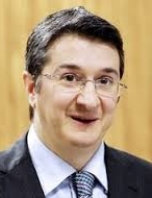
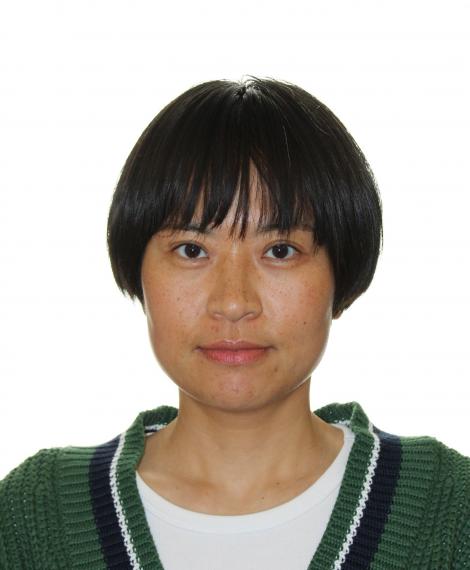
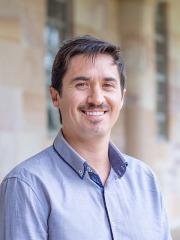
Mauro Bambi is an Associate Professor at Durham University Business School and an Associate Fellow at the Institute of Advanced Studies. His research focuses on Macroeconomic Theory, Endogenous Growth, Habit Formation, and Behavioral Economics. He earned his PhD from the European University Institute (2007) and held positions at ETH Zurich and the University of York. He directs the Centre for Macroeconomic Policy (CEMAP) and has been recognized with the 2008 Italian Association of Applied Mathematics award for his PhD thesis. Education: PhD in Economics (European University Institute, 2007); Postdoctoral Fellowships at Université Catholique de Louvain (Belgium) and ETH Zurich (Switzerland). Research Interests: Macroeconomic Theory and Policy Design Endogenous Growth and Fluctuations Habit Formation in Economic Models Behavioral Economic Preferences Mathematical Methods in Macroeconomics Key Contributions: His work on habit formation models, time-to-build frameworks, and policy design has influenced macroeconomic theory. Recent studies analyze post-COVID demand shifts and pandemic economic impacts. Awards: 2008 Graduate Prize for Best PhD Thesis (Italian Association of Applied Mathematics). Advising and Leadership: Supervised PhD students like Federico Bertoni and Xinyi Xu. Directed CEMAP from 2019–2022, fostering macroeconomic policy research. Active in interdisciplinary collaborations at the Institute of Advanced Studies. Labs/Teams: Leader of CEMAP, collaborating with global institutions on macroeconomic policy analysis.
Giuseppe Fontana is an Associate Professor of Political Economy (SECS-P/01) at the University of Sannio (UNISANNIO) in the Department of Law, Economics, Management and Quantitative Methods (DEMM). He has maintained an active research profile for over two decades, establishing himself as a significant contributor to Post-Keynesian economics and monetary theory. His research interests include: Post-Keynesian Economics Monetary Theory and Endogenous Money Macroeconomic Policy and Financial Stability Financialization and Socioeconomic Impacts Economic Methodology and History of Economic Thought International Trade and Exchange Rate Theory Stock-Flow Consistent Modeling Fontana's scholarly trajectory demonstrates a consistent focus on heterodox economic approaches, particularly Post-Keynesian theory. His work evolved from theoretical contributions in the early 2000s to increasingly policy-relevant analyses of contemporary economic challenges. His recent publications show special attention to the Eurozone crisis, the impact of the COVID-19 pandemic on European economies, and the theoretical foundations of monetary production. He frequently employs stock-flow consistent modeling to provide comprehensive analyses of macroeconomic phenomena, challenging mainstream economic frameworks with alternative theoretical perspectives. Fontana has established important collaborations with scholars like Emiliano Brancaccio, Riccardo Realfonzo, and Marc Lavoie, demonstrating his integration within international networks of heterodox economists. His work has been published in leading heterodox economics journals including the Cambridge Journal of Economics, Journal of Post Keynesian Economics, and Review of Political Economy, as well as in edited volumes with major academic publishers like Palgrave Macmillan and Edward Elgar.
Duane J. Seppi is a Professor of Financial Economics at the Tepper School of Business , Carnegie Mellon University since 2001, currently holding the Richard C. Green Professor chair. His research focuses on market microstructure (price manipulation, limit orders, market liquidity) and derivative pricing for commodities. PhD in Finance from University of Chicago (1988) MBA from University of Chicago (1984) BA from Stanford University (1977) His work bridges financial theory with commodity operations , exploring topics like natural gas storage valuation , electricity price modeling , and merchant commodity asset management . Key publication trends include Nash equilibrium in price impact , latent trading demand analysis , and commodity real options . Scientific awards include: Best Paper Award (2015) WFA/NYSE Prize (2005) George Leland Bach Award (2002) Roger F. Murray Prize (1998) As a dedicated educator , he teaches option pricing , stochastic processes , and algorithmic trading . His editorial board service spans the Journal of Finance , Journal of Financial Markets , and Review of Finance . Duane has held visiting fellowships at the U.S. SEC , University of Vienna , and Nanyang Technical University .
Andrei A. Levchenko is the John W. Sweetland Professor of International Economics at the University of Michigan's Department of Economics. He holds affiliations with prominent institutions including NBER, CEPR, and CEBRA, where he directs the International Trade and Macroeconomics Program. His research focuses on international trade, global production networks, business cycle transmission, and the macroeconomic implications of institutional changes. Levchenko's work bridges micro and macroeconomics, analyzing firm-level data to understand aggregate phenomena. Key contributions include studies on global supply chains' role in economic fluctuations, the impact of industrial policy on long-term growth, and the distributional consequences of large devaluations. He has been recognized with the Bhagwati Award and featured in the Economic Report of the President multiple times. His research spans topics such as trade elasticities, inflation dynamics, and the intergenerational trade-offs of pandemic lockdowns. Levchenko collaborates with leading economists globally, producing influential papers in top journals like the American Economic Review and Review of Economic Studies. His Google Scholar profile highlights over 10,000 citations, underscoring his significant impact on modern international economics. Education: Not explicitly listed in the provided materials. Affiliations: NBER Research Associate, CEPR Research Fellow, CEBRA Director of ITM Program. Grants & Awards: Bhagwati Award (2021/2022), multiple NBER/CEPR working papers, and contributions to policy dialogues via IMF and World Bank collaborations.
Dr. Wenjing Zhang is an Assistant Professor in the School of Computer Science at the University of Guelph, Canada. She holds a Ph.D. in Computer Science from the University of Guelph (2024) and was a visiting research scholar at the University of Arizona's Department of Electrical and Computer Engineering (2016–2018). Her research focuses on cybersecurity in AI/ML, including security threats to models, privacy-preserving techniques, and data privacy in generative AI. She leads projects on robust defenses against adversarial attacks, secure federated learning, and privacy-preserving prompt engineering for LLMs. Dr. Zhang’s research areas include: Security in AI/ML (e.g., poisoning, evasion, prompt injection attacks) Model Privacy (protection of internal parameters) Data Privacy (synthetic data generation, privacy-preserving prompt engineering) She has secured a five-year NSERC Discovery Grant (2025–2030) for her research on enhancing security, privacy, and fairness in generative AI. Her work has been published in top-tier venues such as NeurIPS, IEEE Transactions on Information Forensics and Security, and IEEE Transactions on Communications. She is a recipient of the 2022 Westin Scholar Award and serves on technical committees for IEEE conferences including CNS 2025 and ICC 2025. Her team collaborates on interdisciplinary projects involving federated learning, information theory, and reinforcement learning. She actively seeks partnerships in security, privacy, and generative AI applications.
Richard Hornbeck is the V. Duane Rath Professor of Economics at the University of Chicago Booth School of Business. He is an economic historian and applied-micro economist whose research focuses on the historical development of the American economy, examining why some places and people have become wealthier while others have remained poorer. Hornbeck is a research associate at the National Bureau of Economic Research, affiliated with programs on the Development of the American Economy, Development Economics, and Environmental and Energy Economics. Hornbeck's research spans multiple critical areas of economic history, with particular emphasis on slavery and emancipation economics, environmental history (especially the Dust Bowl migration), gender dynamics in 19th-century manufacturing, railroad development, and agricultural economics related to the Ogallala Aquifer. His work frequently utilizes newly digitized historical data to provide fresh insights into longstanding economic questions, connecting historical events to contemporary economic issues of wealth distribution and regional disparities. His publication record shows strong trends in American economic development research, with recent work focusing on the economic impacts of emancipation, historical manufacturing patterns by gender, and urban economic development. Many of his papers have been published as lead articles in top journals including the Journal of Political Economy, American Economic Review, and Review of Economics and Statistics. Hornbeck has received several prestigious honors including the Alfred P. Sloan Fellowship in 2014 and selection for the 2009 Review of Economic Studies Tour. His NBER affiliations demonstrate his standing in multiple subfields of economics research. Prior to joining Chicago Booth in 2015, Hornbeck was the Dunwalke Associate Professor of American History in the Economics Department at Harvard University. He received his PhD in economics from MIT in 2009 and a bachelor's degree in economics from the University of Chicago in 2004. His teaching includes courses on applied microeconomics in economic history and business in historical perspective, with course schedules extending through 2026.
Christine A. Parlour is the Sylvan C. Coleman Chair of Finance and Accounting at the Haas School of Business, UC Berkeley. She co-directs the Berkeley Center for Responsible Decentralized Intelligence. Her research focuses on Fintech, digital payments, and market microstructure, particularly in cryptocurrency and decentralized finance (DeFi). She has served on the Nasdaq Economic Advisory Board and the New Special Study of Securities Markets steering committee. Education: PhD and MA in Economics from Queen’s University (Kingston), BSocSci from University of Ottawa. Her work explores payment system externalities, blockchain protocols, and banking innovation. Recent research includes analysis of Bitcoin transaction fees, decentralized exchange liquidity, and systemic risks in DeFi markets. Publications span top finance journals, addressing topics like Uniswap’s AMM model, miner collusion in Bitcoin, and the impact of Fintech on traditional banking. She frequently engages with policymakers on digital currency regulation and CBDC design.
Peter Kondor is an Assistant Professor affiliated with the London School of Economics & Political Science (LSE) and Central European University (CEU). His research focuses on finance, asset pricing, liquidity risk, market microstructure, and arbitrage dynamics. Research Interests: Asset pricing with heterogeneous agents Liquidity risk and intermediary capital Over-the-counter market structures Behavioral finance and sentiment analysis Global financial cycles and investment waves Information diffusion and market stability Key Publications Trends: 2011-2025: Explores causal inference in asset pricing, hedge fund impacts on idiosyncratic risk, and liquidity risk dynamics. 2018: Investigates arbitrage capital and liquidity risk in global markets. 2020-2025: Analyzes rational sentiments, narrative momentum, and aggregate earnings.
Julian Berger is a postdoctoral researcher at the Max Planck Institute for Human Development in the Center for Adaptive Rationality , where he explores how to enhance decision-making through hybrid human-AI systems. He is also a fellow of the Joachim Herz Foundation and has received funding from the Foundation of German Business and the Danish Data Science Academy. Education: M.A. Psychology in Business and Economics, Universidade Catolica Portuguesa (2021) B.A. Politics, Administration and International Relations, Zeppelin Universität (2018) His research spans human-AI collaboration , collective intelligence , and interpretable machine learning . A recurring theme in his work is developing methods to combine human expertise with AI capabilities for accuracy in domains like medical diagnostics , credit scoring , and football analytics . He has authored publications in high-impact venues such as PNAS , Nature Human Behavior , and Science and Medicine in Football . Scientific awards and funding include: Fellowship for interdisciplinary economics, Joachim Herz Foundation (2024) PhD funding from the Foundation of German Business (Stiftung der deutschen Wirtschaft) Research grant from the Danish Data Science Academy His recent article trends emphasize ensembling techniques that leverage complementary human and AI errors, algorithmic fairness, and practical heuristics like Hybrid Confirmation Trees. These works demonstrate significant improvements in diagnostic accuracy and decision cost-efficiency. Beyond academia, Berger works as a consultant and ML engineer with Simply Rational , focusing on interpretable models for financial and sports analytics. His work bridges theoretical research with real-world applications, prioritizing fairness, transparency, and human accountability in AI systems.
Sebastian U. Stich is a tenured Professor at CISPA Helmholtz Center for Information Security and a member of the European Lab for Learning and Intelligent Systems (ELLIS). His research focuses on optimization for machine learning, collaborative learning (distributed, federated, and decentralized methods), efficient optimization techniques, adaptive stochastic methods, and privacy/security in machine learning. Recent appointments include ERC Consolidator Grant 2024 for the CollectiveMinds project. Key contributions in federated/decentralized learning, uncertainty estimation, and communication-efficient optimization. Active in workshop organization, including the Optimization for Machine Learning workshop at NeurIPS 2024. Teaching modern optimization methods at Saarland University (2023-2025). His work has been recognized with awards such as the Google Research Scholar Award (2023) and Meta Privacy-Enhancing Technologies Award (2022) . His research group includes postdocs Dr. Anton Rodomanov and Dr. Rotem Mulayoff, and PhD students Xiaowen Jiang and Yuan Gao.
Prof. Dr. Matthias Weidlich is a faculty member at Humboldt University of Berlin within the Institute of Computer Science under the Faculty of Mathematics and Natural Sciences . His research focuses on Process Mining , Complex Event Processing , and Data Privacy with applications in Business Process Management and Scientific Workflows . Research Interests: Business Process Management and Process Mining Complex Event Processing and Stream Data Analysis Data Privacy and Security in Process Systems Scientific Workflow Systems and User Behavior Heterogeneous Network Embeddings Algorithm Design and Optimization Recent Publications (2023-2025) demonstrate expertise in: Efficient stream processing techniques Privacy-preserving process mining frameworks Scientific workflow analysis tools Graph neural network applications Multi-modal data integration Adaptive querying systems Contact: Office: Unter den Linden 6, 10099 Berlin Phone: 030 2093-41277 Email: matthias.weidlich@hu-berlin.de Web: hu.berlin/data
Prof. Ellen Kandeler is a leading academic in soil biology and microbial ecology at the University of Hohenheim , heading the Department of Soil Biology within the Institute of Soil Science and Site Science. Her work focuses on microbial interactions, soil organic matter dynamics, and the impacts of land use and climate change on soil systems. She actively contributes to interdisciplinary projects funded by the German Research Foundation (DFG), including studies on mineral-organic matter associations, pesticide degradation, and agroecosystem resilience. Research interests include rhizosphere dynamics, biogeochemical cycles, and the ecological functions of soil microorganisms, with applications in sustainable agriculture and environmental protection. She is also involved in institutional roles as a Deputy Ombudsperson for Scientific Integrity and member of committees overseeing large-scale research infrastructure. Her recent publications emphasize climate-soil feedbacks, microbial community assembly, and the biodegradation of agrochemicals. Projects like the DFG-FOR 1695 on agricultural landscapes under climate change highlight her commitment to addressing global environmental challenges through soil science. Prof. Kandeler’s work bridges fundamental and applied research, with a focus on translating soil microbial processes into strategies for sustainable land management and mitigating anthropogenic impacts on soil health.
Pavlos S. Georgilakis is a Professor at the School of Electrical and Computer Engineering, National Technical University of Athens (NTUA), specializing in modern techniques for power system analysis, optimization, and renewable energy integration. He holds a Diploma (1990) and PhD (2000) in Electrical Engineering from NTUA. His career includes roles as Lecturer (2009) and Associate Professor (2018–2023) at NTUA, and Assistant Professor at the Technical University of Crete (2004–2009). Research focuses on power transmission/distribution systems, transformer design, and applying AI/optimization for grid efficiency. He led 10 research projects, including Horizon 2020 initiatives SHAR-Q, WiseGRID, and NobelGrid. He authored 3 books and over 230 publications (SCOPUS citations: >5,500). Editor of IET Smart Grid, Energies, and Electricity journals; senior IEEE member. He supervised 4 doctoral, 9 master’s, and 76 diploma theses. Awards include the 2013 Best Reviewer Award from Electric Power Systems Research. Active in energy storage, smart grids, and decentralized energy resource integration.
Professor Meredith Crowley is a Professor of Economics and Deputy Chair of the Faculty at the University of Cambridge, where she also serves as a Research Fellow at CEPR (London). She is a Fellow of St. John's College and serves as a Research Coordinator for the Janeway Institute's Transmission Mechanisms and Economic Policy Research Theme. Professor Crowley has established herself as a leading expert in international trade and trade policy, with extensive engagement with international institutions including Bruegel, CEPII, and the Kiel Institute. Professor Crowley's educational background includes: PhD (2001) and MS (1999) in Economics from the University of Wisconsin-Madison MPP (1996) in International Trade and Finance from Harvard University AB (1990) in Asian Studies and Chemistry from Bowdoin College Professor Crowley's research focuses on international trade and trade policy, with particular expertise in trade agreements, trade remedies, currency invoicing, and the economic impacts of Brexit. Her work examines how trade policy uncertainty affects firm behavior, how trade agreements shape market competition, and how exchange rate movements influence trade flows. She has made significant contributions to understanding pricing-to-market dynamics, the role of dominant currencies in trade, and the challenges facing the global trading system, frequently using detailed firm-level data in her empirical analyses. Analysis of Professor Crowley's recent publications reveals a consistent focus on the intersection of trade policy and firm behavior. Her work demonstrates how trade policy uncertainty influences market entry decisions, how trade agreements create competitive effects across markets, and how currency invoicing patterns respond to major economic events like Brexit. Her research combines rigorous empirical methods with deep policy relevance, often using detailed firm-level data to examine how international trade operates in practice, with particular attention to the impacts of trade disputes, tariff threats, and exchange rate fluctuations. Professor Crowley has received significant recognition for her work, including being elected as a Research Fellow at the Centre for Economic Policy Research (CEPR) in 2016. She has secured multiple research grants, including a UK in a Changing Europe Fellowship from the Economic and Social Research Council (2019-2022) and a Data Impact Fellowship from JISC (2017). She also received an ESRC grant for research on 'The impact of trade policy and exchange rate shocks on trade' (2017-2018). Professor Crowley has supervised several PhD students, including Chuan-Han Cheng (International Macroeconomics, Trade, and Monetary Policy) and Yi (Amanda) Wang (International Trade, Innovation, Productivity), and advised others such as Deniz Atalar (Inter-Sectoral Trade Linkages in Aggregate Fluctuation) and Ana Lleo-Bono (Behavioral, Experimental, and Organizational Economics). She serves as co-investigator for the publicly-funded Centre for Inclusive Trade Policy and has been actively involved in policy discussions, serving on the Trade and Economy Panel of the UK Department for International Trade and providing scientific advice to international institutions. Professor Crowley is a key member of the Janeway Institute for Economics at Cambridge and actively contributes to the Centre for Inclusive Trade Policy. Her research group focuses on empirical microeconomics, particularly examining international trade phenomena through detailed firm-level data analysis. She has established herself as a leading voice in trade policy discussions, with over 100 media appearances including BBC, The New York Times, Financial Times, and The Economist, where she explains complex trade issues to the public and policymakers.
Dr. Jorge Miranda-Pinto is a Senior Lecturer at the School of Economics within the Faculty of Business, Economics and Law at the University of Queensland. He is also a Research Associate at the ANU Centre for Applied Macroeconomic Analysis (CAMA) and an Affiliate of the Centre for Efficiency and Productivity Analysis. His research focuses on applied macroeconomics, international economics, and macroeconomic theory, with an emphasis on business cycle fluctuations, production networks, fiscal policy transmission, and sectoral shifts. He holds a PhD in Economics from the University of Virginia (2017). Educations: PhD in Economics (University of Virginia, 2017) His research explores the role of firm and household heterogeneity in shaping macroeconomic volatility and the effects of fiscal stimulus. Recent work includes analyzing commodity price shocks, service trade impacts, and monetary policy transmission mechanisms. He has contributed to projects such as the ARC-funded study on unobserved networks in macroeconomic fluctuations (2022–2025). Publications highlight interdisciplinary approaches to understanding economic dynamics, including articles on production networks, business cycle asymmetry, and trade credit effects. His work bridges theoretical models with empirical applications, addressing global economic challenges. Grants: ARC Discovery Project (2022–2025) Miranda-Pinto collaborates with institutions like the IMF and Federal Reserve Bank of Cleveland, reflecting his engagement with policy-relevant research. He is available for academic supervision and media commentary on macroeconomic topics.