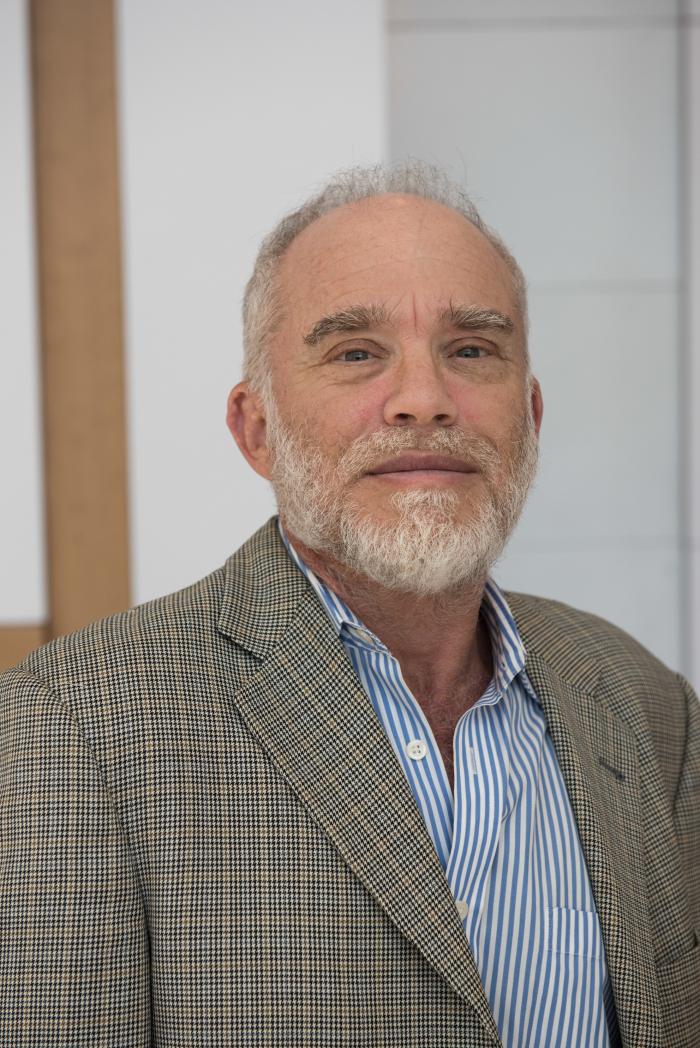
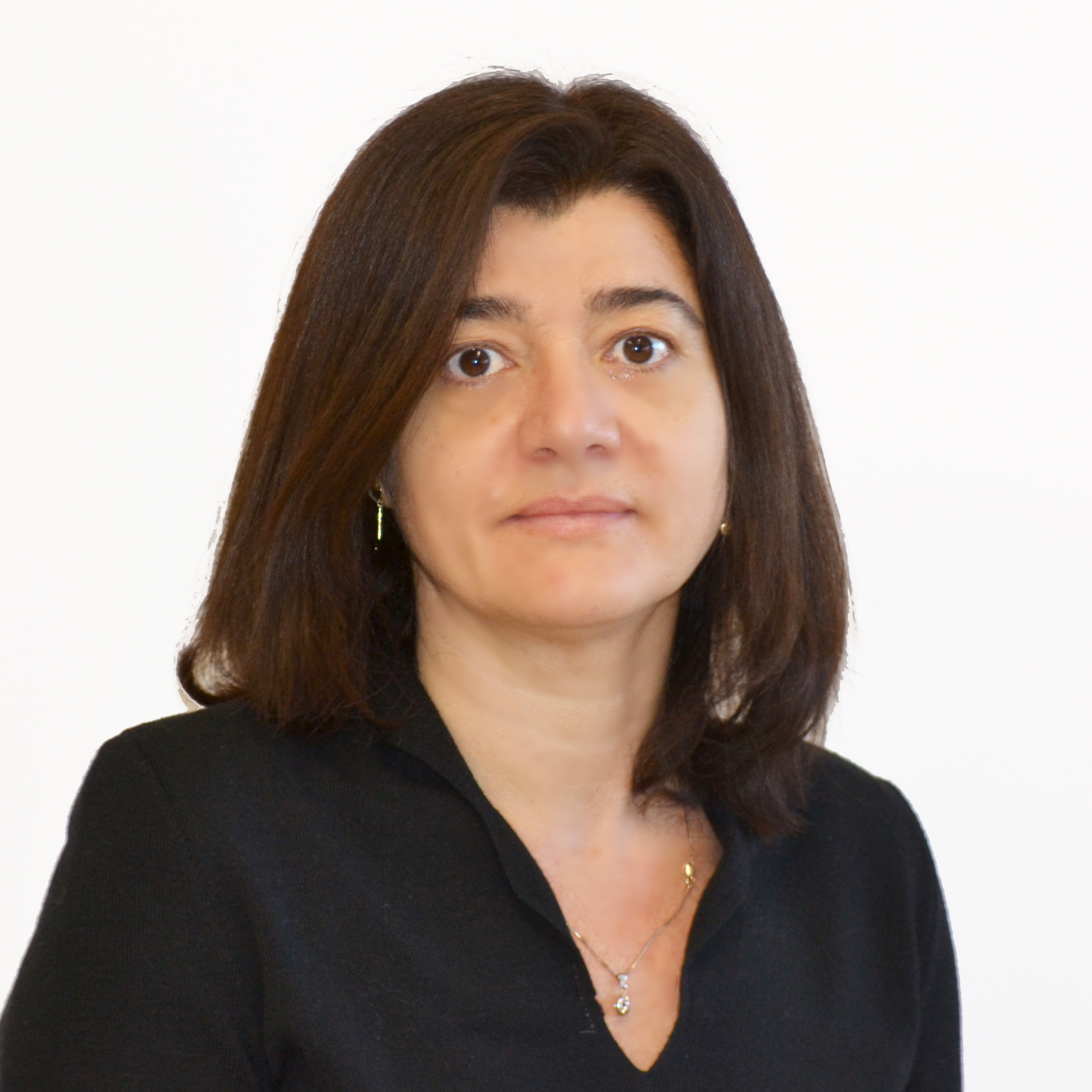
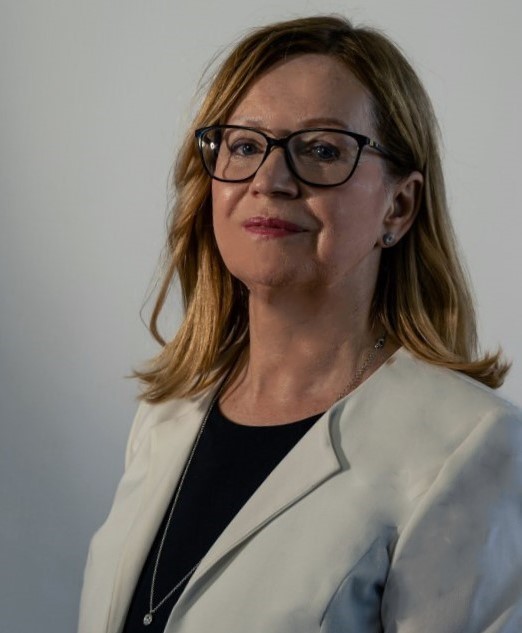
Prof. Dr. Haris Gačanin is a faculty member at RWTH Aachen University, affiliated with the Institute for Distributed Signal Processing under the College of Electrical Engineering. His research focuses on integrating machine learning with wireless communication systems, particularly in industrial IoT, edge computing, and network optimization. Current academic rank: Professor Contact: harisg@dsp.rwth-aachen.de Research Interests: Wireless systems, machine learning, signal processing, and network optimization. Key contributions include: Adaptive resource allocation in IIoT and vehicular networks AI-driven channel estimation and feedback mechanisms Security-oriented emitter identification via metric learning Federated/transfer learning for edge environments Hardware-efficient deep learning models for mmWave and THz communications Methodological Focus: Combines reinforcement learning, attention mechanisms, and robust neural architectures with practical implementations on FPGA and vehicular systems.
Peter Schwardmann is an Associate Professor at Carnegie Mellon University's Department of Social and Decision Sciences within the Dietrich College of Humanities and Social Sciences. He previously served as an assistant professor at the University of Munich (LMU) and holds a Ph.D. in Economics from Toulouse School of Economics. Education : Ph.D. in Economics (Toulouse School of Economics), Undergraduate (University of Cape Town) His research focuses on biased belief formation and its implications for market outcomes and communication dynamics. Key areas include: Motivated reasoning in political polarization Mental health stigma and treatment demand Consumer misperceptions about carbon emissions Self-deception and strategic overconfidence Gender differences in social networks Recent work explores cross-partisan communication effects, climate policy targeting, and psychological drivers of economic behavior. His experimental methodology combines laboratory and field experiments to test theoretical predictions about belief dynamics. Pioneer Award (BAdW): Recognizing innovative research in behavioral economics As Director of Undergraduate Studies, he leads academic program development while maintaining active collaborations with institutions like the Bavarian Academy of Sciences and European Economic Review researchers. Current projects examine policy implications of biased belief updating in social interactions and consumer decision-making.
Robert J. Weiner is Professor of International Business, Public Policy and Public Administration, and International Affairs at George Washington University School of Business. He serves as Director of the Master of Science in International Business (MSIB) program and Faculty Director of the Center for International Business Education and Research (CIBER). He holds affiliate appointments at the Elliott School of International Affairs' Institute for International Economic Policy, Institute for Middle East Studies, Institute for Security and Conflict Studies, and Sigur Center for Asian Studies. His educational background includes a Ph.D. (1986), M.A. (1982), and B.A. (1979) from Harvard University. Prior to academia, he worked as an energy and environment consultant at ICF Inc. Professor Weiner's research centers on energy security and petroleum markets, with specific focus areas including: Resource nationalism and political risk in energy sectors Oil market turbulence and speculation dynamics State-owned enterprises and sovereign wealth funds Corruption in energy trade (notably UN Oil-for-Food Program) US-China competition for oil resources Foreign investment in petroleum industries His publication portfolio spans top journals including Journal of International Business Studies, Strategic Management Journal, and Accounting, Organizations and Society. His scientific recognition includes: Tucker and Dean's Scholarships for research excellence Gilbert White Fellowship at Resources for the Future Research awards from NSF, Québec government, and Columbia Center Professor Weiner maintains significant policy engagement through congressional testimony (U.S. House Small Business Subcommittee 2011, UK Treasury Select Committee 2008), UN advisory roles (UNCTAD Eminent Person on Commodities 2003), and extensive consulting for major oil companies (Amoco, Mobil, Phillips, Texaco), exchanges (NYMEX, IPE), and international institutions (World Bank, U.S. DOE). He has directed the International Business Department (2001-2005, 2013-2016) and Elliott School's MA in International Trade and Investment Policy (2016-2018). His institutional leadership extends to CIBER (Center for International Business Education and Research) and multiple Elliott School research institutes, where he contributes to energy policy analysis and international business education through study abroad programs and executive education initiatives.
Karl Harmenberg is a Swedish economist based at the Department of Economics, University of Oslo since 2022. He holds a PhD from Stockholm University's Institute for International Economic Studies (2018) and previously worked at Copenhagen Business School (2018-2021) and BI Norwegian Business School (2021-2022). As a tenure-track associate professor , he teaches Macroeconomic Theory and develops open-source Python tooling for macroeconomic modeling. Key research themes include macroeconomic dynamics with heterogeneous agents , earnings distribution mechanisms , and integrated epi-econ modeling for pandemic preparedness His methodological innovations include the permanent-income-neutral measure for heterogeneous-agent models and directed cycle graph representations of macroeconomic frameworks Current projects include WaCoMacro (wage contracts and macroeconomics) and ongoing collaborations with Timo Boppart , Per Krusell , and Erik Öberg Recent publications span: 2025 International Economic Review work on unemployment-risk amplification mechanisms 2025 Quantitative Economics article on integrated epi-econ modeling 2024 Economics Letters paper establishing Pareto distribution in top earnings 2023 AER Insights research on wage contract rigidity 2021 Journal of Economic Dynamics & Control contribution on permanent income shocks His work has been cited in policy discussions regarding: Swedish automatic stabilizer design Norwegian pandemic response strategies Scandinavian labor market reforms Nordic macroeconomic teaching curricula
Mehdi Toloo is a Reader in Business Analytics at the University of Surrey's Surrey Business School. He holds a BSc, MSc, and PhD, and is a docent. Previously, he was a Professor at Technical University of Ostrava (Czech Republic) and Sultan Qaboos University (Oman). His research focuses on Business Analytics, Operations Research, Data Envelopment Analysis (DEA), and Decision Analysis. He has supervised over 40 postgraduate students and contributed to top-tier journals like European Journal of Operational Research and Omega. He is an editor for journals including Computers & Industrial Engineering and Decision Analytics. Recognized globally, he ranks in the top 2% of scientists worldwide in Business Analytics & Operations Research (2020-2024). His research projects include performance evaluation with unclassified factors, economies of scope in network DEA, and selective measures in DEA. He collaborates internationally on projects like robust optimization and supply chain sustainability. His teaching spans undergraduate courses in Operations Research, Mathematics for Business, and Programming, alongside postgraduate modules on Quantitative Methods and Advanced DEA. His work bridges theoretical and applied research, with applications in healthcare, renewable energy, and public policy.
Evi Pappa is a Full Professor of Macroeconomics at Universidad Carlos III de Madrid. Her research focuses on fiscal policy, monetary economics, and open economy macroeconomics, with a particular emphasis on business cycle analysis and policy impacts in developed economies. She holds affiliations including Research Fellow at the Center for Economic Policy Research (CEPR), member of the Euro Area Business Cycle Dating Committee (EABCDC), and non-executive member of the Portuguese Fiscal Council. Previously, she held positions at LSE (2001-2006), Bocconi University (2004-2005), UAB (2005-2011), and EUI (2011-2018). Her work addresses topics like the macroeconomic effects of fiscal and monetary policies, structural funds, climate transition costs, and policy responses to economic crises. She serves as associate editor for journals including the Economic Journal and the Journal of International Economics. Educational background includes a PhD from Universitat Pompeu Fabra (UPF) in Barcelona (2001). Her research has explored fiscal multipliers, greenflation dynamics, and the interplay between sentiment and economic behavior. She has collaborated with central banks such as the European Central Bank, Bank of Spain, and Bank of England. Her recent work analyzes crisis support measures, green transition challenges, and the implications of gender representation on societal outcomes. Awards and recognitions include membership in high-profile economic committees and editorial roles. Her research spans theoretical and empirical frameworks, with a focus on policy relevance and real-world economic challenges. She contributes to policy design through academic publications and advisory roles, addressing issues from pandemic response to long-term structural economic transformation.
Luisa Fuster is a Full Professor in the Department of Economics at Universidad Carlos III de Madrid, serving as Head of Department. She holds a PhD from Universitat Autònoma de Barcelona. Previously, she was Associate Professor with tenure at Universitat Pompeu Fabra (1995-2003) and the University of Toronto (2003-2008). Her research focuses on macroeconomics and public finance, particularly labor market dynamics, gender wage gaps, and social security policies. Education: PhD in Economics, Universitat Autònoma de Barcelona Her research explores topics like labor market polarization, tax policy implications, and occupational segregation. She has published in top journals such as the Review of Economic Studies and the American Economic Journal: Macroeconomics. Recent work includes analyses of Spain’s tax policies and underground economy impacts on public financing. Her articles highlight trends in labor supply microfoundations, gender disparities, and social security reforms. She served as President of the Spanish Economic Association in 2021. Advising includes PhD student Lidia Cruces, placed at Goethe University Frankfurt. Her research is supported by grants from the Spanish Ministry of Education and the Generalitat of Catalonia.
Dr. Andrea Flack is an Independent Emmy Noether Group Leader at the Max Planck Institute of Animal Behavior, Konstanz, Germany, and a Junior Group Leader at the Centre for the Advanced Study of Collective Behaviour, University of Konstanz. Her research focuses on understanding how ecological, environmental, and genetic factors shape migratory behaviors in birds, particularly white storks, and their evolutionary consequences. Current Positions: Independent Emmy Noether Group Leader, Max Planck Institute of Animal Behavior (2022–present) Junior Group Leader, Centre for the Advanced Study of Collective Behaviour (2020–present) Education: DPhil in Zoology (2009), University of Oxford Diploma in Biology (2009), Freie Universität Berlin Her work integrates cutting-edge technologies such as high-resolution GPS, accelerometers, and on-board cameras with experimental approaches like delayed-releases and cross-fostering to explore behavioral variation and its implications. Recent research highlights include social learning in migration and the impact of anthropogenic habitats on stork movement patterns. Key trends across her publications emphasize collective decision-making, environmental adaptation, and technological innovations in tracking. Notable contributions appear in journals like PNAS , Current Biology , and Journal of Applied Ecology . Scientific Awards: Emmy Noether Fellowship Dr. Flack collaborates extensively, utilizing Movebank for data integration and leading studies on avian collision risks and migration phenology. Her lab team includes researchers like William Fiedler and Emily Aikens , focusing on experimental designs and ecological modeling.
Yaser S. Abu-Mostafa is a Professor of Electrical Engineering and Computer Science at the California Institute of Technology (Caltech), with a distinguished career spanning over four decades. He earned his B.Sc. from Cairo University in 1979, an M.S.E.E. from Georgia Tech in 1981, and a Ph.D. from Caltech in 1983. Holding roles such as Garrett Research Fellow (1983), Assistant Professor (1983-89), Associate Professor (1989-94), and Professor since 1994, he has cemented his reputation as a pioneer in artificial intelligence and machine learning. Educational Background B.Sc., Cairo University (1979) M.S.E.E., Georgia Institute of Technology (1981) Ph.D., California Institute of Technology (1983) Abu-Mostafa’s research bridges AI/ML with medical diagnostics and computational finance. His projects include non-invasive blood pressure measurement via ultrasound, AI-based detection of congestive heart failure through video analysis, and early stroke prediction using clot-detection algorithms. These innovations leverage machine learning to address biological variability and real-world complexity. His recent publications focus on predictive modeling for epidemiology (2022, 2021), theoretical advancements in machine learning (2015, 2006, 2005), and foundational work in swarm robotics and financial mathematics (2004). Trends in his work emphasize robustness, adaptability, and interdisciplinary applications. Scientific Awards Clauser Prize (Caltech’s most original Ph.D. thesis) ASCIT Teaching Awards (1986, 1989, 1991) GSC Teaching Awards (1995, 2002) Richard P. Feynman Prize for Excellence in Teaching (1996) Abu-Mostafa Fellowship established by Hertz Foundation (2005) Abu-Mostafa has advised numerous students and led research teams at Caltech, while also serving on scientific advisory boards and consulting for industries. His Caltech MOOC on machine learning has garnered over 8 million views, and his textbook Learning from Data is an Amazon bestseller. He collaborates extensively, including a major project with UCSF on heart failure detection and partnerships in computational finance. His work on a Caltech patent for stroke prediction received a US patent in 2025, alongside other medical AI patents.
Daniel Murphy is the Jung Family Associate Professor of Business Administration at the Darden School of Business, University of Virginia. He holds a B.S. from the University of Notre Dame and M.A. and Ph.D. from the University of Michigan. His research bridges macroeconomics and public policy, focusing on fiscal stimulus, housing markets, and economic slack. B.S., University of Notre Dame M.A., University of Michigan Ph.D., University of Michigan Murphy's research examines cost-effective strategies for economic stabilization, emphasizing how fiscal policies impact heterogeneous populations. Key areas include: Defense spending effects on employment and inequality Gentrification and housing affordability Land taxation efficiency and implementation Consumer debt dynamics during recessions Macroeconomic modeling of demand complementarities Speculative trading in oil markets His recent publications analyze: 2025: Theoretical models for expenditure shocks 2024: Land tax impacts on urban development 2022: Fiscal policy during pandemics 2020: Credit market responses to stimulus No scientific awards are explicitly mentioned in the provided text.
Dr. Narges Arastouei serves as a postdoctoral researcher at the Chair of Mobile Business & Multilateral Security, Goethe University Frankfurt since 2019. With over 12 years of industry experience including leadership of security operations at Iran's largest mobile provider (MCI), she specializes in cybersecurity for next-generation mobile networks and critical infrastructure protection. Her educational background includes: Ph.D. in Computer System Networking and Telecommunications from Amirkabir University of Technology (AUT), Tehran Research focuses on network security, 5G/6G communications, IoT security, and Security Operations Center (SOC) frameworks. Current work bridges theoretical networking with practical incident handling, emphasizing human factors in cybersecurity and privacy-preserving healthcare applications. Her projects address evolving threats in mobile ecosystems through both technical solutions and policy frameworks. Publication trends reveal progression from foundational work in opportunistic network routing (2013-2019) to cutting-edge 6G security research (2022-2025), with consistent emphasis on real-world implementation challenges. Key themes include risk-aware protocols, botnet detection, and secure healthcare systems. Scientific recognition includes: First-place doctoral student award She leads coordination of EU-funded CyberSec4Europe and CyberSecPro projects while spearheading human factor components in the ECCO initiative. Secured Goethe-Corona-Fonds grant funding for longitudinal study on Germany's Corona Warning App adoption. Hosts the SECMGT workshop on information security management since 2023. Active within Goethe University's security research ecosystem, she contributes to multilateral security frameworks and mentors junior researchers through student assistant programs.
Giovanni Gallipoli is a Professor at the Vancouver School of Economics, part of the Faculty of Arts at the University of British Columbia. His research focuses on macroeconomics and applied microeconomics, with particular emphasis on economic inequality, labor market dynamics, firm heterogeneity, and computational methods. He holds a Ph.D. from University College London. Key professional roles include Associate Editor of the Journal of Political Economy , Faculty Associate at the Stone Centre on Wealth and Income Inequality, and membership in the CEPR and HCEO. His work bridges theoretical rigor and empirical analysis, exploring topics such as general equilibrium effects of policies, household responses to shocks, and skill dispersion across workers and firms. Notable awards include the Killam Research Prize and the Young Economist Award from the European Economic Association. His research outputs span influential journals in economics, with recent studies addressing structural transformation, digital intensity impacts, and intergenerational transfers. He actively contributes to policy discussions through affiliations with institutions like the Panel Study of Income Dynamics (PSID).
Felipa de Mello-Sampayo is an Assistant Professor in the Department of Economics at ISCTE - University Institute of Lisbon and an integrated researcher at BRU-Iscte (Business Research Unit). She specializes in health economics, spatial analysis, and microeconomic modeling with applications across various social science domains. Her research bridges theoretical economic frameworks with empirical applications to address real-world healthcare and policy challenges. Dr. de Mello-Sampayo earned her Aggregation in Economics from the University of Lisbon's Higher Institute of Economics and Management in 2024, following a PhD in Economy from the University of Birmingham (2001), a Master's degree in International Economy from the same institution (1998), and a Bachelor's degree in Management from the Higher Institute of Economics and Management - UTL (1994). Her doctoral thesis was published in The British Library. Her research focuses on microeconomic models and their empirical applications, particularly in health economics and spatial analysis. She has made significant contributions to understanding healthcare accessibility through spatial interaction models, cost-effectiveness of medical interventions, and the economic implications of healthcare delivery systems. Her work often examines decision-making under uncertainty, applying real options theory to healthcare contexts. She has coordinated research projects including 'Health and Economic Growth' (PTDC/EGE-ECO/104157/2008) funded by the Foundation for Science and Technology (FCT), and has co-edited special issues for journals including Sustainability and the International Journal of Environmental Research and Public Health. Analysis of her 15 most recent publications reveals a consistent focus on spatial econometrics applied to healthcare accessibility, cost-effectiveness analysis of medical interventions, and economic modeling of healthcare decision-making. Her work spans diverse geographic contexts including Portugal, the United States (particularly Texas), BRICS countries, and China. A distinctive feature of her research is the application of spatial interaction models to healthcare accessibility questions and the use of real options theory to analyze timing decisions in medical contexts. Dr. de Mello-Sampayo is affiliated with the Data Analytics Group at ISCTE and contributes to the BRU-Iscte research unit. Her work demonstrates strong interdisciplinary connections between economics, public health, spatial analysis, and healthcare management, with publications appearing in high-quality journals across these fields.
José Pablo Chaves Ávila is an Associate Professor at the Engineering School (ICAI) and a researcher at the Institute for Research in Technology (IIT) at Comillas Pontifical University. He holds a Bachelor's degree in Economics from the University of Costa Rica, and Erasmus Mundus Master's degrees in Electric Power Industry and Digital Economics from ICAI and Paris Sud-11 University. His Ph.D. in Sustainable Energy Technologies and Strategies was awarded by Delft University of Technology (Netherlands), in collaboration with Comillas and KTH Sweden. His research focuses on smart grids, energy economics, renewable integration, and regulatory frameworks for electricity systems. Affiliations : Associate Professor, ICAI - Comillas School of Engineering Researcher, IIT - Institute for Research in Technology Deputy Director of IIT since October 2020 Visiting Positions : Lawrence Berkeley National Laboratory (USA) Massachusetts Institute of Technology (MIT) European University Institute (Italy) His research interests emphasize Energy Economics , Smart Grids , and Regulation of Electricity Markets . He has authored over 80 publications in journals like Applied Energy , Energy Policy , and Renewable & Sustainable Energy Reviews . Current projects include the EU-funded BeFlex and eFORT initiatives, focusing on flexibility markets, TSO-DSO coordination, and decarbonization strategies. Notable contributions include leadership roles in the ISGAN Academy (since 2016), ACER Expert Group on Demand Flexibility (2021), and CRIE Expert List (2020). His work bridges technical innovation with policy design, addressing challenges in grid modernization and energy transition. Grants and Projects : European Commission-funded eFORT (2022-2026) Horizon 2020 BeFlex (2022-2026) Spanish Ministry Modesc (2020-2023) Consultancy for regulatory bodies in Spain, Costa Rica, and Slovenia Labs/Teams : Active in IIT's Energy Systems Group and coordinates the Smart Grids and Regulation research cluster.
Eva Muchová is a Professor in the Department of Economics at the University of Economics in Bratislava. She holds the position of Person responsible for the Study Programme Economics and Law and teaches courses including Principles of Economics 1/2, Macroeconomics, and International Economics and Law. Her research focuses on International Economics, European Integration, Methodology of Teaching Economics, and Economics of Happiness. Education background not explicitly stated in text. Research projects include leadership roles in VEGA and KEGA grants addressing EU post-crisis dynamics, e-learning in economics education, and Slovak economic policy. Key international projects include coordination of Leonardo da Vinci programs and participation in ERASMUS+ initiatives. Her teaching innovations include e-learning applications through the KEGA project 'Learn Economics'. Notable publications analyze balance-of-payments constraints in CEE, EU export competitiveness, and Slovak fiscal policies. She serves on multiple university committees including the Ethics Commission and Scientific Board of the Faculty of Economics and Finance. Her research portfolio includes over 10 peer-reviewed articles in journals like Emerging Markets Finance & Trade and Journal of Economic Policy Reform, covering topics from EU integration post-crisis to corruption dynamics in transition economies. She has consistently led major research projects with certifications for excellent outcomes from VEGA grants.