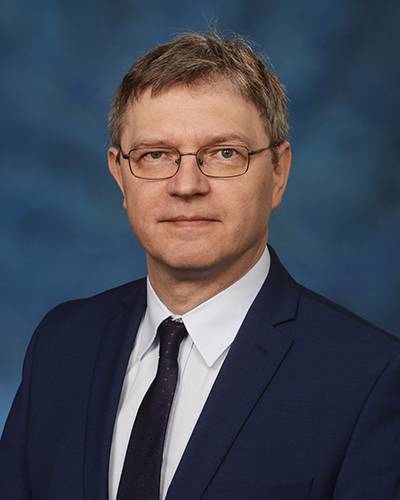
Jörg Denzinger is a Professor at the University of Calgary, Canada, specializing in artificial intelligence, multi-agent systems, and automated testing. His work bridges evolutionary computation, cybersecurity, and game-based simulations, with a focus on emergent behavior and cooperative strategies. Key Research Areas: Multi-Agent Systems, Evolutionary Algorithms, Automated Theorem Proving, Game AI, Data Mining, Cybersecurity, Distributed Systems. Recent Trends: He has concentrated on applying exploratory evolutionary testing to security policy optimization, using deep learning for medical imaging, and modeling emergent coordination in self-organizing systems. Scientific Contributions: Developed frameworks for combining security mechanisms and testing multi-agent systems. Explored decentralized control in water distribution networks and adaptive risk management. Contributed to code reuse tools like Jigsaw and structural correspondence analysis.
Mason Brown serves as a Visiting Assistant Professor of Computer Science at Hamilton College, based in Taylor Science Center 3005. His research integrates software engineering and artificial intelligence to advance cyber-physical systems across ground, air, and space domains, with emphasis on practical implementations for real-world applications. Educational Background: Ph.D. in Computer Science from Griffith University M. IT. from Griffith University B. I.T. from Charles Sturt University His doctoral dissertation focused on An Ilities Tool for Minisatellite Software Validation , developed in collaboration with Gilmour Space Technologies. Research expertise spans satellite systems validation, multi-robot coordination, and AI-driven cyber-physical solutions. His postdoctoral work at the University of Technology Sydney involved multi-robot target tracking and path planning under Professor Robert Fitch. Current investigations include aircraft visual inspection via machine learning and natural language interfaces for robotic systems, demonstrating strong interdisciplinary connections between space engineering and robotics. Publication analysis reveals a clear trajectory from foundational satellite software validation (2020-2021) toward advanced human-robot collaboration (2023-2024), with consistent focus on verification methodologies and real-world deployment challenges. Key thematic threads include ilities-based validation frameworks, multi-robot field experimentation, and machine learning applications in aerospace. Teaching includes Computer Science for All and Algorithms and Data Structures , with active supervision of student projects in mechatronics and computer science. He particularly encourages new students to engage in research. Professional activities include appointment to the Australian Computer Science faculty in 2025 and collaborations with laboratories at Griffith University (Professor Paulo de Souza) and University of Technology Sydney (Graeme Best).
Professor Ian Mitchell is a faculty member in the Department of Computer Science at the University of British Columbia's Faculty of Science. He received his B.A.Sc. and M.Sc. from UBC and PhD in Scientific Computing and Computational Mathematics from Stanford University. His research focuses on algorithms for hybrid systems, level set methods for Hamilton-Jacobi PDEs, control systems for cyber-physical applications, assistive technology development, and reproducible research practices. Key research contributions include the Toolbox of Level Set Methods Development of Dijkstra-like ordered upwind methods Advancements in safety-preserving control algorithms Applications in smart wheelchair navigation and user interface design His recent publications demonstrate expertise in Hamilton-Jacobi equation solving, robotics applications of level set methods, and assistive technology design. While no explicit awards are listed, his work spans multiple disciplines including computer science, control theory, and biomedical engineering. He teaches both graduate (CPSC 5xx) and undergraduate (CPSC 4xx and below) courses in computational robotics and parallel computing.
Miroslaw Janowski is a Professor in the Department of Diagnostic Radiology and Nuclear Medicine at the University of Maryland , where he co-directs the Program in Image Guided Neurointerventions (PIGN) . His research focuses on integrating advanced imaging techniques (PET, MRI) with neurointerventional therapies to enable precision medicine, particularly for central nervous system (CNS) diseases. Education: MD, Medical University of Warsaw (2001) PhD, Neuroscience, Mossakowski Medical Research Centre, PAS (2010) Postdoctoral Fellowship, Radiology, Johns Hopkins University (2011-2012) Research Interests center on overcoming the blood-brain barrier (BBB) through intra-arterial delivery, radiolabeling of therapeutic agents, and CRISPR-based genome editing. He has pioneered real-time MRI/PET-guided methods for targeted stem cell and drug delivery to the CNS. His work includes patents pending for BBB modulation and CRISPR applications. Recent Publications highlight advancements in intra-arterial antibody delivery, hyperpolarized metabolic imaging for stroke, 3D-printed soft robotics for endovascular interventions, and manganese-labeled hydrogels for cell transplantation. These studies span biomedical engineering, neuroscience, and translational medicine. Grants include NIH/NINDS, Geneva Foundation, and American Cancer Society funding for projects on BBB opening, warfighter brain health, and T cell PET imaging. His lab trains students and researchers in molecular imaging, neurointervention, and regenerative medicine.
Milad Poursoltan is a Postdoctoral Researcher at the Integration, Material to System Laboratory (IMS-Bordeaux), affiliated with Université de Bordeaux. His work focuses on modeling and simulation frameworks for Cyber-Physical and Human Systems (CPHS), bridging conceptual models with executable systems. Research Group: Production Engineering Team: MEI (Modélisation, Évaluation, Innovation) Research Interests include: Digital Twin methodologies Agent-based modeling Human-machine collaboration Ontological systems modeling Intelligent industrial systems Recent Article Trends reveal expertise in: CPHS validation frameworks Data management for digital twins HiLLS language adaptation for simulation
Susanna Pirttikangas (D.Sc.(tech.), M.Sc.(math)) is a Research Director at the University of Oulu's Faculty of Information Technology and Electrical Engineering , affiliated with the Center for Ubiquitous Computing and the Interactive Edge research group. She actively collaborates across research units within her faculty. Research Interests : Edge Intelligence Machine Learning Artificial Intelligence Smart Environments 6G Wireless Networks Scientific Contributions : Her recent work focuses on 6G-enabled AI architectures , federated learning , privacy-preserving systems , and urban well-being analytics . Articles highlight applications in industrial metaverse integration, fault diagnosis, and mobility-as-a-service.
Ahmet Feyzi Ateş is an Assistant Professor at FMV Işık University 's Faculty of Engineering and Natural Sciences, Department of Computer Science and Engineering. He previously served as an Assistant Professor at İstinye University, where he founded the Department of Software Engineering. His research focuses on Semantic Web technologies, Multi-Agent Systems, Data Mining, and Telecommunications protocols. PhD, Ege University (2008): Thesis on Semantic Web and Multi-Agent technologies for telecommunications services. MSc, University of Southern California (1994): Specialization in Data Communications and Computer Networks. MSc, Bilkent University (1993): Thesis on Formal Protocol Specifications and Conformance Testing. BSc, Yıldız Technical University (1990): First in class, Department of Computer Science and Engineering. Dr. Ateş's research integrates Semantic Technologies with Agentic AI to develop autonomous systems. His work in Data Mining applies to Call Center Text Analysis and Network Problem Detection. He explores Formal Methods for Protocol Verification and has contributed to Mobile Network Integration through Crowdsourcing. Recent publications highlight trends in Telecommunications , Software Engineering , and AI , with sub-fields like Agent-Based Services, Multimedia Synchronization, and Entitlement Management. His Semantic Technologies Lab drives innovation in Agentic AI systems. 2017 : Eşik Üstü Teşvik Ödülü (TÜBİTAK) for H2020 privacy-preserving big data projects. 2017 : Eşik Üstü Teşvik Ödülü (TÜBİTAK) for H2020 critical technology research. Dr. Ateş has held leadership roles in industry, including Project Manager at Turk Telekom and R&D Group Manager at Defne Communications. He holds a national patent for a data privacy query system and advises startups in algorithmic trading and influencer marketing.
Yatsko Oksana Myroslavivna is an Associate Professor at the Department of Computer Science, Chernivtsi National University named after Yuriy Fedkovych. She holds a Candidate of Pedagogical Sciences degree (specialty 13.00.02 - theory and methods of teaching informatics) and has been certified as an Associate Professor since 2022. Her research focuses on computer-oriented methodological systems for teaching computer disciplines, with specializations in data mining for business applications, game theory implementation in economic decision-making, web technologies development, and algorithm design. She actively contributes to educational literature with multiple textbooks on Discrete Mathematics, Operations Research, Web Technologies, and Systems Modeling. Her professional engagements include membership in the Bukovina Information Technology Cluster, Chernivtsi Mathematical Society, and participation in international conferences like SPIE Optical Engineering and Correlation Optics. She has completed advanced certifications in machine learning, data visualization, and online education technologies from Prometheus, SoftServe, and other institutions. Her publications demonstrate expertise in strategic business analysis, cross-platform decision support systems, and educational software development. The 15 most recent works (2023-2024) cover data structures, game theory applications, web development tools, and polarization-based biomedical diagnostics. She serves as an expert for Ukraine's Ministry of Education and National Agency for Quality Assurance in Higher Education.
Prof. Bekir Tevfik Akgün serves as Professor and Dean of the Faculty of Computer and Information Sciences at Yeditepe University, with prior academic appointments at Istanbul Okan University (Department Head, Institute Director), Ohio State University, and Yildiz Technical University (Dean). His expertise spans artificial intelligence, information security, computer graphics, and distributed systems, supported by extensive research funding and supervision of 19 graduate students. Educational background includes: Ph.D. in Control and Computer Engineering, Istanbul Technical University (1991) M.S. in Control and Computer Engineering, Istanbul Technical University (1984) B.S. in Electrical Engineering, Istanbul State Academy of Engineering and Architecture (1981) His research integrates theoretical and applied computer science, with recent focus on AI-driven environmental monitoring (forest fire detection via drone-IoT networks), bioinformatics security, and advanced color models. Early work established foundational contributions in digital art (marbled paper techniques) and real-time operating systems, evolving into contemporary applications in energy management and autonomous systems. Publication trends since 2001 reveal consistent innovation across domains: computer graphics (2004-2024), distributed systems (2001), and emerging AI/IoT applications (2022-2024). The interdisciplinary nature of his work bridges theoretical computer science with practical implementations in security, environmental science, and human-computer interaction. Scientific Awards: No major scientific awards were listed in the provided information. Advising and Grants: Supervised 18 master's theses and 1 doctoral dissertation covering autonomous vehicles, deep learning, and IoT systems. Secured over 1.5 million Turkish Lira in research funding through TÜBİTAK projects including Smart Renewable Energy Management System (2018-2021, 159,636 TL) and Advanced Autonomous Bus System (2018-2021, 915,810.99 TL), with additional projects in battery management and metrobus efficiency. Labs and Teams: Project descriptions indicate leadership in autonomous systems teams and energy management research groups, though specific laboratory affiliations are not detailed in the source text.
Takahiro Uchiya serves as Professor at Nagoya Institute of Technology, holding dual appointments in the Department of Information Engineering within the Faculty of Engineering and the Information Technology Center. His academic leadership spans agent-oriented knowledge engineering and intelligent informatics, with recent focus on disaster response robotics and multi-agent systems development. Uchiya completed his academic foundation at Tohoku University through a rigorous progression: Bachelor of Engineering, Faculty of Engineering (1999) Master of Information Science, Graduate School of Information Science (2001) Doctor of Information Science, Graduate School of Information Science (2004) His research centers on agent-oriented knowledge representation, problem solving, and acquisition techniques, with significant extensions into cyber society software platforms and social knowledge applications. Recent investigations reveal a pronounced shift toward practical disaster management solutions, including robot-guided evacuation systems and BLE-based positioning technologies. This trajectory demonstrates consistent innovation in translating theoretical multi-agent frameworks into real-world emergency response tools. Uchiya's scientific contributions have earned recognition including the BWCCA2024 Best Paper Award and IEEE CES West Japan Chapter Young Researcher Award. His award portfolio spans both Japanese and international venues, reflecting broad scholarly impact. Through committee roles in the Information Processing Society of Japan and Institute of Electronics, Information and Communication Engineers, Uchiya actively shapes academic discourse. His societal engagement manifests in developing voice dialogue systems for elderly care and robotics programming workshops for schoolchildren, bridging academic research with community needs through events like Science Agora 2018.
Cédric Claude Bernard Grueau serves as an Assistant Professor in the Department of Systems and Computer Science at Setúbal School of Technology, Setúbal Polytechnic University, and holds Invited Researcher positions at MARE - Centre for Marine and Environmental Sciences and ALGORITMI research unit (University of Minho). His research centers on developing interactive spatial decision-support tools that integrate human behavior modeling with resource management simulation. Key domains include Geographic Information Systems (GIS) for environmental planning, regional planning, mining, water infrastructure management, and health informatics. Recent work emphasizes AI-enhanced platforms for national agencies in water management and health risk prediction. Publication analysis reveals consistent application of agent-based modeling and GIS across environmental domains, with recent focus on infrastructure asset management (2023), ODD protocol frameworks (2021), and land use change modeling (2014). His work bridges technical development with practical implementation in EU-funded projects. Grueau supervises over 20 undergraduate and multiple master's students. His research is funded through national and EU projects including WISDom (Water Intelligence System Data), AiECHOES (AI health risk prediction), and PROBIO (biodiversity management). He collaborates extensively with Portuguese public institutions: National Civil Engineering Laboratory (LNEC), Institute for Nature Conservation and Forests (ICNF), and Mineral Resources Industry Association. Active in academic service, he serves on conference program committees and peer-reviews for scientific journals, operating within MARE and ALGORITMI research ecosystems.
Dr. Shawn Keshmiri, the Spahr Professor at the University of Kansas, is a faculty member in the College of Engineering , Department of Aerospace Engineering . His research focuses on advanced guidance, navigation, and control systems for unmanned aerial vehicles, combining classical control theory with modern machine learning approaches. Education : B.S. from Shiraz University, M.S. from California State University, Los Angeles (CSULA), Ph.D. from the University of Kansas Dr. Keshmiri's work emphasizes nonlinear and robust control systems , multi-agent UAV coordination , and applications of artificial intelligence in adaptive aircraft control. His recent publications demonstrate expertise in: 3D path following via Lyapunov control Reinforcement learning-based flight controllers Control barrier functions for safety guarantees Wind shear and turbulence mitigation Multi-reference guidance algorithms
Manuel Filipe Vieira Torres Santos is an Associate Professor with Habilitation at the School of Engineering of the University of Minho, Portugal. He serves as a Senior Researcher at Centro ALGORITMI (Associate Laboratory in Intelligent Systems) where he coordinates the Intelligent Data Systems research lab and the Information Systems and Technologies research group. His academic career combines teaching responsibilities with extensive research activities focused on data science applications in healthcare settings. Dr. Santos' research interests center on applying advanced computational techniques to healthcare challenges. His primary areas include Machine Learning, Knowledge Discovery from Databases, Data Mining, Agent-based Systems, and Intelligent Decision Support Systems. He has pioneered work in Pervasive and Adaptive Business Intelligence specifically tailored for healthcare environments. His research spans both theoretical advancements in data science methodologies and practical implementations in real-world medical settings, particularly in intensive care units, hospital management, and precision medicine applications. Analysis of his recent publications reveals a strong trend toward integrating emerging technologies like blockchain, Internet of Things, and openEHR standards into healthcare information systems. His work demonstrates a progression from foundational data mining techniques to increasingly sophisticated architectures that support real-time decision making, predictive analytics, and personalized patient care. The publications show particular emphasis on standardization efforts, interoperability challenges, and the development of maturity models for digital transformation in healthcare institutions. Coordinator of Intelligent Data Systems research lab Coordinator of Information Systems and Technologies research group Principal Investigator for multiple funded projects including: Intelligent hospitalization management (2021-present) Data Science applied to diabetes (2021-present) Intelligent Decision Support for response times optimization (2020-present) Intelligent Hospital Infection Control (2020-present) Dr. Santos has secured significant research funding for healthcare analytics projects, demonstrating the practical value of his work. His approach combines technical expertise in data science with deep understanding of healthcare workflows and challenges, resulting in solutions that address real clinical needs while advancing the state of the art in health informatics.
Dr. Maral Aminpour is an Assistant Professor in the Department of Biomedical Engineering at the University of Alberta , where she leads a computational lab focused on drug discovery and biological systems modeling. Her research integrates artificial intelligence and physics-based methods to study protein-protein interactions, with particular emphasis on repurposing drugs for COVID-19 and optimizing anti-tubulin cancer therapeutics . Her lab develops hybrid AI-physics software tools to advance rational drug design and has contributed to understanding ivermectin's multi-target effects, Omicron's neurovirulence, and microtubule-targeting cancer drugs. Current projects include computational approaches to PROTACs design and antiparasitic drug discovery . Teaches graduate courses in Rational Drug Design (BME 620) and Machine Learning for Biomedical Applications (BME 677) Lab website: Aminpour Lab Active research areas: Computational drug discovery , AI in biomedical engineering , Protein interaction modeling
Milli Letizia is an Assistant Professor in the Department of Computer Science at the University of Pisa, Italy. She is a member of the Knowledge Discovery and Data Mining Laboratory (KDDLab), a joint research group connecting the University of Pisa, CNR-ISTI, and Scuola Normale Superiore. Her work bridges theoretical and applied aspects of network science, data mining, and computational social science. Education: PhD in Computer Science, University of Pisa (2018) Master Degree in Computer Science, University of Pisa, magna cum laude (110/110 cum laude, 2013) Bachelor Degree in Mathematics, University of Pisa (2010) Her research focuses on data mining , complex networks , diffusion of innovation , quantification , and the science of success . She investigates how information, behaviors, and diseases spread across networks, using both data-driven and simulation-based approaches. Her work integrates machine learning, network modeling, and social theory to understand spreading phenomena in real-world systems. The trend in her recent publications reveals a strong emphasis on modeling diffusion processes in complex networks, with a focus on algorithmic bias, community-aware diffusion, and opinion dynamics. She has developed influential open-source tools such as NDlib and CDLIB , which are widely used in network science for simulating diffusion and detecting communities. Her work spans disciplines including computer science, public health, and social science, demonstrating interdisciplinary impact. Scientific Service and Recognition: Program Committee Chair, 3rd and 4th International Workshop on Dynamics in Networks (DyNo) at PKDD 2017 and ASONAM 2018 Program Committee Member, NetSciX 2019, DATA ANALYTICS 2017–2019, GOODTECHS 2017, DataMod 2018 Member of Local Organizing Committee, XIII AI*IA Symposium on Artificial Intelligence (2014) She has contributed to major EU projects including SoBigData++ , HumanE-AI-Net , SBD@RT , and CIMPLEX . Although no formal advising or grant leadership is explicitly mentioned, her active research output and tool development suggest significant involvement in funded research and potential mentorship. She has taught courses on data mining, big data analytics, and databases at both undergraduate and master’s levels. Milli Letizia is affiliated with the Knowledge Discovery and Data Mining Laboratory (KDDLab) , a leading interdisciplinary research group focused on big data analytics, social mining, and network science. The lab fosters collaboration between academia and research institutions, promoting innovation in data-driven societal applications.