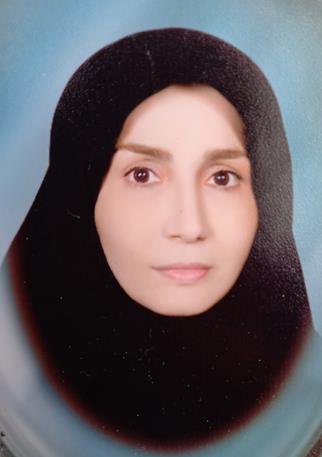
Nasibeh Esmaeili is an Assistant Professor in the Department of Demography at the University of Tehran, Iran. She holds a Ph.D. in Demography and maintains active research in computational demographic modeling approaches. Her research focuses on agent-based modeling , intelligent and mathematical modeling approaches , and neural-network-wavelet-based forecasting in demography. Her work bridges computational methods with demographic analysis to address complex population dynamics, particularly in the Iranian context. Her most recent publication (2024) demonstrates her expertise in applying multi-agent-based modeling to examine how family policies and economic conditions impact low fertility rates in Tehran, Iran. This research represents the intersection of computational social science and demographic analysis. Dr. Esmaeili maintains professional contact through the University of Tehran and continues to contribute to demographic research methodology.
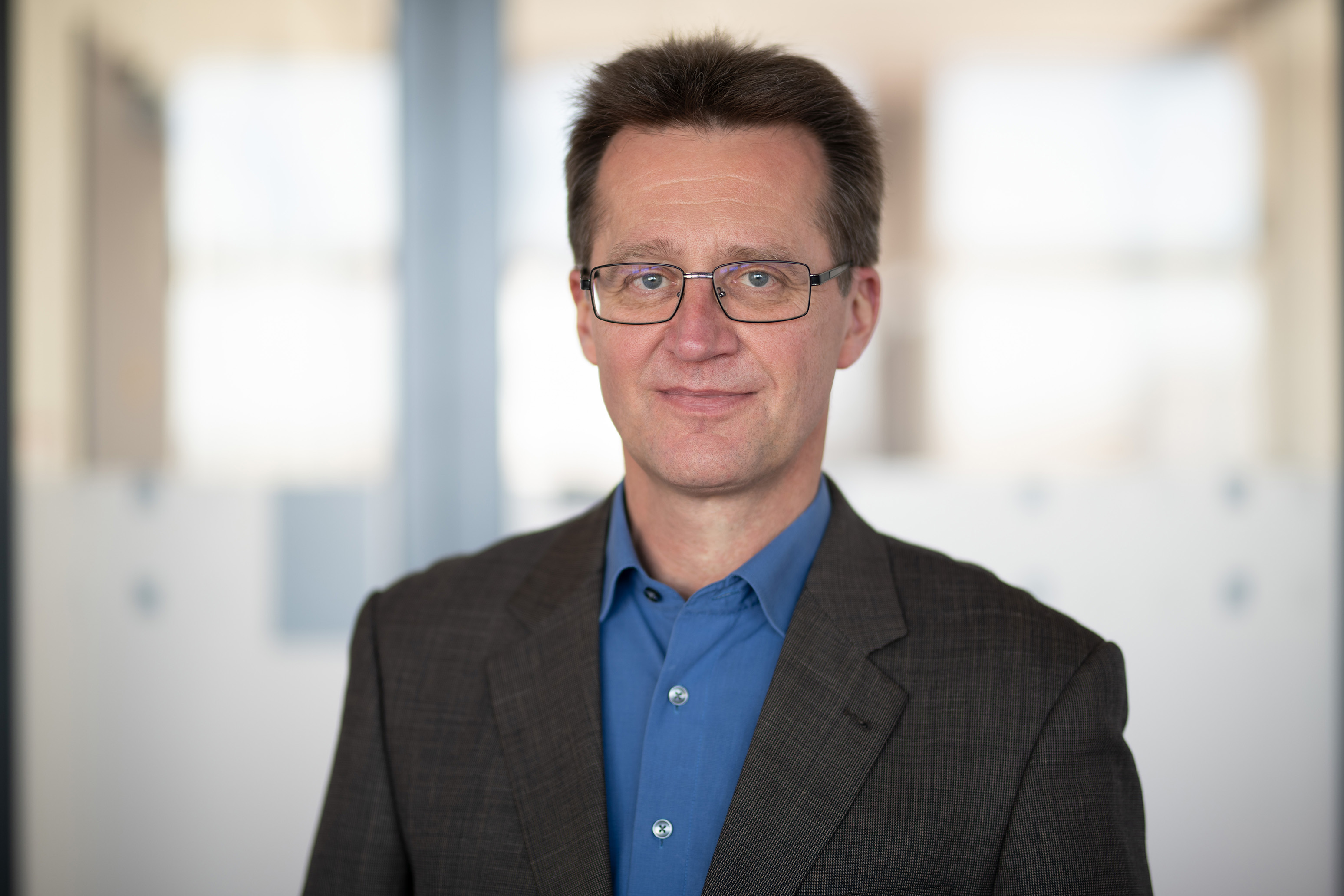
Professor Franziska Matthäus is a theoretical biologist at Goethe University Frankfurt and a Fellow at the Frankfurt Institute for Advanced Studies (FIAS). Her research focuses on mathematical modeling of spatiotemporal processes in biological systems, particularly cell motility and pattern formation. She leads an active research group within the Life- and Neurosciences department, collaborating extensively with experimental partners to develop models that bridge microscale cellular processes with population-level behavior. Dr. Matthäus earned her doctorate summa cum laude from the University of Warsaw in 2005 after studying biophysics at Humboldt University of Berlin. She held postdoctoral positions at the University of Heidelberg, where she became head of the research group "Complex Biological Processes" in 2011. In 2016, she accepted a junior professorship at the University of Würzburg before joining Goethe University Frankfurt and FIAS, where she currently holds a Giersch endowed professorship. Her research employs agent-based models, partial differential equations, and image analysis techniques to study cell motility, pattern formation, and tissue dynamics. Her group develops mathematical models describing individual cells and large cell populations, incorporating internal signaling processes and interactions with chemical and mechanical environments. Current projects investigate embryo development, cancer cell migration, organoid dynamics, and pattern formation in biological systems. They use advanced computational methods including GPU implementations for efficient simulations and have developed specialized tools like a Julia package for 3D particle image velocimetry. Professor Matthäus has organized significant academic initiatives including "The Beauty of Theoretical Biology" project with Springer Publishing, which collects scientific images from theoretical biology research for publication and exhibition. Her publication record shows consistent output across mathematical biology, with recent work focusing on vertex models, pattern formation mechanisms, and advanced image analysis techniques for studying cellular dynamics. Giersch endowed professorship at Goethe University She actively supervises PhD students including Camile Kunz, Zoë Lange, Tim Liebisch, Marc Pereyra, and Rutian Zhou, guiding them in research projects that combine mathematical modeling with biological applications. Her teaching includes courses in computational biology, bioinformatics, and theoretical biology for both bachelor's and master's students at Goethe University. She offers specialized modules in the Physical Biology of Cells and Cell Interactions (PBioC) program, emphasizing hands-on research experience with data analysis, modeling, and simulation techniques. Professor Matthäus maintains strong international collaborations and has contributed to numerous interdisciplinary research projects, particularly those bridging mathematics, physics, and biology. Her work has applications in understanding metastasis formation, parasite-host interactions, and embryonic development processes.
Prof. Dr. Hartmut Paschen is a Professor of Mechatronics at Ruhr West University of Applied Sciences (HS Ruhrwest), where he has been serving since April 2013. He is the Head of the Bachelor's program in Mechatronics and is affiliated with the Institute of Measurement and Sensor Technology. His office contact information includes email at hartmut.paschen@hs-ruhrwest.de and phone number +49 208 88254-394. Prof. Paschen was born in 1966 and studied Electrical Engineering at TH Darmstadt with a focus on Electromechanical Constructions. He completed his Diplom-Ingenieur degree in 1994 and then worked as a scientific researcher at Ruhr-Universität Bochum (Faculty of Mechanical Engineering) in the field of automation technology. He completed his doctorate in 1999 with the dissertation "Vollständig verteiltes SPS-System auf der Basis einer horizontalen Kommunikation in der Sensor/Aktorebene" (Fully distributed PLC system based on horizontal communication in the sensor/actuator level). Prof. Paschen's research interests center around mechatronic systems, with particular focus on: Embedded Mechatronics and control systems Electrical drive technology and motor control Sensor technology and measurement systems Automotive electronics and control units Distributed control systems and horizontal communication in sensor/actuator levels Development of universal test stands for small electric motors His current research projects include the development of a universal test stand for small electric motors, control of brushless and brushed DC motors (including hardware, software, and sensorless methods), and embedded mechatronics applications. Well-equipped laboratories for mechatronics and drive technology are available for these research activities. Prof. Paschen's publication record shows a strong focus on motor control systems, circuit design for automotive applications, and distributed control systems. His work spans from fundamental research in control theory to practical applications in the automotive industry. The evolution of his publications demonstrates a progression from theoretical work on distributed PLC systems to applied research in automotive electronics and motor control. His recent work (2018) shows continued interest in reconfigurable distributed control systems using software agents, indicating an adaptation to modern software engineering approaches in industrial automation. Prof. Paschen's technical competencies include: Hardware and software development of automotive control units Automotive industry development processes and Automotive Spice Drive technology control Microcontroller technology / Embedded Systems Measurement technology (automotive and industrial) Before joining academia, Prof. Paschen spent 14 years in the automotive industry working on series development of control units for mechatronic systems, eventually becoming head of the "Electronics for Adjustment Systems" department. This industry experience has strongly influenced his practical approach to mechatronics education and research. At Ruhr West University of Applied Sciences, Prof. Paschen teaches courses including: Introduction to Mechatronics Embedded Systems Mechatronics Project Work Electrical Drive Technology Measurement Technology Electrical Engineering
Fabrizio Lamberti is a Professor at the Polytechnic University of Turin, Italy. His research focuses on Virtual Reality (VR), Extended Reality (XR), and Human-Computer Interaction (HCI), with applications in medical training, cultural heritage, robotics, and educational technologies. He holds a PhD in Distributed Systems and Information Technologies from the same institution (2005). Key contributions include pioneering work on immersive VR training systems for emergency response, medical procedures, and industrial robotics. He has extensively explored motion capture, real-time rendering, and AI-driven solutions for virtual environments. His work bridges theoretical advancements with practical implementations, such as VR-based surgical simulations and digital twin frameworks for manufacturing. Lamberti's interdisciplinary approach integrates computer vision, machine learning, and semantic technologies. Notable projects include semiotic AI frameworks for facial image analysis and blockchain-based interfaces for autonomous vehicle communication. He frequently collaborates with industry partners like KUKA and IEEE, contributing to standards in consumer electronics and entertainment computing. He has authored over 150 peer-reviewed articles spanning journals like IEEE Transactions on Visualization and Computer Graphics, IEEE Consumer Electronics Magazine, and Medical Image Analysis. His editorial roles include guest editorships for special issues on VR in education and medical imaging. Lamberti's research also addresses ethical and accessibility challenges in emerging technologies, such as cybersickness mitigation in immersive systems.
Suree Funilkul is an active researcher in the fields of Human-Computer Interaction, E-Government, and Internet of Things (IoT). Her work focuses on user experience (UX) design, AI-driven conversational agents, cybersecurity in consumer IoT, and smart home technologies. She has collaborated extensively with researchers like Debajyoti Pal on studies involving voice assistants, metaverse adoption in education, and information quality frameworks for public sector systems. Her research spans both theoretical models (e.g., SEM-based analyses) and practical frameworks (e.g., CASUX scale for AI UX measurement).
Alexander Zass is a Substitute Professor for Probability Theory at the University of Potsdam and a post-doctoral researcher in the Interacting Random Systems group at WIAS, Berlin. His research focuses on advanced topics in probability theory, statistical mechanics, and stochastic processes, with particular emphasis on Gibbs point processes, diffusion dynamics, and mathematical physics. He explores systems such as infinite-dimensional diffusions, depletion interactions in colloids, and phase transitions in interacting particle systems. His work integrates rigorous mathematical analysis with applications in physics and complex systems, as seen in studies of the free Bose gas, Widom-Rowlinson models, and the Vicsek model for collective motion. Zass also contributes to foundational aspects of Gibbs measures and their existence under unbounded interactions. His publications reflect expertise in stochastic geometry, cluster expansions, and path-space processes, often addressing existence and uniqueness theorems in probabilistic frameworks. While no awards are explicitly mentioned, his research activity spans over a decade with contributions to both theoretical and applied probability.
Sebastian Pokutta is a Professor at Technische Universität Berlin, Vice President at Zuse Institute Berlin (ZIB), and Chair of the Cluster of Excellence MATH+ and MODAL. His research focuses on artificial intelligence, optimization, and machine learning, with emphasis on algorithmic development, decision-making systems, and real-world applications in areas like satellite data analysis, quantum computing, and combinatorial mathematics. He leads a research group exploring AI-driven methodologies and their interdisciplinary applications. He holds academic positions including leadership roles in major institutions and has contributed to numerous high-impact publications in optimization, machine learning, and quantum computing. His work has been recognized with awards such as the Science Prize of the Association for Pediatric Orthopedics (VKO). Pokutta actively engages in academic outreach, delivering talks on optimization and AI, and contributes to open-source projects like the FrankWolfe.jl library. His research bridges theoretical foundations with practical implementations, addressing challenges in computational efficiency, mathematical modeling, and AI ethics.
Prof. Manuel Bodirsky is a Professor of Algebra and Discrete Structures at Technische Universität Dresden since August 2014. He leads the Algebra and Discrete Structures group within the Faculty of Computer Science and is affiliated with the International Center for Computational Logic (ICCL). His research focuses on constraint satisfaction problems (CSP), algebraic methods in computer science, computational logic, Ramsey theory, model theory, and discrete mathematics. Notable projects include exploring the algebraic tractability of CSPs and applying universal algebra to classify computational complexity. His work frequently intersects with combinatorics, graph theory, and theoretical computer science. Recent publications address advanced topics like temporal CSPs, spectrahedral shadows, and resilience problems using valued CSP frameworks. He maintains active collaborations in computational algebra and logic, contributing to both theoretical foundations and algorithmic applications. Education: Not explicitly listed in provided texts but inferred to include advanced studies in mathematics and computer science. Research interests span foundational areas such as: Constraint satisfaction problem complexity classification Applications of universal algebra to computational problems Model theory and finite structures Combinatorial properties of graphs and tournaments Algorithmic approaches to algebraic and logical systems His recent articles emphasize methodological innovations, including reductions to semidefinite programming, Ramsey-theoretic techniques, and gadget-based transformations. Despite no listed academic awards in the provided data, his prolific publication record reflects significant contributions to theoretical computer science and discrete mathematics. No student advisees or grant details were explicitly mentioned, though his group likely engages in funded research projects given the institutional context.
Stefan Kooths is a Professor of Economics and Research Director of the Business Cycles and Growth Research Center at the Kiel Institute for the World Economy (IfW Kiel). He holds professorial roles at the University of Applied Sciences Europe (Campus Berlin) and BSP Business and Law School in Berlin/Hamburg. His expertise spans macroeconomic forecasting, stabilization policies, and computational economics. He advocates a coordinationist paradigm focusing on systemic economic mismatches and has held leadership roles including interim Vice President of the Kiel Institute (2021–2023). Education: PhD in Economics (1998), University of Muenster Master of Science in Economics (1993), University of Muenster Research Interests: Dr. Kooths prioritizes analyzing systemic distortions in economies using computational methods. His work integrates simulation software, soft computing, and knowledge-based systems to address macroeconomic imbalances. He emphasizes the role of dysfunctional social coordination mechanisms in economic crises. His recent analyses focus on inflation, supply chain disruptions, and policy responses to global shocks. Affiliations: Chairman of the Hayek Society, member of the Mont Pèlerin Society, Board Member of the World Economic Council, and advisor to the Liberal Institute (Zurich). He has held leadership roles at institutions like the Muenster Institute for Computational Economics (2002–2005) and DIW Berlin (2010). Advising & Grants: Directed the German economic outlook at the Kiel Forecasting Center (2010–2014), managed macroeconomic analysis teams, and secured grants for computational economics projects. His advisory work includes policy evaluations for inflation and growth strategies. Labs/Teams: Oversees the Business Cycles and Growth Research Center, a hub for macroeconomic modeling and policy analysis. Collaborates with international institutions on forecasting tools and crisis management frameworks.
Jeffrey P. Bigham is a researcher at Carnegie Mellon University 's Human-Computer Interaction Institute . He specializes in Artificial Intelligence , Accessibility , and Human-Computer Interaction , with a focus on Inclusive AI systems Accessible web and mobile development Large language model applications User interface engineering His recent publications explore synthetic data generation for UI/Slide understanding, LLM-based code generation , and real-time notetaking systems . Key themes include Improving accessibility through AI Interactive ML model optimization Collaborative human-AI workflows Visual and speech interface analysis Bigham's work spans Computer Science , Machine Learning , and Natural Language Processing , often addressing disability inclusion and user-centered AI . He collaborates extensively with researchers like Jason Wu Yi-Hao Peng Amy Pavel Stephanie Valencia Henny Admoni across 300+ publications since 2006. Notable contributions include automated accessibility tools (like Screen Recognition ), stuttering accommodation in speech recognition , and generative AI literacy initiatives . His research bridges technical AI innovation with social impact , particularly for marginalized user groups.
Professor Ah-Hwee Tan is a distinguished faculty member at Singapore Management University's School of Computing and Information Systems, Department of Information Systems. With over 30 years of academic contributions since 1991, his research has significantly advanced neural network architectures, particularly Adaptive Resonance Theory (ART), with applications spanning multiple domains of artificial intelligence. His primary research interests include Neural Networks , Adaptive Resonance Theory , Machine Learning , Reinforcement Learning , Knowledge Graphs , Natural Language Processing , and Multi-Agent Systems . Professor Tan's work bridges theoretical neural computation with practical applications, developing novel approaches for knowledge representation, semantic understanding, and intelligent decision-making systems. His recent publications (2022-2025) demonstrate continued innovation across multiple AI subfields, with particular emphasis on hierarchical reinforcement learning, knowledge graph refinement, sentiment analysis, and federated learning architectures. The research shows a clear trajectory from foundational neural network theory toward increasingly complex real-world applications in healthcare, social media analysis, and multi-agent coordination. Professor Tan has mentored numerous researchers who have become significant contributors in their own right, including Budhitama Subagdja, Shubham Pateria, and Di Wang. His collaborative work spans international institutions, reflecting his standing in the global AI research community. His research has been consistently published in top-tier venues including IEEE Transactions, Neural Networks, ACM journals, and major AI conferences (AAAI, IJCAI), demonstrating both theoretical rigor and practical impact across computer science and interdisciplinary applications.
Hao Yang is a Professor at Southeast University's School of Computer Science and Engineering, specializing in computer vision, deep learning, and robotics. His research spans multiple domains including medical imaging, infrastructure inspection, and multimodal AI systems. His research interests focus on advancing computer vision techniques for practical applications. He develops innovative deep learning architectures for object detection, image segmentation, and quality assessment, with particular emphasis on solving challenges in complex real-world scenarios including rotated object detection, ancient character recognition, and 3D point cloud analysis. His work often integrates novel transformer variants and Mamba architectures to address domain-specific challenges. His publication record shows significant contributions across multiple IEEE and ACM journals, with a strong emphasis on practical applications of AI in engineering contexts. His recent work demonstrates expertise in adapting cutting-edge neural network architectures to solve domain-specific problems in civil engineering, medical imaging, and transportation systems. Hao Yang actively collaborates across disciplines, with publications spanning computer science, electrical engineering, civil engineering, and biomedical applications. His work frequently appears in top-tier conferences including CVPR, AAAI, and ACL, demonstrating his broad impact across multiple AI subfields.
Dr. Kwang-Cheng Chen is a Professor in the Department of Electrical Engineering at the University of South Florida. His research focuses on wireless communications, machine learning applications in networks, robotics, and smart manufacturing systems. He holds a PhD from the University of Maryland (1989) and has affiliations with institutions like National Taiwan University and National Tsing Hua University. Dr. Chen has contributed extensively to IEEE journals and conferences, with over 400 publications since 1992. His work bridges theoretical advancements and practical applications in areas such as 5G/6G networks, edge computing, and multi-agent systems. He has collaborated with global researchers and industry partners, addressing challenges in network slicing, UAV-assisted communications, and resilient production systems. Research interests include: Machine Learning for Network Optimization Smart Factory Automation Ultra-Reliable Low-Latency Communications (URLLC) Edge and Fog Computing Multi-Agent Systems and Robotics Network Slicing and Virtualization Recent articles emphasize leveraging AI and reinforcement learning to solve complex problems in wireless networks (e.g., RIS-aided interference suppression) and robotic systems (e.g., multi-robot task allocation). His work often integrates theoretical models with real-world deployments, such as blockchain-enhanced UAV communication and federated learning in open RAN systems. Grants and collaborations involve government and industry projects on 6G architectures, IoT security, and smart city infrastructure. He leads interdisciplinary teams focusing on future communication systems and industrial automation.
Thomas Kiderle is a Researcher at the Chair for Human-Centered Artificial Intelligence at the University of Augsburg's Faculty of Applied Computer Science. His work focuses on nonverbal behavior synthesis, computational humor, and virtual character development. Key projects include PRESENT (photorealistic sentient entities) and ViLeArn_more (virtual learning environments). He contributes to interdisciplinary research in affective computing, social robotics, and AI ethics. Research interests span multimodal interaction design, generative AI for social agents, and real-time behavioral adaptation. Notable publications address voice conversion for virtual agents, parallel robot affective expressions, and socially-aware personality systems. His team develops emotionally intelligent systems for healthcare, education, and human-robot collaboration. Supervises topics in virtual character interaction, conditional motion synthesis, and multimodal dialogue systems. Collaborates on EU-funded projects like FORSocialRobots and MITHOS. Active in forums like FMLA (Machine Learning Augsburg). Contact: Email | Office 2038N | ORCiD
Prof. Dr. Andreas Pyka is a Professor of Innovation Economics at the University of Hohenheim. His research focuses on modern innovation theory, complexity economics, and the bioeconomy, emphasizing sustainability transitions and policy design. He holds a PhD and habilitation from the University of Augsburg, with postdoctoral and visiting professorships at institutions in Grenoble, Vienna, and Bremen before joining Hohenheim in 2009. Education: Studied economics at the University of Augsburg (PhD), followed by postdoctoral research at INRA/SERD in Grenoble. Visiting professorships included the Austrian Research Centers in Vienna (2004) and a role at the University of Bremen (2006–2009). Research Interests: Pyka explores the interplay between digital and green transitions, innovation networks, and policy frameworks for sustainable development. His work addresses challenges in bioeconomy, circular economy, and the role of artificial intelligence in stakeholder capitalism models. Recent Article Trends: Focus on sustainability transitions (e.g., bioeconomy governance, food security post-Paris Agreement), digital transformation in industries (automotive, platforms), and agent-based modeling of innovation diffusion. His contributions bridge theoretical frameworks (e.g., Schumpeterian economics) with policy-relevant analysis. Awards: None explicitly listed in the provided texts. Advising & Grants: Supervised numerous dissertations and leads the Department of Innovation Economics, fostering collaborative research with visiting scholars and external doctoral teams. His work emphasizes policy laboratories and systemic interventions in regional innovation systems. Labs/Teams: Coordinates the Chair's research activities, including doctoral seminars and interdisciplinary projects on sustainability and innovation systems.