Young Ook Kim is a Professor at the Department of Architecture, Sejong University. His research focuses on spatial morphology, space syntax, and urban design, with applications in pedestrian behavior analysis and urban regeneration. 1999 Ph.D., University College London 1994 M.S., University of Colorado, Denver 1986 B.S., Yonsei University His work explores the relationship between spatial layouts and human behavior, particularly in crowded environments. Recent studies include predictive modeling for crowd accidents and agent-based simulations for subway station design. Key methodologies involve space syntax and computational modeling. Latest research trends emphasize pedestrian safety, urban walkability, and regional spatial characteristics, leveraging space syntax tools and agent-based simulations to analyze crowd dynamics and urban configurations. He has collaborated extensively on projects related to spatial configuration and urban planning, with contributions to conferences like the International Space Syntax Symposium. His h-index is 7, with 13 Scopus citations on recent works. 2024: Crowd accident risk prediction, improved agent simulations, and regional walking behavior studies 2023: Pedestrian behavior analysis in Seoul's Gangnam Station 2022: Mega-shelter layout planning and user-behavior studies
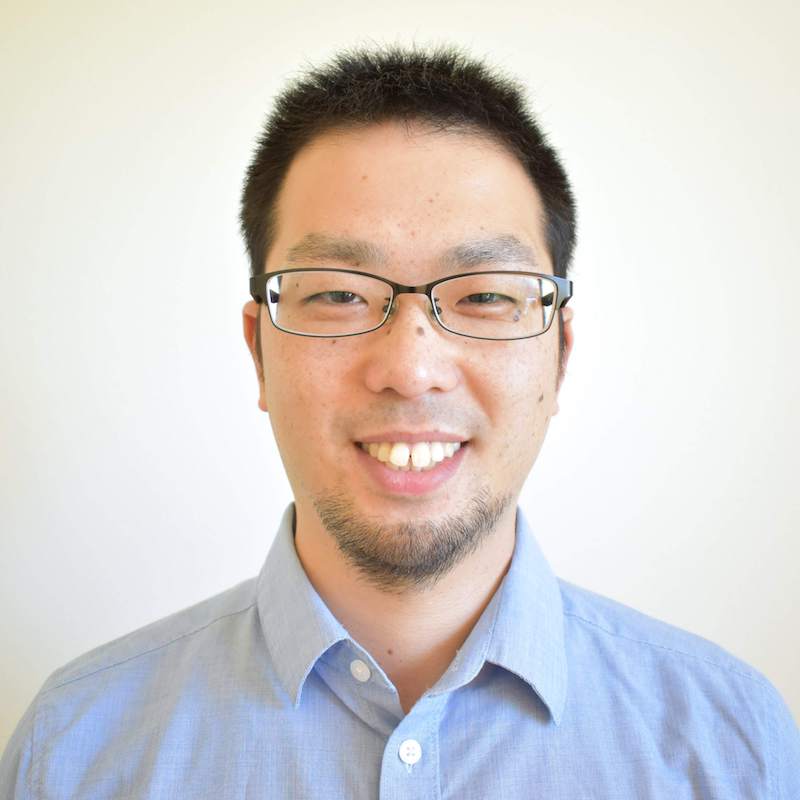
Genya Ishigaki is an Assistant Professor in the Department of Computer Science at San José State University's College of Science. His research focuses on network slicing, combinatorial optimization, and reinforcement learning, addressing resource allocation challenges in next-generation telecommunications networks. Ph.D. in Computer Science, The University of Texas at Dallas, 2021 M.S. in Computer Science, The University of Texas at Dallas, 2021 M.S. in Engineering, Soka University, Japan, 2016 B.S. in Engineering, Soka University, Japan, 2014 Dr. Ishigaki's work explores adaptive network control through machine learning and combinatorial optimization, including elastic network slices , explainable AI , and federated learning . His research addresses critical tradeoffs in resource utilization versus capacity reservation for future demands. Recent publications demonstrate his focus on network automation (2025), information diffusion (2025), federated learning platforms (2024), and DDoS attack detection (2024). Articles span network security , AI-driven optimization , and social network dynamics . NSF Student Travel Grant (2019) Shigeta Education Foundation Ph.D. Scholarship (2019-2021) Outstanding TA Award (2019) JASSO Ph.D. Scholarship (2016-2019) NEC C&C Foundation Travel Grant (2015) He leads the Interconnect Lab, which investigates accountability in autonomous network operations and edge computing-oriented federated learning. His grants include SJSU's RSCA Seed Grant (2022-2023) and University Grant Academy Award (2022).
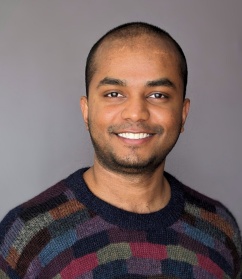
Dr. Amir K. Miri is an Assistant Professor in the Department of Biomedical Engineering at New Jersey Institute of Technology (NJIT) and Director of the Advanced Biofabrication Lab. His work focuses on additive manufacturing for biomedical applications, particularly bioprinting technologies for tissue regeneration and disease modeling. After receiving his PhD in Mechanical Engineering from McGill University (2013) and completing postdoctoral training at the MIT-Harvard Division of Health Sciences and Technology, he began his academic career at Rowan University before joining NJIT. PhD, Mechanical Engineering, McGill University (2013) MSc, Mechanical Engineering, Sharif University of Technology (2007) BSc, Mechanical Engineering, Iran University of Science and Technology (2005) Dr. Miri's research spans advanced bioprinting platforms, including multi-axial extrusion, handheld printers, and digital light projection systems. His work emphasizes the development of biomimetic models for cancer, vocal fold tissue, and vascular systems, with a particular focus on microfluidic integration and material optimization for bioprinting. He has pioneered low-cost prototyping solutions for resource-limited settings and explored the role of extracellular matrix mechanics in cellular behavior. Key trends in his publications include 3D bioprinting for tumor modeling, microfluidic device applications in drug screening, and the use of hydrogels like GelMA in cancer research. His group has also advanced acoustic metasurface technology for biomedical wave manipulation and investigated the interplay between biomaterial rheology and bioprinting resolution. Dr. Miri leads a research team at NJIT focused on biofabrication and microfluidics, though specific student advisees are not listed in the provided information. His lab emphasizes interdisciplinary collaboration, particularly in the development of multi-material and multi-scale tissue constructs.
Professor Farookh Hussain is a distinguished academic at the School of Computer Science , University of Technology Sydney , specializing in Artificial Intelligence , Cloud Computing , and Software Engineering . His research spans diverse sectors including agriculture, manufacturing, healthcare, and transportation. Affiliated with the Australian Artificial Intelligence Institute (AAII) , he leads impactful work in business intelligence and carbon credit systems. Key research areas: AI applications, blockchain for provenance, carbon credit analytics Active in Masters/PhD supervision and cloud computing education Research Highlights : Developed KACINO framework for carbon dynamics modeling Created hybrid cybersecurity frameworks for supply chain risk management Advanced chatbot dialogue breakdown solutions through systematic reviews Proposed hypercomplex knowledge graph recommenders Published extensively on carbon credit price prediction and blockchain storage methods Contributions to water demand forecasting and collaborative robotics adoption Grant Activities : Secured funding from Hampton Capital Asset Management , Innovation Connections , and Science and Industry Endowment Fund Projects include LLM-driven text-to-SQL conversion , blockchain for melanoma data , and AI for storm water management
Janarthanan Rajendran is an Assistant Professor and the Sexton Chair in Reinforcement Learning at the Faculty of Computer Science, Dalhousie University, in Halifax, Nova Scotia, Canada. He is actively involved in research, teaching, and mentoring, with a focus on deep reinforcement learning and its applications in complex, dynamic environments. Education: Postdoctoral Fellow, Mila Quebec AI Institute and University of Montreal, Canada (2023) PhD in Computer Science and Engineering (AI stream), University of Michigan, Ann Arbor, USA (2021) MTech and BTech in Electrical Engineering, Indian Institute of Technology Madras, India (2016) His research focuses on enabling machines to learn through interaction, with core interests in deep reinforcement learning, model-based RL, multi-agent systems, transfer learning, and applications in materials science and economics. He also explores the integration of large language models and foundation models into reinforcement learning frameworks. His work emphasizes adaptivity, lifelong learning, and societal implications of AI. The most recent publications show a strong trend in advancing cooperative multi-agent systems, developing adaptive and memory-efficient RL methods, and applying RL to real-world challenges such as crystal design and dynamic pricing. His research bridges theoretical innovation with practical application, often in interdisciplinary contexts. Scientific Awards: Sexton Chair in Reinforcement Learning Dr. Rajendran is actively involved in mentoring graduate students and fostering an inclusive research environment. He is currently recruiting PhD and MCS students at Dalhousie University. He has no formal grants listed in the text, but his research chair and active publication record suggest strong funding support. He is also engaged in the broader AI community, having organized and participated in major conferences such as the Atlantic Canada AI Summit and NeurIPS. Labs and Research Groups: He leads a research group focused on deep reinforcement learning at Dalhousie University, working on topics including model-based RL, off-policy learning, and leveraging external knowledge sources. The group emphasizes inclusivity and supports underrepresented groups in computer science research.
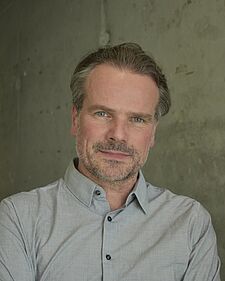
Professor Mark Levine is a leading figure in social psychology at Lancaster University , affiliated with the Department of Psychology and multiple interdisciplinary research centers including Security Lancaster (Behavioural Science) , Cyber Security Research Centre (Psychology) , Data Science Institute , and Social Processes . His research lies at the intersection of psychology and technology, focusing on social identity, group dynamics, and prosocial behavior in public and digital environments. His research interests include bystander intervention, violence prevention, urban resilience, cybersecurity, emergency response, public safety, and the role of technology in shaping human behavior. He employs diverse methodologies such as virtual reality, CCTV analysis, smartphone data collection, and computational text analysis. His work is highly applied, informing policy and practice in policing, emergency services, and community safety. The trends in his recent publications reflect a strong interdisciplinary focus, combining social psychology with computer science, criminology, and urban studies. His articles frequently analyze real-world behavioral data from public spaces and digital environments, emphasizing the protective role of group identity in emergencies and the feasibility of technological interventions for societal challenges. Scientific grants and projects he has led include: REASON: Resilient Autonomous Socio-cyber-physical agents (£3.3M, EPSRC) RBOC Network+: Urban resilience in 2050 (£2.25M, EPSRC) Challenging the Bystander Effect via Documentary Film (A$356K, ARC) STRETCH: Technology-enhanced support for older adults (£1.3M, EPSRC) “Being There”: Humans and Robots in Public Space (£2.4M, EPSRC) Advising and grants : He supervises 7 postgraduate research students and has secured over £15 million in research funding from EPSRC, ESRC, DSTL, NCSC, Home Office, and international bodies. He advises government departments, police forces, and city councils on public safety and prosocial behavior. His collaborative work extends to creative industries and third-sector organizations like AGE-UK Exeter. Research groups and collaborations : He is deeply embedded in interdisciplinary networks, contributing to projects involving computer scientists, roboticists, software engineers, and HCI researchers. His affiliations with Security Lancaster and the Data Science Institute reflect his central role in socio-technical research at Lancaster.
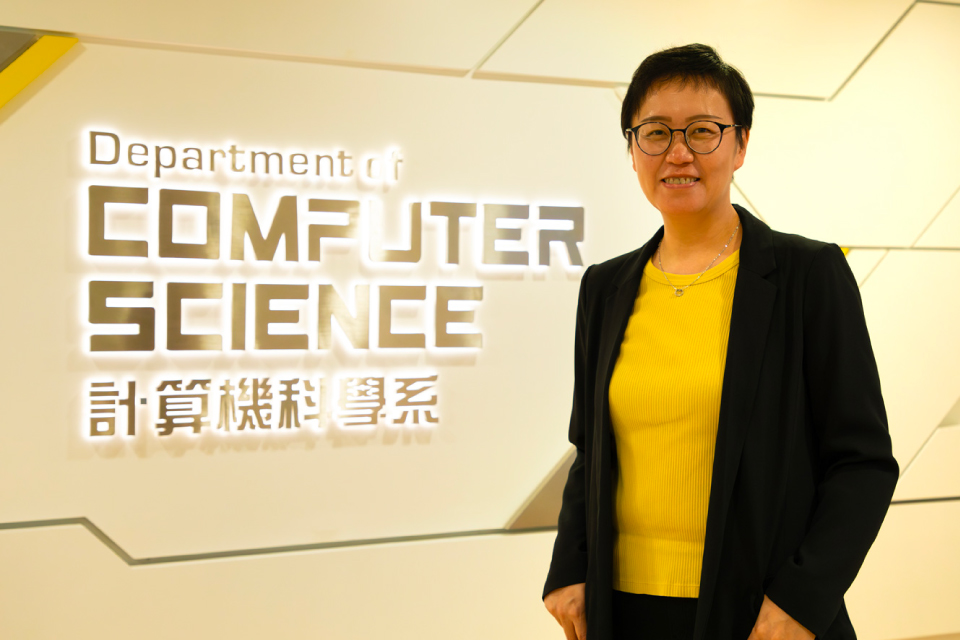
Professor Li Chen is a full Professor and Associate Head (Research) in the Department of Computer Science at Hong Kong Baptist University (HKBU), with an affiliate appointment at the Academy of Wellness and Human Development. She leads the Positive Intelligence Lab , focusing on intelligent technologies for human well-being. Her research spans conversational AI, explainable AI, recommender systems, and human-computer interaction. Education: PhD in Computer Science, Swiss Federal Institute of Technology in Lausanne (EPFL), Switzerland (Nominee for Best PhD Thesis Award) Master in Computer Software and Theory, Peking University, China Bachelor in Computer Science, Peking University, China Her research interests revolve around personalized conversational and explainable AI, with applications in entertainment, education, e-commerce, and mental well-being. She has published over 150 papers in top venues including ACM TOIS, IJHCS, CHI, SIGIR, AAAI, RecSys, and UMAP . Her work has been recognized with awards such as the RecSys Best Student Paper Award (2024), CHI Honourable Mention (2022), and multiple best paper awards at UMAP and UMUAI. The most recent publications reflect a strong trend toward fair, explainable, and user-centric recommender systems , with increasing integration of large language models , mental health applications , and conversational agents . Her research emphasizes user feedback, negative sampling techniques, and evaluation frameworks grounded in real user behavior. Scientific Awards & Recognition: President’s Award for Outstanding Performance in Teaching (Individual), HKBU (2024/25) President’s Award for Outstanding Performance in Research Supervision (2022/23) World’s Top 2% Most-Cited Scientists, Stanford University (2021–2024) ACM Senior Member (2015) RecSys’24 Best Student Paper Award CHI’22 Honourable Mention Award UMAP’20 Best Student Paper Award UMUAI 2018 Best Paper Award THE Awards Asia 2021 Excellence and Innovation in the Arts (Co-I) Professor Chen is actively involved in mentoring PhD and Master’s students such as Wanling Cai and Yuhan Zhao, who have co-authored award-winning papers. She has secured research funding through grants like the HKBU IRCMS Project. Her editorial leadership includes serving as Co-Editor-in-Chief of ACM Transactions on Recommender Systems (TORS) , Associate Editor for ACM TiiS , and Editorial Board Member for UMUAI . She has chaired major conferences including ACM RecSys’23 (General Co-Chair), RecSys’20 (Program Co-Chair), and UMAP’18 (Program Co-Chair). She leads the Positive Intelligence Lab , which conducts interdisciplinary research on AI for well-being. The lab has developed datasets like the Intent Annotation of Recommendation Dialogue (IARD) and focuses on user-centric AI design, mental health chatbots, and personalized recommendation interfaces.
Dave Bennett is a Professor in the Department of Geography at the University of Iowa, within the College of Liberal Arts and Sciences. His work bridges geographic information science, environmental policy, and complex systems theory, with a strong emphasis on interdisciplinary research. He is actively involved in teaching and mentoring graduate students, offering courses in GIS, field methods, and environmental applications. Research Interests: His research lies at the intersection of technology, policy, and science, focusing on geographic information science (GIScience) and environmental decision-making. He is particularly interested in human-environment interactions and how complex, nonlinear responses emerge from system interactions. Much of his work is framed within complexity theory and employs agent-based modeling, evolutionary algorithms, and cyberinfrastructure to study land use change, watershed management, and disaster response. Publication Trends: His most recent publications (2010–2016) demonstrate a consistent focus on agent-based modeling, parallel computing, land use dynamics, and socio-environmental systems. These works often integrate high-performance computing and service-oriented architectures to simulate complex spatial processes. Key themes include resilience, opinion diffusion, mobility, and provenance in geosimulation. Scientific Awards: No specific awards or fellowships are mentioned in the provided text. Advising and Grants: Dave Bennett has advised numerous PhD and Master’s students, including current advisees Patrick Bitterman, Haoyi Xiong, Shuang Xu, and James Madden. He has served as principal investigator or senior personnel on multiple major grants from the NSF, USDA, NIH, and NGA, totaling millions of dollars. Key projects include 'People, Water, and Climate,' 'Geoinformatics for Environmental and Energy Modeling and Prediction (GEEMaP),' and 'Understanding Water-Human Dynamics with Intelligent Digital Watersheds.' Labs and Teams: While no specific lab name is mentioned, his research is conducted within multidisciplinary teams and leverages cyberinfrastructure platforms at the University of Iowa. His work often involves collaboration with engineers, ecologists, and social scientists, particularly through NSF-funded interdisciplinary programs.
Prof. Dr.-Ing. Jörg Rainer Noennig is Professor of Digital City Science at HafenCity University Hamburg (HCU) and Head of the WISSENSARCHITEKTUR Laboratory of Knowledge Architecture at TU Dresden. With a background in architecture (Bauhaus Universität Weimar, Waseda University Tokyo), he practiced in Tokyo before transitioning to academia. He has held visiting professorships in Italy, France, Russia, and Japan. His research focuses on digital urban systems , including smart cities, participatory planning, and knowledge architecture. He explores AI applications in urban design, agent-based simulations for mobility, and transdisciplinary frameworks for sustainability. Recent projects include TOSCA (open-source urban tools), SmartFly (eVTOL integration), and MICADO (migrant integration platforms). Publications emphasize data-driven urban methodologies , spanning synthetic data generation, pedestrian modeling, and sustainable infrastructure design. His work integrates materials science (e.g., auxetic structures) with digital twins for resilient cities. Awards include the Grand Prix of the European Association for Architectural Education (EAAE). He leads Hamburg’s Digital City Science team and coordinates international collaborations, including Indo-German urban development projects. He directs the WISSENSARCHITEKTUR Laboratory , focusing on knowledge synthesis for urban innovation. Courses taught at HCU include 'Knowledge Architecture', 'Digital City Science', and 'Smart City Technologies'.
Ozan Emre UFACIK is an Assistant Professor in the Department of Business Administration at Istanbul Beykent University, Faculty of Economics and Administrative Sciences. He has been actively contributing to academia since 2020, progressing from Research Assistant to Doctor Lecturer and currently holding a faculty position. His email is emreufacik@beykent.edu.tr, and he maintains an ORCID profile (0000-0002-7982-6440), reflecting his active scholarly engagement. His research interests span a wide range of topics in management and organizational sciences, including Leadership (particularly toxic and paternalistic forms), Organizational Behavior , Marketing Ethics , Sustainability in Business , Family Businesses , and Bibliometric Analysis . His work often combines empirical case studies with quantitative and analytical methods, especially in Turkish business contexts. The 15 most recent publications (limited to available data) show a consistent trend in leadership studies, sustainability, and ethical business practices. His research frequently employs bibliometric and case study methodologies, published in both international and national refereed journals. Topics such as toxic leadership , agency theory , and sustainable urbanization reflect his interdisciplinary approach to business administration. He has supervised at least one master’s student, Osman Askin, whose 2024 thesis focused on paternalistic leadership. While no specific grants are mentioned in the text, his consistent publication record across multiple journals indexed in TR INDEX, DOAJ, EBSCO, and others indicates active research funding or institutional support. His work appears in journals such as Journal of Current Marketing Approaches and Research , Eurasian Journal of Social and Economic Research , and Erciyes University Social Sciences Institute Journal . Dr. UFACIK has contributed to academic discourse through nationally and internationally refereed articles, with a strong emphasis on practical implications for Turkish businesses and organizations. His recent works suggest continued focus on leadership dynamics and sustainability challenges in SMEs and family firms.
Yan Zhang is a scientific leader at Meshcapade and a guest lecturer at ETH Zurich's Computer Vision and Learning Group (VLG). He previously served as a postdoctoral researcher at ETH Zurich (2020-2023) and research intern at Max Planck Institute for Intelligent Systems (2018-2020). His research focuses on generative human foundation models, human motion and behavior synthesis, 3D human perception, and applications in AR/VR, embodied AI, and interactive avatars. He has pioneered methods for scene-conditioned motion generation, contact-aware reconstruction, and egocentric interaction modeling. His recent publications (2025-2020) span Real-time motor models for avatars (PRIMAL, ICCV'25) Diffusion architectures for motion (RoHM, CVPR'24) Scene-population algorithms (Odysseus, CVPR'22) Physics-aware reconstruction (EgoHMR, ICCV'23) Whole-body grasping models (SAGA, ECCV'22) Multi-modal datasets (EgoBody, ECCV'22) Scientific recognition includes the Qualcomm Innovative Fellowship Europe 2023 . He organized workshops at CVPR'25, ECCV'24, and ECCV'22, and served on senior program committees (AAAI'26) and area chairs (CVPR'25). As co-supervisor, he mentored student projects on diffusion-based hand motion capture, 3D pose estimation, body-scene interaction, and mixed reality navigation at ETH Zurich (2020-2023). His work bridges computer vision, machine learning, and computer graphics to advance human-centric AI systems.
Ida Scheel is an Associate Professor in Statistics and Data Science at the University of Oslo , Department of Mathematics. She specializes in Bayesian hierarchical modeling, recommendation systems, and stochastic processes on networks. Her research interests include: Bayesian statistics and model diagnostics Data science applications in environmental and health domains Network-based machine learning Uncertainty quantification in predictive modeling Recent publication trends show a focus on Bayesian model validation, machine learning for product adoption prediction, and real-estate analytics. She contributes to interdisciplinary projects like BigInsight and CELS . Scientific awards : Sverdrup Prize for Young Researchers (2011) Advising : Supervised 8 PhD students (main/co-supervisor) in areas spanning Bayesian causal effects, neural network survival analysis, and model conflict detection. Key grants include participation in the Data Science@UiO and Integreat projects. Labs/teams : Active member of the Center for Computational Inference in Evolutionary Life Science (CELS) and the BigInsight center.
Dr. Ninghao Liu is an Assistant Professor of Computer Science in the School of Computing at the University of Georgia, part of the Franklin College of Arts & Sciences - Division of Physical & Mathematical Sciences. He holds a Ph.D. in Computer Science from Texas A&M University (2021) and an M.S. in Electrical and Computer Engineering from Georgia Institute of Technology (2015). His research focuses on Explainable AI (XAI), Graph Mining, Model Fairness, Recommender Systems, and Outlier Detection, with notable contributions to foundational AI techniques and their applications in education, healthcare, and environmental sciences. Dr. Liu has secured significant funding, including a three-year NSF grant (2022–2025) for 'Graph-Oriented Usable Interpretation' and a five-year $10 million grant from the U.S. Department of Education (2024–2029) for the GenAI Empowered National Initiative for STEM+C Education. He has also been honored with the Outstanding Paper Award at ICML 2022, Best Paper Award Shortlist at WWW 2019, and other distinctions. His work emphasizes interpretable machine learning, graph neural networks, and addressing algorithmic bias. He collaborates across disciplines, contributing to radiology AI, climate-smart forestry, and pandemic prediction through knowledge-enhanced deep learning. His lab is based at the Boyd Research and Education Center, where he advances research in trustworthy AI systems and data-centric solutions.
Andrea Appolloni is an Associate Professor at the Department of Management and Law, University of Rome Tor Vergata. His academic career focuses on Management with emphasis on Sustainable Supply Chain Management , Digital Transformation , and Circular Economy . His research explores the intersection of technological innovation and sustainability, particularly through topics like AI in Logistics , Green Procurement , and Policy Optimization . Publications span both theoretical frameworks and empirical studies in China, Italy, and Malaysia, with a strong focus on environmental impact and organizational performance. Recent work includes digital twin applications for human-AI collaboration, blockchain integration in sustainable supply chains, and analyzing barriers to circular economy adoption. His 15 most recent articles (2025-2022) demonstrate a trend toward combining Artificial Intelligence , Operations Management , and Environmental Governance .
Alice Guerrini is a Research Fellow at the Interdepartmental Center for Mind/Brain Sciences (CIMEC) at the University of Trento, specializing in infant cognitive development and neural mechanisms of social cognition. Her research focuses on infant social cognition , particularly examining how infants process communicative signals, attribute mental states, and develop theory of mind. Key methodologies include electrophysiological recordings (ERPs, theta oscillations) to investigate neural correlates of belief attribution and agent recognition in infants as young as 4 months. Her work consistently explores false belief correction , non-human agency perception , and communicative information transfer during early development. Analysis of her 2025 publications reveals a cohesive research trajectory centered on neural anticipation mechanisms in infant social cognition. All seven papers investigate how infants process communicative cues through electrophysiological markers, with particular emphasis on theta oscillations for mental state attribution and N170 responses for agent recognition. The research spans multiple international conferences including Dubrovnik Cognitive Science, CogEvo, and Lancaster Infant Development conferences. Guerrini collaborates extensively with Eugenio Parise and Giulia Mazzi , forming a core research team at CIMEC. Her work demonstrates strong integration between developmental psychology and cognitive neuroscience methodologies to uncover foundational mechanisms of human social cognition.