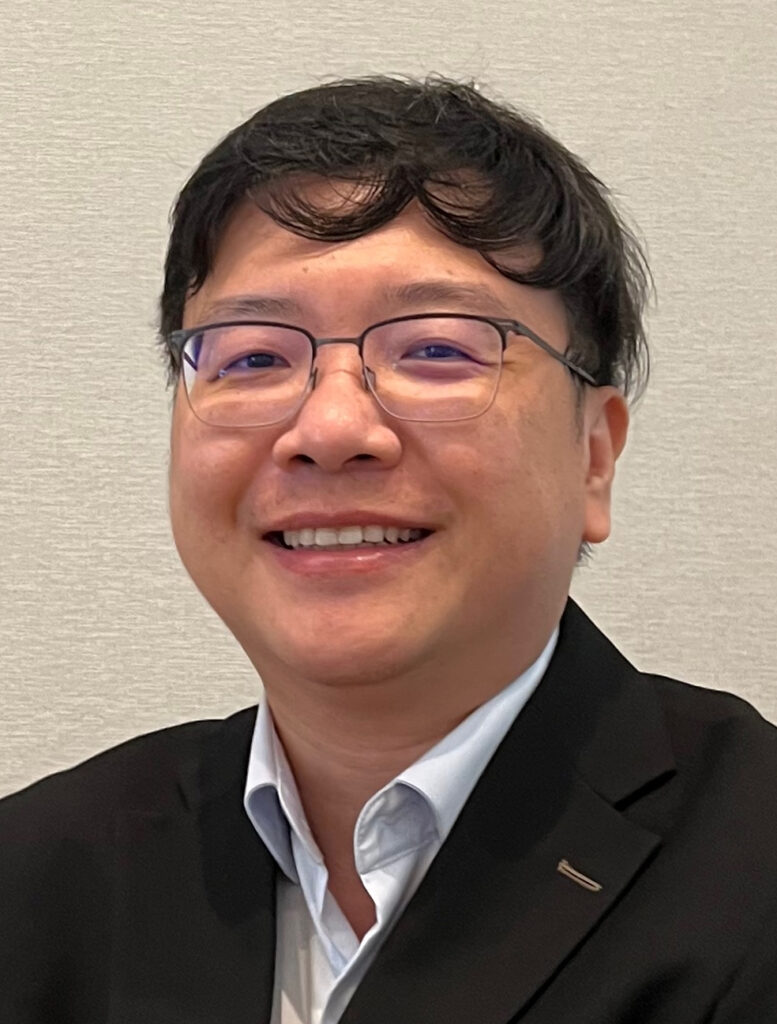
Dr. ONG Ghim Ping Raymond is an Associate Professor and Deputy Head (Research) at the Department of Civil and Environmental Engineering, National University of Singapore (NUS). He concurrently serves as Director (Operations) at the Coastal Protection and Flood Resilience Institute (CFI) Singapore. His expertise spans sustainable pavements, multimodal transport infrastructure, and urban mobility systems. Dr. Ong holds a B.Eng (Civil) with First Class Honours and a PhD from NUS, followed by postdoctoral research at Purdue University. He has authored/co-authored over 85 peer-reviewed journal articles and 120 conference papers. His research focuses on circular economy applications in infrastructure, car-lite urban design, and mega-projects like Tuas Port and Changi Airport expansions. Dr. Ong actively engages in policy advisory roles, serving on international committees for ASCE, ASTM, and EASTS. He has received prestigious awards including the Alfred Noble Prize (ASCE) and Takeuchi Yoshio Award (OCDI). His teaching accolades include multiple NUS Faculty of Engineering commendations. He advises on critical infrastructure projects for agencies like Changi Airport Group and Defence Science and Technology Agency. Dr. Ong frequently contributes to public discourse on transport and urban planning via media interviews and policy consultations.
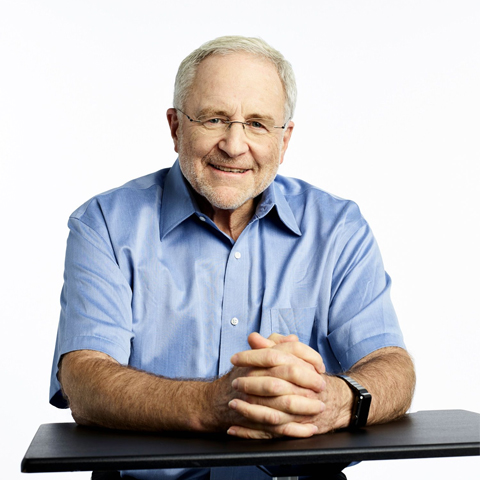
Moshe E. Ben-Akiva is the Edmund K Turner Professor at the Massachusetts Institute of Technology (MIT), affiliated with the School of Engineering and the Department of Civil and Environmental Engineering. He holds a B.S. from Technion-Israel Institute of Technology (1968), and M.S. and Ph.D. degrees in transportation systems from MIT (1971, 1973). His research focuses on transportation systems analysis, intelligent transportation systems, demand modeling, econometrics, and infrastructure management. He has been recognized with prestigious awards, including election to the National Academy of Engineering (2025) for contributions to transportation systems modeling and demand analysis. His work spans theoretical and applied domains, including agent-based microsimulation for freight logistics, tradable credit schemes for congestion management, and behavioral dimensions of transport decarbonization. Ben-Akiva collaborates with industry and policymakers to design sustainable mobility solutions. His notable publications include foundational texts on discrete choice analysis and stated preference elicitation. He advises on transportation policy, urban planning, and emerging mobility technologies such as automated vehicles and urban air mobility. Current research explores impacts of automated mobility-on-demand systems, real-time tolling strategies, and e-commerce delivery demand modeling. His team develops tools like SimMobility Freight, an agent-based urban freight simulator. He remains active in teaching, focusing on demand modeling and econometrics courses at MIT.
Jonathan Levine is a Professor of Urban and Regional Planning at the University of Michigan's Taubman College of Architecture and Urban Planning, where he has been faculty since 1991. His work focuses on transportation planning, housing and equitable development, and land use and environmental planning, with a particular emphasis on shifting from mobility-based to accessibility-based planning paradigms. Levine's educational background includes: Ph.D. in City and Regional Planning from the University of California, Berkeley M.C.P. in City and Regional Planning from the University of California, Berkeley M.S. in Engineering (Civil Engineering-Transportation focus) from the University of California, Berkeley B.S. in Political Economy of Natural Resources from the University of California, Berkeley His research centers on the potential and rationales for policy reform in transportation and land use. Levine argues that a shift in the transportation and land-use planning paradigm from a mobility to an accessibility basis is compelled by transportation theory and would be transformative to planning practices. His current work includes sponsored projects and the book "From Mobility to Accessibility: Transforming Urban Transportation and Land-Use Planning" (Cornell University Press, 2019), co-authored with Joe Grengs and Louis Merlin. He previously authored "Zoned Out: Regulation, Markets, and Choices in Transportation and Metropolitan Land Use" (Resources for the Future, 2006), which argued for policy reform based on expanding households' effective range of choices. Levine's recent publications demonstrate a clear trend toward accessibility-based evaluation of transportation systems and land-use planning. His articles explore topics such as comparing bus rapid transit and light rail, project-level accessibility analysis, overcoming the last-mile problem, and the effects of automated transit systems. His work consistently challenges traditional transportation planning paradigms and advocates for approaches that prioritize access to destinations rather than mere mobility. Levine's contributions to the field have been recognized with several prestigious awards: 2010 Chester Rapkin Award for best paper in the Journal of Planning Education and Research 2011 Residential Fellowship at the Rockefeller Foundation Center in Bellagio, Italy 2001 Excellence in Urban Policy Scholarship Award from the Association of Collegiate Schools of Planning and U.S. Department of Housing and Urban Development 1996 Best of Association of Collegiate Schools of Planning Award Levine has led significant research projects including Implementation of Accessibility-Based Evaluation for Transportation and Land-Use Planning funded by NEXTRANS, Sustainable Transportation for a 3rd Century addressing the last mile problem, and Accessibility Evaluation from Laboratory to Practice. His teaching portfolio includes Transportation and Land-Use Planning, Public Economics for Urban Planning, Research Design, and the MUP Capstone studio, where he guides students through real-world planning challenges. As a thought leader in urban planning, Levine regularly contributes to public discourse on zoning policies, housing diversity, and transportation planning. He has been featured in numerous media outlets discussing how land use policies impact sustainability, affordability, and racial justice, emphasizing that "zoning is behind all of it, and is not only the cause, but exacerbates it." His insights on the historical role of single-family zoning in perpetuating racial segregation have been particularly influential in contemporary housing policy debates.
Anders Karlström is a Professor at KTH Royal Institute of Technology, specializing in Transport Modelling and Economics. His research focuses on sustainable transportation systems, emissions reduction, and energy efficiency. Key interests include activity-based modelling, dynamic discrete choice frameworks, and policy analysis for urban mobility. He has contributed to studies on travel behavior, infrastructure planning, and environmental impacts of transport systems across multiple international cities. His work integrates advanced methodologies such as recursive logit models, spatial regression, and machine learning for predictive analytics. Notable research areas involve evaluating weather variability effects on travel patterns, optimizing traffic state estimation with sensor data, and developing scenario-based models for future employment growth. Karlström collaborates with industries to enhance the competitiveness of sustainable transport solutions globally.
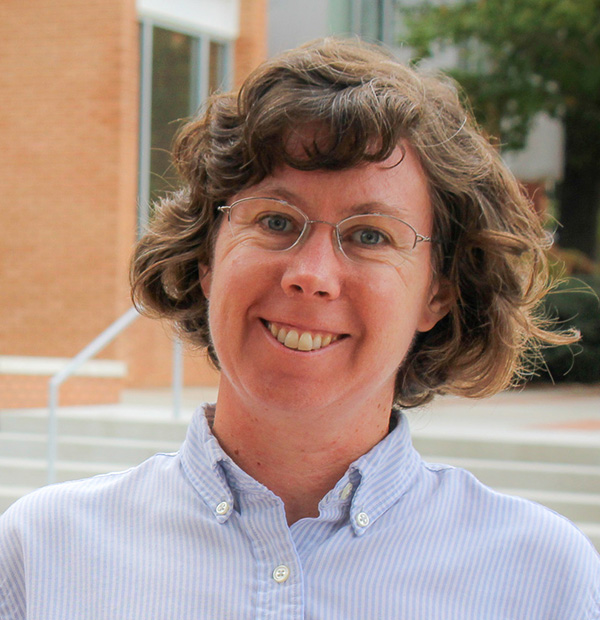
Dr. XiaoYue Cathy Liu is an Associate Professor in the Department of Civil & Environmental Engineering at the University of Utah. She holds a PhD in Transportation Engineering from the University of Washington and advanced degrees in Transportation Planning and Electronics Engineering. Her research focuses on sustainable transportation systems, shared mobility, public transit optimization, managed lanes, and intelligent transportation systems. She actively serves on committees including the Transportation Research Board's Highway Capacity Quality of Service (HCQS) Committee and chairs its Technology Transfer Subcommittee. She also advises the Utah Model Advisory Committee and previously served on Salt Lake City’s Transportation Advisory Board. Dr. Liu is a licensed professional engineer in Utah. Education: PhD, Transportation Engineering, University of Washington (2013) MA, Transportation Planning & Management, Texas Southern University BS, Electronics & Electrical Engineering, Beijing Jiaotong University Graduate Certificate, Global Trade & Logistics, University of Washington (2011) Research Interests: Electric vehicle infrastructure and charging networks Smart transportation systems and agent-based modeling GIS-based asset management for transportation infrastructure Snowplowing operations optimization and winter maintenance Managed lanes and high-occupancy toll (HOT) lane analysis Public transit equity and accessibility Her recent publications emphasize data-driven approaches to transportation challenges, including EV demand forecasting, drone delivery networks, and resilience in interdependent transit systems. She collaborates on projects addressing Utah’s unique transportation needs, such as optimizing snowplow routes and integrating renewable energy into public transport systems. Professional Contributions: Board member, Utah Model Advisory Committee Former Chair, Salt Lake City Transportation Advisory Board (2013-2016) TRB Managed Lane Committee member TRB Transit Capacity & Quality of Service (TCQS) Committee member (2016-2019) Dr. Liu’s work bridges transportation engineering with computational methods, focusing on equity, sustainability, and operational efficiency. She leads research initiatives involving large-scale modeling, geospatial analytics, and interdisciplinary solutions for modern mobility challenges.
Hua Cai is the Thomas and Jane Schmidt Rising Star Associate Professor at Purdue University's Edwardson School of Industrial Engineering with a joint appointment in Environmental & Ecological Engineering. She holds a PhD in Environmental Engineering & Natural Resources from the University of Michigan, an MS in Environmental Engineering from Penn State, and a BS from Tsinghua University. Her research integrates operations research and production systems to address sustainability challenges, with focus areas including: Environmental implications of emerging technologies Urban sustainability modeling and infrastructure resilience Industrial ecology and complex adaptive systems Sustainable transportation and mobility systems Recent publications demonstrate strong focus on sustainable transportation systems, with extensive analysis of shared mobility patterns (bike/e-scooter systems), autonomous vehicle impacts, and microgrid resilience. Her work consistently applies advanced computational methods including reinforcement learning, agent-based modeling, and spatiotemporal analysis to urban sustainability challenges. Dr. Cai has received recognition including the Thomas and Jane Schmidt Rising Star Professorship for her contributions to sustainable systems engineering. She leads research on renewable energy integration in transportation infrastructure and advises projects on climate-resilient urban systems.
Gregory D. Erhardt is an Associate Professor of Civil Engineering at the University of Kentucky and serves as Associate Director of the T-SCORE Center, a multi-university consortium advancing public transit strategies. He holds a PhD from University College London’s Centre for Advanced Spatial Analysis, with prior experience in transportation planning across public and private sectors. His research focuses on transportation forecasting, big data applications, and evidence-based policy decisions, particularly addressing the impacts of emerging mobility technologies like ride-hailing on urban systems. Erhardt’s work emphasizes improving forecast accuracy and advocating for gender equity in engineering. He has been recognized with awards such as the Transportation Research Board’s Certificate of Appreciation and the Chan Wui & Yunyin Rising Star Fellowship. Education: PhD (University College London), M.S. (Northwestern University), B.S. (Cornell University). His research integrates activity-based travel models with big data to evaluate infrastructure investments and mobility trends. Key projects include analyzing public transit ridership decline, ride-hailing effects on congestion, and TNC impacts on urban transportation systems. Current initiatives include developing multi-agent simulation frameworks for on-demand transit systems. As a Hans Fischer Senior Fellow at the TUM Institute for Advanced Study, he collaborates on travel behavior modeling. His advocacy for diversity includes leading 'Advocates and Allies' training to promote gender equity in engineering. Erhardt’s publications span journals like Transportation Research Part A and Science Advances , with a focus on policy-relevant transportation analytics.
Anton Rozhkov is an Industry Assistant Professor and Director of the M.S. in Applied Urban Science and Informatics Program at the Center for Urban Science and Progress (CUSP) at New York University (NYU) Tandon School of Engineering. His work focuses on applying geospatial tools, modeling techniques, and data science to address complex challenges in urban environments, with particular emphasis on infrastructure planning and city design. Dr. Rozhkov earned his Ph.D. in Urban Planning and Policy from the University of Illinois Chicago, where his research centered on decentralized and renewable energy systems in urban contexts through a complex systems approach. Prior to his doctoral studies, he received an M.S./B.S. in Engineering in Land Cadaster from the State University of Land Use Planning in Moscow, Russia, and worked as a senior specialist in the Russian power grid sector with "Rosseti" Group of Companies. His research interests span the application of complex systems, data science, and spatial analytics to solve urban challenges, particularly focusing on how data-driven policies and new technologies can transform infrastructure planning and city design. Dr. Rozhkov employs methods including causal loop diagrams, system dynamics, and agent-based modeling to understand how decentralized energy systems interact with existing power grids and contribute to sustainable urban development. He has published extensively on urban transportation, energy systems, and census data analysis, with a notable focus on Chicago's urban landscape and Illinois state initiatives. Dr. Rozhkov has been actively involved in several significant research projects including an empirical investigation into affordable transit-oriented development in California sponsored by the California State University Transportation Consortium, the Sustainable Urban-Regional Modeling Network project funded by the Illinois Innovation Network, and the Census 2020 Map-The-Count project with the Illinois Department of Human Services which developed predictive models for census response rates and a GIS platform for reporting outreach activities. Ph.D. in Urban Planning and Policy, University of Illinois Chicago M.S./B.S. in Engineering in Land Cadaster, State University of Land Use Planning (Moscow, Russia) His teaching portfolio includes courses on geographic information systems (GIS), advanced spatial analysis, decision modeling, and machine learning for cities. Dr. Rozhkov emphasizes not just understanding urban trends but exploring the "why" behind these trends to develop sustainable solutions. His recent publications (2020-2025) demonstrate a consistent research trajectory examining the complex interrelationships between urban infrastructure systems, particularly focusing on energy, transportation, and spatial patterns through sophisticated analytical methods. Outside of his academic work, Dr. Rozhkov is passionate about urban and landscape photography, traveling, running, snowboarding, and playing guitar. He was born and raised in Balashikha, a city in the Moscow suburbs in Russia, and maintains a gallery of his photographic work from various global locations.
Dr. Pamela Murray-Tuite is a Professor of Civil Engineering at Clemson University's College of Engineering, Computing and Applied Sciences. Her work bridges transportation systems, disaster resilience, and emergency response modeling. Education: B.S. (1998), M.S. (1999), and Ph.D. (2003) in Civil Engineering from the University of Texas at Austin and Duke University Teaching: Courses include CE 3110 Transportation Engineering and CE 8930 Mathematical Modeling for Civil Infrastructure Systems Analysis Her research focuses on transportation resilience , with emphasis on evacuation modeling, emergency response, and infrastructure interdependence. She explores the impact of disasters on mobility patterns, utilizing mathematical modeling and simulation tools to enhance urban systems' robustness. The 15 most recent articles span hurricane evacuation behavior, agent-based modeling, and infrastructure resilience under climate change. Keywords include transportation systems, disaster management, and behavioral modeling, while subfields cover evacuation routing, network analysis, and risk perception dynamics. Dr. Murray-Tuite's work integrates statistical methods with transportation policy, addressing challenges in both natural disasters and public sector disruptions. Her contact details include office location (210 Lowry Hall) and phone (864-656-3802).
Xiaolei Guo is a Professor of Management Science at the Odette School of Business, University of Windsor. His expertise spans transportation systems, supply chain optimization, and infrastructure pricing strategies. He holds a Ph.D. in Transportation from the Hong Kong University of Science and Technology (2008) and a B.A. in Hydraulic Engineering from Tsinghua University (2004). His research focuses on congestion pricing mechanisms, transportation network modeling, and toll road economics. Notable areas include optimizing toll designs under uncertainty, analyzing autonomous vehicle impacts on ridesharing, and evaluating strategic distribution channel decisions under environmental regulations. Dr. Guo has contributed to over 30 peer-reviewed articles since 2005, exploring topics such as Braess paradox under bounded rationality, Pareto-improving congestion schemes, and profit maximization for private toll roads. His work bridges theoretical optimization with practical policy applications. He is an active member of the Canadian Transportation Research Forum (CTRF) since 2011 and the Institute for Operations Research and the Management Sciences (INFORMS) since 2009.
Dr. Ahmed F. Abdelghany is the Associate Dean for Research and Professor of Operations Management at the David O'Maley College of Business, Embry-Riddle Aeronautical University, since January 2006. He specializes in commercial airlines, airports, big data cloud computing, business analytics, and operations research models. Prior to his academic career, Dr. Abdelghany worked in enterprise optimization at United Airlines, Chicago. Education: Ph.D. in Civil Engineering (Transportation Systems) from the University of Texas at Austin (2001) Dr. Abdelghany’s research focuses on airline network planning, flight scheduling, simulation of complex transportation systems, and NextGen air traffic management. He has authored two influential books: Modeling Applications in the Airline Industry (Routledge 2010) and Airline Network Planning and Scheduling (Wiley 2018). His publications analyze airline operations, competitive dynamics, and crowd management in transportation facilities. He teaches courses like Airline Management (BA 315) and Airline Operations & Mgmnt (BA 609), and participates in industry short courses. Dr. Abdelghany contributes to research projects such as NextGen air traffic implementation, integrated airport initiatives, and benefit-cost analysis of arrival management systems. His work bridges academic theory with real-world airline and transportation challenges.
Zhenyu Yang is a Lecturer and Postdoctoral Researcher at École Polytechnique Fédérale de Lausanne (EPFL), affiliated with the College of Engineering through the Department of Civil Engineering and the Urban Transport Systems Laboratory (LUTS) . He holds a PhD in Industrial System Engineering from the National University of Singapore (2022), an M.Eng from Beijing Jiaotong University, and a Diploma in Transportation Engineering from Huazhong University of Science and Technology. PhD, Industrial System Engineering, National University of Singapore (2022) M.Eng, Beijing Jiaotong University Diploma, Transportation Engineering, Huazhong University of Science and Technology His research focuses on urban transportation network modeling , travel demand management , and traffic information provision , with a strong emphasis on handling uncertainty and optimizing shared mobility systems. Recent work explores reinforcement learning applications, vehicle-drone cooperative delivery , and dynamic incident-responsive traffic systems . His publications highlight advancements in ridesourcing algorithms , congestion pricing , and multi-modal transport regulation . As a lecturer, he teaches Transportation Economics , covering demand-supply dynamics, welfare analysis, and environmental policy in transport systems. He is affiliated with EPFL's Urban Transport Systems Laboratory (LUTS) and contributes to the SGC-ENS teaching unit.
Ravi Seshadri is an Associate Professor in the Transport Division at the Department of Technology, Management and Economics, Technical University of Denmark (DTU). His research focuses on designing equitable, efficient, and sustainable mobility solutions with a focus on fiscal instruments like congestion pricing and tradable permits, as well as emerging mobility modes such as shared and demand-responsive transit. He employs methods from transportation network equilibria, dynamic traffic assignment, and agent-based simulation. His research interests span transportation economics, urban planning, and intelligent transportation systems. Key areas include evaluating the impacts of automated mobility-on-demand systems, optimizing tolling strategies using predictive control and reinforcement learning, and integrating multi-modal transportation networks through game-theoretical frameworks. His work emphasizes real-world applications in urban freight systems, e-commerce logistics, and sustainable urban mobility policies. Recent projects include studying congestion pricing schemes via agent-based microsimulation, analyzing behavioral responses to decarbonization policies, and developing frameworks for tradable credit systems with peer-to-peer trading. He has contributed to both theoretical advancements (e.g., robust traffic assignment models) and applied tools like the SimMobility simulation platform. Ravi's research demonstrates a strong focus on bridging transportation engineering with policy analysis, using cutting-edge computational methods to address complex urban mobility challenges. His work spans academic publications, industry collaborations, and policy consultations to advance sustainable transportation systems.
Genya Ishigaki is an Assistant Professor in the Department of Computer Science at San José State University's College of Science. His research focuses on network slicing, combinatorial optimization, and reinforcement learning, addressing resource allocation challenges in next-generation telecommunications networks. Ph.D. in Computer Science, The University of Texas at Dallas, 2021 M.S. in Computer Science, The University of Texas at Dallas, 2021 M.S. in Engineering, Soka University, Japan, 2016 B.S. in Engineering, Soka University, Japan, 2014 Dr. Ishigaki's work explores adaptive network control through machine learning and combinatorial optimization, including elastic network slices , explainable AI , and federated learning . His research addresses critical tradeoffs in resource utilization versus capacity reservation for future demands. Recent publications demonstrate his focus on network automation (2025), information diffusion (2025), federated learning platforms (2024), and DDoS attack detection (2024). Articles span network security , AI-driven optimization , and social network dynamics . NSF Student Travel Grant (2019) Shigeta Education Foundation Ph.D. Scholarship (2019-2021) Outstanding TA Award (2019) JASSO Ph.D. Scholarship (2016-2019) NEC C&C Foundation Travel Grant (2015) He leads the Interconnect Lab, which investigates accountability in autonomous network operations and edge computing-oriented federated learning. His grants include SJSU's RSCA Seed Grant (2022-2023) and University Grant Academy Award (2022).
R. Jayakrishnan , a Professor in the Department of Civil and Environmental Engineering at the Samueli School of Engineering , University of California, Irvine, is a leading researcher in transportation systems engineering. Ph.D., University of Texas, Austin, Civil Engineering, 1992 M.S., University of Texas, Austin, Civil Engineering, 1987 B.S., Indian Institute of Technology, Madras, India, 1985 His research focuses on dynamic traffic assignment , urban traffic simulation , and real-time information systems to improve congested traffic corridors. He is developing advanced dynamic simulation-assignment models for urban traffic networks. Recent publications highlight his contributions to: Crowdsourced delivery optimization using decomposition heuristics Eco-driving algorithms with V2I communication Multi-furniture placement applications via augmented reality Subscription mobility services cost-benefit analysis Agent-based lane-changing coordination systems These works demonstrate his interdisciplinary approach combining transportation engineering, optimization algorithms, and emerging technologies like AR and connected vehicles.