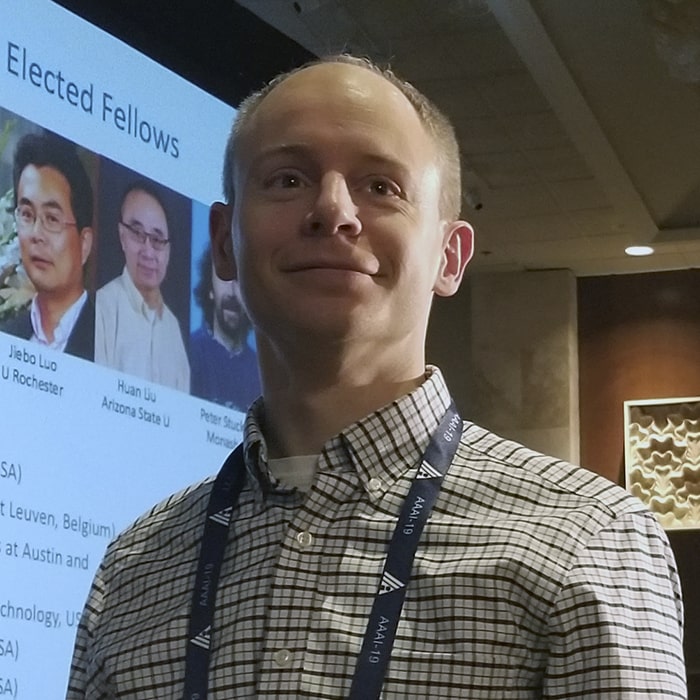
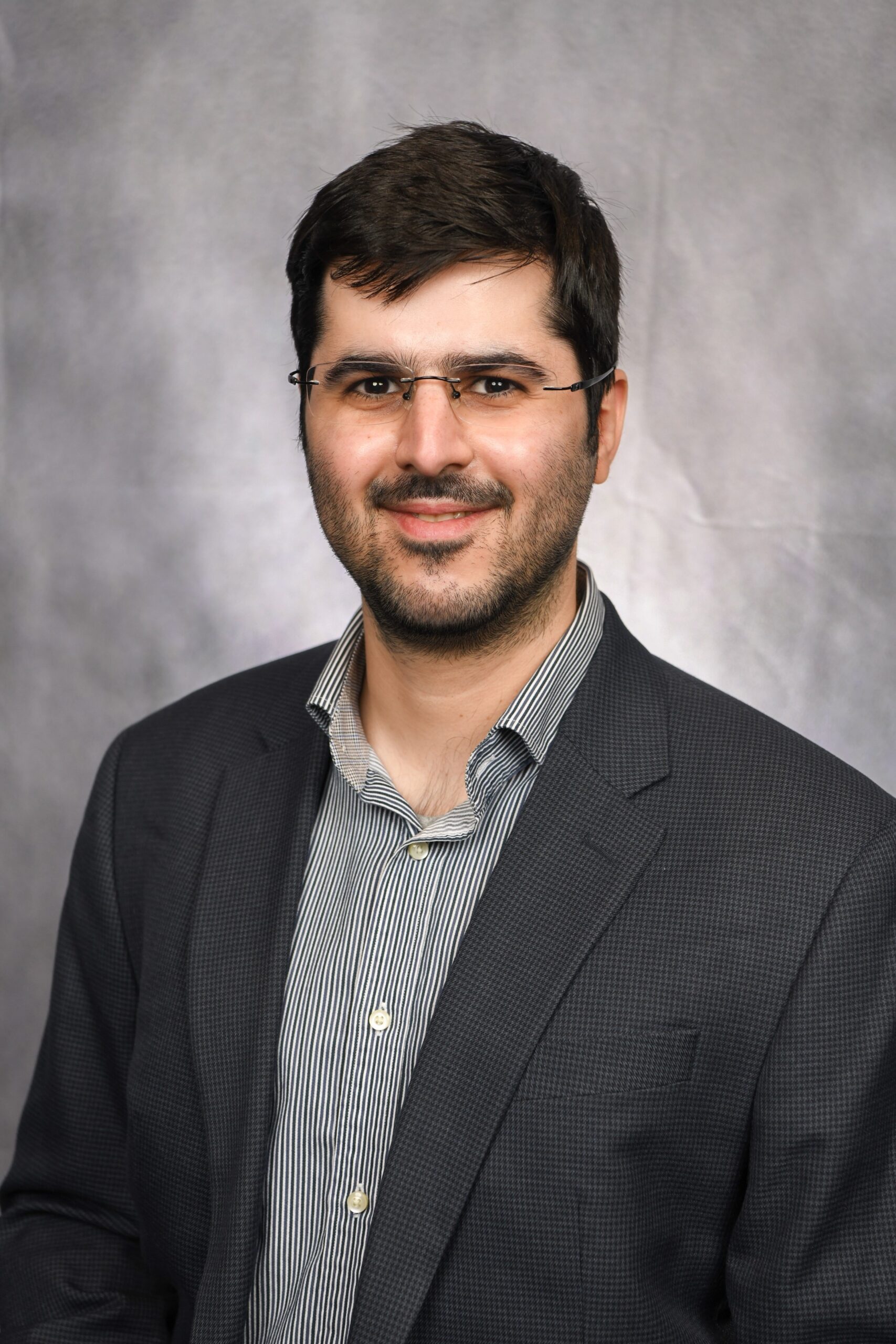
Jan de Wit is an Assistant Professor at Tilburg University's Tilburg School of Humanities and Digital Sciences (Department of Communication and Cognition). His research focuses on human-robot interaction, conversational agents, and the ethical evaluation of AI systems. He is affiliated with the Academic Collaborative Center for Digital Health & Mental Wellbeing. Key research interests include social robotics, NLP evaluation methodologies, and the psychological impacts of digital interactions. Recent work explores mood contagion in human-robot collaboration and the use of LLMs for simulated user testing. He has organized workshops like EduCUI 2024 and contributed to projects such as the scoping review on intersectionality in technology design. Notably, he received a Best Paper Award in 2019 and has collaborated with institutions on interdisciplinary research.
Pavel Albores is a Professor of Operations and Supply Chain Management and Director of the Aston Crisis Management Research Centre at Aston Business School . He served as Head of Department in the Operations and Information Management Department from 2015 to 2018. With academic appointments at Aston University since 2004 (including roles as Research Fellow, Lecturer, Senior Lecturer, and Professor), he has over 17 years of academic experience. Education : PhD in Simulation of e-business processes (University of Strathclyde, 2007) MSc in Manufacturing Management (University of Strathclyde, 2000) BSc in Chemical and Industrial Engineering (Universidad de las Americas - Puebla, 1996) Research Interests : Dr. Albores specializes in humanitarian logistics , disaster management , and supply chain simulation . His work bridges emergency response with business process optimization , focusing on mass evacuation modeling , sustainable supply chains , and digital manufacturing technologies . He has developed simulation frameworks for crisis management and blockchain applications in customer order systems. Key Projects : Served as co-investigator in the EC-funded ERGO project (€440,000) analyzing evacuation preparedness across 10 countries. Participated in ERDF-funded research (£1.2M) on low-carbon SMEs and supply chain management projects. Teaching : Leads postgraduate modules on Crisis Management , Enterprise Resource Planning , and Simulation . Has supervised 17 completed doctoral students and 8 ongoing PhD/DBA candidates. Recent Publications : His 15 most recent articles focus on humanitarian logistics optimization , sustainable intermodal transportation , blockchain-driven supply chains , and emergent technology adoption in manufacturing. These works demonstrate a consistent emphasis on multidisciplinary approaches combining operations research with real-world crisis scenarios . Scientific Recognition : Elected Fellow (2013) External Examiner for University of Strathclyde (2019–present) and Ulster University (2015–present) Professional Memberships : ACM SIGSIM Production and Operations Management Society Operational Research Society European Association of Operations Management Institution of Engineering and Technology Institute of Operations Management
Professor Jana Lasser holds a professorship in Data Analysis at the University of Graz, where she leads the Complex Social & Computational Systems research group at the interdisciplinary IDea_Lab. She serves as Associate Faculty at the Complexity Science Hub Vienna and previously held positions at Graz University of Technology as a Marie Curie Fellow and interim professor at RWTH Aachen. Her educational background includes a PhD in Physics from Georg-August-University Göttingen (2019), conducted at the Max Planck Institute for Dynamics and Self-Organization, with research on salt desert pattern formation. Her academic journey reflects a transition from geophysics to computational social science. Lasser's research centers on emergent phenomena in complex social systems, employing machine learning, natural language processing, and computational modeling. Key interests include misinformation spread on social media, counterspeech effectiveness, social media recommendation algorithms' societal impact, and the fracturing of societal understanding of honesty. Her work combines theoretical frameworks with real-world applications through agent-based simulations and large-scale text analysis. Her recent publications reveal strong thematic coherence across computational social science, with significant focus on political communication dynamics, platform governance, and methodological innovation. The 15 most recent works demonstrate increasing integration of computational methods with social theory, particularly in analyzing truth-concept evolution in political discourse and developing alternative social media architectures. ERC Starting Grant 101160928 DeSiRe for designing social media recommendation algorithms FWF standalone project P 37280-N on conspiracy theory spread netidee SCIENCE prize for digital civic innovation Marie Curie Fellowship for postdoctoral research Lasser actively supervises graduate students in computational social science, with current focus on topics related to her ERC-funded project. She leads the Survey Special Interest Group within the COST Action on Researcher Mental Health, conducting Europe's largest benchmark study on academic mental health. Her lab maintains strong collaborations with the Complexity Science Hub Vienna and international institutions.
Suzanne Lenhart is a Chancellor’s Professor of Mathematics at the University of Tennessee, Knoxville, affiliated with the College of Arts and Sciences. Her research focuses on optimal control theory applied to biological systems, including population dynamics, infectious diseases, and natural resource management. She also served as Associate Director of Education and Outreach at NIMBioS, promoting interdisciplinary research in mathematical biology. Education: PhD in Mathematics from the University of Kentucky. She has published over 250 journal articles and four books, including Optimal Control Applied to Biological Models and Mathematics for the Life Sciences . Her work emphasizes translating mathematical models into practical solutions for ecological and public health challenges. Research interests include partial differential equations, optimal control applications in epidemiology, and environmental modeling. She has secured grants from the CDC and NSF, focusing on topics like hospital-acquired infections and US-Africa collaborative research in mathematical sciences. Outreach: Directed REU programs for 15+ years, supervised 33 PhD and 36 master’s students. Serves as a faculty sponsor for AWM and SACNAS student chapters, and leads the TAPDINTO-STEM initiative to promote STEM inclusion for students with disabilities. Awards: Fellowships from AWM, AMS, AAAS, and SIAM. Recognized for leadership in advancing women in mathematics and science education.
Vincent Conitzer is a Professor in the Computer Science Department at Carnegie Mellon University, with a courtesy appointment in the Department of Philosophy. His research intersects artificial intelligence, game theory, and ethics, focusing on computational social choice, moral decision-making in AI, and mechanism design. Primary Affiliation: Computer Science Department, Carnegie Mellon University Courtesy Appointment: Department of Philosophy, Dietrich College of Humanities and Social Sciences Labs: Affiliated with the Laboratory for Symbolic and Educational Computing His work addresses game theory , ethical AI , and computational epistemology , with publications exploring moral preference elicitation, strategic behavior in automated systems, and the intersection of economics and artificial intelligence. Recent trends in his publications include game theory , AI ethics , mechanism design , and computational social choice , reflecting his focus on aligning AI systems with human values and strategic reasoning. Vincent's research spans both theoretical and applied domains, including bioethics (e.g., kidney allocation decisions), cooperative AI, and the stability of moral preferences in algorithmic systems. He is associated with the Laboratory for Symbolic and Educational Computing and the Center for Formal Epistemology , contributing to interdisciplinary projects at the interface of computer science and philosophy.
Frank Wood is an Associate Professor of Computer Science at the University of British Columbia and a Canada CIFAR AI Chair at AMII. He directs the Pacific Laboratory for Artificial Intelligence (PLAI) research group and co-founded Inverted AI, a spin-out focused on advanced simulation for autonomous vehicles. His research focuses on probabilistic programming, deep generative models, and reinforcement learning, with applications in autonomous driving, robotics, and vision. Wood teaches courses such as Machine Learning and Data Mining (CPSC 340) and Topics in Artificial Intelligence (CPSC 532W). He has been on academic leave from January to December 2025. His work integrates theoretical advancements with practical applications, including projects like PLAICraft, a large-scale embodied AI dataset. Key awards include the ICML Best Paper Honourable Mention and contributions to probabilistic programming systems like Anglican. His research group collaborates on tools such as TorchDriveEnv for autonomous driving benchmarking and explores cutting-edge methods in diffusion models and continual learning.
Dr Davood Shiri is a Lecturer in Operations Management and Decision Sciences at the Sheffield University Management School, University of Sheffield. His research focuses on online and stochastic optimization, large-scale optimization, graph/network models, healthcare/humanitarian logistics, and combinatorial optimization. He holds a PhD in Industrial Engineering and Operations Management from Koç University, Turkey, and has prior roles as an Assistant Professor at Medipol University and Bilgi University, and a postdoctoral research fellow at Koç University. Education: BSc and MSc in Industrial Engineering from Sharif University of Technology (Iran), PhD in Industrial Engineering and Operations Management from Koç University (Turkey). His teaching includes modules like MGT3010 (Applications of Operations & Supply Chain Management) and MGT137 (Analysis for Decision Making). Research interests emphasize optimization frameworks for dynamic environments, with applications in disaster response logistics, healthcare systems, and network resilience. His publications address challenges in ambulance routing during disasters, post-disaster road restoration, and algorithmic strategies for interdependent networks. Awards/Grants: No specific awards mentioned in available texts, though his work reflects competitive research funding in operations research domains. Labs/Teams: Active in the Operations Management and Decision Sciences research group at Sheffield Management School, contributing to Triple Crown-accredited programs.
Dr. Miguel Juarez is a Lecturer in Statistics at the University of Sheffield's School of Mathematical and Physical Sciences. He holds a PhD in Mathematical Sciences from Universidad de Valencia (2004), an MSc in Economics from CIDE (Mexico), and a BSc in Actuarial Sciences from ITAM (Mexico). His research focuses on Bayesian hierarchical modeling for panel/longitudinal data with applications in biology, medicine, and econometrics. Key projects include the STriTuVaD initiative for integrating computer simulations with clinical trials and developing models for super-resolution microscopy image analysis. He has contributed to advancing in silico trial methodologies through the UISS-TB simulator and works on objective Bayesian methods for non-Gaussian data. Professional activities include teaching MAS2010 Statistical Inference and Modelling. His recent work emphasizes accelerating tuberculosis vaccine development via augmented clinical trials and establishing credibility frameworks for in silico trials. He collaborates with interdisciplinary teams in systems biology and biomedical informatics. Research outputs span Bayesian statistical theory, computational epidemiology, and medical technology innovation. Notable collaborations include the Warwick Systems Biology Centre and EU-funded H2020 projects.
Suruz Miah is an Associate Professor in the Department of Electrical and Computer Engineering at Bradley University and an Adjunct Professor at the University of Ottawa's School of Electrical Engineering and Computer Science. He holds a B.Sc. from Khulna University of Engineering & Technology (Bangladesh) and M.A.Sc./Ph.D. degrees from the University of Ottawa. His research focuses on Cyber-Physical Systems, Optimal Control, Multi-Agent Systems, and RFID Technology. He has held roles including Visiting Associate Professor at Hosei University (Japan), Visiting Research Fellow at DRDC Canada, and Part-Time Professorships at multiple institutions. Education: B.Sc., Computer Science and Engineering, Khulna University of Engineering & Technology (2004) M.A.Sc. and Ph.D., Electrical and Computer Engineering, University of Ottawa (2007, 2012) Research Interests: Dr. Miah specializes in Cyber-Physical Systems, including autonomous robotics, multi-agent coordination, optimal control, and machine learning applications. He leads projects on mobile robot navigation, energy management systems, and RFID-based localization. His work bridges theoretical control systems with practical implementations in robotics and industrial automation. Advising & Collaborations: Advised/co-authored over 20+ student research projects, focusing on reinforcement learning, multi-agent systems, and robotics. Collaborates with institutions like DRDC Canada, Bradley University's Cyber-Physical Systems Lab, and University of Ottawa's MIRaM Lab. Developed open-source frameworks like MAFOSS (Multi-Agent Framework using Open-Source Software) and BEMOSS (Building Energy Management System). Labs & Teams: Principal Investigator at Bradley's Cyber-Physical Systems Lab. Research member of the Machine Intelligence, Robotics, and Mechatronics (MIRaM) Lab at the University of Ottawa.
Dr. Yanliu Lin is an Associate Professor in Spatial Planning and Digitalization at Utrecht University's Department of Human Geography and Spatial Planning. His research focuses on digital planning technologies, urban governance, and collaborative planning processes, particularly in China and the Netherlands. He leads an ERC-funded team exploring social media's role in collaborative planning and co-leads an AI-driven Digital Twin Platform project with partners from TU Eindhoven and Wageningen University. Key research areas include: Planning Support Systems and Smart Urban Governance Social Media's Impact on Public Participation Digital Twin Applications for Sustainable Development Migration and Urban Integration Ethical Dimensions of AI in Urban Planning His 60+ publications appear in top journals like Computers, Environment and Urban Systems and Urban Studies . He edited two books on smart governance and co-organized major conferences like the 2025 CUPUM workshop on Digital Planning. Awards include an ERC Starting Grant (2021-2026) for collaborative planning research. Professional Contributions: Serves on editorial boards for Planning Practice & Research and Urban Governance , reviews for 40+ ISI journals, and advises the Swiss National Science Foundation.
Professor Emma Norling is a Professor of Engineering Education and Director of Education in the School of Computer Science at the University of Sheffield. She holds a BEng (Hons) from the University of Melbourne and a PhD in Computer Science from the University of Sheffield. Her career includes postdoctoral work at Manchester Metropolitan University's Centre for Policy Modelling and a lecturing role at its School of Mathematics, Computing and Digital Technology. Her research focuses on agent-based systems, particularly cognitive and social simulations, with an emphasis on integrating social intelligence into computational models. She leads the Teaching Specialists group and oversees accreditation and professional institution relations. Key roles include directing educational strategy and promoting pedagogical innovation in engineering and computing education. Her publications highlight contributions to agent-based modelling methodologies, emergency response systems, and social simulation frameworks. Notable works include studies on food web evolution, morphogenetic network growth for emergency teams, and the application of BDI agents in human behavior modelling. She actively engages with interdisciplinary approaches, bridging computer science with education and social sciences. Professional service includes leading educational accreditation efforts and fostering collaboration between academia and industry. She is a sought-after expert in computational models of human behavior and their implications for educational technology and societal systems.
Peter Grassberger is a Visiting Research Professor at the Department of Physics and Astronomy, University of Calgary, Canada. His academic journey includes professorships at institutions such as the University of Wuppertal (1977–2005) and the John-von-Neumann Institute in Jülich (1996–2005). He holds a Dr. Phil. from the University of Vienna (1965) and a Habilitation from Bonn University (1973). His research spans statistical physics, nonlinear dynamics, and complex systems. Key contributions include work on strange attractors, percolation theory, and computational methods like the PERM algorithm for polymer systems. He is renowned for foundational papers on estimating attractor dimensions and for pioneering studies in directed percolation and self-organized criticality. Grassberger's awards include being a Highly Cited Researcher with over 13,000 citations. His work bridges theoretical physics and applications, such as medical diagnostics and earthquake prediction. He has advised numerous students and holds editorial roles in journals like Journal of Physics A and Complexity .
Rouhi Rad is an Assistant Professor at Texas A&M University's College of Agriculture and Life Sciences, specializing in Environmental and Natural Resource Economics with a focus on Water Resources Economics. Their work addresses agricultural sustainability, climate policy, and water governance. They hold a PhD from the University of Illinois Urbana-Champaign (2017), an MS from New Mexico State University (2012), and an undergraduate degree in Civil Engineering from Sharif University of Technology (2010). Research interests include groundwater management, climate adaptation strategies, and policy evaluations for agricultural systems. Key areas of inquiry involve the intersection of environmental economics with real-world challenges like wildfire impacts, salinity management, and stakeholder-driven water planning. Publications emphasize integrated modeling approaches to quantify economic and environmental outcomes of water policies. Recent studies explore stakeholder-driven governance frameworks, the economic impacts of climatic shocks on rural electricity, and the role of subsidies in groundwater conservation. Collaborative work with institutions like Colorado State University highlights interdisciplinary approaches to sustainable resource management. No scientific awards are explicitly listed in the provided materials.
Cathy McLellan is an Associate Professor and Interim Division Chair of Cardiology at Queen’s University, a role she has held since December 2024. She joined the Queen’s Cardiology Division in 2003 and served as Chair from 2017 to 2022. Dr. McLellan is also an interventional cardiologist at Kingston General Hospital, where she leads clinical roles in Percutaneous Coronary Interventions and Cardiac Program Medical Direction (2017–2020). Her work focuses on expanding regional cardiac care programs, such as the Southeastern Ontario Regional MI program, and overseeing postgraduate training in cardiology. Her expertise spans clinical cardiology, healthcare leadership, and medical education. She has held key administrative roles, including directing the Cardiology residency program and contributing to institutional governance through divisional leadership positions. While no specific awards are listed, her contributions to clinical practice and education are central to her professional profile. Dr. McLellan’s current focus includes advancing cardiac care protocols and maintaining operational excellence in hospital-based cardiology services. No formal research grants or student advisement details are provided in the text, though her administrative roles suggest involvement in training future clinicians.
Kevin Flores is an Associate Professor in the Department of Mathematics at North Carolina State University (NC State), and Director of the Biomathematics Graduate Program. He leads the Flores Lab, focusing on developing mathematical and statistical methods for parameter estimation, uncertainty quantification, and forecasting in Precision Medicine, Environmental Toxicology, and Synthetic Biology. His work bridges computational approaches with biological systems analysis. Dr. Flores earned his PhD in 2009 from Arizona State University. His research groups include the Mathematical Biology cluster within the Department of Mathematics. His affiliations include Cox Hall 406D and the College of Sciences at NC State. Research interests emphasize interdisciplinary applications: (1) Mathematical Biology involving tumor heterogeneity, viral dynamics, and angiogenesis modeling; (2) Biostatistics focusing on parameter estimation in complex systems; and (3) Computational Tools for biomedical image analysis and machine learning in healthcare. His lab pioneered methods like biologically-informed neural networks and topological data analysis for biological systems. Recent work highlights include: (1) tumor spheroid modeling predicting clinical variability; (2) BK virus infection dynamics in transplant patients; (3) EEG-based brain-computer interface improvements using GANs; and (4) few-shot learning for plant phenotyping. His methodologies address challenges in sparse data scenarios and integrate mechanistic understanding with data-driven approaches. Awards and recognition : None explicitly listed in provided texts. Advising and grants: No specific advisees or grant details provided in texts. His lab's software tools support image segmentation and population modeling. Labs/teams: Directs the Flores Lab for Mathematical Biology at NC State, specializing in hybrid computational-experimental approaches. Collaborates across departments in biomathematics and engineering.