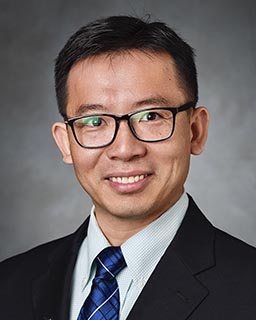
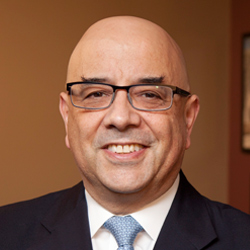
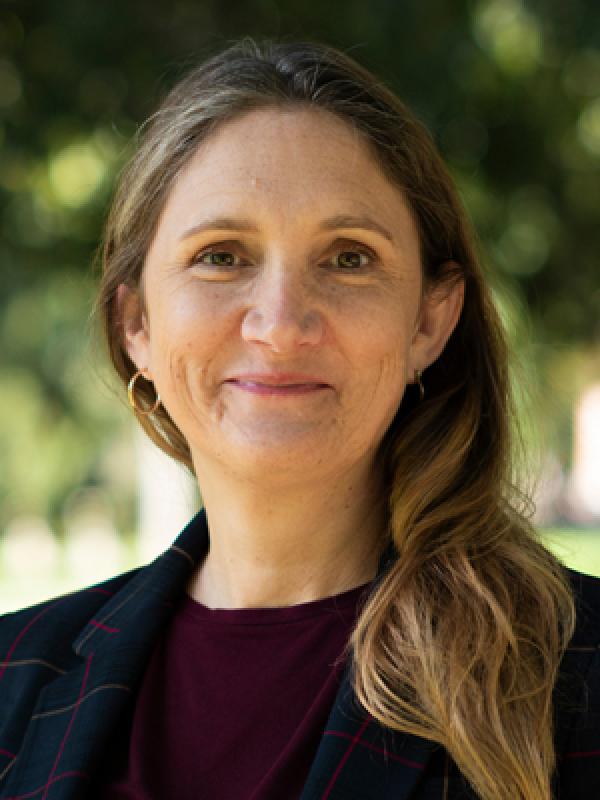
Martin Riegler is a researcher at the Institute of Physics and Materials Science , part of the University of Natural Resources and Life Sciences, Vienna (BOKU). His work focuses on advanced material analysis and sustainable construction within the wood technology sector. Specializes in electrical resistivity measurements of wood Applies machine learning to wood machining acoustics Studies adhesive bondlines modified with carbon fillers Investigates moisture dynamics in wood Recent publications highlight his contributions to smart wood composites , non-invasive testing , and machine learning applications in wood processing. He has presented research at international conferences and collaborated with institutions like the Northern European Network for Wood Science and Engineering. Riegler's work intersects with Materials Science , Wood Technology , and Sustainable Engineering , particularly in optimizing particleboard production and wood moisture prediction . His research spans technical innovation and environmental stewardship in forestry applications.
Geir Andre Ringstad is an Associate Professor at the Department of Radiology and Nuclear Medicine , University of Oslo, specializing in neuroimaging and cerebrospinal fluid (CSF) dynamics . His research focuses on the glymphatic system , CSF tracer studies , and MRI-based quantification of brain clearance mechanisms. Research Themes Neurofluid dynamics and glymphatic dysfunction in normal pressure hydrocephalus , Chiari malformation , and pineal cysts Impact of sleep deprivation on CSF tracer clearance Novel MRI protocols for assessing CSF disorders and neuroimmune interfaces Publications cover diverse topics including glymphatic-lymphatic coupling , CSF flow modeling , contrast agent safety , and computational analysis of neurofluid pathways. Collaborative work spans neurosurgery , endocrinology , and biophysics .
Professor Robin Purshouse is a leading academic at the University of Sheffield , currently serving as Professor of Decision Sciences in the Department of Automatic Control and Systems Engineering within the School of Electrical and Electronic Engineering . With a career spanning academia and industry, his work bridges computational modelling , optimization , and systems science to address complex challenges in public health and engineering. His research has been pivotal in developing mechanisms for agent-based modelling and evolutionary multi-objective optimization . Education: PhD in Control Systems (2004), MEng in Control Systems Engineering (1999) from the University of Sheffield Professor Purshouse's research focuses on computational modelling of complex social systems , decision analytics for population health policy , and Bayesian optimization . He has pioneered the integration of machine learning and uncertainty quantification in social science simulations, with notable projects like the Sheffield Alcohol Policy Model and CASCADE initiative. His work spans interdisciplinary domains, including health economics , policy evaluation , and engineering design . Recent publications highlight his expertise in agent-based modelling for smoking/vaping dynamics , intersectional disparities in alcohol consumption , and inclusive economy frameworks . He has secured substantial funding (exceeding £16 million) through grants from NIH , CRUK , UKPRP , and MRC , including his role as co-PI in the HealthMod cluster. His contributions to multi-objective optimization and evolutionary algorithms have advanced methodologies in both engineering and public health domains. Scientific Awards: ESRC Future Research Leaders Award (2012-2015) As a co-developer of the Liger optimization environment , Purshouse has fostered open-source tools for complex decision-making. He leads the SIPHER consortium for systems science in public health and serves on editorial boards for journals like Environmental Modelling & Software . His teaching includes Agent-Based Modelling (ACS6132), and he maintains professional memberships in the Association for Computing Machinery and Research Society on Alcohol .
Christopher A. Mattson is a Professor of Mechanical Engineering at Brigham Young University (BYU) and director of the Design Exploration Research Group. With a PhD from Rensselaer Polytechnic Institute (2003), he has received prestigious awards including the Presidential Early Career Award (PECASE), NSF CAREER Award, Fulbright Scholarship, and ASME Fellowship. Education: PhD, Mechanical Engineering, Rensselaer Polytechnic Institute (2003) MS, Mechanical Engineering, BYU (2001) BS, Mechanical Engineering, BYU (1999) Research Interests: Focus on engineering design theory, multiobjective optimization, and social impact modeling for global development. Applications span poverty alleviation, sustainable design, and modular product platforms. He develops formal methodologies integrating computational optimization with social and environmental factors during conceptual design stages. Teaching Interests: Specializes in team-based engineering design, teaching courses like Advanced Product Development and Global Product Development. His pedagogy emphasizes interdisciplinary collaboration, industry-sponsored projects, and global engagement through travel and cross-cultural partnerships. Scientific Awards: ASME Fellow (2020–Present) NSF CAREER Award (2010–2014) Presidential Early Career Award (PECASE) (2012) Ben C. Sparks Medal (ASME) (2015) Fulbright Scholar (2014–2015) Professional Service: Holds leadership roles in ASME committees, serves as Associate Editor for Journal of Mechanical Design , and contributes to multidisciplinary design optimization societies. His work bridges academia, industry, and international development through sponsored projects and research collaborations.
George Ferguson is an Associate Professor in the Department of Computer Science at the University of Rochester . He serves as the Co-Director of the Undergraduate Program and has been recognized with multiple teaching awards, including the Edward Peck Curtis Award for Excellence in Undergraduate Teaching (2023) and the UR Students’ Association Professor of the Year in Engineering and Applied Sciences (2018-2019) . Education: Ph.D. in Computer Science (University of Rochester, 1995) M.Sc. in Computer Science (University of Rochester, 1989) M.Sc. in Computing Science (University of Alberta, 1989) B.Sc. in Mathematics and Computer Science (McGill University, 1987) Research Interests: Ferguson’s work bridges Artificial Intelligence , Human-Computer Interaction , and Medical Informatics . He focuses on Intelligent Conversational Assistants using Natural Language Understanding and Temporal Reasoning for domains like healthcare and logistics. His Dialogue Systems and Knowledge Representation research have led to innovations in Collaborative Problem-Solving and User-Centered Design . Scientific Awards: Outstanding Paper Award at AAAI-2007 Program Co-Chair for AAAI-2004 Invited Participation in NSF-NIH Symposia Teaching: Ferguson has taught a range of courses, from Introductory Programming (Java/Python/JavaScript) to advanced topics like Artificial Intelligence and Programming Language Design . He is also involved in outreach to middle/high school computing education.
Xingcheng Zhou is a Research Assistant at the Technical University of Munich (TUM), affiliated with the Chair of Robotics, Artificial Intelligence and Real-time Systems since 2023. He holds an M.Sc. in Electrical and Computer Engineering from TUM (2021) and previously worked as an Industrial AI Researcher at Siemens. Research Interests: Focus on Large Language Models , Vision Language Models , 3D Environment Perception , and Domain Adaptation in autonomous driving contexts. Publications: Contributions to 3D object detection refinement, sim2real domain adaptation, vision-language models, and dataset development for intelligent transportation systems. Teaching Involvement: Co-supervisor for master's theses and seminars on autonomous agents, perception models, and traffic environment understanding. Advising: Mentoring students on projects including LiDAR-guided monocular detection, world models, and multimodal benchmarks for transportation scenes. Trends in Research: Zhou's work bridges low-light image enhancement with spatial-frequency features, surface-aware frameworks for 3D detection, and weakly-supervised domain adaptation. He contributes to benchmarking spatio-temporal video understanding and evaluating autonomous driving datasets. Supervision and Collaboration: Co-authored key surveys and frameworks with Prof. Alois C. Knoll and peers, focusing on real-time roadside LiDARs, graph-based object relationships, and vision-language integration for traffic analysis.
Hui Yang is a Professor of Industrial and Manufacturing Engineering and Biomedical Engineering at Pennsylvania State University , holding the Gary and Sheila Bello Chair Professor title. He is affiliated with multiple institutions including the Penn State Cancer Institute , Clinical and Translational Science Institute , and Institute for Computational and Data Sciences . Currently serving as PI and Site Director of the NSF Center for Health Organization Transformation (CHOT) , his career includes leadership roles in professional societies such as IISE Data Analytics and Information Systems Society (President 2017-2018) and INFORMS Quality, Statistics and Reliability (QSR) society (President 2015-2016). As Associate Editor for journals like IISE Transactions , IEEE JBHI , and IEEE Transactions on Automation Science , he maintains strong editorial influence. His research integrates nonlinear stochastic dynamics with sensor-based system informatics to advance both smart manufacturing and healthcare engineering . Recent work explores digital twin technologies , blockchain applications , and AI-driven disease modeling for conditions like Alzheimer's and cardiovascular disease . Key scientific contributions include developing character-level linguistic biomarkers for early dementia detection, self-organizing network representations of cardiac systems, and privacy-preserving neural networks for Industry 4.0 environments. His research group has received significant external funding from NSF , DOE , and NIST to address challenges in heterogeneous manufacturing networks , adaptive failure prognosis , and spatiotemporal optimization . Fulbright Award in Science, Technology and Innovation (2022) IISE Fellow (2021) NSF CAREER Award (2015) Through his Virtual Learning Factory and SCOUT spatiotemporal framework , Yang bridges manufacturing analytics with health informatics , creating cross-domain methodologies for system diagnostics/prognostics , process optimization , and smart health monitoring . His Cross Recurrence Analysis Toolbox provides open-source methods for nonlinear time series analysis.
Prof. Dr.-Ing. Stefan Lechner has been full Professor of Energy Economics and Energy Systems at the Technical University of Central Hesse (THM) , Giessen, since March 2015. He is affiliated with the Department of Mechanical Engineering and Energy Technology and the Institute THESA – Institute of Thermodynamics, Energy Process Engineering and Systems Analysis . Additionally, he leads the Laboratory for Energy Economics and is a core member of the Competence Center for Energy Technology and Energy Management (etem.THM) . Education & Career Dr.-Ing., Brandenburg University of Technology (BTU) Cottbus, 2012 – Dissertation on steam-fluidized-bed drying of lignite. Dipl.-Ing. (FH) Mechanical Engineering, Georg Agricola University of Applied Sciences Bochum, 2002 – specialising in Future Energies. Supplementary doctoral studies & economics coursework at BTU Cottbus and FernUniversität Hagen. Professional experience at Vattenfall (plant management, power-plant planning & R&D) and Kreisel Umwelttechnik (Head of Development) before entering academia. Research Interests Prof. Lechner’s work centres on the techno-economic analysis and optimisation of energy systems in transition . Core themes include renewable energy integration , thermal energy storage (particularly Carnot batteries using ceramic high-temperature stores), sector coupling between electricity, heat and mobility, and 5th-generation cold district-heating networks (5GDHC). Methodologically, he combines experimental thermal engineering with open-source simulation frameworks , agent-based demand modelling , and electricity-market modelling . Recent activities expand into waste-heat recovery from data centres and transcritical CO₂ heat-pump systems for low-temperature district heating, always targeting cost-effective, grid-friendly and sustainable solutions . Publication Trends Between 2017 and 2024 his output highlights a clear evolution from fundamental studies on pressurized steam fluidized-bed drying and lignite heat-transfer toward system-level analyses of storage-based sector coupling . A dominant cluster addresses Carnot batteries , covering high-temperature storage materials, gas-turbine re-conversion concepts, and demonstration results. Parallel streams examine GIS-based rooftop PV potential , agent-based settlement energy-demand modelling , and regulatory frameworks for cross-sector energy markets. Scientific Awards & Honours No specific awards are mentioned in the provided material. Research Funding & Teams Prof. Lechner has secured and coordinates projects worth > €10 million (THM share ≈ €6.5 million) funded by BMBF, BMWK/BMWi, Hessian ministries (HMWK, HMWEVW), WI-Bank and ERDF : LOEWE 3 DUWä (2025-2027) – transcritical CO₂ dual-use heat pumps for cold district heating. EnEff:Stadt FlexQuartier2 (2023-2027) – hybrid storage optimisation in Giessen’s Philosophenhöhe district. KNW-Plus (2022-2023) – design & online tool for cold local heating networks. Innovative waste-heat use from data centres (2022-2023). FlexQuartier Gießen (2018-2023) – integrated hybrid storage & sector coupling in a new-build district. Kommun:E (2018-2022) – municipal energy-supply transformation under Germany’s Energiewende. High-T-Stor (2017-2019) – cross-sector high-temperature storage for renewable balancing. FES (2019-2021) – Research Center for Energy Storage and Sector Coupling. These projects involve interdisciplinary consortia including municipalities, grid operators, SMEs, and research partners across Germany. Teaching & Academic Leadership He lectures in Energy Economics and Sector Coupling, Energy Markets, Heat Transfer, Renewable Energy Technology and Energy System Analysis . He also serves as Programme Manager for the part-time continuing-education M.Sc. Energy Efficiency Management (StudiumPlus, Wetzlar) and contributes to advanced master’s courses on energy law and thermodynamics.
Enrico R Crema is an Associate Professor in Computational Analysis of Long-Term Human Cultural and Biological Dynamics at the Department of Archaeology , University of Cambridge, and a Fellow at the McDonald Institute for Archaeological Research. His work integrates computational modeling, quantitative analysis, and cultural evolutionary theory to address long-term human societal changes. Research Focus: Cultural evolution, prehistoric demography, settlement archaeology, and the Jomon-Yayoi transition in Japan. Key Projects: ERC-funded ENCOUNTER on rice farming diffusion, Leverhulme-funded BuckBee on crop-pollinator dynamics, and Marie Sklodowska-Curie supervised projects on archaeological modeling. Recent Publications highlight his expertise in Bayesian radiocarbon analysis, demographic modeling, and cultural transmission studies. His methodological contributions include the rcarbon and nimbleCarbon R packages for open science in archaeology. Scientific Awards include the McDonald Anniversary Research Fellowship Philip Leverhulme Prize in Archaeology Marie Sklodowska-Curie Fellowship (Host Supervisor) Advising involves mentoring current PhD candidates like Leah Brainerd Christiane-Marie Cantwell Alexes Mes Charles Simmons Finn Stileman Andriana Xenaki and former students including Rachel Blevis Jasmine Vieri Benjamin J Utting .
Professor Minyue Fu is an Honorary Professor in the School of Engineering at the University of Newcastle, Australia, specializing in Electrical and Computer Engineering. With over 30 years of research experience, he has established himself as a leading expert in control systems and signal processing, having published over 500 research papers with an H-index of 55. His academic journey began with a Bachelor's degree from the University of Science and Technology of China, followed by M.S. and Ph.D. degrees from the University of Wisconsin-Madison. Prof. Fu's research interests span a broad range of topics in control theory and signal processing. His work consistently focuses on fundamental theoretical problems with practical applications in diverse fields including power systems, sensor networks, multi-agent systems, and cyber-physical systems. He has made significant contributions to distributed control algorithms, stochastic systems, quantization effects in control, and networked systems. His recent publications (2021-2024) demonstrate continued productivity and relevance in the field, with research spanning decentralized optimal control, anomaly detection in cyber-physical systems, cart-pole control systems, and mean-field games. These works reflect his ability to bridge theoretical control concepts with practical engineering challenges, particularly in the context of modern networked and distributed systems. Fellow of IEEE (2004) Fellow of IFAC (2022) Fellow of Engineers Australia Fellow of Chinese Association of Automation (2018) Throughout his career, Prof. Fu has held significant editorial positions including Editor of IEEE Transactions on Signal Processing (2010-2014) and Associate Editor for several prestigious journals. His research has been supported by numerous grants, though specific details aren't provided in the current text. His laboratory work has focused on practical implementations of control algorithms in various systems, demonstrating the real-world applicability of his theoretical contributions. Prof. Fu has also supervised numerous students throughout his career, though specific names aren't listed in the available information.
Dr. Jun Liu serves as an Associate Professor in the Department of Civil, Construction and Environmental Engineering within the College of Engineering at the University of Alabama. He directs the NextGen Transportation Lab and holds editorial positions including Managing Editor for the Journal of Intelligent Transportation Systems. His affiliations include the Center for Sustainable Infrastructure and Center for Transportation Operations, Planning and Safety. Ph.D. in Civil Engineering, University of Tennessee (2015) M.S. in Statistics, University of Tennessee (2015) M.S. in Transportation Planning & Management, Huazhong University of Science & Technology (2011) B.S. in Transportation Engineering, Huazhong University of Science & Technology (2008) Dr. Liu's research spans transportation safety, connected/automated vehicles, and sustainable mobility systems. His work integrates machine learning with geospatial analysis to address responder safety, travel behavior, and urban planning challenges. Current projects focus on generative AI applications, EV infrastructure, and rural transportation equity. His methodology combines agent-based simulation, spatial modeling, and behavioral pathway analysis to develop practical transportation solutions. Publication trends reveal strong emphasis on machine learning applications in transportation safety (32% of recent works), with significant contributions to connected vehicle systems (24%) and sustainable mobility solutions (18%). His research demonstrates consistent integration of spatial analysis techniques across 78% of publications, with increasing focus on generative AI applications since 2023. Recent work shows growing international collaboration, particularly with Chinese institutions on robotaxi deployment. Inaugural Editorial Board Member, Transportation Research Record 2018 Small Grants Program Award, University of Alabama Distinguished Scientific Paper Award, ITS World Congress Best Reviewer, Journal of Traffic and Transportation Engineering Dr. Liu has secured over $21 million in research funding since 2018, including an NIH/CDC R01 award as lead PI. His 30 projects include 17 as Principal Investigator from NSF, NIH/CDC, US DOT, and state agencies. He mentors numerous graduate students, with recent publications featuring trainees as first authors. Current initiatives include a $2 million CDC/NIOSH project on first responder safety and $16.8 million smart transportation network development in West Alabama. His NextGen Transportation Lab focuses on integrating AI with transportation systems while exploring creative applications through dance and choreography.
David Banks is Professor of the Practice of Statistics at Duke University, specializing in adversarial risk analysis and network modeling. With an MS in Applied Mathematics (1982) and PhD in Statistics (1984) from Virginia Tech, he held positions at Carnegie Mellon, NIST, USDOT, FDA, and Cambridge University before joining Duke in 2003. Research develops Bayesian methods for security applications including counterterrorism, autonomous systems, and blockchain. Authored 100+ refereed articles and books including the DeGroot Award-winning 'Adversarial Risk Analysis'. Current projects examine MEV distribution in blockchain and defense resource allocation under uncertainty. Honored with the American Statistical Association's Founders Award (2015) and fellowships in AAAS, IMS, and ASA. Leads NSF-funded initiatives including the Statistical and Applied Mathematical Sciences Institute (2018-2022). Editorial contributions include coordinating editor for JASA and founding editor of Statistics and Public Policy. Active in human rights statistics, co-editing 'Statistical Methods for Human Rights' and developing multiple systems estimation for trafficking victim counts.
Dr. Evangelos Markopoulos is a Lecturer at the University College London School of Management, specializing in Knowledge & Innovation Management, Entrepreneurship, and Futuristic Interactive Technologies. He holds a PhD in MIS Project Management and has extensive industry experience with IBM, Siemens, and Bell Labs. His research focuses on integrating Digital Twins, Metaverse Applications, and ESG Compliance into organizational strategies. He has published 120+ papers and authored a book on Innovative Organizational Cultures. Notable achievements include a Clinton commendation and two Global Social Innovation Awards (HultPrize). His teaching emphasizes real-world industry collaboration through internships and competitions. Education: BSc Computer Science → MSc Computer Science/Artificial Intelligence → PhD MIS Project Management. He has taught at QMUL, UCL, Essex, and others. Research interests span Digital Transformation, Sustainable Leadership, and Gamification in Education. Current projects include VR safety training for maritime sectors and democratic innovation frameworks. Key Research Themes: ESG-SDGs Alignment, Metaverse in Maritime Training, Democratic Organizational Culture Student Impact: Mentored teams to global awards in social innovation Industry Collaboration: Founder of companies in Project Management, Enterprise Engineering, and Innovation Apps
Julio M. Ottino is the Walter P. Murphy Professor of Chemical and Biological Engineering and holds a courtesy appointment in Mechanical Engineering at Northwestern University. He also serves as a Professor of Management and Organizations at the Kellogg School of Management. His research focuses on complex systems, granular matter dynamics, and mixing/segregation phenomena, with applications spanning engineering, geophysics, and environmental science. Ottino’s work bridges theory, computation, and experimentation, addressing challenges in granular flow optimization and segregation control. He is affiliated with the Theoretical and Applied Mechanics Graduate Program and leads the Ottino Research Group. Key research interests include agent-based modeling, network theory, and the interplay between order and disorder in physical systems. His contributions span fluid dynamics, nonlinear systems, and engineering education innovation. Awards: Member of the National Academy of Sciences (2022), G.I. Taylor Medal (2023), and numerous engineering accolades. Publications: Over 200 peer-reviewed articles on granular flows, segregation forces, and mixing dynamics. Education: Ph.D. in Chemical Engineering (assumed based on career trajectory). Ottino’s work emphasizes cross-disciplinary collaboration, as highlighted in his book ArtScience: Creativity in the post-Google Generation . His lab explores cutting-edge topics like machine learning for mixing optimization and ergodic subset analysis in chaotic systems.
Kendra McSweeney is a Professor of Geography at The Ohio State University, affiliated with the College of Arts and Sciences. Her research focuses on human-environment interactions, particularly in Latin America, addressing issues like political ecology, conservation, and the socioecological impacts of drug trafficking. She holds a Ph.D. from McGill University (2000), an M.Sc. from the University of Tennessee (1993), and a B.A. from McGill University (1991). Her work spans decades of field research in Honduras, Central America, and Brazil, examining topics such as climate resilience, indigenous demography, and the environmental consequences of drug policies. McSweeney has led interdisciplinary projects funded by NASA, NSF, and the Open Society Foundations, totaling over $2 million in grants. McSweeney’s research has been recognized with prestigious awards, including AAAS and American Academy of Arts & Sciences Fellowships (2024 and 2023), the Alexander and Ilse Melamid Medal (2020), and the CAPE Distinguished Career Award (2020). She has authored over 70 peer-reviewed articles and edited books, including co-editing Geographical Fieldwork in the 21st Century (2021). Her teaching spans undergraduate courses like Our Global Environment and graduate seminars on fieldwork and political ecology. McSweeney advises students on topics ranging from narco-trafficking’s environmental impacts to indigenous health. She collaborates with international organizations such as the World Resources Institute and UNICEF, bridging academic research with policy and community engagement. Current projects include modeling drug-trafficking networks and their environmental effects, and studying demographic changes among Latin America’s indigenous populations. McSweeney is also a Phi Beta Kappa Visiting Scholar (2024-25), emphasizing her role in public scholarship and education.