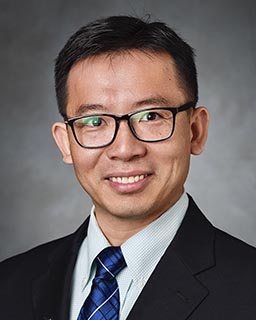
Xingcheng Zhou is a Research Assistant at the Technical University of Munich (TUM), affiliated with the Chair of Robotics, Artificial Intelligence and Real-time Systems since 2023. He holds an M.Sc. in Electrical and Computer Engineering from TUM (2021) and previously worked as an Industrial AI Researcher at Siemens. Research Interests: Focus on Large Language Models , Vision Language Models , 3D Environment Perception , and Domain Adaptation in autonomous driving contexts. Publications: Contributions to 3D object detection refinement, sim2real domain adaptation, vision-language models, and dataset development for intelligent transportation systems. Teaching Involvement: Co-supervisor for master's theses and seminars on autonomous agents, perception models, and traffic environment understanding. Advising: Mentoring students on projects including LiDAR-guided monocular detection, world models, and multimodal benchmarks for transportation scenes. Trends in Research: Zhou's work bridges low-light image enhancement with spatial-frequency features, surface-aware frameworks for 3D detection, and weakly-supervised domain adaptation. He contributes to benchmarking spatio-temporal video understanding and evaluating autonomous driving datasets. Supervision and Collaboration: Co-authored key surveys and frameworks with Prof. Alois C. Knoll and peers, focusing on real-time roadside LiDARs, graph-based object relationships, and vision-language integration for traffic analysis.
Ryen W. White is a Partner Research Director and Deputy Lab Director at Microsoft Research in Redmond, leading the LEAP research area (Language, Learning, Audio, Privacy) and engineering organizations. He holds an Affiliate Professor position at the University of Washington , where he contributes to academic research while maintaining his industry leadership. Research focuses: Information Retrieval, Human-Computer Interaction, Computational Health Key projects: AutoGen multi-agent systems, WHAM for gameplay ideation, action engine frameworks His work emphasizes user-centered search systems , privacy-preserving personalization , and advanced interaction paradigms . Recent publications analyze long-term behavioral modeling, decision biases in search, and next-generation search interfaces, spanning subfields like implicit feedback mechanisms , task completion algorithms , and generative AI applications . Scientific honors include: ACM Fellow (2021) Tony Kent Strix Award (2022) ASIST Best Information Science Book Award (2017) SIGIR Test of Time Awards (2010, 2022) BCS Distinguished Dissertation Award (2005) As Workshop Chair for HCIR series and Program Chair for SIGIR 2017, he has shaped research agendas through community-building initiatives. His book Interactions with Search Systems established foundational principles for exploratory search interfaces and privacy-aware information access .
Baptist Liefooghe is an Associate Professor in the Social, Health and Organisational Psychology department at Utrecht University's Faculty of Social and Behavioural Sciences. His research bridges cognitive psychology with human-centered artificial intelligence, focusing on how humans interact with and trust AI systems while examining fundamental cognitive processes like task switching and instruction-based learning. His primary research interests include Cognitive Psychology , Experimental Psychology , Applied Data Science , and Human-centered Artificial Intelligence . Dr. Liefooghe investigates how humans process instructions, switch between tasks, and develop trust in artificial intelligence systems. His work demonstrates how cognitive processes influence human-AI interactions, particularly examining how people judge AI morality and competence, how social presence affects trust in algorithms, and how cognitive control mechanisms operate during task switching. Analysis of his recent publications reveals a strong trend toward interdisciplinary research combining cognitive psychology with AI applications. His work spans from fundamental cognitive processes (task switching, instruction implementation) to applied human-AI interaction research (trust in AI, facial perception of artificial agents, health behavior change through AI). This integration of basic cognitive research with practical AI applications represents a distinctive feature of his scholarly contributions. Dr. Liefooghe has published extensively in top-tier journals including Journal of Cognition, Cognitive Research, Cortex, and Frontiers in Artificial Intelligence. His research has garnered significant attention in the field, with multiple highly cited publications examining the cognitive mechanisms underlying human interaction with technology. His methodological expertise includes experimental design, statistical analysis using R programming language, and cognitive modeling. This technical proficiency enables him to conduct rigorous investigations into complex cognitive phenomena while applying these insights to real-world human-AI interaction scenarios.
Hui Yang is a Professor of Industrial and Manufacturing Engineering and Biomedical Engineering at Pennsylvania State University , holding the Gary and Sheila Bello Chair Professor title. He is affiliated with multiple institutions including the Penn State Cancer Institute , Clinical and Translational Science Institute , and Institute for Computational and Data Sciences . Currently serving as PI and Site Director of the NSF Center for Health Organization Transformation (CHOT) , his career includes leadership roles in professional societies such as IISE Data Analytics and Information Systems Society (President 2017-2018) and INFORMS Quality, Statistics and Reliability (QSR) society (President 2015-2016). As Associate Editor for journals like IISE Transactions , IEEE JBHI , and IEEE Transactions on Automation Science , he maintains strong editorial influence. His research integrates nonlinear stochastic dynamics with sensor-based system informatics to advance both smart manufacturing and healthcare engineering . Recent work explores digital twin technologies , blockchain applications , and AI-driven disease modeling for conditions like Alzheimer's and cardiovascular disease . Key scientific contributions include developing character-level linguistic biomarkers for early dementia detection, self-organizing network representations of cardiac systems, and privacy-preserving neural networks for Industry 4.0 environments. His research group has received significant external funding from NSF , DOE , and NIST to address challenges in heterogeneous manufacturing networks , adaptive failure prognosis , and spatiotemporal optimization . Fulbright Award in Science, Technology and Innovation (2022) IISE Fellow (2021) NSF CAREER Award (2015) Through his Virtual Learning Factory and SCOUT spatiotemporal framework , Yang bridges manufacturing analytics with health informatics , creating cross-domain methodologies for system diagnostics/prognostics , process optimization , and smart health monitoring . His Cross Recurrence Analysis Toolbox provides open-source methods for nonlinear time series analysis.
Jia Hu is an Associate Professor in Computer Science at the University of Exeter. He holds a PhD in Computer Science from the University of Bradford (2010), and M.Eng/B.Eng degrees in Electronic Engineering from Huazhong University of Science and Technology. His research specializes in edge-cloud computing, federated learning, and AI-driven optimization for networks and IoT systems. Research Interests: Hu's work spans resource optimization, applied machine learning (particularly in distributed settings), network security, blockchain integration, and intelligent systems for electric vehicles and Industry 4.0. His recent projects focus on federated edge AI, 6G-enabled industrial IoT, and real-time federated learning via hardware-algorithm co-design. Publications: His 150+ papers emphasize federated learning, edge computing, and reinforcement learning applications. Recent works (2020–2025) show a strong trend toward optimizing AI at the network edge, with themes like digital twins, blockchain security, and EV-integrated systems dominating. Awards & Recognition: Best Paper Awards: IEEE SOSE'16, IUCC'14 Outstanding Service & Leadership Awards for IEEE conferences Top 4% contributor to EPSRC Peer Review Fellow of the Higher Education Academy (HEA) Grants & Projects: Secured €4.7M+ funding from EU Horizon, EPSRC, and Royal Society for projects including: SAILING (Secure AI for Smart Internet-of-Energy, €3.6M) REFINE (Real-time Air Quality Monitoring with UAVs, €897K) SustainAIRA6G (Energy-Efficient AI for 6G Networks, £118K) Advising: Supervised 12 PhD students to completion; currently mentoring 7 students in federated learning, edge computing, and AIoT.
Dr. Vennapusa Sivaranjana Reddy is an Associate Professor in the Department of Chemistry at the School of Chemistry, Indian Institute of Science Education and Research Thiruvananthapuram (IISER TVM). With a career spanning theoretical and computational chemistry, her research focuses on ultrafast excited-state intramolecular proton transfer (ESIPT), intersystem crossing (ISC), and triplet state formation in organic molecules. She leads a dynamic research group investigating these phenomena through quantum molecular simulations and computational techniques. Education: M.Sc. and Ph.D. from the University of Hyderabad (2003-2010); B.Sc. from Government Arts College, Kadapa (2000-2003). Professional Experience: Associate Professor (2022–present) and Assistant Professor (2013–2022) at IISER TVM; postdoctoral fellowships at Nagoya University (Japan), Heidelberg University (Germany), and CSIR-HRDG/SERB-funded projects. Her research group explores ESIPT mechanisms in 5- and 6-membered proton transfer cycles, ultrafast ISC pathways in naphthalene and pyrene derivatives, and triplet formation in ESIPT tautomers. The 15 most recent articles highlight her expertise in designing optoelectronic materials, fluorescent probes for H2S detection, and computational modeling of spin-vibronic dynamics. She has secured significant grants from CSIR and SERB and collaborates with institutions across India and abroad. Her students have received prestigious PMRF fellowships and presented award-winning work at international conferences. Scientific Awards: Early Career Research Award (SERB, 2016), Alexander von Humboldt Postdoctoral Fellowship, GATE-2005 (All India Rank 6), UGC-CSIR qualification, and merit scholarship during M.Sc. Dr. Reddy’s group utilizes advanced computational tools like GAUSSIAN 09, TURBOMOLE 7.4, and MCTDH for electronic structure calculations and quantum nuclear dynamics. She mentors Ph.D. students and alumni, including those now at institutions like the University of Vienna and Ludwig-Maximilians-Universität München. Her teaching portfolio includes courses in physical chemistry, quantum chemistry, and computational methods.
Aron Szekely is an Assistant Professor in Sociology at Collegio Carlo Alberto and an Associate Researcher at the Laboratory of Agent Based Social Simulation (LABSS) within the Institute of Cognitive Sciences and Technologies (ISTC) at CNR. He coordinates the Social and Political Sciences track of the Allievi Honors Program and teaches courses on social change, policy analysis, and cooperation at Collegio Carlo Alberto and the University of Turin. Education : DPhil in Sociology (2015), MSc in Sociology (2010) from the University of Oxford, and BSc in Biology (2008) from the University of Bristol. Research Interests : Interdisciplinary studies on signaling theory , social norms , group reputation , cooperation , conflict , and agent-based modeling . His work bridges sociology, psychology, and computational methods. Scientific Awards : Recipient of the Carlo Alberto Medal for contributions to interdisciplinary research. Recent Publications analyze topics such as collective risk response, pandemic-induced norm changes, organized crime dynamics, and the psychology of honor killings, with methods ranging from experimental design to agent-based simulation.
Dr. Christian Klassert is a researcher at the Department of Economics, Helmholtz Centre for Environmental Research (UFZ) in Leipzig, Germany, where he serves as co-speaker of the Working Group Social-Science Water Research. His work spans international water security projects focusing on Jordan, India, and Germany. Current Position: Postdoctoral Researcher, Department of Economics, UFZ (since 09/2021) Previous Positions: Researcher at UFZ (2017-2021), Researcher at Leipzig University (2014-2017), Research Assistant at UFZ Bioenergy Department (2011-2014), Visiting Postdoctoral Scholar at Stanford University (2022-2023) Dr. Klassert holds a PhD in Economics from Leipzig University (2021), where he received summa cum laude honors for his thesis on decentralized private water service provision in intermittent supply systems in Jordan. He also earned a European Master in Law and Economics and LL.M. from the Universities of Hamburg, Ghent, and Haifa, and a German academic law degree from Mainz University where he ranked second in his state-wide examination. His research combines coupled human-natural systems modeling, agent-based modeling, and econometrics to assess water security impacts of unequal urban water access and agricultural droughts. Klassert contributes to major international projects including the Jordan Water Project, FUSE Project in India's Upper Bhima Basin, and agricultural drought adaptation research through UFZ Graduate Schools AGRI-TRANSFORM and Thirsty Cities. His interdisciplinary approach integrates economic, social, and environmental dimensions of water security challenges. Analysis of his publication record reveals a strong focus on urban water security, particularly examining informal water markets, household water demand under intermittent supply, and the water-energy nexus. His work increasingly incorporates climate change impacts on water resources and agricultural systems, with a growing emphasis on equity dimensions of water access and infrastructure planning. The geographic scope of his research spans the Middle East (particularly Jordan), South Asia (India), and Europe (Germany). Dr. Klassert received the UFZ Research Award in 2022 for his interdisciplinary work assessing future water crisis risks in Jordan. He serves as a reviewer for prestigious journals including Nature Water, One Earth, and Water Resources and Economics, and co-chairs the Working Group Human Systems Modeling within the MultiSector Dynamics community of practice. His research is supported through multiple international projects including the UFZ Graduate Schools AGRI-TRANSFORM and Thirsty Cities, Future Earth project NexusFootprints, Belmont Forum projects FUSE and Jordan Water Project, and BMUB project JordanCap. These projects involve extensive international collaboration with research institutions in Germany, the United States, Jordan, and India. Klassert's work is conducted within the Department of Economics at UFZ, which focuses on interdisciplinary environmental economics research. His projects often involve close collaboration with stakeholders through workshops and participatory approaches, particularly in the Food-Water-Energy Nexus research in Amman, Jordan and Pune, India.
Dr. Karthik Akkiraju serves as Assistant Professor in the Department of Materials Engineering within UBC's Faculty of Applied Science, maintaining an active research program at the intersection of materials science and socio-environmental systems. His office (FF 011) and contact email (karthik.akkiraju@ubc.ca) reflect his current institutional affiliation. His research pioneers a techno-social paradigm for planetary health through three synergistic foci: (1) Establishing material poverty benchmarks using household survey data to identify resource-deprived communities; (2) Quantifying socio-environmental impacts across material supply chains; (3) Integrating well-being metrics into heterogeneous catalyst design frameworks. This work fundamentally reimagines materials engineering by centering human well-being within ecological boundaries, developing design methodologies that balance material requirements with equitable environmental constraints. Analysis of his publication trajectory reveals consistent interdisciplinary innovation spanning computational catalysis, environmental policy, and social metrics. His recent work demonstrates particular strength in perovskite catalyst engineering for sustainable chemistry and novel methodologies for spatial well-being assessment, reflecting a unique fusion of traditional materials science with computational social science. Dr. Akkiraju directs the Sustainable Materials Lab (SMAL), where his team develops frameworks connecting material consumption patterns to human development outcomes, creating pathways for resource allocation that simultaneously address poverty alleviation and environmental sustainability.
Professor Phillip Morgan is a leading academic in Human Factors and Cognitive Science at Cardiff University's School of Psychology, holding a Personal Chair since 2020. He directs the Human Factors Excellence (HuFEx) Research Group and serves as Director of Research for the Centre for Artificial Intelligence, Robotics & Human-Machine Systems (IROHMS) . Since March 2019, he has been seconded part-time to Airbus as Director of their Centre of Excellence in Human-Centric Cyber Security . BSc (Hons) Psychology, Cardiff University (2001) PGDip Research Methods, Cardiff University (2002, Distinction) PhD in Cognitive Psychology, Cardiff University (2005) PGCHE, University of Wales (2012, Distinction) His research merges Human Factors with Cognitive Science to address real-world challenges in: Human-machine interaction in autonomous systems Cyberpsychology and security behavior Transport human factors (connected/autonomous vehicles) Interruption/distraction effects on cognition Trust and blame dynamics in AI systems Industry 5.0 human-centric manufacturing Recent publications show AI and cybersecurity as dominant themes, with specific focus on autonomous vehicle interfaces, human fatigue analysis, and trust calibration in human-machine systems. His work integrates behavioral experiments, driving simulators, and human-state monitoring. Scientific Recognition: Associate Fellow of the British Psychological Society Best Paper Award at AHFE 2021 Member of Experimental Psychology Society Keynote speaker at multiple international conferences As supervisor, he leads projects on cybersecurity frameworks, fatigue detection, and human-AI interaction. His grants portfolio exceeds £37m from sources including EPSRC, ESRC, Airbus, and Wellcome Trust. Current supervisees include Victoria Marcinkiewicz, George Raywood-Burke, and Nicola Turner.
Nikolaos Paterakis is an Assistant Professor of Power System Optimization and Electricity Markets with the Electrical Energy Systems research group at the Department of Electrical Engineering, Eindhoven University of Technology (TU/e). He is the founder and principal investigator of the Electricity Markets & Power System Optimization Laboratory (EMPSOLab) established in 2019, and a member of the Cyber-Physical Systems Center Eindhoven (CPSe). His research focuses on applying optimization and machine learning techniques to power system and electricity market problems, particularly regarding renewable energy integration and smart grid technologies. Dr. Paterakis received his Dipl.Eng. from Aristotle University of Thessaloniki in 2013, followed by a PhD in Industrial Engineering and Management (cum laude) from the University of Beira Interior in 2015. After serving as a post-doctoral fellow at TU/e from 2015-2017 and working as a consultant for the Energy Market Regulatory Authority of Turkey, he was appointed Assistant Professor at TU/e in April 2017. His research spans power system optimization, electricity market design, renewable energy integration, and the application of machine learning techniques to grid management problems. Recent work emphasizes distributed energy resource integration, local electricity markets, congestion management in low-voltage grids, and real-time grid control using advanced optimization techniques. His publications demonstrate a clear trajectory toward increasingly sophisticated methods for managing grid constraints while enabling market participation of distributed energy resources. Dr. Paterakis has received several prestigious awards including IEEE SEGE'15, SEST 2019, and SEST 2020 Best Paper Awards, and recognition as a Best Reviewer for IEEE Transactions on Smart Grid (2015, 2017) and IEEE Transactions on Sustainable Energy (2016). He serves as Associate Editor for multiple journals including IET Renewable Power Generation, IEEE Systems Journal, IEEE Transactions on Intelligent Transportation Systems, and Elsevier's e-Prime. He leads multiple research projects including MEGAMIND (NWO-funded), P2P-TALES (NWO-funded), and the Electricity Markets Game series (TU/e BOOST!-program). His educational contributions include teaching courses on power system analysis and optimization, electricity markets modeling, and developing innovative educational tools for power systems education. In 2021, he was elevated to Senior Member of the IEEE Power & Energy Society.
Professor Robin Purshouse is a leading academic at the University of Sheffield , currently serving as Professor of Decision Sciences in the Department of Automatic Control and Systems Engineering within the School of Electrical and Electronic Engineering . With a career spanning academia and industry, his work bridges computational modelling , optimization , and systems science to address complex challenges in public health and engineering. His research has been pivotal in developing mechanisms for agent-based modelling and evolutionary multi-objective optimization . Education: PhD in Control Systems (2004), MEng in Control Systems Engineering (1999) from the University of Sheffield Professor Purshouse's research focuses on computational modelling of complex social systems , decision analytics for population health policy , and Bayesian optimization . He has pioneered the integration of machine learning and uncertainty quantification in social science simulations, with notable projects like the Sheffield Alcohol Policy Model and CASCADE initiative. His work spans interdisciplinary domains, including health economics , policy evaluation , and engineering design . Recent publications highlight his expertise in agent-based modelling for smoking/vaping dynamics , intersectional disparities in alcohol consumption , and inclusive economy frameworks . He has secured substantial funding (exceeding £16 million) through grants from NIH , CRUK , UKPRP , and MRC , including his role as co-PI in the HealthMod cluster. His contributions to multi-objective optimization and evolutionary algorithms have advanced methodologies in both engineering and public health domains. Scientific Awards: ESRC Future Research Leaders Award (2012-2015) As a co-developer of the Liger optimization environment , Purshouse has fostered open-source tools for complex decision-making. He leads the SIPHER consortium for systems science in public health and serves on editorial boards for journals like Environmental Modelling & Software . His teaching includes Agent-Based Modelling (ACS6132), and he maintains professional memberships in the Association for Computing Machinery and Research Society on Alcohol .
Prof. Dr. Ingmar Glauche serves as Deputy Institute Director at the Institute for Medical Informatics and Biometrics within TU Dresden's Medical Faculty . He leads the Theoretical Stem Cell Biology research group and coordinates the institute's teaching activities. As an elected member of TU Dresden's extended senate, he contributes to institutional governance. Academic focus on hematopoietic stem cell biology Expertise in computational modeling Key roles in leukemia research and stem cell transplantation Research interests span clonal competition , stem cell aging , and proliferation-differentiation control , with applications in chronic/acute myeloid leukemia and inherited bone marrow failure . His work combines differential equation models and agent-based simulations to study clonal dynamics , spatial organization , and feedback mechanisms in stem cell systems. Recent publications analyze clonal dominance mechanisms (2025), pediatric CML therapy monitoring (2023), and stem cell aging (2022). Collaborations include DFG , BMBF , and Wilhelm Sander-Stiftung projects like TKI-Stop and MinimaL . Current students include Andrea Gottschalk and Thomas Zerjatke , while former advisees include Christoph Baldow and Helene Hoffmann . 2025: Blood - Myeloid bias mechanisms 2024: BMC Medical Education - Competence analysis 2024: Leukemia - Clonal hematopoiesis 2023: PLOS Digital Health - Data integration 2022: Nature Communications - Clonal reconstruction
Thomas W. Price is an Assistant Professor in the Department of Computer Science at North Carolina State University's College of Engineering. He directs the Help through INTelligent Support (HINTS) Lab and is affiliated with NCSU's Center for Educational Informatics. His work bridges computer science, education, and artificial intelligence to create intelligent learning environments. Dr. Price earned his M.S. and Ph.D. in Computer Science from NC State University in 2015 and 2018 respectively, and was named the College of Engineering Doctoral Scholar of the Year in 2018. His research focuses on computing education with an emphasis on automatically generating programming hints and feedback using student data. He has evaluated innovative programming environments including block-based and frame-based systems, and designs intelligent support tools that integrate with these technologies. His work examines how students seek and use help in both classroom and online settings, with particular interest in open-ended programming projects, data-driven feedback systems, and understanding student programming behaviors. His recent publications reveal a strong trend toward integrating AI and educational data mining techniques to support programming education. His work spans from fundamental research on student help-seeking behaviors to practical tools that provide immediate feedback, detect student struggles, and offer personalized support. A significant portion of his recent work addresses emerging challenges like student use of generative AI tools and detecting AI-generated code submissions. College of Engineering Doctoral Scholar of the Year (2018) Exemplary Paper Award from International Conference on Educational Data Mining Exemplary Paper Award from ACM Technical Symposium on Computer Science Education Recognition by STARS Computing Corps for leadership in computing outreach Dr. Price mentors several Ph.D. students including James Skripchuk, John Thomas Bacher, and Keith Tran. He has secured over $4 million in research funding from the National Science Foundation for projects including infrastructure for sustainable innovation in computer science education, data-driven technologies for STEM instruction, and intelligent support for creative programming projects. His research has practical applications in classroom settings and aims to create scalable solutions that don't place additional burden on instructors. As director of the HINTS Lab, Dr. Price leads a team investigating how to re-imagine educational programming environments as adaptive, data-driven systems. The lab focuses on supporting students working in creative, open-ended contexts through automated tools for planning, hint generation, and progress monitoring. Their research emphasizes practical methods that can scale to new classrooms and contexts while providing personalized support tailored to individual student needs.
François Suro is a Lecturer at the University Institute of Technology, Valence within Grenoble Alpes University. He is affiliated with the LCIS laboratory and conducts research as part of the Co4Sys team. He earned his PhD in Computer Science from the University of Montpellier in 2020, focusing on epigenetic learning in multi-agent systems. Research Focus: His work centers on developmental approaches to artificial intelligence, with three primary domains: Progressive structuring of agent behaviors through hierarchical architectures (MIND framework) Acquisition and grounding of symbolic representations in embodied systems Emergence mechanisms for collective behaviors in agent societies Key application areas include robotics, social simulations, and cognitive modeling. Publication Trends: Recent works (2019-2021) demonstrate consistent exploration of hierarchical control architectures for autonomous agents, progressive learning methodologies, and collective behavior emergence in multi-agent environments. Dominant themes include developmental robotics frameworks, modular skill composition, and agent-based social simulations using platforms like NetLogo. Laboratory Context: As part of the LCIS laboratory's Co4Sys research team, he contributes to projects involving intelligent systems design and multi-agent coordination frameworks.