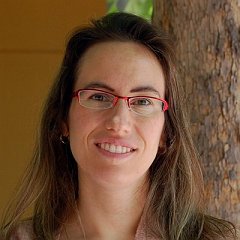
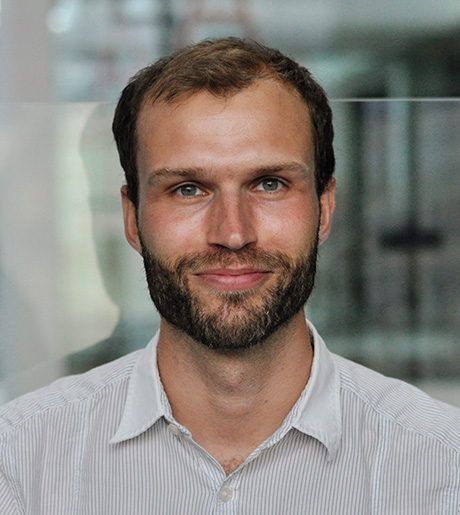
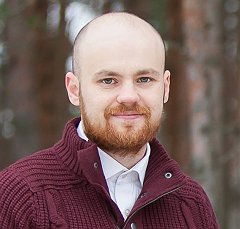
Dominique Devriese is an Associate Professor at the Department of Computer Science , Faculty of Engineering Science , KU Leuven . They serve as a promotor for multiple research projects focused on type theory, formal verification, and secure software systems. Faculty: Engineering Science Department: Computer Science Academic Rank: Associate Professor Their research explores multimodal dependent type theory , parametricity , logical frameworks like Agda, and secure compilation principles. Projects include formalizing RISC-V security guarantees, developing BiSikkel for multimode logic, and advancing substitution algorithms for type systems. Recent work demonstrates trends in formal methods , programming language theory , and hardware-supported security , with a strong emphasis on mathematical foundations and tool implementation. PhD Student Supervision: Joris Ceulemans Collaborations: Andreas Nuyts, Loes Deferme Active in academic governance, Dominique is a member of the Council of the Faculty of Engineering Science and POC Computerwetenschappen.
Graham Hutton is a Professor of Computer Science at the University of Nottingham , where he leads the Functional Programming Lab and serves as Director of the Midlands Graduate School . He co-founded the Quotient Haskell project and maintains key roles in Journal of Functional Programming editorial work and Haskell Foundation governance. Co-leader, Functional Programming Lab (2008–date) Director, Midlands Graduate School (2023–date) ACM Distinguished Scientist Principal investigator for £912k EPSRC project (2024–2027) His research focuses on mathematical approaches to program construction , particularly through functional languages like Haskell and Agda . He develops techniques for compiler correctness , type system design , and program optimization , with recent work on quotient polymorphism and denotational cost models . Key article themes include: Compiler derivation from formal semantics Effect handling in functional languages Graph-based code generation over traditional tree structures Quotient type systems with SMT solver integration Concurrency semantics using choice trees Operational improvement with parametric polymorphism Scientific awards include: ACM Distinguished Scientist (2013) Best Paper & Best Student Paper (2018) EPSRC funding for compiler correctness projects He advises current PhD students in compiler calculation and memory safety , while maintaining extensive educational contributions through his widely-used textbook Programming in Haskell and open course materials.
Dr. Wouter Swierstra is an Associate Professor in the Software Technology group within the Faculty of Science at Utrecht University. His research focuses on functional programming, type theory, and program verification, with particular expertise in dependently typed programming languages like Agda. His research interests span several key areas in programming language theory and implementation: Functional programming language design and implementation Dependent types and formal verification Program transformation and derivation Generic programming techniques Formal methods for blockchain and smart contracts Hardware verification using domain-specific languages Swierstra's recent work shows a strong trend toward applying formal methods to practical problems, particularly in the areas of blockchain technology and hardware verification. His publications demonstrate expertise in both theoretical foundations of programming languages and their practical applications. He has made significant contributions to the understanding of data structures in functional settings, program derivation techniques, and verification methodologies. Dr. Swierstra teaches courses related to functional programming, including "Advanced functional programming" and "Logic for Computer Science," helping to train the next generation of programming language researchers and practitioners.
Max S. New is an Assistant Professor in Computer Science & Engineering at the University of Michigan, part of the MPLSE research community. His research focuses on the mathematical foundations of programming languages, particularly interoperability between languages via Gradual Typing and compiler intermediate languages. He holds a PhD from Northeastern University (2020) and completed a postdoc at Wesleyan University. Research interests include formal methods, type theory, compiler design, and categorical logic. Recent work emphasizes verified parsing using Dependent Lambek Calculus, demonstrated in a PLDI 2025 paper accepted with students Steven Schaefer and collaborators. Advises PhD students in areas like language interoperability and formal verification. Active in open-source projects like the Agda implementation of Dependent Lambek Calculus.
Guillaume Allais is Lecturer in Computer Science at the University of Strathclyde, specializing in type-safe programming abstractions and formal verification. His research develops mathematically structured programming paradigms. Core research themes: Type-and-scope safe metaprogramming techniques Verified compiler pipelines for functional languages Dependently-typed algebraic simplification Recent publications advance staged compilation techniques and generic programming for serialized data. He contributes to the Idris 2 compiler and serves on ICFP program committees. Open-source projects include Agda libraries for syntax representation and verified core language implementations.
Ana Bove is an Associate Professor (Docent) at Chalmers University of Technology and University of Gothenburg, affiliated with the Department of Computer Science and Engineering. She leads the Logic and Types unit in the Computing Science division since 2021. Her research focuses on type theory, formal methods, and programming languages, with contributions to dependent types, interactive theorem provers, and functional programming. Affiliations: Chalmers University, University of Gothenburg Roles: Head of Logic and Types unit, former Director of Studies (CSE), Project Manager (ForMath EU project) Her work emphasizes foundational aspects of programming languages and verified software. Notable projects include the ForMath EU initiative under Prof. Thierry Coquand. She has contributed to Agda and type systems, with over 28 publications in formal methods and theoretical computer science. Research interests include recursion models in type theory, partial functions, and alpha-structural induction. Her lab, the Logic and Types unit, explores advanced type systems and formal verification techniques.
Ulf Norell is a Researcher at the Computing Science department of Chalmers University of Technology. He is an active member of both the Programming Logic and Functional Programming research groups, focusing on the intersection of theoretical type systems and practical programming language implementation. Dr. Norell completed his PhD at Chalmers University of Technology in 2007 with the dissertation "Towards a practical programming language based on dependent type theory," following a Licentiate thesis from Chalmers and Göteborg University in 2004 and a Master's degree from Chalmers in 2002. His educational background demonstrates a consistent focus on the theoretical foundations of programming languages. His research centers on making formal verification accessible through practical implementations of dependent type theory. Dr. Norell has made significant contributions to the Agda proof assistant, developing both the core system and the experimental AgdaLight platform. His work bridges advanced type theory with real-world programming challenges, particularly in the areas of parser implementation, mixfix operator handling, and generic programming techniques. The evolution of his publications shows a clear trajectory from foundational theoretical work toward increasingly practical applications of dependent types in programming. At Chalmers, Dr. Norell has taught Advanced Functional Programming (2008-2009) and Types for Programs and Proofs (2009), courses that directly reflect his research expertise. His teaching emphasizes the practical application of advanced type systems and formal methods. He maintains an active presence in the programming languages research community through conference presentations at venues including ICFP, TPHOLs, and MPC, where he demonstrates how dependent types can be used for interactive programming and formal verification in real-world contexts.
Dominique Devriese is a researcher affiliated with Vrije Universiteit Brussel , specializing in Secure Compilation, Capability Machines, Functional Programming , and Dependently-typed Programming . His work bridges theoretical foundations with practical applications in programming language design and security verification. Active contributor to top-tier conferences like POPL, ICFP, and PriSC Program Committee member for CPP, CoqPL, and Haskell tracks Session Chair for Type Systems and Verification sessions His research explores secure calling conventions, parametricity, and capability safety, often leveraging formal methods and type theory to ensure robust system behavior. Recent publications focus on Cubical Agda, CHERI architecture, and gradual typing. Though no awards or students are explicitly listed, his contributions to program committees and co-located events like PriSC and WGT highlight his academic engagement.
Lindsey Kuper is an Assistant Professor in the Computer Science and Engineering Department at the Baskin School of Engineering, University of California, Santa Cruz. Her research focuses on programming languages, distributed systems, concurrency, parallelism, and software verification. Ph.D., Indiana University (2015) Research interests include: Programming-language-based approaches for concurrent/distributed systems Library-level choreographic programming (Haskell, Rust, TypeScript) Dependently-typed diagrams for inductive reasoning Causal message delivery with refinement types Key research projects: 2025: KameraBag (Kubernetes observability) 2024: Sender-side causal message protocol 2023: HasChor (Haskell choreographic programming) 2022: Liquid Haskell causal broadcast verification Scientific awards: NSF CAREER Award Stellar Development Foundation Grant Google Faculty Research Award Amazon Web Services gift Zulip in-kind sponsorship Teaching history includes courses on: Foundations of Programming Languages (CSE114A) Distributed Systems (CSE232/CSE138) SMT Solving and Solver-Aided Systems Programming Abstractions (Python) Service contributions: Co-founded !!Con and !!Con West Chaired: Choreographic Programming 2024, PLMW workshops, DSLDI, OBT ICFP/OOPSLA/PLDI program committee member Research group: CASL Group (Concurrency and Safety Lab) Languages, Systems, and Data (LSD) Lab Current members: 6 PhD students
Stefan Milius is a Senior Lecturer (Akademischer Direktor) at the Chair of Theoretical Computer Science (Computer Science 8) within the Faculty of Engineering at Friedrich-Alexander University Erlangen-Nuremberg (FAU). He is actively involved in research, teaching, and academic leadership, with a strong emphasis on theoretical foundations of computer science. His research interests are centered on coalgebras, category theory, universal algebra, formal verification, semantics of iteration and recursion, and logic in computer science . He investigates algebraic and categorical methods for modeling and reasoning about computational systems, particularly through the lens of fixed points, automata, and logical semantics. His recent publications (2022–2025) span top-tier venues such as LICS, CALCO, ICALP, MFPS, POPL, and CONCUR, showcasing a consistent focus on algebraic language theory with effects, nominal automata, graded semantics, bialgebraic reasoning, and coalgebraic algorithms . The work often involves deep categorical constructions and has applications in program equivalence, formal verification, and automata minimization. Stefan Milius has received several prestigious awards, including: Ackermann Award (2006) for his PhD thesis Best Theory Paper at FM 2019 EATCS Best Paper Award at MFCS 2017 CALCO 2015 Best Paper Award Braunschweig Prize for Outstanding Academic Achievements (2000) He plays a significant role in the academic community as Editor-in-Chief of Logical Methods in Computer Science (since 2020), member of the advisory board of TheoretiCS , and editorial board member of Applied Categorical Structures . He has served on numerous program and steering committees, including FoSSaCS, LICS, MFPS, CALCO, and CMCS. He has also supervised student projects and thesis topics in theoretical computer science, though specific student names are not listed. He has been involved in externally funded research, including the BMBF project VerSyKo at TU Braunschweig (2011–2012), focusing on formal verification of synchronous software components. His current work continues to advance foundational methods in theoretical computer science with broad applicability.
Patrick Bahr is an Associate Professor at the IT University of Copenhagen and Co-Head of Education for the Master of Software Design program. His research focuses on developing programming languages and tools to ensure high-assurance software through formal methods. Education : PhD in Computer Science (2012), University of Copenhagen; MSc in Computational Logic (2009), Dresden & Vienna University of Technology; BSc in Computer Science (2008), Dresden University of Technology Patrick's research spans Type Systems , Compilers , and Functional Reactive Programming (FRP) , emphasizing Modal Types to ensure causality and productivity. His work includes Formal Verification of compiler correctness and Domain-specific Languages for enterprise and financial contracts. Recent publications highlight trends in Graph-Based Compilers , Asynchronous FRP , and Guarded Recursion . His methodologies often integrate Haskell and Agda for verified implementations. Key contributions include Sound-By-Construction Type Systems and Monadic Compiler Calculation . Scientific Awards : Best Contribution to RTA 2010 DIKU Paper of the Year 2012 He actively contributes to program committees (e.g., TFP 2026, ICFP 2024) and has led research projects like Guarded Recursive Types funded by the Danish Independent Research Fund (2015-2019). Collaborations span institutions such as the University of Nottingham and Utrecht University.
Denis Firsov is a researcher at the Department of Software Science at Tallinn University of Technology (TUT) and a formal methods engineer at Input Output Global (IOG) . His work bridges formal methods , cryptography , and type theory , with a focus on zero-knowledge proofs , security verification , and language-based security . He has a PhD from the Institute of Cybernetics at TUT (2016), where he studied constructive type theory using Agda and Coq. Postdoctoral research at the University of Iowa (2016-2018) involved impredicative type theory in Cedille. He has held positions at GuardTime (2018-2020) and Matter Labs (2020-2023), working on formal verification of cryptographic protocols and ZK-circuit DSLs . Research Highlights: Developed formalizations for zero-knowledge protocols (Fiat-Shamir, Schnorr, Blum) in EasyCrypt Created Rust DSLs for ZK-circuits with formal correctness proofs Advanced impredicative lambda-encodings with induction in Cedille Contributed to parser certification for context-free and regular languages Patents: US 11,316,698: Delegated signatures for smart devices EU EP4044501B1: Method for data signatures with unbounded keys
Maximilian Doré is a Departmental Lecturer in the Department of Computer Science at the University of Oxford, and a College Lecturer at Corpus Christi College and Merton College. His research focuses on formalized mathematics, type theory, and automated theorem proving, with applications in computational mathematics and programming language foundations. He teaches courses on programming paradigms, functional programming, and algorithms. Education: DPhil in Computer Science from the University of Oxford (supervised by Samson Abramsky and Sam Staton), MSc in Logic and Philosophy of Science from LMU Munich (thesis on constructivity in type theory), and a joint Bachelor’s in Computer Science and Mathematics from RWTH Aachen. Research Interests: Formalized mathematics using dependent type theory, particularly Cubical Type Theory; topological data analysis formalized in Cubical Agda; and educational tools like the Elfe prover for undergraduate mathematics. Current projects include proof search automation in Cubical Agda and machine learning approaches to theorem proving via Hindsight Experience Replay. His work bridges foundational mathematics and computational logic, aiming to create tools that enhance mathematical rigor through computer-verified proofs.
Andreas Martin Abel is a Senior Lecturer at the University of Gothenburg, affiliated with the Logic and Types department. His research focuses on type theory, dependent types, programming languages, and formal verification. He has contributed significantly to foundational work in type systems, including advancements in cubical Agda, modal logics in type theory, and normalization-by-evaluation techniques. His work often intersects with functional programming and homotopy type theory. Key research areas include formalizing type systems, exploring proof-theoretic properties of logics, and developing mechanized proof systems. He has published extensively in venues like the Journal of Functional Programming and ACM SIGPLAN Notices, collaborating with notable researchers such as Thierry Coquand and Andrea Vezzosi. His recent work includes studies on graded modal dependent type theories, decidability of type conversions, and the integration of univalence principles in Agda. He maintains an active role in advancing type-theoretic foundations for programming languages and formal verification.
Matt Superdock is an Assistant Professor in the Department of Computer Science at Rhodes College, Memphis, Tennessee. He holds a Ph.D. in Algorithms, Combinatorics, and Optimization from Carnegie Mellon University (2021), advised by Florian Frick. His research focuses on Interactive Theorem Proving (formal proofs, dependently typed data, metacircular languages) and Topological Combinatorics (Borsuk-Ulam extensions, simplicial complexes, finite projective planes). Recent work includes collaborations on Vietoris-Rips complexes, fundamental group constructions, and applications of topological methods in combinatorics. Publications appear in Discrete Mathematics , Journal of Topology and Analysis , and Journal of Combinatorial Theory . He teaches advanced algorithms, data structures, and programming fundamentals at Rhodes. Previously, he taught AP Calculus and Computer Science at Charles E. Jordan High School. Software contributions include vim-agda (asynchronous type-checking for Agda), agda-unused (code analysis tool), and vim-foldout (syntax-aware folding in Vim).