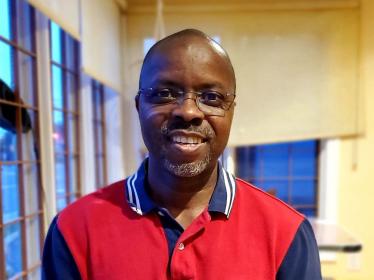
Amatoritsero Ede is an Assistant Professor in the Department of English at Mount Allison University. His work focuses on Afropolitan Studies, Global Anglophone Literature, and socio-political cultural commentary. He authored the 2022 nonfiction collection Imagination’s Many Rooms , blending literary analysis with personal narratives about encounters with global literary figures. His research engages postcolonial theory, digital humanities, and cultural identity politics. His academic contributions include critical essays on African literature’s digital futures, the evolution of Afropolitanism as a cultural framework, and redefining the global literary canon. His 2023 articles Area Studies: From “Global Anglophone” to Afropolitan Literature and Digital Afropolitan Futures exemplify his exploration of transnational cultural networks and technological impacts on identity formation. Ede’s writings often appear in venues like the Maple Tree Literary Supplement, with pieces such as The Example of Mandela anthologized in Mandela: Tributes to a Global Icon . His interdisciplinary approach bridges literary studies with socio-political analysis, offering critical insights into diasporic consciousness and cultural decolonization.
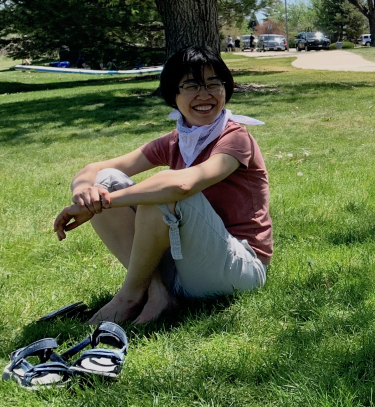
Janice Ho serves as Associate Professor and Associate Head (Curriculum & Planning) in the Department of English Language and Literatures at the University of British Columbia's Faculty of Arts. Previously, she taught at the University of Colorado Boulder after completing her graduate studies at Cornell University. Her academic profile spans British and transnational modernisms, postcolonial/decolonial studies, and infrastructure-focused literary analysis. Educational background: BA (First Class Honours), University of Queensland MA, Cornell University PhD, Cornell University Ho's research investigates twentieth- and twenty-first century British literature through intersecting frameworks of citizenship, empire, and infrastructure. Her work critically examines how sociopolitical transformations—from women's suffrage to colonial welfare policies—reshape literary representations of national identity. Current projects extend these inquiries into midcentury development discourses and contemporary global issues like Afropolitanism and refugee crises. Publication trends reveal consistent engagement with postcolonial theory and modernist aesthetics, evolving toward infrastructure studies in recent works. Her scholarship frequently analyzes canonical authors (Conrad, Woolf, Rushdie) while addressing urgent themes of human rights and transnational governance through literary lenses. Scientific awards: No specific honors or fellowships are documented in the provided materials. Advising and grants: The source text contains no information regarding graduate student supervision, research funding, or grant acquisitions.
Kanika Batra is a Professor of English at Texas Tech University, where she teaches and conducts research in Postcolonial Studies, Globalization, Transnational Feminism, and Queer Studies. She serves as a faculty member in the Department of English within the College of Arts and Sciences, contributing significantly to comparative literature and interdisciplinary scholarship that bridges literary studies with social justice movements. Dr. Batra earned her PhD in English from Loyola University Chicago in 2006, following advanced degrees from the University of Delhi in India. Her scholarly work emphasizes connections between literary forms and social movements, with particular attention to how marginalized communities create counterpublics and advance human rights through diverse forms of expression including magazines, newsletters, pamphlets, and digital communications. Her research reveals consistent engagement with Black, Asian, and minority ethnic writing across the Global South, with methodological innovation that combines archival historical research, analysis of policy documents, close readings of activist publications, and conversations with activists. Dr. Batra's work demonstrates how literary forms function as crucial sites for imagining alternative social relations and political futures, particularly through non-biological kinship structures and transnational solidarities between movements in India, Jamaica, and South Africa. Scientific Awards and Recognition Fulbright Canada Research Chair in Society and Culture, University of Alberta (2025) Speculative Play and Just Futurities Residency, Mellon Foundation-Indiana University (2025) Stellenbosch Institute for Advanced Studies Research Fellowship (2024) TTU College of Arts and Sciences Excellence in Research Award in the Humanities (2021) National Women's Studies Association-Routledge Book Prize for Worlding Postcolonial Sexualities (2020) Abioseh Porter Best Article Prize of the African Literature Association (2018) Beinecke Rare Book & Manuscript Library Fellowship, Yale University (2018) Dr. Batra has supervised numerous doctoral students whose research focuses on comparative literature, globalization, postcolonial studies, and feminist and queer studies. Her former students have secured academic positions at institutions across the United States, including Texas Tech University, Miami University, and Purchase College SUNY. She serves as an external examiner for MA and PhD research at universities in South Africa and India, and has mentored international scholars through Fulbright Foundation sponsorship. Current research projects include comparative studies of civil rights movements in the United States and South Africa, and a contracted volume for Cambridge University Press on feminist literary history. Dr. Batra is actively engaged in professional service as a Delegate Assembly Member for the Modern Languages Association (2023-2026), and previously served as Chair of the Forum on South Asian and Diasporic Literatures for the MLA (2019-2020). She has contributed significantly to academic discourse through editorial work, conference presentations, and public-facing scholarship that bridges academic research with broader social justice conversations.
Dr. Alpha Abebe (PhD, Oxford) is an Associate Professor with the Faculty of Humanities at McMaster University , where she serves as the Lead for African and Black Diaspora Studies (ABLD). She teaches interdisciplinary courses focused on equity and social justice , migration and diasporas , ethical leadership , and critical inquiry , while leading initiatives to advance equity and amplify student voice on campus. Education : PhD in International Development from the University of Oxford (2016), MA and Graduate Diploma in Refugee and Forced Migration Studies from York University, and BA from the University of Toronto. Her research explores African diasporas , transnational identities , and Black community engagement , with a focus on youth from Black/African, immigrant, and low-income communities. Publications highlight themes of diasporic identity, health equity, and Ethiopian diaspora development. Scientific awards include recognition in McMaster’s Celebrating excellence in Teaching and Learning stories, though no formal prizes are listed. She has no visible grants in the VIVO database but collaborates with co-authors like Dean, Rethmann, Moffat, and Frost.
Dr Alpha Abebe is an Associate Professor of Communication Studies & Media Arts in the Faculty of Humanities at McMaster University , Canada. She also serves as the Lead for the African and Black Diaspora Studies (ABLD) programme, driving interdisciplinary research and curriculum innovation centred on equity, migration and Black community engagement. Education B.A., University of Toronto M.A., York University Graduate Diploma, Refugee and Forced Migration Studies, York University Ph.D., University of Oxford Research Interests Dr Abebe’s scholarship interrogates African diasporas, transnational identities and Black community engagement through lenses of critical race theory, migration studies, and community-based participatory research . Her work spans anti-oppression pedagogy, cultural studies, globalization, youth and social justice. She is particularly interested in how diasporic youth negotiate belonging and contribute to development discourses across borders. Recent analyses explore health advocacy within Black Canadian communities, COVID-19 impacts on diasporic populations, and the politics of representation in public engagement. Across these themes she foregrounds ethical leadership and student voice. Publication Trends Between 2009 and 2024 Dr Abebe has produced a steady stream of peer-reviewed articles, book chapters and policy-oriented pieces. Her scholarship is anchored in diaspora studies but increasingly intersects with public health policy , critical development studies and visual methodologies . Collaborative outputs emphasize co-authorship with community stakeholders and emphasize participatory epistemologies. Teaching & Mentorship At McMaster she teaches undergraduate and graduate courses including Being, Belonging and Migration , Researching Global Peace and Social Justice , and Insight & Inquiry: Questions to Change the World . She is actively involved in the Black Student Mentorship Program and continually works to amplify student perspectives in curriculum design and university governance. Labs, Teams & Initiatives Dr Abebe leads the African and Black Diaspora Studies (ABLD) initiative at McMaster, convening faculty, students and community partners around research, events and curricular development. She maintains extensive networks with grassroots organizations and youth groups across Ontario, positioning the university as a key site for community-engaged scholarship.
Grace Adeniyi-Ogunyankin is an Assistant Professor in the Department of Geography and Planning and holds a cross-appointment in Gender Studies at Queen’s University, Faculty of Arts and Science. She specializes in postcolonial systems, African urban futures, and gender studies, with a focus on spatial exclusions, financial inclusion, and Afrofuturism. Her research integrates urban ethnography and popular culture analysis to address issues of difference and belonging. Education: Bachelor of Arts (Honours) in Psychology and Global Development Studies, Queen’s University (2005) Master of Public Administration, Queen’s University (2006) Ph.D. in Gender, Feminist, and Women’s Studies, York University (2014) Research Interests: Her work explores Black futurity, low-income women’s resistance, and transnational research politics. She has conducted fieldwork in Nigeria, addressing urban governance, women’s political participation, and neoliberalism’s impact on aging populations. Publications: Recent works include studies on Owambe urbanism, Afropolitan imagineering, and gendered urban experiences during the pandemic. Her articles highlight intersections of race, class, and gender in postcolonial urban contexts. Affiliations: Board Member at Nokoko Carelton University, Canada Research Chair in Youth and African Urban Futures.
Kai Wood Mah is an Associate Professor at Laurentian University, a licensed architect with the Ordre des architectes du Québec (OAQ), and co-founder of the interdisciplinary design practice Afield (www.afield.ca). His work integrates architectural practice with design history and community engagement, particularly through collaborations with Cree and Inuit communities in Northern Québec. His educational background includes: PhD in Architecture from McGill University MA in East Asian Studies from McGill University Bachelor of Architecture from McGill University Dr. Mah's research spans Architecture, Design History, Indigenous Architecture, Refugee and Migration Studies, and Humanitarian Architecture, employing archives, fieldwork, and social science methodologies to advance spatial justice. His interdisciplinary approach addresses critical social issues through design-creation processes. Recent publications like "Situated Practices in Architecture and Politics" (2023) and "Economies of Humanitarian Architectural Practices" (2018) reveal a consistent focus on architecture's role in refugee situations, early childhood development, and community building, demonstrating how spatial interventions can drive social change. No information is available regarding academic advising or research grants in the provided text.