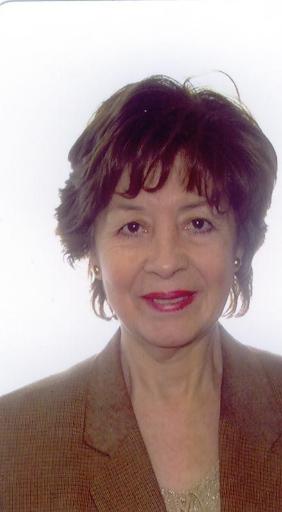
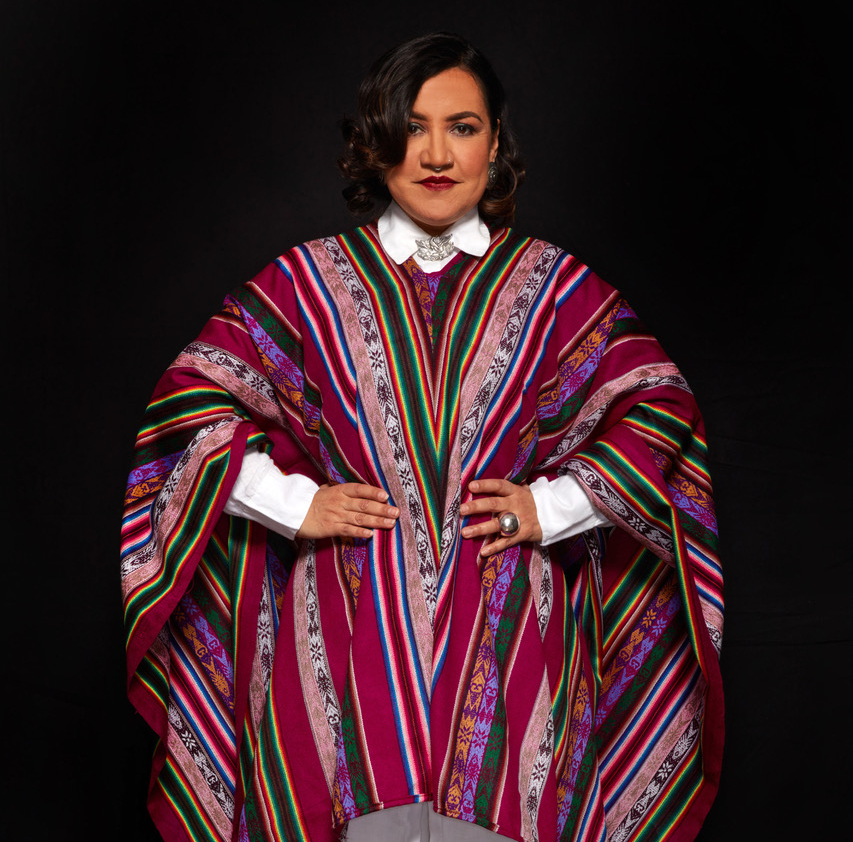
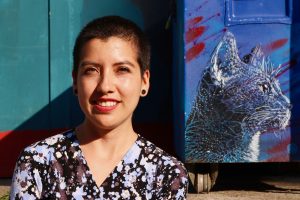
Lillie Padilla is an Assistant Professor of Spanish Linguistics at Sam Houston State University's Department of World Languages and Cultures. Holding a Ph.D. and M.A. in Spanish Linguistics from Arizona State University alongside a Bachelor of Arts from the University of Ghana, her research explores interdisciplinary connections between: Afro-Latinx representation in educational materials Discourse analysis and language ideologies Sociolinguistic studies in Equatorial Guinea Critical race theory applications in language teaching Her work focuses on Spanish subject pronoun expression patterns in multilingual contexts and curriculum development for inclusive pedagogy. Recent publications examine: Representation gaps in Spanish language textbooks Methodological challenges in Equatorial Guinea research Critical discourse analysis of Netflix's Elite series Intersectional representation of Afro-Latinx women Scientific achievements include: Finalist for American Association of Linguistics 2025 award for co-edited volume Representation, Inclusion and Social Justice in World Language Teaching Padilla's research continues to shape conversations about linguistic diversity and marginalized voices in language education through both empirical studies and theoretical frameworks.
Glenda R. Carpio is the Powell M. Cabot Professor of English and Professor of African and African American Studies at Harvard University. She holds a Ph.D. in English from UC Berkeley and a B.A. from Vassar College. Her research focuses on African American literature, humor studies, and intersections of race, immigration, and cultural identity. She has published critically acclaimed works like Laughing Fit to Kill and co-edited African American Literary Studies . Her teaching spans Harvard, NYU, and Compton schools through Teach for America. Notable awards include the Harvard Abramson Teaching Award and a Fulbright Fellowship. She is affiliated with the W.E.B. Du Bois Institute and has advised initiatives like Fuerza Latina. Current projects explore immigration narratives in American literature. Her interdisciplinary work bridges literature, art, and historical memory, with contributions to Daedalus , American Literature , and Chronicle of Higher Education . She advises Harvard undergraduates and engages in public discourse on race and culture.
Lady Rojas Benavente is an Associate Professor in the Department of Classics, Modern Languages and Linguistics at Concordia University, where she has been teaching since her appointment as Assistant Professor in 1996, with promotion to Associate Professor in May 2003. Prior to joining Concordia, she served as an Assistant Professor at the University of Ottawa and as a lecturer at the Faculty of Education at The University of Western Ontario, where she taught second language methodology, French and Spanish. Dr. Rojas Benavente received her PhD in Hispanic Literature from the University Laval in 1991, following an MA in Spanish Literatures (Cum Laude, 1985) and BA in History and Spanish (1983), both from the University of Ottawa. She also holds a Diploma qualifying as a Secondary School teacher specializing in Spanish Language and Literature, Psychology and Philosophy from the National Pedagogic University of Women in Lima, Peru (Cum Laude, 1968). Her research focuses on Critical Feminism in Peruvian & Latin-American Women Writers, with special emphasis on contemporary Peruvian and Mexican narrative, drama, poetry and essay. Her work encompasses Cultural Studies and Literary and Critical Theories, Latin American History, Post-colonialism, Human Rights, Women Studies, Feminist Theories, Gender Issues, Latin America Black History, Indigenous and Minorities Studies, and Comparative Studies in Education. She has published nine books (two poetry collections and seven critical interpretations) and over 50 refereed papers in Latin American Women's literary work, particularly focusing on Peruvian and Mexican authors. Dr. Rojas Benavente's scholarly output demonstrates consistent engagement with themes of gender, ethnicity, and power structures in Latin American literature. Her recent publications explore the works of contemporary Peruvian women writers, examining how they address issues of violence, racism, and gender in post-independence national contexts. Her research trajectory reveals a deepening focus on decolonial perspectives, indigenous resistance, and the intersection of gender with other social categories. Hispanic Literary and Cultural Institute's Honor Diploma (2010) Publication Award from the University of New Brunswick for the Anthology, Constructing Memory: Latino-Canadian Women Writers in the New Millennium Recognition by Mouvement Desjardins in celebration of International Women's Day (2008) As president of the Society for Literary Criticism of Spanish American Women Writers' work (CCLEH), Dr. Rojas Benavente has facilitated connections between Concordia colleagues, local artists, international writers, and the Latino-Montreal community. She serves on the editorial boards of Alba de America, a literary magazine from the United States, and Voces, a Peruvian cultural magazine. Her leadership extends to organizing numerous conferences on Latin American women writers across Canada, Latin America, and Montreal, including multiple meetings of Hispano-Canadian Women Writers and events commemorating significant figures in Latin American literature.
Juan Eduardo Wolf is an Associate Professor of Ethnomusicology at the University of Oregon's School of Music and Dance. He holds a PhD in Folklore and Ethnomusicology from Indiana University (2013), alongside degrees in Chemical Engineering and Art Studio from prestigious institutions. His research focuses on music-dance traditions of Afro-descendant and Indigenous communities in Latin America and the Caribbean, exploring decolonial methodologies and cultural equity. He directs the Latin American Studies Program and coordinates the World Music Series, which hosts global music performances. His awards include grants from UO's Center for Latin American and Latinx Studies (2018) and Global Oregon (2018). Wolf teaches courses like Decolonizing Music, Music in World Cultures, and directs World Music Ensembles focusing on Andean and Puerto Rican traditions. His research examines how marginalized groups use music-dance to resist colonial legacies, with fieldwork in Chile, Puerto Rico, and Bolivia. He is a core faculty member in Folklore and Public Culture Programs and advises on Latinx Studies initiatives. Notable publications include Styling Blackness in Chile (2019), analyzing Afro-Chilean music-dance, and Un Tumbe Ch’ixi (2021), integrating Afro-descendant ideas into Andean methodologies. His work challenges colonial frameworks and advocates for socially just music science practices. He performs as a percussionist/guitarist in global ensembles and mentors students through experiential learning.
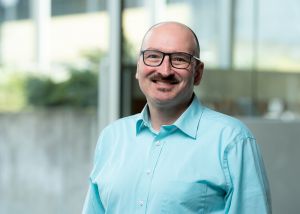
Harald Zapf is a Senior Lecturer in the Department of English and American Studies at Friedrich-Alexander University Erlangen-Nürnberg (FAU), specializing in American literature and cultural studies. Affiliated with the Faculty of Philosophy and Theology, he focuses on postcolonial theory, hybridity, and multiculturalism in the Americas. 2002 Lilli Bechmann Rahn Doctoral Prize 2001 Bavarian American Academy Dissertation Prize His research explores intersections of ethnicity, language, and performance in contemporary American poetry, particularly in multilingual and transnational contexts. He has collaborated extensively with Wolfgang Binder and Klaus Lösch on publications examining cultural encounters and hybrid identities. Zapf’s publications span monographs, edited volumes, and critical articles, with a strong emphasis on authors like Ishmael Reed and theoretical frameworks such as rooted cosmopolitanism and deconstruction. His work bridges literary analysis with sociocultural and philosophical discourses.
University of Illinois Urbana-ChampaignUnited States
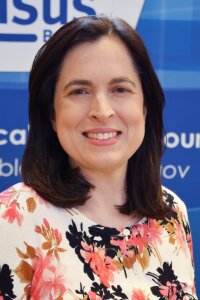
Julie A. Dowling is an Associate Professor in the Department of Latina/Latino Studies at the University of Illinois at Urbana-Champaign. She holds a Ph.D. in Sociology from the University of Texas at Austin (2004) and is also affiliated with the Department of Gender and Women's Studies. Her research examines racial identity construction, ethnic categorization, and sociocultural dynamics among Latino populations. Current projects focus on racial socialization in Mexican American families and gender identity negotiation among U.S.-born Latina women. She actively contributes to U.S. Census Bureau policy through her service on the National Advisory Committee (NAC). Dr. Dowling's scholarly work has received recognition, including: Distinguished Contribution to Research Award for 'Best Article' from the Latino/a Sociology Section of the American Sociological Association Honorable Mention for the 2009 Distinguished Contribution to Sociological Perspectives Award Her publications span interdisciplinary journals in sociology, linguistics, and ethnic studies, revealing a consistent focus on racial ideology, language politics, and immigrant experiences in triracial systems. Dr. Dowling's work also extends to policy-oriented research through edited volumes like Governing Immigration Through Crime .
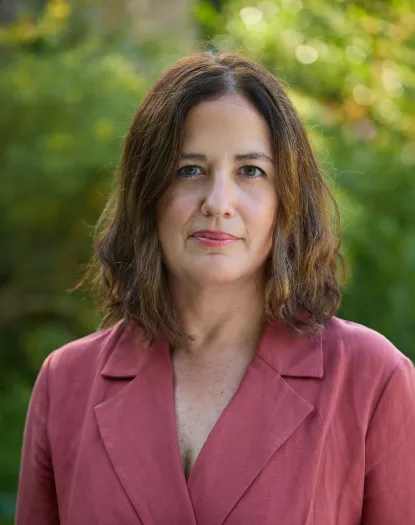
María del Pilar Blanco is a Professor of Spanish American and Comparative Literature at the University of Oxford, where she is also a Fellow and Tutor at Trinity College and Associate Lecturer at Worcester College. Her research intersects Spanish American literature with comparative frameworks, focusing on literature and science, spectrality, landscape, and transnational literary exchanges. Research explores popular science writing in late 19th-early 20th century Spanish American periodicals Current book project: Modernist Laboratories: Science and the Poetics of Progress in Fin-de-Siècle Spanish America (Oxford University Press) Supervision interests: literature/science intersections, spectrality, comparative projects on hemispheric American literature Key awards include the British Academy Mid-Career Fellowship (2017-18) and the Ray and Pat Browne Award (2010). Her publications span spectral theory, modernist studies, Latinx literature, and scientific modernity in Latin America.
Carmen Lamas is an Associate Professor at the University of Virginia, jointly appointed to the Department of English and the Department of American Studies. Her work bridges Latinx literary traditions with hemispheric American and Latin American studies, focusing on 19th-century to contemporary scholarship. PhD, University of Pennsylvania M.A., Georgetown University B.S./B.A., Florida State University Lamas specializes in Latinx literary cultures, translation practices, and historiography of the Americas. Her research interrogates the intersections of race, migration, and transnational identity through 19th-century texts, digital humanities projects, and collaborative editorial work. Her recent publications highlight the enduring relevance of 19th-century Latinx literature, emphasizing translation as both a creative and political act. Themes include hemispheric transformations, Afro-Latinx representation, and archival recovery of marginalized voices. LASA 2022 Latinx Studies Book Award MLA 2023 Book Prize All-University Teaching Award, 2022 Buckner W. Clay Award, 2021 Henry Luce Project Course Development Award, 2018 As co-founder of the Latina/o Studies Association and editor of Pasados , Lamas champions interdisciplinary collaboration. She has presented widely, including plenary addresses at MACLAS and the MLA Conference, and serves on editorial boards like J19 and Recovering the US Hispanic Literary Heritage .
George Reid Andrews is a Distinguished Professor of History at the University of Pittsburgh's Dietrich School of Arts and Sciences. His work focuses on Afro-Latin America, race relations, and comparative history. He holds a PhD from the University of Wisconsin-Madison (1978), with earlier degrees from Dartmouth College (BA, 1972) and Wisconsin (MA, 1974). Andrews has authored numerous books and articles, including Afro-Latin America, 1800-2000 and Blackness in the White Nation . His research examines racial inequality, slavery, and the African diaspora across Latin America. His teaching spans courses on colonial and modern Latin America, race in Latin America, and U.S.-Latin American relations. Andrews has advised over 15 PhD students, many of whom focus on Afro-Latino history and social movements. Awards include the Guggenheim Fellowship (1996), Chancellor’s Distinguished Teaching Award (1996), and multiple Arthur Whitaker Prizes. Andrews has held visiting professorships in Uruguay and Brazil, and serves on editorial boards for journals like Hispanic American Historical Review . His work bridges academic research with public engagement, including lectures at over 100 institutions globally.
Gema Guevara is an Associate Professor in the Department of World Languages and Cultures at the University of Utah, with over two decades of academic service (1999–present). Her career progression includes: Assistant Professor (1999–2007) and Associate Professor (2007–present). Research Interests focus on intersections of: Latinidad and transnational identity Afro-Cuban musical traditions Racial and gender discourses Cultural hybridity in diasporic contexts Travel writing and colonial narratives Historical constructions of national identity Teaching Portfolio includes courses on: Latin American Cultures & Society US Latino Literature Special Topics in Iberian and Latin American Studies Thesis Research (Masters level) Key Trends in Publications (2000–2014) emphasize: Music as a vehicle for cultural identity Transnational flows in artistic expression Racial politics in literary and musical narratives Gender-specific racial tropes Discursive struggles over cultural authority Diasporic reinterpretations of national identity Scientific Awards : Recipient of the prestigious Obert C. & Grace A. Tanner Fellowship (2012) from the Tanner Humanities Center Academic Service spans teaching, research, and leadership activities within the university structure.
California Institute of Integral StudiesUnited States
Catherine E Walsh is a senior professor and director of the doctoral programme in Latin American Cultural Studies at the Andean University Simón Bolívar in Ecuador. Her academic work centers on decolonial theory, critical interculturality, and the political, epistemic and ethical dimensions of knowledge production in Latin America, with particular focus on Indigenous and Black social movements across the region. Walsh's research interests span decolonial studies, Indigenous epistemic traditions, critical pedagogy, race and gender studies, and Latin American political movements. She has developed influential theoretical frameworks including "re-existence" and "cracks" to understand how alternative social practices emerge from below to challenge coloniality and hegemonic neoliberalism. Her work places Indigenous knowledge systems in conversation with feminists of color like M. Jacqui Alexander and Maria Lugones, as well as anticolonial theorists like Frantz Fanon, creating a rich interdisciplinary approach that bridges social movements with academic theory. She examines how communities living in direct relation with the land challenge Western nation-state sovereignty and imagine alternative forms of humanity "after Man." Walsh's publication trajectory reveals a consistent evolution from early work on educational exclusion of Latinos in the United States toward increasingly sophisticated decolonial frameworks. Her recent scholarship demonstrates how decolonial "cracks"—understood as extant and nascent fissures in the dominant order—take form through ground-up theorizing and practice. She argues for moving beyond "pedagogy as justice" toward "pedagogies of and for life" that enable alternative modes of living despite and beyond the capitalist-modern-colonial-racist system. Her work consistently centers Indigenous and Afro-descendant knowledge while critically engaging with Western theoretical frameworks. Among her most significant contributions is the 2023 book "Rising Up, Living On," which provides a comprehensive overview of Indigenous and Black militant social movements in Latin America from the mid-1990s to the present. As an editor, she has made foundational decolonial works accessible to broader audiences through her 2024 editorial work on "Aníbal Quijano: Foundational Essays on the Coloniality of Power." Her conceptual development of "re-existence" has become a powerful framework for understanding resistance that not only opposes domination but actively creates new forms of being and knowing.
Ysamur Flores-Pena is an Associate Professor at Otis College of Art and Design, affiliated with the Creative Action department under Liberal Arts and Sciences. He specializes in African-based religions in the New World, with a focus on Lucumí (Santería) traditions, identity politics, and intercultural communication. Education: Ph.D., Folklore and Mythology, University of California, Los Angeles (1998) M.A., Folklore and Mythology, UCLA (1991) M.A., Education, Catholic University of Puerto Rico B.A., Hispanic Studies, University of Puerto Rico His research explores Afro-Caribbean ritual arts, sacred narratives, and the intersection of religion, aesthetics, and identity. He has published extensively on topics like Ifá divination, Yemaya altars, and Puerto Rican Spiritism, while his teaching spans courses on religious anthropology, cultural communication, and urban violence. Scientific Awards: UCLA Wayland D. Hand Award (1998) Arnold Rubin Award (1993) Project 88 Scholarship (1990-1994) Graduate Opportunity Fellowship (1989-1990) Otis Faculty Development Grants (multiple years) He has received recognition for his scholarship and teaching, including a certificate from the City of Venice and honors from UCLA and the American Folklore Society. His publications and exhibitions at institutions like the Fowler Museum and St. Louis Museum highlight his interdisciplinary approach to African diasporic cultures.
Marta Caminero-Santangelo is a Professor in the Department of English at the University of Kansas. Her work bridges literary criticism with social justice activism, focusing on U.S. Latinx literature, trauma narratives, and the role of storytelling in immigrant rights movements. Research: Literature’s role in social change, especially for marginalized communities Teaching: Courses on Latinx literature, social justice, and 20th-century American literature Service: Community engagement with immigrant rights organizations Her scholarship analyzes how narratives by undocumented immigrants, DREAMers, and Afro-Cubans challenge power structures and foster solidarity. She has published extensively on topics including testimonio, border-crossing trauma, and panethnic identity construction. Recent publications examine life-writing by undocumented youth, the evolution of the Sanctuary Movement, and intersections of religion with migration activism. Her work combines literary theory with empirical engagement, emphasizing the relevance of cultural analysis to real-world social struggles.
Martha Gonzalez is an Associate Professor in the Intercollegiate Department of Chicana/o-Latina/o Studies at Scripps College, Claremont, where she also serves as the Director of the Scripps Humanities Institute. A scholar, artist, and activist, she is deeply engaged in public scholarship through music, performance, and community organizing. Her work bridges academia and grassroots movements, particularly through her leadership in the Grammy Award-winning band Quetzal and her role in fostering transnational cultural dialogues. PhD in Feminist Studies (Chicana Studies Emphasis), University of Washington, 2013 BA in Ethnomusicology, University of California, Los Angeles, 1999 Transfer, Pasadena City College, 1990-1993 Her research centers on the intersection of Chicana feminist theory , Chican@ music , transnational musical dialogues , and performance studies . She emphasizes collective songwriting and participatory music as tools for social justice and decolonial praxis. Her scholarly work is deeply informed by her lived experience as a musician and community organizer in East Los Angeles and transnational networks with Jarocho communities in Veracruz, Mexico. The 15 most recent publications reflect a consistent engagement with themes of cultural resilience, feminist epistemology, and music as testimony. They span ethnographic analysis, critical reviews, and theoretical explorations, demonstrating her interdisciplinary approach across folklore, ethnomusicology, urban studies, and feminist theory. Her work frequently highlights marginalized voices and practices, from street vendors in Boyle Heights to incarcerated women. Her scientific honors include: MacArthur Fellowship (2022) United States Artist (USA) Fellowship (2021) Grammy Award (2013) Fulbright Garcia-Robles Fellowship (2007-2008) Woodrow Wilson Career Enhancement Fellowship Multiple Scripps College research and teaching awards Gonzalez has advised and co-founded several academic and artistic collectives, including Women Who Rock and The Seattle Fandango Project . She has secured research grants from the Mellon Foundation, California Arts Council, and the 5Cs Creativity and Innovation Initiative. Her leadership extends to board roles at Smithsonian Folkways Records and the American Folklife Center at the Library of Congress . Her personal musical artifacts are housed in the National Museum of American History , underscoring her cultural impact.
Tania Lizarazo is an Associate Professor at the University of Maryland, Baltimore County (UMBC), affiliated with the Department of Modern Languages, Linguistics & Intercultural Communication. She contributes to the Global Studies Program, Spanish Area, and MA in Intercultural Communication, with additional roles as Affiliate Faculty in Gender, Women’s + Sexuality Studies and Language, Literacy & Culture. Ph.D. in Latin American Literature and Cultures from UC Davis (2015) Research focuses on Latin American cultural studies, transnational feminisms, digital storytelling, and performance studies Key projects include mujerespacificas.org with Colombian Black peasant organizations and sexualidadescampesinas.ucdavis.edu with California farmworkers Author of Postconflict Utopias: Everyday Survival in Chocó, Colombia (University of Illinois Press, 2024) Her recent publications and collaborations emphasize digital storytelling as a tool for community engagement and critical analysis of race, gender, and violence in Latin America. She co-edited Repensando a Policéfalo (2006) and has published in journals like Journal of Latin American Cultural Studies and Corpografías . Her work bridges academic research with social justice initiatives. Current courses include topics on digital humanities, migration, Afro-Latin America, and performance studies. She collaborates with Dr. Thania Muñoz D. on the teaching project Intercultural Tales: Learning With Baltimore’s Immigrant Communities .