Ricardo Soares de Oliveira is Full Professor of Political Science at CERI Sciences Po and Senior Research Fellow at the Department of Politics and International Relations, University of Oxford . He also co-directs the Oxford Martin Programme on African Governance and serves as joint editor of Oxford Studies in African Politics and International Relations by Oxford University Press. He is a fellow of the Global Public Policy Institute in Berlin. Education: While specific degrees are not listed, his academic trajectory includes affiliations with the University of Cambridge, Yale University, and the Woodrow Wilson Center, indicating a robust scholarly background. Research Interests: His work centers on the international political economy of African states , with a strong focus on extractive industries , offshore finance , kleptocracy , African-Asian relations , and post-conflict reconstruction . His fieldwork spans multiple African countries and examines how global financial systems and governance structures interact with African political systems. Publications: His scholarly output includes major monographs such as Magnificent and Beggar Land: Angola Since the Civil War (2015) and Oil and Politics in the Gulf of Guinea (2007), as well as edited volumes like China Returns to Africa (2008). His current book project, Africa Offshore , explores the global offshore economy's impact on African politics. Awards and Fellowships: British Academy Senior Research Fellowship (2023) Leverhulme Trust Fellowship (2011) Grants and Collaborations: He has received funding from leading institutions including the ESRC , Rockefeller Foundation , Volkswagen Foundation , and DFID/FCDO . He has consulted for organizations such as the World Bank , European Commission , UNCTAD , and Oxfam . Labs and Teams: He co-directs the Oxford Martin Programme on African Governance at the University of Oxford, a major interdisciplinary initiative examining governance challenges across the African continent.
Ana Paulina Lee is an Assistant Professor of Writing and Digital Humanities in the Comparative Literature, English, and Creative Writing Department at the American University of Paris. She joined AUP in 2025 after teaching Latin American literature and culture at Columbia University for eight years and serving as a Mellon Postdoctoral Fellow at Tulane University. Her interdisciplinary scholarship bridges literature, history, law, and urban studies with particular focus on marginalized narratives in the Americas. Ph.D. from University of Southern California M.A. from New York University B.A. from Binghamton University Professor Lee's research examines how stories—archival, fictional, oral—shape legal imagination, social life, and urban experience in the Americas. She specializes in the intersections of magic, law, and literature in Latin America, with particular focus on Asian and African diasporas in Brazil. Her work traces how narrative functions as both historical record and catalyst for social transformation, exploring themes of slavery, emancipation, colonial legacies, and urban memory. She approaches these topics through interdisciplinary lenses combining literary analysis with histories of labor, migration, and performance. Lee's recent publications reveal a consistent focus on marginalized narratives and their impact on social structures. Her scholarship connects legal history with cultural production, showing how magical thinking and narrative practices shape urban spaces and social relations. Works like 'Urban Sorcery, Segregation, and Spectacle in Twentieth-Century Rio de Janeiro' and 'Black Magic City' demonstrate her innovative approach to understanding the relationship between occult logics and legal frameworks in Brazilian contexts. Her research on diasporic communities, particularly Chinese and Japanese experiences in Latin America, contributes significantly to transnational and comparative race studies. David B. Larson Fellowship in Health and Spirituality, Kluge Center, United States Library of Congress (2025-2026) National Endowment for the Humanities Fellowship (2025) Social Sciences Research Council, Inaugural Recipient of Interdisciplinary Projects in the Social Sciences (2020-2023) Institute for Ideas and Imagination Fellowship, Columbia University in Paris, France (2021-2022) Provost's Tsunoda Senior Fellowship, Visiting Scholar, Waseda University, Tokyo, Japan (2019) Heyman Center Fellow, The Heyman Center for the Humanities, Columbia University (2017-2018) Fulbright, Lisbon, Portugal (2013-2014) Professor Lee's scholarly activities have been generously supported by major research grants from the National Endowment for the Humanities, the Social Sciences Research Council, and the Library of Congress. Her work demonstrates a commitment to interdisciplinary approaches that bridge humanities and social sciences, particularly through projects examining intersections of race, migration, and cultural production in the Americas. Her publication 'Socially Engaged Oral History Pedagogy Amid the COVID-19 Pandemic' indicates a strong commitment to innovative teaching methods and community-based research. While specific details about current advisees aren't provided, her research program suggests engagement with graduate students interested in diaspora studies, urban history, and literary-cultural analysis. Though not explicitly mentioned in the available information, Professor Lee's research on urban spaces, magic, and law in Brazil likely involves collaborative work with scholars across disciplines. Her participation in centers like the Institute for Ideas and Imagination at Columbia University suggests engagement with interdisciplinary research communities focused on global cultural production and social transformation. Her work contributes to ongoing conversations about how narrative practices shape legal frameworks and social structures in the Americas, particularly regarding racial formation and diasporic experiences.
National Institute of Oriental Languages and CivilizationsFrance
Hardy Mylene is a Lecturer at the National Institute of Oriental Languages and Civilizations (INALCO) in France. Her academic work focuses on intercultural and international communication within the PLIDAM research team. Academic Rank: Lecturer Institution: National Institute of Oriental Languages and Civilizations Department: Intercultural and international communication Research Areas: Epistemology of communication, Chinese communication, organizational communication, economic intelligence Teaching: Contemporary concepts in communication, socio-cognitive psychology, public/cultural diplomacy, "nation branding" Research Themes: Communication competence, theories of organization, economic intelligence, Chinese communication, complexity theories Her research explores communication strategies in Chinese society, cultural diplomacy, and organizational communication frameworks. She has contributed to studies on cognitive warfare, public diplomacy implementation, and pandemic communication strategies. Hardy's work bridges French and Chinese communication practices through digital and organizational lenses. She works with the PLIDAM research team and has directed the Com2I sector (formerly CFI). Her publications cover topics like: Japans cognitive warfare concepts and postures Organizationality in French cultural diplomacy Chinese pandemic strategies Maoist communication structures Louvre museums communication in China Guanxi networks in China-Africa relations While specific awards and student advisement details aren't provided, her work consistently examines communication systems across cultural, political, and organizational boundaries in Asian contexts.
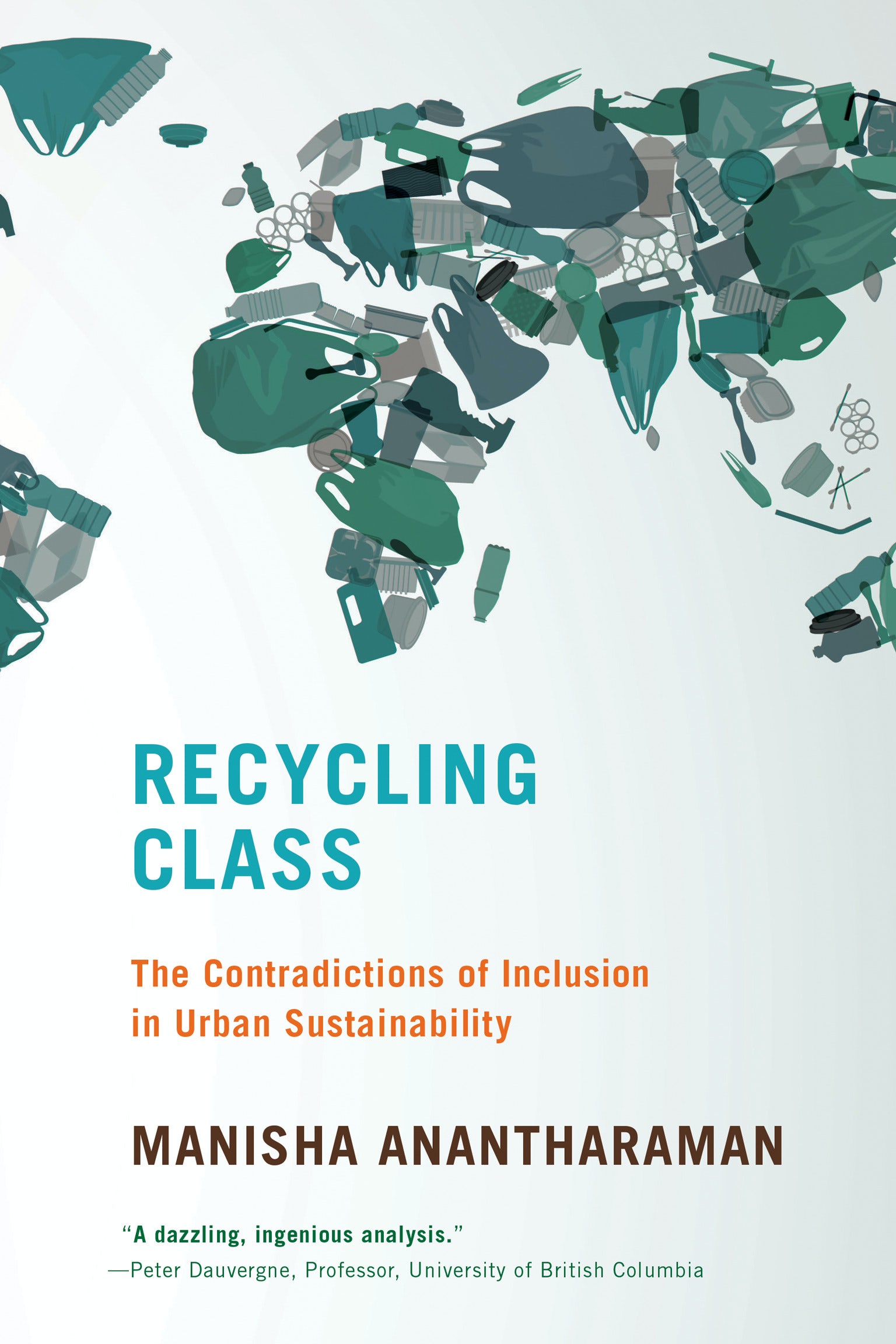
Manisha Anantharaman is an Assistant Professor at the Center for the Sociology of Organizations (CSO), Sciences Po in Paris, where she joined in January 2024. She was previously an Associate Professor at Saint Mary’s College of California in the Global Studies and Environmental Studies programs. Her research lies at the intersection of sociology, environmental studies, and political ecology, with a focus on the socio-cultural and political dynamics of ecological transitions in the Global South. PhD, Environmental Science, Policy and Management, University of California, Berkeley (2015) MA, Integrative Bio-sciences, University of Oxford (2008), Inlaks Scholar Alba Viotto Visiting Professorship, University of Geneva (2019) Her research critically examines how economic ideologies, socio-cultural identities, and power relations shape sustainability practices and environmentalism, particularly focusing on intersectional inequalities of race, class, caste, and gender. She is the author of the book Recycling Class (MIT Press, 2024), which presents an ethnographic study of waste labor and middle-class environmentalism in Bengaluru, India, critiquing 'performative environmentalism' and the limitations of inclusion without structural reform. Her work spans themes of circular economy, informal labor, green public spaces, digital infrastructures of consumption, and sustainable well-being. Her recent publications reflect a strong trend in critical sustainability, analyzing everyday practices, urban green spaces, and the politics of consumption through feminist, postcolonial, and intersectional lenses. She employs ethnographic and community-based methodologies to understand how marginalized communities navigate environmental transitions and assert their rights. Pandemic Pedagogic Excellence Award (2021) Inlaks Scholar (2008) Alba Viotto Visiting Professorship, University of Geneva (2019) Anantharaman is actively engaged in advising and research grants. She is a co-Principal Investigator on a €1.3 million Belmont Forum project studying digitalization and sustainable consumption across five countries. She also serves as an Associate Editor for Elementa: Science of the Anthropocene and Consumption and Society . Her policy work includes collaborations with Chatham House and UNEP, where she contributes to reports on circular economy and consumption, emphasizing marginalized perspectives. She teaches courses in Environmental Justice, Environmental Sociology, and Qualitative Methods at Sciences Po, and has extensive teaching experience at institutions like UC Berkeley and the University of Geneva. She is a key member of the Center for the Sociology of Organizations at Sciences Po, participating in seminars on ecological sense and social-ecological transitions. Her research projects involve collaboration with scholars from Sweden, Norway, Turkey, and Japan, as well as engagement with municipal governments, civil society, and digital designers through design workshops. She is currently launching a comparative study on informal work in the circular economy across Asian and African cities.
Jules Naudet is a CNRS research fellow at the Center for Indian and South Asian Studies (CEIAS) at the École des Hautes Études en Sciences Sociales (EHESS). Previously, he conducted postdoctoral research at the Research Team on Social Inequalities (ERIS) at the Maurice Halbwachs Center and worked at CSH in New Delhi where he directed the "Politics and Society" division. Dr. Naudet serves on the editorial board of the SAMAJ journal and co-edits "La Vie des Idées." He co-directs the "Sociology of Inequalities in India" seminar with Joël Cabalion, Mathieu Ferry, Odile Henry, and Olivier Roueff. Naudet's research centers on social inequalities and economic elites in India, with particular focus on caste systems and social mobility. His scholarly work spans sociology, political science, and South Asian studies, examining how traditional social structures interact with modern economic forces. His recent publications reveal an expanding interest in digital sociology, investigating how technological changes reshape social organization and political power dynamics. This represents an evolution from his earlier work on caste systems to include contemporary digital transformations, demonstrating his ability to bridge historical analysis with current sociological inquiry. His publication record indicates consistent scholarly productivity with works spanning from 2009 to the present, showing particular concentration in the last five years. The thematic diversity of his work—ranging from caste studies to digital revolution impacts—reflects his interdisciplinary approach to understanding social phenomena across different contexts. Naudet completed his education at Sciences Po and the National Institute of Oriental Languages and Civilizations, earning a doctorate in sociology. His academic trajectory demonstrates sustained focus on social stratification with geographical specialization in India, while increasingly adopting comparative perspectives that connect Indian society with Western contexts.
Mark Turin is an Associate Professor in the Department of Anthropology and the Institute for Critical Indigenous Studies at the University of British Columbia. He directs both the Digital Himalaya Project and the World Oral Literature Project. Previously, he served as Chair of the First Nations and Endangered Languages Program (2014-2018) and as Acting Co-Director of the Institute for Critical Indigenous Studies (2016-2018). Before joining UBC, he was an Associate Research Scientist with the South Asian Studies Council at Yale University and the Founding Program Director of the Yale Himalaya Initiative. Dr. Turin's research focuses on ethnolinguistics, language endangerment, visual anthropology, digital archives, and fieldwork methodology. His work spans the Himalayan region (particularly Nepal, northern India, and Bhutan) and more recently the Pacific Northwest. He has worked collaboratively with Thangmi-speaking communities since 1996 and with the Heiltsuk First Nation since 2014. His academic training includes Social Anthropology from the University of Cambridge and linguistic work on the Thangmi language through the Himalayan Languages Project at Leiden University. His scholarly publications reveal a trajectory from specific linguistic documentation of Himalayan languages toward broader concerns with digital archiving, language revitalization, and the politics of language contact. Recent works focus on relational lexicography for Indigenous languages, the impact of global events like pandemics on language practices, and digital approaches to preserving oral traditions. His editorial work consistently centers community engagement and accessibility in language documentation. Dr. Turin serves on numerous editorial boards including HIMALAYA (which he co-edited 2013-2017), HAU: Journal of Ethnographic Theory, and Book 2.0. He also holds advisory roles with the Tamang Language Preservation Initiative, Archive Nepal, Canadian Language Museum, and multiple international language preservation organizations. As an educator, Dr. Turin has led academic programs focused on Indigenous languages and has mentored students through UBC's First Nations and Endangered Languages Program. His community-based work has resulted in practical language materials including mother tongue primers for Thangmi-speaking children. He regularly acts as a peer reviewer for major research funding bodies including AHRC, SSRC, ESRC, and NSF. Through the Digital Himalaya Project (co-founded 2000) and World Oral Literature Project, Dr. Turin has established significant digital infrastructure for preserving endangered cultural materials. His BBC Radio 4 series "Our Language in Your Hands" (2012) and "On Language Location" (2014) demonstrate his commitment to public engagement with linguistic anthropology and language endangerment issues.
Charlotte Wang serves as an Assistant Professor of Organizational Communication at IPAG Business School since 2014, where she also acts as the Asian Relationship Manager. Prior to this, she worked as a journalist in France (TV5 Monde, France 24) and in China. Education: Ph.D. in Information Sciences & Communication (2009), University of Paris II, France Master in Communication (2004), French Institute of Press, France Bachelor in Lettres (2000), Shanghai International Studies University, China Her research focuses on Organization Management , Corporate Communication Strategies , and Chinese Culture & Geopolitics , with a particular interest in China-specific business dynamics. Key publication trends include: Sino-European comparative studies (circular economy communication) Geopolitical analyses of media and technology Intercultural negotiation patterns Economic influences on religious organizations Her professional background combines academic research with practical experience in media production and international business relations, particularly between France and China.
National Institute of Oriental Languages and CivilizationsFrance
Marie Chosson is a Lecturer specializing in Mesoamerican anthropology, particularly focusing on Tseltal Maya communities in Chiapas, Mexico. She holds academic affiliations with INALCO's College of Mesoamerican Languages and Civilizations and is actively involved in research teams like CESSMA (Centre for Social Science Studies on the African, American and Asian Worlds). Her roles include leading the Mesoamerican Languages and Civilizations program, serving on INALCO's Scientific Council, and editing the 'Americas' collection for Presses de l'Inalco. Her research interests span the anthropology of politics, ritual communication, Mayan oral traditions, and the intersection of indigenous rights with transnational discourse. Key themes include temporalities in Mesoamerican ritual practices, symbolic landscapes, and the adaptation of exogenous knowledge systems by indigenous groups. She has contributed to interdisciplinary volumes on temporalities in Mesoamerican ritual, materiality in house-building rituals, and the socio-political dynamics of indigenous territorial projects. Her publications analyze topics such as nocturnal economic practices among the Tseltal, male pregnancy rituals, and the challenges of translating rights discourse into indigenous contexts. She collaborates with institutions like the EREA (Centre for Native American Ethnology) and has co-edited works on knowledge appropriation and Mayan historical narratives.
National Institute of Oriental Languages and CivilizationsFrance
Mathieu Guerin is a Lecturer at the National Institute of Oriental Languages and Civilizations (INALCO) , specializing in Southeast Asian History and Environmental History within the Southeast Asia and the Pacific department. He is authorized to direct research (EHESS 2019) and holds an associate affiliation with HisTeMé (EA 7455, University of Caen). His work bridges social history and environmental governance , with a focus on Cambodia and the Malay Peninsula . Research Themes: Social History of Cambodia, Environmental History of Southeast Asia Expertise: Asia, particularly Southeast Asia Teaching: History of Southeast Asia Notable trends in recent publications include colonial and post-colonial conservation policies , social dynamics in Cambodia, and environmental history across tropical regions. His work often intersects with wildlife conservation , land use , and historical governance in Southeast Asia and Africa.
Bertrand GROSLAMBERT is a Professor of Finance at SKEMA Business School, with over 25 years of academic experience. His career began in 1999, progressing from Associate Professor to his current rank. He has held leadership roles such as Dean of Faculty and Associate Dean at SKEMA. His research focuses on emerging markets, country risk, extreme risk, and banking industry dynamics. Key contributions include work on bank output measurement, liquidity analysis, and tail risk modeling. He has authored influential books like Country Risk Assessment: A Guide to Global Investment Strategy and contributes to peer-reviewed journals in finance and economics. His interdisciplinary approach bridges financial theory with practical policy implications, particularly in crisis management and regulatory frameworks. Educational Background: Dr. Groslambert holds a Doctorat in Economics from Aix-Marseille Université (1998) and advanced degrees in International Economics and Finance (1991) and Management-Finance (1990). Professional Experience: Prior to academia, he worked as a financial controller at Total SA in Senegal and as a portfolio manager at FP Consult, focusing on Latin American and African stock markets. Academic Leadership: He has organized transdisciplinary workshops on extreme risk modeling and serves on editorial boards such as McGraw-Hill's. Media Engagement: His analyses on economic crises and European policy are published in Libération , Mediapart , and Les Echos .
Marie-Albane DE SUREMAIN is a Lecturer in Contemporary History at the Université Paris-Est Créteil Val de Marne (UPEC), affiliated with the ESPE (teacher training school) and the research laboratory CESSMA (Center for Social Science Studies on the African, American and Asian Worlds). She co-directs the laboratory's 'Construction and Uses of Knowledge' research axis, focusing on interdisciplinary analyses of development and globalization dynamics. Her research explores: The history of social sciences in colonial/postcolonial contexts (anthropology, geography, sociology) Historiography of Africa and colonial systems Knowledge circulation between Europe and Africa Pedagogy of socially sensitive topics like slavery and colonization Her publications predominantly examine colonial knowledge systems, postcolonial educational reforms, and transnational academic networks, with recent works analyzing the reappropriation of African historical narratives. She received the Waldo G Leland Prize (2021) for contributions to the Oxford Research Encyclopedia of African History. Key grants include coordination roles in: ANR-SUDS AFRODESC program (educational axis, 2009-2012) European EURESCL program (slave trade education, 2009-2012) She supervises MEEF master's theses in history/geography and leads teacher training on sensitive historical topics.
Simon Chadwick is Professor of Sport and Geopolitical Economy at SKEMA Business School, where his research focuses on the convergence of sports, economics, and international relations. His work critically examines Gulf state investments in football (e.g., Qatar's PSG ownership, Saudi sportswashing), mega-events like the World Cup and Olympics, and the transformation of clubs into global lifestyle brands. Research Interests: Chadwick's expertise spans sport geopolitics, soft power strategies, and commercial branding. He analyzes how nations like Qatar and Saudi Arabia leverage sports for diplomatic influence, and how clubs like PSG transcend traditional football to become fashion icons. His studies also explore diaspora impacts in African football, China's infrastructure diplomacy, and the economic implications of mergers in football. Publications: His recent articles (2022–2024) reveal a consistent focus on Middle Eastern sport investments, mega-event legacies, and geopolitical rivalries. Over 80% emphasize Gulf states' strategies, with recurring themes of soft power, commercialization, and global power shifts in sport. Other Activities: Chadwick frequently collaborates with co-authors (e.g., Paul Widdop) and contributes analysis to international media. No awards, grants, or student advisories are mentioned in the provided texts.
Pierre Biscaye is an Assistant Professor at Université Clermont Auvergne, affiliated with the Centre d'Études et de Recherches sur le Développement International (CERDI). His research focuses on development economics, agricultural economics, conflict risk analysis, and financial inclusion. Key Research Areas: Development economics, agricultural shocks, financial infrastructure, gender disparities in mobile money use, and climate adaptation in farming. Publication Trends: Recent work examines agricultural shocks (e.g., desert locust swarms) and their conflict implications, financial systems in low-income countries, gender gaps in digital finance, and agricultural data methodology.
Dr. Karine DEBOUDT is a University Professor at the University of the Littoral Opal Coast, France, where she has been faculty since 1994. She works at the LPCA (Laboratory of Physics of the Atmosphere and the Ocean, UR 4493) in Dunkirk, France, focusing on atmospheric aerosol research. Her work combines analytical microscopy with atmospheric chemistry to understand particle transport and reactivity in urban and industrial environments across multiple geographical contexts. Dr. DEBOUDT received her PhD in Macromolecular and Organic Chemistry from the University of Sciences & Technologies of Lille (France) in 1994, followed by her State PhD (HDR) in 2009. She began her career at the University of the Littoral Opal Coast as an Assistant Professor before advancing to her current Professor position. Her research focuses on the physico-chemical evolution of aerosols in urban and industrial plumes at various scales, the mixing state of African dust and biomass burning particles at continental scales, and developing methodologies for characterizing atmospheric particles at the particle scale using advanced techniques like TSEM-EDX and TEM-EELS. Her work bridges analytical chemistry, atmospheric physics, and environmental health with significant contributions to understanding the transport, reactivity, and health impacts of atmospheric particles. Analysis of her 15 most recent publications (2021-2024) reveals a strong international collaborative approach examining pollution in diverse geographical contexts including Southeast Asia (Hanoi), South Asia (Indo-Gangetic Plain), and European coastal environments. Her research demonstrates methodological innovation in particle characterization while addressing pressing air quality issues related to urban pollution, vehicle emissions, and health impacts of particulate matter. Dr. DEBOUDT's laboratory work at LPCA involves sophisticated analytical techniques for single-particle analysis, with particular expertise in electron microscopy applications for atmospheric science. She has developed specialized instrumentation for time-resolved aerosol measurements and has made significant contributions to understanding the chemical transformations of particles during atmospheric transport.
Sofia Péquignot is a Lecturer in Social Anthropology at the University of Toulouse – Jean Jaurès, affiliated with the Interdisciplinary Laboratory for Solidarity, Societies, Territories (LISST). She teaches courses including Anthropology of Politics (Master 2), Anthropology of Indian Worlds (Master 1), and various undergraduate anthropology courses. Her research focuses on the Siddi communities of India, exploring processes of identification and unification among these African descendants. Péquignot examines how Siddis construct collective identities through religious networks, kinship, political organization, and musical traditions, while navigating complex relationships with caste, race, and Pan-African movements. Her publications reveal consistent themes across Indian regions, documenting how Siddi communities maintain distinct religious practices (Sufism, Christianity, Hinduism) while developing transnational connections. Her work shows how Siddis are reshaping their communities through both local adaptation and global networking, particularly through digital platforms that connect them with other African diaspora communities worldwide. Péquignot has been actively involved in public anthropology through AtoupAs (Toulouse Association for the Promotion of Social Anthropology), which she co-founded in 2017 to organize ethnology workshops in schools across Toulouse and Lavelanet. She has also participated in organizing the international congress of the French Association of Ethnology and Anthropology. Her field research spans over six projects totaling 17 months between 2014-2020 with Siddi communities across Gujarat, Karnataka, Mumbai, and Hyderabad, following earlier research (2011-2012) with Senegalese street vendors in Barcelona, Spain.