Rutgers, The State University of New JerseyUnited States
Belinda Edmondson is a Distinguished Professor and Chair of the Department of English at Rutgers University-Newark. She holds affiliate memberships in the departments of Africana Studies, American Studies, and Women's, Gender, and Sexuality Studies. Education: Ph.D., Northwestern University Research Interests: Caribbean literature and culture Black Transatlantic literary histories Vernacular literatures Postcolonial and diaspora studies Current Research: Principal Investigator for Natives and Natives, Immigrants and Migrants in an American City (Sawyer Seminar Series, Rutgers-Newark, 2022-23) Biography of nineteenth-century Jamaican author Henry Garland Murray ( Black Dickens ) Scientific Awards & Grants: Modern Language Association Scaglione Prize for African Studies (2023) Gordon K. and Sybil Lewis Award Honorable Mention (2022) Sawyer Seminar Series Grant (2022-23) Sheila Biddle Ford Foundation Fellowship (Harvard, 2020) Johns Hopkins University Society of Scholars (Elected Member, 2014-present) Publications & Coursework: Authored groundbreaking books on Caribbean literature Teaches courses in Caribbean literature, Black vernacular literature, African literature in diaspora, and women's literature of the African diaspora
Rutgers, The State University of New JerseyUnited States
Naomi Jackson serves as Assistant Professor of English and Creative Writing within the Department of Africana Studies and Creative Writing at Rutgers University-Newark. Her academic foundation includes a Williams College undergraduate degree, an MFA from the Iowa Writers’ Workshop, and an MA in Creative Writing from the University of Cape Town earned through a Fulbright Scholarship. Professor Jackson’s creative scholarship centers on literary fiction and nonfiction with deep engagement in African diaspora narratives, Caribbean cultural identity, and intergenerational memoir. Her work critically examines family structures, migration experiences, and postcolonial identities through the lens of Black Atlantic communities. Her publications demonstrate consistent thematic focus on diasporic belonging, with her 2015 novel establishing critical recognition that extends to her forthcoming memoir. Literary contributions span both book-length works and periodical essays in major publications. Major recognitions include: NAACP Image Award and Hurston/Wright Legacy Award nominations Longlistings for National Book Critics Circle, Center for Fiction, and International Dublin Literary Awards Black Caucus of the American Library Association Honor Book designation Residencies at MacDowell Colony and Hedgebrook Fellowships from Camargo Foundation, NYFA, and Schomburg Center She actively contributes to academic governance as Board of Trustees member for France’s Camargo Foundation while mentoring emerging writers through institutional programs and leveraging artistic residencies to advance her creative practice.
Sarah Soanirina Ohmer serves as Assistant Professor of Latin American and Latino Studies, African American Studies, and Women's Studies at Lehman College within the City University of New York (CUNY) system. Additionally, she holds a position on the editorial board of the Women's Studies Quarterly journal, contributing to the field of gender studies scholarship. Her scholarly work critically examines the intersection of gender, race, class, and trauma within Black Women's Literature from Cuba, Brazil, and the United States. This research program bridges African Diaspora Studies, Feminist Theory, and Postcolonial Literary Analysis, revealing how marginalized women articulate resistance through narrative strategies across geopolitical contexts. Her methodological approach integrates intersectional frameworks with close textual analysis to expose systemic power dynamics in literary representations of Black womanhood. Dr. Ohmer has received numerous academic honors and fellowships, including: Fulbright Fellowship CUNY Graduate Center for Politics, Culture and Place Fellowship FLAS Fellowship University of Pittsburgh Internal Research Fellowship University of Indianapolis Internal Research Fellowship CUNY Internal Research Fellowship Her publications appear in the Zora Neale Hurston Forum, Confluencia, and InterFACES, where she advances critical discourse on transnational Black feminisms and literary trauma studies. While specific grant details and student mentorship records remain undocumented publicly, her editorial board service for Women's Studies Quarterly demonstrates sustained commitment to shaping scholarly conversations in gender and racial justice.
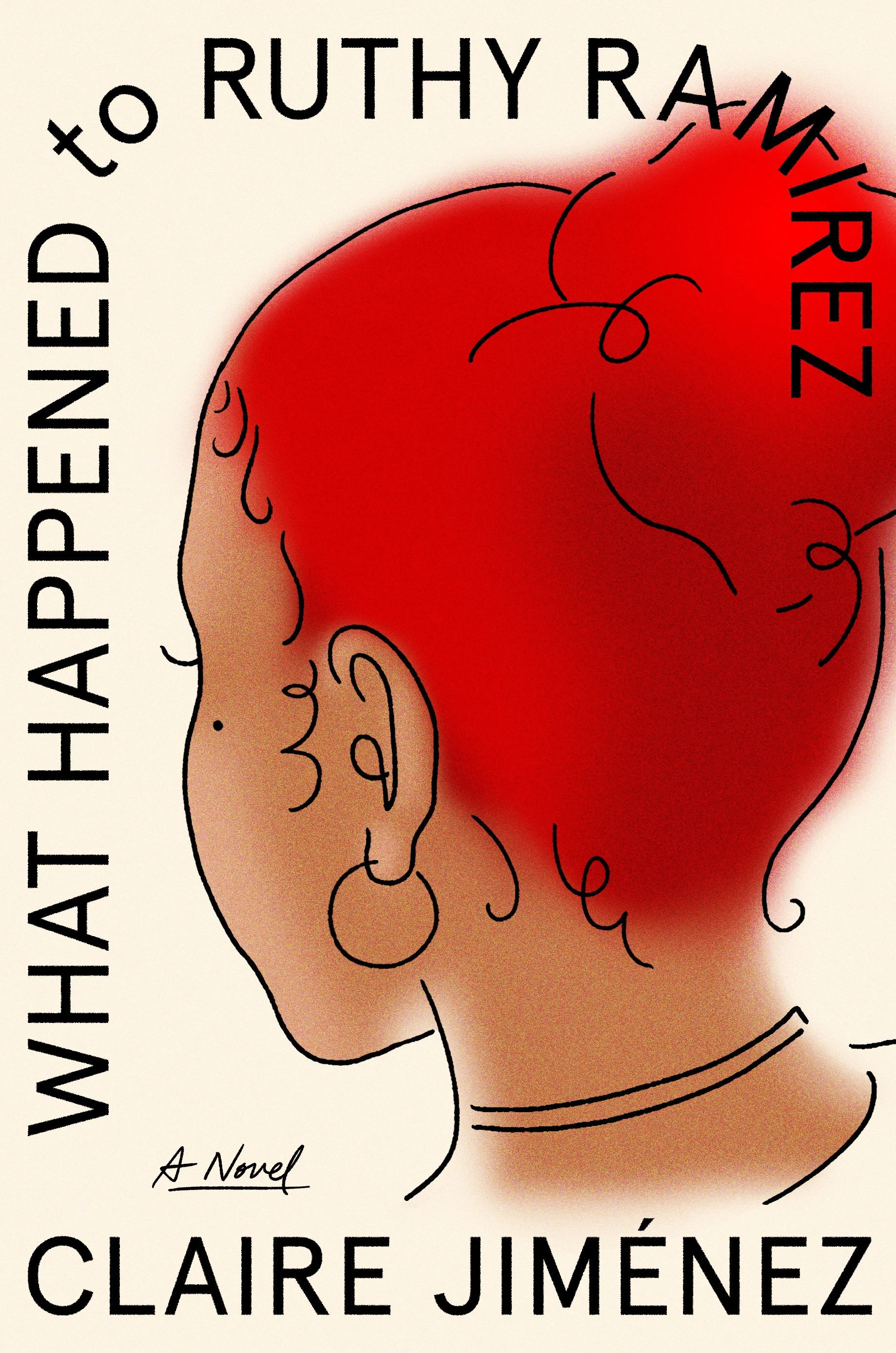
Claire Jiménez is a Puerto Rican writer and Assistant Professor of English and African American Studies at the University of South Carolina. Her work explores Puerto Rican women's experiences through themes of family, grief, colonialism, and cultural identity, blending literary fiction with scholarly research in ethnic studies. She is the author of two critically acclaimed publications: the short story collection Staten Island Stories (2019) and the novel What Happened to Ruthy Ramirez (2023). Her academic background includes an M.F.A. from Vanderbilt University and a Ph.D. in English with specializations in Ethnic Studies and Digital Humanities from the University of Nebraska–Lincoln. This foundation informs her dual focus on creative production and cultural preservation. Jiménez's research centers on Puerto Rican literary traditions within diaspora contexts, particularly examining intergenerational trauma, media representation of women of color, and the legacy of colonialism. Her narrative style combines sharp social critique with emotional depth, using humor and realism to dissect familial bonds and cultural displacement in urban settings. Her publications consistently engage with Puerto Rican narratives across time and space, evolving from localized Staten Island experiences in her 2019 collection to broader explorations of media bias and racialized trauma in her 2023 novel. Both works demonstrate her commitment to centering marginalized voices while innovating within literary form. Her major recognition includes: 2024 PEN/Faulkner Award for Fiction for What Happened to Ruthy Ramirez Jiménez co-founded the Puerto Rican Literature Project in 2019, a digital humanities initiative archiving hundreds of Puerto Rican writers' works. This project exemplifies her integration of academic scholarship with community-focused preservation, creating accessible resources that document literary heritage while challenging historical erasure.
North Carolina Agricultural and Technical State UniversityUnited States
Tajanae Barnes serves as a Part-Time Lecturer within the Department of English at North Carolina A&T State University, contributing to undergraduate instruction in specialized literary fields. Her academic preparation includes: Ph.D. in English from University of Nevada, Las Vegas (2021) M.A. in English and African American Literature from North Carolina A&T State University (2015) B.A. in English from North Carolina A&T State University (2014) Dr. Barnes specializes in African American literary traditions with particular expertise in novelistic forms. Her pedagogical focus manifests through long-standing instruction of African American Novel I (since 2023) and African American Novel II (co-taught with F. Spencer-Maor since 2019), demonstrating sustained commitment to advancing critical engagement with Black literary heritage. No scientific awards or research grants are documented in available institutional records. Current teaching responsibilities constitute her primary academic engagement, with no indicated supervision of graduate students or leadership of research laboratories.
Dr Josie Gill is an Associate Professor in Black British Writing within the Department of English at the University of Bristol, holding a PhD from the University of Cambridge. Her interdisciplinary research bridges literature, science, and race studies, with leadership roles in the Centre for Black Humanities and Migration Mobilities Bristol initiatives. Her educational background includes: BA, University of Sheffield MA, University of Nottingham PhD, University of Cambridge Gill's scholarship focuses on contemporary Black British, Caribbean, and African American writing, examining intersections with genetics, epigenetics, and racial science. She explores how literature intervenes in scientific debates about race while addressing decolonization's impact on interdisciplinary collaboration. Her work extends to historical fiction and postcolonial theory, particularly regarding enslaved experiences through archaeological-literary dialogues. Recent publications reveal a consistent interdisciplinary trajectory, merging literary analysis with scientific inquiry to critique racial narratives in genetics and medicine. Her award-winning book *Biofictions* exemplifies this approach, while newer projects tackle antiracism in humanities-science collaborations and decolonizing academic structures. Key accolades include: British Society for Literature and Science Book Prize (2020) for *Biofictions* Shortlisted for European Society for the Study of English First Book Award (2022) Philip Leverhulme Prize (2022) for *Black Lecturer* project Gill actively supervises doctoral research in Black British writing and literature-science intersections. Her funded projects demonstrate significant grant leadership: AHRC: 'Literary Archaeology' (Principal Investigator, 2016-2017) Wellcome Trust: 'Black Health and the Humanities' (Principal Investigator, 2020-2022) Philip Leverhulme Prize (2022) for *Black Lecturer* development As a core member of Bristol's Centre for Black Humanities, she co-develops initiatives exploring race, health, and migration. Her work with the Centre for Humanities, Health and Science and Migration Mobilities Bristol fosters cross-disciplinary networks addressing historical trauma and contemporary racial justice through collaborative scholarship.
Maria Katharina Wiedlack serves as Assistant Professor for Anglophone Cultural Studies at the Department of English and American Studies, University of Vienna. Her academic journey includes postdoctoral fellowships at the Humboldt University of Berlin, Europa-Universität Flensburg, and the University of Vienna, as well as a visiting professorship at Johns Hopkins University's Center for Advanced Media Studies. She teaches courses including Introduction to the Study of Literature and Culture, Cultural Theories and Popular Culture, and specialized seminars on topics ranging from queer theory to Asian American culture. Wiedlack's research centers at the intersection of queer-feminist theory, post-socialist studies, disability studies, and decolonial approaches. Her work critically examines Western representations of Russia, particularly regarding vulnerable populations, with a focus on media constructions, historical narratives, and cultural productions. She investigates how geopolitical tensions shape understandings of gender, sexuality, and disability across national boundaries. Her recent publications reveal a consistent scholarly trajectory examining the complex relationships between Eastern Europe and 'the West' through critical lenses. Wiedlack's work demonstrates particular interest in archival practices, knowledge production in marginalized communities, and the politics of visibility. Her research often focuses on how mainstream Western media constructs narratives about Russian and post-Soviet subjects, particularly regarding queer and feminist movements. Principal Investigator for FWF project 'Rivals of the Past, Children of the Future: Localizing Russia within US National Identity Formations from a Historical Perspective' (V 741) Project lead for 'The Magic Closet and the Dream Machine: Post-Soviet Queerness, Archiving, and the Art of Resistance' (https://magic-closet.univie.ac.at/) Wiedlack's scholarly work extends beyond traditional academic boundaries into community engagement, particularly through her research on queer-feminist punk subcultures and activism. Her recent monograph 'Under Western Eyes: Vulnerable Minorities and the Russian State in New Cold War Cultures' (Academic Studies Press, 2025) represents a significant contribution to understanding contemporary geopolitical narratives through critical cultural analysis.
E. Cecelia Conway is a Professor in the Department of English at Appalachian State University with significant cross-appointment in Interdisciplinary Studies, specializing in folklore and Appalachian cultural studies. Her work centers on documenting African American musical contributions to Appalachian traditions, particularly the banjo's historical trajectory from Africa to the mountains. Duke University: BA and MA in English University of North Carolina at Chapel Hill: PhD Conway's research explores the confluence of African diasporic and Appalachian musical practices through ethnographic fieldwork, media production, and curation. She investigates how oral traditions, instrument craftsmanship, and performance styles reflect cultural resilience and exchange, with emphasis on banjo history, fiddle traditions, and ballad keepers. Her methodology integrates archival research with community engagement to preserve endangered musical heritage. Her publications from 1995-2008 reveal consistent focus on material culture and oral history, evolving from scholarly monographs like 'African Banjo Echoes in Appalachia' toward multimedia documentation including documentaries, curated exhibits, and sound recordings. These works collectively form an interdisciplinary archive highlighting African American artistry in shaping Appalachian music, with increasing emphasis on public-facing scholarship through events like the Black Banjo Gathering. Project Director for National Endowment for the Arts grant for Black Banjo Gathering Reunion & More (2010) Fellow in Residence at International Center for Jefferson Studies, Monticello (2009) NEH African Roots Seminar Fellowship (2009) ASU Foundation Fellowship (2008-2009) Virginia Foundation for the Humanities Fellowship (2008) National Endowment for the Arts grant for African Roots of Old Time Fiddle & Banjo Video ($20,000) (2005) Smithsonian Folkways grant for Black Banjo Songster CD #2 (2005) National Endowment for the Arts grant for Black Banjo Gathering 2005 Video (2005) Black Banjo Songster Rufus Kasey Video grant (2005) Conway has secured over $20,000 in NEA funding and multiple fellowships from NEH and humanities councils to support documentary production and cultural events. While student advising isn't documented, her collaborative projects involve musicians, filmmakers, and institutions like the Center for Black Music Research. Current initiatives include the Black & Global Banjo Roots Concerts website and preservation work with Appalachian artists, reflecting ongoing commitment to community-based scholarship beyond traditional academic boundaries.
Javier Marín-López is a Full Professor of Music at the University of Jaén, Spain, where he has been teaching since earning his Ph.D. in Musicology from the University of Granada in 2007 with Special Award and International Diploma. He serves as the Artistic and General Director of the Festival de Música Antigua de Úbeda y Baeza (FeMAUB) since 2007, and as Editor-in-Chief of the Revista de Musicología, demonstrating his dual commitment to academic scholarship and cultural leadership. His primary research areas include: Latin American Colonial Music Spanish Music History Early Music Soundscape Studies Digital Musicology Marín-López specializes in the musical connections between Iberia and the Americas, particularly colonial Mexican music from the 16th-19th centuries. His work examines how music circulated across the Atlantic, the adaptation of European musical practices in the New World, and the development of distinctive musical traditions in colonial contexts. He has pioneered work in digital musicology applied to Latin American music studies, exploring how digital tools can transform research and teaching in this field. His research often focuses on specific composers like Ignacio Jerusalem (1707-1769), the most significant composer of galant music in the Americas. His publications demonstrate a consistent focus on the music of New Spain/Mexico, particularly cathedral music traditions. His editorial work shows strong commitment to advancing scholarship in Iberoamerican music studies through collaborative international projects that connect researchers across continents. His recent work explores the application of digital humanities to musicological research in Latin America. Among his notable achievements are: Receiving Special Award and International Diploma for his doctoral dissertation Being recognized among the top 0.5% of scholars on Academia.edu with over 106,000 public views Establishing significant editorial projects that have advanced the field of Iberoamerican music studies Directing the Festival de Música Antigua de Úbeda y Baeza for over 15 years As an academic leader, Marín-López has directed numerous conferences, supervised doctoral students, and led major research initiatives. His work bridges academic research with public engagement through festival direction, cultural programming, and digital humanities applications to musicological research.
Joseph May is a Professor of Global Studies in the Department of Social Science and Cultural Studies at Pratt Institute's School of Liberal Arts & Sciences. He founded Harmattan Theater, an environmental theater company in New York City, and serves as Managing Co-Editor-in-Chief of Island Studies Journal. His interdisciplinary work integrates critical theory, architectural theory, and performance practice to examine coastal and island environments within climate change contexts. His educational background includes a Ph.D. in Dramatic Art from the University of California, Santa Barbara (1992), focusing on British Cultural Studies and Black British/African Film and Theater. Additional degrees comprise an M.A. in Directing and Playwriting from UCSB (1987), and M.A. (1985) and B.A. (1983) in English from Madras Christian College, India. He also attended the Oxford Center for African Studies (1990). May's research centers on New York City as a forty-island archipelago and sinking ecology, exploring intersections of urbanism, water politics, and climate futures through comparative frameworks with East Africa, South and East Asia. His key interests include environmental theater, coastal resilience, anthropocenic histories, and applied pedagogical approaches to climate change. He investigates how performance traditions from Indian/Tanzanian folk theater, Japanese Kyogen, and experimental techniques (Grotowski, Brecht, Abramovich) can address water ecologies. His recent publications reveal strong thematic convergence around climate vulnerability, island sovereignty, and performance-based climate interventions. Works span environmental philosophy, marine anthropology, and political ecology, consistently examining historical and contemporary water systems through interdisciplinary lenses. There is pronounced focus on archipelagic thinking, coastal urbanism, and decolonial approaches to environmental justice across global contexts. May's scientific recognition includes: Luce Grant National Science Foundation Grant Mellon Grant Ford Foundation Grant Rockefeller Fellowship at Asian/American Center, CUNY Pembroke Center Post-Doctoral Fellowship at Brown University of Illinois Post-Doctoral Fellowship UC Humanities Research Institute Fellowship His grant-funded research and artistic projects—supported by Luce, NSF, Mellon, and Ford foundations—drive Harmattan Theater's community-based performances addressing water issues across 12 global cities. These collaborations integrate diverse performance traditions with local communities to develop climate adaptation strategies through embodied practice. As founder and artistic director of Harmattan Theater, May leads projects like Tkuweyo (2024, Little Island), Jape (2022, Rockaway), and Aquatopia (2017, Governors Island), creating site-specific works in Istanbul, Venice, Amsterdam, and Cape Town. The company synthesizes water politics, trance movement, ritual, and ecological knowledge to foster collective understanding of coastal futures.
Dr. Henghameh Saroukhani serves as Associate Professor in Black British Literature at Durham University's Department of English Studies, joining in September 2022 after holding a similar position at Saint Mary's University in Canada. Her academic trajectory includes teaching appointments at the University of British Columbia, University of Leeds, and Manchester Metropolitan University, establishing her as a prominent voice in postcolonial literary studies. Her doctoral training culminated in a PhD from the University of Leeds, supported by an international fully-funded research scholarship (FFIRS), which laid the foundation for her expertise in Black Atlantic literatures. PhD, University of Leeds (FFIRS scholarship) Saroukhani's research interrogates the intersections of race, migration, and literary form through frameworks of cosmopolitanism, new materialism, and autotheory. Her current focus examines Windrush-era narratives, documentality in migration contexts, and dub poetry's political aesthetics, revealing how Black British writing challenges nationalist historiography while constructing transnational solidarities. This work manifests in three major book projects exploring cosmopolitics, Empire Windrush archives, and immigration law's literary representations. Analysis of her recent publications shows consistent engagement with Caribbean-British identity formation, archival recovery of marginalized histories, and theoretical innovations bridging literary criticism with migration studies. Her scholarship demonstrates particular methodological rigor in combining new materialist approaches with postcolonial critique to examine state violence, documentary regimes, and embodied resistance. Her scholarly contributions have been recognized through competitive funding and editorial leadership: International Fully-Funded Research Scholarship (FFIRS), University of Leeds Social Sciences and Humanities Research Council Insight Development Grant (2021-2023) Leverhulme Research Fellowship (2024-2025) As an active supervisor, Saroukhani mentors PhD candidates including Ayesha Gaye in areas spanning Black British literature, Windrush writing, and migration narratives. Her research program, substantially funded by SSHRC and Leverhulme awards, centers on archival projects examining the HMT Empire Windrush's global legacy. Beyond Durham, she shapes the field as Board Member and Reviews Editor for ARIEL: A Review of International English Literature , where she curates special issues on Andrea Levy and Windrush narratives. Through her tripartite book projects and editorial work, Saroukhani continues to advance critical conversations about Black British cultural production, migration epistemologies, and the politics of archival recovery in postcolonial contexts.
Rosario M. de Swanson is a Professor of Spanish Language and Literature at Marlboro College, teaching since 2009. Her courses center on literature as cultural resistance, focusing on women writers from the Spanish-speaking world including Afro-Latin America, Equatorial Guinea, and US Latinx communities. Her educational background includes: B.A. from Smith College (1998) M.A. from University of Massachusetts-Amherst (2003) Ph.D. from University of Massachusetts-Amherst (2008) Her research examines representation at transnational junctions through language, poetry, literature, and music. She critically engages with feminist perspectives, Afro-Latin American studies, and Equatorial Guinean literature, analyzing identity, resistance, and women's roles in national discourse. Her work emphasizes cultural production as a tool for social critique and empowerment. Publications from 2009-2019 reveal consistent focus on Hispanic literary traditions, with recurring themes of cultural resistance, identity negotiation, and representation across drama, poetry, and narrative forms. Key figures like Rosario Castellanos and Nicomedes Santa Cruz anchor her exploration of marginalized voices. She received the Victoria Urbano Prize (2011) for her drama 'Metamorphosis before the Obsidian Mirror'. Victoria Urbano Prize (2011) from the Association of Gender and Sexuality Studies Professor de Swanson has advised students including Avellana Ross (2019), Alicia Lowden (2019), Sasha Iammarino (2016), Scott Weaver (2012), Chrissy Raudonis (2011), and Antonio Iaccarino (2010). Her mentoring emphasizes critical engagement with cultural and social issues in the Spanish-speaking world, reflected in student projects on topics like Brazilian migration, mining impacts, and tourism industry dynamics. Her 2019 collaboration with Mexico's Autonomous University of San Luis Potosí demonstrates active academic networking in Latin American studies.
Eyda M. Merediz is an Associate Professor of Spanish and Portuguese at the University of Maryland, affiliated with the School of Languages, Literatures, and Cultures and the Latin American and Caribbean Studies Center. She currently serves as Associate Director for Graduate Academic Affairs and Strategic Initiatives, and previously held roles such as Department Head of Spanish and Portuguese (2015–2021), Director of Graduate Studies, and Undergraduate Advisor for Latin American Studies. Her research focuses on Colonial Latin American Studies, Early Modern Transatlantic Literatures, and Caribbean cultural studies. Earning her Ph.D. from Princeton University, Merediz has authored works including Refracted Images: The Canary Islands through a New World Lens and co-edited volumes like Approaches to Teaching the Writings of Bartolomé de las Casas . She designs study abroad programs in Cuba, Spain, and Ecuador, integrating cultural immersion into language pedagogy. Her recent projects explore Bartolomé de las Casas’ legacy in the Caribbean and transnational dimensions of Cuban cinema. Merediz’s scholarly contributions bridge historical and contemporary analyses of colonialism, transatlantic exchanges, and postcolonial identity. Her courses emphasize Latin American popular culture, blending literary and visual materials. She actively shapes curricula at all academic levels, advocating for interdisciplinary approaches to language and culture.
Paulina L. Alberto is a Professor of African and African American Studies and History at Harvard University, serving as Director of Graduate Studies in her department. She specializes in Afro-Latin American history, focusing on race, nation-building, and racial storytelling in post-slavery Brazil and Argentina. Her work analyzes how racial narratives shape national identities and social inclusion. Key publications include Black Legend (2022) and Terms of Inclusion (2011), which have received major academic awards. She has held previous appointments at the University of Michigan and is co-editor of interdisciplinary collections like Rethinking Race in Modern Argentina (2016). Her research interests span cultural history, intellectual history, and the intersection of race with political and social systems in Latin America. Teaching focuses on comparative race studies, historical methodology, and the interplay between history and fiction. Awards include the Bolton-Johnson Prize and the Socolow-Johnson Prize, recognizing her contributions to Latin American historical scholarship. She actively engages with public history through edited volumes that recover marginalized voices from Black newspapers across Latin America. Affiliations: Harvard University (since 202?), previously University of Michigan Key Projects: Research on Afro-Argentine celebrity Raúl Grigera, transnational Black press archives, and comparative racial democracy frameworks Labs/Teams: Collaborates with historians in Latin America and the U.S. on diaspora studies and archival preservation Her work bridges historical scholarship with contemporary debates on race, emphasizing how narratives shape both individual lives and national ideologies. Ongoing projects include analyzing post-emancipation labor systems and the role of media in racial consciousness.
Christopher Pexa is an Associate Professor of English at Harvard University, affiliated with the Faculty of Arts and Sciences. He holds a BA from Arizona State University, an MFA in Poetry from Arizona State University, and a PhD from Vanderbilt University. His research focuses on Očhéti Šakówiŋ Language and Literature, Native American and Indigenous Studies, and 19th-/20th-century American literature. His work bridges literary analysis with critical Indigenous theory, exploring themes of sovereignty, kinship, and resistance to colonial frameworks. Recent scholarship includes co-editing Dreaming Our Futures: Ojibwe and Očhéthi Šakówiŋ Artists and Knowledge Keepers (2024) and analyzing Indigenous sovereignty in Sovereign Flows and the Obligation of Repayment (2023). His 2019 monograph Translated Nation examines Dakota kinship systems through literary lenses. Pexa’s articles appear in American Literary History , MELUS , and Studies in American Indian Literatures . His work engages interdisciplinary topics like Indigenous art practices, environmental justice, and decolonial pedagogy. Pexa has contributed to exhibitions such as Dreaming Our Futures , showcasing Indigenous visual and literary traditions. He is actively involved in revitalizing Očhéti Šakówiŋ language and cultural knowledge through academic and community collaborations.