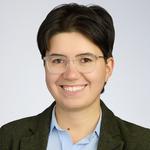
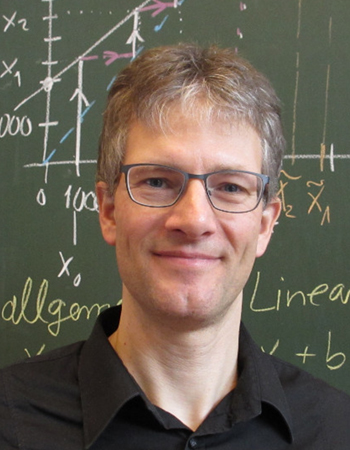
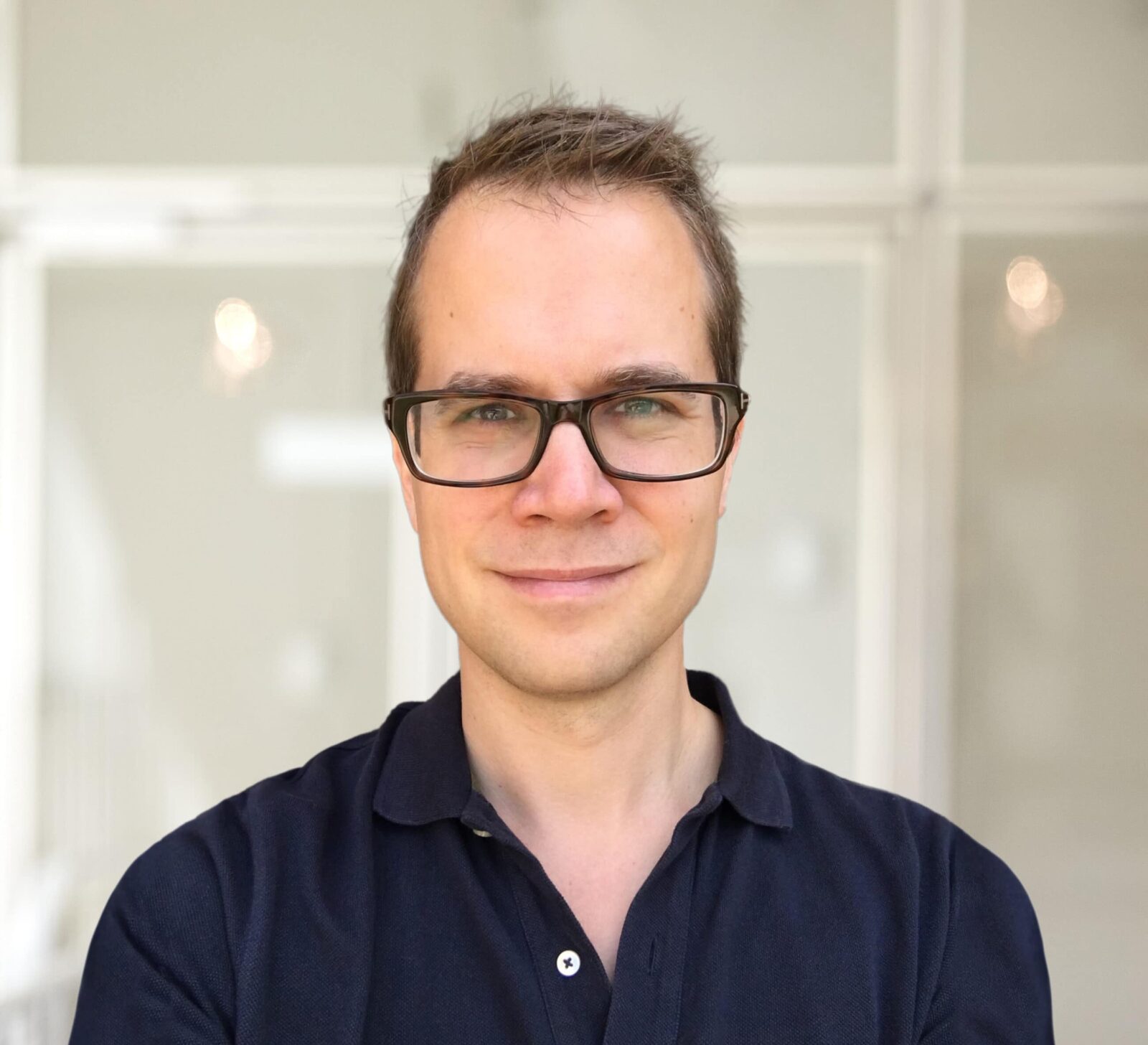
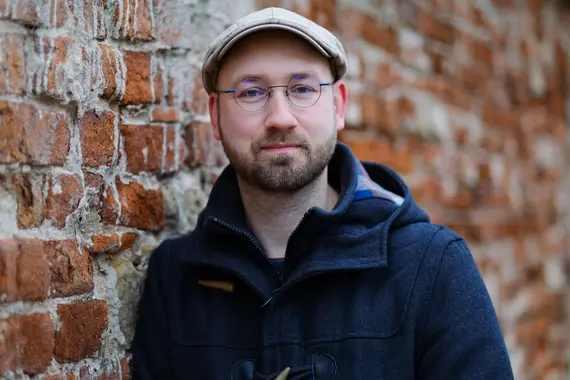
Dr. Anja Silge is the Deputy Head of the Research Department Spectroscopy/Imaging at the Leibniz Institute of Photonic Technology (IPHT). Her research integrates Raman spectroscopy and imaging to address complex biological and medical challenges, including microbial interactions, disease diagnostics, and photonics innovation. She holds a doctoral degree and leads advanced spectroscopic projects. Research Focus: Application of Raman spectroscopy in microbiology and disease diagnostics. Development of machine learning algorithms for spectroscopic data analysis. Investigation of bacterial toxins affecting algae and fungi. Clinical translation of spectroscopic techniques (e.g., COVID-19 detection). Her publications emphasize Raman spectroscopy's versatility, spanning algal-bacterial interactions, diagnostic tool development, and analytical method validation. Recent work highlights trends in clinical spectroscopy (e.g., neutrophil activation in SARS-CoV-2) and machine learning-enhanced instrumentation . No awards, grants, or student mentorship details are available in the provided sources.
Leibniz Institute of Agricultural Development in Transition EconomiesGermany
Professor Kirill Bolotin is a leading researcher in quantum nanoelectronics of 2D materials at Freie Universität Berlin's Department of Physics. As Principal Investigator for Project B08 within the TRR227 research consortium, he directs the Bolotin Lab with a focus on fundamental properties of atomically thin materials and their potential applications in next-generation electronics. His research spans multiple frontiers in 2D materials science, with particular emphasis on graphene, transition metal dichalcogenides (TMDs), and hexagonal boron nitride (hBN). Bolotin's group investigates quantum transport phenomena at ultrahigh carrier densities, develops novel strain engineering techniques to manipulate material properties, and studies excitonic physics in monolayer semiconductors. Their work combines advanced nanofabrication with low-temperature electrical measurements, optoelectronic characterization, and nanomechanical testing. Analysis of recent publications reveals a strong focus on strain-engineered 2D materials, exciton physics in TMDs, and quantum transport phenomena. The group has made significant contributions to understanding how mechanical strain affects electronic properties, how excitons behave in non-uniform environments, and how to achieve ultra-high electrical fields in 2D systems. Bolotin actively mentors numerous PhD students and has built a substantial research team with expertise spanning nanofabrication, electrical transport, and optical characterization. His laboratory operates the Nanofab facility at Altensteinstraße 23a, equipped with electron beam lithography, focused ion beam systems, and various deposition and characterization tools. The Bolotin Lab maintains a dedicated cleanroom facility (Nanofab) with comprehensive nanofabrication capabilities including electron beam lithography, metal evaporation, plasma etching, and atomic force microscopy. Their measurement capabilities include cryogenic systems down to 1.5K with 12 Tesla magnets, custom photocurrent setups, and low-temperature photoluminescence/Raman systems, enabling comprehensive characterization of quantum phenomena in 2D materials.
Dr. Angela Radulescu is an Assistant Professor at the Icahn School of Medicine at Mount Sinai in the Department of Psychiatry. She holds faculty positions at the Mt. Sinai Center for Computational Psychiatry and the Lipschultz Center for Cognitive Neuroscience, with additional affiliation at the Friedman Brain Institute. Her research program focuses on cognitive computational neuroscience, specifically investigating how patterns of symptoms that cut across psychiatric diagnoses arise from the interplay between cognitive and affective processes. Dr. Radulescu employs a diverse methodological toolkit including reinforcement learning, Bayesian inference, behavioral experiments, and virtual reality to model how the mind generates behavior and to uncover how the algorithms supporting behavior are implemented in the brain. Dr. Radulescu's recent publications demonstrate expertise in attention mechanisms, emotional processing, and reinforcement learning within mental health contexts. Her work bridges computational approaches with clinical psychiatry, contributing to the growing field that aims to develop more precise models of mental health conditions through quantitative methods. She actively participates in the academic community as evidenced by her involvement in the New York Computational Psychiatry Workshop (which she co-organizes), presentations at international conferences including CCN in Amsterdam and UCL, and collaborations with researchers across institutions. Her lab recently secured funding through a BD2 Foundation Discovery Research Grant. As Principal Investigator of the Dynamics of Cognition and Affect Lab, Dr. Radulescu provides research opportunities for students and collaborators interested in computational approaches to understanding mental health. She maintains an active online presence where she shares updates about her research and relevant developments in her field.
Richard Kempter is a Professor at Charité - Universitätsmedizin Berlin's Institute of Neuroscience, where he leads research in computational neuroscience with a focus on hippocampal circuitry and memory systems. His work bridges experimental neuroscience with theoretical modeling, examining how neural networks support spatial navigation, memory formation, and consolidation processes. His research interests center on the computational principles underlying hippocampal function, particularly in memory consolidation, spatial navigation, and neural coding. Kempter investigates how hippocampal circuits generate sharp wave-ripple events, how grid cells form spatial representations, and how memory traces transform during systems consolidation. His work combines computational modeling with experimental data analysis to develop testable theories about neural mechanisms. Analyzing Kempter's recent publications reveals a strong focus on hippocampal CA3 circuitry, with particular attention to sharp wave-ripple complexes and their role in memory consolidation. His work demonstrates how specific connectivity patterns between pyramidal neuron subtypes enable memory replay, while his computational models explain how grid-like representations emerge in entorhinal cortex. The research spans multiple scales from single-cell properties to network dynamics, with applications to both rodent and human memory systems. Kempter's scientific contributions have appeared in top-tier journals including Nature , Neuron , and PNAS , reflecting the significance of his work in understanding fundamental neural mechanisms. His publications demonstrate consistent innovation in developing computational frameworks that explain experimental observations while generating new testable predictions about memory systems. His research team collaborates extensively across institutions, working with experimental neuroscientists to bridge theoretical models with empirical data. Current projects examine how neural synchrony creates functional filters during rest states, how population sparseness affects memory capacity, and how subtype-specific connectivity enables sequential activation during memory replay events.
Leibniz Research Centre for Working Environment and Human FactorsGermany
Peter Bröde is a Researcher in the Immunmodulation team at the Leibniz Research Centre for Working Environment and Human Factors (IfADo) in Dortmund, Germany. He has been with the institution since March 1991, following his Diploma in Mathematics from the University of Düsseldorf. His work bridges immunology, biometeorology, and occupational health, with particular focus on thermal stress assessment and immune aging research. Bröde's research interests span immunomodulation, thermal stress assessment using the Universal Thermal Climate Index (UTCI), immune aging biomarkers, and the physiological impacts of environmental stressors on work ability. His work often examines how biological, sociodemographic, and psychosocial factors interact to affect human performance across the lifespan. He has made significant contributions to understanding how thermal environments impact physiological responses, particularly in occupational settings and sports contexts. His recent publication record demonstrates a strong focus on immune aging biomarkers, thermal comfort modeling, and the intersection of immunology with occupational health. Notable research directions include the application of statistical learning algorithms in thermal stress assessment, immune age profiling in different occupational groups, and the physiological impacts of heat stress on athletic performance. Bröde has collaborated extensively with researchers including Carsten Watzl (Head of Department), PD Gajewski, M Claus, K Golka, and JG Hengstler across numerous interdisciplinary projects examining the complex relationships between environmental factors, immune function, and human performance.
Leibniz Research Centre for Working Environment and Human FactorsGermany
Prof. Dr. Jan G. Hengstler serves as Head of the Department of Systems Toxicology at the Leibniz Research Centre for Working Environment and Human Factors in Dortmund, Germany. With a distinguished career spanning over three decades, he previously held positions as Professor of Molecular Pharmacology and Toxicology at the University of Leipzig (2003-2007) and conducted research at the Institute of Toxicology, University of Mainz (1990-2003). Dr. Hengstler completed his medical studies at the University of Mainz (1984-1990), obtained his medical license in 1992, and completed his MD thesis on DNA damage in 1991. He achieved his habilitation in Pharmacology and Toxicology in 1998 and specialized as a physician in Pharmacology and Toxicology in 1997. His research focuses on the molecular mechanisms of liver disease, particularly cholestatic liver injury, bile acid metabolism, and the gut-liver axis. His work integrates toxicology, pharmacology, and molecular biology to investigate how environmental and pharmaceutical compounds affect liver function. Recent studies examine bile acid signaling, gut microbiome interactions, and mechanisms of liver fibrosis and carcinogenesis. His research employs advanced methodologies including iPSC-derived hepatocyte models, in vivo mouse models, and systems toxicology approaches. Analysis of his 15 most recent publications reveals a strong emphasis on translational research with significant clinical implications, particularly in cholestatic liver diseases, drug-induced liver injury, and cancer mechanisms. His work frequently appears in high-impact journals including Hepatology, Nature Metabolism, and Journal of Hepatology. Dr. Hengstler leads an active research group within the Toxicology department at the Leibniz Research Centre, collaborating with multiple international institutions. His laboratory maintains strong connections with clinical researchers and utilizes both experimental and computational approaches to investigate liver pathophysiology.
Leibniz Research Institute for Environmental MedicineGermany
B. Paige Lawrence is a Professor in the Department of Environmental Medicine at the University of Rochester School of Medicine and Dentistry. With a Scopus ID of 7102054090, Dr. Lawrence has published 109 documents with 3,556 citations and maintains a 37 h-index, demonstrating significant scholarly impact in environmental health sciences. Dr. Lawrence's research focuses on the intersection of environmental toxicology and immunology, particularly examining how environmental exposures affect immune function and susceptibility to infectious diseases. Their work prominently features the aryl hydrocarbon receptor (AHR) pathway, investigating how environmental chemicals that activate AHR influence immune responses to viral infections like influenza. Research spans multiple model systems including mice, Xenopus frogs, and human cell cultures, addressing critical questions about developmental immunotoxicity, transgenerational effects, and chemical mixtures. Analysis of Dr. Lawrence's recent publications reveals a consistent focus on environmental chemical impacts on immune function, with particular emphasis on AHR-mediated effects. The research spans basic molecular mechanisms of receptor signaling to population-level epidemiological investigations, demonstrating translational approach from bench to bedside. Key trends include examining timing of exposures, chemical mixtures, and the dual nature of AHR activation (both beneficial and harmful effects). Dr. Lawrence has published extensively in top toxicology and immunology journals including Toxicology and Applied Pharmacology , Reproductive Toxicology , Environmental Research , and Immunotoxicology . Their work has been cited over 3,500 times, reflecting significant influence in the field of environmental health sciences. Dr. Lawrence's research program investigates how environmental exposures modify immune responses to pathogens, with particular focus on viral infections. Their laboratory employs diverse methodologies from molecular biology to animal models to epidemiological studies, providing comprehensive insights into how environmental factors shape host-pathogen interactions and disease outcomes.
Max Planck Institute for Research on Collective GoodsGermany
Kurt Mitman is a Professor at CEMFI, an Associate Professor at the Institute for International Economic Studies (IIES) at Stockholm University (currently on leave), a Research Fellow of the Centre for Economic Policy Research (CEPR), and a Research Fellow of the IZA Institute of Labor Economics. He also conducts research at the University of Oslo and serves as a Research Fellow of IZA. Previously, he served as Managing Editor of the Review of Economic Studies from December 2019 to January 2024 and is co-editor of the Journal of the European Economic Association and Macroeconomic Dynamics. PhD in Economics from the University of Pennsylvania (2014) Professor Mitman's research focuses broadly on macroeconomics, with particular interest in monetary and fiscal policy, housing, household debt and default, labor market dynamics, and wealth inequality. His work often employs heterogeneous-agent models to understand how household-level differences affect macroeconomic outcomes and policy responses. He has made significant contributions to understanding the effects of unemployment insurance, bankruptcy policies, and housing market dynamics during economic downturns. His research has identified important patterns regarding how wealth inequality amplifies business cycle fluctuations, how unemployment benefit extensions affect both job search behavior and vacancy creation, and how housing market dynamics interact with household balance sheets during recessions. His recent ERC Consolidator Grant for the HIPSTERMacro project focuses on housing, inequality, and price-setting in the macroeconomy. ERC Consolidator Grant for HIPSTERMacro research proposal Professor Mitman has served as Managing Editor of the Review of Economic Studies and is co-editor of the Journal of the European Economic Association and Macroeconomic Dynamics. His research has been supported by significant grants including the ERC Consolidator Grant. He regularly presents at major universities and conferences worldwide and co-organizes the VMACS (Virtual Macro Seminar) series. Professor Mitman is actively involved in organizing academic conferences including the SITE Session on Macroeconomics and Inequality and the Economic Growth and Fluctuations Group at the Barcelona Summer Forum. His research group focuses on macroeconomic issues with household heterogeneity, particularly examining how inequality affects business cycles and policy effectiveness.
Max Planck Institute for Research on Collective GoodsGermany
Professor Christian Bayer is a Professor of Economics at the University of Bonn, where he has been a full professor since 2008. He is affiliated with the Department of Economics and the Institute for Macroeconomics and Econometrics. His research focuses on macroeconomics of heterogeneous agents, fiscal friction, and monetary and fiscal policy. PhD from the University of Dortmund in 2004 Positions at EUI and Bocconi before joining University of Bonn Member of the Academic Advisory Board of the German Federal Ministry of Economics and Technology Visiting professor at the German Federal Ministry of Finance Member of the German Gas Crisis Commission in 2022 Professor Bayer's research primarily centers on the macroeconomics of heterogeneous agents, examining both firms and households. His work investigates how financial frictions, fiscal policy, and monetary policy affect macroeconomic outcomes and inequality. He has made significant contributions to the development of heterogeneous agent new Keynesian (HANK) models, which have become influential in modern macroeconomic analysis. His recent work has focused on the economic implications of energy shocks, particularly related to Russia's invasion of Ukraine and the resulting energy crisis in Germany. He has also conducted important research on the distributional effects of fiscal policy, the impact of pandemics on consumption patterns, and the convergence dynamics between East and West Germany. Hermann-Heinrich Gossen Prize of the Verein für Sozialpolitik (2022) ERC Advanced Grant (2017) ERC Starting Grant (2012) Professor Bayer has published in leading economics journals including Econometrica and American Economic Review. He is actively involved in policy discussions, frequently contributing op-eds to major German newspapers like FAZ and serving on important policy advisory bodies. He is a member of the ECONtribute: Markets & Public Policy cluster of excellence at the University of Bonn and co-hosts a popular economics podcast called "WRINT: Wirtschaftskunde" where he discusses current economic issues with colleagues.
Max Planck Institute for Research on Collective GoodsGermany
Nenad Kos is an Associate Professor in the Department of Economics at Bocconi University. He is also an affiliate at the Innocenzo Gasparini Institute for Economic Research (IGIER) and Centre for Economic Policy (CEPR). His primary research interests include: Game Theory Mechanism Design Information Economics Corporate Finance Epidemiology Dr. Kos's research focuses on theoretical foundations of economics, particularly in mechanism design and game theory. His work explores how information asymmetry affects market outcomes, optimal pricing strategies, and auction design. He has made significant contributions to understanding signaling in markets with covert information, the design of mechanisms under ambiguity, and the economic aspects of epidemic modeling. His publications span top economics journals including Econometrica, Journal of Economic Theory, Review of Economic Studies, and American Economic Journal: Microeconomics. His research demonstrates a consistent focus on theoretical rigor while addressing practical economic problems across various domains. Dr. Kos teaches courses in computational microeconomics, specifically focusing on mechanism design, and general microeconomics at Bocconi University. His teaching reflects his research expertise, emphasizing theoretical foundations and mathematical approaches to economic problems.
Dr. Behnam Ghazinouri is a Computational Neuroscientist at the Institute of Neuroinformatics (INI), Faculty of Computer Science, Ruhr University Bochum. His research centers on modeling spatial navigation and memory mechanisms using spiking neural networks, with emphasis on hippocampal place cells and grid cells in both healthy and pathological conditions. Originally trained in physics, he transitioned to computational neuroscience for his doctoral work. His interdisciplinary background bridges theoretical physics, neuroscience, and machine learning to develop biologically plausible neural models. His primary research focuses on computational modeling of spatial navigation systems, neural mechanisms of spatial memory formation, spiking neural network simulations of hippocampal function, and pathological impacts of neurological disorders (Alzheimer's, Parkinson's) on spatial cognition. He investigates how place/grid cell degradation affects navigation behavior and develops models to simulate disease progression. Recent publications (2024-2025) demonstrate consistent focus on spatial coding efficiency, mammalian navigation taxonomy, and grid cell functionality through computational modeling. These works integrate closed-loop simulations with neurobiological principles to analyze neural coding efficiency and behavioral outcomes in spatial tasks. Dr. Ghazinouri has supervised Master's theses including grid cell property research in spatial navigation. His work operates within the INI's interdisciplinary framework that combines neurophysiology, machine learning, and robotics to advance cognitive systems research.
Max Planck Institute for Chemical Physics of SolidsGermany
Prof. Dr. Vladimir M. Fomin serves as a Research Professor at the Institute for Integrative Nanoscience (IIN) within the Leibniz Institute for Solid State and Materials Research Dresden. His academic career spans over 15 years with extensive contributions to nanostructured superconductors and topological materials. His research focuses on geometric control of superconductivity in 3D nanoarchitectures , specializing in vortex dynamics, topological transitions, and quantum effects in curved nanostructures. Key areas include superconducting nanotubes, quantum rings, and phonon engineering in nanomembranes. His work bridges theoretical modeling with experimental nanofabrication techniques. Analysis of his 15 most recent publications (2023-2025) reveals dominant trends in topology-driven superconductivity and geometric manipulation of quantum states . The research consistently explores how curvature and topology affect vortex matter, with applications in superconducting electronics and quantum computing. Sub-fields prominently featured include vortex ratchets, Shapiro steps, magneto-polaron resonances, and microwave generation in nanoscale systems. His scientific impact is evidenced by 64 journal papers, 9 contributed book chapters, 95 invited talks across 15+ countries, and 5 monographs. Notable speaking engagements include keynote addresses at IEEE-NANO 2022, K. Alex Müller Workshop (2023), and international seminars from Moscow to Busan. Prof. Fomin actively supervises PhD projects in geometric control of superconductivity and collaborates globally with institutions including Universidad Autónoma de Madrid, Pusan National University, and Argonne National Laboratory. His research group develops advanced simulation frameworks for curved nanostructures while maintaining strong experimental partnerships for nanofabrication and characterization. He leads research on catalytic micro/nanoengines and superconducting vortex matter, with recent work focusing on reconfigurable 3D superconducting architectures and topological transitions in ac/dc-driven systems. Current projects involve quantum interference phenomena in non-ideal mesoscopic rings and phonon spectrum engineering in rolled-up nanostructures.
Dr. Alexander Fischer is a research associate at the Chair of Philosophy II and the transdisciplinary Institute Humans & Aesthetics (IMAE) at the University of Bamberg and Coburg University of Applied Sciences. He returned to Bamberg in 2024 after pursuing postdoctoral studies at the University of Basel. He has held academic positions at multiple international institutions including Duke University, University of Cambridge, Bond University, and University of Notre Dame. His educational background includes: Magister Artium in German, Philosophy, Communication Studies, and History from Otto-Friedrich University of Bamberg (2012) Studies in Psychology at Otto-Friedrich University of Bamberg Master of Arts in Film & Literature from University of Waterloo, Canada (2010) Doctorate from University of Bamberg with dissertation "Manipulation: On the Theory and Ethics of a Form of Influence" (2017) Dr. Fischer's research spans multiple interdisciplinary fields at the intersection of philosophy with psychology, literature, and ethics. His primary focus is on manipulation theory, exploring both its theoretical foundations and ethical implications in democratic societies, therapeutic contexts, and digital environments. He examines how narrative structures shape human understanding and ethical decision-making, with particular attention to emotional manipulation in social media and political discourse. His work bridges continental philosophy with practical applications in psychotherapy and social critique. His publication record demonstrates a consistent trajectory exploring manipulation across multiple contexts - from political discourse and social media to therapeutic relationships and romantic interactions. This body of work reveals growing interest in the ethical dimensions of influence across various human interactions, with increasing attention to digital environments and their psychological impacts. As an educator, Dr. Fischer has taught diverse courses including Animal Ethics, Philosophical Perspectives on Gender, Freud and Psychoanalysis, Propaganda: Media, Power & the Self, and Philosophy and Practice of Design at institutions including University of Bamberg, University of Basel, and University of Notre Dame. Dr. Fischer is also actively involved with the Institute for Humanity & Aesthetics (IMAE), contributing to the development of this transdisciplinary research institute. His dual professional identity as both academic philosopher and practicing psychotherapist uniquely positions him to bridge theoretical insights with practical therapeutic applications.
Dr. Rahul Trivedi is a tenured Research Group Leader in the Theory Division at the Max Planck Institute of Quantum Optics in Garching, Germany. His research focuses on theoretical quantum information and quantum science, particularly addressing challenges in noisy quantum systems and simulators. Dr. Trivedi received his undergraduate degree in Electrical Engineering from the Indian Institute of Technology Delhi, followed by MS and PhD in Electrical Engineering from Stanford University (2021). After a postdoctoral fellowship at the Max Planck Harvard Research Center for Quantum Optics, he served as an Assistant Professor of Electrical and Computer Engineering at the University of Washington before returning to MPQ as a tenured researcher in 2024. His research program spans multiple areas at the intersection of quantum information theory, many-body physics, and quantum device engineering. Key research directions include: Theory of open quantum systems and non-Markovian dynamics Quantum simulation with noisy intermediate-scale quantum (NISQ) devices Quantum error correction and fault tolerance Quantum optics theory with applications to quantum simulation and metrology Dr. Trivedi has secured significant research funding including an ERC Starting Grant for his ToNQS project (Theory of Noisy Quantum Simulation of Many-body Physics), as well as previous awards from the National Science Foundation and Department of Energy in the United States. His scientific awards and recognitions include: ERC Starting Grant: ToNQS - Theory of Noisy Quantum Simulation of Many-body Physics National Science Foundation (NSF) research funding Department of Energy (DOE) research funding Dr. Trivedi currently leads a research group consisting of three PhD students, one Master's student, and several co-advised students. His group maintains extensive collaborations with partners both within Europe and the US. With the ERC grant, additional positions for PhD students and postdoctoral researchers are becoming available. The Theory of Open Systems research group is housed in the Theory Division at the Max Planck Institute of Quantum Optics. The group actively collaborates with experimental teams to bridge theoretical frameworks with practical quantum device implementations, particularly focusing on how noise affects quantum simulation capabilities.