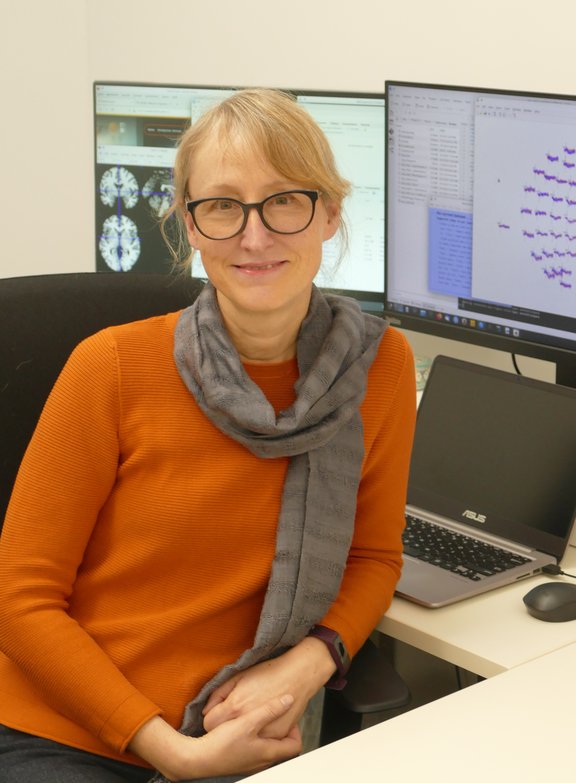
Annett SchirmerView profile
Professor
Annett Schirmer is a Professor and head of the Department of General Psychology II (Emotion and Motivation) at the University of Innsbruck, Austria, a position she assumed in 2022 after appointments at the Chinese University of Hong Kong (2017-2022), National University of Singapore (2006-2017), and the University of Georgia (2004-2006). Her research centers on nonverbal communication mechanisms, particularly vocal and tactile behaviors, and their impact on emotion processing and social interaction. Educational Background: PhD (2002) from Max Planck Institute for Human Cognitive and Brain Sciences, Germany Research Focus: Schirmer's work investigates affective touch and vocal emotion processing through behavioral and neurophysiological methods. Her lab examines how CT afferents mediate pleasant touch, cultural differences in touch perception, cross-species emotion communication (including human-dog interactions), and the role of musicality in vocal emotion recognition. Key methodologies include EEG, eye/body motion tracking, and cross-cultural experimental designs focused on health and well-being applications. Publication Trends: Recent work (2023-2025) emphasizes neural correlates of prolonged gentle stroking, human-animal touch dynamics, multisensory integration in attraction, and individual differences in vocal emotion processing. A strong thread connects affective touch mechanisms to subjective well-being across species, with increasing use of EEG to map temporal dynamics of somatosensory processing. Scientific Awards: No specific awards are documented in the provided materials. Advising and Grants: While her role as department head and editorial positions indicate leadership, specific student mentorship details and grant funding information are not disclosed in available texts. Laboratory: The Brain & Behavior Lab (https://sites.google.com/view/brainbehaviorlab/home) employs multimodal approaches to study nonverbal communication, with active projects on tactile comfort mechanisms, cross-cultural touch exchanges, and comparative analyses of emotion expression in humans and companion animals.