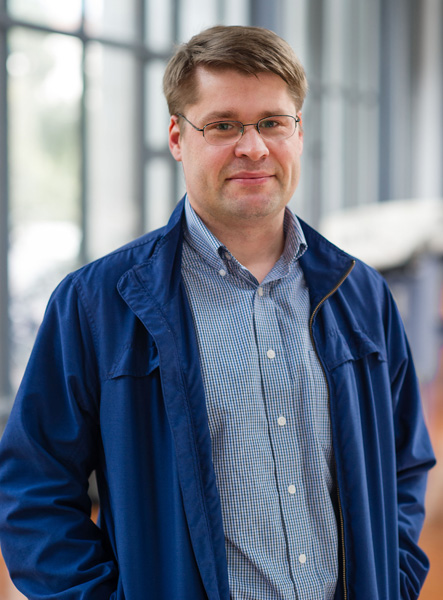
Univ.-Prof. Torsten Möller, PhD is a Professor at the University of Vienna and serves as Head of the Research Group Visualization and Data Analysis and Head of the Research Network Data Science. His work spans data visualization, visual analytics, and human-computer interaction, with a focus on biomedical, environmental, and societal data applications. Academic rank: Professor Research group: Visualization and Data Analysis Network: Data Science Email: torsten.moeller@univie.ac.at Research interests include: Visual data analysis for complex systems Interdisciplinary applications in climate science and medicine Human-computer interaction in data exploration Image processing and computer graphics Recent publication trends show expertise in: Visualizing climate change and pandemic data Multi-volumetric and network analysis Algorithmic transparency and user-centered design Interdisciplinary collaborations (e.g., astrophysics, medical imaging) Statistical and uncertainty visualization Design frameworks for visualization recommendation Teaching includes courses in: Computer graphics and visualization Image processing and analysis Human-computer interaction Data analysis projects Doctoral research seminars
Mark Coeckelbergh is a Professor of Philosophy at the University of Vienna, specializing in the philosophy of technology, AI ethics, and robot ethics. He is affiliated with the Department of Philosophy and the Research Network Data Science at the University of Vienna. In addition to his academic position, Coeckelbergh has held significant roles including Former President of the Society for Philosophy and Technology (SPT) and Member of the European Commission's High-Level Expert Group on Artificial Intelligence (AI HLEG). His research focuses on the ethical, political, and philosophical implications of emerging technologies, particularly artificial intelligence and robotics. Coeckelbergh has published extensively in these areas, authoring influential books such as Robot Ethics (2022), The Political Philosophy of AI (2022), and Why AI Undermines Democracy and What To Do About It . His work explores how AI systems affect democratic processes, human agency, and social relationships. Recent publications demonstrate a strong focus on the relationship between AI, democracy, and ethical governance, examining how AI systems can both threaten and potentially enhance democratic processes through algorithmic transparency and participatory design approaches. Finalist of the World Technology Award 2017 Coeckelbergh teaches various courses including 'Introduction to Philosophy of LLMs,' 'LLMs and the Future of Writing,' 'Ethics and Robotics,' and 'Global Governance of AI.' He has supervised numerous students working on topics related to technology ethics and philosophy. He has been involved in several major research projects including H2020 PERSEO, WWTF Democracy Responsible Entrepreneurship, and FP7 DREAM (Development of Robot-Enhanced therapy for children with Autism spectrum disorders). Coeckelbergh has also announced upcoming guest professorships at the Institute of Philosophy of the Czech Academy of Sciences and Uppsala University, where he will work on environmental and technology ethics projects.
Martin Laimer serves as Associate Professor and 1st senior physician at Paracelsus Medical University in Salzburg, Austria, with dual appointments in the Department of Dermatology and Allergology and the Research Program of Molecular Therapy of Genodermatoses. His clinical and research work focuses on rare genetic skin disorders, particularly various forms of epidermolysis bullosa. With over 179 research outputs spanning more than two decades, he has established himself as a leading expert in the field of genodermatoses and rare skin diseases. Dr. Laimer's research interests center on clinical trials for rare dermatological conditions, molecular therapies for epidermolysis bullosa, and the challenges of conducting research on ultra-rare diseases. His work addresses critical issues in trial design, patient recruitment, and treatment efficacy for conditions affecting small patient populations. He has particular expertise in epidermolysis bullosa simplex, epidermolysis bullosa dystrophica, and associated squamous cell carcinoma. His recent publications demonstrate a consistent focus on advancing clinical trial methodologies for rare diseases, with significant contributions to understanding treatment approaches for epidermolysis bullosa variants. His research spans molecular genetics, clinical dermatology, and therapeutic interventions, with an emphasis on translating basic science discoveries into clinical applications. Dr. Laimer has led multiple research projects, including EB Clinical Research initiatives in 2019 and 2022 as principal investigator, and served as co-principal investigator for a dual-center phase II trial on losartan for recessive dystrophic EB. His collaborative work extends to statistical methodology development for rare disease trials, reflecting his commitment to improving research approaches in this challenging field. As an active contributor to the academic community, Dr. Laimer has organized significant conferences including the ÖADF Summer School in 2023 and the 5th Austrian Congress for Rare Diseases in 2015. His leadership in these events underscores his role as a central figure in advancing rare disease research and clinical practice in Austria.
Prof. Tina Wakolbinger is a Professor at Vienna University of Economics and Business (WU) , where she serves as Deputy Head of the Institute for Transport Economics and Logistics and Head of the Supply Chain Management Research Institute. She also chairs the Senate and has led numerous research projects in supply chain management, humanitarian logistics, and the circular economy. PhD in Business Administration, Isenberg School of Management, UMASS Amherst (2007) Mag. in International Economics, University of Innsbruck (2002) Her research focuses on Supply Chain Management , with an emphasis on Humanitarian Logistics and the Circular Economy . She investigates how operational settings and disaster characteristics affect supply chain resilience, explores sustainable urban mobility solutions like electric scooters, and develops frameworks for resource allocation in disaster relief. She has published extensively on topics including disaster preparedness, outsourcing in humanitarian logistics, and the impact of digitalization on sustainable supply chains. Recent publications highlight trends in 2025 with strategic dependencies in supply chains, 2023 contributions to circular economy models and humanitarian logistics assessments, and 2022 analyses of pandemic-era supply chain disruptions. Earlier work includes studies on sustainable freight transport, e-waste management, and risk-sharing contracts. Scientific Awards Literati Award 2020 (Journal of Humanitarian Logistics) WU Cooperation Officer of the Year 2018 Talent promotion bonus of Upper Austria 2011 Best Paper Award 2008 (Fogelman College of Business) Graduate School Fellowship 2006 (UMASS Amherst) She has been involved in external positions such as Member of the Post Control Commission (2022–2027) and advisory roles for Caritas Österreich and Finland’s Strategic Research Council. Current projects include developing circular business models for timber supply chains and optimizing e-scooter fleet management in Vienna.
Tamara Artacker is a Researcher at the Institute of Social Ecology within the Department of Economics and Social Sciences at the University of Natural Resources and Life Sciences, Vienna (BOKU). Based in Vienna at Schottenfeldgasse 29, she has been actively contributing to the field since 2019, following the completion of her MA in International Development Studies from the University of Vienna in 2017. Her work bridges academic research with practical policy implications, particularly focused on Latin America and global environmental challenges. Artacker's educational background in International Development Studies has shaped her interdisciplinary approach to examining the complex relationships between society, environment, and economic systems. Her research spans multiple interconnected domains that address critical contemporary challenges facing communities worldwide. Her research interests center on political ecology, food sovereignty, ecofeminism, and sustainable agricultural systems. Artacker critically examines the structural inequalities embedded in global food systems, the impacts of climate change on agricultural communities, and the tensions between economic development models and ecological sustainability. Her work consistently highlights how extractive agricultural practices intersect with social injustices, particularly affecting vulnerable populations. She explores alternative models that prioritize community resilience, ecological balance, and social equity, with particular attention to the Global South and Latin American contexts. Artacker's extensive publication record reveals a strong focus on the intersections between environmental policy, agricultural practices, and social justice. Her research demonstrates consistent engagement with contemporary crises including the pandemic's impact on food systems, geopolitical conflicts affecting global food security, and the complex challenges of transitioning toward sustainable agricultural models. She has developed particular expertise in analyzing Ecuadorian agricultural policies and their implications for food sovereignty, while also examining broader regional and global patterns. As an active academic, Artacker regularly presents her research at international conferences and engages with diverse audiences through invited keynote speeches. Her work demonstrates a commitment to knowledge transfer beyond academic circles, with presentations addressing policymakers, practitioners, and community organizations working on food sovereignty and environmental justice issues.
Yuriy Gorodnichenko serves as the Quantedge Presidential Professor in the Department of Economics at the University of California, Berkeley since 2018. His extensive academic affiliations include being a Faculty Research Associate at the National Bureau of Economic Research (2014-present), Research Fellow at the Institute for the Study of Labor (2007-present), International Fellow at the Kiel Institute for the World Economy (2011-present), and Research Consultant for both the European Central Bank (2018-present) and European Investment Bank (2017-present). He also serves as Editor of the Journal of Monetary Economics (2018-present) and Member of the Executive Committee of the Association for Comparative Economic Studies (2019-present). Education: Ph.D., Economics, University of Michigan, 2007 M.A., Statistics, University of Michigan, 2004 M.A., Economics (high honors; valedictorian), Economics Education and Research Consortium at National University of Kyiv-Mohyla Academy, Kiev, Ukraine, 2001 B.A., Economics (honors; valedictorian), National University of Kyiv-Mohyla Academy, Kiev, Ukraine, 1999 Gorodnichenko's research spans multiple subfields of economics with particular emphasis on monetary economics, public finance, international economics, and macroeconomics . His scholarly approach typically combines both macroeconomic and microeconomic data with rigorous theoretical and statistical analyses. His work is organized into five major categories: monetary economics, aggregate implications of informational frictions, business cycles, development/productivity/income differences, and inequality. As an applied macroeconomist, he frequently bridges methodological approaches across different economic subdisciplines. His publication record demonstrates consistent high-impact research across top economics journals including American Economic Review, Journal of Political Economy, and Review of Economic Studies. The trajectory of his work shows increasing focus on the microfoundations of macroeconomic phenomena, particularly how information frictions affect economic behavior and policy transmission mechanisms. His recent publications have increasingly addressed the distributional consequences of monetary policy and the role of cultural factors in economic development. Scientific Awards and Honors: Fellow, Econometric Society (2021) Highly Cited Researcher, Clarivate (2021) Distinguished Teaching Award, Social Science Division, UC Berkeley (2020) World Junior Prize in Monetary Economics and Finance (2018) NSF CAREER award (2012) Sloan Research Fellowship (2013) Multiple #1 rankings among young economists by RePEc (2014-2021) Best paper award, American Economic Journal: Economic Policy (2015) Gorodnichenko has received consistent recognition for his teaching and advising from UC Berkeley's Economics Department, including multiple runner-up positions and a win for the Best Advisor Award (2014). His research has been supported by prestigious grants including the NSF CAREER award and Sloan Research Fellowship. His impact metrics are substantial with over 19,000 citations and an h-index of 54, reflecting significant influence in the economics profession. While the scraped text doesn't specify dedicated research laboratories, Gorodnichenko maintains active research collaborations through his affiliations with major economic research institutions including NBER, IZA, and Kiel Institute. His editorial roles at leading journals position him at the center of contemporary macroeconomic research discourse.
Axel Dreher is a Professor of International and Development Politics at Ruprecht-Karls-University Heidelberg, Germany, where he holds the Chair of International and Development Politics within the Faculty of Economics and Social Sciences. He has been a faculty member at Heidelberg University since 2011, previously serving as Head of Department from 2011-2014 and again from 2015-2017, with a term as Deputy Head from 2017-2018. Before joining Heidelberg, he was a Full Professor of Economics at Georg-August University Goettingen from 2008-2011. Professor Dreher's research spans several key areas of economics, with a particular focus on International economics , Political economy , Development economics , and Public economics . His interdisciplinary work on international organizations has established him as one of the leading experts on the International Monetary Fund and potential European Monetary Fund. His research investigates how political factors influence economic development, foreign aid effectiveness, and international financial institutions. Dreher's scholarly output reveals consistent themes across his publications, with a strong emphasis on the intersection of politics and economics in international contexts. His work frequently examines how political considerations affect the effectiveness of foreign aid, the operations of international financial institutions, and patterns of globalization. The methodological approaches in his research combine rigorous econometric analysis with deep theoretical understanding of political economy dynamics. Global Labor Organization (GLO) Fellow (2018) Research Fellow at CEPR (2013) Full Member, European Development Network (EUDN) (2013) Faculty Associate, AidData (2012) Affiliated Professor, Georg-August University Goettingen (2011) Member of the Research Committee on Economic Policy, German Economic Association (2011) Research Fellow at CESifo (2009) As Editor of the Review of International Organizations and chairman of the Research Group on Development Economics of the German Economic Association, Professor Dreher plays a significant role in shaping scholarly discourse in his fields. His extensive publication record, including over 100 articles with more than 14,000 citations, an h-index of 63, and an i10-index of 102, demonstrates the substantial impact of his research. He has supervised numerous graduate students and collaborated on various research projects examining the political economy of international development. Professor Dreher has led significant research initiatives, including serving as Managing Director of the Center for European, Governance and Development Research (cege) at Georg-August University Goettingen from 2009-2011 and as Principal Investigator for the Courant Research Center 'Poverty, Equity and Growth in Developing Countries.' His current research continues to explore the complex relationships between political institutions, economic policies, and development outcomes in the global context.
Privatdozent Dr. Marcela Suarez-Rubio is a Senior Scientist at the Institute of Zoology, University of Natural Resources and Life Sciences Vienna (BOKU) , specializing in urban ecology, biodiversity research, and wildlife monitoring . Her work integrates landscape ecology, remote sensing, and conservation biology to study how land-use changes affect birds and bats in temperate and tropical regions. She has led projects in Austria, Myanmar, and Bhutan, focusing on habitat connectivity, urban green spaces, and endangered species conservation . Education: PhD in Ecology, University of Maryland, USA (2011) MSc in Biology, University of Puerto Rico (2005) BSc in Biology, Universidad del Valle, Colombia (2000) Research Themes: Urbanization gradients and their nonlinear effects on avian and bat communities Biodiversity assessment in remote areas like Hkakabo Razi National Park Telemetric and acoustic methods for wildlife monitoring Conservation strategies for critically endangered species (e.g., White-bellied Heron) Ecosystem management in agricultural and forested landscapes Scientific Awards: ERASMUS+ Teaching Mobility (2022, 2018, 2017) National Parks Austria Research Award (2022) BOKU Teaching Award (2016) NASA-MSU Professional Enhancement Award (2011) Golden Key International Honour Society (2008) Advising and Grants: Supervised 14 theses and secured funding from National Parks Austria, Austrian Academy of Sciences, and international organizations . Active in scientific peer-review (Philosophical Transactions of the Royal Society B, Journal of Urban Ecology) and conservation policy for UNESCO World Heritage nominations.
Andreas Fink serves as a University Professor at the Institute of Psychology within the Faculty of Natural Sciences at Karl-Franzens-University Graz, Austria. His research bridges cognitive neuroscience, psychology, and sports science with a particular emphasis on understanding the neurobiological foundations of creative thinking and emotional processing. As a leading figure in creativity neuroscience, Professor Fink employs advanced methodologies including EEG, fMRI, and ambulatory monitoring to investigate how physical activity influences brain function and cognitive performance. His work has significant implications for mental health interventions and cognitive enhancement strategies across various populations. Professor Fink's research interests center on three interconnected domains: biological mechanisms of cognitive and affective functions, creativity neuroscience, and the relationship between physical activity and brain health. His laboratory investigates how physical exercise influences neural processes related to creativity, emotion regulation, and cognitive performance through both basic neuroscience research and applied interventions. A hallmark of his approach is examining EEG alpha power during creative ideation tasks while simultaneously exploring how running, dance, and other physical activities can improve mental health outcomes and cognitive functioning. His work spans from laboratory-based experimental designs to real-world interventions with ecological validity. Analysis of Professor Fink's recent publication trajectory reveals a sophisticated evolution in his research focus, with increasing emphasis on the intersection of physical movement, brain function, and creative cognition. His work has progressively incorporated more ecologically valid approaches using ambulatory monitoring to study creativity in natural contexts, while maintaining rigorous neuroscience methodology. A consistent theme across his publications is neuroplasticity, particularly how physical exercise interventions induce structural and functional brain changes, with special attention to hippocampal volume and white matter integrity. His research has expanded to explore specialized forms of creativity including malevolent creativity and the nuanced relationship between everyday movement patterns and creative cognition. 2009 Psychology Prize for innovative scientific or practical work for his habilitation thesis 'The neuroscientific study of creative thinking' from the Professional Association of Austrian Psychologists (BÖP) and the Austrian Psychological Society (ÖGP) Professor Fink currently leads multiple significant research initiatives funded by the Austrian Science Fund (FWF), including 'Neuronal mechanisms underlying the generation of creative solutions in complex environments' (2016-2018), 'Running Away From Depression with Your Brain and Your Heart' (2022-2025), and 'Dance and Brain' (2024-2026). These projects demonstrate his commitment to translating basic neuroscience findings into practical interventions for mental health. While specific doctoral students aren't listed in the provided materials, his position as a full professor and principal investigator on multiple grants indicates active mentorship of junior researchers and graduate students. His collaborative approach is evident through interdisciplinary partnerships spanning psychology, neuroscience, sports science, and clinical practice. Professor Fink is an active member of the 'Complexity of Life' profile area at the University of Graz and participates in the 'Brain and Behavior' research network. His laboratory environment fosters interdisciplinary collaboration, bringing together researchers from diverse backgrounds to tackle complex questions about the brain-mind-body connection. Current projects suggest his team employs a multimodal approach combining neuroimaging, physiological monitoring, behavioral assessments, and intervention studies to comprehensively investigate how physical activity influences brain function and creative cognition. His 'Running Away From Depression' project exemplifies his translational research focus, directly connecting basic neuroscience findings to clinical applications for mental health improvement.
Stefan Hagel is a Research Fellow at the Austrian Academy of Sciences and Privatdozent at the University of Vienna, specializing in ancient Greek and Roman music. His work bridges archaeology, philology, and digital reconstruction to analyze ancient musical instruments, notation systems, and performance practices. His research focuses on: Reconstruction of auloi (double-pipes) and hydraulis (water organs) Computational analysis of instrument acoustics Cross-cultural transmission of musical technologies Ancient harmonic theory and notation decipherment He leads major projects including Ancient Music Beyond Hellenisation (ERC Advanced Grant), Digitising Aspects of Graphical Representation in Ancient Music (FWF), and the European Music Archaeology Project . Hagel has developed specialized software for instrument analysis and serves as editor for the Journal of Music Archaeology . His publications demonstrate consistent focus on technical aspects of ancient music through interdisciplinary methodologies.
Martin Aigner is Associate Professor and Private Lecturer at the Karl Landsteiner Private University of Health Sciences, where he heads the Clinical Department of Psychiatry and Psychotherapeutic Medicine at Tulln University Hospital. He also teaches at the Medical University of Vienna and the University for Continuing Education Krems. A board member and president (2022–2025) of the Austrian Society for Psychiatry, Psychotherapy, and Psychosomatics (ÖGPP), he is also involved in the Austrian Pain Society and Austrian Balint Society. His research interests center on the integration of biological, psychological, and social factors in psychiatry, with key areas including transitional psychiatry, obsessive-compulsive and mood disorders, the gut-brain axis, and the impact of environmental toxins like mycotoxins on mental health. He leads the PhD program in 'Mental Health and Neuroscience' and supervises doctoral research. His recent publications reflect a strong trend in interdisciplinary mental health research, combining clinical psychiatry with neuroscience, nutrition, and digital health. Themes include neurofeedback for addiction, microbiome influences on depression, and psychosomatic manifestations in chronic conditions. His work often involves neuroimaging and clinical trials. Three scientific prizes from the Austrian Pain Society Scientific prize from the Vienna Association for Neurology and Psychiatry Contributor to WFSBP guidelines on pharmacological treatment of eating disorders Co-author of guidelines for post-viral conditions He serves as principal investigator in multiple funded projects, including studies on depression and the microbiome, probiotics, and psychosis triggers. He is also co-investigator in follow-up care and community mental health initiatives. Aigner is editor-in-chief of psychopraxis. neuropraxis and advocates for digital health literacy and sustainable mental health structures, particularly in youth care. He leads the Research Center for Transitions Psychiatry, emphasizing early intervention, resilience, and patient empowerment through recovery companions. His team includes habilitated senior physicians, fostering innovation in clinical and research settings.
Bettina Kubicek is Professor of Work and Organizational Psychology at the University of Graz, Faculty of Natural Sciences, where she leads research in the Smart Regulation profile area and contributes to the Human Factor in Digital Transformation and Brain and Behavior research networks. Her work bridges psychological theory with practical organizational challenges in contemporary workplaces. Her research spans work psychology, organizational psychology, and economic psychology with emphases on flexible work arrangements, work intensification, and human-robot collaboration. She investigates cognitive demands of flexible work, work-home interface dynamics, and digital transformation impacts through diary studies and experimental designs. Recent work explores telework challenges, AI in HR, and trust mechanisms in human-robot teams during disaster response. Analysis of her recent publications reveals growing focus on human-robot interaction in Industry 4.0, cognitive aspects of telework, and cross-cultural validation of work addiction scales. Her methodology combines intensive longitudinal designs with physiological measures, increasingly incorporating VR interfaces and AI-driven personnel selection experiments. Scientific awards include: Wirtschaftskammerpreis for project 'Flexible Arbeitsbedingungen und die Vereinbarkeit von Beruf und Familie' (2015) Innovationspreis der Universität Wien (2012) Multiple research stipends for University of Wisconsin-Madison stays (2005-2008) She has secured significant competitive grants including FWF-funded 'Cognitive demands of flexible work: Risks and challenges' (2017-2022) and FFG-supported 'Enabling and Assessing Trust when Cooperating with Robots in Disaster Response' (2021-2023), examining trust calibration and cognitive load in human-robot teams. Current projects address evidence-based guidelines for ICT use in work-life boundaries. As core member of the Human Factor in Digital Transformation network, she collaborates with engineers, computer scientists, and healthcare professionals to develop human-centered technological solutions, particularly in healthcare robotics and disaster response systems.
Jüri Allik is a Professor of Experimental Psychology at the University of Tartu, Estonia, holding roles such as Head of the Institute of Psychology (2002–2013), Dean of the Faculty of Social Sciences (1996–2001), and Chairman of the Estonian Science Foundation (2003–2009). His research focuses on cognitive science, cross-cultural psychology, personality, and visual perception. He has been awarded the Estonian National Science Award twice and is a member of the Estonian Academy of Sciences since 2010. His academic contributions span editorial roles in journals like Journal of Cross-Cultural Psychology and Trames . Notable publications include studies on cross-cultural personality variations, visual perception theories, and neurobiological links to psychological traits. Awards highlight his impact in social sciences and neuroscience. Research interests integrate cognitive and affective neuroscience with cultural psychology, emphasizing global trait comparisons and perceptual mechanisms. His work often employs large-scale international collaborations, as seen in studies of self-esteem and personality across nations.
Anton Pichler is a researcher at the Institute for Transport and Logistics Management at Vienna University of Economics and Business (WU). His work focuses on mapping global supply chains and economic networks to enhance resilience and sustainability. He previously held a James S. McDonnell Fellowship at the Complexity Science Hub in Vienna and completed his PhD in Mathematics at the University of Oxford. Education: Master’s in Quantitative Finance (WU), PhD in Mathematics (Oxford) Pichler’s research explores the interplay between microeconomic interactions and macroeconomic dynamics through complex network structures. He investigates how localized disruptions—such as those during the Covid-19 pandemic—can cascade globally, affecting supply chains, labor markets, and financial systems. His work bridges economics, climate science, and network theory. His recent publications emphasize granular supply network data for climate transitions, pandemic shock propagation, and systemic risk optimization. Collaborations with institutions like the OECD and policy engagement through G20’s Think20 highlight his impact on global frameworks. Scientific Awards: James S. McDonnell Fellowship Anton appreciates WU’s world-class infrastructure and collaborative environment, noting the importance of interdisciplinary teamwork in advancing his research agenda.
Marie-France Chevron serves as an Associate Professor in the Department of Social and Cultural Anthropology within the Faculty of Social Sciences at the University of Vienna. With a research career spanning over two decades from 2001 to 2023, she has established herself as a prominent scholar in digital anthropology and media studies, particularly focusing on how young people navigate contemporary digital landscapes. Her research interests center on media literacy, serious games, mixed methods approaches, and adolescence studies. Chevron employs innovative participatory methodologies to investigate how adolescents develop digital literacy skills through game-based learning environments. Her work bridges cultural anthropology with educational technology, examining the complex interplay between traditional cultural frameworks and emerging digital practices. Analysis of Chevron's publication record reveals consistent engagement with interdisciplinary approaches that merge anthropology, psychology, and media studies. Her recent work shows increasing focus on historical perspectives of cultural phenomena alongside contemporary digital issues, as evidenced by her 2023 analysis of Freudian theories in fin-de-siècle Vienna alongside her ongoing research on social media literacy. Scientific Awards: UNIVIE Teaching Award 2014 - Category ERFOLGREICHER STUDIENEINSTIEG (Successful Student Onboarding) Chevron has supervised numerous student projects and has been actively involved in research funding initiatives, most notably the project 'Zur Selbstoptimierung des Emotionalen' (2017-2020) which explored emotional self-optimization through digital media. Her academic activities extend beyond traditional research to include significant contributions to public discourse through radio appearances and conference presentations. She participates in collaborative research networks focused on anthropological approaches to digital culture and has contributed to the organization of academic symposia including the Internationales ÖGUF/AG-Symposium 2022 on scientific societies in archaeology, anthropology, and ethnology.