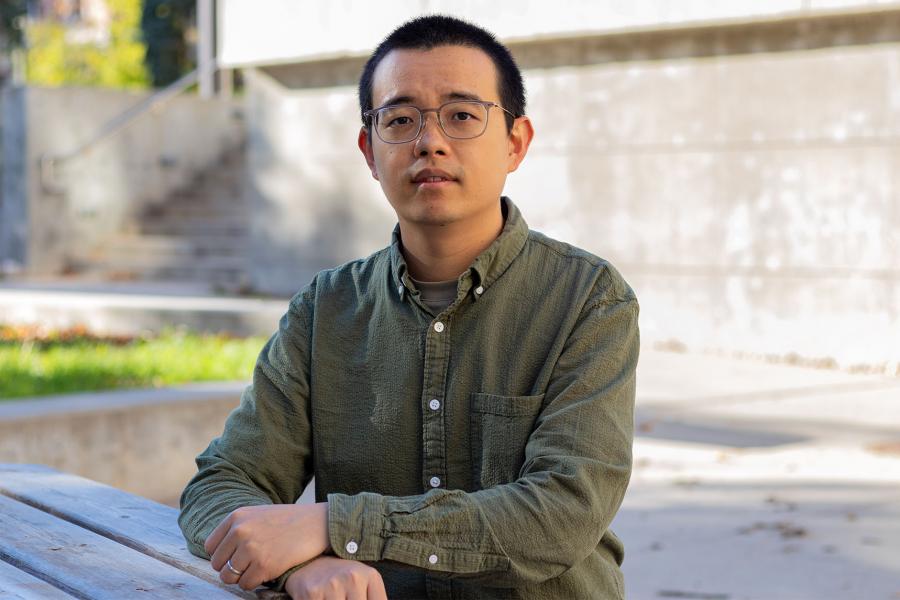
Zhenxiang (Zeke) Chen is an Assistant Professor in the Department of Sociology and Criminology at the University of Manitoba . He holds a PhD in Sociology from the University of California Los Angeles (UCLA) and has taught courses such as Understanding Social Research , Quantitative Social Analysis , and Social Research Methods . PhD (Sociology), UCLA, 2021 MA (Sociology), UCLA, 2018 MPP, UCLA, 2016 BA (Economics, Mathematics, International Studies), University of Wisconsin Madison, 2013 Chen’s research examines social stratification, mobility, and inequality among migrants , focusing on assimilation and integration from life-course and social psychology perspectives. His methodological expertise includes causal inference , quantitative methods , computational approaches , and experimental designs . Recent publications analyze topics like civic engagement pathways , transnational entrepreneurship , parental migration impacts on children , and legal patterns affecting labor outcomes . His work spans disciplines including Economic Sociology , Migration Studies , and Social Psychology . Contact: zeke.chen@umanitoba.ca
Thomas Potthast is a full Professor for Ethics, History and Theory of Biosciences at the Faculty of Science, Department of Biology at the University of Tübingen. He serves as the Speaker of the International Center for Ethics in Sciences (IZEW) and has held this position since 2014. Since 2016, he has also been the Speaker of the Thematic Area on Sustainability, Protection and Management of Natural Resources within the Excellence Strategy's Platform 3 on Environmental Systems. His academic journey includes a habilitation at the University of Tübingen in 2010, where he received teaching authorization for Ethics, Theory and History of Sciences. Prior to this, he was a Feodor-Lynen Fellow of the Humboldt Foundation at the University of Wisconsin-Madison (2002-2001) and a Post-Doc Research Scholar at the Max Planck Institute for the History of Science in Berlin (1998). Potthast's research focuses on environmental ethics, bioethics, and the philosophical foundations of sustainability science. His work critically examines the relationship between scientific knowledge and ethical decision-making, particularly in the context of nature conservation, biodiversity, and technological interventions in ecological systems. He has made significant contributions to understanding epistemic-moral hybrids in environmental decision-making and the ethical dimensions of sustainability transformations. His recent publications reveal a strong emphasis on the ethical challenges of emerging technologies (including gene drives and affective computing) in relation to environmental sustainability, the role of universities in sustainability transformations, and transdisciplinary approaches to real-world sustainability challenges. His work consistently bridges theoretical ethics with practical applications in conservation and sustainability contexts. As an educator and mentor, Potthast has supervised numerous doctoral and master's students working on diverse topics spanning sustainable development education, animal ethics, nature conservation, and the ethical dimensions of technological interventions in natural systems. He leads the Competence Center for Sustainable Development, which is part of the Excellence Strategy since 2018, and has been instrumental in developing the whole-institution approach to sustainability at the University of Tübingen. His work connects academic research with practical implementation of sustainability principles across the university's operations, teaching, and research activities.
Gerko Schaap is a Researcher in Professional Learning & Technology specializing in health psychology and quality-of-life research, with expertise in post-illness syndromes and mental-physical health interactions. His work bridges clinical medicine, psychological science, and digital health interventions, focusing on patient-centered outcomes in chronic conditions. Primary research interests include Quality of Life, Mental Fatigue, Positive and Negative Affect, Fatigue Syndromes, and Post-COVID-19 Syndrome. He investigates symptom trajectories in long COVID using experience sampling methods, explores affective dynamics in daily life, and applies participatory action research to redirect tinnitus treatment paradigms. His work emphasizes real-world symptom management and patient agency in healthcare. Analysis of his 2023-2025 publications reveals concentrated investigation into post-COVID-19 sequelae through longitudinal studies, systematic reviews, and mixed-methods approaches. Key trends include digital intervention suitability assessment, affect-symptom relationships in ecological contexts, and patient-driven research redirection in tinnitus. The work spans medicine, psychology, and digital health with strong emphasis on patient-reported outcomes and real-time data collection. Schaap maintains active collaborations with Bode, van der Palen, and Vonkeman across multiple institutions, reflecting multidisciplinary team engagement. He has contributed two significant datasets on post-COVID symptom experiences and positive psychology interventions, supporting open science initiatives. While specific grant funding isn't detailed, his prolific output indicates sustained research support for chronic condition studies.
Gillian Silverman is a Professor of English and Graduate Director at the University of Colorado Denver's Department of English, College of Liberal Arts and Sciences. She also serves as affiliate faculty in the Women's and Gender Studies Program and holds the prestigious designation of President's Teaching Scholar. Dr. Silverman's research spans American literature and culture, History of the Book/History of Reading, Television Studies, and Women's and Gender Studies. Her work consistently examines the intersections of gender, media, and cultural representation, with particular attention to how reading practices and textual experiences shape identity and community. She approaches American literature through both historical and contemporary lenses, connecting 19th century literary traditions with modern media forms. Her recent publications reveal a trajectory from historical literary analysis toward contemporary media criticism, particularly focusing on representations of women in 21st century television. This evolution demonstrates her ability to apply historical literary methods to current cultural phenomena, especially examining female antiheroes and representations of gender power dynamics in popular media. Among her scholarly recognitions, Dr. Silverman has been named a President's Teaching Scholar, highlighting her excellence in both research and pedagogy. This award recognizes faculty who demonstrate exceptional achievement in teaching, research, and service. Dr. Silverman teaches a wide range of courses including American literature from colonial period to present, critical writing, literary and rhetorical theory, and specialized courses in feminist thought. As Graduate Director, she oversees the graduate program in English, advising students and shaping the department's graduate curriculum.
Syed Ali Raza is a researcher affiliated with the University of Technology, Sydney (PhD 2018), with a former affiliation at the Institute of Business Administration, Karachi. His work focuses on reinforcement learning, robotics, and human-robot interaction. Key contributions include studies on social robots' question-answering services, human feedback integration in AI systems, and optimization of robotic movements in multi-agent scenarios. He has collaborated extensively with researchers like Mary-Anne Williams and Sajjad Haider. His research spans theoretical advancements in machine learning algorithms and practical applications in robotics competitions (e.g., RoboCup). Research interests emphasize computational reinforcement learning, reward shaping techniques, and ethical design of autonomous systems. Notable projects include privacy-first approaches for social robots and hybrid methods for humanoid robot locomotion. His work bridges theoretical AI advancements with real-world robotic implementations.
Svetlana Yarosh is a Professor at the University of Minnesota , focusing on Human-Computer Interaction (HCI) , Virtual Reality (VR) , and Social Support Systems . Her research explores technology's role in Online Health Communities , Intergenerational Communication , and Substance Use Recovery , emphasizing ethical design and participatory methods. Affiliation: University of Minnesota, Minneapolis, MN, USA Research Interests: Yarosh investigates Mediated Social Touch , XR for Children , and Collaborative Technologies in health and family contexts. Her work addresses Privacy in Online Communities , Dynamic of Recovery Support , and Ethical Frameworks for emerging technologies, particularly focusing on Stigmatized Populations and Peer Support Systems . Article Trends: Recent publications highlight VR Video applications in education, AR for Remote Reading , and Ethical Considerations in children's technology use. Themes include Community-Engaged Research , Interactive Volumetric Video , and Conflict Resolution through VR perspective-taking.
Valeria Filippou is a Researcher at the Computation-based Science & Technology Research Center (CaSToRC) within The Cyprus Institute. She holds an MEng in Medical Engineering, an MSc in Tissue Engineering and Regenerative Medicine, and a PhD in Medical Engineering with a focus on Machine Learning, Signal Processing, and Wearable Technologies from the University of Leeds. Her research spans interdisciplinary applications of AI in healthcare, financial services, and environmental monitoring. Key areas include developing credit risk models, medical diagnostics algorithms, AI-driven data privacy solutions, and consulting on large language models (LLMs) and retrieval-augmented generation (RAG) systems. Her recent publications focus on wearable sensor data analysis for activity recognition, multimodal prediction of psychological conditions like alexithymia, and advancements in medical imaging phantoms via 3D printing. These works bridge computational methods with practical healthcare and environmental monitoring challenges. No scientific awards or grant details are explicitly stated in the provided information.
William Tov is an Associate Professor of Psychology at Singapore Management University's School of Social Sciences and serves as Deputy Director of the Centre for Research on Successful Ageing (ROSA). His research program examines multilevel well-being processes, investigating cultural influences on societal-level well-being while analyzing micro-level fluctuations in emotion and satisfaction influenced by personality traits, social interactions, and life circumstances. Education includes: PhD in Psychology, University of Illinois, Urbana-Champaign (2008) MA in Psychology, University of Illinois, Urbana-Champaign (2006) BA, University of California, Berkeley (2002) Research centers on cross-cultural well-being patterns, personality expression in digital environments, and policy applications of well-being metrics. His work integrates macro-level societal analysis with micro-level examination of emotional dynamics. Primary interests include well-being measurement, cultural psychology, successful aging, and the psychological impact of social media. Recent publications (2022-2024) demonstrate strong focus on aging populations, pandemic impacts, and social determinants of well-being, employing longitudinal designs, cross-cultural comparisons, and quasi-experimental approaches. Key themes include mental health interventions, technology adoption among elderly, urban design equity, and cross-national relationship satisfaction. Awards include: Lee Kong Chian Fellowship for research excellence Advises graduate students Jonathan Louis Chia, Jie Sheng Clement, and Lau Yong Hao. Leads the Singapore Life Panel - a high-frequency longitudinal survey tracking well-being metrics for older Singaporeans.
William Pan is the Elizabeth Brooks Reid and Whitelaw Reid Professor of Population Studies and Global Environmental Health at Duke University, holding joint appointments at the Duke Global Health Institute (DGHI) and the Nicholas School of Environment. He also serves as Adjunct Professor in the Department of International Health at Johns Hopkins Bloomberg School of Public Health. With over 20 years of experience, Pan leads large, multi-institutional research teams focused on human-environment dynamics affecting health in low- and middle-income countries, primarily in Latin America's Amazon region. His research spans several critical areas: mercury and chemical exposures from artisanal gold mining; forecasting vector-borne disease risks using climate, land use, and surveillance data; migration's role in infectious disease transmission; lead exposure among hunters; and nature-based solutions for agroforestry, climate resilience, and disease mitigation. Pan received his DrPH from UNC-Chapel Hill with a focus on biostatistics, demography, and spatial analysis, and holds an MPH from Emory University. Pan's laboratory has produced significant research on malaria forecasting systems now adopted by two countries, mercury pollution impacts in gold mining communities, and environmental health in the Amazon. His team has secured major grants from NIH, NASA, and Conservation International for projects including ELIMINAR-Malaria and satellite-informed malaria early warning systems. NASA: Developing an Early Warning System for Malaria Risk in the Amazon Amarakaeri Reserve: Impacts on Human Health and the Environment from Resource Extraction Mercury Pollution & the Madre de Dios watershed research Pan has mentored numerous doctoral students, post-doctoral fellows, and master's students who have gone on to positions at institutions including Johns Hopkins University, CDC, and various public health organizations. His work bridges academic research with practical applications, serving on expert panels including the MINAMATA Effectiveness Evaluation Panel and Technical Advisory Group for the Tripartite One Health initiative.
Bunmi O. Olatunji is a Professor in the Department of Psychology and Psychiatry at Vanderbilt University, where he also serves as Director of Clinical Training. He holds editorial roles at prominent journals including the Journal of Consulting and Clinical Psychology , and his research focuses on anxiety disorders, disgust-driven behaviors, and experimental psychopathology. His work has been funded by the NIH and APA divisions, yielding over 160 publications and book chapters. Dr. Olatunji directs the Emotion and Anxiety Research Laboratory, examining how basic emotions like disgust influence anxiety-related disorders. Key interests include cognitive behavioral therapy optimization, PTSD neurobiology, and the intersection of sleep/circadian rhythms with mental health. His research bridges clinical practice and scientific inquiry, emphasizing translational outcomes. Editorial Roles: Associate Editor of Journal of Consulting & Clinical Psychology, Editorial Board of Behavior Therapy, etc. Funding: NIH grants, Anxiety Disorders Association of America Publications: Co-author of 10-Minute CBT and co-editor of Disgust and Its Disorders Awarded the APA Shakow Early Career Award and Theodore Blau Award for contributions to clinical psychology, his work highlights mechanisms underlying exposure therapies and the role of disgust in OCD/PTSD. His lab employs advanced neuroimaging (e.g., ENIGMA-PGC PTSD consortium) and ecological momentary assessment to study real-time symptom dynamics. Grants and mentorship efforts emphasize training next-generation clinical scientists, with a focus on bridging basic science and clinical practice. His work addresses pandemic mental health challenges, chronic insomnia, and the ethics of brief therapy.
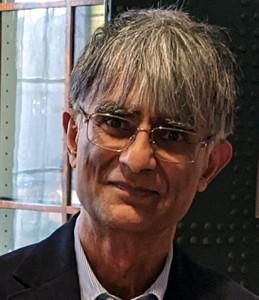
Sir Harshad Bhadeshia is Professor of Metallurgy at the School of Engineering and Materials Science, Queen Mary University of London. A distinguished academic holding Fellowships of the Royal Society (FRS), Royal Academy of Engineering (FREng), and Institute of Materials, Minerals and Mining (FIMMM), his career has been dedicated to advancing the fundamental understanding of metallurgical phenomena with practical industrial applications. His work bridges theoretical developments with real-world engineering challenges in steel technology and sustainable materials design. Professor Bhadeshia's research focuses on the theory of solid-state phase transformations, with particular emphasis on predicting and verifying structural development in complex metallic alloys, especially multicomponent steels. His interests span physical and chemical metallurgy, phase transformations, mathematical modeling, alloy design, and materials algorithms. He has made significant contributions to understanding hydrogen interaction with iron and its compounds, bainite formation, and the development of nanostructured steels with exceptional properties. His work on computational approaches to materials science has led to practical tools for steel design and manufacturing. Analysis of his recent publications reveals a sustained focus on fundamental metallurgical phenomena with practical applications across multiple domains. His research spans steel design for specific applications (rails, welds), phase transformations (bainite, pearlite), hydrogen-related phenomena, and computational materials science. A consistent theme is the integration of theoretical understanding with practical engineering solutions, particularly in addressing challenges related to sustainability, hydrogen embrittlement, and advanced manufacturing techniques like additive manufacturing. Fellow of the Royal Society (FRS) Fellow of the Royal Academy of Engineering (FREng) Fellow of the Institute of Materials, Minerals and Mining (FIMMM) Knighthood for services to metallurgy Extensive publication record spanning decades Development of freely available teaching resources through the Materials Algorithms Project (MAP) Professor Bhadeshia has mentored numerous researchers throughout his career, evident from his extensive collaborative publication record. His work has been supported by significant research grants, particularly in the areas of steel development, phase transformations, and sustainable engineering. He has led major research projects addressing critical challenges in materials science, including hydrogen embrittlement, high-temperature performance of steels, and computational design of advanced alloys. His research group has made substantial contributions to understanding the fundamental mechanisms governing steel behavior under various conditions. Based at Queen Mary University of London, Professor Bhadeshia leads research within the Centre for Sustainable Engineering. His team focuses on metallurgy, particularly steel research, phase transformations, and computational materials science. Current research directions include developing steels with enhanced resistance to hydrogen embrittlement, designing sustainable steel alloys with reduced carbon footprint, and advancing computational methods for predicting microstructure-property relationships. The group maintains strong industry collaborations, ensuring their research addresses real-world engineering challenges while advancing fundamental scientific understanding.
Prof. W.F.G. Haselager is a Professor of Artificial Intelligence at Radboud University Nijmegen, affiliated with the Donders Institute for Brain, Cognition and Behaviour and the Donders Centre for Cognition. He holds dual expertise in philosophy, psychology, and AI, focusing on societal implications of emerging technologies. His research integrates empirical methods (e.g., robotics, computational modeling) with philosophical inquiry into agency, responsibility, and human self-understanding. Education: MSc degrees in Philosophy and Psychology, PhD (1995) from Vrije Universiteit Amsterdam. Teaching responsibilities include bachelor/master programs in AI and Cognitive Neuroscience. Active in public engagement through lectures/workshops on AI ethics, neurotechnology, and free will. Key research themes include neuroethics, AI equity, and brain-computer interfacing. Current projects include the ELSA Lab (AI for Health Equity) and 'Healthy Data' initiatives addressing algorithmic bias and medical AI oversight. He advises Zander Labs on neurotechnology ethics and co-leads multi-institutional grants exploring conversational AI and neurodiverse education. Media appearances include Dutch TV/NOS coverage of brain implants and podcasts on AI sentience. Ancillary activities include the 'Pim Haselager Lectures' series and advisory roles in neurotechnology ethics.
Dr. Michael Webster is a Senior Lecturer in the School of Biology at the University of St Andrews. His research focuses on the behavior of group-living animals, including social foraging, competition, information diffusion, and predator-prey dynamics. He investigates the benefits/costs of grouping, mechanisms of group formation, and how individual behaviors shape collective outcomes. Key research interests include understanding how group structure influences survival strategies, decision-making in social contexts, and the ecological implications of collective behavior. His work spans various taxa, including fish, ants, and arthropods, with a focus on both theoretical and empirical approaches. Dr. Webster supervises PhD students Melissa Ramsay and Li Veiros. His publications explore topics such as cognitive styles in sticklebacks, climate impacts on fish social behavior, and cooperative predator inspection in fish. He has contributed to popular science through articles like 'Animals learn survival tricks from others – even if they live alone' in The Conversation. His research integrates experimental fieldwork and computational modeling, often collaborating with international teams. Current projects examine how environmental stressors affect group cohesion and how social learning operates in solitary species.
Scott Richard Floyd is the Gary Hock and Lyn Proctor Associate Professor of Radiation Oncology at Duke University School of Medicine, with secondary appointments as Associate Professor of Radiation Oncology and Assistant Research Professor in Pharmacology and Cancer Biology. He is also a Member of the Duke Cancer Institute and serves as Associate Radiation Director of the Duke Center for Brain and Spine Metastasis and Associate Program Director of the Duke Radiation Oncology Residency Program. Dr. Floyd received his M.D. and Ph.D. from Yale University in 2002. His professional training includes: Internship in Internal Medicine at Hospital of Saint Raphael (2002-2003) Residency in Radiation Oncology at Harvard Medical School, Harvard Radiation Oncology Program (2003-2007) Clinical Investigator position at MIT Koch Institute for Integrative Cancer Research (2012-) Dr. Floyd's research focuses on DNA damage signaling and repair in brain tumor cells, particularly investigating how chromatin changes mediated by epigenetic modifiers affect the DNA damage response (DDR). His lab develops small animal irradiation techniques and mouse models of glioblastoma to test the effects of epigenetic writers and readers on DDR in clinically relevant model systems. He aims to identify strategies to enhance tumor cell killing while protecting normal brain tissues from radiation damage. His work on brain slice models provides a platform for studying stroke, Alzheimer's disease, Huntington's disease, and brain tumors while reducing animal use. Analysis of Dr. Floyd's recent publications reveals a strong focus on brain metastases, radiation necrosis, and the application of artificial intelligence in radiation oncology. His work increasingly integrates radiogenomics, machine learning, and novel radiation techniques to improve outcomes for patients with brain tumors. There's a clear trend toward interdisciplinary collaboration, particularly in combining radiation therapy with immunotherapy and targeted agents, as evidenced by his leadership in the Consortium for Intracranial Metastasis Academic Research (CIMARa). Dr. Floyd has secured significant research funding, including: NEUROD1 function in SCLC fate and plasticity (NIH, 2024-2029) Synthetic lethality with BET bromodomain inhibition (American Cancer Society, 2025-2026) ASPET SURF Institutional Award (2018-2028) Multiple NIH R01 grants supporting his research on DNA damage response and brain tumor biology Dr. Floyd leads the Floyd Lab, which focuses on studying mechanisms of DNA damage signaling and repair in brain tumor and other mammalian cells. His lab utilizes advanced techniques including small animal irradiation, mouse models of glioblastoma, and organotypic brain slice culture platforms. He is also involved in Project Brainslice, which develops experimental model systems using brain slices to research new treatments for brain diseases. His clinical expertise centers on the treatment of benign, primary, and metastatic tumors of the brain and spine, making him a key figure in Duke's brain and spine metastasis program.
Dr. Monique Rooney is a Senior Lecturer in English Literature at the School of Literature, Languages & Linguistics, Australian National University. Her research focuses on melodrama, new media, US and Australian literature, and the works of Ruth Park. She holds a PhD on passing-for-white in US literature and film, exploring intersections of race, gender, and sex. Current projects include a book on 'Brow Network: Programs and Promises of Taste-making in Contemporary American Literature and Art,' and a biography of Ruth Park. She has supervised research students and contributed to over 60 publications since 2001. Her work spans film analysis (e.g., Agnès Varda’s films, *Mad Men*, and *Melancholia*), intermediality, and cultural studies. Key themes include plasticity in art and media, and the evolution of taste-making in digital networks.