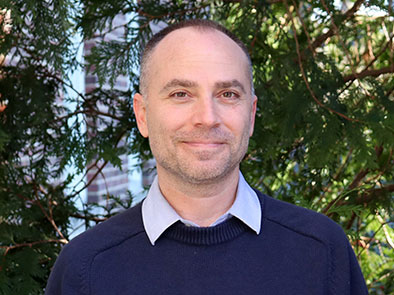
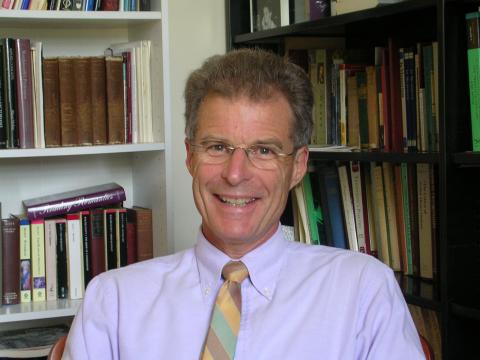
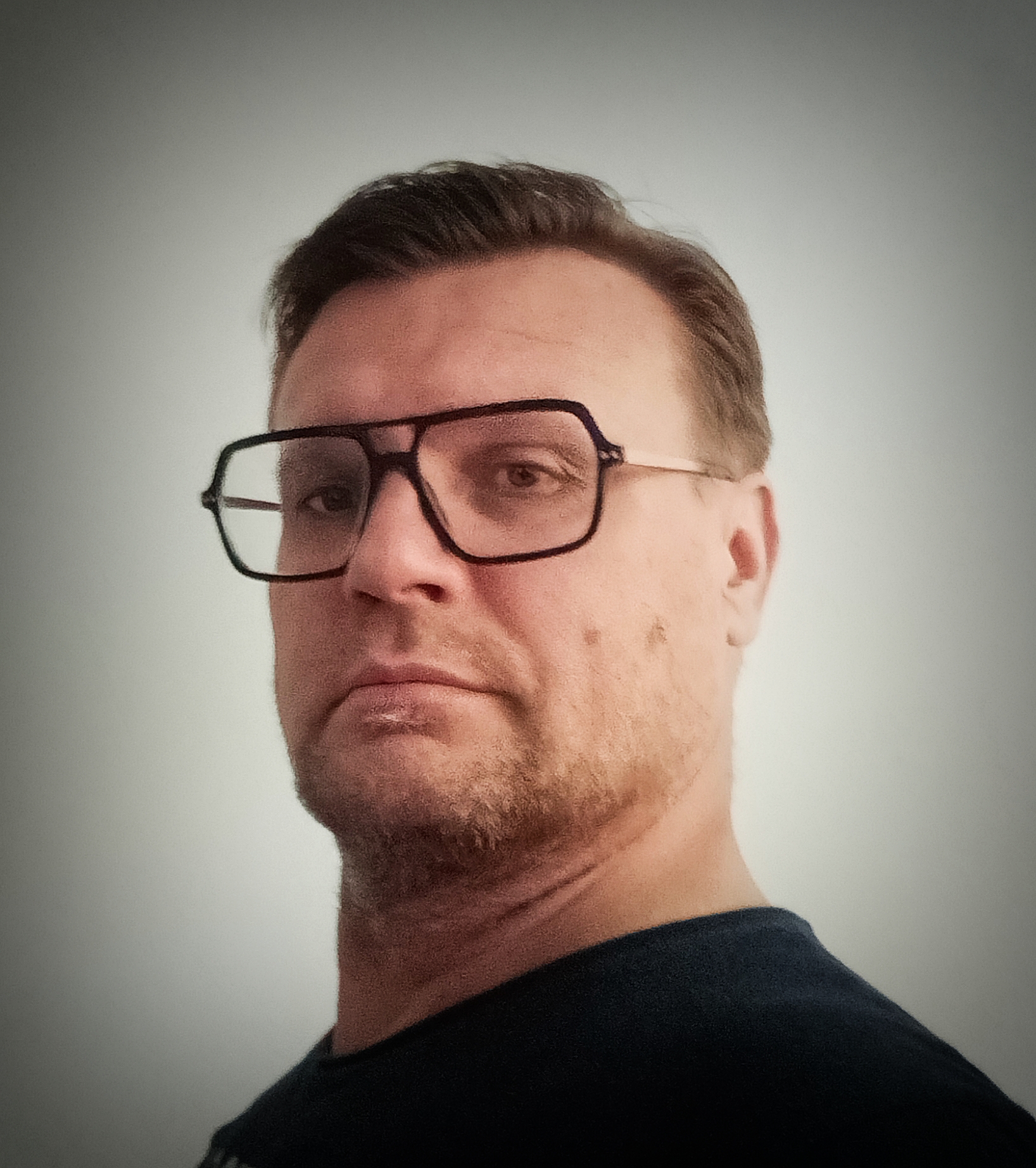
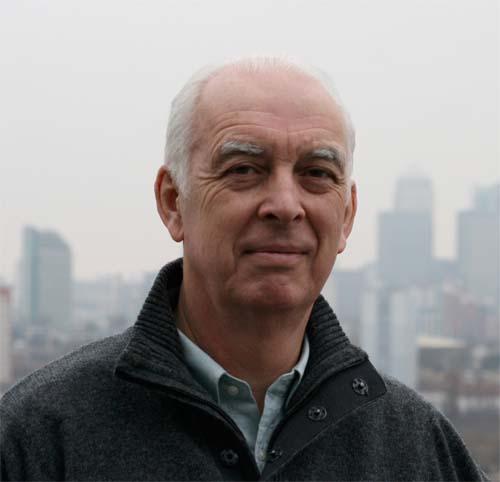
Dr. hab. Piotr Łukomski is an Associate Professor at the Department of Political Theory, Institute of Political Science, University of Wrocław. His academic career focuses on the intersection of political theory, philosophy, and cultural analysis, with notable contributions to Hannah Arendt's philosophy, game theory applications in politics, and the role of imagination in political thought. Department: Political Theory Email: piotr.lukomski@uwr.edu.pl ORCID: 0000-0002-5307-616X Research Interests: His work spans conceptual metaphors in political theory, decision-making under hazardous conditions, cultural evolution of tyranny, and the aestheticization of politics. He examines how digital technologies (like VR) reshape political identity and how Arendtian frameworks apply to modern governance. Teaching: Coordinates social consulting labs and teaches decision-making processes in political contexts, with a focus on practical applications in hazardous conditions. Publications: Recent articles analyze VR-era political identity, Hannah Arendt's relevance to modern democracy, and the integration of problem-solving strategies in political thought.
Jonathan H. Grossman is a Professor in the Department of English at the University of California, Los Angeles (UCLA), where he has been since 2013. He earned his Ph.D. in English from the University of Pennsylvania (1996) and a B.A. in English and Religious Studies from Brown University (1989). Education: Ph.D., English, University of Pennsylvania (1996) M.A., English, University of Pennsylvania (1993) B.A., English & Religious Studies, Brown University (1989) Research Interests focus on the intersection of 19th-century British literature, standardization history, and narrative theory. His work examines how transportation networks, legal systems, and technological infrastructures reshaped Victorian perceptions of time, space, and community. Recent projects include analyzing metrology’s role in literary form and global transport’s narrative implications. Publications highlight his expertise in Dickens studies and Victorian systems. Notable works include Charles Dickens’s Networks: Public Transport and the Novel (Oxford, 2012) and The Art of Alibi (Johns Hopkins, 2002). His 2025 article on screw thread standardization in Technology and Culture extends his interdisciplinary analysis. Scientific Awards include the UCLA Senate Distinguished Teaching Award (2013–14) and recognition in The Best American Essays (2005) for his essay 'Alibis'. He has secured multiple UCLA Senate grants for digital humanities initiatives like Cruikshank’s Eye and Yellowback Cover Art . Professional Service spans editorial roles as Co-Editor of Nineteenth-Century Literature (2011–present) and leadership in the Dickens Project. He mentors graduate students, serves on departmental committees, and contributes to academic publishing workshops and conferences.
Salomé Aguilera Skvirsky is an Associate Professor in the Department of Cinema and Media Studies and The College at the University of Chicago, with affiliated appointments in the Center for Latin American Studies and the Center for the Study of Race, Politics, and Culture. She earned her Ph.D. from the University of Pittsburgh and serves as co-editor at Critical Inquiry. Her research pioneers the concept of the “process genre”—a transmedial category depicting step-by-step production processes that aestheticize labor as skilled and artisanal across ideological spectrums. She employs hemispheric frameworks to analyze race, labor, and “the people” in Latin American political cinema, Third Cinema, and nonfiction media, revealing how representations intersect with power structures and historical trauma. Recent publications examine police representation in “Filming the Police,” domestic labor in Roma, and the legacy of The Battle of Chile. Her work spans Cinema Journal, Journal of Latin American Cultural Studies, and The Routledge Companion to Latin American Cinema, demonstrating methodological rigor in visual analysis and political theory. Major recognitions include: Best First Book Prize (Society for Cinema and Media Studies, 2021) PROSE Book Awards Finalist (Media and Cultural Studies, 2021) Kraszna-Krausz Moving Image Book Award shortlist (2021) She teaches advanced seminars on Latin American Documentary, Cinema/Labor, and Filming the Police, mentoring students in critical media analysis while advancing her book project on police representation across televisual and digital platforms.
Manfred Kern serves as Professor and Head of the Department of German Studies at Paris Lodron University Salzburg. With an extensive publication record dating back to 1995 and continuing through 2025, he maintains an active research profile in medieval literature and digital humanities. His leadership role as department head and project manager for significant research initiatives demonstrates his standing within the academic community. Professor Kern's research interests center on medieval literary cultures, particularly through the lens of digital humanities. His work on the Wenceslas Bible represents a significant interdisciplinary contribution, combining traditional philological approaches with cutting-edge computer vision techniques. His recent editorial work on disability representation in art ( Kunst und Gebrechen ) demonstrates expanding scholarly interests at the intersection of cultural history and visual studies. His research consistently bridges historical scholarship with contemporary methodological innovations. Kern's publication trends reveal a strategic evolution from traditional literary studies toward digital humanities applications. His most recent work (2024-2025) shows a strong emphasis on computational analysis of historical manuscripts, particularly the Wenceslas Bible project, while simultaneously developing theoretical frameworks for understanding disability representation in historical art contexts. This dual focus represents a sophisticated integration of technical and humanistic approaches to cultural heritage. As project manager for significant research initiatives including WB-DEA (The Wenceslas Bible - Digital Edition and Analysis, 2022-2024), TALC_ME (Textual and Literary Cultures in Medieval Europe, 2014-2017), and ALIENA (Old literature re-aestheticized in the experience space, 2010-2013), Professor Kern has secured substantial research funding and built collaborative networks across institutions. His organizational role in numerous academic events, including the IZMF lecture series and the In Nomine conference on medieval naming practices, further demonstrates his leadership in the field. Professor Kern actively participates in departmental and university governance, serving on habilitation committees and appointment committees (Berufungskommission). His academic service extends to editorial work and conference organization, reflecting his commitment to scholarly community building. His leadership of the German Studies department at Paris Lodron University Salzburg positions him at the center of academic activity in his field.
Rachel Ablow is a Professor of English at the University at Buffalo (SUNY), affiliated with the College of Arts and Sciences. Her research focuses on 19th-century literature and culture, particularly the Victorian era, with expertise in novel theory, medical humanities, and affective histories. She holds editorial roles for Victorian Literature and Culture and co-edits the Norton Anthology's Victorian volume. Her major publications include Victorian Pain (Princeton, 2017) and The Marriage of Minds (Stanford, 2007). Her work bridges literary analysis with interdisciplinary topics like pain narratives, legal history, and sensory studies. She has held multiple research fellowships, including from the ACLS and University at Buffalo institutes. Ablow has contributed to special journal issues on pain’s social dimensions and Victorian emotion, and her teaching spans Victorian literature, critical theory, and gender studies. She actively participates in academic organizations like the North American Victorian Studies Association.
Michael Fox is a Teaching Assistant Professor in the School of Information and Library Science (SILS) at the University of North Carolina at Chapel Hill. Prior roles include Senior Lecturer and Academic Director for the Digital Studies of Language, Culture, and History program at the University of Chicago, and Assistant Editor/Software Architect of the William Blake Archive. He holds a PhD in English and BS in Computer Science. His research bridges literary criticism and information science, focusing on digital humanities, AI ethics, and textual studies. Key areas include graph databases, network analysis, and AI methods in literary history, alongside studies of Aestheticism, poetics, and literary history. His first book examines intersections between literary and historical writing, using computational approaches like graph databases. Michael has contributed to the William Blake Archive, a pioneering digital humanities project, and serves on the editorial board of Textual Cultures . His courses span literature, information science, and their intersections (e.g., Digital Humanities, The Idea of AI). His work earned the ADE 2017 Featured Project award for the Blake Archive's redesign. Grants and advising details are pending explicit mentions in texts.
Dr Angela Dunstan is a Reader in English Literature and Visual Culture at Queen Mary University of London's Department of English, School of the Arts. She holds a PhD from the University of Sydney and has taught at institutions including Oxford University College and the University of Sydney. As International Lead for the School of the Arts, she focuses on interdisciplinary research at the intersection of literature and visual culture, particularly in the long 19th century. Her work examines technologies of replication, art authenticity, sculpture, urban culture, and global scholarly practices. Her research explores Victorian sculptural replication, the global circulation of English literature via literary societies, and the history of pedagogy. Notable projects include her forthcoming monograph Reading Victorian Sculpture (Edinburgh University Press) and co-edited collections like Tribute and Trade: China and Global Modernity . She has supervised doctoral theses on children’s literature and British postwar land art. Teaching includes undergraduate and postgraduate courses on Victorian literature, London’s cultural spaces, and art histories. Dunstan’s public engagement includes curatorial advisory roles, digital humanities projects (e.g., Edinburgh Review in the Jeffrey Years), and contributions to Victorian special correspondents databases. She actively participates in academic events and lectures on topics like Decadence and sculpture, emphasizing historical archives and interdisciplinary methodologies.
Herbert Tucker is the John C. Coleman Professor in the Department of English at the University of Virginia, within the College of Arts & Sciences. He specializes in 19th-century British literature, with a focus on poetry, prosody, and Victorian intellectual culture. His scholarly work spans Romantic and Victorian poetics, epic form, dramatic monologue, and literary influence. His research interests include Victorian poetry , 19th-century British literary form , prosody , epic poetry , Shakespeare reception , and literary theory . He explores how poetic form conveys meaning, how writers engage with tradition, and how literature reflects cultural and philosophical concerns of the era. His work often bridges literary analysis with intellectual and cultural history. The recent articles reflect a deep engagement with poetic form , manuscript studies , literary influence , and the aesthetics of charm and enchantment . His scholarship appears in leading journals such as Critical Inquiry , Victorian Studies , and New Literary History , demonstrating sustained contributions to Victorian and Romantic studies. American Academy of Arts & Sciences Member Fulbright Scholar Donald J. Gray Prize National Humanities Center Fellow MLA-ACLS Fellow Whiting Fellow Danforth Fellow Shannon Center Fellow International Senior Research Fellow (Durham) Distinguished Visiting Fellow (Queen Mary) Herbert Tucker has served as Associate Editor of New Literary History since 1996 and Series Editor of Victorian Literature and Culture since 1989, indicating long-standing mentorship and editorial leadership. He has held visiting professorships at Williams College, Massey University, and Yale, and has delivered lectures globally. His projects include For Better for Verse , an interactive prosody tutorial, showcasing innovation in pedagogy and technology. He is affiliated with the New Literary History editorial team and the Victorian Literature and Culture series, both based at the University of Virginia. His work with the Shannon Center for Advanced Studies and the Teaching and Technology Initiative reflects engagement with interdisciplinary research and digital humanities.
Brenda Mathijssen is a Senior Lecturer and Dean of the Faculty of Religion, Culture and Society at the University of Groningen. She holds a prominent role in advancing research on death practices, cultural rituals, and minority inclusion in mortuary spaces. Her work bridges religious studies, anthropology, and geography, with a focus on cemeteries, cremation, and the socio-political dimensions of dying. Mathijssen’s research explores topics such as natural burial trends, ritual efficacy, and the geopolitics of minority deathscapes. She has published extensively on cultural inclusion in cemeteries, crematoria policy, and the symbolic dimensions of funeral rituals. Her recent projects include investigating sustainable death practices in the Netherlands and the role of podcasts in public engagement with mortality. She has received prestigious awards including the NWO Veni Grant (2020) for her work on multicultural deathscapes and multiple teaching awards for innovative modules on climate change, religion, and diversity. Mathijssen actively participates in academic networks, organizing conferences like the IAPR Pre-Conference on Interdisciplinarity and co-hosting the podcast De PodKist . Her scholarly contributions span academic articles, book chapters, and media engagements, addressing both scholarly and public audiences. She also advises on policy matters related to funeral practices and has contributed to debates on ethical corpse treatment and eco-friendly burial alternatives.
Panagiotis Roilos is the George Seferis Professor of Modern Greek Studies and Comparative Literature at Harvard University. He serves as Director of Graduate Studies and is affiliated with the Weatherhead Center for International Affairs and the Minda de Gunzburg Center for European Studies. His academic roles include co-founding the book series Cultural Politics, Socioaesthetics, Beginnings and the Harvard Early Modern and Modern Greek Library. PhD, Harvard University (1999) B.A./Ptychion, University of Athens (Classics, Byzantine, and Modern Greek Literature) Rois's research spans comparative poetics , postclassical Greek culture , and ritual theory , with a focus on cognitive anthropology, reception studies, and European aestheticism. His work bridges ancient and medieval Greek literature with modern theoretical frameworks, examining orality-literacy transitions and ideological discourses. His publications include the monographs Amphoteroglossia (2005) and C. P. Cavafy: The Economics of Metonymy (2009), along with co-edited volumes like Greek Ritual Poetics (2005). Recent projects address digital posthumanism ( Neomedieval Metacapitalism ) and Byzantine imaginaries. Forschungsstipendium, Humboldt Foundation (2010) Dumbarton Oaks Fellow (2009) Honorary PhD, Panteion University (Athens) Rois actively collaborates on critical editions of Byzantine texts, directs the Delphi Academy of European Studies, and contributes to interdisciplinary initiatives like the Poetics before Modernity research project. His teaching explores topics from Byzantine rhetoric to modern Greek cultural politics.
Ileyha Dagalp is a researcher at Stockholm Business School (SBS), part of Stockholm University. She specializes in marketing within the Consumer Culture Theory Research Group, focusing on the intersection of consumption, marketing, and consumer culture. Her educational background includes a Ph.D. in business administration with a specialization in marketing from the School of Business, Economics and Law at the University of Gothenburg, where she completed her dissertation titled "myth aestheticization". Dagalp's research interests span multiple areas including brand activism, novel food market aestheticization, sustainabilization, and the fluidity of consumer lifestyles within digital consumer culture. Her methodological approach combines consumer and expert interviews with visual and digital research methods. She has published extensively on advertising aesthetics, past themed consumption, marketplace mythology, and cultural approaches to aestheticization. Her recent publications reveal a consistent focus on aesthetic dimensions of consumer culture, with particular attention to how aesthetic principles shape advertising, digital marketing, and consumer behavior. Her work often bridges theoretical consumer culture concepts with practical marketing applications. Among her notable achievements is being a recipient of the prestigious Jan Wallanders and Tom Hedelius Postdoctoral Fellowship. She is currently curating a special issue on "Poetics of Consumption" which reflects her ongoing interest in the literary and artistic dimensions of consumer behavior. Dagalp actively contributes to the academic community through her research in the Consumer Culture Theory Research Group, which examines consumer culture as "the interconnected system of commercially produced objects, images, and texts that various market actors use to construct and produce practices, identities and meanings."
Dr. hab. Rafał Kotwis is a Professor at the University of Arts in Poznań (UAP), employed continuously since 2006. He heads the 1st Studio of Sculpture and Environment within the Faculty of Sculpture and lectures in Computer Techniques in Sculpture since 2015. Concurrently, he serves as a Lecturer at Collegium da Vinci in Poznań from 2022. His administrative tenure includes Dean of the Faculty of Sculpture (2020–2023), UAP Senator (2020–2024), and Faculty Coordinator for PhD Studies (2018–2019), confirming active faculty status without former or retired designation. Educational Background: 2000–2005: Faculty of Painting, Graphic Arts and Sculpture, University of Arts in Poznań (UAP) 2002–2005: Philosophy, Adam Mickiewicz University (interrupted) 2012: Doctoral degree obtained, Assistant Professor appointment 2020: Post-doctoral degree obtained, Professor appointment Kotwis’s research centers on the critical examination of digital technology’s impact on sculptural practice and human experience. Early works analyzed aestheticization of everyday life as cultural dysfunction, while current focus explores artistic immersion and dehumanization through electronics appropriation, where technology replaces or filters reality. His methodology combines resin, steel, electronics, and 3D printing to investigate tensions between virtual and physical realms. Projects like the Made by Kotwis series merge aesthetics with functionality, examining how digital tools redefine artistic predicates and mass cultural seduction. His publications (2022–2024) reveal consistent thematic progression: from material analysis of 3D printing (e.g., Temptation of Zbrush series) to philosophical inquiries about AI’s relationship with art. Works address digital figuration limits, virtual-physical reality translation, and contemporary art definitions, all contextualized within his hands-on studio practice. This output bridges artistic creation with academic discourse, emphasizing technology’s role in reshaping sculptural form and cultural perception without explicit grant documentation. No scientific awards, prizes, or medals are referenced in the provided materials. Kotwis’s academic leadership includes direct oversight of PhD studies coordination and university governance. His roles demonstrate institutional commitment to scientific quality and educational advancement: Advising & Academic Service: Faculty Coordinator of PhD Studies (2018, 2019) Science and Art Festival coordination (2012, 2015, 2019) Administrative Leadership: Dean of Faculty of Sculpture (2020–2023) Vice-Dean of Faculty of Sculpture (2016–2020) Faculty Coordinator for Quality of Scientific Activity (2023–present) UAP Senator (2020–2024) Scientific Council membership (2020–2024) Committee Involvement: Medals and Decorations Committee (2016–2022) University Council for Science and Quality of Education (2016–2020) PKA team (2014–2019) Art high school promotion trips (2016–2018) His primary creative base is the Sculpture and Environment Studio at UAP, where resin, steel, and electronic components are integrated with 3D printing to produce immersive objects. The PKA team (2014–2019) at the Faculty of Sculpture functioned as a collaborative unit for academic development, though specifics of its mandate are unelaborated. Current studio practice focuses on ABS resin artworks exploring electronic dehumanization, as seen in 2024’s Temptation of Zbrush III series, operating as a hub for digital-physical artistic synthesis.
Mike Featherstone is Professor of Sociology in the Institute for Creative and Cultural Entrepreneurship (ICCE) at Goldsmiths, University of London. He joined Goldsmiths Sociology Department in January 2013 and moved to ICCE in January 2016. Previously, he was Research Professor of Sociology and Communications and Director of the Theory, Culture & Society Centre at Nottingham Trent University. His academic qualifications include a PhD, MA from Durham University, and BA from State University of Utrecht (1900). Professor Featherstone's research focuses on consumer culture , social and cultural theory , the body , global culture and knowledge formation , ageing and the life course , automobilities , aestheticization processes , and digital culture . His work explores the intersections between material consumption, cultural practices, and social formations, with particular attention to how global processes shape local experiences. He has made significant contributions to understanding luxury consumption, the dynamics of global culture, and the relationship between digital technologies and social life. His recent publications reveal a growing interest in the public sphere in the digital age, the future of universities, and the relationship between consumer culture and sustainability. Featherstone's work consistently bridges theoretical sophistication with empirical richness, examining how cultural practices reflect and shape broader social transformations. His scholarship demonstrates increasing engagement with questions about ecological sustainability, the transformation of knowledge institutions, and the cultural politics of global events. Founding editor of Theory, Culture & Society (1982-) Founding editor of Body & Society (1995-) Editor of Theory, Culture & Society Book Series (1990-) Member of Consortium of Humanities Centres and Institutes (2000-05) HEFCE Research Assessment Exercise Sociology panels (1995-6 and 2001) Professor Featherstone has been a visiting professor in Barcelona, Geneva, Kyoto, Recife, São Paulo, Singapore, Tokyo and Vancouver. He currently spends part of the year working with colleagues at the University of Tokyo and Tokyo University of the Arts on a project related to the Olympics, examining cultural dimensions of global sporting events and their impact on national identity formation in East Asia.
Prof. Dr. Irmela Marei Krüger-Fürhoff serves as Chair of Modern German Literature at the Institute for German and Dutch Philology , Freie Universität Berlin. She concurrently holds leadership roles as Managing Director of the Institute and Vice Dean of Friedrich Schlegel Graduate School for Literary Studies . Her research focuses on intersections between literature, medicine, and visual culture, particularly through Disability Studies and Graphic Medicine . She leads the DFG-funded project "Cosmogonies and Loss Narratives in Contemporary Literature and Comics" (2024-2028) and previously directed the €671,000 Einstein Foundation project "PathoGraphics" (2016-2021). Key academic affiliations: Freie Universität Berlin, Stanford University (2013), University of Cincinnati (2005) Doctoral supervision includes 12 completed and ongoing dissertations on topics ranging from organ transplantation narratives to literary representations of neurodegenerative diseases Her narrative research examines how literary and visual texts construct meaning around bodily difference, disease, and technological intervention. This spans from 18th-century aesthetic theories to 21st-century comics about Parkinson's disease and dementia. She pioneered Graphic Medicine applications in German academia and explores intermediality through projects like "Comicstudien" series and co-edited volumes on body politics in comics. Recent article trends reveal systematic analysis of Temporal disruptions in dementia narratives Gendered dynamics of medical ethics Subversive aging portrayals in graphic media Visual-textual organ transplantation Posthumanism in biomedical fiction Historical continuity in disability representation Scientific Recognition : Max Kade Prize for Best Article (2022) DFG Research Group Leader (FOR 5323) Berlin University Alliance funding recipient As a narrative researcher , she has supervised 12 PhD candidates and developed curricula across bachelor's to graduate school levels. Her collaborative labs include the PathoGraphics team and Friedrich Schlegel Graduate School's inter-university initiatives.
Eileen Fischer is Professor of Marketing and Associate Dean of Research at York University's Schulich School of Business, where she holds the Anne & Max Tanenbaum Chair in Entrepreneurship and Family Enterprise. Her research examines consumer culture, market system dynamics, and entrepreneurial processes, with special emphasis on qualitative methodologies and branding. Her research interests span: Consumer behavior in alternative market systems Branding and reputation building in entrepreneurial contexts Institutional dynamics in aestheticized markets Professional and personal brand management Methodological advances in qualitative research Her recent publications demonstrate strong focus on: Platform economies and digital market evolution Consumer activism in stigmatized markets Qualitative research methodologies and theory building Personal branding strategies in attention economies Major scientific recognitions include: Multiple Outstanding Reviewer Awards from Journal of Consumer Research (2001, 2004, 2006) Journal of Business Venturing Outstanding Reviewer Award (2007) Schulich Research Awards (1999, 2002) Keynote speaker at international conferences including Consumer Culture Theory Workshop Faculty Fellow appointments at European Marketing Association and AMA doctoral consortia Her research has been supported by substantial grants from Canada's Social Sciences and Humanities Research Council (SSHRC), including: $180K Insight Grant on complexity and market dynamics (2018-2022) $207K Insight Grant on opportunity creation processes (2015-2020) Multiple earlier grants on entrepreneurial reputation and advisory services