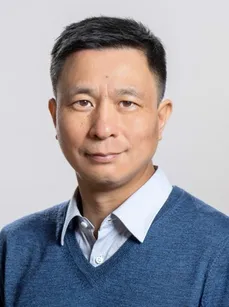
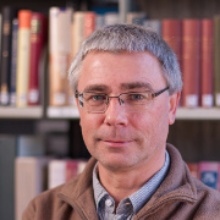
Prof. Dr. Nikolaus A. Adams is a full professor and Chair of Aerodynamics and Fluid Mechanics at the Technical University of Munich (TUM), affiliated with the TUM School of Engineering and Design. Born in 1963, he holds a doctorate from TUM (1993) and habilitation from ETH Zurich (1999). His research focuses on numerical methods, turbulent flows, microfluidics, and multiphase systems. He has held leadership roles, including Dean of the Faculty of Mechanical Engineering since 2023 and Vice Dean (2015–2016). Education: PhD from TUM (1993), habilitation from ETH Zurich (1999) Research interests include aerodynamics, fluid-structure interaction, and numerical techniques for compressible flows. His work spans high-speed aerodynamics and computational fluid dynamics (CFD). Awards include ERC Advanced Grants (GENUFASD 2023, NANOSHOCK 2015), the Gordon Bell Prize (2013), and Fellow of the American Physical Society (2011). Grants and leadership: Spokesperson of DFG SFB/TRR 40 (2008–2020), co-author of 'Large-Eddy Simulation for Compressible Flows' (2009), and editorial roles in J. Comput. Phys.
Prof. Dr. Mirko Hornung is a Professor of Aircraft Design at the TUM School of Engineering and Design, Technische Universität München. His research focuses on conceptual aircraft design, integration of propulsion systems, and evaluation of aviation technologies in operational contexts. Education and Career: PhD in Aeronautical Engineering from the University of the Bundeswehr (2003), awarded a research prize for work on reusable space transport systems. 2003–2009: Worked at Airbus Group (EADS) on military air systems, propulsion integration, and program management. Executive Director of Research & Technology at Bauhaus Luftfahrt, a think tank for long-term aviation developments. Research Interests: Aircraft design optimization, including hybrid energy systems, electric propulsion, and UAV technologies. Environmental sustainability in aviation, such as hydrogen-powered aircraft and lifecycle assessment. Aerodynamic and structural analysis, including flutter suppression and composite materials. Key Publications Highlight Trends: Focus on hybrid-electric and hydrogen propulsion for reducing environmental impact. Advancements in UAV design, including morphing wings and autonomous systems. Integration of AI-driven tools for propulsion optimization and lifecycle analysis. Scientific Awards: EADS Promotion Award (1995) Research Prize for Thesis on Reusable Space Transport Systems (2003) Advising & Grants: Directs research at Bauhaus Luftfahrt, collaborating on future aviation concepts. Engaged in interdisciplinary projects like FLEXOP UAV demonstrator and Ce-Liner eMobility studies. Labs/Teams: Active in the Aircraft Design Professorship at TUM and leadership roles at Bauhaus Luftfahrt, focusing on next-generation aviation technologies.
Prof. Dr. Michael Ulbrich is a full professor and Chair of Mathematical Optimization at the Technical University of Munich (TUM), within the School of Computation, Information and Technology. He has held this position since 2006 and previously served as Dean of Studies (2007–2010) and Vice Dean of the Faculty of Mathematics (2012–2015). His research focuses on nonlinear optimization, optimal control, and numerical analysis, with applications in fluid dynamics, shape optimization, and PDE-constrained systems. He leads projects in the DFG SPP 1962 and IGDK 1754, and has received prestigious awards including the Howard Rosenbrock Prize (2015) and the Doctoral Award from the TUM Association of Friends (1996). Ulbrich is Editor-in-Chief of Optimization and Engineering and contributes to multiple journals. His work bridges theoretical foundations and practical applications, including CO2 sequestration, fluid-structure interaction, and distributed optimization algorithms. Education: PhD (1996), Habilitation (2002) in Mathematics at TUM. Research stays at Rice University (USA) under DFG funding. Research Areas: Semismooth Newton methods, PDE-constrained optimization, optimal control of Navier-Stokes equations, and distributed parameter systems. Awards: Rosenbrock Prize, Teaching Excellence Awards, and recognition for doctoral work. Leadership Roles: Department Head of Mathematics (2022–), Member of TUM Senate (2019–2022), and Co-Chair of GAMM 2018. Ulbrich has authored influential textbooks like Semismooth Newton Methods for Variational Inequalities and Nichtlineare Optimierung . His recent projects include OptiGeoS (2024–2026) and collaborations on nonsmooth optimization and stochastic algorithms. His academic contributions span over 100 publications, emphasizing both algorithmic innovation and rigorous mathematical analysis.
Prof. Dr. Marcello Romano is a Professor at the Technical University of Munich (TUM) , holding the Chair of Astrodynamics since January 2025. With a career spanning over two decades, he has served as a founding director of the Spacecraft Robotics Lab at the Naval Postgraduate School and held visiting professorships at TUM, NASA Ames, and Stanford University. Doctorate in Aerospace Engineering - Politecnico di Milano (2001) National Research Council Postdoctoral Fellow His research focuses on spaceflight mechanics , integrating theoretical analysis, simulation, and flight testing to advance: Rotational and orbital maneuvering of satellites Autonomous GNC systems Orbital robotics for debris removal Space-enabled sustainability initiatives Recent publications highlight his work in convex programming for orbital capture , aerodynamic attitude stabilization , and multi-spacecraft rendezvous maneuvers . He has received prestigious awards including the Patti Grace Smith Award and AIAA Associate Fellowship . Prof. Romano contributes to the field through: Leadership in the International Academy of Astronautics Development of advanced space systems Technology transfer and innovation projects
Prof. Dr. Christian Breitsamter is a Professor at the Technische Universität München (TUM), leading the Chair of Aerodynamics and Fluid Mechanics within the TUM School of Engineering and Design. He has held this position since 2007 and has been a member of key committees such as the ICAS Programme Committee and STAB-Programmleitung. His research focuses on aerodynamics of aircraft and rotorcraft configurations, including vortex dynamics, aeroelasticity, and fluid-structure interaction. Education: PhD in Aerodynamics (1997) Master’s in Aerospace Engineering (1989) Research Interests: Prof. Breitsamter’s work spans experimental and numerical studies of high-agility aircraft, helicopter aerodynamics, and advanced wing designs. Key areas include leading-edge vortices, gust load mitigation using flexible wings, and flow control techniques. His group investigates cutting-edge topics like deep learning for buffet prediction and hybrid neural networks for aerodynamic modeling. Awards: Willy Messerschmitt Preis (1999) AIAA Associate Fellow (2007) Advising & Grants: While specific student names are not listed, his research involves collaborative projects with industry partners (e.g., RACER Compound Helicopter) and EU initiatives like the FURADO program. His team contributes to the NFDI4ING infrastructure for engineering data. Labs/Teams: Active in the Aerodynamics Wind Tunnel facilities (Windkanäle A/B/C) and leads the SAGITTA flying wing demonstrator project. His group also explores membrane wings and elasto-flexible morphing technologies.
Fabian Fritz holds an M.Sc. degree and works at the Technical University of Munich (TUM) within the Chair of Aerodynamics and Fluid Mechanics . His research focuses on computational fluid dynamics (CFD) and numerical simulation of multiphase flows, particularly using Smoothed Particle Hydrodynamics (SPH) . He collaborates on projects like PBF-LB/M (additive manufacturing) and contributes to Lagrangian fluid mechanics benchmarking frameworks. Research Trends: His publications emphasize numerical methods (SPH, level-set, finite-volume), multiphase flow modeling , heat transfer , and thermoacoustic stability . Recent work includes hardware-agnostic code optimization and adaptive mesh refinement techniques. Education: Completed a master’s thesis on Diffusive-Interface Modeling of Multiphase Flows with Surface-Tension Effects , supervised by P.D. Dr.-Ing. habil. Stefan Adami.
Prof. Dr.-Ing. Stephan Staudacher is the Director of the Institute of Aircraft Propulsion at the University of Stuttgart. His work focuses on aircraft propulsion systems, gas turbine performance, and turbomachinery design. He holds a professorship in the Faculty of Mechanical Engineering and Aerospace, leading research in advanced engine technologies, erosion effects, and fault detection algorithms. Research interests include engine reliability, computational fluid dynamics (CFD), and experimental validation of propulsion systems. His publications emphasize topics like neural network applications for fault detection, ice crystal icing simulations, and particle transport in additive manufacturing processes. Recent studies highlight the optimization of composite-cycle engines and assessment of mission severity caused by erosion. Key contributions include advancements in engine condition monitoring, transient performance analysis, and the development of Stuttgart University’s Altitude Test Facility (ATF). His work bridges theoretical models with industrial applications, addressing challenges in both civil and military aviation propulsion systems.
Prof. Dr.-Ing. Dieter Moormann is affiliated with the Institute of Flight System Dynamics at RWTH Aachen University, a leading institution in engineering research. His work focuses on aerospace systems, specifically flight mechanics and control technologies. Research Interests include: Flight system dynamics and control Autonomous flight systems Aerodynamics and avionics Contact: moormann@fsd.rwth-aachen.de
Rainald Loehner is a Distinguished Professor of Fluid Dynamics at George Mason University's Center for Computational Fluid Dynamics. Since 2003, he has led the Center for Computational Fluid Dynamics at George Mason University. He is currently a Hans Fischer Senior Fellow at the Technical University of Munich's Institute for Advanced Study (TUM-IAS) for 2023, hosted by Professors Kai-Uwe Bletzinger and Roland Wüchner in the 'Adjoint-Based System Identification of Large-Scale Structures' Focus Group. Loehner received his Diplom Ingenieur (Maschinenbau) degree from the Technical University of Braunschweig, and his PhD and a DSc in civil engineering from the University College of Swansea, Wales. After teaching at Swansea for a year, he worked at the Naval Research Laboratory in Washington, DC, followed by a research professorship at George Washington University. He joined George Mason University as an associate professor and was promoted to full professor in 1995 and distinguished professor in 2004. With over 35 years of experience, Professor Loehner's research spans the complete pipeline of numerical solvers and simulation tools. His expertise includes pre-processing, grid generation, numerical methods, field solvers, parallel computing, adaptive mesh refinement, fluid-structure interaction, shape optimization, system identification, and computational crowd dynamics. His current work focuses on developing advanced field solvers for compressible and incompressible flows, acoustics, electromagnetic wave propagation, heat and mass transfer, structural mechanics, and fluid-structure interaction. Key application areas include blast mitigation, ship hydrodynamics, blood flow, contaminant transport, and pedestrian safety. Loehner's recent research output (2020-2024) shows a strong trend toward digital twin technology and adjoint-based methods for structural analysis and optimization. His publications focus on high-fidelity digital twins for detecting structural weaknesses, risk assessment in engineering systems, and optimization of sensor placement. His work bridges computational mechanics with machine learning approaches, particularly in system identification and inverse problems, demonstrating how computational methods can solve complex real-world engineering challenges. 2020: Ranked #15119 in the Stanford List of Most Influential Scientists of the World; #8 in Aerospace and Aeronautics 2010: Distinguished International Career Award, Argentine Association of Computational Mechanics 2008: Fellow, International Association for Computational Mechanics 2006: Associate Fellow, AIAA 2005: Honorary Professor, University of Wales Swansea 2005: Advisory Professor, Shanghai Jiao Tong University 2004: Distinguished Professor of Fluid Dynamics, George Mason University 1999: Computational Mechanics Achievements Award, Japan Society of Mechanical Engineering 1993: Doctor of Science in Civil Engineering, University College of Swansea 1979-1983: Studienstiftung des Deutschen Volkes (Top 1% of German Students) Professor Loehner has mentored numerous students through his work at George Mason University and has supervised research in computational fluid dynamics, structural mechanics, and related fields. His research has been supported by various grants from government agencies and industry partners, enabling the development of advanced simulation tools applied in aerodynamics, hydrodynamics, shock-structure interaction, and medical applications. His codes and methods have been widely adopted in industry and academia for applications ranging from aircraft and ship design to medical simulations and urban pathogen transmission modeling. Loehner leads the Center for Computational Fluid Dynamics at George Mason University, which focuses on developing cutting-edge computational methods for fluid dynamics and related multiphysics problems. The center works on strategic application areas including blast mitigation, ship hydrodynamics, blood flow simulation, and pedestrian movement modeling. As a TUM-IAS Fellow, he collaborates with the Chair of Computational Modeling and Simulation at TUM on adjoint-based system identification of large-scale structures, bringing together expertise in computational mechanics and digital twin technology to address complex engineering challenges.
Ina Fichtner is a Professor at the Faculty of Digital Transformation of University of Applied Sciences HTWK Leipzig since 2022. Previously, she led the MINT department at the Institute for Applied Training Science (IAT) in Leipzig for 13 years (2009–2022), focusing on integrating mathematics, informatics, and natural sciences into sports research. Her work bridges computer science , biomechanics , and sports informatics , with extensive projects on athlete movement analysis, data systems (IDA), and digital tools for elite sports. PhD in Computer Science (2007) from TU Dresden and Leipzig University Diplom in Mathematics and Computer Science (2002) from Jena, Dresden, and Sheffield Her research spans data science , sports technology , and applied informatics , particularly in ski jumping , dive analysis , and athlete biomechanics . She has co-authored numerous publications in theoretical computer science and applied sports informatics , including studies on 3D body scanning , inertial sensors , and force-velocity profiling . She served as Alumni Representative and Treasurer of the Friends' Association at HTWK Leipzig, with memberships in German Mathematical Society and German Sports Science Association .
Prof. Dr. Dongsheng Wen is a Full Professor at the Chair of Thermodynamics at the Technical University of Munich (TUM) since 2022. He has held academic positions at the University of Leeds (2013-2022), Queen Mary University of London (2006-2009), and Beihang University (2016-2022), where he served as Dean of the School of Aeronautic Science and Engineering. Education : B.Eng. in Cryotechnology and Refrigeration Engineering, Beihang University (1997) M.Eng. in Engineering Thermophysics, Tsinghua University (2000) D.Phil. in Engineering, University of Oxford (2005) His research focuses on multiphase flow and heat transfer , renewable energy technologies , multiscalar modeling , and micro/nanoscale engineering . He has contributed to projects involving nanofluids, nano-energy systems, and combustion dynamics. He has received prestigious awards including the European Research Council Consolidator Grant and the MIC Particuology Best Paper Award , and is a Fellow of multiple institutions such as the Royal Society of Chemistry and the Energy Institute. As Editor-in-Chief of Advances in Aerodynamics and on editorial boards of journals like Applied Thermal Engineering and Nature Scientific Reports , he plays a significant role in academic publishing and peer review.
Yannis Kevrekidis is a Professor at Princeton University with a distinguished career in computational mathematics and chemical engineering. He is currently a Hans Fischer Senior Fellow at the Technical University of Munich (TUM-IAS) and has held visiting positions at institutions like the Zuse Institute Berlin and Caltech. Education : National Technical University of Athens (Chemical Engineering) University of Minnesota (PhD in dynamical systems) Research Interests : Equation-Free and Variable-Free Modeling Complex Systems Dynamics Multiscale Computation Integration of Machine Learning with Scientific Computing Pattern Formation & Instability Analysis Key Article Trends : Advanced data-driven modeling of dynamical systems Manifold learning for reaction coordinates Projective integration methods Coarse-grained modeling across disciplines Applications in epidemiology, neuroscience, and fluid dynamics Scientific Awards : Guggenheim Fellowship Humboldt Research Award Computing in Chemical Engineering Award (AIChE) Bodossaki Academic Award Allan P. Colburn Award Collaborations : Extensive international collaborations with institutions in Germany, Austria, and the UK Key role in the Complex Systems Modeling and Computation focus group at TUM-IAS
Jens von Wolfersdorf is a Professor at the University of Stuttgart's Faculty of Engineering, Department of Mechanical Engineering. His research focuses on advanced thermal management systems for high-speed aerospace applications, particularly in the areas of heat transfer, fluid dynamics, and combustion. He specializes in experimental and numerical methods for analyzing complex flows in rotating and stationary cooling channels, transpiration cooling for rocket engines, and turbulence modeling. His work integrates cutting-edge techniques such as thermochromic liquid crystal (TLC) measurements, particle image velocimetry (PIV), and computational fluid dynamics (CFD) to validate novel cooling configurations. Key projects include the COOREFLEX-Turbo initiative and contributions to the European ATLLAS-II program for high-speed vehicle materials. Recent studies emphasize rotational heat transfer effects in two-pass cooling channels, additive manufacturing of ribbed cooling structures, and validation of coupled FEM-CFD frameworks. His research addresses challenges in aerospace thermal protection, turbine blade cooling, and scramjet combustor efficiency. Publications span over 15 years, with a focus on transient heat transfer, flow visualization, and material characterization for transpiration-cooled systems. Collaborations involve experimental facilities for high-speed flows and advanced thermal measurement systems.
Prof. Fabian Meder is an Associate Professor at the BioRobotics Institute of Scuola Superiore Sant'Anna in Pisa, Italy, leading the Lab for Surface Phenomena and Integrated Systems . He holds a PhD in Materials Science (2013) from the University of Bremen and has held positions at EMPA (Switzerland), University College Dublin (Ireland), and the Max Planck Institute (Germany). His research focuses on surface phenomena and their applications in energy harvesting, soft robotics, and biohybrid systems, particularly leveraging plant surfaces for sustainable technologies. Education: Bachelor's in Bio- and Nanotechnology (2008) – South Westphalia University of Applied Sciences PhD in Materials Science (2013) – University of Bremen Research Interests: Triboelectric charging and energy conversion on biological surfaces Plant-inspired biohybrid systems for autonomous energy generation Epicuticular electrification mechanisms and their ecological implications Soft robotics and sensor technologies integrated with natural systems Grants & Awards: ERC Consolidator Grant (2024) for the EpiC project on epicuticular electrification National Italian Habilitation (ASN) as Associate Professor in Physical Chemistry (2022) Labs & Teams: Leads the Lab for Surface Phenomena and Integrated Systems, collaborating on interdisciplinary projects in biohybrid robotics and energy harvesting.
Prof. Dr.-Ing. David E. Rival is a full Professor at the Institute of Fluid Mechanics within the Faculty of Mechanical Engineering at Technische Universität Braunschweig. His research spans interdisciplinary domains at the intersection of experimental fluid dynamics, data assimilation, network science, and bio-inspiration, with applications in renewable energy systems and bio-mimetic engineering. Former Associate Professor at Queen’s University, Canada Doctoral work on dragonfly flight aerodynamics at TU Darmstadt Alexander von Humboldt research fellowship recipient (2020) Postdoctoral associate at MIT studying shape morphing in nature Research chair at University of Calgary on atmospheric sensing His work focuses on unsteady flow phenomena, bio-inspired design, and advanced measurement techniques. Key projects include: Co-chairing NATO AVT task group on flow separation International collaborations with AFOSR, NATO, and ONR Development of cost-effective flow-tracking sensors for natural environments Investigations into shear-thinning suspension dynamics and vortex ring behavior Recent publications demonstrate a strong emphasis on: Large-scale particle tracking with natural light and UAVs Machine learning for sparse data reconstruction in fluid flows Soft coastal protection methods and ecohydraulics Advanced sensing techniques for atmospheric and industrial applications Scientific Awards: 2020: Alexander von Humboldt Research Fellowship Notable research achievements include textbook authorship on Biological and Bio-Inspired Fluid Dynamics (Springer) and media features in The Nature of Things (David Suzuki) and Discovery Channel’s Daily Planet .