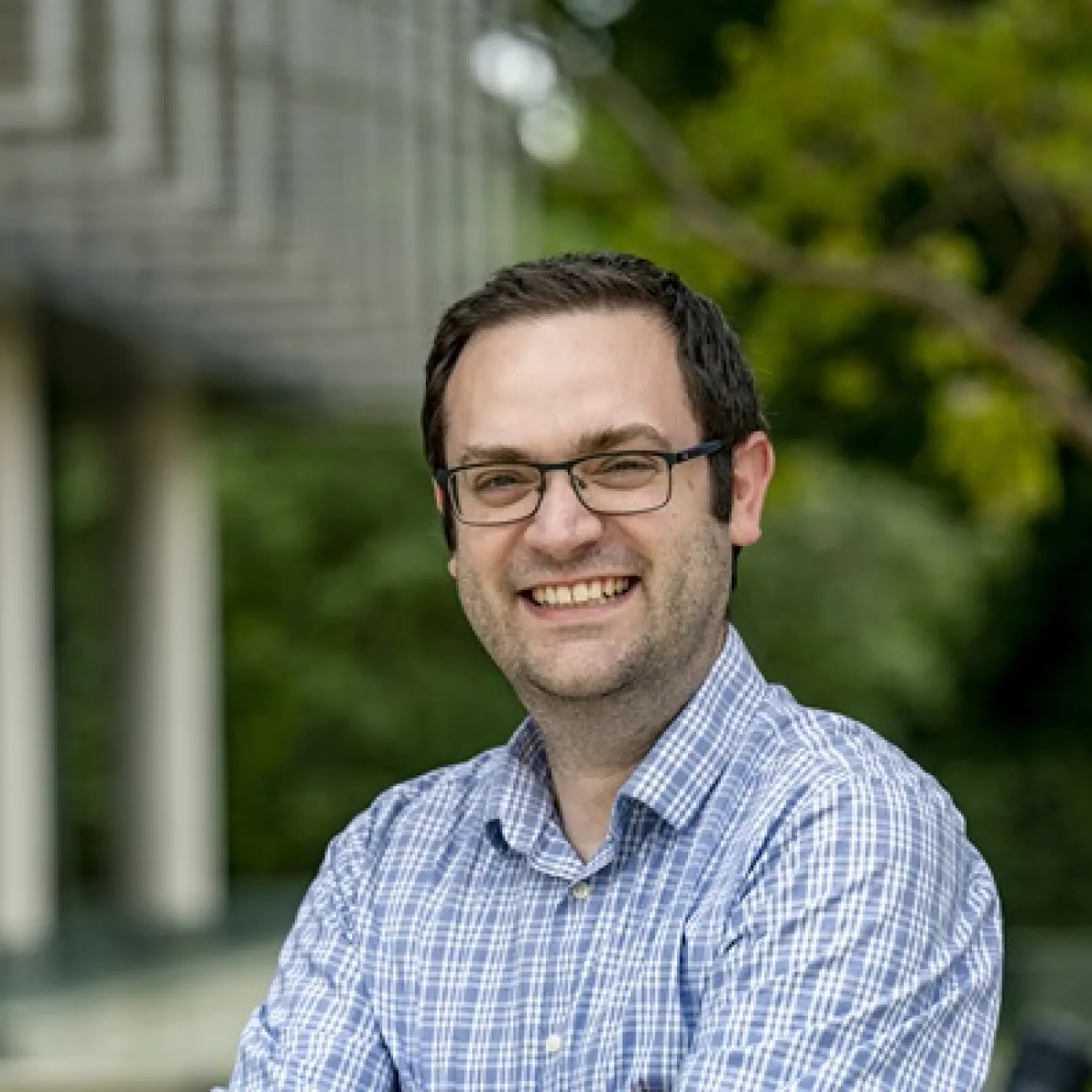
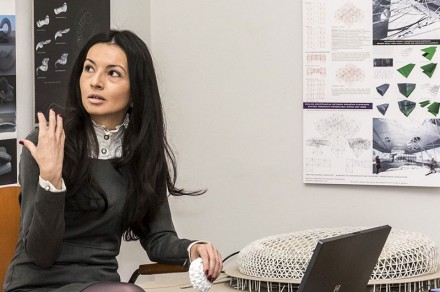
Dr. David Toal is an Associate Professor at the University of Southampton, specializing in the application of machine learning techniques to aerospace system design optimization. His research focuses on automated geometry creation, prediction of simulation outputs, and fundamental machine learning advancements. He is affiliated with the Computational Engineering and Design Group and the Institute for Life Sciences. His teaching interests include engineering design methods, optimization, reliability, and CAD integration. He supervises multiple PhD students in areas such as aerodynamic geometry generation and structural design automation. Dr. Toal has led projects funded by the European Union and EPSRC, including E-Break (FP7) and equipment grants for advanced computational tools. His work emphasizes multidisciplinary collaboration, leveraging CAD systems and deep learning for applications in advanced aerial mobility and turbine optimization. Recent publications highlight advancements in Kriging models, adversarial auto-encoders, and semantic segmentation for engineering design. Dr. Toal's research bridges computational methods with practical aerospace challenges, aiming to accelerate design processes through data-driven and AI-enhanced approaches.
Dr. Serhat Hosder is the James A. Drallmeier Centennial Professor in the Department of Mechanical and Aerospace Engineering at Missouri S&T. He serves as Director of the Aerospace Simulations Laboratory, focusing on computational aerothermodynamics, hypersonic flow modeling, and uncertainty quantification for planetary entry systems. Professor of Aerospace Engineering (2019–present) Director, Aerospace Simulations Lab Advisor to students receiving NASA Space Technology Research Fellowships and Amelia Earhart Fellowships Research funded by NASA, DoD, and NSF Research Interests: Computational aerothermodynamics, hypersonic flow modeling, uncertainty quantification, multi-fidelity methods, directed energy applications, planetary entry systems, and aerodynamic shape optimization. His work combines numerical methods with robust design principles for high-speed vehicles. Scientific Awards: Missouri S&T Outstanding Faculty for Contributions to Graduate Studies Award (2022) Fellow of the Royal Aeronautical Society (2021) NASA Langley Research Center Henry J. E. Reid Award (2018) Associate Fellow of AIAA (2017) Missouri S&T Faculty Research Awards (2015, 2012) Advising & Grants: His students have secured positions at NASA, Sandia National Labs, and academia. Research funded by DoD Joint Hypersonics Transition Office, NASA (Langley, JPL), Missile Defense Agency, NSF, and industry partners like M4 Engineering, Inc.
Sanjay Jayaram is an Associate Professor in the Department of Aerospace and Mechanical Engineering at Saint Louis University's School of Science and Engineering, where he has served since 2005 and became Aerospace Engineering Coordinator in 2013. His academic foundation includes a Ph.D. and M.S. in Mechanical Engineering from the University of Central Florida and a B.S. from R.V. College of Engineering in India. His educational background: Ph.D. Mechanical Engineering, University of Central Florida M.S. Mechanical Engineering, University of Central Florida B.S. Mechanical Engineering, R.V. College of Engineering, Bangalore, India Dr. Jayaram's research pioneers bio-inspired aerospace systems through five interconnected thrusts: (1) Bio-AIMS for fluid-structure-control morphing using shape memory alloys; (2) Tubercle-inspired vertical tail drag reduction via biomimetic flow control; (3) Intelligent Learning Control (ILC) for autonomous morphing wing systems; (4) Multirotor drone turbulence mitigation and noise reduction for Urban Air Mobility; and (5) Distributed guidance/navigation for multi-UAV teams. His work integrates wind tunnel experimentation , computational fluid dynamics , and adaptive control theory to solve real-world aerospace challenges. Analysis of his recent publications reveals dual emphasis on cutting-edge aerospace research (morphing structures, drone stability, spacecraft systems) and transformative engineering education , with 60% of his 2013-2025 publications focusing on student-led projects in rocketry, satellite design, and curriculum innovation. His publications span spacecraft engineering, control systems, and sustainable propulsion technologies. As an educator, Dr. Jayaram mentors multiple student spacecraft teams including SLUCube, BillikenSat, and high-powered rocket projects for Spaceport America Cup. He serves as Treasurer for the ASEE Aerospace Division and Committee Chair for the AIAA/ASEE Leland Atwood Awards Committee, demonstrating leadership in aerospace education communities. His laboratory infrastructure supports wind tunnel testing for bio-inspired morphing structures, drone aerodynamics characterization, and full spacecraft integration/test facilities for student satellite programs, enabling hands-on research from concept to flight validation.
Ole Andre Øiseth is a Professor at the Department of Structural Engineering, Norwegian University of Science and Technology (NTNU), specializing in structural dynamics with focus on bridges and marine structures. He leads the structural mechanics research group. Research Interests: Wind Engineering Bridge Aerodynamics Structural Health Monitoring Operational Modal Analysis Fluid-Structure Interaction Extreme Load Analysis Key Contributions: Developed nonlinear force models for bridge aerodynamics Advanced Kalman filter techniques for wind load identification Environmental contour methods for bridge design Automated monitoring systems for long-span bridges
Jelena Milošević is an Assistant Professor at the Department of Architectural Technologies, University of Belgrade - Faculty of Architecture. She serves as Vice-Dean for Teaching and Student Affairs and specializes in structural systems, spatial structures, morphology, and optimization of structures. Her research combines computational design, digital fabrication, and sustainable construction methods. Education: Graduated in Architecture, University of Belgrade (2006) Enrolled in doctoral studies (2009) Her research focuses on generative design approaches for architectural structures, performance-based optimization, and applications of 3D printing in construction. She investigates biomimetic pattern applications in structural design and develops parametric workflows for complex geometries. Recent work explores circular economy potentials in architectural production through recycled materials and additive manufacturing. Publications demonstrate a strong focus on digital fabrication technologies in architectural education and practice. Recent articles examine hybrid pedagogical approaches integrating 3D printing technologies into design studios, material efficiency in additive-manufactured structural systems, and sustainable applications of recycled materials in digital fabrication. She has participated in research projects including 'Development and application of scientific methods in design and construction of highly economical structural systems using new technologies' funded by the Ministry of Education, Science and Technological Development of Serbia.
Professor Wei Zhang is a Full Professor at the School of Electrical Engineering & Telecommunications, University of New South Wales (UNSW), where he has been serving since May 2008, progressing from Senior Lecturer (2008-2012) to Associate Professor (2013-2017) and finally to Full Professor in November 2017. He received his PhD degree in Electronic Engineering from the Chinese University of Hong Kong in 2005 and was a Research Fellow at the Department of Electronic and Computer Engineering, Hong Kong University of Science and Technology from 2006 to 2007. Professor Zhang's research spans cognitive radio, massive MIMO, 5G/6G networks, UAV communications, orbital angular momentum, and reconfigurable intelligent surfaces. His publications demonstrate a strong theoretical foundation combined with practical implementations, addressing critical challenges in modern wireless systems including spectrum efficiency, secure communications, and network intelligence. With over 200 papers in IEEE journals and conferences along with three authored books, his work has significantly impacted the field of wireless communications. Analysis of his recent publications (2023-2025) reveals a clear trajectory toward next-generation wireless technologies with emphasis on reconfigurable intelligent surfaces (RIS), orbital angular momentum (OAM), non-orthogonal multiple access (NOMA), and the integration of machine learning with traditional communication techniques. A substantial portion of his current work focuses on satellite-terrestrial integrated networks, UAV communications, and secure wireless transmission techniques, showing increasing sophistication in addressing complex communication challenges through innovative approaches. Professor Zhang's scientific achievements have been recognized with prestigious honors including: Fellow of the IEEE Fellow of the IET Distinguished Lecturer of IEEE Communications Society (2016-2017) His leadership in the academic community is evident through his editorial roles as Editor-in-Chief of IEEE Wireless Communications Letters (2016-2019) and currently as Editor-in-Chief of Journal of Communications and Information Networks (JCIN). As Area Editor of IEEE Transactions on Wireless Communications and former editor for multiple IEEE Transactions journals, he has significantly influenced the direction of wireless communications research. His active participation in major IEEE conferences as TPC Chair and Co-Chair demonstrates his commitment to advancing the field through scholarly exchange. Currently serving as Chair of IEEE Wireless Communications Technical Committee and Vice Director of IEEE Communications Society Asia Pacific Board, Professor Zhang continues to shape the future of wireless communications research globally, bridging the gap between academic innovation and industry implementation in next-generation wireless networks.
Giuseppe Pascazio serves as a Full Professor in the Department of Mechanics, Mathematics & Management at the Polytechnic University of Bari, Italy. His research spans computational fluid dynamics with dual focus on aerospace applications and biomedical engineering, particularly in hypersonic flow phenomena and microwave ablation technologies for cancer therapy. His primary research interests include fluid dynamics, computational methods for high-enthalpy flows, thermochemical non-equilibrium modeling, turbulent boundary layer analysis, and biomedical device optimization. Pascazio develops advanced numerical techniques including high-order schemes, state-to-state kinetics implementations, and GPU-accelerated solvers to address complex flow physics in atmospheric entry and medical applications. His work bridges fundamental gas dynamics with practical engineering solutions for spacecraft thermal protection and minimally invasive cancer treatments. Analysis of his recent publications (2021-2025) reveals three dominant research thrusts: (1) High-fidelity simulation of hypersonic flows with detailed chemistry using state-to-state kinetics, (2) Development of robust numerical methods for shock-capturing in thermochemically non-equilibrium flows, and (3) Biomedical applications focusing on microwave ablation probe design and microcapsule transport in vascular systems. His aerospace work emphasizes atmospheric reentry physics while biomedical research targets cancer therapy optimization. Pascazio has participated in significant research projects including "PrInCE" (Innovative Processes for Energy Conversion) and "INNOVHEAD" (Advanced technologies for reduction of polluting emissions in Heavy Duty engines). His collaborative work involves industrial partnerships in aerospace and medical device sectors, though specific grant details beyond project names aren't provided. He maintains active research output with over 50 publications demonstrating consistent contributions to high-speed aerodynamics and biomedical fluid dynamics.
Lesley Wright is an Associate Professor in the J. Mike Walker ’66 Department of Mechanical Engineering at Texas A&M University, holding the Jana and Quentin A. Baker ‘78 Career Development Chair. She serves as ABET Coordinator and leads research in gas turbine cooling, convective heat transfer, and fluid mechanics experimentation. Her work emphasizes experimental methods and advanced measurement techniques like pressure-sensitive paint (PSP) for film cooling effectiveness analysis. Education: Ph.D., Mechanical Engineering, Texas A&M University (2006) M.S., Mechanical Engineering, Texas A&M University (2003) B.S., Engineering with Mechanical Engineering Concentration, (2001) Research Interests: Wright’s research focuses on optimizing turbine blade cooling through jet impingement, serpentine channel designs, and advanced thermal measurement technologies. She collaborates with the Turbomachinery Laboratory to develop solutions for high-temperature applications in aerospace and energy systems. Publications: Her recent work highlights contributions to film cooling performance, heat transfer enhancement in rotating channels, and the application of machine learning for temperature field reconstruction. Over 50 peer-reviewed articles and two textbooks ( Experimental Methods in Heat Transfer and Fluid Mechanics and Analytical Heat Transfer ) reflect her expertise. Awards: Walker Outstanding Service Award (2023) AIAA Associate Fellow (2023) ASME Fellow (2021) SAE Ralph R. Teetor Educational Award (2015) Lab Affiliations: Wright is affiliated with the Turbomachinery Laboratory, advancing research in turbomachinery cooling, heat transfer, and fluid dynamics. Her team employs state-of-the-art facilities for experimental validation and computational modeling.
Nathan Tichenor is a Research Associate Professor in the Department of Aerospace Engineering at Texas A&M University. He also serves as Chief Research Officer at the Bush Combat Development Complex and Director of Hypersonic Facilities there. His research focuses on high-speed aerodynamics, novel flow control strategies, advanced diagnostic development, and wind tunnel design, with expertise in computational fluid dynamics (CFD). He holds a PhD, MS, and BS in Aerospace Engineering from Texas A&M University, completed in 2010, 2007, and 2005 respectively. His work spans experimental and numerical studies of hypersonic boundary layers, shock wave interactions, and flow control techniques using laser-based methods and plasma discharges. Notable contributions include studies on cylinder-induced shock interactions, cycloidal rotor blade dynamics, and thermal transport in high-speed flows. He has led projects involving shape-memory alloy actuators for wind tunnel models and developed novel methods for flow tagging and imaging in hypersonic regimes. Recent publications highlight advancements in boundary layer instability measurements, dual-mode energy deposition control systems, and antenna optimization for hypersonic flows. His research emphasizes practical applications of fluid dynamics principles in defense and aerospace engineering contexts.
Associate Professor Wim van Rees is affiliated with the Department of Mechanical Engineering at Massachusetts Institute of Technology. His research focuses on computational methods for fluid-structure interactions, bio-inspired propulsion, and shape-shifting structures. PhD, ETH Zurich (2014) BSc/MSc, Delft University of Technology (2008) Postdoctoral Fellow, Harvard University (2015) Research Interests : Develops advanced numerical simulations to study: Bio-inspired propulsion – optimizing swimmers' gait and shape using evolutionary techniques Vortex dynamics – analyzing vortex interactions and helicity dynamics Shape-shifting structures – designing stimuli-responsive materials that deform under environmental triggers Recent Publications span computational methods (e.g., immersed finite-difference techniques), vortex dynamics, and bio-inspired design across mechanics, ocean engineering, and materials science. US Department of Energy Early Career Award (2020) Army Research Office Early Career Award (2021) DOE Mission Science award (2022) Laboratory : The van Rees Lab develops high-performance numerical methods and applies evolutionary optimization to design fluid-driven systems and responsive materials.
Iain Boyd is the H.T. Sears Memorial Professor of Aerospace Engineering Sciences at the University of Colorado Boulder and Director of the Center for National Security Initiatives. He holds a PhD in Aeronautics and Astronautics (University of Southampton, 1988) and a BSc in Mathematics (University of Southampton, 1985). His research focuses on hypersonic aerothermodynamics, electric propulsion, rocket plumes, and computational modeling of nonequilibrium gas and plasma dynamics. Boyd has held academic positions at the University of Michigan (2010–2019 as James E. Knott Professor), Cornell University (1993–2002), and NASA Ames Research Center (1989–1992). He leads the Nonequilibrium Gas and Plasma Dynamics Laboratory (NGPDL) and contributes to the Aerospace Mechanics Research Center (AMREC). His awards include the AIAA Thermophysics Award (2018), Fellowships from the Royal Aeronautical Society (2017) and American Physical Society (2014), and the Chief of Staff of the Air Force Award (2017). His research emphasizes advancing hypersonic vehicle technologies, plasma-based propulsion systems, and computational methodologies for extreme aerodynamic environments. Recent work addresses aerocapture trajectory optimization, plasma-driven cooling systems, and sensitivity analysis of hypersonic flow phenomena.
Michele Trancossi is a Senior Lecturer in the ACES school at Sheffield Hallam University, United Kingdom, where he has been employed since November 2015. He holds a PhD in Industrial Engineering from the Università degli Studi di Modena e Reggio Emilia, Italy, awarded in 2009. He also serves as a Visiting Scientist at the Department of Electromechanical Engineering, Universidade da Beira Interior, Portugal, since 2019. PhD in Industrial Engineering, Università degli Studi di Modena e Reggio Emilia (2006–2009) His research focuses on thermodynamics, fluid dynamics, aerospace propulsion, and energy efficiency, with a particular emphasis on the Constructal Law, Bejan number, Coanda effect, and plasma actuators. He investigates applications in sustainable building design, UAVs, airships, and thermal management systems. His work integrates theoretical modeling with experimental validation, especially in heat transfer and fluid flow optimization. The recent publications of Michele Trancossi demonstrate a strong trend in applying second-law thermodynamics and exergy analysis to diverse engineering challenges, ranging from aerodynamics and propulsion to sustainable architecture and indoor climate control. His work frequently explores innovative configurations such as stair-shaped plasma actuators, container house energy systems, and high-altitude airships, often integrating renewable energy sources and Industry 4.0 principles. Member, American Physical Society (2020–present) Member, American Society of Mechanical Engineers – Heat Transfer Division (2009–present) Associate, Society of Automotive Engineers International – Aerospace and Automotive (2008–present) Member, ASTM International (2020–present) Michele Trancossi has led and contributed to numerous research projects on energy-efficient vehicle design, thermodynamic optimization, and advanced propulsion systems. His collaborations span institutions in Portugal, Italy, and the UK, involving interdisciplinary teams focused on aerospace, mechanical, and energy engineering. While specific grant details are not listed, his extensive publication output in high-impact journals and conferences indicates sustained research activity and funding support. He supervises research in thermal systems, fluid dynamics, and sustainable technologies, though no named students are listed in the provided data. He is actively involved in research teams working on the ACHEON propulsion system, Coanda effect applications, and energy self-sufficient vehicles. His work often involves computational fluid dynamics (CFD), experimental testing, and thermodynamic modeling in collaboration with international researchers such as J. Pascoa, G. Cannistraro, and A. Dumas.
Pourya Forooghi serves as Associate Professor in the Department of Mechanical and Production Engineering at Aarhus University's School of Engineering, Denmark. His active research profile is anchored in the university's heat and fluid flow group, with direct contact available via telephone (+45 93 52 23 03) and email (forooghi@mpe.au.dk). Current activities include conference contributions such as the 2024 ERCOFTAC Symposium lecture on electrolyzer modeling. Research Interests His work spans fundamental and applied fluid dynamics with emphasis on: Turbulent flow over complex rough surfaces (anisotropic, patchy, irregular) Thermohydraulic roughness characterization Data-driven modeling for drag and heat transfer prediction Power-to-X (PtX) energy systems Secondary flows in boundary layers Cryogenic heat transfer (frost formation, evaporators) Publication Trends Analysis of his 2023-2025 publications reveals a dominant focus on roughness effects in turbulent flows using DNS and data-driven methods. Key patterns include hydrodynamic/thermal property characterization of realistic rough surfaces, drag reduction via spanwise forcing, and laminarization techniques in pipe flows. Applications concentrate on energy systems like CO2 heat pumps, PtX electrolyzers, and refrigeration evaporators. Scientific Awards No scientific awards, fellowships, or medals were documented in the provided materials. Advising and Grants The source text contains no explicit information regarding graduate students, postdoctoral advisees, or grant funding activities. His research group involvement suggests likely supervision responsibilities absent specific listings. Laboratories and Teams Forooghi leads computational research within Aarhus University's heat and fluid flow group, utilizing DNS/LES techniques and data-driven frameworks. His work integrates high-fidelity simulations with engineering applications, particularly in energy conversion systems requiring advanced roughness modeling.
Giovanna Barigozzi is a Full Professor at the University of Bergamo's Department of Engineering and Applied Sciences within the School of Engineering. Since October 2024, she has served as Vice Rector with responsibility for Innovation and Digital Transition of University Processes and Services, with a focus on ethical AI implementation in academic contexts. Previously, from 2018 to 2024, she was Director of the Department of Engineering and Applied Sciences and a Member of the Academic Senate. PhD in Fluid Machine Engineering, University of Genoa (1996) Diploma Course in Turbomachinery, von Karman Institute for Fluid Dynamics, Belgium Bachelor's with honors in Mechanical Engineering, University of Genoa (1992) Professor Barigozzi's research spans thermo-fluid dynamics, gas turbine cooling systems, and sustainable energy technologies. Her work combines experimental and numerical approaches to address complex engineering challenges in film cooling of gas turbine arrays, energy conversion systems, and hydrogen technologies. She has pioneered innovative cooling system analyses through collaborations with Korea University, applying artificial intelligence to optimize cooling geometries. Her recent publication portfolio reveals strong trends in advanced cooling techniques for gas turbines, with particular emphasis on film cooling optimization using shaped holes, trench geometries, and experimental techniques like Pressure Sensitive Paint. The research spans fundamental fluid dynamics investigations to applied studies on hydrogen production systems and automotive brake disc aerodynamics, demonstrating both theoretical depth and practical engineering applications. As an academic leader, Professor Barigozzi serves as Associate Editor of the ASME Journal of Turbomachinery and on the Editorial Board of the International Journal of Turbomachinery, Propulsion, and Power. For ASME IGTI, she coordinates the Honors & Awards Committee for the 2024-2026 biennium, reflecting her standing in the international turbomachinery community. Professor Barigozzi coordinates the Energy Systems and Turbomachinery Laboratory at the University of Bergamo and is a member of the Doctoral School in Sustainable Technologies for Industrial and Construction Engineering (SUSTAIN). Her leadership extends to coordinating teaching activities across multiple engineering programs, including courses on fluid machinery, sustainable energy, and experimental techniques for fluid machinery.
Professor Jonathan Morrison is a Professor of Experimental Fluid Mechanics at the Department of Aeronautics, Imperial College London. He holds a PhD from the University of Durham and joined Imperial College in 1991. His research focuses on turbulent flow instabilities, drag reduction in fluid systems, and interdisciplinary applications of fluid mechanics with smart materials and control theory. He leads the UK National Wind Tunnel Facility (NWTF), a network of 22 wind tunnels across UK universities, supported by £36.3m in funding from EPSRC and UKRI. Key affiliations include Energy Futures Lab, Flow Control Group, and the Royal Society Industry Fellowship (2023–2027). He is a Fellow of the Royal Academy of Engineering and Royal Aeronautical Society. His work bridges mechanical engineering, aerospace engineering, and applied mathematics, addressing challenges in energy efficiency and transport sector emissions. Notable achievements include developing adaptive surface structures for boundary layer control, collaborating with QinetiQ on airframe drag reduction, and exhibiting at the Royal Society Summer Exhibition (2014). His experimental studies on turbulent wakes, bluff body dynamics, and boundary layer transition have advanced fundamental and applied fluid mechanics. Scientific Awards Fellow of the Royal Academy of Engineering (FREng) Royal Society Industry Fellow (2023–2027) Fellow of the Royal Aeronautical Society Grants & Collaboration £13.3m EPSRC/Aerospace Technology Institute grant (2014) for NWTF establishment £23m UKRI funding (2023) for expanding NWTF facilities Industry collaboration with QinetiQ on drag reduction for airframe design Labs & Teams Flow Control Group at Imperial College (www3.imperial.ac.uk/aeflowcontrol) focuses on experimental and numerical studies of turbulent flows. The NWTF network enables large-scale aerodynamic testing for academia and industry partnerships.