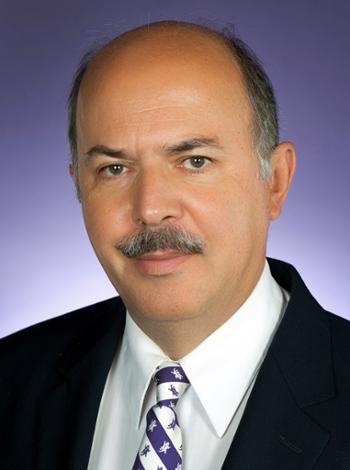
Phillip J Ansell is an Associate Professor in the Department of Aerospace Engineering at the University of Illinois. He serves as the Director of the Center for High-Efficiency Electrical Technologies for Aircraft (CHEETA), focusing on advancing sustainable aviation through innovative propulsion and energy systems. His research interests include aerodynamics optimization, hydrogen propulsion, electric aircraft integration, and cryogenic technologies. Ansell has received prestigious awards such as the AFOSR Young Investigator Award (2015), ARO Young Investigator Award (2017), and the Lawrence Sperry Award (2023), recognizing his contributions to sustainable aviation and flow control technologies. His work spans interdisciplinary areas like hydrogen fuel cell systems, airfoil design, and electrified aircraft architectures. Recent research emphasizes sustainable aviation frameworks, cryogenic hydrogen storage, and propulsion-airframe integration. Ansell has collaborated on projects involving distributed propulsion systems, wind energy optimization, and advanced plasma actuators for flow control. His leadership in CHEETA drives innovations in superconductivity and high-temperature superconducting components for next-generation aircraft. Notable contributions include studies on laminar flow control, transonic aerodynamics, and the technical challenges of integrating MW-scale hydrogen propulsion systems. His publications reflect a blend of theoretical modeling, experimental validation, and systems engineering approaches to address aviation's sustainability challenges.
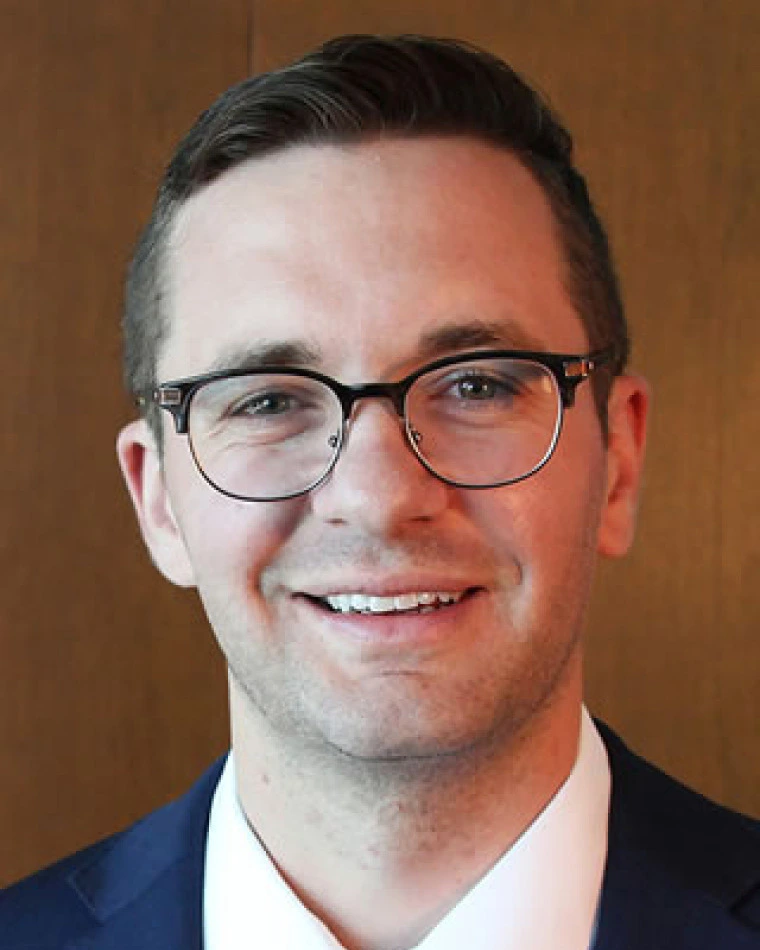
Prof. Juan Alonso is the Vance D. and Arlene C. Coffman Professor and James & Anna Marie Spilker Chair in the Department of Aeronautics & Astronautics at Stanford University. He directs the Aerospace Design Laboratory (ADL), focusing on high-fidelity computational methods for aerospace system design. His expertise spans transonic/supersonic/hypersonic aircraft, rotorcraft, and launch vehicles. Alumni include record-holding teams for human-powered watercraft and lightweight unmanned aerial vehicles. Education: PhD (1997) from Princeton University in Mechanical & Aerospace Engineering; M.A. (1993) Princeton; B.S. (1991) MIT Aeronautics/Astronautics. Research emphasizes multi-disciplinary optimization, numerical methods, and parallel computing applied to advanced aircraft design, sustainable aviation, and UAS systems. Notable contributions include computational design frameworks like SU2 and SUAVE, and initiatives in curriculum development for engineering education. Recent work focuses on: GPU-accelerated CFD solvers, multi-fidelity surrogate models (e.g., VortexNet), contrail simulation frameworks, and battery degradation modeling for electric aircraft. Active in urban air mobility and high-fidelity trajectory optimization for hypersonic systems. Labs/Teams: Aerospace Design Laboratory (ADL) leading open-source computational tools development. Involved in NASA-funded projects and industry partnerships for advanced propulsion systems.
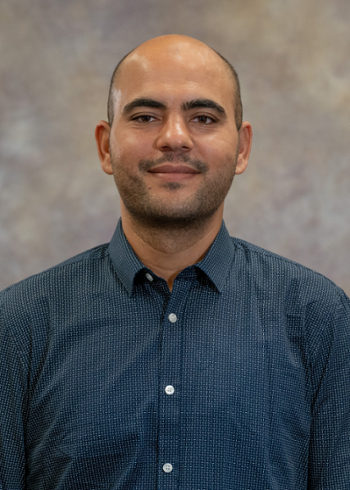
Efstathios (Stathis) Michaelides is the W.A. "Tex" Moncrief, Jr. Founding Chair of Engineering at Texas Christian University (TCU). He holds a Ph.D. and M.S. in Engineering Science from Brown University (1980, 1979) and a B.A. in Engineering Science and Economics from Oxford University (1977). His research focuses on advanced energy systems, multiphase flow, and renewable energy transitions. Ph.D. , Engineering Science, Brown University, 1980 M.S. , Engineering Science, Brown University, 1979 B.A. , Engineering Science and Economics, Oxford University, England, 1977 Michaelides' work spans energy conversion , geothermal systems , nanofluidics , and particle-fluid dynamics . His recent publications analyze energy storage requirements for renewable transitions, drag force correlations in complex flows, and thermodynamic implications of carbon sequestration. His research trends include decarbonization strategies , nanoparticle-enhanced phase transitions , and smart microfluidic systems . He has also contributed to foundational texts like Particles, Bubbles and Drops (2006) and the Multiphase Flow Handbook (2017).
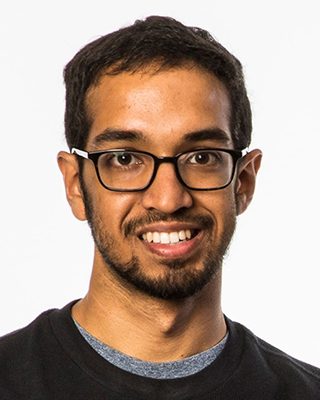
Ingo Jahn is a Professor at The University of Queensland's School of Engineering. His academic career spans roles including R&D at Rolls-Royce (2007–2012) and academic positions at The University of Queensland (2012–2022). He holds an MEng (Oxford, 2005) and PhD (Oxford, 2011). Education: MEng in Engineering, University of Oxford (2005) PhD in Aerospace Engineering, University of Oxford (2011) Research Interests: Hypersonics: vehicle design, glide trajectory optimization, and aerothermodynamics Fluid Dynamics: computational methods, turbulence, and flow control Control Systems: model predictive control and co-design frameworks Thermodynamics: heat transfer in supercritical CO2 cycles and thermal protection systems His work bridges theoretical and experimental approaches, with a focus on hypersonic vehicle integration and propulsion systems. Publications: Recent articles emphasize hypersonic vehicle co-design, fluid-structure interaction, and experimental methods. Key themes include trajectory optimization, thermal management, and advanced simulation techniques. Grants & Awards: No awards explicitly listed, but extensive industry collaboration (e.g., Rolls-Royce) and leadership in high-impact projects indicate significant recognition. Supervision: Currently supervising 8 doctoral students on topics like hypersonic co-design, unstart prevention in ramjets, and scramjet trajectory optimization. Affiliations: Institute for Advanced Engineering and Space Sciences, AIAA, ASME. Active in conferences like AIAA SciTech and Global Power and Propulsion Society events.
Kyle Hanquist is an Assistant Professor in the Department of Aerospace and Mechanical Engineering at the University of Arizona, where he is also a member of the Graduate Faculty. He directs the Computational Hypersonics and Nonequilibrium Laboratory (CHANL), focusing on advanced simulation techniques for high-speed flows. His academic journey includes a PhD and MSE in Aerospace Engineering from the University of Michigan and a BSE in Mechanical Engineering from the University of Nebraska. PhD, Aerospace Engineering, University of Michigan, Ann Arbor MSE, Aerospace Engineering, University of Michigan, Ann Arbor BSE, Mechanical Engineering, University of Nebraska, Lincoln Dr. Hanquist's research centers on hypersonics, aerothermodynamics, and nonequilibrium flows , with strong emphasis on computational fluid dynamics , low-temperature plasmas , and thermal management systems . His work involves modeling complex physical phenomena such as electron transpiration cooling, plasma-assisted flow control, and high-temperature gas effects in reentry environments. He also investigates molecular gas dynamics and finite-rate chemistry in extreme conditions. His recent publications reveal a strong trend in computational modeling of hypersonic boundary layers , plasma sheaths , and shock-tube validation of thermochemical models . The interdisciplinary nature of his work spans aerospace engineering, plasma physics, and materials response under extreme thermal loads. Much of his research integrates multi-physics simulations to address fluid-thermal-structural interactions critical for next-generation hypersonic vehicles. Dr. Hanquist has received several scientific honors, including: 2020 AIAA Plasmadynamics and Lasers Best Paper Award Editor's Choice, AIP Publishing - Physics of Fluids (Summer I 2020) Featured Article, AIP Publishing - Physics of Fluids (Summer I 2021) Frontiers in Physics – Plasma Physics (Spring 2020) As an advisor and lab director, he mentors graduate students in computational hypersonics and collaborates with institutions like NASA and the University of Michigan. His research is supported by grants from aerospace and defense agencies, though specific funding sources are not listed. He teaches courses in fluid mechanics, numerical methods, and nonequilibrium flows, contributing to both undergraduate and graduate education. He leads the Computational Hypersonics and Nonequilibrium Laboratory (CHANL) , which develops and applies high-fidelity simulation tools for hypersonic applications. The lab focuses on kinetic modeling, plasma interactions, and optimization of thermal protection systems, often using massively parallel CFD codes and multi-fidelity surrogate models.
Dr. Abdessattar Abdelkefi is a Professor in the Department of Mechanical & Aerospace Engineering at New Mexico State University's College of Engineering. He directs the Nonlinear Dynamics & Energy Harvesting Laboratory (NDEHL) and holds a Ph.D. from Virginia Tech (2012). His research bridges dynamics, fluid-structure interactions, and renewable energy, with applications in drones, MEMS, and energy harvesting. Research Focus Dr. Abdelkefi's work spans Dynamics & Vibrations , Aeroelasticity , and Robotics & Controls , emphasizing nonlinear phenomena and energy conversion. Key areas include: Vortex-induced vibrations for renewable energy harvesting Bio-inspired drone design and aerodynamic optimization Nanoscale sensors and microgyroscopes Flexoelectric and piezoelectric material applications Publication Trends Recent articles (2019-2020) focus on experimental/theoretical synergy in energy harvesting (galloping, vortex-induced, piezoelectric) and bio-inspired UAV design. Over 70% involve computational modeling validated with wind tunnel/field tests, highlighting innovations in broadband energy capture and nano/microsystem efficiency. Awards & Honors 2020: Outstanding Research Professor (MAE Academy) & Teaching-Research-Service Synergy Award (College of Engineering) 2019: Early Career Award (NMSU Research Council), Outstanding Research Professor, Los Alamos NMC Faculty Appointee 2013: Best Paper Award from Theoretical & Applied Mechanics Letters 2011–2012: Graduate Scholarships (Virginia Tech) Laboratory & Advising NDEHL researches vibration-based energy harvesting, nonlinear dynamics, and drone aerodynamics. Dr. Abdelkefi mentors graduate students in experimental/computational projects, though specific advisees are unnamed in available data.
Vikram Iyer is an Assistant Professor at the Paul G. Allen School of Computer Science and Engineering and holds an Adjunct Appointment in Mechanical Engineering at the University of Washington. He co-directs the CS for Environment Initiative , focusing on interdisciplinary solutions that bridge computing, biology, and physical systems for environmental sustainability. Education : Ph.D. in Electrical & Computer Engineering (University of Washington), B.S. in Electrical Engineering and Computer Sciences (UC Berkeley) Research Interests revolve around bio-inspired wireless systems , environmentally sustainable electronics , and miniaturized autonomous robotics . His work includes: Biodegradable circuit boards Battery-free wireless sensors Insect-scale vision systems Wind-dispersed environmental monitors AI tools for sustainable design Article Trends highlight contributions to green hardware , energy-autonomous robotics , and environmental sensing networks , often integrating machine learning with physical world interaction . Awards include: NSF CAREER Award SIGMOBILE Dissertation Award Marconi Society Paul Baran Young Scholar Best Paper Awards (SIGCOMM 2016, Sensys 2018) Google/Amazon Research Awards Students advised include Kyle Johnson (NSF Fellow), Vicente Arroyos (GEM Fellow), and Qiuyue Xue (co-advised with Shwetak Patel). His lab collaborates with the Networks & Mobile Systems Lab and Urban Innovation Initiative .
Rainald Loehner is a Distinguished Professor of Fluid Dynamics at George Mason University's Center for Computational Fluid Dynamics. Since 2003, he has led the Center for Computational Fluid Dynamics at George Mason University. He is currently a Hans Fischer Senior Fellow at the Technical University of Munich's Institute for Advanced Study (TUM-IAS) for 2023, hosted by Professors Kai-Uwe Bletzinger and Roland Wüchner in the 'Adjoint-Based System Identification of Large-Scale Structures' Focus Group. Loehner received his Diplom Ingenieur (Maschinenbau) degree from the Technical University of Braunschweig, and his PhD and a DSc in civil engineering from the University College of Swansea, Wales. After teaching at Swansea for a year, he worked at the Naval Research Laboratory in Washington, DC, followed by a research professorship at George Washington University. He joined George Mason University as an associate professor and was promoted to full professor in 1995 and distinguished professor in 2004. With over 35 years of experience, Professor Loehner's research spans the complete pipeline of numerical solvers and simulation tools. His expertise includes pre-processing, grid generation, numerical methods, field solvers, parallel computing, adaptive mesh refinement, fluid-structure interaction, shape optimization, system identification, and computational crowd dynamics. His current work focuses on developing advanced field solvers for compressible and incompressible flows, acoustics, electromagnetic wave propagation, heat and mass transfer, structural mechanics, and fluid-structure interaction. Key application areas include blast mitigation, ship hydrodynamics, blood flow, contaminant transport, and pedestrian safety. Loehner's recent research output (2020-2024) shows a strong trend toward digital twin technology and adjoint-based methods for structural analysis and optimization. His publications focus on high-fidelity digital twins for detecting structural weaknesses, risk assessment in engineering systems, and optimization of sensor placement. His work bridges computational mechanics with machine learning approaches, particularly in system identification and inverse problems, demonstrating how computational methods can solve complex real-world engineering challenges. 2020: Ranked #15119 in the Stanford List of Most Influential Scientists of the World; #8 in Aerospace and Aeronautics 2010: Distinguished International Career Award, Argentine Association of Computational Mechanics 2008: Fellow, International Association for Computational Mechanics 2006: Associate Fellow, AIAA 2005: Honorary Professor, University of Wales Swansea 2005: Advisory Professor, Shanghai Jiao Tong University 2004: Distinguished Professor of Fluid Dynamics, George Mason University 1999: Computational Mechanics Achievements Award, Japan Society of Mechanical Engineering 1993: Doctor of Science in Civil Engineering, University College of Swansea 1979-1983: Studienstiftung des Deutschen Volkes (Top 1% of German Students) Professor Loehner has mentored numerous students through his work at George Mason University and has supervised research in computational fluid dynamics, structural mechanics, and related fields. His research has been supported by various grants from government agencies and industry partners, enabling the development of advanced simulation tools applied in aerodynamics, hydrodynamics, shock-structure interaction, and medical applications. His codes and methods have been widely adopted in industry and academia for applications ranging from aircraft and ship design to medical simulations and urban pathogen transmission modeling. Loehner leads the Center for Computational Fluid Dynamics at George Mason University, which focuses on developing cutting-edge computational methods for fluid dynamics and related multiphysics problems. The center works on strategic application areas including blast mitigation, ship hydrodynamics, blood flow simulation, and pedestrian movement modeling. As a TUM-IAS Fellow, he collaborates with the Chair of Computational Modeling and Simulation at TUM on adjoint-based system identification of large-scale structures, bringing together expertise in computational mechanics and digital twin technology to address complex engineering challenges.
Fabio Pierella is an Associate Professor at the Technical University of Denmark (DTU), affiliated with the Department of Wind and Energy Systems Flows, specializing in Wind Turbine Design Division. His research focuses on offshore wind energy systems, fluid dynamics, and structural engineering. He has contributed to projects like OC6 Phase IV and the DeRisk database, validating numerical models for floating offshore wind structures and extreme wave loads. Key research interests include computational fluid dynamics (CFD), hydrodynamic load modeling, and the design of large-scale floating wind turbines. His work spans numerical simulations, experimental validation, and database development for extreme sea states. Pierella has presented at international conferences on topics like wave-structure interaction and turbine control systems. He received the Best Poster Presentation Award (2024) and contributed to datasets such as the DeRisk Database, which provides critical wave data for offshore wind turbine design. His research emphasizes practical applications, including monopile structural integrity under extreme loads and control strategies for floating platforms. Pierella's activities include conference presentations on ultra-large floating turbines (EMULF2 project) and the impact of wave shape on 15MW turbine loads. His interdisciplinary approach integrates computational models with experimental results to address challenges in offshore renewable energy systems.
Alexandros Kontogiannis is a research fellow at the University of Cambridge, Department of Engineering, specializing in fluid dynamics and applied mathematics. His work combines Bayesian inference, machine learning, and physics-informed algorithms to solve inverse problems in magnetic resonance velocimetry (MRV) and fluid-structure interaction. EPSRC National Fellow in Fluid Dynamics Member of Energy, Fluids and Turbomachinery Division Research Focus: Development of digital twin frameworks that integrate MRV data with Navier-Stokes equations to reconstruct flowfields, infer rheological parameters in non-Newtonian fluids, and estimate hidden quantities like pressure and wall shear stress. Key innovations include: Physics-informed compressed sensing for sparse MRV data Simultaneous boundary shape and flowfield estimation Bayesian turbulence model parameter learning Scientific Awards: ASME Fluids Engineering Division Graduate Student Scholar (2021) Technical Chamber of Greece (TEE) Award (2018) Limmat Foundation Academic Excellence (2017) Mentzelopoulos Scholarship for international studies (2017) Greek State Scholarships Foundation Award (2012) Key Contributions: Algorithms for 3D flow reconstruction with adaptive discretization, viscous signed distance field regularization, and multi-objective aerodynamic shape optimization. His methodologies enable 27x reductions in MRI scanning time while maintaining diagnostic accuracy.
Dr Sean Anderson is a Senior Lecturer at the Department of Automatic Control and Systems Engineering , University of Sheffield , with over 15 years of experience in interdisciplinary research spanning robotics, control systems, and computational biology. He earned his MEng and PhD from the University of Sheffield, focusing on control systems and chemical engineering. Education: MEng in Control Systems Engineering, University of Sheffield (2001) PhD in Chemical and Process Engineering, University of Sheffield (2005) Research Interests include: Bioinspired robotics Adaptive and optimal control in biological systems Nonlinear system identification Computational neuroscience Acoustic and visual sensor fusion for localization His recent publications highlight innovations in robotic localization in hazardous environments, interpretable deep learning for control systems, acoustic sensing technologies, and data-driven modeling of complex systems. Key projects involve autonomous navigation in pipe networks, turbulence modeling, and biomedical signal processing. Grants and Funding: He has secured major grants from EU H2020 (£4M), EU FP7 (£2.9M), and EPSRC (£5.7M), focusing on bioinspired control algorithms, robotic safety, and infrastructure assessment. Teaching: He leads the ACS61011 Deep Learning module, emphasizing practical applications in robotics and signal processing.
Dr. Charles Hoke serves as a Senior Lecturer in the School of Engineering and Technology at UNSW Canberra, specializing in computational aerodynamics and energy harvesting systems. His academic foundation includes a Bachelor's in Engineering Mechanics from UC San Diego (2000) and a Master's in Aeronautics and Astronautics from Stanford University (2001), with ongoing PhD studies at UNSW Canberra. His educational background comprises: Bachelor of Science in Engineering Mechanics, University of California, San Diego (2000) Master of Science in Aeronautics and Astronautics, Stanford University (2001) PhD candidate in Engineering, University of New South Wales, Canberra (present) Dr. Hoke's research centers on unsteady fluid-structure interactions, with primary focus areas: Computational investigation of flapping foil power generation systems Active flexibility mechanisms and near-wall flow effects Hypersonic shock-structure interaction phenomena Energy harvesting applications from oscillating foils Analysis of his publication history (2004-2024) reveals a progressive research trajectory from missile aerodynamics (2004) to advanced computational studies of bio-inspired propulsion systems. Recent works (2023-2024) demonstrate significant innovations in active morphing techniques for power extraction efficiency and high-fidelity modeling of hypersonic fluid-thermal-structural interactions, reflecting his dual expertise in defense applications and renewable energy solutions. His professional experience includes eight years as a US Air Force officer (2000-2008), serving as Aeronautical Engineer at the Air Force Research Laboratory and Assistant Professor at the Air Force Academy where he directed courses in aerodynamics and computational fluid dynamics, followed by four years as Lead Aerodynamicist at Raytheon Missile Systems (2008-2012).
Professor Qing Xiao is a faculty member in the Department of Naval Architecture, Ocean and Marine Engineering at the University of Strathclyde . With over 25 years of expertise in Computational Fluid Dynamics (CFD) , they focus on bio-inspired fluid dynamics and marine renewable energy systems. Their research includes modeling flapping-wing aerodynamics, tidal turbines, and floating wind turbines with coupled aero-hydrodynamic simulations. Research Themes: Bio-inspired robotics, offshore renewable energy, fluid-structure interaction, vortex-induced vibrations. Collaborations: EPSRC-funded projects, Supergen ORE Hub partnerships, and industrial alliances. Recent Work: AI-driven surrogate models for floating offshore wind turbines, hyperelastic material applications in wave energy converters, and digital twin frameworks for structural health monitoring. Scientific Recognition: OMAE Subrata Chakrabarti Young Professional Award (2017) Strathclyde Teaching Excellence Award (2013) Students & Supervision: Advising PhD candidates like Kobe Hoi Yin Yung and Hoi Yin Yung, with graduates Xiang Li and Yang Luo contributing to bio-inspired robotics and CFD-FSI studies. Labs & Teams: Leads an interdisciplinary CFD-FSI research group at Strathclyde, fostering academic-industrial cooperation and hosting visiting researchers.
Kim Rasmussen is the Challis Professor of Civil Engineering at the University of Sydney's School of Civil Engineering. He holds a MScEng from the Technical University of Denmark and PhD/DEng from the University of Sydney. His roles include former Head of School (2005–2016), Deputy Dean (2016–2022), and Interim Dean (2018). His research focuses on structural mechanics, particularly steel/cold-formed/stainless-steel structures, 3D-printed metals, and fracture mechanics. Major projects include: midrise cold-formed steel structures, reliability of 3D-printed metal frameworks, and fracture analysis of steel connections. He collaborates internationally with institutions like Imperial College London and Stanford University. Awards include the 2016 Shortridge Hardesty Award and 2020 Lynn Beedle Award. His work advances sustainable and efficient structural designs, with over 20 years of ARC funding. Current students research topics like additive manufacturing and structural reliability.
David Lentink is a Full Professor of Biomimetics at the University of Groningen , leading the Biomimetics Group within the Faculty of Science and Engineering. His research bridges biomechanics, aerospace engineering, and robotics, focusing on avian flight mechanics and bio-inspired aerial robotics . Previously at Stanford University, he pioneered the development of the Aerodynamic Force Platform and low-turbulence wind tunnels for animal flight studies. Education : PhD in Aerospace Engineering (Stanford), MSc in Mechanical Engineering (Delft), BSc in Mechanical Engineering (Delft). Research Interests : Understanding bird flight biomechanics to design advanced drones, studying evolutionary adaptations in flight, and developing biohybrid robots with real feathers. Scientific Awards : Dutch Academic Year Prize for the Flight Artists (2013). World Economic Forum Young Scientist under 40 (2013). Alumnus of the Young Academy of The Royal Netherlands Academy of Arts and Sciences. Labs : The Lentink Lab at Groningen’s Linnaeusborg campus integrates bird aviaries, wind tunnels, and maker spaces for bio-inspired robotics development. His team collaborates globally with institutions like Stanford, TU/e, and Sorama.