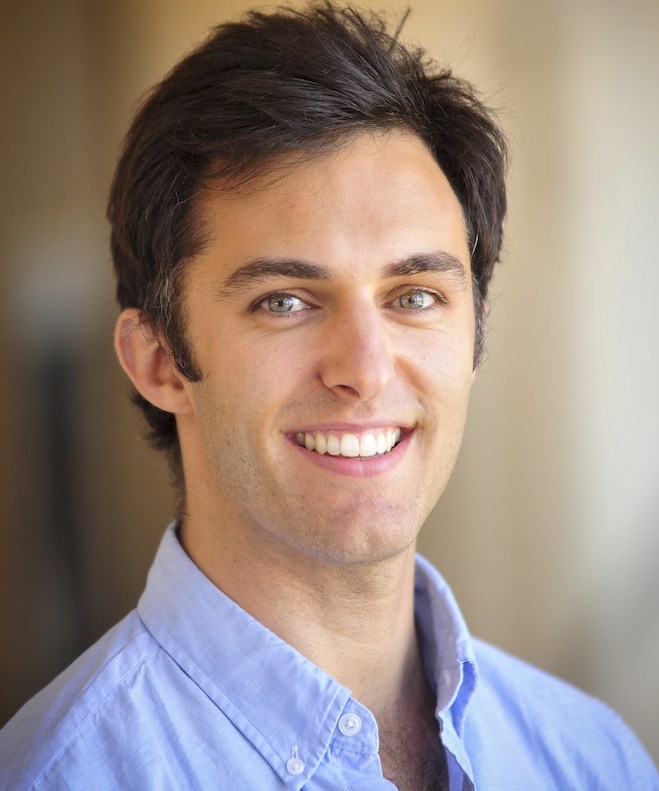
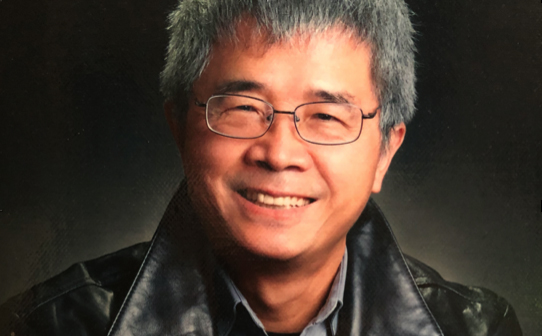
Daniel M. Roy is a Full Professor at the University of Toronto, with cross-appointments in the Department of Computer Science, Department of Statistical Sciences, and Department of Electrical and Computer Engineering. He serves as Research Director at the Vector Institute and holds the CIFAR Canada AI Chair. Research Focus: Foundational principles of prediction, inference, and decision-making under uncertainty across machine learning, statistics, mathematical logic, applied probability, and computer science. Scientific Contributions: Key work in learning theory, statistical network analysis, probabilistic programming, and information-theoretic frameworks for generalization. Awards: ICML 2024 Best Paper Award for "Information Complexity of Stochastic Convex Optimization" and promotion to Full Professor in 2024. Student Advising: Actively mentors Ph.D. candidates and postdoctoral researchers with strong quantitative backgrounds, particularly at the intersection of machine learning, statistics, and computer science. Email: daniel.roy@utoronto.ca
Prof. Dennis Komm is an Associate Professor at ETH Zurich's Department of Computer Science, leading the group for Algorithms and Didactics. He chairs the Center for Computer Science Education (ABZ) and serves on committees such as the Swiss Maturity Board (Schweizerische Maturitätskommission) and the STEM Commission of the Swiss Academies. Previously, he held roles at RWTH Aachen University (Master's, 2008), ETH Zurich (PhD, 2012), University of Zurich (external lecturer, 2014–2020), and PH Graubünden (including department head and professor of 'Fachdidaktik Informatik'). Education: He completed a Master's in Computer Science at RWTH Aachen (2008), a PhD at ETH Zurich (2012), and studies in Information Technology at Queensland University of Technology (2006). His academic journey includes visiting roles at King's College, Stanford, and Comenius University. He has taught extensively across institutions, emphasizing Python and LOGO-based approaches for beginners. Research focuses on algorithm design, approximation algorithms, reoptimization, and advice complexity in theoretical CS. His work in education explores computational thinking, programming pedagogy (especially for K–12), and interdisciplinary approaches (e.g., robotics in math). Recent trends in his articles highlight advancements in online algorithms, optimization under dynamic conditions, and initiatives to integrate CS into Swiss school curricula sustainably. He actively promotes CS education through platforms like WebTigerPython and collaborates on projects such as CyberQuest and MINTerlink. His outreach includes organizing conferences (e.g., STIU 2025) and workshops on programming and cybersecurity for teachers and students. Despite no listed scientific awards, his contributions to education and theoretical CS are recognized through editorial roles in journals like Informatics in Education and contributions to the TigerJython Group. Grant-related advising includes co-supervising doctoral theses on robotics, USOs, and programming didactics. He advocates for equitable educational opportunities via the Passerelle exam and the Swiss Beaver Competition. His team's work spans teacher training, didactic certifications, and bridging university-school collaborations through initiatives like MINTerlink. Labs and teams: Head of ABZ (ETH's CS education center), collaborator with the Computational Robotics Lab, and part of the TigerJython Group. He also co-organizes the Colloquium on Mathematics, Computer Science, and Education with ETH's Mathematics Department.
Nicolò Cesa-Bianchi is a Professor of Computer Science at the University of Milan, where he serves as head of the Computer Science programs. He is also associated with the Department of Electronics, Information and Bioengineering (DEIB) at Politecnico di Milano. Cesa-Bianchi holds significant leadership roles including Board member, Fellow and co-director of the Milan unit of the European Laboratory for Learning and Intelligent Systems (ELLIS), and membership in the prestigious Accademia Nazionale dei Lincei. He is also involved with The European Lighthouse on Secure and Safe AI (ELSA), The European Lighthouse of AI for Sustainability (ELIAS), and The FAIR foundation. Professor Cesa-Bianchi's research focuses on the theoretical foundations of machine learning, with special emphasis on sequential decision making and online learning algorithms. His work spans multiple areas including multi-armed bandit problems, regret analysis, prediction with expert advice, and learning on graphs. He has made significant contributions to understanding the theoretical limits of learning algorithms and developing efficient methods for various learning scenarios. His research has important applications in online markets, social networks, and bioinformatics. His monographs 'Prediction, Learning, and Games' and 'Regret Analysis of Stochastic and Nonstochastic Multi-armed Bandit Problems' are considered seminal works in the field. His recent publications demonstrate continued leadership in advancing the theoretical understanding of machine learning, with 2024-2025 papers covering cooperative online learning, multitask learning, fair trade mechanisms, and refined analyses of bandit algorithms. The research shows increasing focus on practical economic applications while maintaining strong theoretical foundations. Google Research Award Xerox Foundation UAC Award Member of the Accademia Nazionale dei Lincei ELLIS Fellow Cesa-Bianchi has been deeply involved in academic service, having served as action editor for the Machine Learning Journal, IEEE Transactions on Information Theory, and the Journal of Machine Learning Research. He currently serves as associate editor for the Journal of Information and Inference and TheoretiCS. He has held leadership positions including President of the Association for Computational Learning and member of the steering committee for the EC-funded Network of Excellence PASCAL2. He was program chair of the 13th Annual Conference on Computational Learning Theory and the 13th International Conference on Algorithmic Learning Theory. He leads the Laboratory for AI and Learning Algorithms (ALGA) at the University of Milan, which focuses on theoretical and applied research in machine learning. His international collaborations are extensive, with visiting positions at UC Santa Cruz, Graz Technical University, Ecole Normale Supérieure in Paris, Google, and Microsoft Research. As an educator, he teaches advanced courses including Reinforcement Learning and Statistical Methods for Machine Learning, and has supervised numerous students through the years.
Cem Say is a Professor in the Department of Computer Engineering at Boğaziçi University's Faculty of Engineering, where he has established himself as a leading researcher in theoretical computer science and artificial intelligence. His academic journey began with the completion of his doctoral dissertation titled Qualitative System Identification in 1992, which was the first thesis of Boğaziçi University's Computer Engineering PhD program. Professor Say's research interests span multiple domains of computer science, with significant contributions to quantum computing, artificial intelligence, and theoretical computer science. His early work focused on qualitative reasoning and simulation, particularly through the QSIM algorithm, where he made significant improvements to filtering techniques and addressed challenges in representing physical systems. Over time, his research evolved toward quantum computation, where he has made substantial contributions to quantum finite automata theory, space-bounded quantum computation, and quantum complexity classes. His recent work explores the energy complexity of computation, bridging theoretical computer science with thermodynamics. His publication record shows a clear evolution from classical AI and qualitative reasoning toward quantum computation. The most recent articles demonstrate his focus on space-bounded quantum computation, energy complexity of regular languages, and interactive proof systems with minimal resources. His work consistently addresses fundamental questions about computational limits, particularly in quantum and sublogarithmic-space models. Professor Say has also made significant contributions to science communication through several books written for general audiences, including 50 Soruda Yapay Zekâ (2018), Yeni Dünya, Yeni Ağ (2020), and En Hakiki Mürşit (2021), which explain complex concepts in artificial intelligence and scientific methodology in accessible terms. Throughout his career, Professor Say has been actively involved in the Turkish academic community, editing proceedings for multiple Turkish symposia on artificial intelligence and neural networks. His doctoral dissertation established foundational work in qualitative system identification, and his subsequent research has consistently pushed boundaries in theoretical computer science, particularly in quantum computation where he has collaborated extensively with Abuzer Yakaryılmaz and other researchers.
Ole Wæver is a Professor of International Relations at the Department of Political Science, University of Copenhagen. He founded the Centre for Advanced Security Theory (CAST) and directs the Centre for Resolution of International Conflicts (CRIC) . His work spans security theory, conceptual history, and sociology of science, with global recognition for developing the Copenhagen School of securitization theory. Primary Research Areas: International Relations, Security Studies, Climate Change, Religion/Secularism, Conflict Analysis Notable Contributions: Pioneering securitization theory, interdisciplinary analysis of security concepts, and theoretical developments in regional security complexes. His recent work explores the intersection of technology, philosophy of language, and security. Scientific Awards: Royal Danish Academy of Sciences and Letters (2007) Carlsberg Foundation Research Prize (2012) Knight of the Order of Dannebrog (2014) Hesbjerg Foundation Peace Prize (2015) Honorary Doctorate, University of Turku (2015) Publications: Authored and co-authored influential books such as Security: A New Framework for Analysis and Regions and Powers , and contributed to leading journals including International Organization , Security Dialogue , and Millennium .
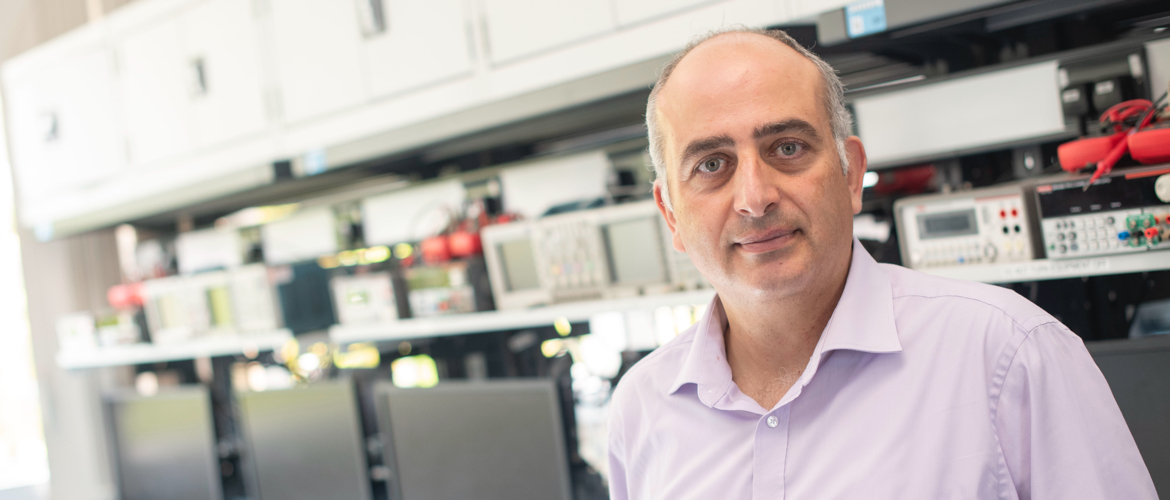
Dr Christos Mias is a Reader in Electrical and Electronic Engineering at the School of Engineering, University of Warwick, UK. He serves as Director of Studies for the Electrical and Electronic Engineering stream and has held roles such as UK URSI Commission B (Fields and Waves) representative from 2009-2014. His research focuses on electromagnetic shielding, computational electromagnetics, microwave engineering, antennas, periodic structures, and radiowave propagation. Dr Mias' work bridges theoretical advancements with practical applications in antenna design, frequency selective surfaces, and electromagnetic modeling. His research interests emphasize innovative solutions in antenna array analysis, periodic structure optimization, and advanced simulation techniques such as finite element time-domain (FETD) modeling. He has contributed to understanding scattering phenomena, non-reflecting boundary conditions, and molecular vs electromagnetic wave propagation comparisons. Recent studies include railway infrastructure monitoring and critiques of superlensing concepts in plasmonics. Publications highlight advancements in MoM formulations, FSS analysis, and sparse matrix methodologies for boundary condition simulations. His work often integrates computational methods with real-world engineering challenges, such as optimizing antenna performance and improving electromagnetic compatibility in complex environments. Dr Mias advises through his role as Director of Studies, fostering academic excellence in electrical engineering education. His office is located in A325, with advice hours on Fridays 10 AM-12 PM during term time.
Aryeh Kontorovich is a Professor in the Computer Science Department at Ben-Gurion University. His research primarily focuses on theoretical machine learning, with expertise in probability, statistics, Markov chains, and metric spaces. His research interests span theoretical machine learning, with particular emphasis on: Probability theory and concentration inequalities Statistical learning theory Markov chains and mixing time estimation Metric space learning Kernel methods Sample compression schemes Professor Kontorovich's recent publications (2021-2025) demonstrate a continued focus on theoretical foundations of machine learning. His work shows strong trends in statistical estimation for Markov processes, distribution learning, metric space analysis, and sample compression. Many papers explore the intersection of probability theory and machine learning, particularly examining concentration inequalities, minimax optimality, and theoretical guarantees for learning algorithms. His research consistently bridges abstract mathematical theory with practical machine learning applications. Scientific awards and recognitions: Distinguished contribution award at MLG 2007 for "A Universal Kernel for Learning Regular Languages" Professor Kontorovich has advised numerous students and collaborated extensively with researchers in theoretical machine learning. His work spans both theoretical foundations and practical applications, with significant contributions to understanding the mathematical limits of learning algorithms. While specific grant information isn't provided in the source material, his extensive publication record in top venues suggests successful funding for his research programs. He maintains active collaborations with researchers worldwide, including prominent names like L. Gottlieb, D. Berend, and S. Hanneke.
Anthony TUNG Kum Hoe is a Professor in the Department of Computer Science at the National University of Singapore (NUS), where he has established himself as a leading researcher in database systems and data mining. He is also affiliated with the NUS Graduate School for Integrative Sciences and Engineering and serves as a SINGA supervisor. His educational background includes a Ph.D. in Computer Science from Simon Fraser University (2001), an M.Sc. in Information Systems & Computer Science from NUS (1998), and a B.Sc. with 2nd Class Upper Honours in Information Systems & Computer Science from NUS (1997). Professor Tung's research spans several interconnected areas within database systems and data mining. His primary focus is on developing efficient methods for indexing and searching complex data structures including time series, trajectories, trees, graphs, and high-dimensional objects. He has pioneered work in visual query processing, keyword search, and ranking systems. His GENIE (Generic Inverted Index) and LAMP (semi-Lazy Mining Paradigm) projects represent significant contributions to big data analytics, particularly in handling the 'variety' aspect of big data by providing unified frameworks for processing diverse data structures while preserving semantic meaning. His research bridges theoretical database concepts with practical applications in visual data mining, collaborative analytics, and just-in-time model construction. His recent publications reveal a clear evolution from traditional database research toward more complex analytics on diverse data types. While maintaining his core expertise in database indexing and query processing, his work has expanded to incorporate machine learning techniques, particularly in areas like nearest neighbor search, anomaly detection, and predictive analytics. There's a noticeable trend toward interdisciplinary applications, with publications spanning computer vision, natural language processing, transportation systems, and social computing. His research group consistently publishes in top-tier venues including SIGMOD, VLDB, ICDE, and KDD, demonstrating both theoretical rigor and practical relevance. 2005 Best Paper Award for 'Indexing DNA Sequences Using q-grams' 2007 Invited panel speaker on 'Advice for a successful database researcher career in Asia' at SIGMOD 2010 Guest Lecturer for VLDB Database School 2012 VLDB 2012 Research PC Co-chairs 2015 10 Years Best Paper Award, DASFAA 2015 Invited to SIGMOD 2008 and SIGKDD 2008 Program Committees Professor Tung has supervised numerous PhD students and research associates throughout his career, including notable researchers like Zhang Zhenjie (recipient of the 2007 President Graduate Fellowship) and Wang Nan (published in SIGMOD'08). His research group has been consistently productive, with students publishing in top conferences including SIGMOD, ICDE, and VLDB. His professional service is extensive, having served as PC Chair for COMAD'06, Research PC Co-chair for VLDB 2012, and on program committees for virtually all major database and data mining conferences over the past two decades. His research has been supported by various grants that have enabled significant contributions to database technology. His GENIE and LAMP projects represent a cohesive research direction focused on developing systematic approaches to big data analytics. GENIE provides a unified platform for storage and retrieval of big data with various structures, while LAMP introduces a novel paradigm for predictive analytics that combines the strengths of lazy and eager learning approaches. These projects have evolved to incorporate GPU acceleration and parallel processing capabilities, reflecting his commitment to addressing real-world scalability challenges in data-intensive applications.
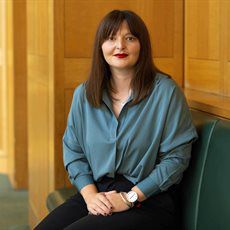
Louise Reardon is Professor of Governance and Public Policy at the University of Birmingham's School of Government, Department of Public Administration and Policy. She serves as School Deputy Director of Research (Impact) and is Thematic Research Lead for Transport at UK Parliament. Her internationally recognized expertise spans transport policy and governance, with research focusing on institutional collaboration across scales to advance local transport goals, technological innovation, and sustainability. Louise earned her PhD in Political Science from the University of Sheffield (2014), MA in Governance and Public Policy from the University of Sheffield (2009), and BA (hons) in Philosophy, Politics and Economics from the University of Durham (2008). She holds a Post-Graduate Certificate in Higher Education (2018) and is a Senior Fellow of the Higher Education Academy (2020). Her research interests center on transport policy and governance, with specific focus on multilevel governance, agenda setting, policy implementation, smart mobility transitions, urban governance, and wellbeing. As a political scientist, she advances theoretical understanding of policy processes through transport analysis, examining how local dynamics influence issue recognition, agenda setting, policy change, and approaches to wicked problems. Her work consistently bridges academic theory with practical policy application. Louise's research portfolio demonstrates a clear trajectory toward increasingly complex, interdisciplinary climate-related transport research. Her recent publications show strong emphasis on net-zero transitions, smart city governance, and pandemic recovery implications for transport systems, with growing international collaboration particularly with Indian and Australian institutions. The trend indicates deepening engagement with practical policy implementation challenges alongside theoretical contributions. Senior Fellow of the Higher Education Academy, 2020 Louise regularly provides scientific advice to diverse stakeholders and serves on the UK Department for Transport's Transport Research Innovation Grant advisory board. She co-edited the Handbook of Transportation and Public Policy (2025) and previously co-chaired the Governance and Decision-Making Processes Special Interest Group for the World Conference on Transport Research Society. She serves on editorial boards for Research in Transportation Business & Management and Local Government Studies. As an educator, Louise led the College of Social Science's first Degree Apprenticeship programme and specializes in blended teaching approaches. She has supervised PhD students on evidence use in local policymaking, center-local government relations, and walking's role in climate change agendas. She actively seeks new doctoral students interested in multi-level governance, policy change, sustainable transitions, and urban governance topics.
Professor Meredith Crowley is a Professor of Economics and Deputy Chair of the Faculty at the University of Cambridge, where she also serves as a Research Fellow at CEPR (London). She is a Fellow of St. John's College and serves as a Research Coordinator for the Janeway Institute's Transmission Mechanisms and Economic Policy Research Theme. Professor Crowley has established herself as a leading expert in international trade and trade policy, with extensive engagement with international institutions including Bruegel, CEPII, and the Kiel Institute. Professor Crowley's educational background includes: PhD (2001) and MS (1999) in Economics from the University of Wisconsin-Madison MPP (1996) in International Trade and Finance from Harvard University AB (1990) in Asian Studies and Chemistry from Bowdoin College Professor Crowley's research focuses on international trade and trade policy, with particular expertise in trade agreements, trade remedies, currency invoicing, and the economic impacts of Brexit. Her work examines how trade policy uncertainty affects firm behavior, how trade agreements shape market competition, and how exchange rate movements influence trade flows. She has made significant contributions to understanding pricing-to-market dynamics, the role of dominant currencies in trade, and the challenges facing the global trading system, frequently using detailed firm-level data in her empirical analyses. Analysis of Professor Crowley's recent publications reveals a consistent focus on the intersection of trade policy and firm behavior. Her work demonstrates how trade policy uncertainty influences market entry decisions, how trade agreements create competitive effects across markets, and how currency invoicing patterns respond to major economic events like Brexit. Her research combines rigorous empirical methods with deep policy relevance, often using detailed firm-level data to examine how international trade operates in practice, with particular attention to the impacts of trade disputes, tariff threats, and exchange rate fluctuations. Professor Crowley has received significant recognition for her work, including being elected as a Research Fellow at the Centre for Economic Policy Research (CEPR) in 2016. She has secured multiple research grants, including a UK in a Changing Europe Fellowship from the Economic and Social Research Council (2019-2022) and a Data Impact Fellowship from JISC (2017). She also received an ESRC grant for research on 'The impact of trade policy and exchange rate shocks on trade' (2017-2018). Professor Crowley has supervised several PhD students, including Chuan-Han Cheng (International Macroeconomics, Trade, and Monetary Policy) and Yi (Amanda) Wang (International Trade, Innovation, Productivity), and advised others such as Deniz Atalar (Inter-Sectoral Trade Linkages in Aggregate Fluctuation) and Ana Lleo-Bono (Behavioral, Experimental, and Organizational Economics). She serves as co-investigator for the publicly-funded Centre for Inclusive Trade Policy and has been actively involved in policy discussions, serving on the Trade and Economy Panel of the UK Department for International Trade and providing scientific advice to international institutions. Professor Crowley is a key member of the Janeway Institute for Economics at Cambridge and actively contributes to the Centre for Inclusive Trade Policy. Her research group focuses on empirical microeconomics, particularly examining international trade phenomena through detailed firm-level data analysis. She has established herself as a leading voice in trade policy discussions, with over 100 media appearances including BBC, The New York Times, Financial Times, and The Economist, where she explains complex trade issues to the public and policymakers.
Dr. Felix Mezzanotte is an Assistant Professor of Law at Trinity College Dublin and Director of the MSc in Law and Finance Programme, a collaboration between Trinity Law School and Trinity Business School. He holds a PhD and advanced degrees from the University of East Anglia, SOAS (University of London), and the University of Warwick. His research focuses on the legal dimensions of sustainable finance, corporate sustainability reporting, investor protection, and compliance frameworks within financial markets. Academic Role: Assistant Professor of Law Affiliations: Trinity Law School, Trinity Business School (MSc Programme Director) Professional Experience: Former teaching at Hong Kong Polytechnic University, policy advisor for the World Bank, and visiting scholar at Columbia Law School and others. Dr. Mezzanotte's research interests span sustainable finance regulatory design, ESG compliance, blockchain applications in reporting, and cross-border enforcement challenges. His recent work emphasizes the legal accountability mechanisms linking corporate sustainability disclosures to investor rights under EU directives. Publications reflect a focus on EU sustainable finance policy, with analysis of regulatory complexity, blockchain innovations, and investor protection gaps. Recent articles address double materiality frameworks, impact reporting standards, and the role of robo-advisors in ESG integration. Key Award: Faculty of Business Award for Outstanding Teaching (Hong Kong Polytechnic University) Research Collaborations: European-China Law Studies Association, Columbia Center for Sustainable Investment He supervises doctoral candidates exploring topics like greenwashing prevention, non-financial disclosure obligations, and regulatory enforcement in sustainable finance contexts.
Xiaotie Deng is a distinguished academic and Chair Professor at Peking University (since 2018), with prior roles at Shanghai Jiao Tong University (2013–2017), the University of Liverpool (2010–2013), and City University of Hong Kong (1997–2013). His research focuses on algorithmic game theory, internet economics, and parallel computing. He holds prestigious fellowships including ACM Fellow (2008) and IEEE Fellow (2019). Deng has led significant grants, including a RMB 5M project on algorithmic game theory at Peking University (2018–2020) and NNSFC-funded research on market competitiveness and fairness (2018–2020). Education: PhD in Computer Science from Stanford University (1989), MSc from Chinese Academy of Sciences (1984), BSc from Tsinghua University (1982). Research interests span computational game theory, equilibrium analysis, and blockchain applications. Notable contributions include foundational work on Nash equilibrium complexity and mechanism design for resource allocation. He has advised numerous PhD students and serves on editorial boards of top journals like SIAM Journal on Computing and IEEE Transactions on Cloud Computing. Key awards: ACM and IEEE Fellowships, JSPS Invitation Fellowships (2005, 1996), and NSERC International Fellowship (1991). Active in conference organizing, including PC chairs for WINE 2020 and SAGT 2018. Consultancy includes work with Cryptape, Ant Financial, and Microsoft Research Asia, reflecting his industry engagement in algorithmic solutions and blockchain technologies.
Bruna De Marchi is a Guest Researcher at the University of Bergen’s Centre for the Study of the Sciences and the Humanities (SVT). She is also affiliated with Egesta Lab at the University of British Columbia and Società per l’Epidemiologia e la Prevenzione in Milan. Her career spans over 40 years in disaster sociology, risk governance, and environmental epidemiology, with early work focusing on inter-ethnic relations and post-earthquake recovery in Italy. A key focus has been integrating scientific and local knowledge in risk management, particularly through participatory citizen science projects like CitieS-Health, which involves communities in environmental health research. Her research emphasizes post-normal science frameworks to address complex societal challenges, including pandemics and climate-related disasters. She has held academic roles in Italy, including leading the Mass Emergencies Programme at the Institute of International Sociology of Gorizia. Teaching includes online courses on risk communication at the University of Ferrara. De Marchi’s work bridges academia and policy, with contributions to EU projects like MAGIC (focusing on nexus security) and contributions to science policy debates through outlets like the ESRC STEPS Centre. Her publications explore ethics in public health, disaster governance, and innovative methodologies for collaborative research.
Anne Broadbent is a Full Professor at the University of Ottawa's Department of Mathematics and Statistics within the Faculty of Science. She holds a Tier 1 Canada Research Chair in Quantum Communications and Cryptography. Her academic journey includes an MSc and PhD from the University of Montreal. Her research focuses on quantum information processing and cryptography, with a particular emphasis on quantum communication protocols, encryption, and secure computation. She has contributed to groundbreaking work in quantum homomorphic encryption, uncloneable encryption, and quantum delegation protocols. Broadbent supervises graduate students including Daniel Lovsted, Sherry Wang, Pierre Botteron, Nagisa Hara, and Peter Yuen, often in collaboration with colleagues at institutions like Toulouse. Her research group explores discrete mathematics and analysis, alongside quantum information theory. Her recent articles highlight advancements in quantum proof systems, secure quantum communication architectures, and cryptographic primitives resistant to cloning. These contributions underscore her role in advancing theoretical and applied aspects of quantum information science.
Vanessa Bowden is a Senior Lecturer in the School of Psychological Science at The University of Western Australia. She serves as Graduate Research Coordinator for the School, Deputy Director of the Master of Industrial and Organisational Psychology program, and Co-Director of the Human Factors and Applied Cognition Laboratory. Her academic credentials include a PhD from The University of Western Australia and a Graduate Diploma in Human Factors and Safety Management Systems from the University of South Australia. Dr. Bowden's research expertise spans multiple domains within human factors and cognitive psychology. Her primary research interests include: Human interaction with technological systems Automation design and human-automation interaction Driver distraction and transportation safety Cognitive processes in complex work settings Situation awareness and workload management Prospective memory in applied contexts Her recent research has focused on understanding how humans interact with automated systems across various domains, from driving to air traffic control. Dr. Bowden has developed computational models of human decision-making with automated advice and has investigated the impact of automation transparency on operator performance. Her work has important implications for designing safer technological systems that optimize human performance. Dr. Bowden has received significant research funding, including an Australian Research Council Discovery grant (2024) for $924,198 for "A Unified Computational Model of How Humans Use Automated Advice" and multiple Department of Defence grants. Her research has been published extensively in top-tier journals in human factors and cognitive psychology. She has supervised numerous research students and currently accepts PhD and other Higher Degree by Research students. Dr. Bowden teaches several courses including Psychology of Training (PSYC5573), Industrial and Organisational Psychology (PSYC3309), and Perception and Sensory Neuropsychology (PSYC3318).