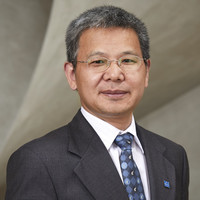
Henrik Sandberg is a Professor at the Division of Decision and Control Systems , KTH Royal Institute of Technology , Stockholm, Sweden. He holds the title of Deputy Head of Division and is affiliated with the School of Electrical Engineering and Computer Science . Education: MSc in Engineering Physics (1999) PhD in Automatic Control (2004) from Lund University Postdoctoral position at Caltech (pre-2007) Research Interests: Focus on cyber-physical systems security , power systems , model reduction , and fundamental limitations of control systems . Key sub-areas include attack detection , networked control , privacy-preserving estimation , and resilient control architectures . Publications: Over 150 papers across IEEE Transactions and Automatica , covering topics like stealthy attacks , distributed control , LQG optimization , and thermodynamic costs in filtering . Recent work includes LWE-based encrypted control and Bayesian deception mechanisms . Scientific Awards: Best Student Paper Award Finalist at IEEE CASE 2014; Best Student-Paper Award at IEEE CDC 2004. Grants & Projects: Leads the DYNACON project (WASP Cybersec cluster) and collaborates on CERCES (critical infrastructure resilience). Serves as examiner for multiple advanced courses in cybersecurity and control systems. Contact: Email: hsan@kth.se Phone: +46 (0)8 790 7294 Room: A:607, Malvinas Väg 10, Stockholm
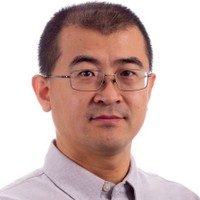
Zhonghai Lu is a Professor of Electronic Systems Design (specializing in Dependable and Autonomous Systems) at KTH Royal Institute of Technology, part of the Department of Electrical Engineering in the School of Electrical Engineering and Computer Science (EECS). He serves as Program Director for KTH's Embedded Systems master's program and Director of Studies at the Division of Electronics and Embedded Systems. His research focuses on Network-on-Chip (NoC), computer architecture, embedded systems, and Prognostics and Health Management (PHM) of power electronics. He leads a research group exploring in-network processing and embedded intelligence, transforming passive networks into active computational frameworks. Lu holds a BSc from Beijing Normal University (1989), MSc and PhD from KTH (2002, 2007), and an MBA in Innovation and Growth from the University of Turku (2012). He has authored over 240 scientific papers, including journal articles and peer-reviewed conferences, with notable recognitions such as Best Paper Awards at NOCS’2015 and EU HiPEAC, and a Featured Paper in IEEE Transactions on Computers (2020). He serves as Associate Editor for ACM Transactions on Architecture and Code Optimization (TACO) and has chaired major conferences like HiPEAC’2017 and NOCS’2018. His research group’s recent work includes integrating AI into hardware acceleration, fault-tolerant neural networks, and RUL estimation for power electronics using recurrent neural networks. Lu has secured grants from the Swedish Research Council and Intel Corporation and developed courses like IL2230 (Hardware Architectures for Deep Learning) and IL2233 (Embedded Intelligence), pioneering embedded AI education at KTH. Education: BSc (Beijing Normal University), MSc/PhD (KTH), MBA (University of Turku) Awards: Best Paper Awards (NOCS, EU HiPEAC), Swedish Research Council Grants, Intel Research Gifts Labs/Teams: Research Group on In-Network Processing and Embedded Intelligence
Henrik Boström is a Professor of Computer Science specializing in Data Science Systems at the Division of Software and Computer Systems, KTH Royal Institute of Technology. His research focuses on trustworthy machine learning , with emphasis on conformal prediction (for confidence-calibrated predictions) and explainable AI . He is the developer of Python packages crepes (conformal classifiers/regressors) and xrf (explainable random forests). His primary research domains include: Developing robust methods for uncertainty quantification in predictive models Creating interpretable machine learning frameworks Optimizing ensemble techniques for high-dimensional data Applying ML to healthcare informatics and industrial diagnostics Analysis of his recent publications reveals strong emphasis on: (1) advancing conformal prediction theory for trustworthy AI, (2) enhancing interpretability of complex models like random forests and GNNs, and (3) developing efficient algorithms for uncertainty-aware learning in domains including healthcare, graph data, and high-dimensional regression. He serves as examiner for multiple degree projects and teaches courses including Programming for Data Science (ID2214) and Research Methodology and Scientific Writing (II2202) . He leads development of open-source tools for conformal prediction and model interpretation.
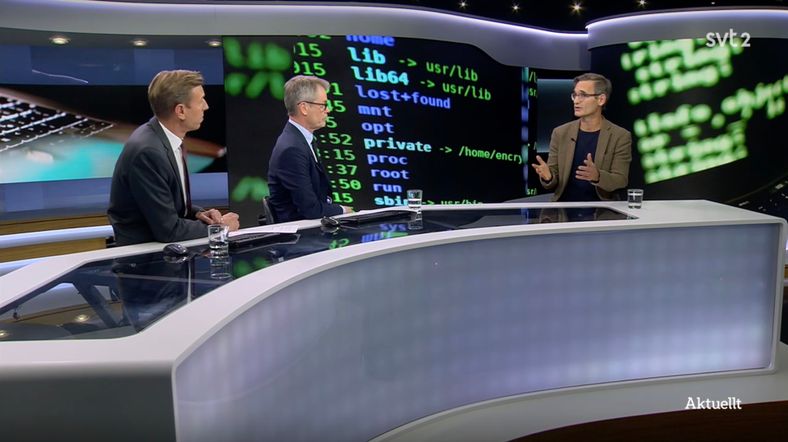
Pontus Johnson is a Professor at the KTH Royal Institute of Technology in Stockholm, Sweden. He leads the Center for Cyber Defense and Information Security (collaborating with Swedish Armed Forces, FRA, MSB, FOI, FHS) and serves as vice director of Cybercampus Sweden since 2024. His research focuses on cybersecurity , enterprise architecture analysis , and probabilistic threat modeling , particularly through his development of the Meta Attack Language (MAL) for simulating cyber attacks on networked systems. Education: MSc in Computer Science, Lund Institute of Technology (1997) PhD in Computer Science, KTH (2002) Docent title, KTH (2007) Leadership Roles: Director, Center for Cyber Defense and Information Security (2013–present) Vice Director, Cybercampus Sweden (2024–present) Board Member, Swedish Research Council (2025–present) Deputy Chair, Swedish Royal Academy of Engineering Sciences (IVA) Board (2024–present) His work spans cybersecurity research , attack simulation methodologies , and enterprise architecture frameworks . He has developed tools like securiCAD (acquired by Google) and pwnPr3d for probabilistic threat modeling. His 15 most recent publications highlight advancements in graph-based attack simulations , automated security assessments , and AI applications in cyber defense . Scientific recognition includes: Listed among Tech Awards Sweden's 50 Most Influential People in Swedish Tech (2022, 2023) Discovery of vulnerability in the Universal Turing Machine (2021) He supervises 16 PhD students and alumni (2005–2024), including Simon Gökstorp , Jakob Nyberg , and Sotirios Katsikeas . His academic service includes over 50 program committee roles and leadership positions in international conferences. He contributes to both academic and public domains through media appearances (SVT, Aftonbladet), courses in ethical hacking , and industry collaboration via his role at Google (20% of his time). His research group Software Systems Architecture and Security (SSAS) focuses on predictive security frameworks and system-of-systems analysis.
Zhibo Pang is an Adjunct Professor at KTH Royal Institute of Technology's Department of Intelligent Systems (EECS) and Senior Principal Scientist at ABB Corporate Research Sweden. His work focuses on digital transformation in industry and healthcare, spanning robotics, AI, control systems, and wireless communication. He leads projects in embodied intelligence, Industry 4.0, and Healthcare 4.0, with 23 granted patents and over 120 journal papers. Education: PhD in Electronic and Computer Systems (KTH, 2013), MBA in Innovation & Growth (University of Turku, 2012). Key Roles: IEEE Technical Committee Chair, Editor of 6 IEEE journals, ABB Inventor of the Year (2016, 2018, 2021). Research Interests: Robotics safety, wireless automation, federated learning, digital twins, and IoT security. Recent Projects: Cloud-fog automation frameworks, robot skin systems for healthcare, and latency-aware industrial control. His work bridges academia and industry through cross-functional collaborations.
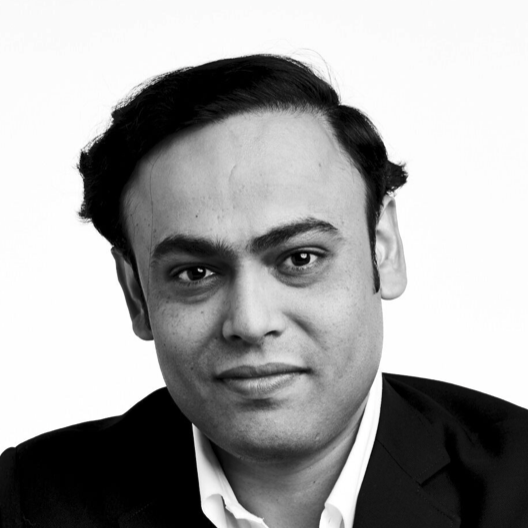
Saurabh Amin is a Professor in the Department of Civil and Environmental Engineering at the Massachusetts Institute of Technology (MIT), where he also serves as the Edmund K. Turner Professor and Undergraduate Officer. He is a Principal Investigator at the Laboratory of Information and Decision Systems and holds affiliations with the Operations Research Center and the Center for Computational Science and Engineering. His educational background includes: B.Tech. 2002, Indian Institute of Technology (IIT) Roorkee M.S. 2004, University of Texas (UT) Austin Ph.D. 2011, University of California (UC) Berkeley Saurabh Amin's research focuses on the design and control of infrastructure systems using game theory and optimization in networks. His work spans three main areas: resilient network control, information systems and incentive design, and optimal resource allocation in large-scale infrastructure systems. By concentrating on critical infrastructure domains including highway transportation, electric power distribution, and urban water networks, his research develops innovative theory and tools to enhance system performance against both stochastic and adversarial disruptions. His approach involves modeling cyber-physical interactions in infrastructures to assess vulnerabilities, developing detection and response tools for failures at various scales, and designing economic incentive schemes that improve aggregate public good while accounting for dependencies and private information among strategic entities. Amin's work bridges mathematical systems theory with practical civil engineering applications, creating a rigorous theoretical foundation for infrastructure resilience that addresses diverse failure mechanisms from natural disasters to deliberate malicious actions. His recent publications demonstrate a strong focus on decarbonization of energy systems, resilient infrastructure planning under climate uncertainty, optimization methods for complex networked systems, and game-theoretic approaches to sustainable infrastructure management. His work increasingly integrates artificial intelligence and machine learning techniques with traditional control theory to address contemporary challenges in infrastructure resilience and sustainability. The research shows a clear trajectory toward addressing climate change impacts on infrastructure systems while maintaining economic efficiency and operational reliability. Professor Amin has received numerous prestigious awards and honors: Common Ground Excellence in Teaching Award, 2025 HSCC Test-of-Time Award, 2024 MIT CEE, Distinguished Service and Leadership Award, 2023 Samuel M. Seegal Prize (SoE) – inspiring students in pursuing and achieving excellence, 2022 Earll M. Murman for Excellence in Undergraduate Advising, 2022 C3.ai Digital Transformation Institute Research Award, 2020 MIT, Ole Madsen Mentoring Award, 2020 MIT, Energy Initiative Research Award, 2020 National Academy of Engineering, China-America Frontiers of Engineering Symposium speaker, 2019 MIT, Robert N. Noyce Career Development Professor, 2015-2018 Google Faculty Research Award, 2015 National Science Foundation CAREER Award, 2015 Siebel Energy Institute Research Award, 2015 MIT, Solomon Buchsbaum AT&T Research Fund Award, 2012 Professor Amin has been actively involved in significant research projects including the C3.ai DTI project on Causal Reasoning for Real-Time Attack Identification in Cyber-Physical Systems and another on Learning in Routing Games for Sustainable Electromobility. He serves as the chief scientist on multi-institutional NSF grants, including the $9 million Foundations of Resilient Cyber-Physical Systems (CPS) project. His teaching portfolio includes courses such as 1.008 Engineering for a Sustainable World, 1.104 Sensing and Intelligent Systems, 1.020 Engineering Sustainability: Analysis and Design, and 1.208 Resilient Networks. As Undergraduate Officer, he plays a key role in shaping the educational experience for civil and environmental engineering students at MIT. Professor Amin leads the Resilient Infrastructure Networks Lab at MIT, where his team develops theoretical foundations and practical tools for infrastructure resilience. The lab focuses on the intersection of control theory, game theory, and optimization applied to cyber-physical infrastructure systems. Current research directions include pandemic-resilient urban mobility and hurricane-resilient smart grid operations, reflecting the lab's commitment to addressing pressing societal challenges through rigorous systems engineering approaches.
Karl Henrik Johansson is a Professor at the School of Electrical Engineering and Computer Science, KTH Royal Institute of Technology in Stockholm, Sweden, where he also serves as the Founding Director of Digital Futures. He is a Fellow of both IEEE and the Royal Swedish Academy of Engineering Sciences, and has held leadership positions including Immediate Past President of the European Control Association and IEEE Control Systems Society Vice President Diversity, Outreach & Development. Dr. Johansson earned his MSc in Electrical Engineering and PhD in Automatic Control from Lund University. His academic journey includes visiting positions at prestigious institutions such as UC Berkeley, Caltech, and NTU. His research focuses on networked control systems and cyber-physical systems with applications in transportation, energy, and automation networks. His work investigates fundamental challenges in connecting physical world systems through communication networks, exploring how wireless communication and sensor technology can enhance system robustness, reliability, energy efficiency, and safety. Current research directions include security of cyber-physical systems, distributed optimization, multi-agent systems, and applications to intelligent transportation and energy networks. Analysis of his recent publications reveals a strong focus on distributed optimization algorithms, secure networked control, multi-agent systems, and applications to transportation and energy networks. His work increasingly integrates machine learning techniques with traditional control theory, addressing challenges in privacy-preserving distributed computation, resilient state estimation, and resource allocation in complex networked systems. IEEE Control Systems Society Hendrik W. Bode Lecture Prize (2024) Swedish Research Council Distinguished Professor (2018-2027) Wallenberg Scholar (2009-2026) IFAC Young Author Prize IEEE CSS Distinguished Lecturer (2017-2019) IFAC Outstanding Service Award IEEE Fellow Dr. Johansson has supervised over 100 postdocs and PhD students, with many now holding prominent positions at institutions worldwide. His research has been supported by significant grants including the Swedish Research Council Distinguished Professor Grant (2018-2027), multiple Wallenberg Foundation grants, and numerous EU and national research projects. He has directed major research centers including ACCESS Linnaeus Centre (2009-2016) and Strategic Research Area ICT TNG (2013-2020). His research group operates within the Digital Futures initiative and maintains strong connections with industry partners through projects like the Integrated Transport Research Lab (supported by Scania and Ericsson) and Smart Mobility Lab. The group actively collaborates with international institutions and participates in major EU-funded projects addressing challenges in cyber-physical systems, transportation, and energy networks.
John Folkesson is an Associate Professor at the Department of Robotics, Perception and Learning at KTH Royal Institute of Technology. His research focuses on mobile robotics, underwater autonomous vehicles (AUVs), and Simultaneous Localization and Mapping (SLAM), particularly addressing challenges in dynamic underwater environments. He leads the AUV group within the Swedish Maritime Robotics Centre (SMaRC2.0) and supervises multiple PhD projects, including those funded by Ocean Infinity and Vinnova. Folkesson has pioneered work on sonar-based SLAM, bathymetric mapping, and autonomous underwater navigation without human intervention. He teaches courses such as Probabilistic Graphical Models (DD2420) and Applied Estimation (EL2320). Recent projects include developing neural rendering techniques for sidescan SLAM and automatic launch systems for AUVs in collaboration with Purdue University and SAAB. His research emphasizes long-term autonomy, environmental ambiguity, and sensor data interpretation in unstructured underwater scenarios. Education: PhD in Robotics (2005, KTH Royal Institute of Technology) Recent Funding: 2024 projects include ALARS (Vinnova), WASP WARA-PS, and industrial collaborations. Research Interests Folkesson's work spans underwater robotics, SLAM algorithms, and sensor fusion. Key areas include: Underwater SLAM and sonar modeling Bathymetric reconstruction using neural networks Autonomous decision-making in AUV missions Real-time terrain modeling and localization Articles Trends Recent publications emphasize neural networks for SLAM optimization, sonar data processing, and autonomous underwater systems. Themes include real-time bathymetric mapping, sensor fusion in dynamic environments, and neural rendering techniques for improving navigation accuracy. Folkesson's work bridges theory and practice, with applications in marine robotics and industrial surveys. Advising & Grants PhD supervision: AUV perception (2024), SLAM with Ocean Infinity, event-response AUV systems. Collaborations: Purdue University, SAAB, Ocean Infinity. Course responsibilities: Over 10 advanced robotics and engineering courses at KTH. Labs & Teams Lead of SMaRC2.0, KTH's official research center for maritime robotics. Active in developing AUV systems for long-duration missions, including ice-covered and deep-sea exploration.
Gustav Eje Henter is an Assistant Professor at KTH Royal Institute of Technology, holding roles as the Head of Research at Motorica AB and a Core Team Member of the Wallenberg Research Arena (WARA) for Media and Language. He is the Secretary of the ISCA SynSIG (Special Interest Group on Speech Synthesis) and a Co-Organiser of the GENEA Workshops on Embodied Agents' Non-Verbal Behavior. His research focuses on speech synthesis, gesture generation, and multimodal interaction, with contributions to TTS systems, neural networks, and embodied AI. He leads Digital Futures, a cross-disciplinary research center addressing societal challenges through digital technologies. This center is a collaboration between KTH, Stockholm University, and RISE. His work spans foundational research to industrial applications, emphasizing ethical AI, privacy in voice conversion, and human-robot interaction. Key research themes include causal reasoning in LLMs, adversarial privacy techniques, and benchmarking frameworks like the GENEA Leaderboard. He has organized international workshops (GENEA 2021-2024) and contributed to standards in TTS evaluation methodologies. His technical innovations include HiFi-Glot for formant synthesis and Matcha-TTS for fast waveform generation. His research integrates audio, gesture, and motion synthesis with deep learning, addressing challenges in spontaneous speech synthesis, multimodal coherence, and listener perception. He advocates for rigorous evaluation practices and open challenges to advance the field's reproducibility and real-world applicability.
Tobias Oechtering is a Professor at the Division of Information Science and Engineering within the School of Electrical Engineering and Computer Science at KTH Royal Institute of Technology. His research focuses on information theory, privacy-preserving technologies, statistical signal processing, machine learning, and smart grid systems. He has held academic positions at KTH since 2008, advancing from Post-Doctoral Researcher to Assistant Professor (2010–2013), Associate Professor (2013–2018), and Professor (2018-present). He has supervised over 20 PhD students and contributed to numerous postdoctoral programs. Research Interests: - Network information theory and physical-layer security - Privacy mechanisms with provable guarantees - Distributed statistical inference and sensor calibration - Reinforcement learning and privacy-aware machine learning - Smart grid privacy and energy management - Wireless communication algorithms and signal processing - Networked control systems and stability analysis He currently supervises 7 PhD students and hosts 3 postdocs. His work has led to over 150 peer-reviewed publications, with recent contributions in privacy-preserving smart grid strategies, adversarial inference control, and information-theoretic security. He has served as editor for IEEE Transactions on Information Forensics and Security and held leadership roles in KTH's Digitalisation Research Platform.
Monowar Bhuyan is an Associate Professor in the Department of Computing Science at Umeå University, Sweden, leading the Cyber Analytics and Learning Group within ADSLab. He holds a Ph.D. in Computer Science from Tezpur University and has held academic positions at Assam Kaziranga University and Umeå University. His research focuses on machine learning, anomaly detection, edge AI, and distributed systems security. He has secured over 35 MSEK in grants from WASP, STINT, and EU Horizon programs. Education Ph.D. in Computer Science and Engineering, Tezpur University (2014) M.Tech. in Information Technology, Tezpur University (2009) B.E. in Computer Science and Engineering, IETE (2007) Research Interests Distributed/Federated/Responsible Machine Learning Cybersecurity and Anomaly Detection in Edge Clouds AI for DDoS Defense and Cyber Resilience Edge AI and Serverless Computing Recent Contributions His recent work addresses secure federated learning, DDoS attack detection in cloud-edge systems, and responsible AI. Key publications include novel frameworks for VSI-DDoS detection and federated learning optimizations. Awards & Grants Best Paper Awards at ICONIP 2023 and ACM ICACCI 2012 WASP NEST Grant (AIR2 Project, 5 MSEK) EU Horizon Europe Grant (SovereignEdge.Cognit, 8.27 MSEK) Lab & Collaborations He leads the Cyber Analytics and Learning Group (ADSlab), collaborating with institutions like KTH, Linköping University, and Nara Institute of Science and Technology (NAIST). The lab focuses on AI-driven security solutions for distributed systems.
Tommy Löfstedt is an Associate Professor at Umeå University , affiliated with the Department of Computing Science and the Department of Mathematics and Mathematical Statistics. His research focuses on machine learning , computer vision , and medical image analysis , with applications in life sciences, radiation therapy, and biomedical imaging. He leads multiple research projects, including AI-driven delineation in radiation therapy, quantitative MRI for radiotherapy, and machine learning for plant nutrient uptake. Current research emphasizes structured regularization methods to improve model interpretability and robustness. Key applications include medical image segmentation , Alzheimer's classification , and uncertainty estimation in MRI . Recent publications highlight his work on morphological regularization , adversarial attack mitigation , and multi-task learning in medical imaging contexts. His projects span 2022–2026 with funding for pediatric oncology automation and gynecological cancer staging. Affiliated with both computing and mathematical departments, he bridges algorithm development with applied mathematical frameworks in medical and life science domains.
Cecilia Åsberg is Professor at Linköping University (LiU) since 2005, leading the Theme Gender (TEMAG) department under Department of Theme (TEMA) . She founded the Posthumanities Hub in 2008 - a feminist research platform for interdisciplinary work across art, science, and technology. In 2013, she established The Seed Box , an international environmental humanities program. Current work includes developing ocean humanities through projects like Sea Mania. Professor at Linköping University (2005-present) Founder of Posthumanities Hub (2008) Founder of The Seed Box (2013) Developing ocean humanities and multispecies studies Her research focuses on posthumanist gender studies , environmental humanities , and AI ethics , particularly examining how technology, ecology, and embodiment intersect in contemporary society. She specializes in intersectional analysis of synthetic biology, digital citizenship, and environmental change. Recent publications address AI-generated imagery 's representational politics, multispecies storytelling , and blue humanities approaches to marine ecosystems. She collaborates with networks like the Eco- and Bioart Lab and Queer Death Studies Network . Key projects include: Sea Mania : Coastal culture and sustainable seafood practices Sociocultural implications of AI technology Checking in with Deep Time Clocks : Materializing intergenerational ethics Young Future Creators : Environmental communication for youth As a research leader, she mentors doctoral students and coordinates international collaborations across 28 institutions, funded by ERC , VR , and Formas grants.
Bobby Lee Townsend Sturm JR is an Associate Professor at KTH Royal Institute of Technology, leading the MUSAiC project (ERC-2019-COG). He holds a PhD in Electrical and Computer Engineering from UC Santa Barbara (2009), followed by postdoctoral research at LAM, Paris 6, and academic roles at Aalborg University and Queen Mary University of London. His research focuses on AI ethics in music, generative AI for music, and folk music preservation. Current roles at KTH include teaching and supervising in Machine Learning, Music Informatics, and AI Ethics. He has pioneered AI music generation challenges (e.g., 2020 Double Jigs Challenge) and investigates societal impacts of AI on traditional music cultures. His work bridges technical innovation with cultural and ethical considerations, addressing issues like data colonialism, algorithmic bias, and human-AI collaboration in creative contexts. Education: PhD (UCSB, 2009), Postdoc (Paris 6), Academic appointments at Aalborg University (2010–2014) and Queen Mary University (2014–2018) Key Projects: MUSAiC (ERC), Virtual Session System for Irish Music, Traditional Music Dataset Analysis Teaching: Courses in Machine Learning, Music Acoustics, and ICT Innovation Publications span peer-reviewed journals and conferences, emphasizing ethical AI, music generation, and interdisciplinary research in MIR (Music Information Retrieval). He actively collaborates with musicians, anthropologists, and technologists to ensure culturally informed AI development.
Ericka Johnson is a Professor and Deputy Prefect at Linköping University, working within Gender Studies in the Department of Thematic Studies. She is affiliated with the Center for Medical Humanities and Bioethics (CMBS), Bodies Hub, and the P6: Body, Knowledge, Subjectivity research collective. Her work bridges Science & Technology Studies, medical humanities, and gender studies, with a focus on how data representation intersects with AI systems and how technologies 'refract' invisible discourses to make them visible. Johnson's research program investigates how the world becomes data, exploring connections between ontologies, epistemologies, and AI. She employs feminist science studies frameworks to examine medical technologies and material-discursive practices around the body. Her metaphor of refraction—comparing how technologies reveal hidden discourses to how prisms refract light into visible spectra—has become influential in feminist technoscience research. She is particularly known for identifying 'intersectional hallucinations' in synthetic medical data, where AI systems generate data that misrepresents complex, overlapping identities. Her major projects include 'Social complexity and fairness in synthetic medical data' (funded by WASP-HS and Vinnova), which examines how machine learning-generated data can overrepresent 'standard' patients while underrepresenting minorities, and 'The Constant Torment' project exploring prostate anxiety and its relationship to masculinity, resulting in her book 'A Cultural Biography of the Prostate.' Her recent publications span critical data studies, human-robot interaction, and the sociotechnical dimensions of AI, consistently examining how technologies shape and are shaped by social, cultural, and gendered contexts. As a supervisor, Johnson mentors doctoral students Isabel García Velázquez, Alexandra Gribble, and Dominika Lisy, as well as postdoctoral researcher Maria Arnelid. Her research is supported by major grants from WASP-HS (NetX) and Vinnova, focusing on fair and representative synthetic data, and she participates in the Wallenberg Autonomous Systems Program (WASP) Humanities and Society initiative. Johnson is actively involved in interdisciplinary research communities including the Center for Medical Humanities and Bioethics, Bodies Hub (researching bodies, identity, and gender), and the P6 research collective. These frameworks support her collaborative work at technology's intersection with gender, society, and healthcare, with practical implications for developing more equitable AI systems in medical contexts.