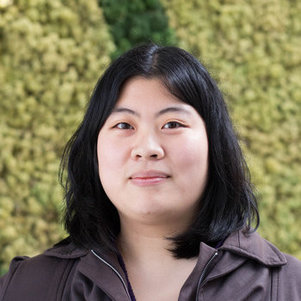
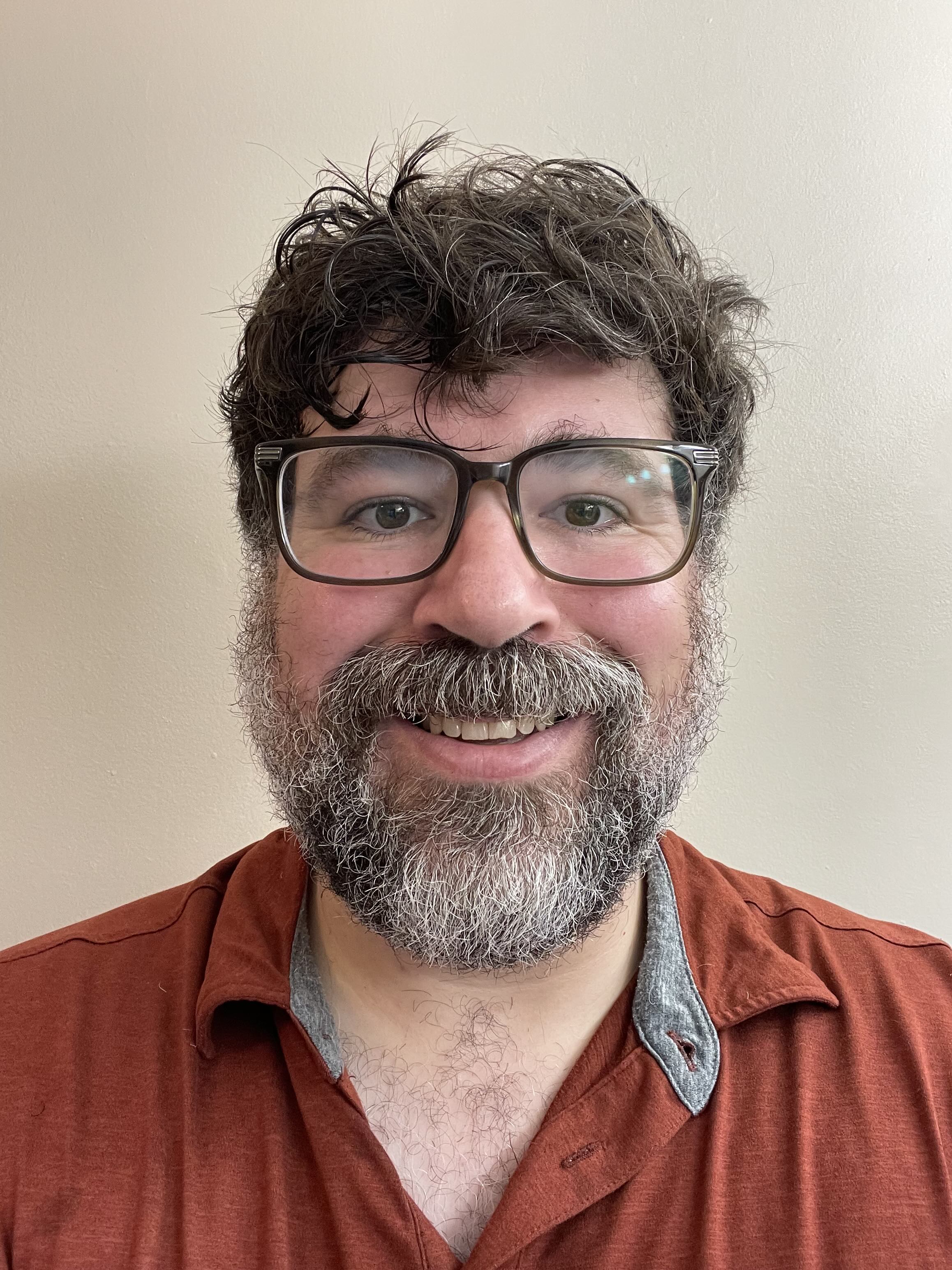
Amin Alipour is an Associate Professor in the Department of Computer Science at the University of Houston, where he directs the Software Engineering Research Group. He holds a Ph.D. from Oregon State University and multiple advanced degrees from institutions in Iran and the U.S. His work focuses on improving safety and user experience of AI-assisted software engineering tools, with funding from NSF and IARPA. Prior to joining the U.S., he taught at the University of Kashan and Shiraz University in Iran. Education: Ph.D. in Computer Science, Oregon State University (Advisor: Alex Groce) M.S. in Computer Science, Michigan Technological University M.S. in Computer Engineering, Tarbiat Modares University B.S. in Computer Engineering, Petroleum University of Technology (Iran) Research interests include: Secure AI systems, particularly in code LLMs Trojan detection and mitigation in neural models Educational impacts of AI tools in programming education Formal methods for software verification Human-AI collaboration in programming tasks His recent articles explore cybersecurity in AI, student interactions with LLMs, and adversarial attacks on code models. He currently serves on program committees for ICER 2025 and ICSME 2025. His research group develops tools like FeatureExtractor and ProgramTransformer for analyzing neural code intelligence models.
Cynthia Liem is an Associate Professor at the Multimedia Computing Group, part of the Faculty of Electrical Engineering, Mathematics and Computer Science at Delft University of Technology (TU Delft). Her work uniquely bridges computer science and music, leveraging her dual expertise in both domains. Education: BSc and MSc in Media and Knowledge Engineering (Computer Science), TU Delft (2007, 2009); PhD, TU Delft (2015); BMus and MMus in Classical Piano Performance, Royal Conservatoire, The Hague (2009, 2011). Her research centers on human-centered multimedia analysis, with two core themes. First, she investigates how to algorithmically surface information in large multimodal archives that users would not discover through conventional search or recommendation systems, aiming to broaden user perspectives and help uncover underutilized digital content. Second, she focuses on validation and validity in data science, particularly in contexts where human responses are implicit and hard to measure, drawing inspiration from psychometric validity in the social sciences. Her work emphasizes real-world applicability, especially in music and cultural heritage domains. The two recent publications highlight her engagement with cutting-edge AI challenges: one explores algorithmic recourse dynamics, while the other examines evolutionary algorithms in adversarial example generation, indicating strong interests in robustness, explainability, and human-aligned AI systems. Notable scientific recognitions include: Google Anita Borg Scholarship (2008) Google European Doctoral Fellowship (2010) Top-5 nominee, New Scientist Science Talent Prize (2016) Cynthia Liem has been involved in several significant research projects, including the H2020 TROMPA project on crowd-powered enrichment of public-domain music, an NWO-KIEM project on musician well-being, an NWO-Veni project on perspective-broadening in recommender systems, and an ERASMUS+ initiative on big data in psychological assessment. She collaborates with key institutions such as the National Library of The Netherlands and CDR/Muziekweb. Beyond academia, she remains active as a performing pianist, notably in the Magma Duo, which won first prize at the A Feast of Duos competition and was part of the Dutch Classical Talent Tour, leading to a national concert tour. There is no indication of lab or research team leadership beyond project involvement, though her role as an Associate Professor suggests supervision of students and researchers. Future work appears directed toward socially responsible AI, improved validation frameworks, and interdisciplinary applications of music and data science.
Liangmin Wang is a Professor at the School of Cyber Science and Engineering, Southeast University, Nanjing, China. His research spans cybersecurity, smart contract vulnerability detection, internet of things security, data deduplication, and blockchain technology. He actively contributes to advancements in secure computation, privacy preservation, and network threat analysis. Current affiliation: Southeast University Research focus: Cybersecurity, blockchain, IoT security, federated learning, and malware detection His recent publications demonstrate expertise in applying machine learning and cryptographic methods to security challenges in blockchain systems, fog-assisted cloud storage, and vehicular networks. He collaborates extensively with researchers like Xiaoyu Zhang, Xia Feng, and Wenjin Wang.
Dr Andrew McCarthy is a Senior Lecturer at the University of the West of England (UWE Bristol) , affiliated with the School of Computing and Creative Technologies . He serves as Programme Leader for the BSc(Hons) Cyber Security and Digital Forensics course. Education : Ph.D. in Computer Science (UWE), M.Sc. in Cyber Security (Distinction, UWE), B.Sc. in Computing for Real-time Systems (UWE), Postgraduate Certificates in Computing (Open University) and Learning and Teaching in Higher Education (UWE) His research focuses on adversarial machine learning and secure AI systems , particularly methods to improve robustness against adversarial examples and decision-making in human-machine teams. He brings industry experience from companies like Intel Corp and LogicaCMG to his teaching, which covers programming, machine learning, cyber security, and critical systems security. He holds professional membership with the Association for Computing Machinery and contributes to practical education through UWE's forensic computer labs equipped with tools like EnCase and Autopsy, as well as dedicated isolation and networks labs .
Dr. Fang Yu is an Associate Professor at the Department of Management Information Systems, National Chengchi University, specializing in software security, formal verification, and string analysis. They hold a Ph.D. in Computer Science from the University of California, Santa Barbara. Research Expertise: Dr. Yu focuses on cybersecurity, formal methods for software verification, and machine learning applications in data clustering and adversarial example detection. Their work bridges theoretical computer science with practical security solutions. Publication Trends: Recent articles address biomedical data clustering ( scGHSOM ), explainable AI ( XFlag ), and adversarial defense mechanisms. Topics span bioinformatics, security verification, and fairness testing in neural networks. Awards: 資深優良教師(10年) (2020, National Chengchi University) 國科會研究獎勵 (2019, National Science Council, Taiwan) Projects: Principal Investigator for 15+ grants from Taiwan's National Science and Technology Council and Ministry of Education, focusing on AI security, IoT verification, and financial technology.
Hari Sundaram is a Professor in the Computer Science Department at the University of Illinois at Urbana-Champaign with affiliate appointments in the Charles H. Sandage Department of Advertising, the Institute for Communication Research, and the Center for Social & Behavioral Science. His academic journey includes positions as Associate Professor at the University of Illinois (2014-2021) and Arizona State University (2002-2014), where he also served as Associate Director of the Arts, Media and Engineering program (2012-2009). Dr. Sundaram's educational background includes a Ph.D. in Electrical Engineering from Columbia University (2002), an M.S. in Electrical Engineering from Stony Brook University (1995), and a B.Tech in Electrical Engineering from the Indian Institute of Technology, Delhi (1993). His research, conducted through the Crowd Dynamics Lab, focuses on designing computational systems that empower individuals to make better decisions. His work spans Applied Machine Learning (particularly recommender systems), Network Science (studying how platform rules induce strategic behavior), Human-Computer Interaction (developing systems to elicit truthful preferences), and Mechanism Design (creating rules to incentivize pro-social behavior). His research has significant implications for understanding fairness and discrimination in online markets. Dr. Sundaram's work has been recognized with numerous awards including multiple Best Paper Awards from ACM CSCW (2023), Best Article Award from the Journal of Interactive Advertising (2020), ACM Distinguished Member (2019), IEEE Senior Member (2019), and several IBM Faculty Awards. He has also been consistently recognized for teaching excellence, receiving the "Teacher Ranked as Excellent" award multiple times. As leader of the Crowd Dynamics Lab, Dr. Sundaram oversees research that bridges computer science with social sciences, focusing on how computational systems can enhance human decision-making while addressing fairness concerns. His work has practical applications in online marketplaces, social media platforms, and educational technologies.
Vince Lyzinski is an Associate Professor in the Department of Mathematics at the University of Maryland, College Park, with additional affiliations in the Applied Mathematics, Statistics, and Scientific Computation (AMSC) program. His work spans statistical network inference, graph matching algorithms, and machine learning applications to complex networks. Ph.D. in Applied Mathematics and Statistics (2013), M.S.E. (2011), and M.A. (2007) from Johns Hopkins University B.S. in Mathematics from University of Notre Dame (2006) His research focuses on statistical network inference , particularly graph matching and vertex nomination , with applications to connectomics and adversarial activity analytics. Supported by DARPA MAA , AFOSR , and JHU HLTCOE , he develops algorithms like iGraphMatch for graph alignment and analysis. Recent publications (2025-2023) explore vertex label error impacts, network trimming for robustness, and stochastic blockmodel extensions. Key papers include "Asymptotically Perfect Seeded Graph Matching" and "ACRONYM: Augmented Degree-Corrected Network Models" . Scientific Awards : Best Paper Award at GTA3 2018 Workshop He has advised 13 Ph.D. students and 1 postdoc across UMD , JHU , and Texas A&M , including Keith Levin (now at UW-Madison) and Jesus Arroyo (now at Texas A&M). His DARPA-funded team includes researchers from UMass, UMD, BU, and JHU.
Daniel Cullina is an Assistant Professor in Electrical Engineering, specializing in theoretical computer science and machine learning. His research explores fundamental aspects of adversarial robustness, graph alignment, and information theory, with applications spanning cybersecurity and data science. Research Focus: Adversarial machine learning: Robustness guarantees, attack/defense strategies for classifiers Graph algorithms: Alignment and recovery in random graph models like Erdős-Rényi Information theory: Fundamental limits of database matching and Gaussian alignment Coding theory: Deletion error correction and converse bounds His publications (28+ with 575+ Scopus citations) demonstrate consistent contributions to understanding adversarial vulnerabilities in ML systems and combinatorial algorithms for graph/data matching. Recent work (2020-2023) focuses on theoretical characterization of optimal losses under attacks and database alignment frameworks. With an h-index of 12, his research output shows sustained productivity since 2012, peaking in 2016 (8 publications) and maintaining 3-5 annual publications in recent years.
Deniz Yuret is a Professor in the Department of Computer Engineering at Koç University , Istanbul, and the founding director of the KUIS AI Center . Previously, he spent 12 years at the MIT AI Lab and co-founded Inquira, Inc. His research focuses on Natural Language Processing and Machine Learning , with significant contributions in dependency parsing , language modeling , grounded language learning , and character-level NLP . He has pioneered frameworks like Knet , a deep learning library in Julia, and AutoGrad.jl for automatic differentiation. Deniz's academic work spans neural architectures for language-robot interaction, transfer learning in low-resource NMT, and context embeddings for grammatical category acquisition. His recent publications emphasize transformer models , multimodal systems , and efficient language modeling . He has supervised multiple graduate students, including Emre Can Açıkgöz (PhD, UIUC), Onur Kuru (M.S. 2016), Saman Zia (M.S. 2016), and Osman Baskaya (M.S. 2015). His projects include the TUBITAK 1001 (2016-2018) and ReGROUND (2015-2018) in collaboration with international institutions.
Feng Liu is an Assistant Professor at the Decision Systems and e-Service Intelligence (DeSI) Lab within the Australian Artificial Intelligence Institute (AAII) at the University of Technology Sydney (UTS). He also serves as a Visiting Scientist at RIKEN-AIP, Japan. His academic journey includes a PhD in Computer Science from UTS (2020), an MSc in Probability and Statistics from Lanzhou University (2015), and a BSc in Mathematics from the same institution (2013). His educational background includes: Ph.D. (2020), Computer Science, University of Technology Sydney, Australia M.Sc. (2015), Probability and Statistics, Lanzhou University, China B.Sc. (2013), Mathematics, Lanzhou University, China Feng Liu's research centers on developing trustworthy intelligent systems through hypothesis testing and reliable knowledge transfer across domains. His work spans two-sample testing for distribution comparison, transfer learning for knowledge adaptation across domains, and defending against adversarial attacks to improve model robustness. His approach combines theoretical foundations with practical applications, particularly in domain adaptation with interval-valued data and secure multi-source learning. His recent publications demonstrate a strong focus on trustworthy machine learning, with significant contributions to interval-valued data processing, novel class discovery under unreliable sampling conditions, and privacy-preserving domain adaptation. His work bridges theoretical machine learning with practical applications in computer vision, bioinformatics, and recommender systems, showing a consistent pattern of addressing fundamental challenges in trustworthy AI. Among his notable recognitions are: Outstanding Reviewer Award of ICLR (2021) AAII Best Student Paper Award (2020) Best Student Paper Award from IEEE International Conference on Fuzzy Systems (2019) UTS-FEIT HDR Research Excellence Award (2019) Publons Peer Review Awards - Top 1% reviewers in Computer Science (2019, 2018) Dr. Liu has actively contributed to the academic community through supervision and service. He has helped supervise four students who collectively produced eight academic papers, three of which were published in CORE Tier A* venues. His service includes program committee roles for major conferences including NeurIPS, ICML, ICLR, and AAAI, as well as reviewing for prestigious journals like IEEE-TPAMI and IEEE-TNNLS. His research has been supported by various grants, including the Australian Laureate postdoctoral fellowship. As part of the AAII at UTS, Dr. Liu contributes to a vibrant research environment focused on advancing artificial intelligence through interdisciplinary collaboration. His work in the Decision Systems and e-Service Intelligence Lab addresses real-world challenges in trustworthy machine learning, with applications spanning healthcare, robotics, and secure information systems.
Eran Yahav is an Associate Professor in the Computer Science Department at the Technion - Israel Institute of Technology. He previously served as a research staff member at IBM T.J. Watson Research Center from 2004 to 2010. His academic journey began with a B.Sc. from the Technion in 1996, followed by a Ph.D. from Tel Aviv University in 2005. Yahav's research focuses on program analysis, program synthesis, program verification, and machine learning for programming. His work bridges theoretical foundations with practical applications, particularly in developing techniques that help programmers work more effectively with complex frameworks and APIs. He has pioneered approaches that combine static analysis with machine learning to address challenges in code search, completion, and understanding. His recent work heavily intersects with neural network applications to programming tasks, demonstrating how deep learning can enhance traditional program analysis techniques. His publication record shows a clear evolution from traditional program analysis and verification toward integrating machine learning with programming language processing. The most recent articles reveal a strong focus on neural methods for code understanding, including structural language models, adversarial examples for code models, and neural approaches to binary analysis and program synthesis. This represents a significant shift toward leveraging AI techniques to solve longstanding problems in programming languages and software engineering. Yahav has received numerous accolades including the prestigious Alon Fellowship for Outstanding Young Researchers, the Andre Deloro Career Advancement Chair in Engineering, and an ERC Consolidator Grant. He also earned best paper awards at ISSTA 2006 and 2007. As an advisor, Yahav has mentored numerous Ph.D. and Master's students who have gone on to make significant contributions in academia and industry. His research has been supported by substantial grants, including the ERC Consolidator Grant. He also serves as CTO at Tabnine, demonstrating the practical impact of his research. Yahav leads multiple research projects including PRIME (Programming with Millions of Examples), Fender (Preserving Correctness under Weak Memory Models), Saint (Synthesis using Abstract Interpretation), and several others focused on program analysis, verification, and synthesis. His work often involves building practical tools that translate theoretical advances into usable software engineering solutions.
Wing-Kwong Chan is an Associate Professor in the Department of Computer Science at City University of Hong Kong. With a background that includes industry experience as a software engineer, Dr. Chan returned to academia and has established himself as a leading researcher in software engineering with a focus on emerging technologies. Dr. Chan received his BEng, MPhil, and PhD all from The University of Hong Kong. His academic journey began with a hardware-oriented Computer Engineering degree before shifting to software engineering for his graduate studies. His research interests center on software engineering, particularly the technical aspects interfacing with machine learning, blockchain, and GPU technologies. He addresses challenges in program analysis and concurrency, with recent work focusing on deep learning model verification and robustness. His publications span top venues including TOSEM, TSE, ICSE, ESEC/FSE, and ASE. Dr. Chan's recent publications demonstrate a strong trend toward integrating software engineering principles with deep learning systems, particularly in verification, testing, and robustness of AI models. His work bridges theoretical software engineering concepts with practical applications in emerging technologies. Best Paper Award from COMPSAC'04 Best Paper Award from COMPSAC'08 Best Paper Award from COMPSAC'10 Best Paper Award from QSIC'11 Best Paper Award from QRS'16 Best Paper Award from ISET'18 CityU President's Award 2017 Dr. Chan has successfully advised numerous PhD and MPhil students, with alumni dating back to 2006. He has secured substantial research funding through multiple Hong Kong Research Grants Council projects, ITF grants, and international collaborations. His current research focuses on patch robustness certification for deep learning models, reflecting his ongoing commitment to advancing software engineering practices for emerging technologies. As Program Leader for the MSc in E-Commerce program from the CS Department, Dr. Chan also contributes significantly to academic administration and curriculum development at City University of Hong Kong.
Chevaleyre Yann is a Professor of Computer Science at LAMSADE, Paris-Dauphine PSL University, where he has been working since 2017. Previously, he served as Professor of Computer Science at Paris-Nord University from 2009 to 2017 and as Director of the "data science" team at the LIPN laboratory. His academic journey includes a Lecturer position at LAMSADE, Paris-Dauphine University from 2002 to 2009, a Habilitation thesis at Paris-Dauphine University in 2009, and a Doctorate at Pierre and Marie Curie University under the supervision of Jean-Daniel Zucker from 1998 to 2001. Professor Chevaleyre's research spans multiple areas within artificial intelligence and computer science, with particular expertise in multi-agent systems, computational social choice, and machine learning. His work on preference modeling, voting theory, and resource allocation has significantly contributed to the field of computational social choice. More recently, his research has expanded into adversarial machine learning, robust classification, and generative models, reflecting the evolving landscape of AI research. His publication record demonstrates consistent contributions across multiple domains, with recent work focusing on precision-recall optimization in generative models, the role of randomization in adversarial robustness, and novel approaches to graphical bilinear bandits. His research shows a clear trajectory from foundational work in multi-agent systems toward more contemporary challenges in machine learning security and evaluation. Professor Chevaleyre has maintained active collaborations with researchers across France and internationally, evidenced by his extensive co-authorship network. His work bridges theoretical computer science with practical applications in areas ranging from robotics to bioinformatics.
Marcin Sawiński is a Researcher and Teaching Assistant at the Department of Information Systems within the Institute of Informatics and Quantitative Economics at Poznań University of Economics and Business. With expertise spanning computer and information sciences (75%) and management and quality studies (25%), his work focuses on developing AI tools for addressing misinformation and enhancing fact-checking processes. His primary research interests include: Artificial Intelligence applications for fake news detection Natural Language Processing techniques for misinformation analysis Machine learning approaches to credibility assessment Persuasion techniques detection in social media content Development of robust language models for fact-checking systems Analysis of political narratives during crisis events like pandemics Dr. Sawiński's recent publications (2023-2025) demonstrate a concentrated research trajectory focused on applying transformer-based models to misinformation challenges, particularly in Slavic languages. His work spans multiple dimensions of the fake news problem, from detection of persuasion techniques to cross-lingual transfer learning for check-worthiness assessment. He has been actively involved in international competitions like CheckThat! Lab at CLEF, where his team (OpenFact) has developed innovative approaches to fact-checking challenges, including adversarial text generation to test model robustness. His scientific contributions include 15 publications with over 50 citations, reflecting his growing impact in the field of AI for misinformation detection. His research often involves collaboration with colleagues including Krzysztof Węcel, Witold Abramowicz, and Ewelina Księżniak.
Carl Zhang serves as Assistant Professor of Computer Information Systems and Paul Engler Professor of Business Innovation at West Texas A&M University's Department of Computer Information and Decision Management within the Paul and Virginia Engler College of Business. Joining in 2020, he teaches programming, social network analysis, and data visualization courses while leading research in privacy and machine learning applications. His academic credentials include: Ph.D. in Computer Science, George Washington University (2020) M.S. in Computer Science, George Washington University (2017) B.S. in Information Management, Shandong Normal University (2015) Dr. Zhang's research centers on social network privacy vulnerabilities, data science methodologies, and machine learning implementations. His work bridges theoretical security frameworks with business applications, particularly in deanonymization resistance, malware detection systems, and consumer trust modeling in digital marketplaces. Current investigations focus on federated learning optimization and psychological factors in AI-driven e-commerce. Publication trends reveal increasing emphasis on practical security solutions, with recent work (2024-2025) addressing real-world challenges in data heterogeneity and malware classification. His output spans high-impact journals including IEEE Transactions and Journal of Computer Information Systems, demonstrating consistent contributions to both theoretical foundations and business applications. Key recognitions include: Paul Engler Professor of Business Innovation (2024) College of Business Teaching Excellence Award (2023) Dr. Zhang actively mentors 9-18 undergraduate students per term through structured projects like the ABET accreditation system and community initiatives. His $2,950 WTAMU Foundation grant (2022) supports IT knowledge dissemination via guest lectures and learning platforms. He leads student engagement through BuffTeks and Buff Analytics communities, fostering hands-on technical development. Though without a formal lab, he cultivates research opportunities through course projects, competition mentorship (e.g., USITCC winners), and software development initiatives like the Program Assessment Reporting System deployed on WT's network infrastructure.