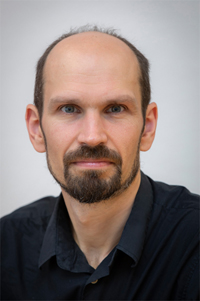
Ramin HasaniView profile
Researcher
Ramin Hasani is a researcher at TU Wien's Cyber-Physical Systems department. He holds a Dr.techn. (Doctor of Engineering) and specializes in machine learning applications for robotics, control systems, and biologically-inspired neural networks. His work focuses on developing interpretable neural architectures like Liquid Time-Constant Networks and Neural Circuit Policies, emphasizing safety and stability in autonomous systems. Hasani's research bridges neural network theory with practical robotics challenges, including autonomous racing, medical data analysis, and adversarial robustness. Key research areas include continuous-time neural networks, formal verification of neural ODEs, and bio-inspired control mechanisms derived from biological neural circuits (e.g., Caenorhabditis elegans). He collaborates extensively with institutions like MIT and ETH Zurich, contributing to projects in health-monitoring systems and end-to-end robot learning frameworks. His publications consistently address real-world challenges such as sepsis prediction via reinforcement learning and robust CNN architectures for image classification. Recent work highlights include developing stable recurrent networks through Gershgorin loss functions and advancing zero-shot transfer learning for autonomous systems. Hasani's interdisciplinary approach integrates principles from neuroscience, control theory, and machine learning to create auditable, high-performance AI solutions for cyber-physical environments.