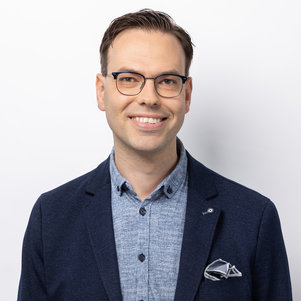
Univ.-Prof. Dr. Hannes Bernien is a Research Director at the Institut für Quantenoptik und Quanteninformation, University of Innsbruck. His work focuses on quantum information science, leveraging neutral atom arrays for quantum computing, simulation, and networking. Key research areas include scalable quantum systems, entanglement engineering, and hybrid quantum technologies. His lab develops platforms like Rydberg atom arrays and nanophotonic interfaces for quantum networks. Notable achievements include loophole-free Bell inequality violations and Schrödinger cat state generation. He has been honored as the CLEO 2024 Gordon Memorial Speaker. PhD students advised: Ka Hui Goh, Shankar G. Menon, Dahlia Ghoshal, and others. Postdocs: Justus Brüggenjürgen, Peng Yin. Recent publications emphasize error-correctable quantum RAM, deterministic entanglement distillation, and hybrid quantum repeaters. His team explores nonergodic chiral dynamics and dual-species Rydberg arrays, advancing both theoretical and experimental quantum frontiers.
David Maresca is an Associate Professor in the Imaging Physics department at the Faculty of Applied Sciences, Delft University of Technology. His research focuses on the intersection of ultrasound imaging physics and molecular engineering, with the goal of enabling ultrasound imaging of cells across space and time in living opaque organs. His research interests include: Biomolecular acoustic sensors Functional ultrasound neuroimaging Transcranial ultrasound Nonlinear ultrasound imaging Engineering of acoustic biosensors Ultrasound imaging of brain function Dr. Maresca's work centers on developing technologies that combine ultrasound physics with molecular engineering to create new imaging capabilities. His lab pioneers approaches to image cells within opaque organs using ultrasound, with applications in neuroscience and biomedical imaging. His research spans from fundamental ultrasound physics to the development of acoustic biosensors and imaging techniques that can detect cellular processes. His recent publications demonstrate a strong focus on advancing ultrasound imaging capabilities, particularly in nonlinear ultrasound techniques, contrast-enhanced ultrasound, and applications in neuroimaging. His work shows increasing interdisciplinary collaboration across physics, engineering, and neuroscience. Dr. Maresca has received recognition including the HFSP Cross-Disciplinary Fellowship. His academic background includes a Ph.D. in Biomedical Engineering from Erasmus MC, an M.Sc. in Acoustics, and a Master's degree in Physics from Université Paris Diderot. He completed postdoctoral work at Caltech and Institut Langevin, ESPCI. His research is supported by collaborations across institutions, with recent work involving researchers from multiple universities and research centers. Dr. Maresca's lab is actively contributing to advancing ultrasound imaging technology and its applications in biomedical research.
Rui Pedro Carvalho Lima de Sousa is a postdoctoral researcher at the Textile Science and Technology Center (2C2T) of the University of Minho. His career focuses on organic-inorganic hybrid materials for sensors and advanced textile applications, with expertise in sol-gel chemistry , electrospinning , and optical sensing . PhD in Applied Chemistry (University of Minho, 2023), thesis: "Sol-gel based optical sensors for monitoring of biocides and other analytes" MSc in Chemical Characterization and Analysis Techniques (2018), BSc in Biochemistry (2016) Research interests span: Development of smart textile materials for filtration and adsorption via electrospinning Biocide detection using quinoline and hydrazone derivatives Hybrid sol-gel matrices for corrosion protection and concrete durability monitoring Integration of machine learning in sensor design Recent publications highlight work in NIR fluorescent probes , ion chemosensors , and environmental monitoring applications. Key collaborations include projects with the Institute of Systems Engineering and Computers (INESC) and University of Trás-os-Montes . Scientific recognitions : Best Doctoral Thesis in Chemistry (PYCA Award) FlashChem Photography Contest (2024) Advising includes mentoring students like Oscar Martinez-Rico and Joana Rocha on electrospun membrane projects, with past contributions to organic-inorganic hybrid material research.
Prof. Vivek Pachauri holds the Chair of Materials for Electrical Engineering I at RWTH Aachen University, leading research at the Institute of Materials for Electrical Engineering. His work bridges materials science and bioelectronics, focusing on graphene-based transducers, silicon nanowires, and metal-organic frameworks (MOFs) for biosensing applications. University: RWTH Aachen University (Germany) Department: Materials for Electrical Engineering Academic Rank: Professor Email: pachauri@iwe1.rwth-aachen.de His research spans nanoscale sensor development , microfluidic platforms , and bioelectronic systems , with applications in disease detection, environmental monitoring, and cellular analysis. Recent work highlights programmable molecular amplification and multi-parametric point-of-care diagnostics. Key trends in his publications include: Advanced 2D materials (graphene oxide, MoS 2 ) Metal-organic frameworks for fluorescence sensing Microfluidic integration of biosensors Plasmonic and Fano resonance-based detection Low-cost cellular assays using organic electronics
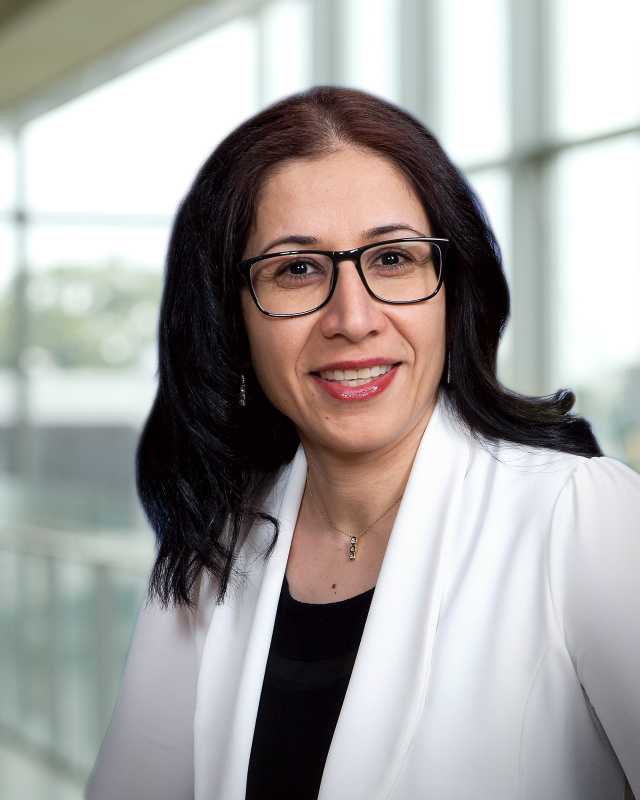
Dr. Arezoo Emadi is an Associate Professor in the Department of Electrical and Computer Engineering at the University of Windsor. She leads the electrical Micro and Nano Devices and Sensors (eMinds) Research Lab, focusing on MEMS-based smart sensor systems for biomedical, environmental, agricultural, and personal electronics applications. Her research spans MEMS sensors, bioMEMS, ultrasonic imaging, and microfabrication technologies . Education: Ph.D., University of Manitoba; Licentiate Degree, Chalmers University of Technology (Sweden). Affiliations: Senior Member of IEEE, Professional Engineer (PEng Ontario), and advisor for IEEE Women in Engineering (WIE). Her research interests emphasize MEMS transducers, chemical sensors, and e-nose systems . Key projects include developing next-generation sensors for medical diagnostics, environmental monitoring, and non-destructive testing. Collaborations with industry and academic partners drive applied innovations. Dr. Emadi has supervised numerous students, including PhD and MASc candidates, undergraduates, and international researchers. Her lab manages advanced fabrication processes and maintains state-of-the-art equipment for MEMS development. Awards: Senior Member, IEEE Professional Engineer (PEng) designation Her lab’s work has produced over 100 publications and patents, including recent advancements in QCM sensors and ultrasonic transduction systems. Current opportunities exist for graduate students and postdocs in MEMS design and sensor integration.
David Brown, PhD is Professor of Electrical & Computer Engineering at the University of Massachusetts Dartmouth, with adjunct appointments in Physics and Mechanical Engineering. He maintains an active research program in engineering acoustics with over three decades of experience in optical and electrical acoustics domains. His educational background includes a PhD (1991) and MS (1988) in Engineering Acoustics from the Naval Postgraduate School, and a BS in Electrical Engineering (1985) from the University of Rhode Island. His teaching portfolio spans acoustic wave theory, electromagnetics, and dissertation research supervision across multiple degree programs including BS, MS, and PhD in Electrical Engineering. Engineering Acoustics Transducer Modeling Underwater Acoustic Sensor Development Fiber-Optic Detection Systems Acoustic Radiation Patterns SONAR and RADAR Environments Professor Brown has secured over $4 million in research funding, including a recent $366,436 award from the Office of Naval Research for acoustic radiation pattern research. His scholarly output exceeds 200 publications, presentations, and technical reports. Fellow of the Acoustical Society of America (2013) He actively mentors undergraduate and graduate students in engineering acoustics, having previously supervised ten years of Navy DoD research personnel. Brown was instrumental in founding the university's underwater acoustics/optics test facility and the ATMC/CIE Center for Advanced Technology and Manufacturing. As President of the Southern New England (Narragansett) Chapter of the ASA, he serves on multiple technical committees including Physical Acoustics, Engineering Acoustics, and Education in Acoustics.
Simone Ferrari is a Fixed-term Assistant Professor in the Department of Energy (DENERG) at Politecnico di Torino. He is a member of the Interdepartmental Center PEIC (Power Electronics Innovation Center) and affiliated with the College of Electrical and Energy Engineering and College of Mechanical, Aerospace and Automotive Engineering as an invited member. His research focuses on electric machines, finite element analysis, and open-source software development for electromagnetic systems. He has supervised multiple PhD students in electrical engineering and has contributed to commercial consulting projects such as the design of electric motors for lifting applications and supervision of high-power motor development. Teaching responsibilities include courses on Propulsion of Hybrid and Electric Vehicles, Applied Electromagnetism, and Electrical Machines across multiple academic years. His work emphasizes multiphysics simulation, data-driven modeling, and the development of efficient traction motors for electric vehicles. Key research outputs include advancements in flux-map-based modeling, fault-tolerant motor designs, and thermal/structural scaling techniques for synchronous machines. Dr. Ferrari holds a patent for a method to identify spatial harmonic flux and torque maps without torque transducers. His recent publications (2024-2025) address challenges in electric motor efficiency, fault performance, and NVH mitigation, reflecting his commitment to advancing sustainable power electronics and clean energy technologies aligned with SDGs 7 and 9.
Henrik Bruus is a Professor and Section Head in the Department of Physics at the Technical University of Denmark (DTU). He leads the Section of Biophysics and Fluids and the Theoretical Microfluidics Group, focusing on theoretical modeling in microfluidics, acoustofluidics, and nanofluidics. His academic journey began at the Niels Bohr Institute, University of Copenhagen, where he earned his B.Sc., M.Sc., and Ph.D. in physics. He has held research and faculty positions at NORDITA, Yale University, CNRS-CRTBT, and DTU, transitioning from DTU Nanotech to DTU Physics in 2012. He has held visiting professorships at Harvard, MIT, Princeton, and several French institutions. B.Sc. in Mathematics and Physics, University of Copenhagen (1984) M.Sc. in Physics, University of Copenhagen (1986) Ph.D. in Physics, University of Copenhagen (1990) Henrik Bruus's research lies at the intersection of theoretical physics and engineering, with a strong emphasis on microfluidics, acoustofluidics, and biophysics . His work explores acoustic radiation forces, electrokinetics, streaming, and particle manipulation in microsystems. He is renowned for his Acoustofluidics tutorial series published in Lab on a Chip. His research contributes to UN Sustainable Development Goals in energy and innovation. He has published over 248 works, including in Physical Review , Lab on a Chip , and Science Advances . The recent publications highlight a consistent focus on acoustofluidic phenomena , particularly the modeling and control of acoustic streaming, radiation forces, and thermoviscous effects in microchannels. His work bridges theoretical analysis with experimental validation, often involving collaborations across disciplines. Key themes include ultrasound manipulation of particles and cells, optimization of microreactors, and development of novel acoustofluidic devices using thin-film transducers. Scientific Awards: DTU Teacher of the Year (2013) Elected Fellow of the American Physical Society (since 2011) Henrik Bruus actively supervises Ph.D. students and leads multiple research projects in biophysics and microfluidics. He has been the main supervisor or co-supervisor on projects related to plant biophysics, micro- and nanochannel flows, and electroacoustic actuation. His international collaborations span across Europe and the U.S., and he has delivered numerous conference presentations, including at APS meetings and specialized workshops. He is a central figure in the global acoustofluidics research community. He leads the Theoretical Microfluidics Group at DTU Physics, which focuses on computational and analytical modeling of fluid behavior at micro- and nanoscales. The group collaborates closely with experimental teams to develop and validate theoretical frameworks for lab-on-a-chip systems. Their work supports applications in biomedical diagnostics, cell sorting, and material science.
Wolfgang H. Sachse is a Professor at Cornell University's College of Engineering, specializing in ultrasonic wave applications for materials characterization. He contributes to the graduate fields of Mechanical Engineering, Theoretical and Applied Mechanics, and Materials Science and Engineering, with visiting roles at NIST and the University of Tokyo. B.S. in Physics from Penn State University M.S.E. and Ph.D. in Mechanics and Materials from Johns Hopkins University His research pioneered active/passive ultrasonic techniques for flaw detection, dynamic fracture analysis, and stress measurement in metals. Early work on laser-spark-X-ray ultrasound generation and point-source/point-receiver methods advanced anisotropic material characterization. Recent innovations include air-coupled ultrasonics for powders and acoustic microscopy of bio-materials. Collaborating with Igor Grabec, he developed intelligent measurement systems described in their Springer-Verlag monograph Synergetics of Measurement, Prediction and Control (1997). His publications span geophysical acoustics (2015), transducer calibration (2015), crystal wave phenomena (2013), and conference proceedings (2008-2010), reflecting interdisciplinary impacts across Acoustics, Materials Science, and Physics. The Golden Whistle (2013) - International Congress on Ultrasonics' highest award German Academic Exchange Fellow Humboldt Fellow Editor-in-Chief of Ultrasonics (Elsevier) Former Editor-in-Chief of Materials Evaluation As an educator, he developed Cornell's acclaimed ENGRI 118 Design Integration course and teaches Mechanics of Solids (250+ students) and Mechanical Properties Laboratory (140+ students). His laboratory innovations include two patents for advanced acoustic measurement systems.
Hans-Martin Schwab is an Assistant Professor at the Biomedical Engineering Department of Eindhoven University of Technology (TU/e), affiliated with the Eindhoven MedTech Innovation Center and the Photoacoustics and Ultrasound Laboratory. His research focuses on advanced ultrasound and photoacoustic imaging techniques, including multi-perspective imaging, model-based artifact reduction, and deep learning-assisted signal processing. He contributes to UN Sustainable Development Goals through innovations in medical imaging technologies. His expertise spans transducer engineering, circumferential strain imaging, and ultrasound reconstruction methods. Recent collaborations involve international teams working on applications like vascular strain analysis and tissue regeneration using ultrasound phased arrays. Over 28 publications since 2020 highlight contributions to photoacoustic imaging systems, numerical simulations, and clinical ultrasound advancements. Prof. Schwab teaches courses on ultrasound imaging, clinical measurements, and blood oxygenation imaging. He has supervised numerous projects, including DBL initiatives on light/sound integration for medical imaging. His work emphasizes translating theoretical models into practical clinical tools, with a focus on improving diagnostic accuracy and patient outcomes.
Professor Kamil Ekinci is a faculty member in the Department of Mechanical Engineering at Boston University, with additional affiliations in Materials Science & Engineering and the Photonics Center. He holds a PhD from Brown University and specializes in nanoscale phenomena, including nanomechanics, nanofluidics, and nanophotonics. His research integrates advanced nanofabrication and ultrasensitive measurement techniques to study fundamental physical and biological processes. His research group explores applications in biotechnology, such as developing ultrasensitive measurement tools for antibiotic susceptibility testing and cardiac tissue engineering. Notable achievements include the NSF CAREER Award (2007) and pioneering work on nanofluidic systems. Collaborations span disciplines, including the School of Medicine and institutions like Argonne National Laboratory. Recent projects focus on transitional fluid dynamics, optomechanical transducers, and bacterial movement analysis. The group maintains labs in the Photonics Center and actively seeks graduate students and postdocs in NEMS and related fields.
Romano Giampaolo is a Full Professor at the Department of Mechanics and Aeronautics, Sapienza University of Rome. His research focuses on fluid dynamics, turbulence, and energy systems, with notable contributions to experimental methods like PIV (Particle Image Velocimetry). He explores topics ranging from aeroelastic energy harvesters to granular flows and biomedical applications of fluid dynamics. His work also occasionally intersects with corporate governance and financial structures, including studies on SPACs. Key research areas include turbulence modeling, energy conversion systems (e.g., piezoelectric and wind turbines), and fluid-structure interactions. His experimental investigations often involve high-resolution flow measurements and interdisciplinary applications, such as vascular aneurysm sealing systems and microchannel heat transfer devices. Recent articles highlight advancements in understanding multiphase flow dynamics, high-pressure methane jet behavior, and the structural effects of obstacles on fluid jets. His work bridges theoretical fluid mechanics with practical engineering solutions, particularly in renewable energy and medical device development.
Richard Christenson is a Professor in the School of Civil and Environmental Engineering at the University of Connecticut. He holds a Ph.D. from the University of Notre Dame (2002). His research focuses on Smart Structures, Structural Control, Vibration Mitigation, and Real-Time Hybrid Testing. Key areas include advanced damping systems like MR dampers, bridge weigh-in-motion (BWIM) systems, and structural health monitoring (SHM). Education: Ph.D., Civil Engineering, University of Notre Dame, 2002 Research Interests: Real-time hybrid simulation methodologies for seismic and aeroelastic systems Development of vibration mitigation devices using magneto-rheological (MR) dampers Integration of sensor technologies (e.g., infrasound, video analytics) for infrastructure monitoring Optimization of bridge weigh-in-motion systems for infrastructure safety Research Contributions: His work spans laboratory-scale experiments to large-scale infrastructure projects, including collaborations with the Connecticut Transportation Institute and National Institute for Undersea Vehicle Technology (NIUVT). Notable applications include earthquake-resistant building systems and advanced BWIM methodologies for highway bridges. Grants & Collaborations: Active in federal and state-funded initiatives, including the NSF EAGER/Collaborative Research on aeroelastic real-time hybrid simulation and the Connecticut Department of Transportation’s BWIM programs. Labs & Facilities: Oversees laboratory research in real-time hybrid testing, structural dynamics, and smart materials at UConn’s Castleman Building. Collaborates with the NIUVT for underwater vehicle technology advancements.
Prof. Mario Kupnik is a Full Professor at the Technische Universität Darmstadt , leading the Measurement and Sensor Technology Group within the Department of Electrical Engineering and Information Technology. His academic career includes roles at Stanford University (2005–2011) and Brandenburgische Technische Universität Cottbus (2011–2014). He holds a doctorate from Montanuniversität Leoben (2000–2004) and a master's in Telematics from Graz University of Technology. His research focuses on micromachined sensors and actuators , ultrasonic and electroacoustic systems , and non-destructive testing . He pioneers innovations in wearable sensors, biomedical applications, and additive manufacturing for sensor integration. Notable contributions include air-coupled ultrasonic transducers, 3D-printed ferroelectret sensors, and robotics for STEM education. Recent work emphasizes biodegradable sensors , acousto-optic modulation , and multi-parameter medical measurement systems . His projects span from fundamental material science to applied engineering solutions, often leveraging open-source hardware. Kupnik’s labs integrate interdisciplinary approaches, combining electrical engineering, materials science, and biomedical engineering.
Daan Brinks is an Assistant Professor at Delft University of Technology in the Department of Imaging Physics within the Faculty of Applied Sciences. He leads the Brinks Lab, which operates at the intersection of physics, biochemistry, optics, mathematics, and nanofabrication, focusing on developing novel imaging tools for neuroscience applications. His research spans both fundamental biophysics and practical biomedical applications, with significant collaborations including Erasmus MC. Faculty of Applied Sciences, Delft University of Technology Department of Imaging Physics (ImPhys) Brinks Lab leader Founding member of BIOlab (Biomedical Intervention Optimization lab) Lead of a convergence Health and Technology Consortium Dr. Brinks' academic journey began with an MSc in Molecular Nanophotonics from the University of Twente (2002-2007), followed by a PhD at ICFO Institute Barcelona (2007-2012). He then completed prestigious fellowships at Harvard University as a Rubicon Fellow (2012-2014) and HMMI Fellow (2014-2017) before joining TU Delft as an Assistant Professor in 2017. His research interests center on voltage imaging techniques to monitor neural activity, optogenetics for neural control, nonlinear optical microscopy for enhanced resolution, and AI applications in bioimaging . The lab develops tools to transduce information in neurons into detectable photons, addressing questions from biophysical principles to behavioral consequences and from subcellular compartments to complete organisms. Current projects include Voltage nanoscopy using plasmonic enhancement, Absolute Voltage Imaging through fluorescence lifetime measurements, Multiphoton Voltage Imaging for deep tissue applications, and advanced image analysis with machine learning. The publications reveal a strong focus on developing novel optical tools for neuroscience, particularly genetically encoded voltage indicators and plasmonic enhancement techniques. His work bridges physics, molecular biology, and neuroscience, with applications ranging from fundamental understanding of neural circuits to cancer cell identification. The research shows progression from fundamental physics (early career) to increasingly applied neuroscience and biomedical applications (recent work), with publications in top journals including Nature, Science Advances, and Nature Biomedical Engineering. Rubicon Fellow (2012-2014) HMMI Fellow (2014-2017) Publications in Nature, Science Advances, Nature Biomedical Engineering Media coverage in major outlets including Delta TU Delft and Trouw Dr. Brinks actively mentors students and researchers, with his lab welcoming enthusiastic students, PhD candidates, and postdocs interested in multidisciplinary projects at the junction of optics, molecular biology, and neuroscience. His research has received external funding through fellowships and likely additional grants supporting his lab's operations. The Brinks Lab collaborates extensively with both academic and medical institutions, particularly evident in the cancer cell research with Erasmus MC. The lab maintains strong physical infrastructure including advanced microscopy systems and nanofabrication capabilities, supporting their work in voltage imaging, plasmonics, and single-cell analysis. They have developed several hardware and software interfaces for automated interaction with excitable tissues and model dynamics in hybrid systems, reflecting their interdisciplinary approach to neuroscience questions.

/prod01/production-cdn-pxl/media/umassdartmouth/college-of-engineering/ece-dept/faculty-students/Brown,David_002.jpg)