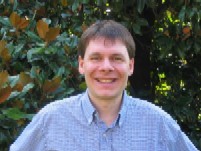
John Yukich is an Associate Professor of Physics at Davidson College, where he teaches courses ranging from introductory classes to advanced theoretical and experimental physics. His research spans atomic, molecular, and optical (AMO) physics and biophysics, involving hands-on experimental work with lasers, optics, and ultra-high vacuum systems. Ph.D. from University of Virginia B.S. from Kenyon College In AMO physics, Yukich conducts fundamental spectroscopy experiments on negative ions, collaborating with institutions like Denison University and Bard College. In biophysics, he investigates physical properties of Chlamydomonas reinhardtii algae and Nephila clavipes spider silk, mentoring students in both areas. He emphasizes mathematical rigor in advanced courses and engages non-science majors through general-education offerings.
Tomas Palacios is a Professor of Electrical Engineering at the Massachusetts Institute of Technology (MIT) , where he directs the Center for Graphene Devices and 2D Systems and leads the Microsystems Technology Laboratories (MTL). His research focuses on pushing the boundaries of microelectronics through novel semiconductor materials and device architectures, including Gallium Nitride (GaN) and 2D materials like graphene and molybdenum disulfide (MoS2). Professor, MIT Electrical Engineering and Computer Science Director, MIT Center for Graphene Devices and 2D Systems Clarence J. LeBel Professor, MIT Faculty Director, Northeast Microelectronics Internship Program (NMIP) Research Interests span multiple cutting-edge domains: High-frequency electronics (>300 GHz) for 6G and quantum applications High-voltage power devices (600V–10kV) for energy conversion Post-silicon logic devices using 2D materials High-temperature electronics (e.g., Venus rover applications) Distributed neural networks on large-area 2D materials Graphene-based biosensors and chemical detection systems Scientific Contributions include: Double recipient of the IEEE George Smith Award for groundbreaking GaN transistor work Co-invented first MoS2 electronic circuits Developed world’s first Wi-Fi-to-electricity conversion antenna Led MIT’s Microsystems Technology Laboratories since 2021 Advising Philosophy emphasizes cross-layer expertise, with students gaining experience from materials synthesis to system-level prototyping. His lab has incubated startups like Vertical Horizons , focused on GaN power devices for AI and EVs.
David A. Smith is an Associate Professor at the Khoury College of Computer Sciences, Northeastern University. His research focuses on Natural Language Processing (NLP) and computational linguistics, with applications in machine translation, information retrieval, digital humanities, and social sciences. He is a founding member of the NULab for Texts, Maps, and Networks, a research center focused on digital humanities and computational social sciences. Smith's work has been funded by grants from the Mellon Foundation, NEH, and IMLS, supporting projects such as the Viral Texts initiative analyzing 19th-century newspaper networks and the Oceanic Exchanges project tracking transnational information flows. He has contributed to advancements in OCR for historical texts, text reuse detection, and computational analysis of classical languages. He has advised numerous PhD students, including Shijia Liu, Si Wu, and Ryan Muther, and teaches courses like Natural Language Processing and Information Retrieval. His research has been featured in outlets like Wired and the Economist .
Lourdes Agapito is a Professor of 3D Vision at the Department of Computer Science, University College London (UCL), within the Faculty of Engineering Sciences. She leads research in Non-Rigid Structure from Motion (NR-SFM) and 3D reconstruction from monocular video sequences. Her work addresses dynamic scenes, deformable objects, and articulated structures, with applications in robotics and computer vision. She holds an ERC Starting Grant (2008–2014) and led the EU Horizon 2020-funded Second Hands project (2014–2019), collaborating with institutions like EPFL and KIT to develop robots with 3D visual perception for maintenance tasks. Her research group focuses on dense optical flow estimation, video registration, and deformable tracking. Agapito’s research interests include monocular 3D reconstruction, non-rigid motion analysis, and neural approaches to 3D modeling. She has supervised multiple PhD students and postdocs, including notable researchers such as Ravi Garg and Marco Paladini (Sullivan Prize recipient). Her contributions to conferences include roles as Program Chair for CVPR 2016 and CVPR 2017, and she has authored influential papers on topics like Video-Popup (ECCV 2014) and Modal Space (CVPR 2017). Current projects involve advancing neural parametric models and real-time 3D reconstruction techniques. Awards include the ERC Starting Grant and recognition for her team’s work in non-rigid reconstruction. She actively mentors students and collaborates on grants, with recent openings for postdocs and PhD candidates in 3D vision and robotics.
Hang Lu is a Professor and holds the Cecil J. "Pete" Silas Chair of Chemical & Biomolecular Engineering at the Georgia Institute of Technology. Dr. Lu also holds a Love Family Professorship and leads the Lµ Fluidics Group, which focuses on engineering microfluidic systems and machine learning tools to address complex questions in neuroscience, developmental biology, and cell biology that are difficult to address with conventional techniques. Dr. Lu's research lies at the intersection of engineering and biology, with primary interests including: Microfluidic systems for high-throughput screens and image-based genetics and genomics Systems biology: large-scale experimentation and data mining Microtechnologies for optical stimulation and optical recording Big data, machine vision, and automation Developmental neurobiology, behavioral neurobiology, and systems neuroscience Cancer biology, immunology, embryonic development, and stem cells Her laboratory engineers microfluidic devices and BioMEMS to study neuroscience, genetics, cancer biology, and biotechnology. These miniaturized Lab-on-a-chip tools operate at scales comparable to biological systems, leveraging unique micro and nano-scale phenomena to gather large-scale quantitative data about complex biological systems. Current projects include Microfluidics for Life Sciences, Optical Neuron Recordings and Manipulations, Machine Learning Tools for Neuroscience, Measuring and Modeling Behavior, and High-throughput, High-content Cell-based Assays. Analysis of Dr. Lu's recent publications (2024-2025) reveals a strong trend toward integrating microfluidics with advanced computational methods: Development of deep learning frameworks for biological image analysis Advanced neuron tracking and functional imaging techniques Non-invasive characterization of 3D organoid cultures Sophisticated neuromechanical modeling of locomotion Microfluidic temperature control systems for in vivo studies Label-free imaging pipelines for neural development Dr. Lu's significant professional honors include: Cecil J. "Pete" Silas Chair of Chemical & Biomolecular Engineering Love Family Professorship The Lµ Fluidics Group actively mentors students and postdocs, currently accepting new postdoctoral researchers. The lab receives substantial funding for interdisciplinary projects at the engineering-biology interface, with research implications spanning fundamental biological understanding to therapeutic development. The group operates within Georgia Tech's School of Chemical & Biomolecular Engineering, with specialized facilities for microfluidic device fabrication, biological experimentation, and advanced imaging, maintaining strong collaborative ties across engineering, neuroscience, and biological disciplines.
Chris Atkeson is a Professor at the Robotics Institute of Carnegie Mellon University. His research focuses on achieving human-level competence in machines through humanoid robotics and human-aware environments. He explores machine learning techniques such as reinforcement learning, nonparametric methods, and memory-based learning to develop robots capable of complex tasks like manipulation, locomotion, and perception. His work emphasizes bridging the gap between simulation and real-world applications (sim2real transfer), with contributions to tactile sensing (e.g., FingerVision), dynamic walking control, and human-robot collaboration. Notable projects include participation in the DARPA Robotics Challenge with Team WPI-CMU, where his team developed reliable humanoid behavior for disaster response scenarios. Atkeson’s research spans robotics, computer vision, and control systems, with a focus on enabling robots to perceive, learn, and act in unstructured environments. His recent work includes advancements in 3D scene capture, soft robotics, and energy-based planning for compositional tasks.
Daniel W. Bliss is a Professor in the School of Electrical, Computer and Energy Engineering at Arizona State University and Director of ASU's Center for Wireless Information Systems and Computational Architectures (WISCA). With over $50 million in research funding as principal investigator from organizations including DARPA, ONR, Google, and Airbus, his work bridges theoretical foundations with practical implementations across multiple domains of wireless systems. Dr. Bliss received his educational foundation with a B.S.E.E. from Arizona State University (1989), followed by M.S. and Ph.D. degrees in Physics from the University of California-San Diego (1995, 1997). His academic journey includes significant industry experience at General Dynamics (1989-1993) and MIT Lincoln Laboratory (1997-2012) before joining ASU. His research program focuses on advanced wireless systems spanning radar, communications, precision positioning, computational architectures, and medical monitoring applications. Bliss employs information theory, estimation theory, and signal processing to develop novel system concepts with disruptive capabilities. Current research emphasizes RF convergence, integrated sensing and communications, and anticipatory medical analytics using wireless technologies, with particular focus on extracting physiological data from radar signals. Analysis of recent publications reveals a strong trend toward integrated sensing and communications systems, particularly utilizing mmWave and radar technologies for medical monitoring applications. His work increasingly bridges traditional communications and radar domains while expanding into physiological monitoring, demonstrating a clear trajectory toward convergence of wireless technologies for healthcare applications and remote vital sign detection. Dr. Bliss has received significant recognition for his contributions: Fellow of the IEEE (2015) 2021 IEEE Warren D. White Award for Excellence in Radar Engineering 2016-2017 Top 5% Teaching Award at ASU 2017 ASU Fulton Engineering Exemplar Faculty As a dedicated mentor, Dr. Bliss has supervised numerous graduate students through successful dissertation and thesis defenses across both PhD and Master's programs. His research portfolio includes substantial funding from diverse sources with over $50 million secured as principal investigator. Current projects include the $17M DARPA DASH project focused on advanced software-reconfigurable heterogeneous SoCs for next-generation RF systems, and multiple initiatives in contactless vital sign monitoring using radar technologies. Dr. Bliss leads the BLISS Lab and serves as director of WISCA, fostering interdisciplinary research in wireless systems. His team includes researchers working on distributed coherent systems, MIMO radar, RF convergence, and medical monitoring applications, with recent successes including the Making Waves team that tied for first place in the Air Force Spark Tank challenge. He has founded two startup companies: DASH Tech Integrated Circuits Company and the Big Little Sensor Company, focusing on high-performance embedded processing and small-scale radar physiological monitoring, respectively.
Professor Ulrik Lund Andersen heads the quantum information group at DTU Physics, Technical University of Denmark. His research develops quantum technologies including quantum computation, secure communication, and quantum-enhanced measurement systems. His group generates entangled optical states and investigates diamond-photon interactions for quantum nonlinearities. Key research areas: Quantum computing architectures Continuous-variable quantum information Quantum key distribution Quantum-enhanced sensing Solid-state quantum systems Recent work advances error correction, quantum state engineering, and quantum sensing algorithms. Publications demonstrate consistent focus on practical quantum technology implementation. Awards include multiple Sapere Aude research grants and the Eliteforsk Award from the Danish Ministry of Science.
Alex Wong is an Assistant Professor of Computer Science at Yale University, specializing in computer vision, robotics, and medical imaging. His research focuses on sensor fusion, unsupervised learning, 3D vision, robust perception under adverse conditions, and medical image analysis. He holds degrees from the University of California, Los Angeles (UCLA), including a B.S., M.S., and Ph.D. in Computer Science. Wong’s work bridges theoretical advances with practical applications, particularly in depth estimation, autonomous systems, and medical diagnostics. He has received prestigious awards such as the NeurIPS Outstanding Student Paper Award (2011) and the ICRA Best Paper Award in Robot Vision (2019). His research often addresses challenges in unstructured environments, emphasizing robustness and adaptability. Recent projects include developing novel frameworks for unsupervised depth completion, adversarial robustness in vision systems, and multimodal fusion techniques. His contributions span conferences like CVPR, ICCV, and ICRA, with a strong focus on advancing AI for real-world applications in healthcare and robotics. Education: B.S., Computer Science, UCLA M.S., Computer Science, UCLA Ph.D., Computer Science, UCLA Awards: NeurIPS Outstanding Student Paper Award (2011) ICRA Best Paper Award in Robot Vision (2019) His lab at Yale Engineering focuses on AI-driven solutions for perception challenges, collaborating across disciplines to advance medical imaging and autonomous systems. Current efforts explore generative models, continual learning, and vision-language integration for robust scene understanding.
Deva Ramanan is a Professor at the Robotics Institute of Carnegie Melllon University, where he leads research in computer vision and machine learning. His work focuses on modeling human visual perception, leveraging large-scale visual data, and developing systems for 3D understanding, neural rendering, and autonomous systems. He advises a large group of PhD students and has mentored numerous postdoctoral researchers now in leading roles across industry and academia. His research interests include computer vision, machine learning, human perception modeling, 3D scene understanding, neural rendering, autonomous driving, video understanding, and multimodal foundation models. These areas reflect his focus on both foundational models and their application to real-world problems in robotics and AI. The recent publications highlight a strong trend toward multimodal and 3D-aware models, with increasing use of diffusion models, neural fields, and large vision-language systems. Key themes include scene flow, 3D reconstruction from monocular video, autonomous driving perception, and robust evaluation of vision-language models. There is a clear emphasis on both methodological innovation and practical deployment in dynamic environments. Marr Prize, Honorable Mention (ICCV 2021) Best Paper, Honorable Mention (ECCV 2020) Best Paper Finalist (WACV 2024) Best Paper Award (WACV 2016) Best Industrial Paper, Honorable Mention (BMVC 2017) Marr Prize winner (ICCV 2009) Deva Ramanan has advised numerous PhD and master’s students, many of whom are now at top institutions and companies including Apple, Meta, Google, Nvidia, OpenAI, and Princeton. He has received substantial funding from IARPA, DARPA, NSF, Intel, Google, and Facebook for projects in video analytics, dispersed computing, visual cloud systems, and multi-task recognition. His group has developed influential datasets and benchmarks used widely in the community. He leads a vibrant research lab focused on advancing computer vision through deep learning and multimodal integration. His team works on core challenges in perception, including 3D reconstruction, motion modeling, object detection, and scene understanding, with applications in robotics and autonomous systems.
Professor Harry E. Ruda holds the Stanley Meek Chair in Advanced Nanotechnology at the University of Toronto's Faculty of Applied Science and Engineering. He directs the Centre for Advanced Nanotechnology and leads the Electronic-Photonic Materials Group. His research spans semiconductor nanostructures, focusing on nanoelectronics and nanophotonics, with notable contributions to nanowire growth, quantum transport, and plasmonic effects. Education: B.Sc. in Physics, Imperial College London Ph.D. in Physics, MIT His research interests include: Semiconductor nanowire growth via VLS process Quantum transport and spintronics Nonlinear optical effects in quantum dots/nanowires Surface state control through passivation Photonic crystal structures for optical devices Carrier dynamics in low-dimensional systems Recent publications highlight advancements in InAs nanowire sensors, Coulomb impurity effects, photonic crystal design, and hybrid superconducting/semiconductor devices. His work bridges fundamental electron dynamics and applied quantum technologies. Scientific Awards: Fellow, Canadian Academy of Engineering Fellow, Royal Society of Canada Fellow, Institute of Physics (UK) Fellow, Institute of Nanotechnology Fellow, Institution of Engineering and Technology Fellow, Institute of Materials, Minerals and Mining Fellow, Canadian Academy of Engineering Teaching: MSE335: Materials Physics MSE490: Professional Ethics and Practice MSE1023: Quantum Transport
Prof. Dr. Björn Corzilius is a University Professor (W2) of Physical Chemistry at the University of Rostock, Germany, leading the Corzilius group. His research focuses on solid-state NMR spectroscopy, dynamic nuclear polarization (DNP), and applications in biomolecules and materials. He holds affiliations with the Leibniz Institute for Catalysis (LIKAT) and serves on multiple academic boards, including the transregional Collaborative Research Center TRR 386 and the journal Magnetic Resonance . Education: 1999: Studies of Chemistry, TU Darmstadt 2005: Diploma in Physical Chemistry (TU Darmstadt) 2008: Ph.D. in Physical Chemistry (TU Darmstadt) Research Interests: Solid-state NMR, DNP for sensitivity enhancement, paramagnetic metal ions, biomolecular dynamics, and method development. His work bridges theoretical and experimental approaches to advance structural and functional studies of complex systems like proteins, nucleic acids, and catalytic materials. Recent Article Trends: Focus on DNP applications in biomolecular interfaces, novel polarizing agents (e.g., Gd(III) complexes), and methodological advancements like serial polarization transfer and electron-decoupled DNP. Contributions span inorganic chemistry, materials science, and biophysical systems. Awards: Emmy Noether Fellowship (2012) Felix Bloch Lecture (2016) Regitze M. Vold Memorial Prize (2017) Best Ph.D. Supervision (2018) Grants & Labs: Principal Investigator of the Emmy Noether Group (2013–2019), now leading the DNP research team at the University of Rostock. Collaborates closely with LIKAT on catalytic and materials projects. His group actively develops open-access publishing platforms like Magnetic Resonance and hosts international conferences. Labs/Teams: The Corzilius group at the Institute of Chemistry (Rostock) specializes in NMR method development and applications. Associated with LIKAT for interdisciplinary catalysis research.
Sebastian Scherer is an Associate Research Professor at the Robotics Institute (RI), Carnegie Mellon University (CMU), where he leads cutting-edge research in autonomous aerial systems and robotics. His work focuses on enabling unmanned rotorcraft to operate safely and efficiently in cluttered, low-altitude, and extreme environments. Education: Ph.D. in Robotics, Carnegie Mellon University (2010) MS in Robotics, Carnegie Mellon University (2007) BS in Computer Science (Minor in Robotics), Carnegie Mellon University (2004) His research interests span robotics, artificial intelligence, autonomous navigation, obstacle avoidance, SLAM, visual-inertial odometry, energy infrastructure, and public policy . He has made seminal contributions to UAV autonomy, including the first obstacle avoidance for micro aerial vehicles in natural environments (2008) and the first automatic landing zone detection and landing on a full-size helicopter (2010). His recent publications (2023–2025) demonstrate a strong focus on resilient autonomy, multi-robot exploration, foundation models for robotics, and large-scale dataset development. His team has released key datasets like TartanGround , BETTY , and SubT-MRS , and simulation tools like Pegasus Simulator , indicating a systems-level approach to advancing real-world autonomy. The research trends emphasize self-supervised learning, robust perception, risk-aware planning, and multi-modal fusion for off-road and urban environments. Scientific Awards: Popular Science Best of What's New 2010 Award AIAA@Infotech Best Paper Runner-up Award (2010) Siebel Scholar Dr. Scherer has advised numerous students and leads a vibrant research group focused on high-impact robotics applications. He has secured significant grants related to UAV autonomy, energy infrastructure, and urban air mobility. His lab develops experimental infrastructure such as AIrTonomy for testing next-generation autonomous aerial vehicles. He is actively involved in advancing SLAM and localization in extreme environments, notably through participation in the DARPA Subterranean Challenge. His team develops large-scale datasets and benchmarking frameworks to push the boundaries of robustness and generalization in mobile robotics.
Seth Aubin is a Professor of Physics at the College of William & Mary, affiliated with the College of Arts & Sciences. His research focuses on experimental atomic, molecular, and optical physics, with emphases on precision measurements and quantum phenomena. Key projects include developing atom chip technologies for trapping ultracold atoms, Rydberg atom-based sensors for charged particle diagnostics, and francium spectroscopy for weak interaction studies. Education: License de Physique (ENS Paris/MIP), 1994 B.Sc. in Physics, Yale University, 1995 Ph.D. in Physics, SUNY Stony Brook, 2003 Research Themes: Quantum Trapping Techniques: Innovations in AC Zeeman atom chip traps and RF microtraps to suppress potential roughness Rydberg Atom Sensors: Pioneering applications in electron beam profiling and electromagnetic field imaging Franium Spectroscopy: Collaborative work on parity-violation measurements and isotope shift analyses Recent Article Trends: Recent work emphasizes practical implementations of quantum sensors (e.g., charged particle beam diagnostics) and foundational trapping technology advancements. Over 30 peer-reviewed publications since 2018 reflect sustained contributions to atom chip systems and precision measurements. Awards: American Physical Society Fellow (APS Fellow) Grants & Collaborations: Lead PI on atom chip-based interferometry projects Contributing member to the FrPNC collaboration at TRIUMF (atomic parity violation studies) Developed hybrid optical dipole traps for magnetometry applications Labs & Infrastructure: Manages state-of-the-art atomic physics labs at W&M, including ultrahigh-vacuum systems for francium trapping and laser stabilization setups. Active in developing microwave/radio-frequency atom chip platforms for next-generation quantum sensors.
Michel M. Maharbiz is a Professor in the Department of Electrical Engineering and Computer Science at the University of California, Berkeley. He leads research on miniaturized bioelectronic interfaces, including neural dust implants and cyborg insects. He holds affiliations with the Berkeley Sensor & Actuator Center (BSAC), Center for Neural Engineering & Prostheses (CNEP), and SWARM Lab. His education includes a Ph.D. in EECS from UC Berkeley (2003) and a B.S. in EE from Cornell University (1997). Maharbiz's research integrates MEMS, ultrasonic systems, and synthetic biology to develop wireless neural interfaces, implantable sensors, and biohybrid devices. Key focus areas are neural dust technology for peripheral nerve recording, magnetoelastic strain sensors for medical applications, and electrochemical biosensing using bacterial flagellar motors. His publications emphasize neural interfaces, ultrasonic implants, and biomedical monitoring. Recent articles explore ultrasonic power delivery (2025), radiation detectors for oncology (2025), and fracture-healing smart plates (2019). Trends include miniaturization of wireless implants, closed-loop therapeutic systems, and novel biomaterials. Scientific Awards: McKnight Technological Innovations in Neuroscience Award (2017) Chan-Zuckerberg Biohub Investigator (2017) NSF CAREER Award (2009) MIT TR10 Top Emerging Technology (2009) Bakar Fellows Spark Award (2012) He directs the Maharbiz Lab, advancing neural dust and bioelectronic interfaces. Projects include impedance-based fracture monitoring, carbon fiber neural arrays, and hernia repair sensors. Funding includes NSF and industry partnerships for implantable device development.