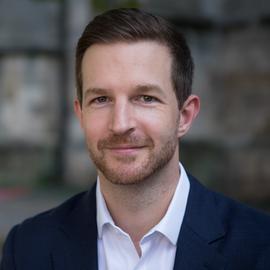
David J. StensrudView profile
Professor
David J. Stensrud is a Professor of Meteorology and Atmospheric Science at Pennsylvania State University, where he has been a faculty member in the Department of Meteorology and Atmospheric Science within the College of Earth and Mineral Sciences. His research focuses on advancing our understanding of severe weather phenomena and improving numerical weather prediction capabilities. Dr. Stensrud received his academic training at Penn State, earning his M.S. in Meteorology in 1985 and his Ph.D. in Meteorology in 1992. His educational background has provided the foundation for his extensive research career focused on atmospheric dynamics and prediction. Dr. Stensrud's research spans several critical areas in atmospheric science, with particular emphasis on mesoscale meteorology , numerical weather prediction , and synoptic meteorology . He is internationally recognized for his work on ensemble forecasting , where he explores how groups of numerical weather prediction models can provide probabilistic forecasts of severe weather events. His research on convective-scale data assimilation aims to improve how observations from radar and satellites are incorporated into high-resolution weather models. Additional research interests include the physical processes behind severe weather phenomena like derechos and heavy rainfall events, the predictability of convective-scale phenomena, and the dynamics of the North American monsoon system. He has made significant contributions to understanding how urban environments influence thunderstorms and how convective systems interact with their larger-scale environment. Analysis of Dr. Stensrud's recent publications reveals a consistent focus on improving severe weather prediction through advanced data assimilation techniques. His work primarily centers on integrating radar and satellite observations into convection-allowing models to enhance forecasting capabilities for thunderstorms and other severe weather phenomena. A notable trend in his research is the increasing sophistication of ensemble approaches to address uncertainties in both initial conditions and model physics. His publications demonstrate a progression from fundamental studies of mesoscale phenomena to increasingly operational applications with potential for real-world forecasting improvements. Dr. Stensrud has served in several important professional capacities that highlight his standing in the meteorological community: Chair, Storm-scale Radar Data Assimilation Workshop, Norman, Oklahoma, October 2011 Member, NOAA/NWS Functional Weather Radar Requirements Integrated Working Team, 2012-2013 Guest Editor, Advances in Meteorology, Special Issue on "Storm-scale data assimilation and NWP", 2013 Commissioner, Scientific and Technological Activities Commission, American Meteorological Society, 2016-2017 Dr. Stensrud has authored more than 150 peer-reviewed publications and a textbook entitled "Parameterization Schemes: Keys to Understanding Numerical Weather Models." He has been actively involved in mentoring graduate students, though specific names of advisees are not provided in the available information. In collaboration with colleagues at Penn State, he helped create a 20-station environmental monitoring network across Pennsylvania with plans to expand to 50+ stations. His research has been supported by various grants that have enabled field campaigns such as the Mesoscale Predictability Experiment (MPEX) in 2013, where his team intercepted severe thunderstorms to collect critical observational data. Dr. Stensrud is involved with several research teams and facilities at Penn State, including work with the Joel N. Myers Weather Center and the Bob and Charlotte Landis Broadcast Room. His research group focuses on analyzing data from dual-polarization radar systems and developing improved techniques for assimilating these observations into convection-allowing models. He collaborates extensively with other researchers at Penn State and beyond, particularly in studies involving the interactions between urban environments and thunderstorms, and the upscale effects of deep convection on larger-scale weather patterns.