Emmanuelle Anne Boehm Courjault is a Lecturer and Scientific Collaborator at École Polytechnique Fédérale de Lausanne (EPFL), affiliated with the School of Engineering (STI) and the Construction Materials Laboratory (LMC). She works within the SMX-ENS teaching unit and participates in intermediate bodies such as the STI Faculty Council and SCI-STI-JVH Group. Her research focuses on materials science, particularly concrete degradation mechanisms like Alkali-Silica Reactions (ASR). PhD Thesis Supervision Teaching in Materials Science and Construction Materials Her research investigates concrete deterioration through advanced microscopy techniques, including Scanning Electron Microscopy (SEM) and Transmission Electron Microscopy (TEM), focusing on early-stage ASR products and their structural and chemical properties. Her work has demonstrated similarities between field and accelerated ASR product analyses, validating laboratory methods for studying concrete degradation. Research includes testing supplementary cementitious materials (fly ash, calcined clay) to mitigate ASR expansion. She is actively involved in teaching and academic governance at EPFL, contributing to the development of materials science education and research protocols.
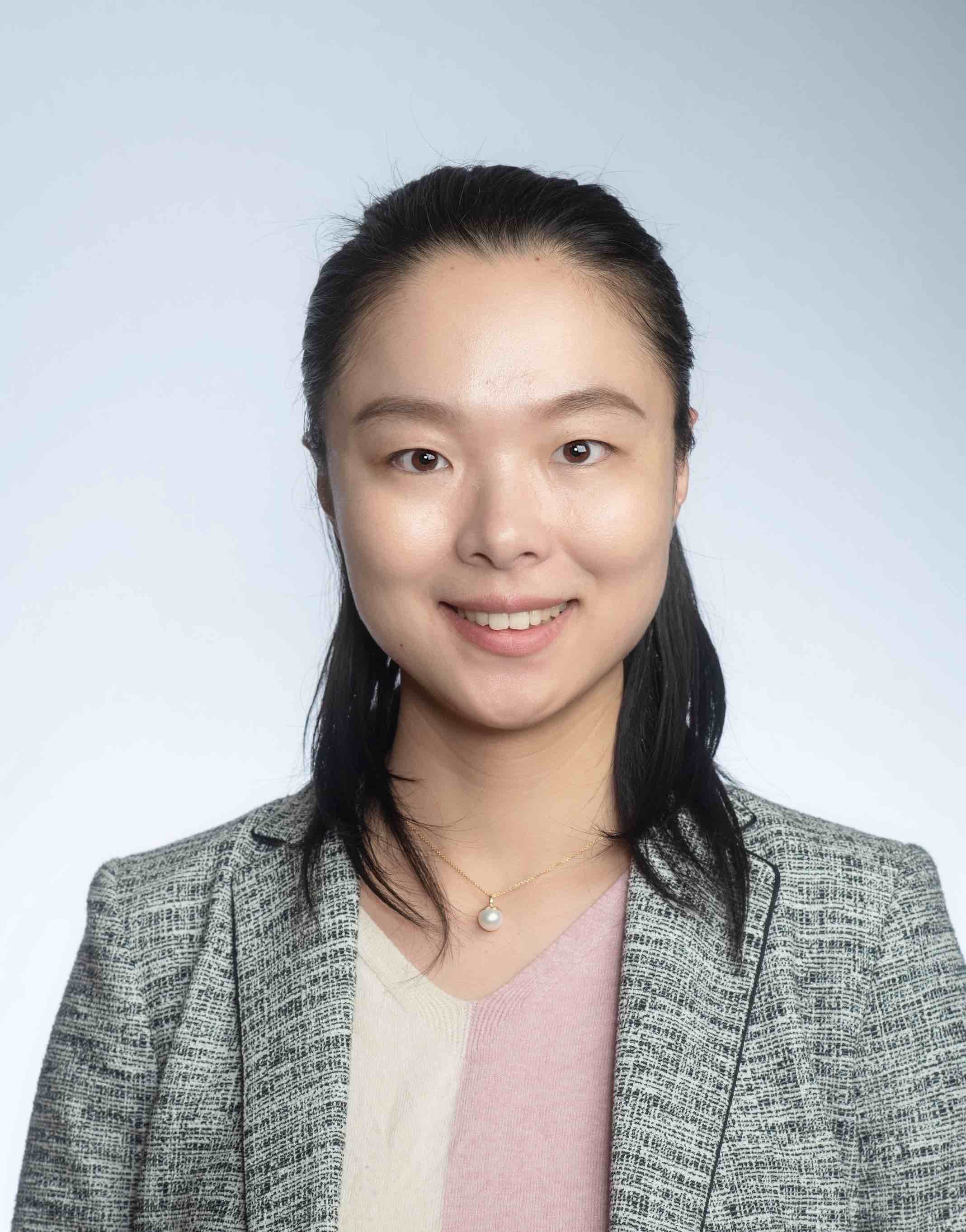
Dr. Hualu Zhou is an Assistant Professor in the Department of Food Science & Technology at the University of Georgia's College of Agricultural & Environmental Sciences. She leads the Laboratory of Future Foods and Biomaterials at the UGA Griffin campus, where her research focuses on developing innovative plant-based food systems and sustainable biomaterials through advanced scientific principles. Dr. Zhou earned her undergraduate degree from Nanchang University (2010-2014), completed her Master's at Xiamen University (2014-2017), and obtained her Ph.D. from the University of Massachusetts Amherst (2017-2021), followed by postdoctoral research there (2021-2023) before joining UGA faculty in 2023. Her research program integrates experimental food science techniques including nanotechnologies, emulsion technologies, and INFOGEST in vitro digestion models with computational approaches such as molecular modeling and data analysis. Current projects focus on: (1) developing plant-based food alternatives using low-energy methods; (2) creating standardized assessment methods for plant-based foods; and (3) exploring food nanotechnology applications for enhanced bioactive compound delivery. Her work emphasizes sustainability, health benefits, and practical food system applications. Analysis of Dr. Zhou's recent publications reveals a strong emphasis on pH-driven processing technologies, plant protein functionality, and innovative delivery systems for bioactive compounds. Her research bridges fundamental food chemistry with practical applications, particularly in developing plant-based meat and dairy alternatives. She maintains extensive collaborations, especially with Dr. D.J. McClements, demonstrating an interdisciplinary approach to solving complex food science challenges. Dr. Zhou has served as a reviewer for numerous scientific journals and has contributed to over 50 reviewed papers in prestigious publications including Food Chemistry, Food Hydrocolloids, and Trends in Food Science & Technology. She also serves on the Early Career Advisory Board for the Journal of Agricultural and Food Chemistry and as an Editorial Board member for Grain & Oil Science and Technology. As an advisor, Dr. Zhou currently mentors Master's student Anthony Suryamiharja, Ph.D. student Minghe Wang, and collaborates with postdoctoral associate Xiping Gong. She has served on graduate committees and trained numerous undergraduate researchers. Her extension work through FoodPIC connects her research with industry partners developing plant-based products like pecan milk and polyphenol-enriched peanut butter. The recently renovated Laboratory of Future Foods and Biomaterials maintains state-of-the-art equipment for food chemistry analysis, including instrumentation for microscopy, HPLC, laser diffraction, and rheometry.
Sergey Kubatkin is a Full Professor at the Quantum Device Physics department within the Department of Microtechnology and Nanoscience (MC2) at Chalmers University of Technology , Sweden. His research focuses on quantum devices , graphene-based electronics , and 2D material heterostructures , with applications in quantum computing and metrology . He leads projects under the Graphene Flagship and collaborates with institutions like the European Commission and Knut and Alice Wallenberg Foundation . Key Research Areas: Quantum transport in graphene and 2D materials Decoherence mechanisms in superconducting circuits Van der Waals heterostructures for electronic devices Near-field scanning microwave microscopy Quantum Hall effect for metrology Recent Publications highlight advancements in epigraphene stability , ultranarrow semiconductor transistors , and spin-echo suppression in quantum circuits . His work addresses challenges in quantum noise reduction and low-power electronic devices , often leveraging collaborations with teams like the European Research Council and Swedish Foundation for Strategic Research . Scientific Contributions include foundational studies on graphene quantum Hall resistance standards and single-molecule electronics . Current projects, such as Quantum geometry and flat bands (2025–2030), aim to explore room-temperature superconductivity through 2D material engineering. His lab develops scalable graphene bolometers and high-precision microwave detectors for quantum technologies.
Thierry Dintzer is a Research Engineer at the University of Strasbourg , affiliated with the Institute of Chemistry and Processes for Energy, Environment and Health (ICPEES) . He serves as Head of the Characterizations Division and manages the MEBCRO platform , specializing in advanced materials characterization techniques. Education : 2002: Doctoral thesis at IPCMS (Institute of Physics and Chemistry of Materials of Strasbourg), Materials Science 1997: Masters in materials with special electronic and magnetic properties 1993: DEUG SSM (Science and Structure of Matter) 1991: Bac D (Biology, Chemistry, Physics) Research Interests : Modeling and understanding catalytic reactions Theoretical study of CO adsorption on Au nanoparticles Electron microscopy (SEM) and X-ray diffraction (XRD) for materials analysis Information systems management and security Practical teaching of materials science Technical Leadership : Head of the MEBCRO platform for characterization infrastructure Responsable du pôle Caractérisations, overseeing scientific equipment and protocols
Dr. Ming Li is an Adjunct Associate Professor at the School of Mechanical and Mining Engineering , The University of Queensland . He focuses on materials science, particularly in energy storage systems. Education : PhD in Chemical Engineering (2017), The University of Queensland. Research Interests : Energy storage materials, electrochemistry, electron microscopy, crystallography, operando characterization, battery degradation mechanisms. Affiliations : Advanced Materials Processing and Manufacturing (AMPAM), Future Autonomous Systems and Technologies, Multiscale Energy Systems. Ming Li’s recent research explores rechargeable battery materials , with significant work on sodium-ion and zinc-ion batteries . His studies emphasize metal nucleation , electrolyte design , and operando electron microscopy to visualize degradation during fast charging. His publications highlight crystallography and advanced characterization techniques , addressing challenges in solid-state batteries and electrochemical stability . Collaborations span institutions, including researchers like Emily Cooper , Shiwei Tao , and Ruth Knibbe . The Advanced Materials Processing and Manufacturing (AMPAM) group at UQ hosts his research. He has contributed to understanding superconducting materials and metallurgical processes in low-carbon steels and iron-silicon alloys.
Dr. Juli Feigon is a Distinguished Professor in the Department of Chemistry and Biochemistry at UCLA's College of Letters and Science, where she has been a faculty member since 1985. Her research focuses on the structure and function of nucleic acids using multidimensional NMR spectroscopy, X-ray crystallography, and cryo-EM to study telomerase, riboswitches, and RNA-protein complexes. As a member of the National Academy of Sciences and recipient of numerous prestigious awards, she has established herself as a leader in structural biology of nucleic acids. Dr. Feigon received her B.A. from Occidental College and her M.S. and Ph.D. from the University of California, San Diego where she studied with Dr. David Kearns. Her postdoctoral work was completed at the Massachusetts Institute of Technology as a Damon Runyon-Walter Winchell Cancer Fund Postdoctoral Fellow with Dr. Alex Rich. Dr. Feigon's laboratory studies nucleic acid structure and function with emphasis on telomerase structure and mechanism, H/ACA RNPs biogenesis, and riboswitch dynamics. Her group uses NMR spectroscopy as a primary tool, complemented by X-ray crystallography, cryo-EM, and biochemical methods to understand how RNA and RNA-protein complexes function in the cell and how mutations can lead to disease. Current research focuses on structure, function, dynamics, assembly, and folding of human telomerase, Tetrahymena telomerase, riboswitches, H/ACA RNPs, and other noncoding RNAs. Analysis of Dr. Feigon's recent publications reveals a progression from fundamental RNA structure studies to increasingly complex biological systems. Her work has evolved from isolated RNA domains to full complexes and holoenzymes, with growing integration of multiple structural biology techniques. While maintaining her core focus on telomerase structure, her research has expanded to include connections to human diseases like cancer and neurodegenerative conditions, demonstrating the broad applicability of her structural insights. Member, National Academy of Sciences (2009) Glenn T. Seaborg Medal (2024) Herbert Newby McCoy Award (2022) Dorothy Crowfoot Hodgkin Award from Protein Society (2017) Founders Award from the Biophysical Society (2019) Presidential Young Investigator, National Science Foundation (1989-1994) Camille and Henry Dreyfus Teacher/Scholar Award (1990) Dr. Feigon has mentored numerous postdoctoral fellows and graduate students who have gone on to independent positions at institutions worldwide. Her laboratory has been exceptionally successful in securing postdoctoral fellowships for its members, including American Heart Association, NIH Ruth L. Kirschstein, and Life Sciences Research Foundation awards. She established the 'Juli Feigon Helping Hands Award' to support postdoctoral fellows, research staff, and graduate students who are primary caregivers for dependent children or other family members, with matching funds from the Department of Chemistry and Biochemistry. The Feigon Laboratory maintains state-of-the-art NMR facilities including an 800MHz Bruker Avance with TCI cryoprobe, 600MHz with TXI cryoprobe, and two 500MHz spectrometers. The lab collaborates extensively with UCLA's DOE shared facilities for crystallization, protein expression, and X-ray/EM structure determination, as well as the EICN EM facility featuring Titan Krios and other advanced electron microscopy equipment. Her research group continues to investigate the structure, function, dynamics, assembly, and folding of telomerase and other non-coding RNA complexes.
Dr. David C. Poole is a University Distinguished Professor of Kinesiology and Physiology at Kansas State University, holding the Elizabeth Chapin Burke Chair in Health and Human Sciences and the Coffman Chair for University Distinguished Teaching Scholars. He serves as Director of the Clarenburg Cardiorespiratory Lab within the College of Veterinary Medicine. His work bridges the fields of kinesiology, physiology, and veterinary medicine, focusing on understanding the fundamental mechanisms of oxygen transport and utilization in health and disease. Dr. Poole earned his B.Sc. from Liverpool Polytechnic and his Ph.D. from UCLA in 1986, followed by a Scientiae Doctor from Liverpool John Moores University in 2000. His academic journey has established him as an internationally recognized researcher in exercise and respiratory physiology. Dr. Poole's research focuses on the critical relationship between oxygen transport and metabolic demands in tissues, particularly during exercise. His laboratory investigates how skeletal muscles can require up to 100-fold more oxygen during exercise compared to rest, and how conditions like heart failure, diabetes, and cancer impair this vital process. Using innovative approaches such as nitrate supplementation and dietary interventions, his work aims to enhance therapeutic strategies for improving exercise tolerance and quality of life in patients with chronic conditions. His research has significantly advanced understanding of capillary function, oxygen uptake kinetics, and Critical Power in exercise physiology. Dr. Poole's extensive publication record includes over 350 peer-reviewed papers in leading journals such as Circulation Research , Journal of Clinical Investigation , and Journal of Applied Physiology . His recent work (2023-2025) demonstrates continued leadership in understanding oxygen transport mechanisms across multiple physiological systems, with particular emphasis on skeletal muscle microcirculation, respiratory muscle function, and the impact of aging and disease on exercise capacity. His research spans fundamental physiological mechanisms to translational applications in clinical settings. Scientiae Doctor from Liverpool John Moores University (2000) Adolph Distinguished Lecturer from the American Physiological Society (2018) Joseph B. Wolffe Memorial Lecture from the American College of Sports Medicine (2021) Higuchi-Dolph Simons Statewide Award for Biomedical Research Excellence (2024) ACSM Citation Award (2019) Fellow of the American College of Sports Medicine Fellow of the American Physiological Society As Principal Investigator, Dr. Poole has secured over $6 million in research funding, with an additional $31 million as Co-Investigator, primarily from the National Institutes of Health and the K-State Johnson Cancer Research Center. His laboratory maintains a vibrant scientific atmosphere with productive collaborations among faculty and students. Key collaborators include Dr. Thomas J. Barstow, Dr. Timothy I. Musch, Dr. Howard H. Erickson, Dr. M. Roger Fedde, Dr. Casey A. Kindig, and Dr. Brad J. Behnke. Dr. Poole's work has achieved an impressive h-index of 84 with over 26,000 citations, reflecting his significant impact on the field. Dr. Poole directs the Clarenburg Cardiorespiratory Lab at Kansas State University, which provides a dynamic research environment focused on understanding oxygen transport limitations from lungs to mitochondria. The lab employs a range of novel and established strategies to investigate tissue oxygenation and metabolic control, with applications to both healthy function and disease states including emphysema, diabetes, chronic heart failure, and cancer.
I-Wei Chen serves as a Professor and the Skirkanich Professor of Innovation in the Department of Materials Science & Engineering at the University of Pennsylvania's School of Engineering and Applied Science. His extensive research portfolio spans ceramics, polymers, and electronic materials with a particular focus on nanomaterial applications. Chen's research interests encompass magnetic and fluorescent smart colloids for molecular imaging (primarily MRI), nanograin ceramics related to multilayer ceramic capacitors (MLCC), sintering and dielectric/ferroelectric properties of barium titanate, and thin film nanometallic electronic devices for resistance random access memory (RRAM). He also investigates energy materials including zirconia, thermoelectrics, and transparent electrodes. His work bridges fundamental materials science with practical applications in electronics, energy storage, and biomedical engineering. Analysis of his recent publications reveals a strong focus on nanocrystalline materials, solid electrolytes, and advanced energy storage systems. His research demonstrates consistent innovation in ceramic processing techniques, particularly in two-step sintering methods, while expanding into biomedical applications like pH-sensitive nanoparticle drug delivery systems. The interdisciplinary nature of his work connects traditional ceramics research with cutting-edge applications in electronics, energy, and medicine. Scientific Awards: Sosman Award of the American Ceramic Society (2006) Edward C. Henry Award, Electronic Division, American Ceramic Society (1999) Humboldt Prize (1997) Ross Coffin Purdy Award, American Ceramic Society (1994) Fellow, American Ceramic Society (1991) Professor Chen has secured significant research funding including NSF grants for nanograin BaTiO3 ceramics research (2009-2012), DOD funding for breast tumor targeting and prostate tumor imaging projects (2010-2013), and DOE support for electric-loading enhanced kinetics in oxide ceramics (2011-2014). His laboratory in the LRSM Building at Penn is equipped with advanced materials characterization tools including atomic force microscopy, sintering equipment, and various analytical instruments. His research group operates within the Laboratory for Research on the Structure of Matter at Penn, utilizing extensive facilities for materials synthesis, characterization, and testing. Current projects focus on nanometallic resistance switching memory devices, advanced ceramic processing techniques, and theranostic nanoparticle platforms for cancer treatment.
David T. Lodowski is an active Assistant Professor at Case Western Reserve University School of Medicine holding multiple appointments across the Department of Nutrition, Center for Proteomics and Bioinformatics, and Department of Pharmacology. He also serves as Director of the Biomedical Sciences Training Program. His laboratory focuses on elucidating the structural mechanisms of G protein-coupled receptors (GPCRs) and related signaling pathways using advanced structural biology techniques. Dr. Lodowski completed his BS in cellular and molecular biology from Tulane University in 1998, followed by a PhD in Biochemistry from the University of Texas at Austin in 2005. He then completed a postdoctoral fellowship in the Palczewski Laboratory at Case Western Reserve University from 2005-2011, where he examined structural changes in bovine rhodopsin during photoactivation and GPCR activation. His research primarily centers on GPCR signaling dynamics, utilizing X-ray crystallography, electron microscopy, and structural mass spectrometry to study macromolecular complexes. Additional research projects include developing biosensors for markers of hypoxia and fatigue, and investigating aquaporins as membrane gas channels. Dr. Lodowski teaches SYBB 501 Systems Biology & Bioinformatics Journal Club and CBIO 455 Molecular Biology I courses. Analysis of his recent publications shows a strong focus on structural biology of membrane proteins, particularly GPCRs and ion channels, with increasing emphasis on protein footprinting techniques and biosensor development. His work bridges structural biology with physiological applications, demonstrating translational potential in understanding cellular signaling pathways. Awards and Honors: Mt. Sinai Scholar (2012) Current Funding: Biosis AFRL as associate project lead since July 15, 2020. Dr. Lodowski has mentored students through the Biomedical Sciences Training Program which he directs. His laboratory has determined numerous protein structures (including IDs 5HI9, 4X1H, 4YEU, and others) related to GPCR signaling pathways. His research team employs a multidisciplinary approach combining structural biology, biophysics, and biochemistry to investigate the molecular mechanisms underlying GPCR activation and signaling, with implications for understanding numerous physiological processes and developing targeted therapeutics.
Dr.-Ing. Bashir Kazimi is a group leader at the Materials Data Science and Informatics (IAS-9) department within the Institute for Advanced Simulation at Forschungszentrum Jülich. His work focuses on advancing deep learning and computer vision techniques for electron microscopy data analysis, enabling efficient material characterization. Expertise: Deep Learning, Computer Vision, Image Analysis Collaboration: Works closely with the Ernst-Ruska-Center (ER-C) for electron microscopy expertise Research Interests: Bashir develops and applies deep learning methods for tasks such as denoising, super-resolution, semantic segmentation, and tracking in electron microscopy. His applications span nanomaterial characterization, crystallographic defect identification, and orientation mapping. Scientific Trends: His recent publications highlight advancements in self-supervised learning, semantic segmentation of TEM images, and applications of deep learning to both materials science and archaeological monument detection in geospatial data. Scientific Achievement: Admitted to the Young Excellent Scientist Program (YESP) in 2024, supporting leadership development and scientific visibility Advising: Supervises Shrindhi Bhat , a PhD student in his group. He is involved in projects like FAST-EMI (Deep-learning assisted fast in situ 4D electron microscope imaging), with a focus on enhancing materials analysis through AI.
Thomas Maresca is an Associate Professor in the Biology Department at the University of Massachusetts Amherst, serving as Graduate Program Director for Molecular & Cellular Biology within the Interdisciplinary Doctoral Graduate Program (IDGP). His research laboratory investigates fundamental mechanisms of cell division with institutional affiliation to the university's life sciences division. His academic training includes: Ph.D. in Cell Biology from the University of California at Berkeley (2005) B.S. in Biology from the University of North Carolina at Chapel Hill (1999) Dr. Maresca's research centers on chromosome segregation mechanics during mitosis, employing Drosophila and Xenopus model systems with advanced live-cell imaging techniques. His laboratory specializes in quantifying kinetochore-microtubule interactions , error correction mechanisms , and force generation during cell division. Key approaches include FLIM-FRET biosensors, single-molecule tracking, and micromanipulation in egg extracts to dissect how intrinsically disordered proteins, motor complexes (particularly dynein), and kinase networks (Aurora A/B, MPS1) ensure mitotic fidelity. Current work focuses on spatiotemporal regulation of phosphorylation gradients and mechanical feedback at the kinetochore-microtubule interface. Analysis of his 15 most recent publications reveals a consistent trajectory in mitotic mechanics with increasing emphasis on intrinsically disordered proteins as mechanical regulators and subcellular signaling hubs . His work bridges molecular biophysics with cellular function, demonstrating how microtubule plus-ends act as physical signaling platforms and how kinase crosstalk establishes precise spatiotemporal control during anaphase. Recent methodological innovations include commercial FLIM-FRET adaptation and quantitative force measurements at kinetochores. As Graduate Program Director, Dr. Maresca oversees curriculum development and student mentorship for the Molecular & Cellular Biology track. His laboratory (located in Morrill Science Center IV, Room 436) maintains active research programs in kinetochore mechanics and mitotic regulation, supported by continuous publication output since 2000. Collaborative networks include structural biologists and biophysicists investigating mechanochemical transduction in division processes.
Ben McMorran is a Professor in the Department of Physics at the University of Oregon, affiliated with the College of Arts and Sciences, Materials Science Institute, and the Oregon Materials Innovation Center (OMQ). His roles include serving on the MSTC Advisory Committee and contributing to interdisciplinary research in SAIL and quantum technology initiatives. Education: Ph.D. in Physics (2009) from the University of Arizona. Research Focus: Free electron physics, matter wave interferometry, electron microscopy, magnetic materials, and quantum technology. His work bridges quantum mechanics and materials science, particularly in imaging topological spin textures and developing structured electron beam techniques. Recent Research Trends: Analysis of chiral plasmons, 3D skyrmions, and magnetic domain walls in multilayer thin films using advanced electron microscopy methods like STEM ptychographic holography and interferometric STEM-EELS. He also contributes to quantum measurement protocols and educational programs for quantum engineers.
Kris Kim is an Associate Professor, Teaching Stream in the Department of Physical & Environmental Sciences at the University of Toronto Scarborough (UTSC). His academic role focuses on undergraduate teaching and curriculum development in chemistry, particularly in analytical chemistry and introductory chemistry courses such as CHMB16H3 and CHMA11H3. His research interests span multiple disciplines including polymer chemistry, nanomaterials, and chemical education. He has contributed to advancements in block copolymer self-assembly, nanoscale material characterization, and the development of virtual laboratory tools for remote education. His work also intersects with biomedical applications, such as studying integrin roles in cancer progression and exploring biopesticides for sustainable aquaculture. Kim’s publications reflect a strong focus on merging educational innovation with cutting-edge research, including the design of open-source laboratory equipment and collaborative initiatives like the Chemistry Teaching Fellowship Program. His interdisciplinary approach bridges chemistry with environmental science, materials engineering, and biomedical research.
Prof. Benedetta Bottari is an Associate Professor at the Department of Food and Drug Science, University of Parma. She specializes in food microbiology, focusing on lactic acid bacteria, fermented foods, and microbial dynamics in dairy products like Parmigiano Reggiano cheese. Her research employs molecular techniques like PCR analysis and fluorescence microscopy to study microbial viability and biodiversity. Educational Background: PhD in Food Science and Technology (2006–2009), University of Parma MSc in Food Science and Technology (2004), University of Parma BSc in Agricultural Studies, Diploma from G. Marconi High School (1994–1999) Research Interests: Prof. Bottari’s work centers on microbial ecology in food systems, probiotic development, food safety, and the application of advanced molecular methods to study cheese microbiota. She has contributed to projects on prebiotic effects, UV treatment for microbial abatement, and the role of microbial communities in food quality. Grants & Projects: Co-led projects on Parmigiano Reggiano microbiota and probiotic strain selection Scientific coordination of EU-funded dairy science education initiatives Collaborations with industries like Tetra Pak and CIPACK for food safety solutions Teaching: She teaches courses in Food Microbiology, Probiotics, and Functional Foods across undergraduate and graduate programs in Food Engineering, Gastronomy, and Nutrition. Labs & Teams: Her research group focuses on food microbiology, collaborating with institutions like SIMTREA and the Parmigiano Reggiano Consortium to advance food technology and safety.
Jean Charles Stinville is an Assistant Professor at the University of Illinois, holding joint appointments in the Departments of Materials Science and Engineering, Mechanical Science and Engineering, and the Materials Research Lab within the College of Engineering. His research focuses on advanced materials characterization, particularly in Ni-based superalloys, microstructure analysis, and high-resolution imaging techniques. He specializes in understanding strain localization, grain boundary interactions, and deformation mechanisms in polycrystalline materials at elevated temperatures. Research Interests: Dr. Stinville's work bridges materials science and mechanical engineering, emphasizing experimental and computational methods to study deformation behaviors in metallic alloys. His lab employs advanced imaging tools like Digital Image Correlation (DIC) and scanning electron microscopy (SEM) for high-throughput analysis. Key themes include microstructure-property relationships, fatigue crack propagation, and the development of novel characterization protocols for complex materials systems. Awards: NSF CAREER Award (2024) Advising & Grants: While specific grant details are not provided, his NSF CAREER Award indicates sustained funding for his research program. Advising records are not detailed in the provided data. Labs & Teams: Affiliated with the Materials Research Lab, focusing on interdisciplinary materials research with collaborations across engineering disciplines.