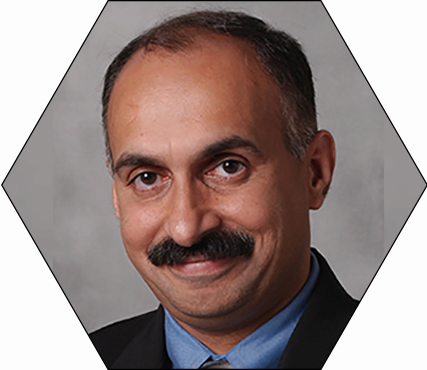
Said Hamdioui serves as a full Professor in the Department of Computer Engineering within the Faculty of Electrical Engineering, Mathematics and Computer Science at Delft University of Technology. His research focuses on cutting-edge hardware architectures for neuromorphic computing and energy-efficient AI acceleration, with particular emphasis on memristor-based systems, emerging memory technologies, and fault-tolerant designs for edge applications. His research interests span Neuromorphic Computing , Memristor-Based Architectures , and Energy-Efficient AI Hardware , addressing critical challenges in hardware security, computation-in-memory, and reliable edge AI deployment. Recent work demonstrates significant advancements in RRAM/FeFET testing methodologies, spiking neural network implementations, and spin wave computing alternatives to traditional CMOS. His publications reveal strong trends toward real-world deployment of brain-inspired hardware with practical constraints like power efficiency, testability, and security. Award highlights include: DATE'20 Best Paper Award DFT'21 Outstanding Student Paper ETS 2021 Best Paper Award LATS 2018 & 2022 Best Paper Awards Professor Hamdioui actively contributes to the research community through editorial roles at IEEE Transactions on VLSI Systems , IEEE Design & Test , and Journal of Electronic Testing from 2017-2018. His leadership in multi-partner projects like CONVOLVE and NEUROKIT2E demonstrates strong industry-academia collaboration for edge AI solutions. Current work shows increasing focus on practical deployment challenges including in-field fault monitoring, security vulnerabilities in neuromorphic systems, and realistic brain simulation frameworks.
Professor David Taubman is a distinguished academic serving as Professor and Deputy Head of School (Research) at the School of Electrical Engineering and Telecommunications (EE&T) at the University of New South Wales (UNSW) in Sydney, Australia. He is also co-director of Kakadu Software Pty. Ltd. and its affiliates Kakadu R&D and Kakadu GPU. With a career spanning over three decades, Professor Taubman has made significant contributions to the field of image and video compression, most notably as the author of the EBCOT coding algorithm adopted in the JPEG2000 international standard. Professor Taubman earned his B.Sc. in Mathematics and Computer Science (1986) and B.E. (Medal) in Electrical Engineering (1988) from the University of Sydney, followed by an M.Sc. (1992) and Ph.D. (1994) in Electrical Engineering from the University of California at Berkeley. His professional journey includes engineering work at the Electricity Commission of N.S.W. (1988-1990), research positions at Hewlett-Packard Laboratories in Palo Alto (1994-1998), and an academic career at UNSW where he progressed from Senior Lecturer (1998-2003) to Associate Professor (2004-2009) and finally to Professor (2009-present). He has held various leadership roles including Head of the EE&T Telecommunications Research Group (2003-2014), Head of the EE&T Signal Processing Research Group (2014-present), Director of Research for the School of EE&T (2011-2016), and Deputy Head of School (Research) since 2017. Professor Taubman's research interests center on image and video compression, with particular expertise in JPEG2000 standards and implementations. His work spans signal processing, wavelet transforms, scalable video coding, motion modeling, and multimedia systems. He has pioneered numerous compression algorithms and frameworks, including the EBCOT coding algorithm that became central to the JPEG2000 standard. His recent research focuses on efficient motion modeling with cuboidal partitioning, learned lifting-based transform structures, and high-throughput implementations of JPEG2000 for video applications. His work bridges theoretical foundations with practical implementations, as evidenced by the commercially successful Kakadu Software tools that have garnered around 500 commercial licensees. Analysis of Professor Taubman's recent publications reveals a consistent focus on advancing compression technologies with particular emphasis on scalability, efficiency, and adaptability. His work spans traditional image compression (JPEG2000 extensions), video coding (cuboid-based partitioning for UHD/360-degree video), and emerging applications (nanopore sequencing data compression). A notable trend is the integration of machine learning techniques with traditional compression frameworks, as seen in his work on learned lifting-based transform structures. His research maintains strong connections to real-world applications across diverse domains including medical imaging, astronomical data processing, and genomic sequencing. IEEE Fellow Engineers Australia Fellow (by invitation) Professor Taubman has served as Associate Editor for the IEEE Transactions on Image Processing for two four-year appointments (2003-2005 and 2010-2013). He has been actively involved in numerous research grants focused on image and video compression technologies, particularly those related to the JPEG2000 standard and its extensions. His work has received significant industry support, reflected in his consultancy with various U.S., Japanese, and Australian corporations. He has also contributed to international standards development as a member of Standards Australia Technical Committee MS-065 (mirroring ISO TC42 on Digital Photography) and as a constitutional member of Standards Australia Technical Committee IT-029 (Coded Representation of Picture, Audio and Multimedia/Hypermedia Information). Professor Taubman co-directs Kakadu Software Pty. Ltd. and its research affiliates Kakadu R&D and Kakadu GPU, which have developed the commercially successful Kakadu Software tools for JPEG2000. His research group at UNSW focuses on advanced image and video compression techniques, with particular expertise in wavelet-based methods, scalable coding, and motion modeling. The group maintains strong industry connections and has contributed significantly to the development and standardization of image compression technologies worldwide.
Michael T. Rizzo is an Assistant Professor in the Department of Psychology at the University of Illinois, Urbana-Champaign, within the College of Liberal Arts & Sciences. He directs the Developing Equitable Minds Lab (DEML Lab), which focuses on promoting social equity in childhood through research on children's developing conceptions of fairness and social biases. Dr. Rizzo earned his B.S. from the University of California, San Diego (mentor: Dr. David Liu), his Ph.D. from the University of Maryland, College Park (mentor: Dr. Melanie Killen), and completed a postdoctoral fellowship at New York University (mentor: Dr. Marjorie Rhodes). His research program examines three interrelated questions: (1) How do conceptions of equity develop? (2) How do social biases develop? (3) How can we promote concern for equity and disrupt social biases? Using a constructivist approach, his work investigates how children experience, interpret, and respond to the world around them. His primary research areas include conceptions of fairness, racism and racial bias, social status and structures, theory of mind, and unmoderated remote research with children. His work has been published in top journals including Proceedings of the National Academy of Sciences , American Psychologist , Child Development , and Developmental Psychology . Analysis of his recent publications reveals a strong focus on understanding the developmental origins of racial bias, particularly how children's beliefs about social norms and racial inequalities shape their developing racial attitudes. His work demonstrates how children distinguish between structural and individual causes of inequality, and how social status influences children's understanding of fairness and others' mental states. His research has increasingly incorporated innovative methodologies, including unmoderated remote research with children. Dr. Rizzo's work has been funded by prestigious organizations including the National Science Foundation (NSF), the Eunice Kennedy Shriver National Institute of Child Health and Human Development (NICHD), and Beyond Conflict. He is deeply committed to promoting equity, diversity, and inclusion through three primary pathways: transforming university spaces, advancing psychological research practices, and engaging with broader society. His lab partners with organizations like Embrace Race, Story Starters, and We Stories to develop anti-racist education programs and parenting materials. The DEML Lab has created a platform called Developing Minds Online (DMO) that allows for unmoderated remote research with children, enabling families to participate from anywhere.
Sang-Hoon Bae is an Assistant Professor in the Department of Mechanical Engineering & Materials Science at Washington University in St. Louis, part of the McKelvey School of Engineering. His research focuses on materials innovation in 2D atomic layers and 3D thin films, aiming to advance ubiquitous electronics through novel material platforms. He holds a PhD from UCLA (2017), and BS/MS degrees from Sungkyunkwan University (SKKU), Korea. Education: PhD in Materials Science and Engineering, University of California, Los Angeles, 2017 MS in Materials Science and Engineering, Sungkyunkwan University, Korea, 2013 BS in Materials Science and Engineering, Sungkyunkwan University, Korea, 2011 Research Interests: Bae’s work integrates thermodynamics, kinetics, and solid-state physics to address challenges in materials science. His lab explores three key areas: Development of freestanding 3D films and 2D materials, and their functional architectures Advanced solar cell technology via solid-state photovoltaic physics Heterogeneous integration for self-powered ubiquitous electronics with AI capabilities Awards & Recognition: 2024 Falling Walls Science Breakthroughs Award (Energy & Technology) Grants & Collaborations: Received NSF funding (2024) for integrated photonics research with Prof. Lan Yang. His work on high-density energy storage via novel material heterostructures earned global recognition. Labs: Bae directs a lab located in Jubel Hall (Room 033), focusing on material innovation and device fabrication. His team collaborates with leading institutions like MIT and IBM.
João F. Mano is a Full Professor at the Department of Chemistry, University of Aveiro, and Director of the Doctoral Program on Biotechnology. He leads the COMPASS Research Group and serves as Vice-Director at CICECO - Aveiro Institute of Materials. His academic appointments include Invited Professor at University of Lorraine (France), Visiting Professor at KAIST (South Korea), and Adjunct Professor at Ajou University (South Korea). Education: PhD in Chemistry (1996, Technical University of Lisbon); D.Sc. in Tissue Engineering, Regenerative Medicine and Stem Cells (2012, University of Minho) Research Interests focus on Biomaterials for Regenerative Medicine , integrating Nanotechnology , Microtechnology , and Biofabrication . His group develops Bioinspired Materials using polymer chemistry, Decellularized Extracellular Matrix , and 3D Bioprinting to engineer Cell Microenvironments for therapeutic applications. Recent Publications highlight advancements in Human-Derived Hydrogels , Photopolymerizable Scaffolds , Magneto-Responsive Biomaterials , and Programmable Bioinks . Trends show emphasis on Organ-on-a-Chip integration, Smart Living Materials , and Green Bioprinting methodologies. Scientific Awards include: European Research Council Advanced Grants (2015, 2020) Fellow at IUPAC, European Academy of Sciences, and American Institute of Medical and Biological Engineering ERC Proof of Concept Grants Doctor Honoris Causa from University of Lorraine and Utrecht UNESCO Chair on Biomaterials George Winter Award (European Society for Biomaterials) Supervisions & Collaborations encompass 74+ MSc, 26+ PhD students, and 40+ postdocs. He co-founded METATISSUE and CELLULARIS Biomodels , and serves as Editor-in-Chief of Materials Today Bio .
Deborah McPhail is an Associate Professor in the Department of Community Health Sciences at the Max Rady College of Medicine, University of Manitoba. Her research is committed to advancing health equity through community-engaged scholarship focused on 2SLGBTQIA+ and fat communities using qualitative, anti-oppressive methodologies. Education: PhD, York University Master of Sociology, Ontario Institute for Studies in Education, University of Toronto Bachelor of Arts, University of Manitoba Dr. McPhail's work integrates feminist, queer, and fat theories to examine systemic oppression in healthcare systems. Her expertise spans critical social sciences, anti-oppressive approaches to health, and qualitative methodologies, with emphasis on marginalized groups' healthcare experiences. She actively develops medical curriculum for 2SLGBTQIA+ health and equity-seeking populations while teaching graduate courses in gender health equity and critical social theories. Her publication portfolio reveals consistent focus on fat studies and 2SLGBTQIA+ health, particularly analyzing reproductive care through lenses of eugenics, colonialism, and social justice. These works demonstrate material and affective analyses of clinical spaces, obesity history, and resistance strategies against healthcare stigma. Scientific Awards: Outstanding Reviewer, CIHR (2021/2022) Manitoba Medical Students Teaching Award (2019) CBC Top 40 Under 40 (2017) University of Manitoba Outreach Award (2016) Body Confidence Awards Canada (2016) Dr. McPhail mentors graduate students and leads major funded research including SSHRC's "Queering COVID" (2021-2025), Research Manitoba's LGBT healthcare professionals study (2016-2024), and CIHR's "Reproducing Stigma" project (2014-2022). Her community partnerships with Sunshine House and Rainbow Resource Centre ensure research directly addresses marginalized populations' needs while informing medical education and practice. As theme lead in gender and sexual health for the medical college, she develops undergraduate curriculum for medical students and serves on UMQueer as founding member. Her work bridges academic research with community advocacy through Manitoba Public Health Association involvement.
Allan David serves as the John W. Brown Professor of Chemical Engineering and Associate Dean for Research at Auburn University's Samuel Ginn College of Engineering. His leadership extends across academic administration and cutting-edge nanomedicine research, with a focus on translating laboratory discoveries into clinical applications. His educational foundation includes: Ph.D. in Chemical Engineering, University of Maryland B.S. in Chemical Engineering, University of Maryland Dr. David's research program pioneers nanomedicine applications through the development of smart materials for cancer diagnostics and therapy. His work spans nanoparticle-based MRI contrast agents , ocular drug delivery systems , and vaccine delivery platforms , with particular emphasis on optimizing physicochemical properties for targeted biological interactions. Current projects address critical healthcare challenges including safer contrast agents for patients with kidney impairment and precision cancer targeting mechanisms. Analysis of his 15 most recent publications reveals a cohesive research trajectory centered on magnetic nanoparticles and biomimetic delivery systems . The work demonstrates increasing translational focus, evolving from fundamental nanoparticle characterization (2020-2021) to clinically relevant applications like ocular delivery and cancer theranostics (2022-2024), culminating in commercialization efforts through NanoXort, LLC. Dr. David has secured significant research funding including an $184,773 grant from the Alabama Department of Economic and Community Affairs (ADECA) for developing cardiovascular MRI agents. He leads collaborative efforts that bridge chemical engineering with biomedical innovation, notably co-founding NanoXort, LLC to commercialize safer MRI contrast agents addressing gadolinium toxicity concerns for renal-impaired patients. His laboratory operates at the intersection of chemical engineering and medicine, focusing on nanoparticle-cell interactions and targeted delivery systems. The research group maintains strong industry partnerships through the NanoXort startup, which has secured $1 million NSF funding to advance MRI contrast agent technology toward clinical implementation.
Helmut H. Strey is an Associate Professor in the Department of Biomedical Engineering at Stony Brook University. His research focuses on micro- and nanotechnologies for quantitative biology , including single-cell analysis, cancer metabolism modeling, and functional MRI data analysis. He holds academic appointments since 2008 and has pioneered technologies like tumor-on-a-chip and optical decoders for translation stages. Education: PhD in Biophysics (Technical University München, 1993), postdoctoral training at NIH (1994-1998). Awards include the NSF CAREER Award (2000-2005), Dillon Medal (2003), and Weston Visiting Professorship (2020). Research interests span cell-to-cell variability , Warburg effect in cancer , and Bayesian analysis of time-series data . His lab develops tools for 3D tumor microenvironments, MRI-compatible drug delivery systems, and biomimetic neural circuit models. Teaching includes advanced numerical methods in biomedical engineering, quantitative biology, and biomolecular analysis. Active in open hardware projects, including microfluidics controllers and IoT devices for health monitoring.
Michael P. Bradley is a Professor in the Department of Physics and Engineering Physics at the University of Saskatchewan, affiliated with the College of Arts and Science. He holds a Ph.D. from MIT and is a Professional Engineer (P.Eng.). His research focuses on precision measurement techniques, plasma-based nanofabrication, and quantum metrology, including work on diamond NV-centre magnetometers and superconducting watt balance systems. He leads the University of Saskatchewan Plasma Physics Laboratory (U of S PPL) and has received a Canada-UK Joint Quantum Technology grant for quantum sensor development. Education BSc (Honours) in Applied Physics, University of New Brunswick Ph.D. in Physics, Massachusetts Institute of Technology (MIT) Research Interests Bradley specializes in quantum magnetometry , plasma processing , semiconductor nanostructures , and precision electromagnetic measurements . His lab develops novel techniques for materials characterization and fabrication, including plasma immersion ion implantation (PIII) for micro- and nano-scale engineering, graphene doping, and silicon photonics. Recent work includes advancements in diamond NV-centre magnetometry for quantum technologies. Grants & Collaborations Recipient of a prestigious Canada-UK Joint Quantum Technology grant (2023). Collaborated internationally, including at the Bureau International des Poids et Mesures (BIPM) in France, where he contributed to superconducting watt balance prototypes for redefining mass standards. Teaching Teaches courses in optics, thermodynamics, and planetary astronomy, including EP421: Optical Systems & Materials and ASTR104: Planetary Astronomy .
Dina Le Gall serves as Associate Professor of History at the Graduate Center, City University of New York (CUNY), and concurrently holds the position of Deputy Director and Associate Professor of Middle Eastern Studies at the Middle East and Middle Eastern American Center (MEEMAC). Her research specializes in Middle Eastern and Islamic History with concentrated expertise in Sufism, Ottoman religious dynamics, and the socio-cultural roles of saints in Muslim societies. She has pioneered extensive scholarship on Naqshbandi Sufi brotherhoods within the Ottoman Empire, examining their institutional evolution and spiritual practices from the 15th through 17th centuries. Her publication trajectory reveals deep engagement with pre-modern Islamic mysticism, intra-Sufi theological conflicts, and the adaptation of religious traditions across historical contexts. This scholarly focus bridges rigorous historical analysis with contemporary discourse on religious identity and community formation in Muslim-majority regions. Dr. Le Gall's research excellence has been recognized through prestigious accolades: Annemarie Schimmel Scholarship from the Institute of Ismaili Studies (2011) National Endowment for the Humanities Faculty Research Award (2009/10) Lehman College Faculty Development Award and Scholar Incentive Award (2009/10) Multiple PSC-CUNY Research Awards As Deputy Director of MEEMAC, she advances interdisciplinary Middle Eastern studies through academic programming and research initiatives. Professional service includes editorial advisory roles for the Journal of Sufi Studies and committee positions with the American Research Institute in Turkey and Middle East Studies Association. No graduate student advising details or specific grant projects beyond the listed awards appear in the source materials.
Daria Camilla Boffito is a Full Professor in the Department of Chemical Engineering at Polytechnique Montréal , holding the Tier-2 Canada Research Chair in Intensified Mechano-chemical Processes for Sustainable Biomass Conversion. Her research spans process intensification , catalysis , sonochemistry , photocatalysis , and metal extraction , with a focus on sustainability. Education: B.Sc. and Ph.D. in Industrial Chemistry from the University of Milan, M.Sc. in Industrial Chemistry and Management Current Research: Developing ultrasound-assisted extraction , CO2 conversion , and floating photocatalysts for wastewater treatment Collaborations: Works with Canadian and international companies on sustainable chemical processes Scientific Awards include the Canada Research Chair Tier-2 (2016-2021), NSERC Banting Postdoctoral Fellowship (2013-2016), and FRQNT PBEEE Postdoctoral Fellowship (2013-2016). Advising has seen 5 Ph.D. and 9 Master's students graduate. She leads the Engineering Process Intensification and Catalysis (EPIC) Laboratory and is a member of the Institut de génie biomédical .
Garnet K. Chan is the Bren Professor of Chemistry and Director of the Rudolph A. Marcus Center for Theoretical Chemistry at the California Institute of Technology. He received his B.S. from the University of Cambridge in 1996 and his M.A. and Ph.D. from the University of Cambridge in 2000. Dr. Chan's research lies at the interface of theoretical chemistry, condensed matter physics, and quantum information theory, focusing on quantum many-particle phenomena and the numerical methods to simulate them. His group has developed numerous methodologies including density matrix renormalization and tensor network algorithms, canonical transformation-based down-foldings, local quantum chemistry methods, quantum embeddings, and new quantum Monte Carlo algorithms. His work addresses problems that appear naively exponentially hard but where understanding of physics, particularly entanglement structure, allows for calculations of polynomial cost. Analysis of his recent publications reveals a strong focus on quantum simulation techniques, particularly tensor network methods applied to strongly correlated systems. His research spans fundamental theoretical developments to practical applications in quantum computing, molecular simulation, and materials science, with increasing integration of machine learning techniques and GPU acceleration in computational chemistry frameworks. Dr. Chan leads an active research group at Caltech dedicated to simulating chemical and physical systems at the level of many-particle quantum mechanics. His group has welcomed numerous researchers including Kasra Hejazi, Zuxin Jin, Zhihao Cui, Ke Liao, Henrik Larsson, and Wenyuan Liu. He teaches courses in Physical Chemistry (Ch 21 abc) and Advanced Quantum Chemistry (Ch 225), contributing significantly to theoretical chemistry education at Caltech.
Dr Farhad Masoomi-Aladizgeh is a Research Fellow in the School of Life and Environmental Sciences at the University of Sydney. His work focuses on understanding how environmental stresses like heat and drought impact crop fertility, particularly in cereal crops. He holds a BSc, MSc, and PhD in Plant Biology. His research emphasizes male reproductive systems in plants and seeks to identify molecular mechanisms underlying abiotic stress susceptibility to enhance climate resilience in crops. Education includes advanced training in plant sciences, with a focus on molecular biology and stress physiology. Current research projects explore transcriptome responses to stress, stress tolerance gene identification in crop relatives, and ABA-mediated stress protection in rice. His publications span plant proteomics, stress physiology, and molecular protocols, with a strong emphasis on drought and heat tolerance mechanisms. Notable work includes developing universal nucleic acid isolation protocols and analyzing stress responses in rice and cotton. No scientific awards are listed, but his contributions to crop resilience research are significant. He advises no current students but collaborates on interdisciplinary projects involving genomic and proteomic approaches to agricultural challenges. Research is centered at the University of Sydney with potential collaborations in plant science labs focused on environmental stress mitigation strategies.
Dr. Sanfeng Wu is Assistant Professor of Physics at Princeton University, where he leads a research group investigating quantum phenomena in two-dimensional materials. His laboratory explores topological materials, superconductivity, and quantum information processes in atomically thin systems. He is an associated faculty of the Princeton Materials Institute and Princeton Quantum Initiative. Research focuses on: Quantum transport in topological materials Superconductivity in two-dimensional systems Moiré engineering of quantum phases Ultralow-temperature spectroscopy techniques Excitonic insulators and correlated states Publication analysis reveals predominant themes: Topological quantum materials (40%) Two-dimensional superconductivity (30%) Quantum transport phenomena (20%) Advanced characterization methods (10%) with recent work advancing understanding of unconventional superconductivity. Honors include: Sloan Research Fellowship (2023) AFOSR Young Investigator Award (2023) Moore Foundation EPiQS Award (2023) He advises doctoral students Haosen Guan, Yanyu Jia, and Yue Tang. His laboratory develops novel cryogenic and nanofabrication techniques for probing quantum phenomena in 2D materials.
Suresh K. Sitaraman is a Regents' Professor and Morris M. Bryan, Jr. Professor in Mechanical Engineering at the Georgia Institute of Technology's George W. Woodruff School of Mechanical Engineering. His primary research focuses on Computer-Aided Engineering (CAE) and Design, manufacturing processes, micro/nano engineering, and mechanics of materials. He leads the Computer-Aided Simulation of Packaging Reliability (CASPaR) Lab and is involved in flexible hybrid electronics research through the Flexible Electronics Center . Dr. Sitaraman holds a Ph.D. from The Ohio State University (1989), M.A.Sc. from the University of Ottawa (1985), and B.E. from the University of Madras (1982). His research includes developing novel techniques like fixtureless magnetic actuation for interfacial fracture testing, compliant micro-scale interconnects for stress mitigation, and synchrotron X-ray diffraction analysis for through-silicon vias (TSVs). He has pioneered studies on carbon nanotube forests' mechanical properties and reliability challenges in 3D microsystems. His awards include the NSF CAREER Award (1997-2002), ASME Fellow designation (2004), and Sigma Xi Sustained Research Award (2008). He has authored over 150 publications and holds multiple patents on compliant interconnect technologies and packaging reliability solutions. Key Research Themes: Micro/nano-scale material characterization, physics-based predictive modeling, flexible electronics, 3D integration, and thermal management. Labs/Initiatives: CASPaR Lab ( caspar.gatech.edu ), Flexible Hybrid Electronics Center. Industry Impact: Contributions to semiconductor packaging, wearable electronics, and advanced manufacturing techniques.