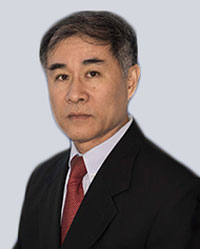
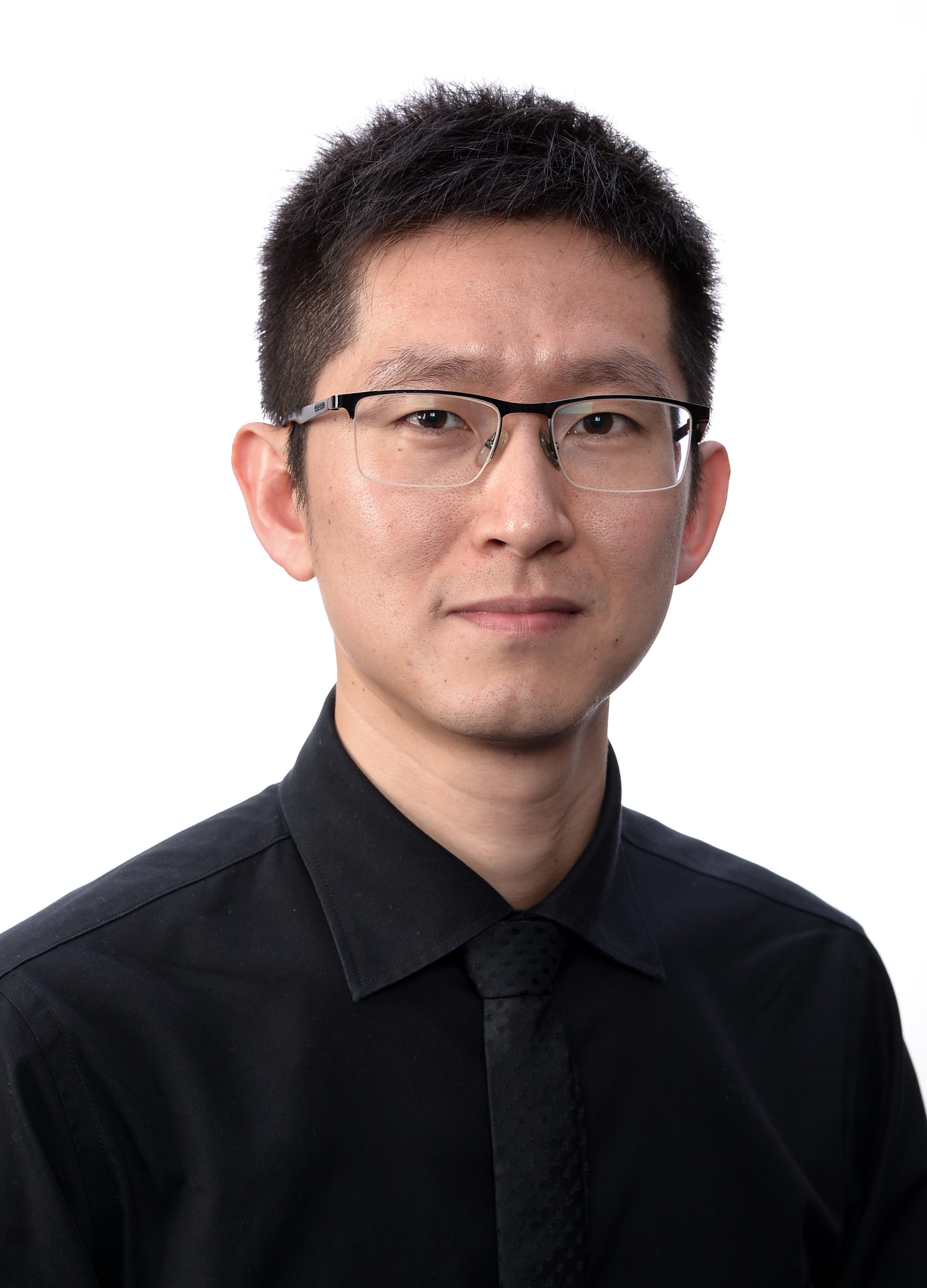
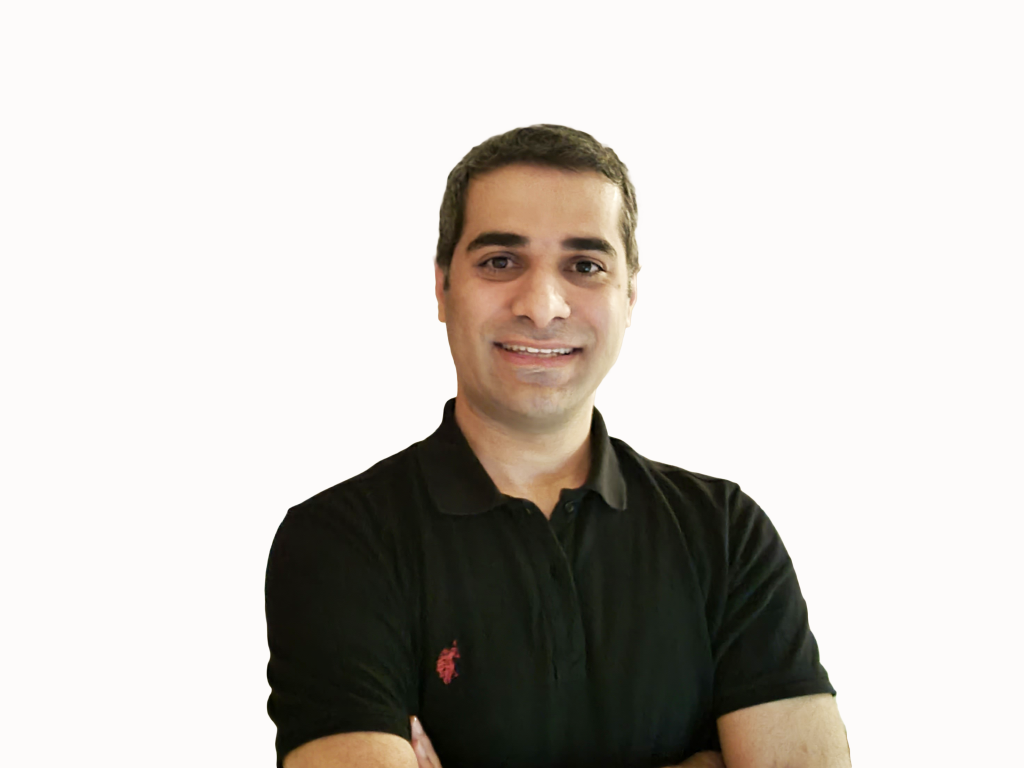
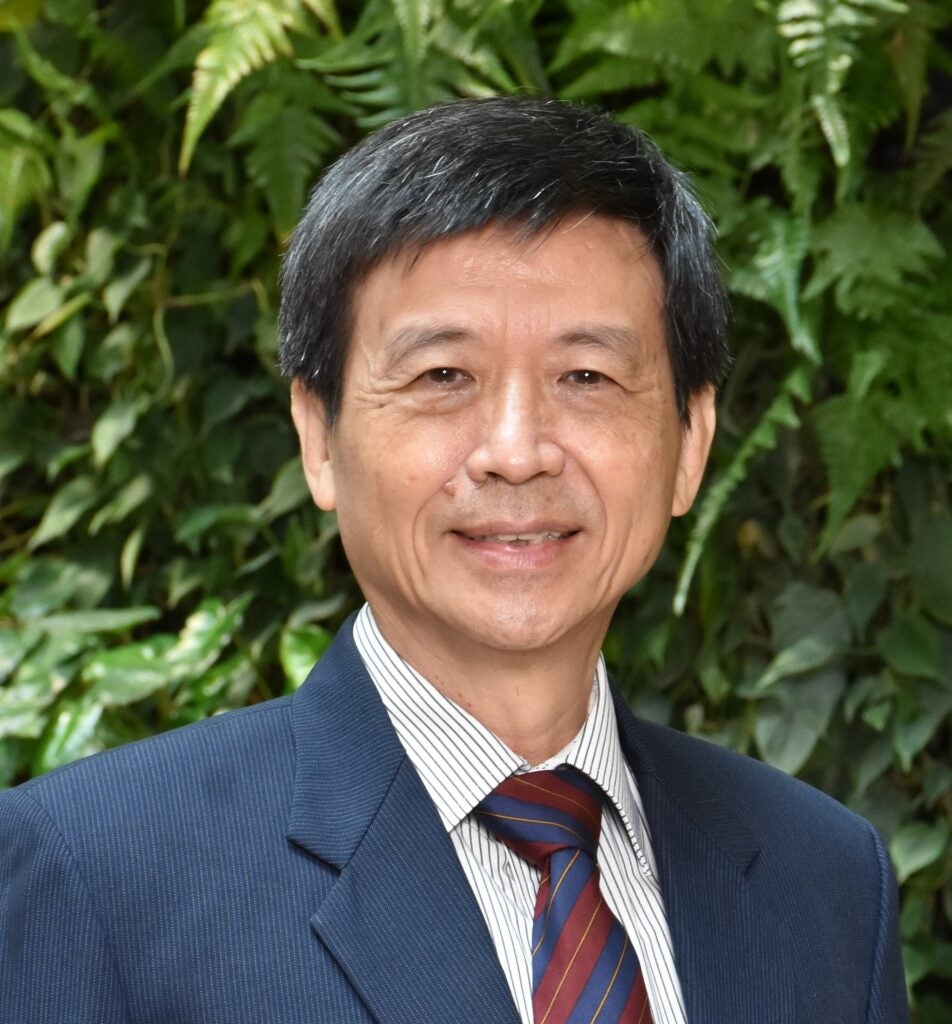
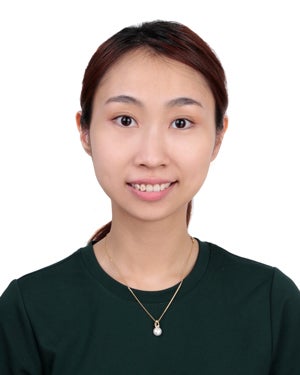
Prof. Li LU is a Professor at the Department of Mechanical Engineering, National University of Singapore (NUS). His research focuses on energy storage materials, ferroelectric systems, and advanced battery technologies. He holds editorial roles at Functional Materials Letters and Materials Technology – Advanced Functional Materials . Education: PhD from KU Leuven (Belgium), M.Eng and B.Eng from Tsinghua University (China). Research interests include thin film deposition, nanostructured materials, and solid-state electrolytes. His work addresses challenges in lithium/ sodium-ion batteries, solid-state interfaces, and high-performance energy storage systems. Recent studies emphasize aerosol deposition techniques, composite electrolytes, and interfacial stability. Publications highlight advancements in battery materials and electrolyte design. Notable contributions include ultra-stable sodium-ion batteries, ferroelectric-engineered electrolytes, and optimizing lithium metal anodes. His research bridges fundamental material science with practical energy solutions.
Dr. Yamin Zhang (张亚敏) holds a Presidential Young Professorship as an Assistant Professor in the Department of Chemical & Biomolecular Engineering at the National University of Singapore (NUS), College of Engineering. She leads the Zhang Group which focuses on interdisciplinary research at the intersection of electrochemistry, materials science, and biomedical engineering. 07/2023 – 01/2024: Research Associate, Northwestern University 02/2021 – 06/2023: Postdoctoral Fellow, Northwestern University 08/2016 – 12/2020: Ph.D., Chemical Engineering, Georgia Institute of Technology 09/2012 – 07/2016: B.S., Chemical Engineering, Tianjin University; B.S., Finance (Double Major), Nankai University Dr. Zhang's research centers on developing advanced electrochemical strategies for next-generation medical devices (implantable, bioresorbable, and wearable) and sustainable energy solutions. Her work bridges bioelectronics , battery technology , and medical therapeutics , with particular emphasis on creating devices that can safely dissolve in the body after serving their purpose. Key areas include bioresorbable optoelectronic systems for electrotherapy, self-powered drug delivery platforms, and eco-safe battery technologies that can harmlessly resorb in biological environments. Analysis of Dr. Zhang's publication record reveals a clear trajectory from fundamental battery chemistry (2021-2022) toward increasingly sophisticated medical applications (2023-2025). Her recent work demonstrates mastery in integrating multiple functionalities into single bioresorbable platforms, as evidenced by her Nature (2025) paper on millimeter-scale optoelectronic systems for electrotherapy and Cell Biomaterials (2025) paper on wireless bioelectronic devices. The research shows strong interdisciplinary collaboration with leading institutions including Northwestern University and Georgia Tech. AHA Early Faculty Independence Award (2023) MIT ChemE Rising Stars (2022) Sigma Xi Best PhD Thesis Award (2021) Chinese Government Award for Outstanding Students Abroad (2021) A*STAR MTC Young Individual Research Grants (YIRG) (2025) Early Career Board Member for ACS Applied Materials & Interfaces (2025) Dr. Zhang has secured significant research funding including the AHA's Second Century Early Faculty Independence Award as Principal Investigator (2023) and the A*STAR MTC Young Individual Research Grant (2025). Her group serves on advisory boards for Cell Biomaterials and ACS Applied Materials & Interfaces. The Zhang Group at NUS maintains active collaborations with Northwestern University researchers including the Rogers group, with whom she has co-authored multiple high-impact publications in Nature, Science, and PNAS. Current research focuses on advancing battery technology and developing sophisticated electrochemical strategies for medical devices with an overarching focus on healthcare innovation and environmental sustainability.
Associate Professor Ng Bing Feng leads research in Additive Manufacturing, Aerospace Engineering, and Thermofluids at Nanyang Technological University's School of Mechanical & Aerospace Engineering. As Cluster Director for Smart & Sustainable Building Technologies at NTU's Energy Research Institute, he oversees projects spanning energy-efficient cooling technologies, advanced filtration systems, and bio-inspired materials. His interdisciplinary work integrates advanced manufacturing with environmental engineering, focusing on sustainable solutions for air quality management and thermal regulation. Current research explores radiative cooling technologies, acoustic agglomeration for emissions control, and crashworthy structures via biomimetic design. Professor Ng's publications demonstrate consistent innovation in multi-scale manufacturing and fluid dynamics, with growing emphasis on sustainable urban technologies. Methodologies combine experimental fluid dynamics with computational modeling and AI-driven design. Leadership Roles: Cluster Director, Energy Research Institute @ NTU Principal Investigator for multiple industry collaborations in sustainable materials Research Output: 42+ publications in high-impact journals Multiple patents in filtration technologies and cooling systems
Dr. Geng Guoqing is an Assistant Professor in the Department of Civil and Environmental Engineering at the National University of Singapore (NUS). He holds concurrent roles as East Asian Regional Convener for RILEM and board member of ACI-Singapore Chapter. His research focuses on sustainable construction materials, particularly durability, microstructural characterization, and waste material utilization. Geng earned his PhD from UC Berkeley (2017), followed by postdoctoral research at the Paul Scherrer Institute (Switzerland). He has authored over 50 papers and leads multiple projects funded by Singapore’s Ministry of Education, Energy Center, and National Research Foundation. Education: Bachelor of Engineering, Southeast University, China (2010) Master of Science, UC Berkeley, USA (2013) PhD, UC Berkeley, USA (2017) Research interests center on sustainable construction materials, multi-scale characterization, and material durability . Key themes include recycling low-grade materials, mitigating degradation in concrete, and developing high-performance binders like LC3. His work employs advanced techniques like molecular modeling, X-ray diffraction, and NMR. Recent articles explore hydration kinetics, CSH matrix mechanics, and waste clay applications. Awards include the 2023 RILEM Medal and multiple teaching excellence recognitions. Current projects address CO 2 absorption, sustainable cement blends, and resilient façade materials. Professional service includes editorial roles at Cleaner Materials and Frontiers in Materials , plus organizing the 2022 EASEC Conference. His lab focuses on bridging microstructural insights with macro-scale material performance.
Associate Professor LI Zhi leads the Chemical & Biomolecular Engineering Department at the National University of Singapore (NUS). His research focuses on advanced biocatalysis for sustainable manufacturing, bio-based fuels, and functional materials. He holds a PhD in Organic Chemistry from the University of Vienna (1991), an MEng from Chinese Academy of Forestry (1985), and a BSc from Nanjing University (1982). Institutional Affiliations: NUS Faculty of Engineering, NUS ChBE Department. His lab actively collaborates with global institutions like A*STAR and the Singapore Catalysis Society. Research highlights include enzyme engineering for cascade reactions, CO₂ utilization, and biomaterial synthesis. Research Interests: Discovery of novel biocatalysts, engineering of biocatalytic systems, renewable feedstock utilization, and smart material development. Recent work emphasizes cascade biotransformations for chiral chemicals and sustainable processes. Lab Activities: Hosted international conferences (e.g., Southeast Asia Catalysis Conference 2019), collaborations with industry leaders (GSK, Pfizer), and visits from distinguished researchers like Prof. Zhao Huimin. Student milestones include PhD completions (e.g., Wang Wen, Joel Choo Ping Syong) and postdoc contributions across institutions. Grants & Labs: Active in grants related to biocatalysis and green chemistry. Lab members include researchers like Dr. Nicholas Goh and PhD students Li Li. Infrastructure includes advanced facilities for biotransformations and material synthesis.
Assoc Prof Ng Teng Yong is an Associate Professor at the School of Mechanical & Aerospace Engineering (NTU), specializing in numerical modeling and simulation. With a background as Research Manager at A*STAR Institute of High Performance Computing, his work spans materials science, nanotechnology, and aerospace engineering. Current focus on graphene-based desalination membranes Expertise in molecular dynamics simulations Investigates nanoscale fluid mechanics and structural dynamics Recent publications highlight advancements in energy-efficient electrodialysis, smart robotics, and nonlinear vibration analysis. His interdisciplinary approach integrates computational methods with experimental validation in additive manufacturing and soft material mechanics.
Dr. Qian Shunzhi is an Associate Professor and Program Director for the Bachelor of Engineering (Civil) at NTU's School of Civil and Environmental Engineering. He holds a PhD from the University of Michigan (2007), with prior faculty experience at Southeast University (2009-2013) and postdoctoral research at TU Delft (2007-2009). His research focuses on advanced construction materials like Engineered Cementitious Composites (ECC), self-healing concrete, and 3D-printable concrete, alongside life cycle assessment of infrastructure. Key interests include sustainable materials, CO2 sequestration, and material durability. Education: Bachelor's: Southeast University (Nanjing, 1998) Master's: Chinese Ministry of Transport Highway Research Institute (Beijing, 2001) PhD: University of Michigan (Ann Arbor, 2007) Research Interests: Novel cementitious composites for infrastructure resilience Recycled materials in construction 3D printing applications in concrete Material lifecycle analysis Notable contributions include bacterial encapsulation for self-healing, graphene-enhanced antibacterial surfaces, and CO2 sequestration via reactive materials. His work bridges material science, sustainability, and advanced manufacturing techniques.
Prof Aaron Thean is the Deputy President (Academic Affairs) and Provost at the National University of Singapore (NUS). Formerly, he served as Dean of the College of Design and Engineering at NUS and held senior roles at IMEC (Belgium) as Vice President of Logic Technologies and Director of Logic Devices Research. His expertise spans advanced semiconductor device technologies, including FinFETs, nanowire FETs, III-V/Ge channels, and emerging beyond-CMOS architectures. He holds degrees from the University of Illinois Urbana-Champaign (B.Sc., M.Sc., Ph.D. in Electrical Engineering) and has published over 300 papers with 50+ patents. His awards include the Gregory Stillman Award (2001) and Compound Semiconductor Innovation Award (2014). Research interests focus on semiconductor innovation, device-process co-optimization (DTCO), and monolithic 3D integration. Notable contributions include industry-first Gate-First HKMG technologies, advanced strained silicon platforms, and neuromorphic computing hardware. His work bridges academia and industry through collaborations with Qualcomm, IBM, and foundry partners. Current initiatives emphasize energy-efficient computing and wearable sensor systems. Prof Thean’s leadership spans NUS-wide academic strategy and global research partnerships. His technical legacy includes foundational advancements in transistor scaling, low-power CMOS design, and AI-driven failure analysis methodologies.
Tural Khudiyev is an Assistant Professor at the Department of Materials Science and Nanotechnology , National University of Singapore (NUS), focusing on multimaterial electronic fibers for human-fabric interaction, soft robotics, and neural probes. He previously worked as a postdoctoral researcher at MIT's Research Laboratory of Electronics. B.Sc. in Nuclear Engineering, Hacettepe University Ph.D. in Materials Science and Nanotechnology, Bilkent University His research spans implantable and wearable electronics , stimuli-responsive drug delivery , and AI in healthcare , with a strong emphasis on scalable nanomanufacturing techniques. His publications in journals like Nature , Nature Nanotechnology , and Advanced Materials highlight innovations in thermally drawn fibers and soft bioelectronic interfaces . Key trends include flexible electronics , machine learning in textiles , and bio-integrated devices , with applications in neural engineering and power textiles . His work has been featured in media outlets such as Reuters and Business Insider . Selected as MIT’s top research story of 2021 #1 Most Read Article in Applied Optics (2015) Featured in Virtual Journal of Nanoscale Science & Technology Khudiyev's contributions to thermally drawn fibers and soft robotics demonstrate interdisciplinary collaboration between materials science, neuroscience, and wearable technology.
Ye Zhisheng is the Dean’s Chair and Associate Professor in the Department of Industrial Systems Engineering & Management at the National University of Singapore (NUS). His research focuses on reliability engineering, inventory control, emergency response systems, and statistical modeling. He holds a PhD in Industrial and Systems Engineering from NUS, along with a BEng in Material Science and Engineering and a BEco in Economics from Tsinghua University. His work emphasizes practical applications in mission-critical systems, predictive maintenance, and data-driven decision-making. Current research initiatives include optimal maintenance policies for manufacturing systems, degradation analysis of bearings, and federated learning approaches for battery lifecycle prediction. He has pioneered methods for integrating physics-informed neural networks into prognostics and health management (PHM) systems. Key technical contributions span advanced statistical methodologies like sieve estimation for survival data, phase-type distributions modeling, and condition-based maintenance optimization. His interdisciplinary approach bridges operations research, mechanical engineering, and computer science to address complex reliability challenges. Recent projects include resilient consensus-based power grid management and contamination source identification frameworks. Notable collaborations involve developing intelligent cross-domain fault diagnosis systems using transformer networks and advancing the Internet of Federated Things (IoFT) for distributed data analytics. His work has been applied in aerospace, telecommunication infrastructure, and medical emergency response systems.
LU Wen Feng is an Adjunct Associate Professor in the Department of Mechanical Engineering at the National University of Singapore (NUS), affiliated with the College of Design and Engineering. His research focuses on advanced manufacturing technologies, including additive manufacturing, robotics, and AI-driven systems. He explores sustainable design methodologies, smart manufacturing innovations, and bioprinting applications. Key areas include optimizing material processes, enhancing mechanical properties of printed materials, and developing autonomous robotic solutions for industrial tasks. Contact: mpelwf@nus.edu.sg , located at E3-02-07. Research Interests : His work bridges AI and manufacturing, emphasizing Knowledge graph integration for additive manufacturing, Autonomous robotic systems in industrial settings, Bioprinting for tissue repair with smart bioinks, Topology optimization for lightweight and sustainable structures, Material characterization and process engineering for 3D-printed composites. Recent Article Trends : LU Wen Feng's 2025 articles highlight advancements in AI-augmented manufacturing systems (e.g., MaViLa, AutoMEX) and sustainable design workflows. His 2024 studies address material anisotropy, corrosion behavior, and topology optimization strategies for lattice structures. These trends reflect his interdisciplinary approach to solving challenges in additive manufacturing, robotics, and biomedical applications. Awards : No scientific awards explicitly mentioned. Advising & Grants : No current graduate students or grants listed. His research likely integrates industry-academia collaborations given the focus on applied manufacturing technologies. Labs/Teams : Not explicitly detailed, but his work suggests involvement in advanced manufacturing labs and AI-robotics teams at NUS.
Alvin NG Theng Haw is an Adjunct Associate Professor at the Division of Information Technology and Operations Management, College of Business (Nanyang Business School), Nanyang Technological University (NTU). He combines over 20 years of global leadership experience in Sales and Product Management with academic roles, including serving as a Senior Career Fellow and executive coach for NTU’s Global Executive MBA and Full-Time MBA programmes. His work focuses on integrating Digital Transformation, Internet of Things (IoT), and Artificial Intelligence for Business into strategic frameworks. Research Interests : Alvin specializes in leveraging Digital Transformation and Advanced Technologies (IoT, AI) to drive business innovation. His publications in materials science demonstrate interdisciplinary applications of these technologies to fields like Soft Robotics, Self-Healing Materials, and Wearable Electronics. His expertise extends to Smart Cities, Sustainability Technology, and Industry 4.0, where he applies business strategies to technological challenges. Contributions : As a founding member of the World Economic Forum’s Digital ASEAN Skills Task Force, he advocates for digital literacy and skills development. His industry experience includes roles in networking, software, cloud platforms, and biorenewable materials, reflecting a bridge between business and engineering.
Prof Tan Ming Jen is a Professor and Associate Chair (Faculty) at the School of Mechanical & Aerospace Engineering, Nanyang Technological University (NTU). He holds the President's Chair in Mechanical Engineering and leads the HP-NTU Digital Manufacturing Joint Lab. His research focuses on additive manufacturing, metallurgy, and sustainable construction materials, particularly in 3D concrete printing and lunar construction materials. Education: B.Sc.(Eng.) and Ph.D. from Imperial College London. Notable fellowships include JSPS Fellow (Kyoto University), STA Fellow (Japan), Visiting Scientist (Columbia University), and Fulbright Scholar (UCLA/Northwestern). Research Interests: Advanced manufacturing techniques, materials science, and sustainable construction. Pioneered work on concrete 3D printing, recognized as a Global Shaker. Over 300 journal publications and S$95M+ in research funding. Leadership Roles: Former Program Director (Building & Construction) at Singapore Centre of 3D Printing, and member of World Economic Forum's Global Future Council on Advanced Manufacturing. Editorial Board roles at Journal of Magnesium & Alloys and Metals .
WEE Kwan Eng is a Senior Lecturer of Operations Management at the Lee Kong Chian School of Business, Singapore Management University (SMU), since 2012. He holds a Ph.D. in Operations Management from Purdue University (2000), an M.S. in Management from NUS (1995), and a B.S. in Mathematics (with Honors) from NUS (1993). His research focuses on pricing strategies, supply chain risk management, game-theoretic models, and queuing systems. He has received multiple teaching honors, including the Dean’s Teaching Honor List (2005–2011). His work spans theoretical and applied operations research, with notable contributions to inventory coordination in retail networks, newsvendor model extensions, and queuing-based manufacturing systems. He has published in top journals like Operations Research Letters and IIE Transactions. Awards: Frederick N. Andrews Fellowship (1995-1997), Dissertation Fellowship (1998-1999) Research Themes: Strategic inventory policies, supply chain coordination, and optimization under uncertainty
Tan Yu Jun is an Assistant Professor at the National University of Singapore (NUS), joining in January 2021. She earned her BEng and PhD from Nanyang Technological University (NTU), focusing on additive manufacturing and biomaterials, followed by postdoctoral work on stretchable and self-healing electronics. Her research lies at the intersection of manufacturing technologies and functional materials , with a focus on developing soft machines and electronics using 3D printing, self-healing materials, and bio-inspired designs. She leads the YJ Laboratory , which emphasizes eco-friendly and smart materials. Her lab has produced high-impact publications in journals like Nature Materials , Nature Electronics , Science Robotics , and Advanced Materials , with recent work on transparent, conductive, self-healing magnetic rubber published in Science Advances (2025). This aligns with her expertise in materials engineering and soft robotics. Scientific Awards & Recognition Student-led teams from her lab won gold, silver, and healthcare special awards at the 25th Singapore Science & Engineering Fair. Her postdoc Zhang Xuan and student Eddy Pang received Best Poster Awards at MRS Fall 2024 and ICMAT 2025, respectively. Her student Max Ang Yi Neng was awarded the NUS-JTC Medal for Sustainability (2021). Advising & Collaborations Advised MSc students Zhou Jinrun and Zhang Biteng to achieve A+ in ME5001. Mentored high school students from Hwa Chong Institution (HCI) and Anglo Chinese School (Independent) through research projects. Participated in organizing RoboSoft 2023 and served as a mentor in student publicity efforts.