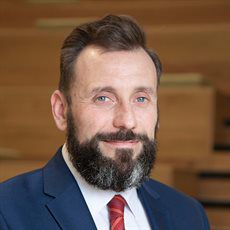
Subhradeep Chatterjee is an Associate Professor at the Department of Materials Science and Metallurgical Engineering at Indian Institute of Technology Hyderabad . He holds a PhD in Materials Engineering from IISc Bangalore and has previously worked at Larsen & Toubro Ltd. R&D and the Zernike Institute for Advanced Materials in the Netherlands. His research focuses on phase transformations, microstructural evolution in metallic alloys, and computational modelling of welding/additive manufacturing processes. Education : PhD (IISc Bangalore), ME (Metallurgy, IISc Bangalore), BE (Metallurgical Engineering, R.E. College Durgapur) His research interests span phase transformations during materials processing, microstructural characterization using electron microscopy and X-ray diffraction , and computational models like phase-field and finite element methods . Recent work includes phase separation in thin films, welding of superalloys, and additive manufacturing of high entropy alloys (HEAs). Collaborations involve colleagues at IIT Hyderabad (Prof. Rajesh, Suryakumar) and Dr. Dheepa Srinivasan from Pratt & Whitney. Key publication trends include studies on spinodal decomposition in Ag-Cu thin films, welding process optimization for superalloys, and microstructure-property correlations in HEAs and metallic nanoparticles. His group integrates experimental and computational approaches to link thermodynamics, kinetics, and material performance. Current and past students include Athira K.S. (PhD on superalloy welding), Vivek Chaitanya Peddiraju (Ag-Cu thin films), Pankaj Bandaru (phase-field models for nanoparticles), and Upender Sunkari (HEAs with niobium alloying). MTech scholars like Lakhvinder Khairwal (Haynes 282 welding) and Indu Kolapalli (AM of XH67 superalloy) have also contributed to his research program.
A. Sadeghi is an Assistant Professor at the Department of Biomechanical Engineering within the Faculty of Engineering Technology at the University of Twente. They lead the Soft Robotics Lab , which focuses on developing innovative methods and robotic systems for additive manufacturing of soft robots. Education Ph.D. in Micro-BioRobotics, Scuola Superiore Sant’Anna, Italy (2013, cum laude) M.Sc. in Manufacturing & Production Engineering, University of Tehran (2004) B.Sc. in Manufacturing & Production Engineering, Noshirvani University of Technology, Iran (2001) Research Interests Dr. Sadeghi's work primarily involves the 3D printing of multilateral, hyperelastic, and fiber-reinforced smart polymers to develop advanced soft sensors and proprioceptive soft actuators . These technologies are applied in domains such as wearable robotics , healthcare , and environmental monitoring . Past contributions at the Italian Institute of Technology’s Center for Micro-Bio Robotics include pioneering Growing Robots that self-structure and move using plant-inspired behaviors. Projects & Collaborations They have served as PI, work package leader, and partner in major Dutch, Italian, and European Union projects, including GROWMIS , PROMETHEUS , Holland Hybrid Heart , INDEPEND , GROWBOT , XoSoft , SMASH , and PLANTOID , targeting soft robotics applications in healthcare and environmental monitoring. Scientific Awards Ph.D. with honor (cum laude) from Scuola Superiore Sant’Anna, Italy (2013) Labs & Teams Dr. Sadeghi’s Soft Robotics Lab at the University of Twente has developed groundbreaking tools like a soft rubber pellet extruder printer , 3D weaving/printing machines , and a multi-material polymer printer , advancing additive manufacturing technologies.
Annalisa Tirella serves as Associate Professor in the Department of Industrial Engineering at the University of Trento, specializing in biomaterials and tissue engineering. Her research focuses on developing advanced 3D models for cancer microenvironments and regenerative medicine applications, with particular expertise in hydrogel engineering and bioprinting technologies. Her primary research interests include Tissue Engineering , Biomaterials Design , and Cancer Microenvironment Modeling , with emphasis on creating physiologically relevant in vitro systems. She investigates how mechanical properties of biomaterials influence cellular behavior in breast and prostate cancer models, develops sustainable biomaterials from circular economy sources, and engineers drug delivery systems using nano-in-micro technologies. Her TERM (Tissue Engineering and Regenerative Medicine) work bridges fundamental biophysical principles with clinical translation. Dr. Tirella teaches advanced courses including Biotechnology Engineering for the Department of Cellular, Computational and Integrative Biology, where she covers TERM applications, biomaterials characterization, and additive manufacturing techniques. Her educational focus emphasizes problem-solving skills for designing biomedical technologies and understanding cell-biomaterial interactions. Her recent publications (2023-2025) reveal strong trends in cancer microenvironment modeling (particularly breast and prostate cancers), hydrogel engineering with alginate and natural polymers, and advanced drug delivery systems . Key research directions include deciphering invasive cancer phenotypes through data-driven approaches, developing tumor-mimetic scaffolds with tunable mechanical properties, and creating sustainable biomaterials for precision medicine applications. The work consistently integrates biomechanical analysis with biological validation. Dr. Tirella actively develops innovative methodologies including microfluidic fabrication, response surface methodology for hydrogel optimization, and nano-in-micro encapsulation techniques. Her research has significant implications for understanding cancer metastasis mechanisms and developing targeted therapeutic approaches.
Stephan Sylvest Keller is a Professor in the Department of Micro- and Nanotechnology at the Technical University of Denmark (DTU), affiliated with the National Centre for Nano Fabrication and Characterization and DTU Nanolab. His research lies at the intersection of materials science, microfabrication, and biomedical engineering, focusing on the development of 3D pyrolytic carbon microsystems for biosensing, neural interfaces, and bioenergy applications. His research interests include biomaterial microsystems , nanofabrication , microelectrode design , bioelectrochemical systems , and drug delivery platforms . He leverages advanced fabrication techniques such as additive manufacturing and lithography to create functional 3D carbon structures for applications in brain-on-a-chip , microsupercapacitors , and microbial energy harvesting . The recent articles highlight a strong trend in developing 3D pyrolytic carbon electrodes for electrochemical applications, spanning neuroscience, environmental remediation, and sustainable energy. Keywords across these works include bioelectrochemistry, microfabrication, and functional materials, with subfields ranging from retinal implants to microbial fuel cells and on-chip energy storage. He actively supervises multiple PhD students and leads cutting-edge projects such as INSECTS (Interdigitated Solar Electrochemical Capacitors) and MIRACLE (Microbial syntRophic metAbolism of CO2 on 3D carbon microeLectrodes for biohExanol production). His work contributes to UN Sustainable Development Goals related to clean energy and good health. His laboratory, embedded within DTU Nanolab, specializes in cleanroom-based micro- and nano-fabrication, focusing on translating engineered microsystems into biomedical and environmental applications. The team collaborates widely across disciplines, including microbiology, electrochemistry, and clinical neuroscience.
Zeynep Başaran Bundur is an Associate Professor and Chair of Civil Engineering at Özyeğin University in Istanbul, Turkey. She leads the Sustainable and Adaptive Materials (SAM) Research Group and oversees the Construction Materials Laboratory at the university. Her academic journey began with a Bachelor's degree in Civil Engineering from Bogazici University in 2009, followed by Master's and Ph.D. degrees from The University of Texas at Austin in 2011 and 2013, respectively. Dr. Başaran Bundur's educational background is impressive and well-focused on her research interests: Bachelor's in Civil Engineering, Bogazici University, 2009 Master's in Civil Engineering, University of Texas at Austin, 2011 Doctorate in Civil Engineering, University of Texas at Austin, 2013 Dr. Başaran Bundur's research focuses on the development of sustainable and adaptive materials for civil engineering applications. Her work centers on understanding the relationship among processing, chemistry, properties, and performance of cement-based materials to develop novel, sustainable, and durable construction solutions. She is particularly known for her pioneering work in bio-based self-healing concrete technologies, where microorganisms are incorporated into cementitious materials to enable automatic crack repair. Her research spans several key areas: Advanced cementitious and mineral building materials (self-healing, self-cleaning) Effect of supplementary cementitious materials and geopolymers Additive manufacturing (3D printing) of cement-based composites Development of bio-based rheology modifying admixtures Use of end-of-life materials as alternative binders in concrete Her publication record demonstrates a consistent focus on sustainable construction materials, with over 40 publications and more than 500 citations as of 2022. The trend in her research shows a progression from fundamental studies on biomineralization in cement-based materials toward practical applications in construction technology, particularly in additive manufacturing and sustainable material development. Her work bridges the gap between biological processes and civil engineering materials, creating innovative solutions for the construction industry's environmental challenges. Dr. Başaran Bundur has received significant recognition for her research contributions: Patent for "CEMENT-BASED COMPOSITIONS WITH IMPROVED RHEOLOGICAL PROPERTIES AND METHODS FOR PRODUCTION THEREOF" (2016) Development of BioCrete, an eco-friendly cement-based mortar with adaptive performance Multiple research grants from TÜBİTAK (The Scientific and Technological Research Council of Turkey) Funding from industrial partners like ÇİMSA A.Ş. for applied research International collaborations with universities in Belgium, France, and the USA As an educator, Dr. Başaran Bundur has supervised numerous graduate and undergraduate students, many of whom have continued their academic careers at prestigious institutions worldwide. Her research group, SAM, actively works on cutting-edge projects that address global challenges in the construction sector, particularly focusing on reducing CO2 emissions and developing sustainable alternatives to traditional construction materials. The group's work aligns with the urgent need to transform the construction industry, which accounts for approximately 8% of global CO2 emissions. The SAM Research Group operates at the intersection of biology, material science, and civil engineering, developing innovative solutions such as: BioCrete: A sustainable and self-healing cement-based grout with improved rheology Geo-3D: Additive manufacturing using fiber-reinforced geopolymers Conc-3D: Additive manufacturing of fiber-reinforced cement-based composites ReCement: Regenerating end-of-life materials for reuse in cement/concrete
Professor Qing Li is a faculty member at the School of Aerospace, Mechanical and Mechatronic Engineering, The University of Sydney. He obtained his PhD from Sydney in 2000, underwent postdoc training at Cornell University (2000-2001), and held academic roles at James Cook University (2004-2006). He joined Sydney in 2006 via a Sesqui senior lectureship, becoming Associate Professor in 2010 and Professor in 2014. He served as Director of Postgraduate Studies (2007-2012) and Director of Biomedical Engineering (2017-2019). Education: PhD (University of Sydney, 2000), ME (UTS), ME (Hunan) His research focuses on computational design, multidisciplinary optimization of nonlinear and time-dependent multifunctional materials, and biomedical applications. Key areas include additive manufacturing , biomechanics , and machine learning in structural reliability. Recent publications emphasize fracture modeling in biomaterials, reliability analysis, and tissue scaffold design. Recent publications highlight Bayesian learning for robotic systems, probabilistic transformation in reliability analysis, and phase field fracture models for additively manufactured composites. Collaborations with industry partners like Cochlear and Stryker span ARC , NHMRC , and MRFF projects. Awards: Clarivate Highly Cited Researcher (2020), Top 50 Australia Research Leader (2020), APACM Computational Mechanics Award (2016) Fellowships: ARC Future Fellow (2013-2017), ARC Australian Postdoctoral Fellow (2001) He supervises PhD students in projects like epidermal electrodes , Silver Diamine Fluoride remineralization , and virtual surgical planning . His leadership extends to the Centre for Advanced Materials Technology and editorial roles in computational methods journals.
Alex Thompson is a Lecturer in the Department of Surgery and Cancer at Imperial College London, affiliated with the Hamlyn Centre. He specializes in Medical Robotics and Image-Guided Intervention, focusing on developing clinical diagnostic tools and wearable sensors for gastrointestinal and oncological applications. His teaching role includes leading the MRes in Medical Robotics and Image-Guided Intervention program, emphasizing hands-on laboratory research and interdisciplinary collaboration among students from diverse backgrounds. Research Interests: Dr. Thompson’s work spans medical robotics, spectroscopic techniques (e.g., Raman, fluorescence), and non-invasive diagnostic systems. Key areas include: Design of microgrippers and optothermal actuators for minimally invasive procedures Development of wearable sensors for gut function assessment in low-resource settings Application of AI-driven systems for gastrointestinal disease screening Quantification of hypoxia in tumors and its impact on cancer prognosis Publications: His recent work highlights trends in integrating AI with robotic systems, advancing fiber-optic spectroscopic tools for real-time diagnostics, and addressing global health challenges via portable sensors. Notable areas include label-free cell identification, breast cancer surgery guidance, and environmental enteropathy protocols in Zambia/Zimbabwe. Teaching & Mentorship: He supervises student projects, fostering independent research skills. His courses attract students from computer science, engineering, and medicine, creating a collaborative environment for innovation. Labs & Affiliations: Based in the Hamlyn Centre, he collaborates on projects blending robotics, photonics, and biomedical engineering to push frontiers in surgical and diagnostic technologies.
Professor Neil Sims holds a faculty position in the Department of Mechanical Engineering at the University of Sheffield . His research spans smart fluid dampers , machining vibration control , and uncertainty propagation in structural systems. He has pioneered methods for chatter suppression in high-speed machining and energy harvesting system design. Educational Background: First Degree in Mechanical Engineering, University of Sheffield PhD in Mechanical Engineering, University of Sheffield Research Focus includes smart materials (magnetorheological/electrorheological fluids), nonlinear dynamics , and adaptive control systems . His work integrates computational modeling , experimental validation , and machine learning for industrial applications. Recent Publications highlight advancements in inerter-based vibration absorbers , machine learning for machining optimization , and actuator saturation challenges . These studies reflect his interdisciplinary approach to structural stability and manufacturing efficiency. Scientific Recognition: EPSRC Advanced Research Fellowship (2003-2008) on machining chatter Collaborative Impact extends to seismic isolation , robotic machining , and energy harvesting from human motion and machinery. His editorial work in the Proceedings of the Institution of Mechanical Engineers, Part B (2021) underscores leadership in machining science.
Professor Karl Dearn is the Head of the School of Engineering and a Professor of Mechanical Engineering at the University of Birmingham. With over 20 years of industrial and academic experience, he specializes in tribology, mechanical engineering design, and polymer engineering. He leads the Mason Institute of Tribology, a research group focused on innovation, comprising post-doctoral fellows, PhD students, and a Master's researcher. His academic journey includes roles as a Lecturer (2008), Senior Lecturer, and Reader in Mechanical Engineering (2016). He holds accolades such as the 2009 IMechE Visionary Award and is a Fellow of the Higher Education Academy. His research explores lubrication science, renewable fuels, additive manufacturing, and surface engineering, with applications in automotive, biomedical, and industrial sectors. Key Research Areas: Tribology, Polymer Gears, Combustion Emissions, Additive Manufacturing. Awards: IMechE Visionary Award, Senior Whitworth Scholar. Professional Affiliations: Whitworth Society (Past President), AMIMechE. Recent publications highlight advancements in nano-additives for lubricants, PEEK mechanical performance in additive manufacturing, and combustion characteristics of alternative fuels. His work emphasizes environmental sustainability and industrial innovation.
Dr. Jiang Li is a Professor in the Batten College of Engineering & Technology at Old Dominion University (ODU). He holds a Ph.D. in Electrical Engineering from the University of Texas at Arlington (2004), an M.S. in Automation from Tsinghua University (2000), and a B.S. in Electrical Engineering from Shanghai Jiao Tong University (1992). Before joining ODU in 2007, he was a postdoctoral fellow at the NIH's Department of Radiology (2004–2006). Dr. Li's research focuses on machine learning, medical imaging, and signal processing. His work spans computer-aided diagnosis systems for medical applications, neural networks, and modeling/simulation. He has led or co-led numerous grants, including funded projects on biomarker identification, robotic dental implantation, and hazard detection. His research trends emphasize interdisciplinary applications of AI, such as medical imaging analysis, remote sensing, and cybersecurity in engineering systems. Recent publications highlight advancements in deep learning for radiation estimation, seagrass mapping, and adversarial attack detection. Awards : NIH Fellows Award for Research Excellence (2006) UTA TxTEC Award (2003) Image Processing Scholarship (2002) Herman Fellowship (2000) Dr. Li's advising and grants reflect collaborations across disciplines, with notable contributions to biomedical engineering and computational methods. He has contributed to labs and teams in medical imaging, robotics, and environmental remote sensing.
Josh Worch is an Assistant Professor in the Department of Chemistry at Virginia Polytechnic Institute and State University (Virginia Tech), part of the College of Science. He leads the Worch Lab, focused on designing sustainable polymers from renewable sources to address ecological challenges. His research emphasizes recyclable materials, dynamic bonding, and green chemistry processes. Education: B.A. in Chemistry & Physics from Manchester University (2011), Ph.D. in Chemistry from Carnegie Mellon University (2016). Postdoctoral roles included a Marie Curie Research Fellowship at the University of Warwick/Birmingham (2017–2019) and Group Leader at the University of Birmingham (2020–2022). Research Interests: Creation of intrinsically recyclable polymers, biogenic feedstocks, additive manufacturing, and programmable material lifetimes. Key themes include stereochemical control, green synthesis, and circular economy principles. Awards: M. Zouhair Atassi Research Paper Prize (2021) Royal Society of Chemistry Outreach Grant (2019) School of Chemistry Public Engagement Award (2019) Marie Skłodowska-Curie Postdoctoral Fellowship (2017) Labs & Teams: Worch Lab at Virginia Tech explores sustainable polymer design, with a focus on recycling and additive manufacturing. Group members gain expertise in polymer synthesis, materials characterization, and degradation studies.
Ji Ma is an Assistant Professor in the Department of Materials Science and Engineering at the University of Virginia. His research focuses on additive manufacturing of metallic alloys, microstructure control, and multifunctional materials design. He explores novel material properties through 3D printing techniques, including spatially tailored properties, 3D concrete printing, and medical implant applications. His work addresses challenges in porosity, residual stress, and corrosion resistance in additively manufactured materials. Education: Ph.D. Mechanical Engineering, Texas A&M University (2012) B.S. Civil Engineering, Texas A&M University (2008) Research Interests include: Additive Manufacturing Multifunctional Materials Tailored Materials Orthopaedic Implants His projects span metallic alloys, multi-material printing, and bio-inspired materials for healthcare and construction. Grants and Collaborations: Virginia Innovation Partnership grant for commercializing 3D-printed wrist replacement technology Lead of $4.3M DARPA project to develop corrosion-resistant materials for naval systems Cross-disciplinary work with architecture and environmental sciences on sustainable 3D-printed soil structures Labs/Teams: Directs the Advanced Additive Manufacturing and Materials Group, focusing on innovation in material design, process optimization, and application-driven solutions for industry and healthcare.
Pu Zhang is an Associate Professor and Undergraduate Studies Director in the Department of Mechanical Engineering at Binghamton University (State University of New York at Binghamton). He leads the Composite and Architected Materials Group, focusing on advanced materials research. Previously, he held postdoctoral positions at the University of Manchester and earned his PhD from the University of Pittsburgh, with earlier degrees from Hunan University. Education background includes a B.S. and M.S. in Mechanics from Hunan University (China), followed by a Ph.D. in Mechanical Engineering from the University of Pittsburgh (USA). His research interests revolve around the mechanics, design, and manufacturing of composite and architected materials, particularly those incorporating liquid metals. Key areas include: Development of soft conductive composites and metamaterials Advanced manufacturing techniques like additive manufacturing and hybrid methods Multiscale and multiphysics modeling for material behavior prediction Recent publications highlight advancements in liquid metal-based composites, additive manufacturing innovations, and multiscale modeling approaches. These works address challenges in material fabrication, characterization, and application in fields like soft robotics and wearable electronics. He has received notable recognitions, including the NSF CAREER Award (2022) and the Watson Early-Stage Distinguished Research Award (2024). Zhang has taught courses such as Intro to Solid Mechanics and Mechanics of Composites. He has mentored over seven PhD and MS students and holds multiple patents. His research is supported by NSF, IEEC, and industry partnerships. His lab, the Composite and Architected Materials Group, fosters interdisciplinary research in soft functional materials and advanced manufacturing technologies.
Anastasios Vassilopoulos serves as Head of the Composite Mechanics Group (GR-MeC) and Adjunct Professor at École Polytechnique Fédérale de Lausanne (EPFL), within the School of Architecture, Civil and Environmental Engineering. He directs the Doctoral Program in Civil and Environmental Engineering while maintaining active roles in the Structural Engineering Group and School Council. His research focuses on composite materials for renewable energy infrastructure , particularly wind turbine rotor blades. Key areas include fatigue analysis of adhesively bonded joints, experimental methods for FRP composites under complex loading, and design methodologies for composite structures. His work bridges fundamental mechanics with industrial applications through extensive collaboration with wind energy stakeholders. Analysis of his 15 most recent publications reveals dominant themes in thick adhesive joint mechanics (73% of articles), fatigue/fracture characterization (67%), and machine learning applications (40%). The research consistently targets wind turbine blade challenges, with 87% of articles addressing specific aspects of renewable energy infrastructure. Methodological trends show increasing integration of computational-experimental approaches and AI-driven predictive modeling. Dr. Vassilopoulos has secured 18 major research projects since 2000, primarily funded by Swiss National Science Foundation and international collaborations. Current projects include NSF-funded work on wind turbine blade adhesive joints (2020-2024) and fire-resistant composite bridge decks. His teaching portfolio includes advanced courses on composites design, structural mechanics, and floating offshore renewables. As Doctoral Program Director, he oversees PhD training while personally supervising 17 doctoral students to completion.
Prof. Jan Torgersen is a Professor of Materials Science at the TUM School of Engineering and Design , Technical University of Munich. His research focuses on advanced materials, additive manufacturing, electrochemical systems, and biomedical applications. He leads projects exploring novel material synthesis techniques, corrosion-resistant coatings, and energy storage solutions. Key research areas include: - Design of architected carbon materials for fuel cells and energy storage - Development of bio-inspired materials for biomedical devices - Computational modeling of material failure and microstructural behavior - Solar energy systems and high-concentration photovoltaics - Atomic layer deposition (ALD) for thin film applications Recent work highlights: - Innovations in gas diffusion layer optimization for PEM fuel cells - Biomimetic designs enhancing mass transport in electrochemical systems - Corrosion mitigation strategies for biomedical implants - Breakthroughs in ultra-thin ALD membrane fabrication His interdisciplinary research bridges materials science with engineering applications, addressing challenges in sustainability, energy efficiency, and healthcare technologies.