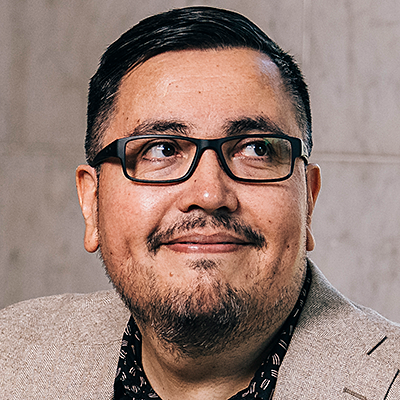
Andres Lucero is Associate Professor of Interaction Design at Aalto University's Department of Art and Media, specializing in human-computer interaction for mobile devices and interactive surfaces. His research integrates human-computer interaction, design methodologies, and playful interfaces. He holds a PhD from Eindhoven University of Technology and has industry experience from Nokia, where he led user-centered design projects as Senior Researcher. Research explores tangible interfaces, social wearables, museum experience design, human-AI collaboration, and cross-cultural co-design approaches. Recent projects investigate conversational agents in design processes, persona generation workflows, and freeform interactive devices. Dr. Lucero received the Honourable Mention Award at MUM 2020 for innovative interaction research. His work advances design methods through first-person perspectives, AI integration, and novel interaction paradigms.
Stephen Y. Chou is the Joseph C. Elgin Professor of Engineering and Professor of Electrical and Computer Engineering at Princeton University. He is affiliated with the Princeton Materials Institute (PMI) and leads the Nano, Meta, and Bio-Health Laboratory (NMBH Lab), previously known as the Nanostructures Lab. His work spans nanotechnology, bioengineering, and photonics, integrating interdisciplinary approaches to address challenges in health, electronics, and manufacturing. Ph.D., Massachusetts Institute of Technology, 1986 M.A., Physics, State University of New York at Stony Brook, 1982 B.S., Physics, University of Science and Technology of China, 1978 Chou's research focuses on nano-bioengineering for diagnostics and health, nanophotonics (meta-optics and subwavelength elements), and nanofabrication techniques. His work has revolutionized nanoimprint lithography, enabling breakthroughs in semiconductor devices, optical sensors, and biomedical tools. The NMBH Lab's innovations include ultra-sensitive biosensors (D2PA), the iMOST™ diagnostic platform, and foundational contributions to gate-all-around (GAA) transistors for sub-3 nm CMOS technology. His publications reflect advancements in plasmonic biosensors, organic solar cells, nanofluidics, and scalable nanoimprint methods. Key themes include nanoscale light manipulation, low-cost diagnostic systems, and quantum electronic devices. Member, National Academy of Engineering (2007) IEEE Cledo Brunetti Award (2004) IEEE Nanotechnology Pioneer Award (2014) Nanoimprint Pioneer Award (2015) Packard Fellow (1991) Fellow, IEEE (2000) Inductee, New Jersey High Tech Hall of Fame (2004) MIT Technology Review Emerging Technologies (2003, 2007) Chou has founded three companies (Nanonex, NanoOpto, Essenlix) and co-founded BioNano Genomics (NASDAQ: BNGO). His work bridges academic research and industrial impact, with over 700 publications (H-index 97) and 400 patents, influencing global nanotechnology and diagnostics. The NMBH Lab develops transformative technologies in nano-bioengineering, nanophotonics, and nanofabrication, emphasizing practical applications for healthcare and electronics.
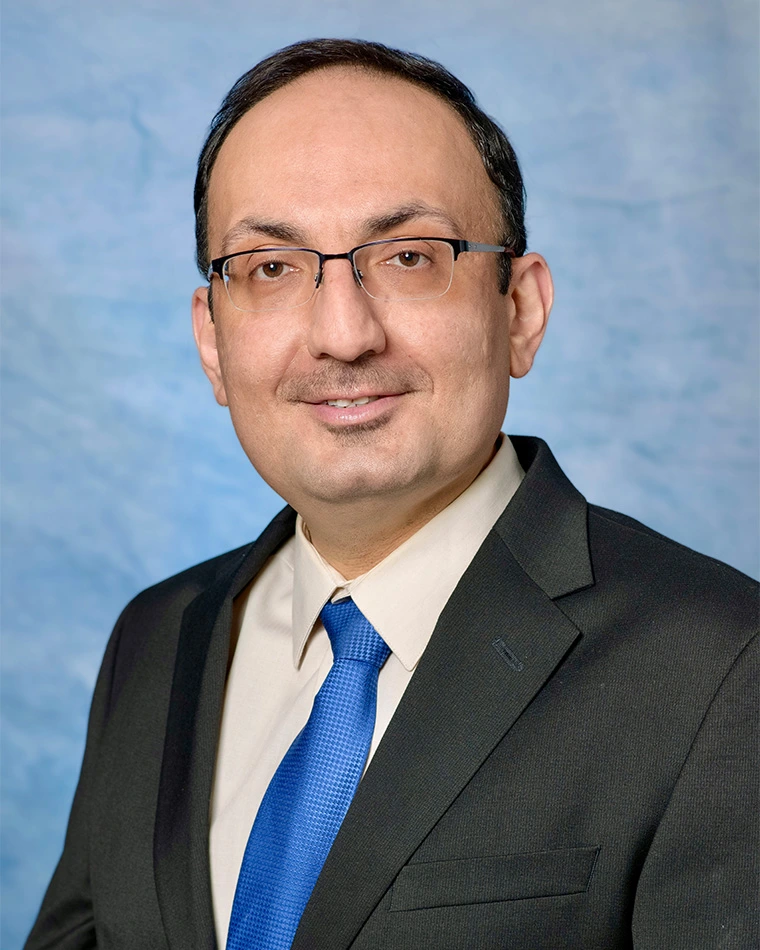
Ehsan Azimi is an Assistant Professor in the Department of Electrical and Computer Engineering and the Department of Computer Science at the University of Arizona, where he is also a member of the Graduate Faculty. His research bridges human-AI interactive systems, extended reality, robotics, and human-centered design, with a strong focus on medical applications. His research interests lie in creating synergistic human-AI systems that enhance medical procedures through advanced technologies. Key areas include extended reality for surgical navigation , robotics in minimally invasive surgery , and intelligent user interfaces . His work has led to innovations in smart glasses calibration, intraocular robotic snakes, needle steering, and digital twins for surgical training, all aimed at improving precision, safety, and learning in medicine. The recent articles highlight a consistent trend in medical robotics , augmented reality in surgery , and human-robot collaboration . These works span from hardware development to AI-driven interfaces, emphasizing real-time interaction, user experience, and clinical applicability across disciplines like ophthalmology, otology, and surgical education. Scientific Awards: Siebel Scholar Provost Postdoctoral Fellowship Link Fellowship Ehsan actively mentors students and scholars in research projects, indicating a strong commitment to academic advising. While specific grant details are not listed, his patented technologies and publication record suggest successful funding and translational research outcomes. His work has been featured in Engineering Magazine and other media, reflecting its impact and innovation. His research is conducted within an interdisciplinary lab environment focused on human-centered AI and medical robotics, integrating expertise from computer science, engineering, and clinical medicine to develop next-generation surgical and training systems.
Jung Han is the William A. Norton Professor of Electrical & Computer Engineering at Yale University, affiliated with the School of Engineering & Applied Science. He holds a Ph.D. from Purdue University and leads the Optoelectronics Materials and Devices Group, focusing on interdisciplinary research in III-nitride semiconductors, optoelectronics, and power electronics. His work bridges fundamental materials science with practical applications in solid-state lighting, energy harvesting, and next-generation electronics. Research interests include wide-bandgap semiconductor materials (e.g., GaN), nanoscale device fabrication, and epitaxial growth techniques. He pioneered nanoporous GaN distributed Bragg reflectors (DBRs) for high-efficiency LEDs and lasers, as well as selective-area growth methods for power electronics. His lab explores green energy technologies, flexible electronics, and hybrid organic-inorganic semiconductors. Publications emphasize advancements in GaN-based vertical-cavity surface-emitting lasers (VCSELs), SWIR detectors, and micro-LED displays. Recent work addresses challenges in defect control, scalability of III-nitride devices, and integration with emerging materials. His group collaborates across engineering, applied physics, and chemistry to advance sustainable energy and high-performance optoelectronics. Notable contributions include wafer-level integrated white-LEDs with quantum dots, damage-free in-situ GaN etching via TBCl, and stacking-fault-free GaN growth on foreign substrates. His research has been recognized in high-impact journals like Advanced Materials and Applied Physics Letters .
Dr. Bob Beitle Jr. is a Professor of Chemical Engineering and Senior Associate Vice Chancellor for Research and Innovation at the University of Arkansas. He joined the department in 1993, earned tenure in 1998, and was promoted to Full Professor in 2006. His research spans biochemical engineering , bioseparation , fermentation , and adaptive technology for the disabled , with significant work on protein purification, catalytic nanoparticles, and sustainable bioprocesses. Education: BS, MS, PhD in Chemical Engineering from the University of Pittsburgh (1987, 1991, 1993) Dr. Beitle's research combines experimental and computational approaches, focusing on peptide-directed nanoparticle synthesis and biocatalysis . His recent publications highlight advancements in MOF-based separations , CO2 capture materials , and viral detection platforms . He has secured grants like the CAREER Award and led projects in industrial partnerships and student development . Scientific contributions include multiple patents in bioseparation and software interfaces. Awards span decades: teaching honors (1988–2007) and mentorship recognition . He serves on the Cell and Molecular Biology Program Advisory Committee and the Executive Committee for the Biochemical Technology Division of ACS . Lab initiatives involve genomic data-driven affinity tail design and membrane-assisted fermentation systems .
Luca Varani is a Professor and Group Leader of the Structural Biology group at the Institute for Research in Biomedicine (IRB), affiliated with the Università della Svizzera italiana in Bellinzona, Switzerland. His research focuses on understanding the molecular mechanisms of antibody-pathogen interactions and engineering novel therapeutic antibodies. Education: Chemistry degree from University of Milan, PhD from MRC-Laboratory of Molecular Biology (University of Cambridge) Former postdoc at Stanford with EMBO fellowship Founder of CLBiotech (2022), a nanobody discovery and engineering startup Varani's research spans structural biology, immunology, and biophysics with emphasis on viral pathogenesis and antibody engineering. His work combines experimental and computational approaches to study antibody-antigen interactions, particularly against emerging pathogens like SARS-CoV-2, Zika, and Dengue viruses. His group has pioneered structure-guided antibody engineering techniques that have led to multiple high-impact publications in journals like Nature, Cell, and Science. Analysis of Varani's recent publications reveals a strong focus on SARS-CoV-2 antibody responses, with significant contributions to understanding neutralizing mechanisms, viral escape, and therapeutic antibody development. His work also extends to prion diseases, cancer immunology, and flaviviruses, demonstrating a multidisciplinary approach that bridges structural biology with translational medicine. As a reviewer for high-impact journals and international granting agencies, Varani contributes significantly to the scientific community. He also serves as an evaluator for European startup accelerator programs and consults for antibody biotechnology companies, translating academic research into practical applications. Varani leads a highly multidisciplinary research team that employs techniques ranging from NMR spectroscopy and X-ray crystallography to cellular assays and computational modeling. His laboratory has been instrumental in developing bispecific antibodies against SARS-CoV-2 and other pathogens, with several candidates advancing toward clinical trials.
Leila Deravi is an Associate Professor of Chemistry and Chemical Biology at Northeastern University's College of Science, affiliated with the Barnett Institute of Chemical and Biological Analysis and the Institute for Chemical Imaging of Living Systems. Her research focuses on biomaterials design, particularly protein-based systems inspired by biological mechanisms in cephalopods and extracellular matrices. She leads the Biomaterials Design Group, which explores applications ranging from tissue engineering to wearable electronics. Her work integrates bioanalytical chemistry, materials science, and design, with projects including cephalopod pigment studies for sunscreen development and bionic material fabrication using additive manufacturing. She has secured significant grants, including an NSF award and U.S. Army funding, and co-founded Seaspire Skincare, leveraging marine biotechnology. Key Research Themes: Bio-inspired materials, cephalopod pigmentation, biomedical textiles, and sustainable cosmetics Notable Collaborations: Cross-disciplinary projects with engineering, biology, and entrepreneurship Innovation: Development of UV-sensing devices and eco-friendly skincare products Deravi's educational contributions include innovative chemistry courses where students design cosmetics, bridging theory and practical application. Her lab's work frequently appears in media discussions on skincare trends and environmental chemistry advancements.
Southern University of Science and Technology (SUSTech)China
Prof. CHEN Shuming is a Tenured Professor and Doctoral Supervisor at the Department of Electronic and Electrical Engineering , Southern University of Science and Technology (SUSTech) . He has held academic positions since joining SUSTech in 2013 and was promoted to Professor in 2024. Education: PhD in Electronic and Computer Engineering (HKUST, 2012), Master in Optical Engineering (Sun Yat-sen University, 2008), Bachelor in Optoelectronics (South China University of Technology, 2005) Research Focus: Prof. Chen specializes in quantum dot light-emitting diodes (QLEDs) and organic light-emitting diodes (OLEDs) , with expertise in device engineering , device physics , and display/lighting applications . His work includes: Novel device structures (tandem, top-emitting, flexible) Charge transport and exciton dynamics Low-cost fabrication techniques (inkjet printing, laminating) Publication Trends: His recent papers address QLED stability , high-efficiency architectures , and AC-compatible devices , reflecting advancements in quantum dot technology and consumer electronics integration . Scientific Awards: Guangdong Natural Science Award (2024) Shenzhen Youth Science and Technology Award (2017) China Invention Association Innovation Award (2024) International Society for Information Display Outstanding Paper Award (2018) Advising and Grants: Prof. Chen has supervised 6 doctoral students, 5 master's students, and multiple undergraduates. He has led over 10 major projects, including National Natural Science Foundation grants and National Key R&D Program initiatives.
Cara Krmpotich is a Professor and Associate Dean at the University of Toronto's Faculty of Information, specializing in museum anthropology with a focus on decolonizing and Indigenizing practices. She co-directs the Great Lakes Research Alliance for the Study of Aboriginal Arts and Cultures (GRASAC), advancing repatriation efforts and Indigenous heritage sovereignty. Krmpotich also co-led DigiLabs, exploring equity and ethics in digital cultural heritage. Her academic leadership includes roles as Past-President of the Council for Museum Anthropology and Board member of the Ontario Museum Association. Education : DPhil, University of Oxford (2004–2008) MA, University of British Columbia (2002–2004) BA, Trent University (1997–2001) Certification in Museum Management and Curatorship, Fleming College (1999–2000) Research Interests : Repatriation of cultural property, kinship and material culture, community-engaged museum practices, digital heritage ethics, and Indigenous sovereignty in cultural institutions. Her work bridges anthropological theory with actionable initiatives to address historical inequities in museum collections. Grants & Collaborations : SSHRC-funded projects on ethical stewardship of Indigenous heritage and digital colonial collections (2013–2025) Canada Foundation for Innovation grants for mobilizing Indigenous heritage research (2018–2025) Initiatives with institutions like the Smithsonian and University of Edinburgh on repatriation and reconciliation Teaching : Courses include Collection Management, Curatorial Practice, and Museums & Indigenous Communities. Krmpotich emphasizes critical pedagogy and practical engagement with museum ethics.
Feng Gao is a Professor of Optoelectronics at the Department of Physics, Chemistry and Biology (IFM), Linköping University, and leads the Electronic and Photonic Materials (EFM) division. He is affiliated with the Faculty of Science and Engineering (Institute of Technology) and conducts interdisciplinary research at the intersection of physics, chemistry, and materials science. His work focuses on organic semiconductors and metal halide perovskites for sustainable energy technologies. His research interests include: Organic and perovskite solar cells with high efficiency and recyclability Perovskite LEDs for next-generation lighting and displays Electrically pumped perovskite lasers Flexible and lead-free perovskite materials for X-ray detection and information storage Sustainable materials design with full lifecycle consideration His recent publications reveal a strong focus on improving device stability, reducing environmental impact, and enhancing energy conversion efficiency in optoelectronic systems. Trends in his work show a shift toward circular economy principles, green manufacturing, and multifunctional materials. His research has been published in top journals including Nature , Science , Nature Energy , and Advanced Materials . Scientific awards received: Göran Gustafsson Prize in Physics ERC Consolidator and Starting Grants Wallenberg Scholar (2024) SSF Future Research Leader (2020) Tage Erlander Prize (2020) Wallenberg Academy Fellow (2017) Lisa Meitner Grant for Israel-Swedish Collaboration Feng Gao has secured significant research funding from the European Research Council (ERC), the Knut and Alice Wallenberg Foundation (SEK 31 million for flexible X-ray technology), Swedish Research Council (VR), Swedish Energy Agency, FORMAS, Vinnova, and Marie Skłodowska-Curie Actions. He actively mentors PhD and postdoctoral researchers, including Max Karlsson and Huotian Zhang, and fosters international collaborations with institutions such as the University of Cambridge, Oxford, and Zhejiang University. His group emphasizes both scientific excellence and career development, supporting exchanges with leading global labs. He leads a dynamic research team within the Advanced Functional Materials (AFM) environment at IFM, working on groundbreaking projects such as fully recyclable solar cells, touch-sensitive LED displays, and perovskite-based random number generators for quantum communication. The group is also building new experimental infrastructure, including advanced labs for optoelectronic materials synthesis and characterization.
Michael Neumayr is an Adjunct Associate Professor in Spatial Experience Design at ArtCenter College of Design’s Graduate Environmental Design program, where he contributes to the education of future design innovators. His professional practice, Neumayr Design, is based in Los Angeles and specializes in high-end residential, product, furniture, commercial, and exhibition design. His research and creative interests span spatial experience design, wellness environments, sustainable design, interactive furniture systems, and the integration of technology in living and public spaces. He emphasizes user-centered, sensory-rich environments that blend classical aesthetics with modern innovation. The body of his work, as seen in projects like the Villa Munich and Aquamoon shower system, reflects a consistent trend toward holistic, immersive experiences that engage all senses. His designs often incorporate advanced technology, sustainable materials, and meticulous craftsmanship, particularly evident in wellness architecture and smart furniture. Good Design 2019 NYC-x Design 2018 | Best Product of the Year Stylepark 2018 | Most Innovative Product Good Design 2008 Permanent Collection | Chicago Athenaeum Museum of Architecture and Design Gute Gestaltung 2009 DDC Award Nominated for Designpreis der Bundesrepublik Deutschland 2010 Finalist IDEA International Design Excellence Award 2009 Nominated for Designpreis Deutschland 2009 iF Design Award 2007 Michael Neumayr has led significant design projects and collaborations, including with Hiller Gruppe and Atelier Schneeweiss, resulting in award-winning products and installations. While no formal advising or grant history is documented, his academic role suggests mentorship of graduate students in design innovation and spatial storytelling. His studio functions as a design lab, integrating research, prototyping, and real-world application across residential, commercial, and exhibition domains. Projects like the i-tech chair and Villa Munich spa illustrate a team-based, interdisciplinary approach to solving complex spatial and functional challenges.
Hamm-Lippstadt University of Applied SciencesGermany
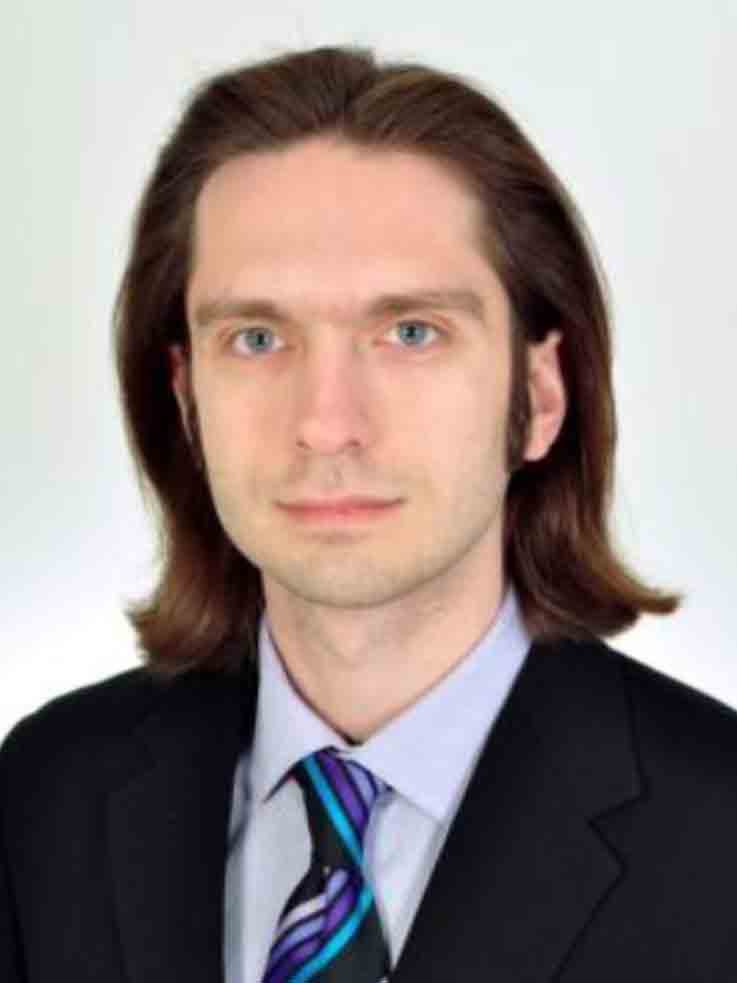
Prof. Jan-Niklas Voigt-Antons is a Professor of Applied Computer Science specializing in Immersive Media at Hamm-Lippstadt University of Applied Sciences. His work focuses on Extended Reality (XR), Virtual Reality (VR), Augmented Reality (AR), and their applications in healthcare, education, and human-machine interaction. He holds a Dr.-Ing (Engineering Doctorate) and has extensive industry experience with organizations like Daimler AG, Telekom Innovation Laboratories, and the German Research Center for Artificial Intelligence (DFKI). Research interests include user experience (UX) design, emotion analysis in virtual environments, and accessibility for aging populations. He has led projects on wearable health tech, AR/VR usability, and immersive training systems. Notable areas of impact include developing guidelines for inclusive XR interfaces and advancing telemedicine through immersive technologies. Prof. Voigt-Antons has collaborated with Charité – Universitätsmedizin Berlin on healthcare applications and has contributed to standardization efforts in telecommunications. His technical competencies include agile project management, statistical analysis, and mobile application development for iOS/Android. He advises on UX evaluations, usability testing, and physiological data analysis for industry partners. Key achievements include creating the Story Time Dataset for video quality research and developing the ColorTable system for flavor perception studies. His work emphasizes real-world deployment, with projects addressing mobility challenges for seniors in rural areas and improving dementia care through tablet-based interventions.
Dr. Dimitrios Koutsonikolas is an Associate Professor in the Electrical and Computer Engineering Department at Northeastern University, leading the WiNS Lab. Previously, he held a tenured position at the University at Buffalo. His research focuses on experimental wireless networking and mobile computing, particularly millimeter-wave systems, 5G/6G networks, energy-efficient protocols, and high-bandwidth applications like VR/AR. He has published over 80 papers in top venues (e.g., MobiCom, INFOCOM), received NSF CAREER and IEEE awards, and led major grants including an NSF-funded $3M project for an open 5G/6G testbed. His lab explores cutting-edge technologies like O-RAN, beam management, and edge computing for latency-critical applications. Education: PhD in Electrical and Computer Engineering from Purdue University (2010). Research Interests: Experimental validation of wireless protocols, mmWave networking, latency-optimized edge computing, and cross-layer design. Current projects include TARGET (5G/6G latency solutions) and the X5G testbed for open spectrum utilization. Recent Trends in Articles: Focus on 5G deployment maturity, mmWave beam management, and 6G-ready technologies like autonomous space networks. Work bridges theoretical contributions with practical implementations, leveraging testbeds for real-world validation. Awards: Notable honors include IEEE Region 1 Innovation (2019), NSF CAREER (2016), and multiple best paper awards at MobiCom, WCNC, and Globecom. Recognized for both research and teaching excellence. Grants & Labs: Principal investigator on NSF grants ($3M+), leading collaborations with IMDEA Networks and industry partners. WiNS Lab develops open-source tools for 5G testing and explores sub-THz channels. Advises over 15 students, many advancing to top tech firms (e.g., Apple, HP Labs).
Craig Shultz is an Assistant Professor in the Department of Electrical and Computer Engineering at the University of Illinois Urbana-Champaign and co-founder of Fluid Reality . His research focuses on interactive embedded systems and haptic actuation , particularly tactile interfaces for VR/AR, IoT, and wearable devices. He employs an interdisciplinary approach blending psychophysics, electrical and mechanical engineering, and human-computer interaction (HCI) to advance haptic rendering. Specializes in surface haptics , non-contact haptics , and electroosmotic pump arrays . Develops technologies for scalable shape displays , mid-air haptic interactions , and haptic-augmented spatial computing . Teaches Interactive Haptic Systems (since 2025). His research has led to 6 best paper awards and nominations at ACM and IEEE venues, including the IEEE Transactions on Haptics Best Application Paper of the Year (2018). He received the Sony Faculty Innovation Award (2025) and the IEEE Technical Committee on Haptics Early Career Award (2025) . His publications emphasize haptic rendering , low-latency touchscreens , and non-contact tactile actuation . He actively collaborates with institutions like Northwestern University and KAIST HCI . Key research areas: tactile interfaces, scientific engineering, VR/AR haptics, and haptic design practices. Technologies developed: Fluid Reality haptic gloves, DynaButtons, LRAir synthetic jets, and TriboTouch micro-patterned surfaces.
University of California , Santa Barbara (UCSB)United States
Steven DenBaars is a Professor of Materials and Electrical & Computer Engineering at the University of California, Santa Barbara (UCSB), where he holds the Mitsubishi Chemical Chair in Solid State Lighting and Displays. He serves as Director of the Institute for Energy Efficiency and Executive Director of the Solid State Lighting and Energy Electronics Center (SSLEEC). PhD, Electrical Engineering, University of Southern California BS, Materials and Metallurgical Engineering, University of Arizona MS, Materials Science, University of Southern California His research revolves around the growth and application of wide-bandgap (GaN-based) semiconductors for blue LEDs, laser diodes, high-power electronics, and quantum technologies. Key areas include MOCVD of III-V compound materials, strain engineering, and device fabrication. Recent publications highlight advancements in GaN-based microLEDs for quantum random number generation, UV LED efficiency, laser diode design, and strain relaxation techniques. Subfields span tunnel junctions, V-defect engineering, and metasurface light-emitting structures. 2021 ISCS Quantum Devices Award 2010 IEEE Photonics Society Aron Kressel Award 2008 JSAP Outstanding Paper Award 2005 IEEE Fellow 2014 National Academy of Inventors Fellow 2021 Central Coast Innovation Award Member, U.S. National Academy of Engineering He has co-founded four compound semiconductor companies (Nitres, Soraa, SLD Laser, Akoustis) and holds over 150 U.S. patents. His research group at UCSB includes 11 graduate students and postdocs focusing on III-nitride materials for optoelectronics and quantum applications. DenBaars leads the SSLEEC, a multidisciplinary lab advancing solid-state lighting and energy-efficient electronics through semiconductor innovation.