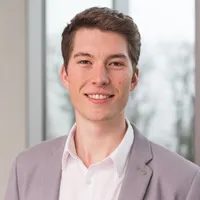
Professor João Santos Silva is a Professor in Economics at the University of Surrey, Department of Economics. His academic journey includes a PhD in Economics from the University of Bristol (1992), a Master's in Applied Mathematics from the Technical University of Lisbon (1988), and a Bachelor's in Economics from the same institution (1985). Prior to Surrey, he taught at the Technical University of Lisbon and the University of Essex. His research focuses on theoretical and applied microeconometrics, with notable contributions in quantile regression, count data models, gravity equations in trade, and mode regression. He co-authored the seminal paper "The Log of Gravity" , recognized as a Classic in Economics. Silva has developed several Stata modules, including fqreg and ppml , advancing econometric software tools. He teaches courses such as ECOM042: Econometrics I and ECOM066: Advanced Econometrics 2. His work has been published in top journals like the Review of Economics and Statistics and Journal of Econometrics . Notable contributions include addressing endogeneity in count data models, machine learning applications in trade research, and analysis of price stickiness in firms. Silva’s research emphasizes methodological rigor and practical relevance in economic analysis.
Frank E. Talke is the CMRR Endowed Chair Professor in the Department of Mechanical and Aerospace Engineering at UC San Diego. His research focuses on medical device technology and information storage systems. He has contributed to advancements in hard disk drive tribology, thermal flying height control, and biomedical innovations like intraocular pressure sensors and 3D-printed endoscopes. Talke holds over 350 publications and 11 patents, with honors including the ASME Medal, Tribology Gold Medal, and membership in the National Academy of Engineering. Education: Diplom-Ingenieur (1965, University of Stuttgart), M.S. and Ph.D. in Mechanical Engineering (1966, 1968, UC Berkeley), honorary doctorate from Technical University of Munich (2005). Research interests span interdisciplinary fields combining mechanical engineering, materials science, and precision instrumentation. Current projects include medical device development (e.g., biofilm-resistant catheters, detachable bronchoscopes) and information storage tribology. His work emphasizes translational applications in both engineering and healthcare sectors. Key Awards: ASME Medal (2008), Tribology Gold Medal (2010), Honorary ASME Membership (2018). Grants and Funding: Extensive industry and academic collaborations in disk drive technology and biomedical engineering. Labs/Teams: Leads the Center for Memory and Recording Research (CMRR), fostering interdisciplinary research in data storage and medical devices.
James Bellingham is the Bloomberg Distinguished Professor of exploration robotics at Johns Hopkins University, holding primary appointments in the Department of Mechanical Engineering and the Applied Physics Laboratory's Asymmetric Operations Sector. He serves as executive director of the Johns Hopkins Institute for Assured Autonomy and is a member of the Data Science and AI Institute. With over 30 years of expertise, Bellingham pioneered small, high-performance autonomous underwater vehicles (AUVs), leading global expeditions across polar and oceanic regions. His work bridges robotics innovation with environmental monitoring, including oil spill response, Arctic exploration, and NASA collaborations for extraterrestrial oceanic exploration. Bellingham's educational background includes BS, MS, and PhD in physics from MIT. He previously led Woods Hole Oceanographic Institution's Marine Robotics Consortium, creating advanced prototyping facilities and fostering entrepreneurship in robotics. His leadership roles span institutional boards such as the Naval Studies Board and OceanX. His research focuses on advancing AUV capabilities for adaptive sampling, fault detection, and interdisciplinary oceanography. Over 50 publications demonstrate his technical contributions, including AUV design, environmental hazard mapping, and collaborative robotic systems. Awards include National Academy of Engineering induction and military honors for public service.
Christoph T. Koch is a Professor of Physics at Humboldt-Universität zu Berlin, where he has held the W3 Chair since 2015. Previously, he held a similar position at Ulm University (2011–2015), supported by the Carl Zeiss Foundation. His research focuses on advanced electron microscopy techniques, including quantitative transmission electron microscopy (TEM), electron holography, and strain mapping. He leads the AG Strukturforschung/Elektronenmikroskopie group, advancing materials science through innovations in imaging and spectroscopy. Education: B.Sc./M.Sc. in Physics at Heidelberg University (1996–1998), followed by an exchange at Arizona State University (1997–1998). PhD in Physics from Arizona State University (2002, advisor: Prof. John C.H. Spence). Postdoctoral research at the Max Planck Institute for Metals Research, Stuttgart (2002–2011). Research interests include: Electron diffraction and phase retrieval Nanometer-scale strain and defect analysis Electron energy-loss spectroscopy (EELS) for plasmonics and bandgap mapping Development of FAIR data infrastructure for materials science Leadership: Managed the Department of Physics at Humboldt University (2020–2024). Collaborates widely, with key co-authors including P.A. van Aken, W. Sigle, and C. Felser. His work bridges experimental microscopy and computational modeling, addressing challenges in semiconductors, ceramics, and 2D materials. Notable contributions include pioneering methods for 3D reconstruction via electron ptychography, dynamic electron diffraction analysis, and strain mapping in advanced CMOS technologies. Current efforts emphasize real-time imaging and AI-driven data analysis in materials research.
Aselia Urmanbetova is a Teaching Professor in the School of Economics at Georgia Institute of Technology. She serves as the Undergraduate Teaching Coordinator and advisor to GT Econ Club and the Georgia Tech chapter of Omicron Delta Epsilon (ODE). Her roles include managing Graduate Student Instructors, TAs, and 30+ Undergraduate TAs, emphasizing active learning and equitable education. She holds a PhD in Public Policy and multiple advanced degrees from Georgia Tech and Emory University. Her research focuses on open education resources, active learning pedagogies, environmental policy, and transportation economics. She also explores globalization's impact on local industries and higher education policy. Courses taught include Global Economy, Cost-Benefit Analysis, and SAS Coding/Data Analytics. Her publications analyze U.S. manufacturing trends, China's rural labor markets, and pulp/paper industry economics. She actively contributes to campus initiatives on sustainability, diversity, and mental health. Outside academia, she practices yoga and dance, reflecting her commitment to holistic well-being.
Philbert Tsai is an Associate Teaching Professor in the Department of Physics at the University of California, San Diego (UCSD). He has held roles as QBio Lab Coordinator/Project Scientist (2015–Present) and Associate Project Scientist (2011–2015), overseeing advanced laboratory setups and bio-imaging research projects. His work focuses on neurovascular systems, microscopy techniques, and cortical blood flow dynamics. Education: Ph.D., Physics, UC San Diego, 2004 Research Interests: Quantitative analysis of cortical microvascular networks Development of ultra-high-resolution imaging systems (e.g., STED, two-photon microscopy) Neurovascular coupling mechanisms and their impact on brain oxygen supply Biomedical engineering applications in neuroscience research Lab & Projects: QBio Lab: Advanced instrumentation including confocal microscopes, 3D printers, and wet-lab equipment Developed vectorized models of mouse brain vasculature and ultra-wide-field multiphoton imaging systems Grants & Awards: No specific awards listed in provided text Collaborations: Worked extensively with colleagues like Dr. David Kleinfeld and Dr. Berislav Zlokovic on neurovascular projects.
Joachim Reuder is a Professor and Research Group Leader at the Geophysical Institute, University of Bergen, affiliated with the Bjerknes Centre for Climate Research. His research focuses on turbulence in the atmospheric boundary layer, wind energy meteorology, and the application of drones for atmospheric measurements. He leads the Meteorology research group and collaborates with the Bergen Offshore Wind Centre. His work combines field observations with advanced simulations, emphasizing stable boundary layers, wind turbine wake dynamics, and lidar technology validation. Key projects include the ISOBAR Arctic field campaigns, COTUR offshore turbulence studies, and the SAMURAI-S drone-based turbulence investigation. Publications highlight contributions to lidar data analysis, boundary layer modeling, and wind energy applications. He has organized conferences and contributed to editorial roles, underscoring his influence in atmospheric science and meteorology.
Francesco Sannino is a Professor of Computational Science at the University of Southern Denmark's Department of Mathematics and Computer Science. He is affiliated with the Danish Institute for Advanced Study (DIAS) and holds a Ph.D. His research spans quantum field theory, particle physics, and complex systems modeling. Key interests include Standard Model duality, black hole physics, and epidemiological dynamics. Education: Ph.D. in Physics (not explicitly stated in provided text, inferred from title). Research focuses on theoretical physics, including conformal field theories, gauge dynamics, and applications of quantum chromodynamics (QCD). Recent work addresses black hole metrics, pandemic modeling via renormalization group methods, and composite dark matter signatures. His studies often bridge high-energy physics and complex systems. Main Research Trends: Over 15 years, Sannino has produced 333+ publications, emphasizing: Black hole physics and effective metrics Standard Model extensions and dualities Quantum field theory at conformal windows Epidemiological modeling of pandemics Awards: Elected Member of the Finnish Academy of Science and Letters (2015) EU Excellence Grant in Theoretical Physics (2005) International Referee for Austrian Science Fund Grants & Projects: Leader of the DG Center for Particle Physics Phenomenology (2014–2019) Carlsberg Foundation Semper Ardens grant (2023–2029) Coordinator for Danish CERN Instrument Center (2017–2019) Labs/Teams: Active in CP³ - Center for Particle Physics Phenomenology and DIAS, collaborating globally on projects like gravitational wave detection and pandemic modeling.
Prof Duncan Robertson is a Professorial Research Fellow at the School of Physics and Astronomy, University of St Andrews, Scotland. He holds a B.Sc. (Hons.) and Ph.D. in Physics from the same institution. His career has focused on millimeter-wave radar technologies with applications in environmental sensing, security systems, and battlefield systems. He leads the Millimetre Wave Group, specializing in radar imaging, radiometry, electron spin resonance instrumentation, and antenna design. Education: B.Sc. (Hons.) in Physics and Electronics, University of St Andrews (1991) Ph.D. in Millimetre Wave Physics, University of St Andrews (1991) Research Interests: Prof Robertson’s work spans millimeter-wave radar systems, including drone detection, glacier monitoring, sea clutter analysis, and holographic metasurfaces. His group develops technologies for security screening, environmental monitoring, and material characterization. Grants & Projects: Environmental Monitoring: Short Range Interferometric Synthetic Aperture Radar (InSAR) MuWMAS: Snowflake Scattering and Microstructure Analysis Drone Detection Radar Commercialization Labs/Teams: Leads the Millimetre Wave Group, collaborating on radar phenomenology and advanced sensor systems. Active in international radar conferences and experimental field trials.
Simon Mochrie is a Professor of Physics and Applied Physics at Yale University, affiliated with the Department of Physics within the Faculty of Arts and Sciences. His research focuses on experimental biophysics and condensed matter physics, with emphasis on chromatin dynamics, nuclear mechanics, and super-resolution microscopy. He holds a Ph.D. from MIT (1985) and has pioneered techniques such as optical tweezers and STED microscopy to study biological systems like the ubiquitin-proteasome system in yeast. Current projects include single-molecule measurements on nucleosomes and developing novel imaging methods like LIVE-PAINT for live-cell super-resolution imaging. Educations: Ph.D., Physics, MIT (1985) Research interests center on understanding how chromatin organization influences nuclear mechanics, with studies on heterochromatin condensation, cohesin-driven loop extrusion, and chromatin-envelope interactions. His lab develops advanced microscopy techniques to visualize protein dynamics and subnuclear structures in real time. Recent work explores diffusive states of membrane proteins and the role of phase separation in heterochromatin mechanics. His articles demonstrate a focus on interdisciplinary approaches, combining biophysical experimentation with computational modeling to elucidate fundamental mechanisms in cell biology and soft matter physics. Notable themes include the interplay between chromatin structure and nuclear stiffness, loop extrusion dynamics, and quantitative analysis of intrachromosomal contacts. Teaching contributions include developing introductory physics courses tailored for life sciences students, emphasizing applications in biology and medicine. He actively participates in STEM education initiatives, including collaborative research networks for graduate students in physical biology. The Mochrie Lab also emphasizes instrumentation innovation, such as building fast-scanning STED microscopes and reversible peptide-based imaging systems.
Audrye Wong is an Assistant Professor of Political Science and International Relations at the University of Southern California (USC) Dornsife College of Letters, Arts and Sciences. Her research focuses on Chinese foreign policy, economic statecraft, and authoritarian governance, with a particular emphasis on how domestic politics influence international strategies. She explores themes such as Sino-US relations, coercive economic diplomacy, environmental governance in authoritarian systems, and the role of subnational actors in shaping foreign policy. Her work bridges comparative politics and international relations, analyzing case studies ranging from China’s engagement with Australia and Ukraine to the geopolitical dynamics between Japan, South Korea, and China. Wong’s studies often highlight the interplay between economic tools, public accountability, and strategic narratives in advancing national interests. Wong’s publications demonstrate a consistent focus on understanding how states leverage economic instruments for geopolitical influence, with a critical eye toward the effectiveness of such strategies in authoritarian contexts. Her research contributes to broader debates on global power transitions, regional stability, and the evolving norms of international economic diplomacy.
Daniel Kühbacher is a Tutor and researcher at the Chair of Environmental Sensing and Modeling at Technische Universität München (TUM). He specializes in developing high-resolution urban emission inventories for CO2, CH4, and co-emitted species, and leads the setup of a 100-sensor CO2 network in Munich to assess sector-specific emission factors. His work bridges environmental monitoring, sensor technology, and urban climate science. Teaching roles include tutoring the Environmental Sensing and Modeling lecture and advanced seminar, as well as the joint practical course Gemeinschaftspraktikum MST . Research focuses on integrating traffic simulation data, mobile measurement units, and flux footprint modeling to quantify urban greenhouse gas emissions. Education: M.Sc. in Environmental Engineering Affiliations: Member of the ICOS Cities project and contributor to the ICOS Science Network Publications emphasize urban GHG monitoring innovations, including sensor network optimization, flux measurement validation, and inventory intercomparison studies. His work supports policy-relevant insights into emission hotspots and mitigation strategies. Currently develops the SCOUT project for street-level carbon observatories and explores human respiration emissions using mobile network data.
Jose Miguel Espi Huerta is an Associate Professor in the Department of Electronic Engineering at the School of Engineering, University of Valencia. He is an active researcher in power electronics and control systems, contributing significantly to grid-connected converters, renewable energy integration, and digital control techniques. His research interests include: Power Electronics and Inverter Control Predictive and Robust Control Strategies Renewable Energy Systems (Photovoltaic and Wind) Induction Heating Technologies Remote and Web-Based Educational Labs The analysis of his recent publications reveals a strong focus on improving the efficiency and reliability of grid-connected power converters using advanced control methods such as predictive current control and MPPT strategies. His work spans both industrial applications and academic education, particularly in developing remote laboratory platforms for control systems. Scientific awards and honors: No awards listed in the provided text. He has supervised academic theses and is affiliated with the LEII (Laboratory of Industrial Electronics and Instrumentation) research group. While no formal grants are listed, his extensive publication record indicates sustained research activity. He has contributed to the development of educational tools such as air levitation systems accessible via PLC and web interfaces, promoting innovative teaching methods in engineering education. The LEII research group focuses on industrial electronics, instrumentation, and power systems, providing a collaborative environment for applied research in energy conversion and control technologies.
Dr. Qiteng Hong is a Reader in the Department of Electronic and Electrical Engineering at the University of Strathclyde, Faculty of Engineering. He holds a BEng (Hons) and PhD from the same institution and is a leading researcher in power system protection and control for renewable-dominated grids. He is Deputy Director of the MSc in Electrical Power and Energy Systems and a member of the Steering Committee for the Joint MSc with Hong Kong University of Science and Technology (HKUST). BEng (Hons), Electronic and Electrical Engineering, University of Strathclyde, 2011 (Top Graduate of the Year) PhD, Electrical Engineering, University of Strathclyde, 2015 (fully funded by National Grid) His research focuses on novel solutions for monitoring, protection, and control of future power systems, particularly those with high renewable penetration. Key areas include wide-area monitoring using synchronized measurements, protection of converter-dominated systems, fast frequency response in low-inertia networks, and digital twin-based real-time control. His work contributes to UN Sustainable Development Goals in clean energy and climate action. Dr. Hong has published over 110 research outputs, including 59 journal articles. His recent publications (2025) emphasize fault detection and arc suppression in active distribution networks using advanced converter topologies and signal processing techniques. Themes include traveling wave analysis, Hough transform, synthetic zero-sequence signals, and machine learning for frequency prediction, reflecting a strong trend toward intelligent, data-driven power system protection. Gold Medal, 49th International Exhibition of Inventions Geneva (2024) IET Best Paper Award (DPSP APAC 2025) Best Paper Award, IEEE APAP (2019) Principal’s Award Runner Up, University of Strathclyde (2024) Students' Choice Award (2021) British Renewable Energy Awards – 'Highly commended' (2018) IET Prize for Academic Excellence (2011) John Moyes Lessells Scholarship (2013) Shortlisted for Best Innovation Award, Scottish Renewables (2018) Dr. Hong has led or participated in over 50 research and KE projects, securing £11M in funding (PI on £2.26M). He leads a team of 10 researchers, including 5 PhD students, and has developed the LGMVP platform—the UK’s first online tool of its kind. He serves on the University Senate, is a guest editor for 5 journal special issues (Co-Guest Editor-in-Chief for a special issue on zero-carbon power systems), and has delivered teaching across 9 modules. He has been PI or Co-I on major projects such as SETTLE-INSIGHT (NIA), Shell-iCase, and NGET SIF ALPHA. He leads an active research group focused on smart grid protection and digital twin technologies. He is the main developer of four prototype software tools and mentors a team of PhD students and research associates. His lab collaborates with industry partners like SSE, National Grid, and Shell, and he is a key figure in international initiatives through IEEE and CIGRE.
Job Dekker is a Professor holding the Joseph J. Byrne Chair in Biomedical Research at UMass Chan Medical School, where he serves as faculty across multiple departments including Systems Biology, Biochemistry and Molecular Biotechnology, and Bioinformatics and Integrative Biology. His work bridges the T.H. Chan School of Medicine and Morningside Graduate School of Biomedical Sciences, with significant contributions to understanding the three-dimensional organization of genomes. Utrecht University, Utrecht, Netherlands: MS Biology Utrecht University, Utrecht, Netherlands: PhD Physiological Chemistry Dekker's research focuses on the fundamental question of how chromosomes are organized in three-dimensional space and how this organization influences gene regulation. As a pioneer in chromosome conformation capture technologies (particularly Hi-C), his laboratory investigates long-range gene regulation, higher-order chromosome organization, and the mechanisms of chromatin folding. The lab employs a multidisciplinary approach combining cell culture, protein biochemistry, microscopy, genomics, and computational modeling to address these questions. Analysis of Dekker's recent publications reveals a continued focus on the structural principles governing chromosome organization, with particular emphasis on mitotic chromosome formation, loop extrusion mechanisms, and the role of cohesin and condensin complexes. His work spans multiple model systems and has increasingly incorporated multi-omics approaches to understand how 3D genome architecture relates to cellular function in both normal and disease states. Member, National Academy of Sciences (2022) Member, National Academy of Medicine (2021) EMBO Associate Member (2020) International Award of the Biochemical Society (2018) Novitski Prize of the Genetics Society of America (2018) Investigator, Howard Hughes Medical Institute (2015) Fellow, American Association for the Advancement of Science (2014) As Principal Investigator of the Dekker Lab within the Program in Systems Biology, Dekker has secured substantial funding including his HHMI Investigator position, which supports his research into chromosome organization. His laboratory offers multiple rotation projects for graduate students focusing on long-range gene regulation and chromosome organization using high-throughput genomics technologies. Dekker's work has been instrumental in developing and refining chromosome conformation capture techniques that are now widely used across the genomics field. The Dekker Lab is a leader in the 4D Nucleome field, contributing significantly to our understanding of how chromosomes fold in three-dimensional space and how this organization changes over time (the fourth dimension). His research group continues to push the boundaries of chromosome conformation capture technologies, developing new methodologies to investigate genome architecture at increasingly higher resolutions and across diverse biological contexts.