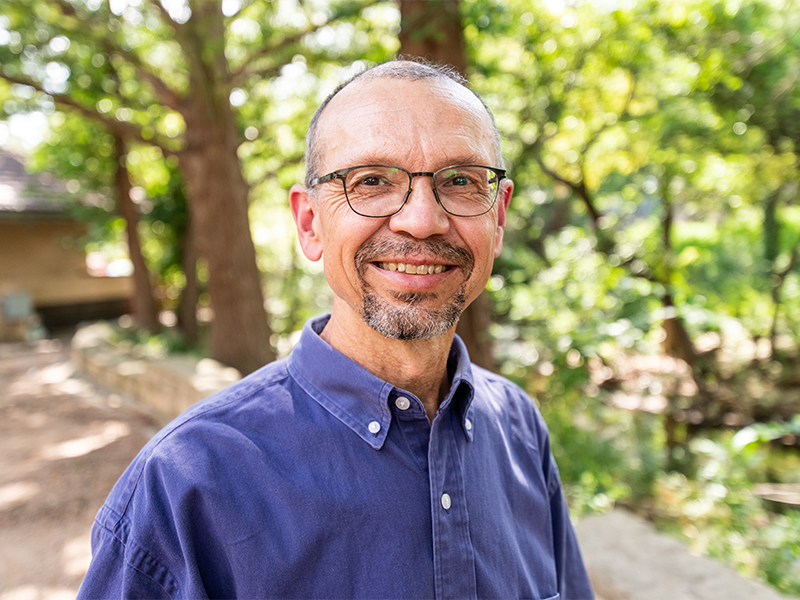
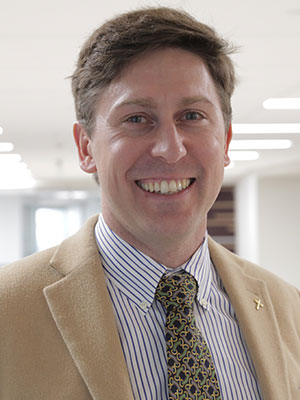
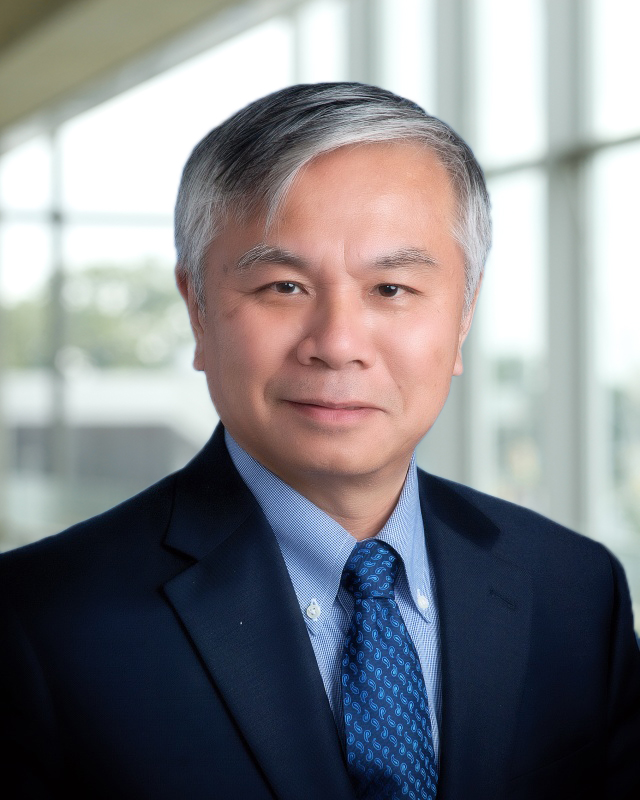
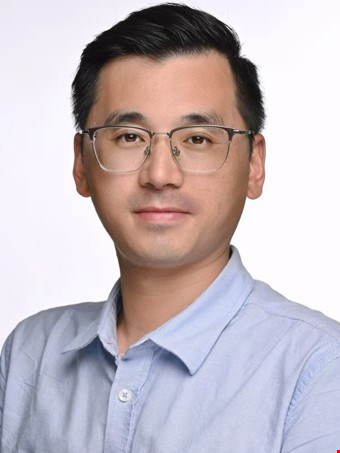
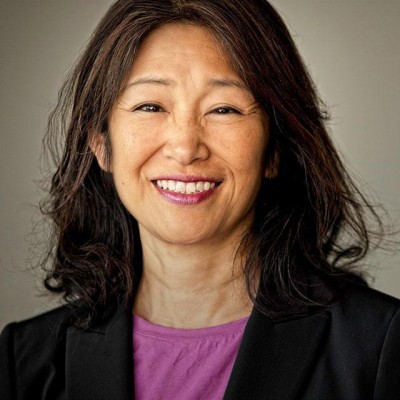
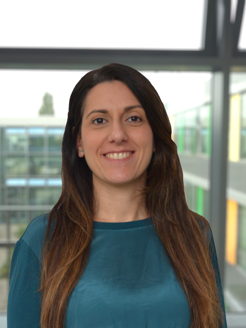
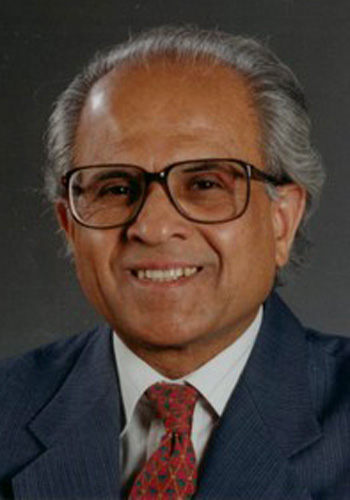
Matthew J. Hall is a Professor in the Department of Mechanical Engineering at the University of Texas at Austin , where he also holds the Louis T. Yule Fellowship in Engineering . He has been a faculty member since 1991 and is affiliated with the Cockrell School of Engineering . His research spans engine combustion processes , thermal fluids systems , engine controls , optical diagnostics , battery safety , and alternative fuels . He is particularly known for his work on cold-start emissions , spark ignition , engine friction reduction , and thermoelectric energy recovery . He teaches courses in Thermodynamics , including modeling of power cycles and HVAC systems , and has published over 150 technical articles. His recent work includes innovations in ammonia combustion , biomass gasification , and advanced engine diagnostics . Scientific Awards & Honors: Fellow of the Society of Automotive Engineers (SAE) Louis T. Yule Fellowship in Engineering Associate Editor, SAE International Journal of Engines Research Impact & Leadership: Prof. Hall leads multidisciplinary efforts in combustion science , energy systems , and sustainable propulsion . His lab has contributed to reducing engine friction by up to 40%, improving fuel efficiency at idle, and advancing the use of ammonia as a low-carbon fuel. He also explores thermoelectric generators for extending drone flight range and improving vehicle energy recovery systems.
Timothy Jacobs is Professor and Head of Multidisciplinary Engineering at Texas A&M University, with joint appointment in Mechanical Engineering. His research advances combustion science, emission control, and alternative fuel applications. Education: Ph.D. Mechanical Engineering, University of Michigan (2005) M.S. Mechanical Engineering, University of Michigan (2002) B.S.E. Mechanical Engineering, University of Michigan (1999) Research focuses on fundamental combustion processes in natural gas engines, developing low-temperature combustion strategies and aftertreatment integration. Recent work optimizes prechamber ignition systems for large-bore engines and hydrogen production via piston reactors. Experimental diagnostics characterize cycle variability, unburned emissions, and flame dynamics. Publications demonstrate expertise in combustion modeling, engine control algorithms, and emission formation mechanisms. Applied research supports decarbonization of power generation and marine propulsion. Awards recognize teaching excellence and research leadership, including ASME Fellowship and university professorships. Secures funding for engine technology development from federal agencies and industry partners.
Arash Nemati is an Assistant Professor at the Department of Energy Conversion and Storage, Technical University of Denmark (DTU). His research focuses on sustainable energy technologies, particularly solid oxide fuel cells, ammonia-fueled systems, and multiphysics modeling of energy conversion processes. He leads and participates in EU-funded projects such as RESCUE and X-SEED, aiming to advance renewable energy storage and green hydrogen production. His work addresses challenges in electrochemical systems, including durability, efficiency, and integration of renewable energy sources. He has received notable recognition, including a Highly-cited Paper award (Web of Science, 2022) and the DAAD Green Hydrogen Research Tour Scholarship (2024). Nemati actively supervises PhD students in areas like co-electrolysis and solid oxide electrolysis cell modeling. His expertise spans thermochemical processes, numerical simulations, and techno-economic evaluations of energy systems. Key projects include developing ammonia-driven reversible solid oxide cells for grid storage and optimizing pyrolysis-electrolysis systems for methanol and char production. His research aligns with UN Sustainable Development Goals, emphasizing clean energy and climate action.
Dr. Youngchul Ra is an Associate Professor in the Department of Mechanical and Aerospace Engineering at Michigan Technological University. He holds a PhD from MIT (1999) and degrees from Seoul National University. His expertise includes computational fluid dynamics (CFD), combustion modeling, chemical kinetics, and alternative fuel research. His work focuses on advanced combustion strategies like Gasoline Compression Ignition (GCI), engine CFD code development, and high-performance computing. Education: PhD in Mechanical Engineering, Massachusetts Institute of Technology (1999) Masters and Bachelors in Mechanical Engineering, Seoul National University Research Interests: Developing multi-component fuel models for real-world applications Optimizing six-stroke GCI engines with advanced valve technologies Reducing emissions via combustion control and injection strategies Parallel computing techniques for large-scale engine simulations Recent work emphasizes oxygenated fuels in GCI engines and parametric studies of combustion efficiency. His CFD models are validated against experimental data for accuracy. His research has led to advancements in low-temperature combustion and emission reduction without explicit awards listed. He collaborates on engine design optimization and fuel formulation projects.
Professor Daniel Rettenwander is a Full Professor at the Department of Materials Science and Engineering, Norwegian University of Science and Technology (NTNU), leading the Battery Materials Team within FACET. He also directs the Christian Doppler Laboratory for Solid-state Batteries and serves as Principle Scientist at the Center for Transport Technologies (Battery Technologies) at AIT Austrian Institute of Technology. His research focuses on advanced solid-state battery materials, particularly solid-state electrolytes and cathode materials for next-generation electric vehicle batteries. Key research interests include the development of high-performance solid electrolytes, interface engineering in batteries, and overcoming challenges in solid-state battery design such as dendrite formation and interfacial degradation. His work bridges fundamental materials science with applied electrochemical engineering, addressing critical barriers to commercializing solid-state batteries. Notable achievements include over 75 peer-reviewed publications, numerous awards including the Emerging Investigator awards (Chem. Comm., Journal of Physics: Energy), and leadership in major EU and national grants. His team’s work has been highlighted in media outlets like Gemini and Krone.at, emphasizing breakthroughs in battery materials science. Funding includes projects like OPERA (HORIZON-CL5-2022), SOLIMEC (M-ERA.NET), and CDG-supported initiatives. He supervises a dynamic team of PhD candidates and postdocs, advancing interdisciplinary research at the intersection of materials chemistry and energy storage technologies.
Professor Dinos Arcoumanis FREng is a distinguished academic at City, University of London, where he has served as Professor since 2000. He previously held academic positions at Imperial College London from 1988-2000, progressing from Lecturer to Reader and ultimately to Professor of Internal Combustion Engines. At City University, he has held significant leadership roles including Head of the Aeronautical, Civil and Mechanical Engineering Department, Dean of the School of Engineering & Mathematical Sciences, Pro-Vice-Chancellor for Research and International Links, and Deputy Vice-Chancellor (Research & International) until August 2014. He remains actively involved in research and academic leadership, currently serving as Director of the International Institute of Cavitation Research and Coordinator of the World Cities World Class (WC2) University Network. Professor Arcoumanis holds undergraduate and graduate degrees in Physics, Engineering and Mechanical Engineering from the Aristotelian University of Thessaloniki, Greece (1973), the University of California at Irvine, USA (1980), and the Imperial College of Science, Technology and Medicine, London (1984), respectively. His primary research focuses on internal combustion engines, with specific expertise in combustion, exhaust emissions, and engine lubrication. Professor Arcoumanis has pioneered the application of laser diagnostics and computational fluid dynamics to study internal combustion engines, with particular interest in automotive fuels including renewable and alternative fuels. His work bridges fundamental fluid mechanics with practical engine applications, addressing critical environmental engineering challenges in the transportation sector. His recent research has expanded into cavitation phenomena, fuel cell technology, and the development of sustainable propulsion systems for future transportation needs. Professor Arcoumanis's extensive publication record demonstrates a clear evolution in research focus, beginning with fundamental studies of diesel engine combustion and progressing toward advanced fuel injection systems, alternative fuels, and environmental sustainability. His work consistently bridges theoretical fluid mechanics with practical engine applications, with recent emphasis on cavitation phenomena in fuel systems and the integration of renewable energy technologies with traditional combustion systems. The interdisciplinary nature of his research connects mechanical engineering principles with environmental science, materials science, and energy systems engineering. Professor Arcoumanis has received numerous prestigious awards and honors throughout his career: 1991 Dugald Clerk Prize of IMechE 1995 and 1998 Arch T. Colwell Merit Award of the Society of Automotive Engineers Elected Fellow of the Royal Academy of Engineering (FREng) in 2001 Honorary doctorate from St. Petersburg State Polytechnic University of Russia (2009) Professor Arcoumanis has made significant contributions to academic leadership and professional service. He founded the International Journal of Engine Research (JER) in 1999 and serves as its Editor for Europe. He has coordinated the World Cities World Class (WC2) University Network since 2010, which brings together international institutions in major cities to address research challenges in transport, global health, business, and cultural industries. He has also served as a consultant to Brussels (DG17) and Bechtel Ltd. on the Auto-oil II European Programme (1998-2000), and was appointed Ambassador-at-Large of the Hellenic Republic for Energy Policy and New Technologies in September 2012. His research has been supported by various funding bodies including the Lloyd's Register Educational Trust, which funds the International Institute of Cavitation Research that he directs. Professor Arcoumanis leads the International Institute of Cavitation Research, a partnership between City University London, Loughborough University, and Delft University of the Netherlands. He has established collaborative research teams focused on engine combustion, fuel injection systems, and alternative propulsion technologies. His research group has developed advanced experimental facilities for studying fuel spray dynamics, combustion processes, and cavitation phenomena in engine systems. These teams regularly collaborate with automotive industry partners and international research institutions to address cutting-edge challenges in engine technology and sustainable transportation.
Ming Zheng is a Professor in the Department of Mechanical, Automotive & Materials Engineering at the University of Windsor, Faculty of Engineering. He is the Director of the Clean Combustion Engine Laboratory and holds a Canada Research Chair in Clean Diesel Engine Technologies. He is a Fellow of both SAE and ASME and a Professional Engineer (PEng). Education: Ph.D., Mechanical Engineering, University of Calgary, Canada, 1993 M.Sc., Thermal Energy and Automotive Engineering, Tsinghua University, China, 1988 B.Sc., Mechanical Engineering, Transport Technology Institute, China, 1982 PDF, Mechanical Engineering, Hokkaido University, Japan, 1995 Dr. Zheng's research focuses on clean and high-efficiency combustion technologies for internal combustion engines. His key interests include low-temperature combustion (LTC), homogeneous charge compression ignition (HCCI), active flow control aftertreatment for emission reduction, advanced ignition systems (e.g., multi-coil, corona), alternative and biofuels (e.g., ethanol, n-butanol), combustion modeling, diagnostics, and real-time adaptive control. His work aims to achieve simultaneous reductions in NOx and soot emissions while improving fuel efficiency. The analysis of his recent publications reveals a strong and consistent research trend centered on advanced combustion strategies using alternative fuels like ethanol and n-butanol. His work extensively explores dual-fuel combustion, the impact of fuel injection strategies, and the use of advanced control algorithms (e.g., extremum seeking control) to manage complex combustion processes. A significant portion of his research is dedicated to developing and optimizing active aftertreatment systems, such as Lean NOx Traps, to handle the unique exhaust characteristics of these clean combustion modes. Scientific Awards: SAE Fellow (2016) ASME Fellow University Award for Excellence in Research, Scholarship and Creative Activity (2007 and 2005) Canada Research Chair in Clean Diesel Engine Technologies (awarded 2003) Dr. Zheng has been a prolific advisor, supervising numerous PhD and Master's students on topics ranging from biofuel testing and low-temperature combustion to aftertreatment modeling and control. His research is highly collaborative, supported by significant grants and contracts from government agencies (NSERC, Auto21, CRC) and major industrial partners like Ford, International Truck and Engine Company, and Imperial Oil. He has secured over $2.6 million in cash awards and approximately $2.1 million in-kind contributions since 2003. Dr. Zheng leads the Clean Combustion Engine Laboratory , a state-of-the-art facility equipped with multiple modern diesel engine test cells (including a Ford common-rail engine and a Yanmar single-cylinder engine), advanced emission analyzers, real-time control systems (FPGA, Can-Bus), and sophisticated diagnostic and modeling tools (LabVIEW, GT-Power, Chemkin, MATLAB/Simulink). The lab specializes in experimental research on combustion, emissions, and aftertreatment, with a focus on active flow control technologies.
Professor Xinyan Wang is a leading academic at Brunel University London, affiliated with the College of Engineering, Design and Physical Sciences and the Department of Mechanical and Aerospace Engineering. He serves as a Principal Editor for Fuel (Elsevier) , editorial board member for multiple journals, and committee member for Hydrogen Europe Research and UK Chinese Society of Automotive Engineering. PhD, Power Machinery and Engineering, Tianjin University MSc, Power Machinery and Engineering, Tianjin University BEng, Thermal Energy and Power Engineering, Jiangsu University His research focuses on low-carbon fuel technologies for internal combustion engines, including hydrogen/ammonia combustion, biofuels, and nanobubble applications. He develops advanced hybrid electric systems and specializes in engine design optimization for alternative fuels. His work spans experimental investigations, computational modeling (CFD/MD/Chemkin), and optical diagnostics of combustion processes. Recent publications (2024-2025) highlight trends in hydrogen combustion analysis, nanofluid applications, dual-fuel strategies, and 2-stroke engine optimization. Key themes include emission reduction, ignition process decoupling, and integration of machine learning with molecular simulations for fuel characterization. UKRI Future Leaders Fellowship (2020) Editorial roles at Fuel , Highlights of Vehicles , and MDPI journals BSI committee member for fine bubble technology He supervises research on topics including zero-carbon fuel combustion, numerical simulations (chemical kinetics, CFD), and optical diagnostics for spray/combustion analysis. His teaching includes vehicle propulsion systems and major engineering projects at undergraduate/graduate levels.
Naoko Ellis is a Professor in the Department of Chemical and Biological Engineering at the University of British Columbia, Faculty of Applied Science. Her work bridges advanced multiphase reaction engineering with pressing sustainability challenges, focusing on fluidized-bed technologies for CO₂ capture, biomass valorisation, and clean energy production. Research Interests Multiphase reaction engineering & fluidized beds CO₂ capture via calcium looping and chemical looping combustion Biomass gasification, pyrolysis, and tar mitigation Bio-oil upgrading and biochar engineering for environmental applications Engineering education innovation for sustainability literacy Recent publications (2020-2024) reveal an integrated approach combining rigorous reactor modeling, novel catalyst development, and educational scholarship. Energy and environmental engineering dominate the portfolio, with emerging use of machine-learning tools for process optimisation and extensive exploration of biochar and bauxite-residue valorisation. Scientific Recognition Guest editor for memorial special issues honouring Prof. John R. Grace (Canadian Journal of Chemical Engineering, Powder Technology, 2023-2024) Invited prefatory contributions on chemical engineering education (Canadian Journal of Chemical Engineering, 2024) Advising & Grant Landscape No specific student names or funding details were provided in the supplied text; however, the breadth of collaborative publications and education-focused papers indicates active supervision of graduate researchers and leadership in curriculum-development grants. Labs & Teams Operates within the multiphase reaction engineering laboratory environment at UBC Chemical and Biological Engineering, leveraging pilot-scale fluidized-bed facilities and advanced analytical instrumentation for thermochemical conversion studies.
Christophe Bailly is the Director of the Laboratory of Fluid Mechanics and Acoustics (LMFA UMR5509) and a Professor at École Centrale de Lyon, France. His career spans academic roles at École Centrale Paris (1995-2006) and École Nationale Supérieure des Techniques Avancées (2001-2020), alongside membership in the Institut Universitaire de France since 2007. He specializes in turbulence, aeroacoustics, sound propagation, and high-resolution numerical methods. His research focuses on jet noise , ducted flow acoustics , and advanced diagnostic techniques like Interferometric Rayleigh Scattering. He has co-authored over 120 peer-reviewed articles and a textbook on turbulence with Geneviève Comte-Bellot. Notable scientific awards include the Yves Rocard Prize (1996), Alexandre Joannidès Prize (2001), Air & Space Academy Medal (2016), CEAS Aeroacoustics Award (2020), and the French Medal (2023). He serves as Associate Editor for the AIAA Journal and Advisory Editor for Flow, Turbulence and Combustion .
Yafang Cheng is Director of the Aerosol Chemistry Department at the Max Planck Institute for Chemistry since 2024, with concurrent appointments as Guest Professor at Peking University (2023-) and Distinguished Guest Professor at University of Science and Technology of China (2021-). Her research integrates experimental methods , multi-scale modeling , and machine learning to advance understanding of aerosol particle dynamics and their impacts on air quality , public health , and climate change . Ph.D. in Environmental Sciences (Peking University, 2007) B.Sc. in Environmental Sciences (Wuhan University, 2001) Her work focuses on reactive nitrogen chemistry , aerosol acidity , black carbon effects , and planetary boundary layer interactions . She has developed novel instrumentation for aerosol analysis and pioneered machine learning applications in atmospheric science. Recent publications emphasize black carbon mitigation strategies (One Earth 2023), aerosol microdroplet pH (Chem 2023), and SARS-CoV-2 transmission modeling (Science 2021). These studies demonstrate interdisciplinary approaches spanning environmental chemistry , climate physics , and public health policy . Fellow: AAAS (2023), AGU (2022) Joanne Simpson Medal (AGU, 2022) Science Breakthroughs of the Year (Falling Walls, 2021) Highly Cited Researcher (Web of Science, 2021-2022) Minerva Outstanding Female Scientist Award (2014) She has mentored 38 early-career researchers (21 postdocs, 17 PhD students) who have achieved professorships , tenured positions , and international awards . Her institutional leadership includes initiating academic exchange programs between European and Chinese institutions.
Abul Kalam Hossain is a Senior Lecturer in the Department of Mechanical, Biomedical & Design Engineering at Aston University's College of Engineering and Physical Sciences. His research focuses on sustainable low-carbon fuels, renewable energy systems, and solar-driven desalination technologies. He has extensive industry experience as a mechanical engineer and has led numerous interdisciplinary projects in biofuel development, waste-to-energy conversion, and energy storage. Dr. Hossain has secured funding from UK Energy Catalyst, Innovate UK, and international collaborations, including projects in Pakistan, India, and UAE. He serves as an Associate Editor for Frontiers in Fuels and on the Scientific Advisory Board of SDEWES conferences. His work bridges academic research with practical applications in cleaner energy and water solutions. Education: BSc from Bangladesh University of Engineering and Technology (BUET), MSc and PhD in Mechanical Engineering from Cranfield University. Professional credentials include Chartered Engineer (CEng), Fellow of the Higher Education Academy (FHEA), and membership in the Energy Institute. Research themes include biofuel characterization, engine emissions control, solar desalination for arid regions, and biomass-solar hybrid systems. Key achievements include pioneering waste-derived biodiesel blends and advancing low-temperature combustion techniques. He currently supervises MSc and final-year engineering projects and teaches modules in thermodynamics, engineering science, and alternative fuels. Funding highlights: Leading roles in projects like 'CoolRun Malawi' (UK Energy Catalyst 2024) and 'Upgraded Flexi Biodiesel Fuel' (Aston Seedcorn 2021). Awards include grants for off-grid desalination in Jordan Valley and filtered drinking water systems in Pakistan. Labs/Teams: Active member of Aston's Energy and Bioproducts Research Institute (EBRI) and collaborator with institutions like Anna University (India) and American University of Sharjah (UAE). Current projects address global challenges in sustainable energy access and water security.
Jun.-Prof. Dr.-Ing. Federica Ferraro is an Assistant Professor in the Faculty of Mechanical Engineering at TU Braunschweig, leading the Reactive Flows in Aero Engines research group. Her work focuses on combustion dynamics, sustainable aviation propulsion, and numerical simulations of reactive flows. She investigates flame-wall interactions, soot formation mechanisms, and alternative fuels like hydrogen and oxymethylene ethers. Key projects include the Cluster of Excellence SE2A (C3.5) and CRC 150 (C07), addressing synthetic fuels and flame retardancy under aviation conditions. Ferraro teaches courses in numerical simulation and high-performance computing for CFD applications. Her research integrates advanced modeling techniques such as Large Eddy Simulation (LES), flamelet manifolds, and quadrature-based methods for particle dynamics. Her contributions span experimental validation, turbulent combustion analysis, and green fuel substitution strategies for decarbonizing aviation. Research Interests : Combustion physics, aero-engine propulsion, sustainable fuels, soot dynamics, CFD modeling, and thermo-chemical systems. Her studies often bridge fundamental combustion science with industrial applications in turbine design and emission control. Projects & Collaboration : Leads the Numerical investigations of synthetic fuel flames (SE2A) and Boundary layer flames with flame retardants (CRC 150). Collaborates with institutions like the Lower Saxony Graduate School on hydrogen/ammonia energy systems. Her team develops novel numerical frameworks for predictive combustion modeling. Labs & Teams : Manages the Reactive Flows group at TU Braunschweig's Institute of Jet Propulsion and Turbomachinery, fostering interdisciplinary research in propulsion and energy technologies.
Farouq Ali is a Distinguished Professor in the Department of Petroleum Engineering at the University of Houston's Cullen College of Engineering. With over 40 years of experience spanning academia and industry, he is globally recognized as a leading expert in reservoir engineering and enhanced oil recovery techniques. Previously holding the Encana/Petroleum Society Chair at the University of Calgary, he has also served as a professor at Pennsylvania State University, University of Alberta, and University of Regina. His educational background includes: Ph.D. in Petroleum and Natural Gas Engineering, Pennsylvania State University M.S. in Petroleum and Natural Gas Engineering, Pennsylvania State University B.Sc. (Hons.) in Petroleum Production Engineering, Birmingham University, England B.Eng. in Electrical and Mechanical Engineering, Karachi University, Pakistan Professor Ali's research focuses on breakthrough methods for oil recovery from challenging reservoirs, particularly heavy oil systems. His pioneering work established micellar-polymer flooding as an industry standard and developed foundational steam injection techniques. Current investigations center on solvent-assisted thermal processes, pore-scale modeling of bitumen mobilization, and advanced reservoir simulation for optimizing steam-assisted gravity drainage (SAGD) and in-situ combustion. His 2015-2018 publications reveal a concentrated research trajectory toward integrating solvents with thermal recovery methods, developing non-equilibrium pore-scale simulators, and optimizing SAGD performance through analytical modeling. Key thematic clusters include solvent-steam synergies, temperature-dependent reservoir behavior, and field-scale implementation of advanced recovery techniques for oil sands and heavy oil deposits. His exceptional contributions are evidenced by prestigious accolades including: Election to the US National Academy of Engineering (2009) Anthony F. Lucas Gold Medal (SPE's highest technical honor, 2007) Kapitsa Gold Medal from Russian Academy of Sciences (1998) SPE Lester C. Uren Award (1996) Multiple SPE Distinguished Lecturer appointments Professor Ali maintains active industry engagement through over 250 reservoir studies and 30 major oilfield designs, advising governments and corporations on production strategies. His academic mentorship includes current Ph.D. candidate Seyed Mahdi Razavi, continuing his legacy of training petroleum engineering leaders. Research funding stems from extensive consulting contracts and collaborative industry projects focused on thermal recovery optimization. His laboratory investigations emphasize thermal recovery mechanisms and reservoir simulation, with current projects developing integrated solvent-steam models and advanced analytical tools for SAGD performance prediction. The research team maintains close industry partnerships for field validation of novel recovery techniques.
Sanjay Jayaram is an Associate Professor in the Department of Aerospace and Mechanical Engineering at Saint Louis University's School of Science and Engineering, where he has served since 2005 and became Aerospace Engineering Coordinator in 2013. His academic foundation includes a Ph.D. and M.S. in Mechanical Engineering from the University of Central Florida and a B.S. from R.V. College of Engineering in India. His educational background: Ph.D. Mechanical Engineering, University of Central Florida M.S. Mechanical Engineering, University of Central Florida B.S. Mechanical Engineering, R.V. College of Engineering, Bangalore, India Dr. Jayaram's research pioneers bio-inspired aerospace systems through five interconnected thrusts: (1) Bio-AIMS for fluid-structure-control morphing using shape memory alloys; (2) Tubercle-inspired vertical tail drag reduction via biomimetic flow control; (3) Intelligent Learning Control (ILC) for autonomous morphing wing systems; (4) Multirotor drone turbulence mitigation and noise reduction for Urban Air Mobility; and (5) Distributed guidance/navigation for multi-UAV teams. His work integrates wind tunnel experimentation , computational fluid dynamics , and adaptive control theory to solve real-world aerospace challenges. Analysis of his recent publications reveals dual emphasis on cutting-edge aerospace research (morphing structures, drone stability, spacecraft systems) and transformative engineering education , with 60% of his 2013-2025 publications focusing on student-led projects in rocketry, satellite design, and curriculum innovation. His publications span spacecraft engineering, control systems, and sustainable propulsion technologies. As an educator, Dr. Jayaram mentors multiple student spacecraft teams including SLUCube, BillikenSat, and high-powered rocket projects for Spaceport America Cup. He serves as Treasurer for the ASEE Aerospace Division and Committee Chair for the AIAA/ASEE Leland Atwood Awards Committee, demonstrating leadership in aerospace education communities. His laboratory infrastructure supports wind tunnel testing for bio-inspired morphing structures, drone aerodynamics characterization, and full spacecraft integration/test facilities for student satellite programs, enabling hands-on research from concept to flight validation.