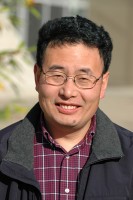
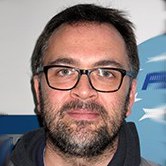
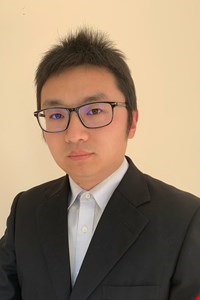
Charlie H. Zhang is a Professor of Geography and Geosciences at the University of Louisville, specializing in spatial analysis, crime mapping, health geographies, and urban segregation. He directs research projects funded by NIH, NSF, and other agencies, focusing on environmental health disparities, urban dynamics, and geospatial methodologies. Zhang earned his Ph.D. from the University of South Carolina (2006) and teaches courses including Urban Geography, Population Geography, Crime Analysis, and Advanced Spatial Statistics. His recent publications investigate spatial patterns of COVID-19, air pollution impacts, lead exposure correlations with crime, and educational inequalities. Current grants include NIH-supported studies on maternal exposure to fly ash and coal ash impacts on child neurodevelopment. Zhang serves as Associate Editor for the International Journal of Applied Geospatial Research and mentors graduate students in geospatial research.
Igor Krupenski is a Senior Lecturer at the Department of Energy Technology, Tallinn University of Technology (TalTech). His primary research focuses on smart district heating systems, integrated assessment of greenhouse gas emissions, and energy efficiency optimization. He specializes in renewable energy integration, thermal systems design, and computational fluid dynamics for multiphase flows. His work emphasizes urban energy systems modernization, particularly in historical areas like Tallinn's Old Town, and explores coupling technologies such as combined heat and power (CHP) with district cooling. He also investigates energy cascading strategies and low-temperature district heating networks for sustainable development. Dr. Krupenski’s research spans numerical simulations of turbulent particulate flows, fluidized bed dynamics, and off-design operation of heat pumps. His contributions bridge theoretical models with practical applications, aiming to enhance energy systems' efficiency and environmental sustainability. Key research themes include: Renewable energy integration in district heating Thermal system optimization for urban and industrial contexts Computational modeling of multiphase and turbulent flows Energy efficiency in historical building retrofitting His publications highlight advancements in CHP-DC coupling, solar-thermal systems, and particulate flow analysis. Despite no listed awards, his work significantly impacts sustainable energy infrastructure design and thermal modeling techniques.
Bhavik Bakshi is the Julie Ann Wrigley Professor at Arizona State University (ASU), holding appointments in the School for Engineering of Matter, Transport and Energy, School of Sustainability, and School of Complex Adaptive Systems. He previously served as Richard M. Morrow Professor Emeritus in Chemical and Biomolecular Engineering at The Ohio State University. His research focuses on sustainable engineering, circular economy, and integrating ecological systems with industrial processes to achieve net-zero emissions and environmental justice. Education includes a PhD (1992) and MS (1989) in Chemical Engineering from MIT, and a B. Tech. (1986) from the Institute of Chemical Technology, Mumbai. His work emphasizes multiscale systems analysis, techno-ecological synergy, and innovation for sustainability. He has authored a textbook on sustainable engineering and developed user-friendly software tools like Netz-CMI and Sustain-GPT. Research interests span process design, lifecycle assessment, ecosystem services, and policy integration. His lab explores pathways to net-zero emissions through circular reaction networks, carbon capture, and nature-based solutions. Notable awards include the Computing in Chemical Engineering Award (2023), AIChE Fellow (2022), and multiple student awards for sustainable engineering contributions. Advisees and alumni include over 50 researchers across academia and industry, with projects on plastics recycling, renewable energy systems, and environmental policy. His grants and collaborations involve NSF, DOE, industry partners like Ford and Coca-Cola, and global initiatives such as the United Nations Environment Program. Bakshi leads the Bakshi Lab, advancing transdisciplinary approaches to align engineering with ecological and social sustainability. His work bridges molecular-scale innovations with global-scale systems analysis, emphasizing actionable solutions for a just and nature-positive future.
Hai Wang is a Professor of Mechanical Engineering at Stanford University with a distinguished career in combustion science, high-speed propulsion, and renewable energy conversion. His research spans combustion chemistry of conventional and renewable fuels, detonation dynamics, quantum-chemistry guided battery materials design, and transport theories in nanoparticle systems. Education : Ph.D. in Fuel Science from Pennsylvania State University (1992), M.S. in Chemical Engineering from Michigan Technological University (1986), B.Eng. in Polymer Materials from East China University of Science and Technology (1984). He has authored seminal works on soot formation in flames, catalytic oxidation of methane, and laminar flame speed modeling. His recent publications address interdisciplinary challenges such as eco-anxiety and advanced data plane verification. Notable administrative roles include co-founding Hestia Tec, LLC (2010-2014) and serving as President of the Combustion Institute (2024-present). Wang’s work has been recognized with the Humboldt Senior Research Award (2019), Mercator Fellow (2019), and multiple fellowships. He mentors doctoral and master’s students and leads research initiatives like the Combustion Energy Frontier Research Center (2010-2014).
Dr. Anthony Mann is a Senior Research Fellow in the School of Mech., Medical & Process Engineering at Queensland University of Technology (QUT). With over 30 years of expertise in computational fluid dynamics (CFD) and boiler combustion modelling, he focuses on optimizing energy systems and reducing environmental impacts. His work spans boiler performance analysis, emission reduction, and sugar-processing technologies. He holds a Ph.D. in Mechanical Engineering from the University of Sydney. His research interests include CFD, combustion modelling, pollutant control, and renewable energy systems. He has authored over 200 technical reports for clients globally and contributed to projects on boiler design, energy audits, and sugar factory process modelling. Key research areas include improving boiler efficiency through CFD, minimizing emissions via combustion optimization, and developing sustainable biomass utilization strategies. His recent work emphasizes advanced scrubber design for dust capture and depithing effects on bagasse storage safety. Projects: Boiler Simulator for Operator Training (2016), Reducing Boiler Maintenance Costs (2016) Grants: Australian Competitive Grants (CAT 1) Labs/Teams: Involved in QUT's Centre for Agriculture and the Bioeconomy
Prof. Jakob Andert is a Universitätsprofessor at RWTH Aachen University's Faculty of Mechanical Engineering, leading the Teaching and Research Area 'Mechatronics in Mobile Propulsion' since 2021. His expertise spans mechatronic systems for combustion engines, hybrid/electrified powertrains, and real-time optimization techniques. He holds a Dr.-Ing. from RWTH Aachen (2012) and prior roles include junior professor (2014–2021) and project manager at FEV GmbH (2011–2014). Research interests focus on component development, systemic innovations, and methodological advancements in drive systems. Key areas include thermal management of electric drivetrains, embedded control systems, and hybrid/electric vehicle architectures. Prof. Andert actively contributes to journals like Automotive Innovation and Energies , and serves on academic committees such as the Budget Committee at the Faculty of Mechanical Engineering. He teaches courses like 'Hardware-in-the-Loop Laboratory for Mobile Propulsion Systems' and 'Electronics in Mobile Propulsion.' His work emphasizes practical applications, with projects involving virtual prototyping, cloud-based reinforcement learning for emission control, and intelligent charging strategies for EV fleets. Education: PhD in Engineering (RWTH Aachen, 2012); Electrical Engineering studies (RWTH Aachen, 2000–2006). Professional Roles: Editor for multiple journals, mentor for Deutschlandstiftung Integration, and reviewer for IEEE and SAE publications.
Miguel Modestino is the Donald F. Othmer Associate Professor of Chemical Engineering at NYU Tandon School of Engineering and Director of the Sustainable Engineering Initiative. He leads the Multifunctional Material Systems Laboratory, focusing on electrochemical engineering and sustainable chemical manufacturing. His research bridges material development and electrochemical systems for energy storage/conversion and decarbonization. Education: Ph.D. in Chemical Engineering, UC Berkeley (2013) M.S. in Chemical Engineering Practice, MIT (2008) B.S. in Chemical Engineering, MIT (2007) Research Interests: Electrochemical reactors for renewable energy integration Material design for improved energy density and efficiency Decarbonization of chemical processes Polymers and ionomers for electrochemical systems Awards: MIT Technology Review Innovators Under 35 (2020 Global, 2017 Latin America) NSF CAREER Award (2019) Goddard Junior Faculty Fellowship (2020) Grants & Partnerships: Collaborations with Air Company for sustainable jet/rocket fuel NSF-funded projects on organic electrosynthesis Labs/Groups: Multifunctional Material Systems Lab Center for Advanced Technology in Telecommunications (CATT)
Quang Khanh Tran is a Professor in the Department of Energy and Process Engineering at the Norwegian University of Science and Technology (NTNU), specializing in biomass conversion and thermal processing. His research focuses on hydrothermal liquefaction, pyrolysis, gasification, and catalytic processes for sustainable energy production. He leads projects such as nCO2pp, BioSynGas, and Fast-HTL, addressing biofuel development and waste valorization. Key research interests include biomass combustion, process intensification, and environmental catalysis. Recent publications highlight advancements in molecular dynamics modeling of biomass reactions, phosphorus recovery from sludge, and synergistic waste-to-energy strategies. Tran collaborates on interdisciplinary projects, integrating computational tools like Aspen Plus with experimental methods. His work emphasizes sustainable biomass utilization and circular economy principles.
Meredith Hastings is the George Ide Chase Professor of Physical Sciences and Department Chair at Brown University's Department of Earth, Environmental & Planetary Sciences. She holds a joint appointment with the Institute for Environment and Society (IBES). Her work bridges geochemistry, atmospheric science, and environmental justice, with a focus on the nitrogen cycle and its impacts on ecosystems and human health. Research interests include reactive nitrogen dynamics, isotopic tracers in atmospheric chemistry, and community-driven environmental monitoring. She leads initiatives such as the Breathe Providence air quality network and the DEEPS-REU NSF program fostering diverse STEM talent. Notable contributions include advancing field safety training (FieldSafe) and addressing workplace equity in geosciences through ADVANCEGeo partnerships. Publications emphasize nitrogen isotope analysis for pollution source identification, climate policy implications of atmospheric chemistry, and inclusive science practices. She collaborates globally on projects like FIREX-AQ biomass burning studies and Antarctic ice core climate reconstructions. Key Affiliations: Brown University, ADVANCEGeo, DEEPS-REU Grants: NSF-funded research on nitrogen cycling and field safety initiatives Education: Not explicitly detailed in provided texts Labs/Teams: Breathe Providence Network, Polar Science Collaborations
Professor Lindsay-Marie Armstrong is an Associate Professor within the School of Engineering at the University of Southampton. She serves as the Chair of the Clean Carbon University Strategic Research Group (USRG), Academic Lead for the Solent Industrial Decarbonisation Cluster, and Director of Student Recruitment for the School of Engineering. With expertise in computational modeling and carbon capture technologies, she leads numerous research projects focused on sustainable energy solutions and industrial decarbonization. Dr. Armstrong's educational background includes: BSc (Hons) Mathematics MSc in Computational Fluid Dynamics (CFD) PhD in reactive multiphase models for thermochemical conversion processes within coal and biomass fluidised beds (2012) Dr. Armstrong's research focuses on developing computational tools for accelerating scale-up of reactive technologies, with special emphasis on carbon capture and utilization. Her work spans reactive multiphase modeling, sustainable marine transportation fuels, CO2 conversion technologies, and industrial decarbonization strategies. She applies advanced computational fluid dynamics to optimize chemical processes and develop innovative solutions for energy sustainability. Her recent publications demonstrate a strong focus on carbon capture, utilization, and storage technologies, with particular attention to maritime applications and industrial implementation. The research shows an interdisciplinary approach combining chemical engineering, computational modeling, and policy analysis to address climate change challenges through technological innovation and systems optimization. Dr. Armstrong has received several prestigious awards for her contributions to the field: Institute of Physics 2011 "Award for significant progress in Combustion by an early career researcher" Faculty of Engineering and the Environment's 2013 "Dean's award for Early Career Excellence" Nominated for several VC teaching awards Hydrodynamic Profiles Of Computed Tomography-Scanned Polydispersed Beds Produced By Sieving (2023) As an academic advisor, Dr. Armstrong currently supervises multiple PhD students across Chemistry and Engineering disciplines. Her research is supported by significant grants from EPSRC, including projects like "Accelerating The Scale-up Of Next-Generation Fuels From CO2," "IDRIC Solent Cluster," and "CO2 from Port to Pipeline (CO2P2P)." These grants total millions of pounds and involve collaborations with numerous industrial partners through the Clean Carbon USRG network of over 150 academic and industrial organizations. Dr. Armstrong leads the Energy Technology Group and is a member of several research entities including Nature-Based Ocean Solutions, Southampton Marine and Maritime Institute, Ocean Energy, Maritime Decarbonisation, and the UKRI AI Centre for Doctoral Training in AI for Sustainability (SustAI). Her work bridges computational modeling, chemical engineering, and environmental sustainability to develop practical solutions for industrial decarbonization.
Fabrizio Bonatesta is a Reader in Thermofluids at Oxford Brookes University, affiliated with the School of Engineering, Computing and Mathematics. He holds a PhD from the University of Nottingham and has been a permanent academic staff member at Oxford Brookes since 2010. His research and teaching focus on thermofluids, internal combustion engines, and emissions reduction, with strong collaborations with Ford, Siemens, and other UK universities. Educational Background: PhD in Engine Research, University of Nottingham, UK Research Interests: Fabrizio Bonatesta's research centers on experimental and numerical modeling of combustion and emissions in gasoline and diesel engines, particularly focusing on particulate matter in modern GDI engines. He has extensive expertise in reactive flow and CFD modeling using commercial and open-source software. His work also extends to sustainable energy systems, including 3D CFD modeling of transpired solar collectors for energy-efficient building heating. His research group, Propulsion and Pollution Modelling (PPM), actively collaborates with Ford, Siemens, Loughborough University, and the University of Nottingham. Recent Research Trends: His recent publications (2015–2024) highlight a strong trajectory in CFD-based modeling of fuel injection, combustion, and soot formation in GDI engines, alongside interdisciplinary work on urban pollutant dispersion and solar thermal systems. The integration of chemical kinetics with CFD and the focus on real-world emission reduction strategies are recurring themes. Scientific Awards: Central Research Funds Award (2013-14) Central Research Funds Award (2014-15) Research Excellence Award (2015-16) Research Excellence Award (2016-17) Research Leadership and Grants: Dr Bonatesta leads significant research projects, including the APC6 DynAMO project (co-sponsored by the Advanced Propulsion Centre, £22M total, £1.35M to Brookes) with Ford, Loughborough, Bath, Siemens, and others. He is also Principal Investigator on the 'Cavendish' project (Innovate UK) developing zero-CO2 hydrogen combustion systems for heavy-duty transport. His sustained funding from internal and external sources reflects the impact and relevance of his work. Research Groups and Labs: He leads the Propulsion and Pollution Modelling (PPM) research group at Oxford Brookes and is affiliated with the Centre for AI, Culture and Society (CAICS). His lab conducts advanced CFD simulations and experimental work in collaboration with industry and academic partners. He also supports interdisciplinary research with the Architectural Engineering Research Group on sustainable heating technologies.
Kilian Oberleithner is an Assistant Professor and group leader of Dynamics of Unsteady Flows at the Institute of Fluid Mechanics and Technical Acoustics (ISTA) , Technical University of Berlin since 2018. He earned his doctorate in 2012 under Prof. Oliver Paschereit (TU Berlin) and Prof. Israel Wygnanski (University of Arizona), followed by a postdoc at Monash University with Prof. Julio Soria . His work bridges fluid mechanics and interdisciplinary applications in renewable energy and propulsion systems. Research interests focus on flow instabilities , coherent structures , and their control in thermofluid dynamic turbulent flows . He integrates data-driven and analytical methods with experimental and numerical data, targeting real-world applications in wind power , gas turbine combustion , and hydropower . Recent publications highlight interdisciplinary approaches: machine learning for multiphase flow metrology, physics-informed neural networks in medical fluid dynamics, and linear stability analysis for combustion optimization. His group develops active flow control strategies for vortex dynamics and Bayesian optimization frameworks for industrial systems. Key collaborations include Monash University , Stanford Center for Turbulence Research , and industry partners like Miele and Honda . Current projects emphasize cross-energy systems and AI-integrated fluid dynamics , aligning with TU Berlin's strategic goals in renewable energy and advanced propulsion .
Dr. Alexander Belt is a researcher at the Research Center Jülich GmbH , specifically within the Institute for Advanced Simulation (IAS) and its Civil Safety Research (IAS-7) division. His work focuses on fire safety engineering and visibility analysis in compartment fires. His research investigates smoke propagation, toxicity, and visibility prediction using computational fluid dynamics (CFD) models like the Fire Dynamics Simulator (FDS). Key methodologies include photometric measurement techniques (LEDEX, MIREX), particle image velocimetry (PIV), and electronic low-pressure impactor (ELPI) for particle size analysis. Publications highlight experimental-numerical model discrepancies in visibility prediction and development of improved measurement frameworks. Recent work includes a waypoint-based visibility approach in fire safety design (2024), tube furnace experiments for pyrolysis analysis (2024), and aerosol extinction coefficient modeling (2024). Collaborative publications with Lukas Arnold, Thorsten Schulze, and others demonstrate interdisciplinary safety research.
Prof. Dr. Snezana Grujic is a Full Professor at the Department of Inorganic Chemical Technology, Faculty of Technology and Metallurgy, University of Belgrade. She has been holding this position since her election on September 20, 2017, and operates from office 040 in the large TMF building. Her primary research focus lies in Inorganic Chemical Engineering , particularly in glass and ceramics technology. Email: grujic@tmf.bg.ac.rs Phone: 011/3303723, 011/3303719 (ext. 723) Her research interests encompass: Glass-Ceramics and Advanced Glass Materials Combustion Process Optimization Waste Recycling and Sustainable Processing Thermal Analysis of Materials Environmental Impact of Combustion Processes Packaging Material Development Her recent articles highlight trends in: Developing eco-friendly glass-ceramics from industrial byproducts Optimizing combustion for reduced emissions Characterizing rare-earth-doped glasses for specialized applications Thermal analysis of crystallization mechanisms Recycling strategies for fly ash and coal combustion residues Improving flame temperature control in hydrogen-natural gas mixtures She has supervised numerous PhD and Master’s students in projects related to glass synthesis, combustion analysis, and materials recycling. Her work spans both fundamental research (e.g., crystallization kinetics) and applied studies (e.g., industrial furnace optimization).
Dr. Changzhao Jiang is a Senior Lecturer in Engines and Fuels at Brunel University London's College of Engineering, Design and Physical Sciences , specializing in the Department of Mechanical and Aerospace Engineering. His research focuses on hydrogen combustion, alternative fuels, and advanced laser diagnostics for fluid dynamics. Education: PhD in Mechanical Engineering (University of Birmingham, 2015), BEng (Huazhong University of Science and Technology, 2010), BEng (University of Birmingham, 2010) Research Areas: Hydrogen internal combustion engines, low-CO2 alternative fuels, engine electrification, and laser diagnostic techniques for combustion analysis. His work addresses emission optimization and powertrain sustainability. Recent Publications explore NOx emissions in hydrogen engines, supercritical propane jet dynamics, methane ignition behavior, and ammonia injection systems. These studies employ experimental and numerical methods to advance low-carbon propulsion technologies. Awards: Associate Fellowship (2019). Projects: Hydrogen engine development for commercial vehicles and net-zero power systems for marine applications.