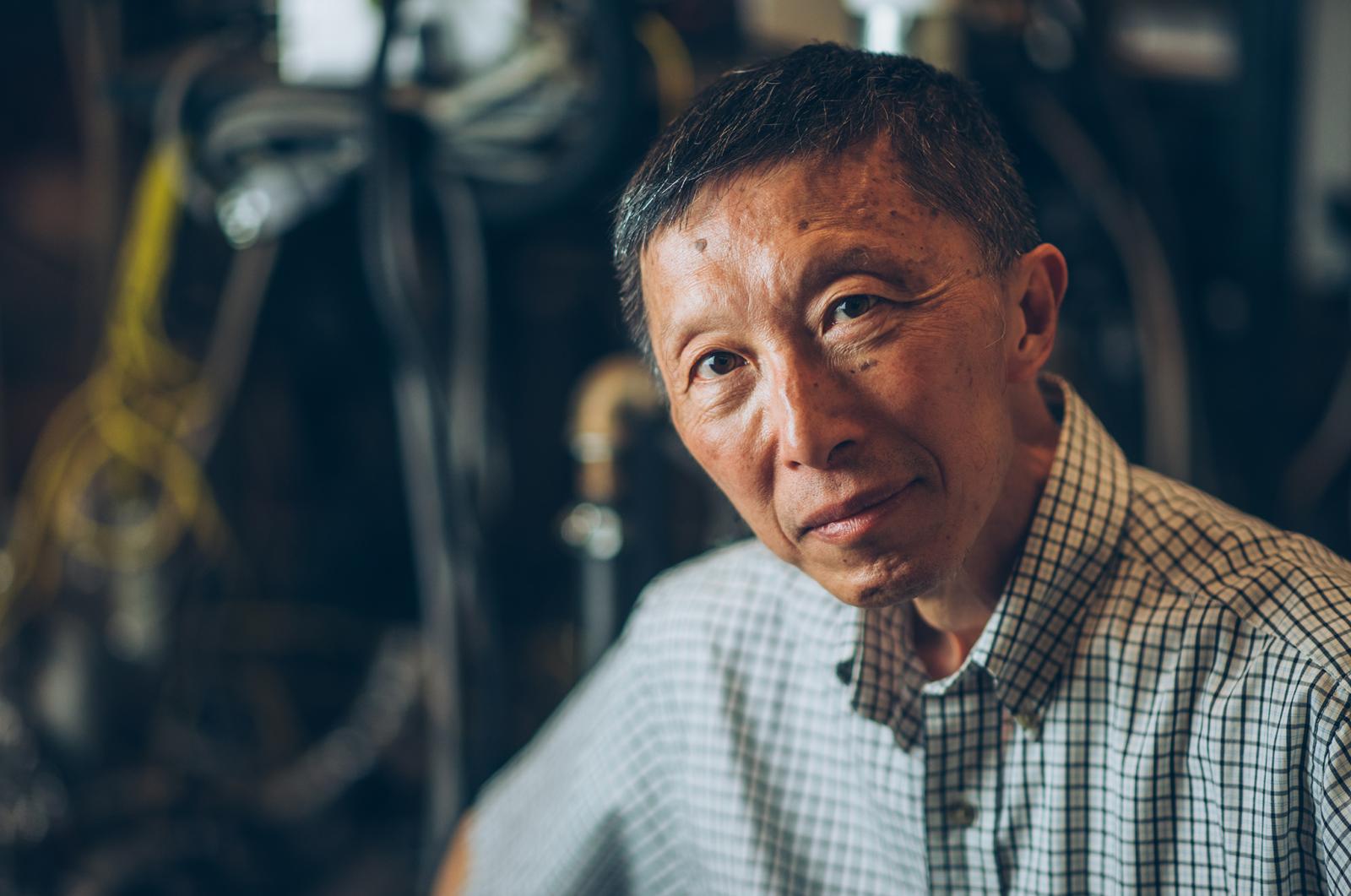
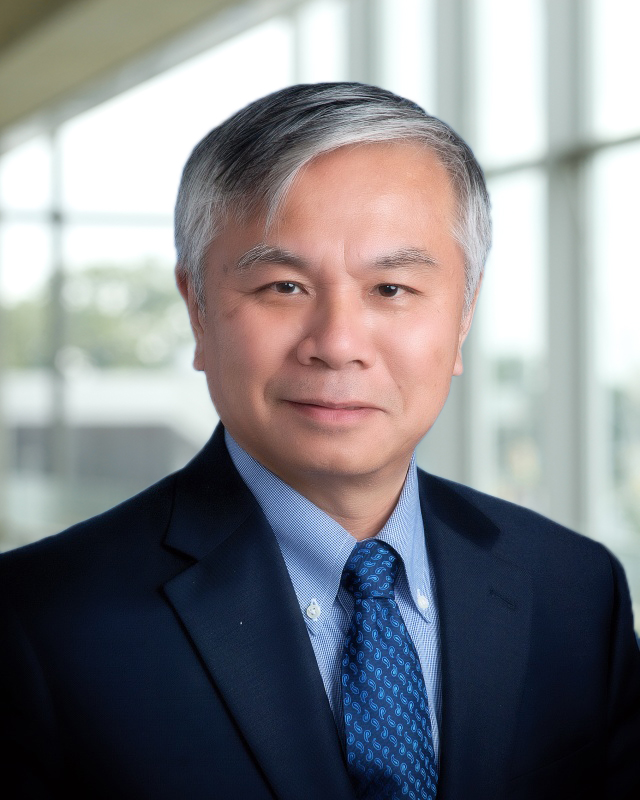
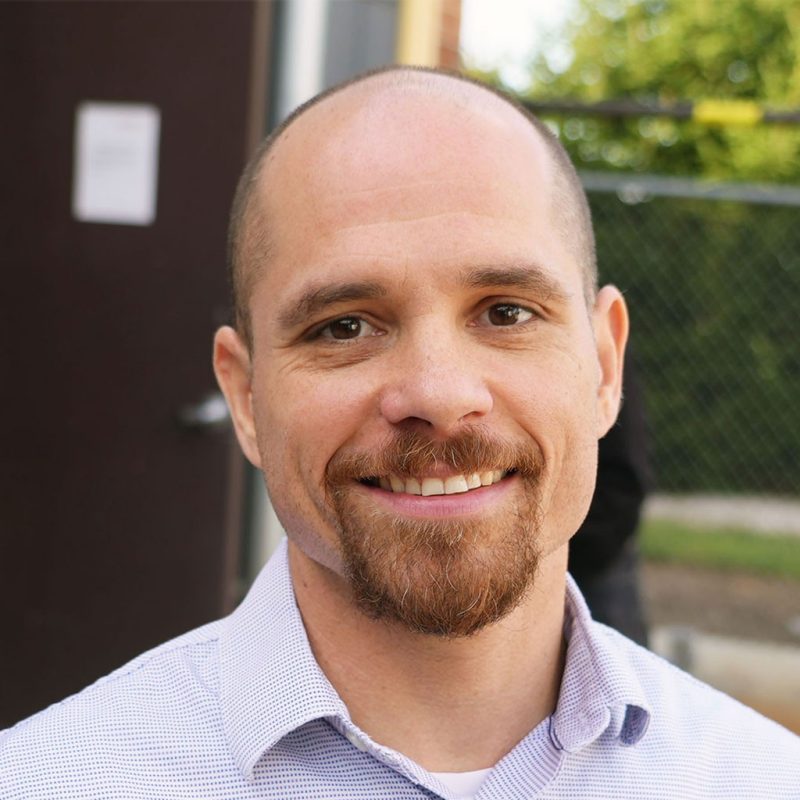
Sumanta Acharya is a Professor in the Department of Mechanical Engineering at Illinois Tech's Armour College of Engineering. His career spans computational methods, experimental fluid mechanics, and combustion, with affiliations including ASME, AIAA, and ASTFE. Ph.D. in Mechanical Engineering, University of Minnesota (1982) M.S. in Mechanical Engineering, University of Minnesota (1980) B.S. in Mechanical Engineering, Indian Institute of Technology (1978) A leading expert in thermal and fluid sciences, Acharya focuses on gas turbine heat transfer, turbulence modeling, and advanced cooling systems. His work integrates Computational Fluid Dynamics (CFD) with experimental validation for applications in biofuels , hydrogen combustion , and phase change materials . Recent publications highlight innovations in Brayton cycle integration, impingement cooling, and aerothermal performance optimization. Awarded by ASME, AIAA, and LSU, his honors include the ASME Heat Transfer Memorial Award (2011) and ASME Fellow (1999). He has contributed to key committees, including the ASME Heat Transfer Division Executive Committee and the Department of Energy's University Turbine Systems Research program. Researcher to Know, Illinois Science & Technology Coalition (2022) ASME Dedicated Service Award (2019) AIAA Thermophysics Award (2015) Contact: sacharya1@illinoistech.edu | Phone: 312.567.3701
Assoc Prof Ng Teng Yong is an Associate Professor at the School of Mechanical & Aerospace Engineering (NTU), specializing in numerical modeling and simulation. With a background as Research Manager at A*STAR Institute of High Performance Computing, his work spans materials science, nanotechnology, and aerospace engineering. Current focus on graphene-based desalination membranes Expertise in molecular dynamics simulations Investigates nanoscale fluid mechanics and structural dynamics Recent publications highlight advancements in energy-efficient electrodialysis, smart robotics, and nonlinear vibration analysis. His interdisciplinary approach integrates computational methods with experimental validation in additive manufacturing and soft material mechanics.
Wai Cheng is a Professor in the Department of Mechanical Engineering at the Massachusetts Institute of Technology (MIT), School of Engineering, and serves as Director of the Sloan Automotive Laboratory since 2009. His educational background includes: B.Sc. from California Institute of Technology (1974) M.Sc. from Massachusetts Institute of Technology (1975) Ph.D. from Massachusetts Institute of Technology (1979) Professor Cheng's research centers on internal combustion engines , with expertise in engine performance, emissions, and combustion science. His work investigates cold-start phenomena in gasoline direct injection (GDI) engines, soot formation mechanisms, knock dynamics, and the impact of alternative fuels like ethanol. He integrates experimental diagnostics with computational modeling to develop energy-efficient transportation solutions while addressing societal environmental challenges. Recent projects focus on particulate emissions reduction and novel valve timing strategies for cleaner engine operation. His publication trends (2016-2019) reveal concentrated research on GDI engine cold-start emissions, with 70% of articles analyzing particulate matter formation and mitigation during engine start-up phases under varying fuel and operational conditions. Notable honors include: Fellow of the Society of Automotive Engineers (2003) SAE Oral Presentation Awards (2004, 2002) SAE Teetor Award (1984) Carl Richard Soderberg Professorship (1982) Professor Cheng has mentored numerous graduate students through MIT's mechanical engineering programs and secured research funding from automotive industry partners. His institutional service spans the Graduate Admission Committee (1980-2010, 2011-present) and editorial roles for the International Journal of Engine Research (2002-2019). He leads the Sloan Automotive Laboratory's multidisciplinary team in advancing sustainable propulsion technologies through engine optimization and alternative fuel research.
Jun Liu is an Assistant Professor in the Department of Mechanical and Aerospace Engineering at the School of Engineering and Applied Sciences, University at Buffalo. His research focuses on advanced energy materials, nano/micro-mechanics, and self-powered systems, with applications in triboelectric energy harvesting and scanning probe microscopy. Education: PhD, Materials Engineering, University of Alberta (2018) MS, Materials Science, Shanghai University (2015) BE, Materials Science and Engineering, Nanchang University (2012) Research Interests: Development of tribovoltaic and triboelectric systems for self-powered electronics Mechanical energy harvesting via dynamic heterojunctions and Schottky contacts 3D-printed hydrogel structures for energy absorption and flexible electronics Nanoscale characterization using atomic force microscopy Design of nanocomposite sensors and catalytic materials Publication Trends: His work emphasizes triboelectricity, nanoscale energy conversion, and sustainable materials. Recent articles explore bionic tactile sensing, tunable hydrogels, and quantum dynamics in sliding interfaces. Awards: SONY Faculty Innovation Award (2021) Nature Springer MINE Young Scientist Award (2020) International Contest of Applications in Nano/Micro Technology Prize (2013) Laboratory: Advanced Energy Materials and Nanomechanics Lab at University at Buffalo.
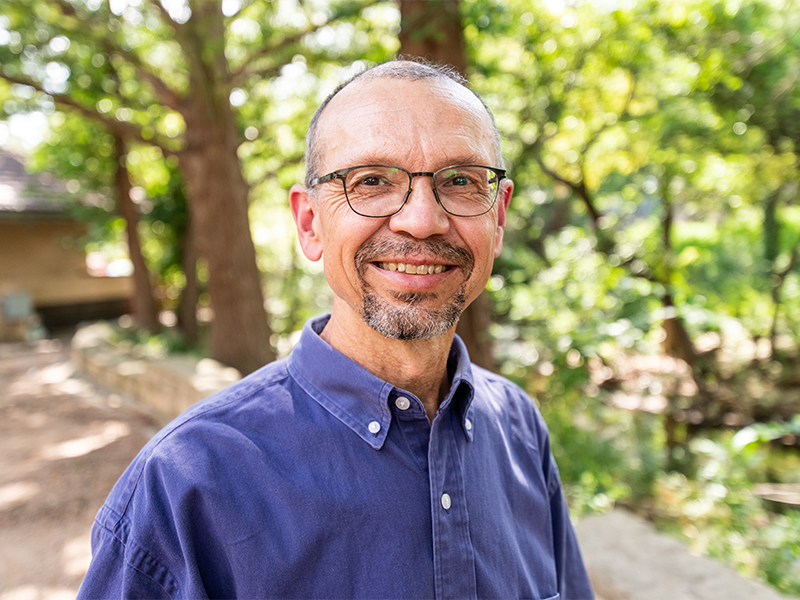
William Anderson is a Professor in the School of Aeronautics and Astronautics at Purdue University since 2001. He holds a Ph.D. in Mechanical Engineering (Pennsylvania State University, 1996), M.S. in Chemical Engineering (University of Arizona, 1984), and B.S. in Chemistry (Arizona State University, 1979). His research focuses on chemical propulsion systems, combustion dynamics, and rocket engine design methodologies. Key research areas include measurement and modeling of combustion instabilities, rocket combustor stability, and liquid propulsion systems. His work spans experimental and computational studies of thermoacoustic behavior, injector design, and hypergolic reaction mechanisms. He has led projects on resonance igniters, hydrogen peroxide/kerosene combustors, and multi-fidelity modeling frameworks. Anderson has been recognized with the C.T. Sun Research Award (2005) and multiple Best Paper Awards from AIAA conferences. He served as Global Engineering Program Director (2011–2014) and is an Associate Fellow of AIAA. His expertise is showcased in invited lectures at institutions worldwide, including Technical University of Munich and Harbin Institute of Technology. He has authored/co-authored books on rocket propulsion and combustion instability, including Rocket Propulsion (Cambridge University Press, 2018) and edited volumes such as Liquid Rocket Engine Combustion Instability (AIAA, 1995). His lab collaborates internationally on advanced propulsion technologies, emphasizing design, build, and test methodologies.
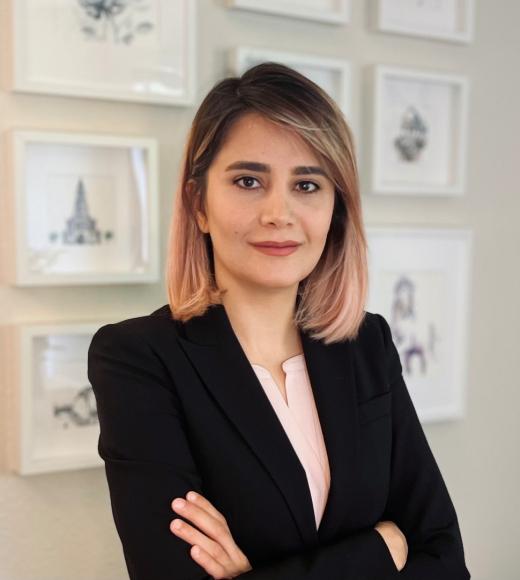
Shima Nazari is an Assistant Professor in the Department of Mechanical and Aerospace Engineering at the University of California, Davis. Her research focuses on dynamics and control with applications to transportation systems, energy systems, and electrified/automated vehicles. She leads the CORE Lab, exploring advancements in hybrid powertrains, autonomous vehicle control, and energy-efficient systems. Education: Ph.D., Mechanical Engineering, University of Michigan (2019) M.S., Electrical Engineering, University of Michigan (2016) M.S., Mechanical Engineering, Sharif University of Technology, Iran (2012) B.S., Mechanical Engineering, Sharif University of Technology, Iran (2009) Her research interests span dynamics and control theory applied to hybrid electric vehicles, powertrain optimization, and autonomous systems. She has contributed to advancements in energy-efficient vehicle designs, regenerative braking, and control strategies for electrified powertrains. Her work often bridges mechanical and electrical engineering disciplines to address real-world challenges in transportation and energy. Recent research trends in her articles emphasize data-driven control methods, hybridization strategies for autonomous systems, and thermal management of energy storage solutions. These studies reflect her commitment to interdisciplinary innovation. Although no scientific awards are explicitly mentioned, her contributions to the field are evident through her active research and publications. She advises students in her lab and collaborates on grants focused on sustainable mobility solutions. Dr. Nazari is affiliated with the UC Davis College of Engineering and actively contributes to graduate programs in Dynamics, Controls, Vehicles, and Robotics. The CORE Lab serves as a hub for experimental and computational research in her areas of expertise.
Christopher Goyne is an Associate Professor in the Department of Mechanical and Aerospace Engineering at the University of Virginia (UVA) and Director of the UVA Aerospace Research Laboratory. He holds a B.Eng. (1991) and Ph.D. (1999) in Mechanical Engineering from the University of Queensland, Australia. His research focuses on hypersonic propulsion, scramjet technology, instrumentation development, and advanced manufacturing. He leads the UVA Hypersonics Research Complex and is a key figure in the University Consortium for Applied Hypersonics. Goyne’s work includes contributions to NASA’s Hyper-X Program and the HyShot scramjet flight test program. He is an Associate Fellow of the AIAA and serves on editorial and advisory boards for journals and organizations such as the Shock Waves journal and Virginia’s Aerospace Advisory Council. Education: B.Eng. (Mechanical Engineering, University of Queensland, 1991); Ph.D. (Mechanical Engineering, University of Queensland, 1999). Research Interests: Hypersonics and scramjet propulsion Diagnostic techniques (e.g., laser-based methods, optical emission spectroscopy) Wind tunnel and flight testing Controls and adaptive systems for hypersonic flow paths Advanced manufacturing for aerospace components Awards: Recipient of the 2023 James C. McDaniel Fellow Award and 2022 Outstanding Researcher Award. Holds leadership roles in AIAA committees, including past Chair of the HyTASP Program Committee. Recognized with the Sigma Gamma Tau Outstanding Aerospace Professor Award (2006) and multiple research fellowships. Grants and Projects: Funded by NASA, the Air Force Office of Scientific Research, and industry partners. Leads UVA’s contributions to hypersonic ground and flight testing, including sensor development and combustion efficiency studies. Labs and Teams: Directs the UVA Aerospace Research Laboratory, collaborating on projects such as the UVA Hypersonics Research Complex and the University Consortium for Applied Hypersonics. Advises student chapters of AIAA and Sigma Gamma Tau.
Prof. Florian Zaussinger is a faculty member at the Faculty of Applied Computer and Life Sciences at Mittweida University of Applied Sciences. His research focuses on thermal convection, fluid dynamics, and numerical simulations in both geophysical and astrophysical contexts. He has contributed extensively to studies on microgravity experiments, including the GeoFlow and AtmoFlow projects conducted on the International Space Station (ISS). University: Mittweida University of Applied Sciences Faculty: Applied Computer and Life Sciences Department: Mathematics Contact: +49 3727 58-1381 | florian.zaussinger@hs-mittweida.de | Building 6, Room 6-131 His research involves advanced numerical modeling of complex fluid systems, including spherical convection, dielectric heating, and double-diffusive processes. He has developed and applied computational tools like the ANTARES code to simulate convection in DA white dwarfs, planetary atmospheres, and Earth's mantle. His work bridges theoretical fluid mechanics with experimental validation in space-based microgravity environments. Recent publications highlight his expertise in thermo-electrohydrodynamic convection, planetary fluid flow analysis, and microgravity-induced instabilities. While the scraped data does not list scientific awards or students directly, his academic profile emphasizes interdisciplinary collaboration with engineering and life sciences, particularly in applied mathematics for fluid dynamics and experimental data processing.
Professor Daniel Rettenwander is a Full Professor at the Department of Materials Science and Engineering, Norwegian University of Science and Technology (NTNU), leading the Battery Materials Team within FACET. He also directs the Christian Doppler Laboratory for Solid-state Batteries and serves as Principle Scientist at the Center for Transport Technologies (Battery Technologies) at AIT Austrian Institute of Technology. His research focuses on advanced solid-state battery materials, particularly solid-state electrolytes and cathode materials for next-generation electric vehicle batteries. Key research interests include the development of high-performance solid electrolytes, interface engineering in batteries, and overcoming challenges in solid-state battery design such as dendrite formation and interfacial degradation. His work bridges fundamental materials science with applied electrochemical engineering, addressing critical barriers to commercializing solid-state batteries. Notable achievements include over 75 peer-reviewed publications, numerous awards including the Emerging Investigator awards (Chem. Comm., Journal of Physics: Energy), and leadership in major EU and national grants. His team’s work has been highlighted in media outlets like Gemini and Krone.at, emphasizing breakthroughs in battery materials science. Funding includes projects like OPERA (HORIZON-CL5-2022), SOLIMEC (M-ERA.NET), and CDG-supported initiatives. He supervises a dynamic team of PhD candidates and postdocs, advancing interdisciplinary research at the intersection of materials chemistry and energy storage technologies.
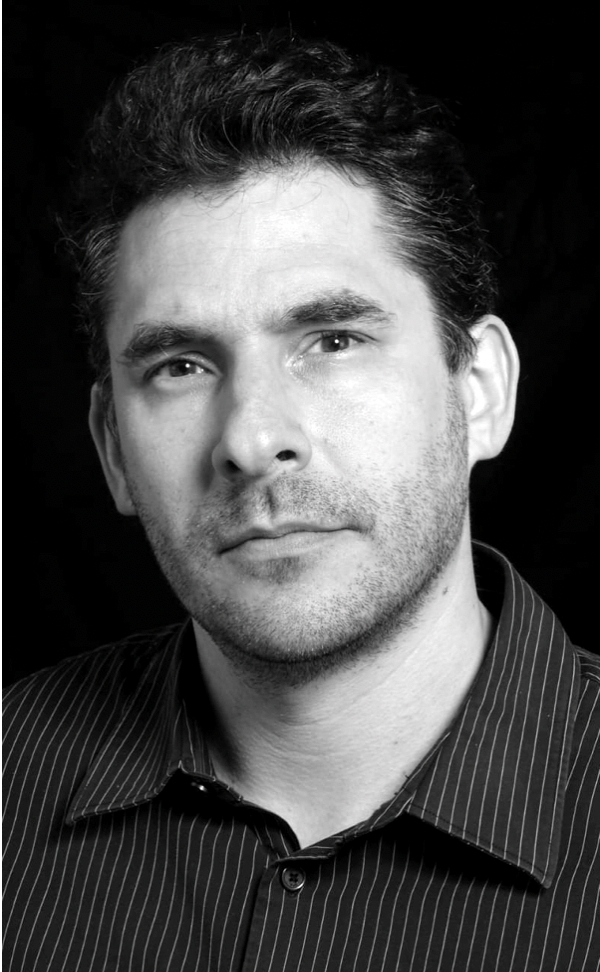
Matthew J. Hall is a Professor in the Department of Mechanical Engineering at the University of Texas at Austin , where he also holds the Louis T. Yule Fellowship in Engineering . He has been a faculty member since 1991 and is affiliated with the Cockrell School of Engineering . His research spans engine combustion processes , thermal fluids systems , engine controls , optical diagnostics , battery safety , and alternative fuels . He is particularly known for his work on cold-start emissions , spark ignition , engine friction reduction , and thermoelectric energy recovery . He teaches courses in Thermodynamics , including modeling of power cycles and HVAC systems , and has published over 150 technical articles. His recent work includes innovations in ammonia combustion , biomass gasification , and advanced engine diagnostics . Scientific Awards & Honors: Fellow of the Society of Automotive Engineers (SAE) Louis T. Yule Fellowship in Engineering Associate Editor, SAE International Journal of Engines Research Impact & Leadership: Prof. Hall leads multidisciplinary efforts in combustion science , energy systems , and sustainable propulsion . His lab has contributed to reducing engine friction by up to 40%, improving fuel efficiency at idle, and advancing the use of ammonia as a low-carbon fuel. He also explores thermoelectric generators for extending drone flight range and improving vehicle energy recovery systems.
Ming Zheng is a Professor in the Department of Mechanical, Automotive & Materials Engineering at the University of Windsor, Faculty of Engineering. He is the Director of the Clean Combustion Engine Laboratory and holds a Canada Research Chair in Clean Diesel Engine Technologies. He is a Fellow of both SAE and ASME and a Professional Engineer (PEng). Education: Ph.D., Mechanical Engineering, University of Calgary, Canada, 1993 M.Sc., Thermal Energy and Automotive Engineering, Tsinghua University, China, 1988 B.Sc., Mechanical Engineering, Transport Technology Institute, China, 1982 PDF, Mechanical Engineering, Hokkaido University, Japan, 1995 Dr. Zheng's research focuses on clean and high-efficiency combustion technologies for internal combustion engines. His key interests include low-temperature combustion (LTC), homogeneous charge compression ignition (HCCI), active flow control aftertreatment for emission reduction, advanced ignition systems (e.g., multi-coil, corona), alternative and biofuels (e.g., ethanol, n-butanol), combustion modeling, diagnostics, and real-time adaptive control. His work aims to achieve simultaneous reductions in NOx and soot emissions while improving fuel efficiency. The analysis of his recent publications reveals a strong and consistent research trend centered on advanced combustion strategies using alternative fuels like ethanol and n-butanol. His work extensively explores dual-fuel combustion, the impact of fuel injection strategies, and the use of advanced control algorithms (e.g., extremum seeking control) to manage complex combustion processes. A significant portion of his research is dedicated to developing and optimizing active aftertreatment systems, such as Lean NOx Traps, to handle the unique exhaust characteristics of these clean combustion modes. Scientific Awards: SAE Fellow (2016) ASME Fellow University Award for Excellence in Research, Scholarship and Creative Activity (2007 and 2005) Canada Research Chair in Clean Diesel Engine Technologies (awarded 2003) Dr. Zheng has been a prolific advisor, supervising numerous PhD and Master's students on topics ranging from biofuel testing and low-temperature combustion to aftertreatment modeling and control. His research is highly collaborative, supported by significant grants and contracts from government agencies (NSERC, Auto21, CRC) and major industrial partners like Ford, International Truck and Engine Company, and Imperial Oil. He has secured over $2.6 million in cash awards and approximately $2.1 million in-kind contributions since 2003. Dr. Zheng leads the Clean Combustion Engine Laboratory , a state-of-the-art facility equipped with multiple modern diesel engine test cells (including a Ford common-rail engine and a Yanmar single-cylinder engine), advanced emission analyzers, real-time control systems (FPGA, Can-Bus), and sophisticated diagnostic and modeling tools (LabVIEW, GT-Power, Chemkin, MATLAB/Simulink). The lab specializes in experimental research on combustion, emissions, and aftertreatment, with a focus on active flow control technologies.
Professor Geraint Jewell is affiliated with the University of Sheffield , serving as Director of the Rolls-Royce University Technology Centre in Advanced Electrical Machines (since 2006) and Director of the EPSRC Future Electrical Machines Manufacturing Hub (since 2019). He is a graduate of the university (BEng 1988, PhD 1992) and has held academic roles since 1994. EPSRC Advanced Research Fellowship (2000-2005) Royal Society Industry Fellowship at Rolls-Royce (2006-2008) Former Faculty Director of Research and Innovation (2008-2011) Former Head of Department (2013-2019) His research focuses on power-dense electrical machines for aerospace applications , including permanent magnet machines , switched reluctance machines , and linear actuators . He has supervised ~20 PhD students and led collaborations with Rolls-Royce on high-temperature devices (up to 800°C) and aero-engine starter-generators. Recent publications analyze stator insulation thermal degradation , eddy current control in additively manufactured materials , and magnetic loss prediction in silicon steel. His work spans electromagnetic modeling , core loss calculation , and advanced manufacturing techniques for electrical machines. EPSRC Advanced Research Fellowship (2000-2005) Royal Society Industry Fellowship (2006-2008) He has advised PhD students across topics like consequent-pole PM machines , doubly salient SynRMs , and core loss characterization . His Electrical Machines and Drives Research Group explores modular motor design and magnetic material optimization for aerospace and electric vehicles.
Joseph Meadows is an Associate Professor in the Department of Mechanical Engineering at Virginia Tech's College of Engineering. His research focuses on combustion, heat transfer, and computational fluid dynamics, with applications in rotating detonation engines and thermoacoustic instability mitigation. He leads the Advanced Propulsion and Power Laboratory. Education: Ph.D., M.S., and B.S. in Mechanical Engineering from the University of Alabama and University of Memphis. Professional History: Associate Professor since 2025, Assistant Professor (2017–2025), and Combustion Design Engineer at Siemens Energy Inc. (2014–2017). His work bridges experimental and computational domains, emphasizing dynamic injector response , fuel inhomogeneity , and mesoscale wood combustion modeling . Recent publications highlight 2D/3D CFD comparisons and acoustic diagnostics in high-temperature environments. While no explicit awards are listed, his research impacts gas turbine design and clean energy systems.
Jonathan Poggie is a Professor in the School of Aeronautics and Astronautics at Purdue University's College of Engineering, where he has been a faculty member since 2015. He previously spent over two decades at the Air Force Research Laboratory. His research group conducts high-fidelity simulations in hypersonic aerodynamics, turbulence, and plasma-based flow control, supported by major grants from DoD, DoE, AFOSR, and ONR. Ph.D., Mechanical and Aerospace Engineering, Princeton University, 1995 M.S.E., Mechanical and Aerospace Engineering, Princeton University, 1991 B.S., Mechanical Engineering, University of Rhode Island, 1988 Prof. Poggie's research focuses on high-speed fluid dynamics , particularly hypersonic flows , compressible turbulence , laminar-turbulent transition , and shock-wave/boundary-layer interactions . His group also investigates plasma-based flow control using electrical discharges. His work combines computational, experimental, and theoretical approaches to address challenges in aerospace vehicle design, especially for defense and space applications. The articles reflect a strong focus on computational fluid dynamics of high-speed flows, with particular emphasis on shock unsteadiness , boundary layer transition , and plasma actuation . The research spans from fundamental fluid mechanics to applied aerospace engineering, with increasing recent interest in military conflict modeling using fluid dynamics analogies. C. T. Sun Excellence in Research Award, 2023 University Faculty Scholar, 2023-2028 Outstanding Graduate Faculty Mentor Award, 2021 Elmer F. Bruhn Teaching Award, 2019 W. A. Gustafson Teaching Award, 2018 ASME Fellow, 2007 AIAA Associate Fellow, 2004 Prof. Poggie has advised 6 PhD students and 18 MS students at Purdue as of 2025. His research has been supported by multiple large-scale grants, including three DoD Frontier Projects and a DoE INCITE Award , providing supercomputing resources for high-fidelity simulations. He collaborates with researchers at The Ohio State University, Notre Dame, and various national laboratories. His group has developed novel approaches to operational mapping for military conflict analysis, creating continuous flow models of battlefield dynamics. The team has also secured two patents in hypersonic technology, one for inlet design and another for a hypersonic test facility. His research group investigates geometric imperfections in hypersonic vehicles (steps, gaps, roughness), laminar-turbulent transition prediction, and separation unsteadiness in shock-wave interactions. They use advanced computational methods like DDES and DNS, supported by massive computing allocations. The group has produced significant work on sidewall confinement effects , wall roughness , and gap flows in hypersonic configurations.
Dr. Matthias Jäger is a Researcher in the Department of Fiber Photonics at the Leibniz Institute for Photonic Technology (IPHT) . His work focuses on advanced optical fiber development, particularly in doped materials and nonlinear laser dynamics. Core technologies: Thulium/Yb/Ho-doped fibers, periodic shadowing for stray light suppression, nonlinear loss management Instrumentation: High peak power laser systems, fluorescence lifetime analysis, multicore emission profiling Research interests span laser physics, materials science, and optical engineering. Recent publications highlight breakthroughs in: Directional stability control for fiber ring lasers (2021-2024) Hybrid Tm:YAG crystal-derived fiber fabrication (2022) Nanoparticle-doped optical fibers (2024) 2 µm eye-safe laser systems (2024) Pr3+-doped nanocrystal fiber integration (2024) Thulium concentration optimization for laser efficiency (2025) His work demonstrates expertise in fiber fabrication methods including: Modified Chemical Vapor Deposition (MCVD) Powder-sinter technology Molten-core processing REPUSIL fiber drawing