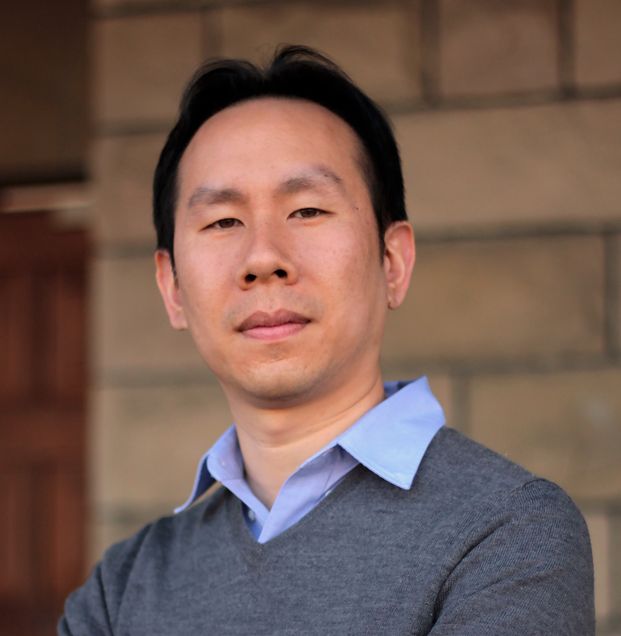
Qiang Cui is Professor of Chemistry at Boston University specializing in computational biophysics and molecular simulations. His research employs multi-scale modeling approaches to study biological systems including membrane remodeling, protein allostery, and enzyme mechanisms. Recent work advances force field development (CHARMM/DFTB+), membrane biophysics, and machine learning applications in molecular biophysics. Publications demonstrate strong methodological focus on QM/MM techniques, free energy calculations, and integrated experimental-computational approaches. Ongoing investigations include lipid membrane interactions with nanoparticles, synaptic fusion mechanisms, photosynthetic energy transfer, and allosteric regulation in proteins.
Jerry Chen is an Associate Professor in the Department of Biology at Boston University. His research focuses on understanding neural mechanisms of perception and abstraction through integrative approaches combining large-scale in vivo imaging with molecular and genetic tools in awake-behaving animals. Research interests include: Principles of long-range cortical communication during sensory processing and decision making Development of multi-area imaging technologies for comprehensive neuronal population monitoring Investigation of genetic determinants in cortical circuit organization and function Dr. Chen's publications demonstrate consistent focus on neuroimaging innovation, with recent work (2020-2025) advancing voltage imaging techniques, denoising algorithms, and cortical circuit analysis. Earlier research (2017-2019) established foundations in sensorimotor processing and cellular-resolution imaging. He teaches graduate courses in Cellular and Systems Neuroscience (BI755/AN810/NE700) and mentors students in computational neuroscience methods applied to neural circuit analysis.
Aaron Beeler is an Associate Professor in the Department of Chemistry at Boston University. His research integrates organic chemistry, engineering, and biology to address challenges in medicinal chemistry, focusing on diseases like schizophrenia, Parkinson’s, and cystic fibrosis. He leads the multidisciplinary Beeler Research Group, which develops technologies such as microfluidics, automation, and photochemistry to advance drug discovery and small molecule synthesis. Education: B.S. in Biology from Belmont University and Ph.D. in Medicinal Chemistry from the University of Mississippi. Research emphasizes drug development, photochemical synthesis of natural products, and high-throughput methodologies. His work explores applications in biomedicine, including HDAC8 inhibitors for cancer and renal disease, and BODIPY-based probes for proteomics. Group members engage in collaborative projects across chemistry, engineering, and biology, preparing students for careers in academia or industry. Current efforts include space-based chemical synthesis and expanding synthetic paradigms for complex molecules.
Anna Crisford is a Research Fellow in Biomedical Microscopy at the University of Southampton. Her work focuses on advanced imaging techniques for biomedical applications, particularly in osteoarthritis diagnosis and neurodegenerative disease research. Key research interests include: Raman spectroscopy for cartilage analysis Nonlinear microscopy in short-wavelength infrared Molecular imaging of protein aggregation Development of cost-effective photonics tools She has contributed to 10 publications between 2019-2025, with recent work on "Spectromics" mapping for osteoarthritis and quadrupolar A-D-A photon absorbing molecules. Collaborating with colleagues across chemistry, neuroscience, and biomedical engineering, her research bridges hardware development and clinical diagnostics. Currently accepting PhD applicants, Crisford contributes to postgraduate research training while developing novel imaging technologies through interdisciplinary collaborations with the Neuroscience, Chemical Biology, and Diagnostics and Therapeutics research groups.
Dr. Peter O'Toole is Head of Imaging and Cytometry and a Professor in the Department of Biology at the University of York. He leads the Imaging and Cytometry Laboratory, a top European facility equipped with state-of-the-art equipment from collaborators like Carl Zeiss and Beckman Coulter. His research focuses on microscopy technology development, with expertise in fluorescence imaging, flow cytometry, and super-resolution techniques. He holds grants from Wellcome Trust, BBSRC, and others, including a £954k Wellcome Trust grant for hyperspectral imaging technology. O'Toole is also Vice President of the Royal Microscopical Society and chairs major microscopy conferences. His educational background includes a PhD in Cell Biophysics from the University of Essex (1998) and a BSc from the same institution (1994). Research interests include developing imaging tools for biomedical applications, immunometabolism, and live-cell analysis. He collaborates internationally on projects like PHENOSPOT and the UK Coronavirus Immunology Consortium. His lab supports cutting-edge projects such as spatial omics and therapeutic vaccine development for leishmaniasis. O'Toole organizes microscopy courses and has pioneered facility meetings for the microscopy community. Grants total over £20M, with recent focuses on deep learning in imaging, immune system metabolism, and hyphae characterization. Key roles include Director of the Bioscience Technology Facility and membership in grant panels for BBSRC, MRC, and Wellcome Trust. His team includes Senior Technicians and PhD students like Laura Wiggins, advancing imaging technologies and collaborative research.
Prof. Dr. Ivo F. Sbalzarini is a Professor of Computer Science and holds the Chair of Scientific Computing for Systems Biology at TU Dresden. He is also a tenured Senior Research Group Leader at the Max Planck Institute of Molecular Cell Biology and Genetics (MPI-CBG) and Director of the Center for Systems Biology Dresden (CSBD). His academic journey includes a Diploma in Mechanical Engineering from ETH Zurich (2002) and a Doctorate in Computer Science from ETH Zurich (2006), awarded the Chorafas Prize. He has held roles such as Dean of the Faculty of Computer Science at TU Dresden (2021–2025) and Co-Spokesperson of the International Max Planck Research School for Cell, Developmental, and Systems Biology (IMPRS-CellDevoSys). Research interests focus on particle methods for image-based computational biology, including multi-scale simulations, data-driven modeling, and parallel high-performance computing. Applications include systems biology of development and active matter. His work integrates computational approaches with biological systems to understand cellular processes and tissue morphogenesis. Notable contributions include the development of the MOSAIC Group, a transdisciplinary research team, and leadership roles in initiatives like the Center for Advanced Modeling and Simulation (CAMS) and the Cluster of Excellence Physics of Life (PoL). He also founded TU Dresden's Computational Modeling and Simulation Master’s program. Prof. Sbalzarini has advised numerous PhD students and postdocs, with research spanning bioimage analysis, stochastic simulation algorithms, and adaptive particle methods. His awards include the Willi Studer Prize and Chorafas Prize, recognizing his academic and research excellence.
Jill L. Johnson is a Professor in the Department of Biological Sciences at the University of Idaho, College of Science. She holds a Ph.D. in Biochemistry and Molecular Biology from Mayo Graduate School (1994) and a B.S. in Cellular and Molecular Biology from the University of Michigan (1988). Her research focuses on molecular chaperones, particularly the Hsp90 chaperone system and its co-chaperones like Hsp40, Hsp70, and Sti1. She investigates their roles in protein folding, stress response, and client protein maturation using Saccharomyces cerevisiae as a model organism. Her work explores the genetic and biochemical mechanisms underlying Hsp90's interaction with co-chaperones and their effects on client proteins such as steroid hormone receptors. Johnson’s research has advanced understanding of Hsp90’s role in signaling pathways and oncogenesis through studies on cochaperone recruitment, ATPase regulation, and structural dynamics revealed via cryo-EM. She has also contributed to uncovering how Hsp90 mutations and cochaperone defects lead to human disorders. Her publications span molecular mechanisms, proteomic analyses, and structural biology insights, with recent work integrating deep learning for ultra-low-light bioimaging applications. Her academic contributions include over 50 peer-reviewed articles, spanning from foundational studies on Hsp90’s yeast models to interdisciplinary applications in imaging and disease mechanisms. She maintains an active research program in the Life Sciences South facility at the University of Idaho, fostering collaborations in cellular stress response and molecular chaperone networks.
Alejandro Luis Callara serves as a postdoctoral researcher at the University of Pisa's Research Center "E. Piaggio," specializing in biomedical signal and image processing methodologies for neuroscience applications. His work bridges engineering and cognitive science through advanced computational approaches to physiological data analysis. His academic foundation includes: Bachelor’s Degree in Biomedical Engineering (2012), University of Pisa Master’s Degree in Biomedical Engineering (2015), University of Pisa PhD in Information Engineering (2019), University of Pisa Callara's research centers on developing analytical pipelines for EEG and fMRI data to map brain connectivity networks, with particular expertise in autonomic nervous system interactions during emotional processing. He actively contributes to the Brain matters team's development of neuronal segmentation tools for confocal microscopy data, extending his methodological focus to multi-scale tissue imaging. His technical proficiency spans directed coherence analysis, dynamic causal modeling, and thermal response quantification. Analysis of his 15 most recent publications (2024-2025) reveals three dominant research trajectories: (1) autonomic physiology investigations examining parasympathetic-sympathetic coupling during emotional tasks using EDA and HRV metrics; (2) innovative neuroimaging techniques for brainstem fMRI analysis and sparse connectivity mapping; and (3) multimodal integration studies exploring olfactory-visual-auditory interactions in affective disorders through VR/AR paradigms. Methodologically, his work consistently employs advanced signal processing frameworks like PCA-based partial correlation and ThermICA for multivariate analysis. Within the Research Center "E. Piaggio," Callara collaborates across bioengineering and robotics initiatives, particularly through the Brain matters team where he applies computational neuroscience to neuronal morphology analysis. His current projects focus on refining contactless stress classification systems using thermal imaging and developing immersive VR scenarios for anxiety disorder research, demonstrating strong translational potential for clinical applications.
Jason Swedlow is a Professor and Chair of Quantitative Cell Biology at the University of Dundee's School of Life Sciences. His primary research focuses on cell division mechanisms, bioimaging technologies, and the development of open-source tools for managing and sharing imaging data. He leads the Open Microscopy Environment (OME), which includes software like Bio-Formats and OMERO, and co-founded Glencoe Software to commercialize these technologies. His work on the Image Data Resource (IDR) has established a global repository for bioimaging data. Collaborations include projects with EMBL-EBI and RIKEN, advancing data integration in life sciences. Research interests include the role of oxygen-sensing enzymes in mitotic spindle assembly and high-throughput screening for contraceptive development. Notable awards include the OBE (2021) and Fellow of the Royal Society of Edinburgh (2012). He holds leadership roles in initiatives like the NIH-funded 4D Nucleome project and chairs the Bill & Melinda Gates Foundation's sperm-targeting contraception program. Awards: OBE, Royal Society of Edinburgh Fellowship, BBSRC Innovator of the Year Grants: NIH, Gates Foundation, Wellcome Trust Labs/Teams: OME Consortium, National Phenotypic Screening Facility, Glencoe Software
Yuanwei Zhang is an Associate Professor in the Department of Chemistry and Environmental Science at the New Jersey Institute of Technology (NJIT). His research focuses on developing near-infrared (NIR)-light-responsive organic chromophores and biomaterials for applications in biomedical imaging, optogenetics, and photodynamic therapy. Zhang completed his B.S. and M.S. in Chemistry from Nankai University (2005, 2008), followed by a Ph.D. in Chemistry from the University of Central Florida (2013). His postdoctoral work at the University of Massachusetts Medical School expanded his expertise in optogenetic techniques and animal studies. His educational background includes: B.S., Chemistry, Nankai University (2005) M.S., Chemistry, State Key Laboratory of Elemento (2008) Ph.D., Chemistry, University of Central Florida (2013) Zhang’s research interests span organic synthesis, photonic materials, and biomedical applications. His lab develops NIR fluorophores for sensors, drug delivery systems, and imaging tools. Notable trends in his publications include advancements in upconversion nanomaterials, pH-sensitive photosensitizers, and label-free microscopy techniques. His work bridges organic chemistry and biomedical engineering, with applications in cancer therapy, cellular imaging, and energy storage materials. Zhang’s lab focuses on interdisciplinary projects at the interface of chemistry and biology. Current efforts include designing injectable retinal nanoantennae for NIR vision enhancement and developing scalable methods for PEGylated polymers in gene delivery. His research also explores the use of BODIPY-based compounds for light-activated drug release and cellular targeting.
Nick Tomkinson is a Professor of Pure and Applied Chemistry at the University of Strathclyde, having joined in 2011 from Cardiff University. He holds a BSc (1992) and PhD (1995) from the University of Sheffield, followed by postdoctoral research at GlaxoSmithKline. His research focuses on developing synthetic methodologies emphasizing room-temperature reactions, moisture/air tolerance, and bench-stable catalysts. Key interests include catalytic oxidation, bioorthogonal chemistry, and drug discovery. He has led over 39 projects, including grants from EPSRC and the Cunningham Trust, and has supervised 33 students. Notable achievements include an EPSRC Advanced Research Fellowship (2004–2009) and contributions to SARS-CoV-2 inhibitor discovery. His work integrates analytical techniques like Raman spectroscopy with synthetic chemistry to address biomedical challenges. Recent research highlights include: Development of modular drug screening platforms Investigations of protein S-acylation mechanisms Design of ratiometric Raman sensors for intracellular analysis High-throughput chemistry automation tools Awards: EPSRC Advanced Research Fellowship (2004–2009). Active collaborations span bioimaging, drug toxicity assessment, and enzyme inhibitor design.
Ronald L Walsworth is a Professor of Physics and Electrical and Computer Engineering at the University of Maryland (UMD), holding the Minta Martin endowed professorship. He is the Founding Director of UMD's Quantum Technology Center (QTC), which focuses on advancing quantum science for translational applications and workforce education. His research develops precision measurement tools and quantum sensors applied to physical and life sciences, including quantum diamond magnetometry, NMR/MRI, and bioimaging. Education details are not explicitly stated in the provided texts. His work combines experimental and theoretical approaches, leveraging quantum defects in diamond and boron nitride for ultra-sensitive measurements. Notable contributions include quantum diamond microscopes, all-optical magnetometers, and applications in astrophysics, biomedical imaging, and dark matter detection. Recent research themes emphasize solid-state spin ensembles for high-resolution magnetic spectroscopy, machine learning for data analysis, and interdisciplinary collaborations. He advises graduate students like Andrew Beling (2025 Boron Nitride Workshop presenter) and has pioneered sensor systems with industrial and academic partners. Grants and collaborations include NASA-funded quantum sensing assessments and DOE initiatives. Labs/Teams: Director of Quantum Technology Center (QTC), leading teams in quantum microscopy, sensor development, and quantum workforce training programs at UMD.
Prof. Dr. Daniel B. Werz is a Full Professor and Chair of Organic Chemistry at the Albert-Ludwigs-Universität Freiburg. His research focuses on organic synthesis, catalysis, and fluorophore design, particularly involving BODIPY derivatives and donor-acceptor cyclopropanes. He leads the Werz Research Group, which develops novel compounds for materials and bioorganic chemistry applications. Werz holds a PhD (summa cum laude) from Ruprecht-Karls-Universität Heidelberg and has held professorships at TU Braunschweig and Göttingen University. He has received prestigious awards including the ERC Consolidator Grant and ORCHEM Award, and has over 200 publications in top journals like Angewandte Chemie and Journal of the American Chemical Society. His research integrates synthesis with applications in bioimaging, flow cytometry, and glycosphingolipid studies. Key projects include designing fluorescent dyes via rational and serendipitous methods, and exploring cyclopropane chemistry for heterocyclic synthesis. He teaches courses on organic chemistry fundamentals and advanced methods at Freiburg. Werz collaborates internationally, including visiting professorships at IIT Guwahati and Hong Kong universities. His lab emphasizes student training and innovation, offering HiWi positions and master’s projects. Recent work highlights include BOIMPY dyes, oligo-BODIPY superstructures, and electrochemical fluorophore functionalization.
Nikita Durandin holds dual academic roles: **Adjunct Professor in Pharmaceutical Nanotechnology** at the **Faculty of Pharmacy, University of Helsinki** (since February 2024) and **Academy Research Fellow** at the **Faculty of Engineering and Natural Sciences, Tampere University**, affiliated with the Chemistry and Advanced Materials (CAM) department. His research focuses on **pharmaceutical nanotechnology, materials science, and photochemistry**, with emphasis on light-activated drug delivery systems, antimicrobial materials, and nanocarrier design. He investigates mechanisms for controlled cargo release, light-sensitive polymers, and energy transfer processes in biomedical contexts. His work spans **nanomedicine**, **biomedical engineering**, and **photomedicine**, with recent advancements in **3D-printable hydrogels**, **BODIPY photocages**, and **indoor-light-activated antimicrobial agents**. Over 50 peer-reviewed articles highlight his contributions to light-responsive materials, drug delivery systems, and molecular dynamics analysis. Key research trends include **triplet sensitization**, **photoswitching dynamics**, and **phthalocyanine-based therapies**, driven by interdisciplinary collaboration between pharmacy, engineering, and chemistry disciplines. His labs at both universities explore applications in regenerative medicine, biocompatible materials, and photodynamic therapy. Contact: nikita.durandin@tuni.fi , Hervanta Campus, Tampere University
Professor Max Massi is a distinguished academic at Curtin University, where he serves as a Professor in the Department of Chemistry within the School of Molecular and Life Sciences, Faculty of Science and Engineering. His research focuses on transition metal and lanthanoid coordination chemistry, with particular emphasis on photophysical properties and applications of luminescent compounds in materials and life sciences. Professor Massi leads an active research group that bridges fundamental chemistry with practical applications in biomedical imaging and materials development. Professor Massi's educational background includes: 2001: Laurea (equivalent to M.Sc.) in Industrial Chemistry, University of Bologna 2005: Ph.D. in Chemistry, University of Bologna His research program centers on developing novel luminescent compounds with applications spanning materials science and biomedical imaging. Professor Massi's group investigates transition metal and lanthanoid coordination chemistry, focusing on the photophysical and photochemical properties of these complexes. A significant portion of his work involves creating molecular probes for bioimaging applications, particularly for lipid visualization and cellular processes. His research bridges fundamental chemistry with practical applications in medical diagnostics and materials development, with strong emphasis on iridium, rhenium, and lanthanoid complexes. Analysis of Professor Massi's recent publications reveals a strong focus on $$\text{Ir(III)}$$ and $$\text{Re(I)}$$ complexes, lanthanoid-based materials, and their applications in bioimaging, OLED technology, and medical diagnostics. His work demonstrates interdisciplinary collaboration across chemistry, materials science, and biomedical research, with particular emphasis on the photophysical properties and practical applications of luminescent compounds. The research spans from fundamental coordination chemistry to applied medical imaging and materials science. Professor Massi's scientific achievements have been recognized through prestigious fellowships and memberships: ARC Future Fellowship (2013-2017) Advanced Spectroscopy in Chemistry Visiting Scholar Fellowship (2013) ARC Postdoctoral Research Fellowship (2009-2012) Member of the Royal Australian Chemical Institute (RACI) Member of the Royal Society of Chemistry (RSC) Professor Massi has successfully mentored numerous students and early-career researchers, as evidenced by the many publications featuring junior researchers as first authors. His research group has secured significant funding including BioSA Research Project ($175,000), ITEK Catalyst Grant ($105,000), ARC Future Fellowship ($705,120), and ARC Linkage Infrastructure ($170,000). His collaborative approach is evident in the diverse range of research projects spanning bioimaging, materials science, and medical applications, with strong connections to industry and clinical partners. The Massi Research Group operates as a dynamic interdisciplinary team focused on developing luminescent compounds for practical applications. Their work integrates synthetic chemistry, photophysical characterization, and biological testing to create novel materials with real-world utility. The group maintains strong collaborations with researchers across Australia and internationally, contributing to its reputation as a leading center for coordination chemistry research. Current research directions include developing molecular probes for lipid imaging, creating novel materials for OLED applications, and investigating therapeutic potential of metal complexes.