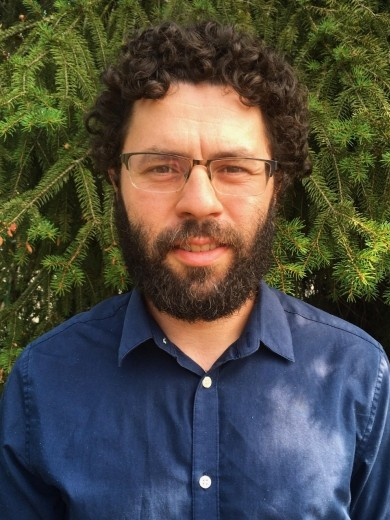
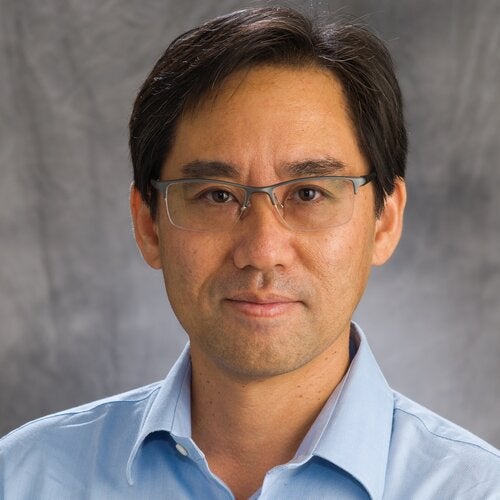
Prof. Dr. Otmar Spinas is affiliated with the Christian-Albrechts-University of Kiel , where he works in the Department of Mathematics . His research focuses on set theory, forcing, cardinal invariants, descriptive set theory, and infinite combinatorics , particularly in the context of Polish spaces and tree ideals. Research Interests : Spinas investigates the interplay between tree ideals, Ramsey theory, and regularity properties, with a focus on cardinal invariants, Tukey reductions, and the structure of Borel functions. His work often bridges mathematical logic, topology, and combinatorial set theory. Publications : His recent papers explore topics such as Mycielski ideals, compact tree ideals, and their covering numbers, alongside foundational contributions to Silver forcing and Sacks amoeba forcing. Projects : He is involved in DFG-funded research on cardinal invariants of tree ideals, antichain numbers, and continuous Ramsey theory.
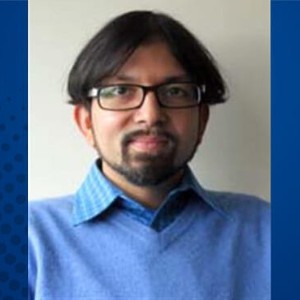
Igor Shinkar is an Associate Professor in the School of Computing Science at Simon Fraser University (SFU). His research focuses on theoretical computer science, discrete mathematics, and probability theory, with particular interests in computational complexity, property testing, and local-to-global phenomena in combinatorial objects. He holds a PhD in Mathematics and Computer Science from the Weizmann Institute of Science (2014), an MSc from the same institution (2009), and a BSc in Mathematics and Computer Science from Tel Aviv University (2005). Shinkar has taught numerous courses at SFU, including CMPT 125 (Introduction to Computing Science and Programming II), CMPT 225 (Data Structures and Programming), CMPT 405/705 (Design and Analysis of Algorithms), and CMPT 706 (Design and Analysis of Algorithms for Big Data). He has also co-taught courses at UC Berkeley and NYU, focusing on topics like coding theory and approximation algorithms. His research explores the interplay between theoretical computer science and mathematics, with contributions to areas such as randomized algorithms, approximation algorithms, and probabilistically checkable proofs. He actively seeks MSc and PhD students interested in theoretical computer science.
Assaf Rinot is a Professor in the Department of Mathematics at Bar-Ilan University in Israel. His research focuses on Mathematical Logic and Set Theory, particularly infinitary combinatorics, including partition relations, singular cardinal combinatorics, and infinite graph theory. He has authored numerous papers on topics such as forcing axioms, Souslin trees, and Ramsey theory. Rinot's work frequently intersects with set-theoretic topology and combinatorial principles like the diamond principle. He has collaborated with prominent researchers including Ari Meir Brodsky, Saharon Shelah, and Stevo Todorcevic. Rinot has presented at international conferences such as the European Set Theory Conferences and the Set Theory Oberwolfach workshops. His contributions span foundational questions in set theory, including investigations into the consistency strength of combinatorial principles and the structure of the continuum.
Will Brian is an Associate Professor of Mathematics at the University of North Carolina Charlotte. His primary research interests lie in set theory, topology, and topological dynamics. He holds affiliations with the Department of Mathematics within the College of Liberal Arts and Sciences. His research explores advanced topics such as cardinal invariants, ultrafilters, and the interplay between set theory and topological spaces. Notable works include studies on Borel partitions, Mahavier products, and dynamics of Cantor spaces. Brian frequently collaborates with scholars like Alan Dow, Saharon Shelah, and Jörg Brendle, producing impactful papers in journals like Proceedings of the American Mathematical Society and Topology and its Applications . Recent research trends focus on partition calculus, topological games, and combinatorial principles in forcing. He has presented at international conferences including the Summer Topology Conference and TOPOSYM, showcasing work on Efimov spaces, Banach-Mazur games, and automorphisms of ultrafilter spaces. Brian’s contributions span over 40 peer-reviewed articles. Notable awards or grants are not explicitly stated in the provided materials. His advising record is currently unspecified, though his collaborations suggest active participation in graduate mentorship. He maintains an active seminar presence and frequently shares preprint versions of his work.
Bryna Kra is the Sarah Rebecca Roland Professor of Mathematics at Northwestern University, where she has served as Department Chair (2009–2012) and currently holds roles including President of the American Mathematical Society (2023–). She joined Northwestern as an Associate Professor in 2004 after faculty positions at Pennsylvania State University and postdoctoral roles post her 1995 Stanford PhD. Her research focuses on ergodic theory and dynamical systems, particularly their intersections with combinatorics and number theory. Kra founded the Graduate Research Opportunities for Women (GROW) program, recognized by the AMS for promoting women in mathematics. Her research interests include nilsequences, combinatorial recurrence, and structural properties of dynamical systems. Recent work addresses problems like Erdos’s B+B+t conjecture and infinite sumset configurations, leveraging ergodic methods. Kra has authored over 50 papers, including foundational contributions on nilsystems and uniformity seminorms. Awards: Simons Fellow (2016, 2021), National Academy of Sciences member (2019), AMS Levi L. Conant Prize (2010), and Fellowships from AMS and American Academy of Arts and Sciences. Editorial Roles: Mathematical Surveys and Monographs (AMS), Ergodic Theory and Dynamical Systems (journal), and others. Leadership Initiatives: Expanding Dynamics conferences, GROW program, and mentorship in mathematics education.
Omer Tamuz is a Professor of Economics and Mathematics at the California Institute of Technology, holding a joint appointment between the Division of Humanities and Social Sciences and the Division of Physics, Mathematics and Astronomy. He has been at Caltech since 2015, initially as an Assistant Professor (2015-2019) before being promoted to full Professor in 2019. He serves as chair of Caltech's undergraduate admissions committee and is an active member of multiple research centers including the Center for Social Information Sciences (CSIS) and the Center for Theoretical and Experimental Social Sciences (CTESS). His research spans the intersection of mathematical theory and economic applications, with particular expertise in probability, dynamics, group theory, and their applications to microeconomic theory. His primary research interests include social learning, information economics, risk and uncertainty, and social choice mechanisms. Tamuz's work is characterized by its mathematical rigor applied to fundamental economic questions, often bridging seemingly disparate fields through innovative theoretical connections. Tamuz's publication record demonstrates consistent high-impact research across both mathematics and economics journals, with significant contributions to understanding information cascades, social learning equilibria, and the mathematical properties of group actions. His recent work (2023-2025) shows continued productivity with papers appearing in top journals like Journal of Political Economy, Econometrica, and Mathematische Annalen, covering topics from stochastic choice to the Boltzmann distribution's economic implications. National Science Foundation CAREER Award (2020) Sloan Research Fellowship in Mathematics (2020) Caltech Division of the Humanities and Social Sciences Brass Award (2019) EC20 best paper award for 'Feasible joint posterior beliefs' MATCH-UP 2024 best paper award for 'The power of two in token systems' Tamuz has received research support from multiple prestigious sources including an NSF CAREER award (DMS-1944153), a Sloan Research Fellowship, a BSF award, a Simons Foundation award, and a MURI grant (N000142412742). He actively mentors students and has taught numerous courses including PS/Ec 172 (Undergraduate Game Theory), Ma140b (Random Walks), and Ma140a (Probability), developing comprehensive lecture notes that are widely used by students.
Per Bäck is an Associate Professor (Docent) of Mathematics at Mälardalen University, affiliated with the School of Education, Culture and Communication and the Division of Mathematics and Physics. He holds a PhD in Mathematics (completed 2022), alongside Master's degrees in Mathematics and Engineering Physics/Electrical Engineering from Linköping University, with additional studies in Chinese and Japanese. His research focuses on nonassociative and noncommutative ring theory, particularly group-graded rings, skew group rings, crossed products, filtered rings like Ore extensions, nonassociative division algebras, and generalizations of Lie algebras. As a co-advisor, he guides doctoral student Tianqi Liu and serves as Program Coordinator for the BSc Program in Engineering Mathematics. He also represents MDU in the Swedish Mathematical Society. His academic contributions span advanced algebraic structures, with recent work emphasizing hom-associative Weyl algebras, non-associative Ore extensions, and deformation theories. Key research themes include exploring non-associative analogs of classical algebraic concepts, structural properties of graded rings, and applications of algebraic methods in geometric contexts. Recent publications reflect interdisciplinary connections between abstract algebra and mathematical physics.
Lukas Spiegelhofer holds the academic rank of Professor in a position associated with the Chair of Mathematics, Statistics and Geometry. His research focuses on number theory, combinatorics on words, and mathematical analysis with particular emphasis on automatic sequences, digit statistics, and entropy-related problems. His work has been published in prestigious journals such as Israel Journal of Mathematics , Journal of the Australian Mathematical Society , and Journal d'analyse mathématique . Recent research explores topics like synchronization of automatic sequences, digit sum collisions across bases, and gap distributions in the Thue-Morse word. Spiegelhofer actively participates in academic activities including invited lectures at conferences such as the 2024 Thue-Morse workshop and combinatorics on words symposium. His research collaborations span international institutions and focus on interdisciplinary areas combining number theory with dynamical systems.
Prof. Ehrhard Behrends is a Professor of Mathematics at the Department of Mathematics and Computer Science, Freie Universität Berlin. His research focuses on functional analysis, probability theory, and stochastic processes. He is also deeply involved in mathematical education and public outreach, having authored numerous popular mathematics books and articles. Key roles include leading the European Mathematical Society's Raising Public Awareness committee (2009–2015) and developing the mathematics portal mathematics-in-europe.eu . Behrends has organized major exhibitions like 'Mathematics for all the Senses' and contributed to initiatives such as the Year of Mathematics 2008. His work bridges advanced research with accessible communication, reflected in his books on Markov chains, analysis textbooks, and the Five Minutes of Mathematics column.
Dr. Rui Han is an Assistant Professor at Louisiana State University, Department of Mathematics. He previously served as a Visiting Assistant Professor at Georgia Institute of Technology (2018–2020) and was a Member at the Institute for Advanced Study (2017–2018). His academic journey includes a B.S. in Mathematics from the University of Science and Technology of China (2008–2012) and a Ph.D. in Mathematics from the University of California, Irvine (2012–2017). Rui Han's research focuses on Mathematical Physics, Harmonic Analysis, and Dynamical Systems and Ergodic Theory. His work explores topics such as spectral theory, quasi-periodic operators, localization phenomena, and applications to quantum dynamics. He employs advanced analytical techniques to study problems in mathematical physics, including the analysis of Schrödinger cocycles, Lyapunov exponents, and the interplay between dynamical systems and spectral properties. His accolades include the Kovalevsky Outstanding Ph.D. Thesis Award (2017), the Von Neumann Award for outstanding performance (2016), and the Connelly Award for excellence in teaching and research (2014). He has secured significant grants, including the NSF CAREER Award (2022–2027) as Principal Investigator and the RTG grant in Topology, Representation Theory, and Mathematical Physics (2023–2028) as senior personnel. No specific laboratory or team affiliations are mentioned in the provided information.
Professor So Hirata is the Marvin T. Schmidt Professor of Chemistry at the University of Illinois at Urbana-Champaign, affiliated with the College of Liberal Arts & Sciences and the Department of Chemistry. He holds additional roles as a Blue Waters Professor and Beckman Affiliate Faculty. His research focuses on electronic and vibrational many-body theory, computational methods for quantum chemistry, and the development of predictive computational techniques. Education: B.S. (1994) and M.S. (1996), University of Tokyo Ph.D. (1998), Graduate University for Advanced Studies (Institute for Molecular Science), Japan Research Interests: Dr. Hirata develops advanced mathematical and computational methods to solve high-dimensional equations in quantum chemistry, enabling precise calculations of molecular properties and transformations. His work includes thermal quasiparticle theory, many-body perturbation theory, and Monte Carlo methods. Applications span molecules, polymers, solids, and liquids, with contributions to understanding excitons, phase transitions, and electronic structures. Key Contributions: Development of algorithms like thermal mean-field theories and explicit correlation factors Pioneering work on finite-temperature coupled-cluster and Green’s function theories Advancements in computational infrastructure (e.g., NWChem software package) Awards & Honors: Guggenheim Fellow (2022) Fellow of the Royal Society of Chemistry (2015) Member of the International Academy of Quantum Molecular Sciences (2014) AAAS Fellow (2012) Grants & Labs: Recipient of major grants including the Camille Dreyfus Teacher-Scholar Award and NSF CAREER Award. Leads the Hirata Quantum Many-Body Theory Group, focusing on computational and theoretical innovations in chemistry.
Mokshay Madiman is a Professor in the Department of Mathematical Sciences at the University of Delaware, affiliated with the College of Arts & Sciences. His research focuses on notions of size for mathematical objects, spanning Convex Geometry, Information Theory, Probability Theory, geometric functional analysis, additive combinatorics, and their applications to theoretical computer science, communication engineering, and data science foundations. Education B.Tech. in Electrical Engineering, Indian Institute of Technology-Bombay Sc.M. and Ph.D. in Applied Mathematics, Brown University Madiman's work explores interactions between entropy, volume, and exotic measures of size, contributing to interdisciplinary applications. He maintains an active academic presence through research and teaching in mathematics. Contact : Office 517B Ewing Hall, Newark DE 19716, USA | Phone: +1 (302) 831-1865
Tuomas Sahlsten is an Academy Research Fellow at Aalto University's Department of Mathematics and Systems Analysis, serving as Principal Investigator for two major Academy of Finland-funded projects on quantum chaos of large many-body systems (2022-2025 and 2022-2027). Education: Doctoral degree in Natural Sciences, University of Helsinki (awarded 30 November 2012) Research Interests: Dr. Sahlsten's work bridges mathematical physics, harmonic analysis, and dynamical systems with emphasis on quantum chaos, ergodic theory, and fractal geometry. His fingerprint reveals deep expertise in Fourier transforms (100%), Euclidean space (80%), tangent measures (80%), trigonometric series (60%), eigenvectors (60%), and self-similar sets (40%), demonstrating interdisciplinary connections between spectral theory, geometric measure theory, and number theory. Publication Trends: Recent work (2021-2024) shows consistent focus on harmonic analysis-dynamical systems intersections, particularly Fourier analysis of fractal structures (Cantor sets, self-similar sets) and quantum ergodicity on hyperbolic surfaces. His research increasingly explores connections between trigonometric series, entropy in dynamical systems, and spectral properties of large-genus surfaces. Scientific Awards: Academy Research Fellow, Academy of Finland (2022) Grants & Collaboration: Leads two Academy of Finland projects investigating quantum chaos through collaborations with international researchers (Masson, Stevens, Orponen). His work demonstrates strong cross-institutional partnerships, particularly in spectral analysis of hyperbolic surfaces and fractal geometry, with recent publications in top-tier journals including American Journal of Mathematics and Mathematische Annalen.
Dr. Pierre Clavier is an assistant professor at Université de Haute Alsace in Mulhouse, France, affiliated with the Institute of Mathematics under the Mathematisch-Naturwissenschaftliche Fakultät. He specializes in mathematical physics, focusing on algebra and quantum field theory, and is currently collaborating with Prof. Dr. Sylvie Paycha at the University of Potsdam on the "species theory" project. Research Focus: Species Theory: Unifying combinatorial results across disparate domains through structural set theory. Applications in mathematical physics, particularly in theoretical aspects of quantum field theory. Collaboration Benefits: His October–November 2023 visit to Potsdam enabled in-person discussions, accelerating progress on unresolved questions and clarifying future research directions. The collaboration includes plans for joint publications and follow-up meetings until December 2023. Additional Interests: Advocates for addressing gender disparities in mathematics and physics through outreach to female high school students, combating historical biases like the "Mathilda effect," and promoting inclusive conference formats such as "Women in [...]" events.
Will Adkisson is a Hedricks Assistant Adjunct Professor at the University of California, Los Angeles (UCLA), actively contributing to the academic community through co-organization of the UCLA Logic Seminar and Logic Colloquium with Anton Bernshteyn. He earned his PhD from the University of Illinois at Chicago (UIC) under the supervision of Dima Sinapova, with no additional educational details provided. His research centers on mathematical logic and set theory, specializing in combinatorial set theory and large cardinals. Key investigations include tree properties at successors of singular cardinals, mutual stationarity phenomena, and combinatorial structures at $\aleph_\omega$, often employing forcing techniques and ultrafilter analysis in choiceless contexts. This work bridges foundational set theory with applications in broader mathematical domains. Analysis of his publications reveals a dual focus: deep exploration of singular cardinal combinatorics (e.g., tree properties, mutual stationarity) and interdisciplinary knot theory applications (e.g., DNA origami). Recent trends emphasize ultrafilter strength above choiceless large cardinals and Prikry forcings, while maintaining consistent contributions to classical set-theoretic problems. No scientific awards are documented in the source material. Information regarding student advising, research grants, or funding sources is absent from the provided text. No specific laboratories, research groups, or collaborative teams beyond seminar organization are referenced.