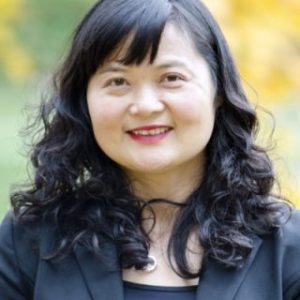
Guofang Li is a Professor in the Department of Language and Literacy Education at the Faculty of Education, affiliated with the Centre for Early Childhood Education & Research (CECER). Her work centers on bilingual development and literacy education within multicultural contexts, particularly focusing on Chinese-Canadian communities. Her research interests include: Early bilingual development Family literacy practices Early literacy instruction methodologies Early education for minority learners Teacher education for multilingual classrooms Analysis of her 2021-2025 publications reveals a concentrated focus on Chinese-Canadian children's bilingual development, examining home literacy environments, digital technology impacts, and pandemic-related disruptions. She consistently advocates for equity-focused approaches in superdiverse educational settings, emphasizing translanguaging practices and critical perspectives on linguistic justice. Scientific Awards: No awards explicitly mentioned in source materials Advising and Grants: No specific student names or grant information provided in source materials Labs and Teams: Centre for Early Childhood Education & Research (CECER): An interdisciplinary hub facilitating collaborative research between academics, educators, and community partners focused on advancing evidence-based early childhood education practices through longitudinal studies and community-engaged projects.
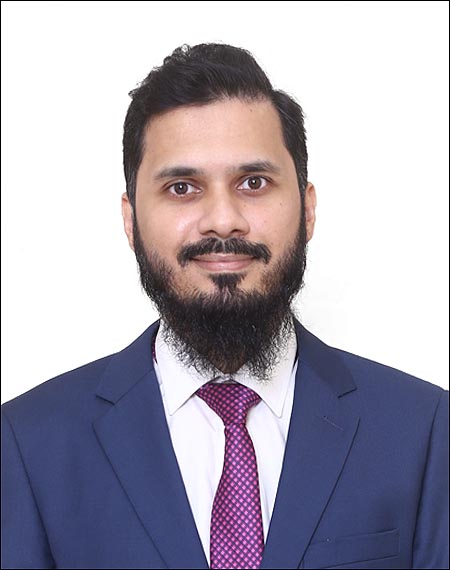
Dr. Anas Iftikhar is an International Lecturer (Assistant Professor) in Logistics and Supply Chain Management at Lancaster University's Management School, United Kingdom. He is affiliated with the Centre for Productivity and Efficiency and contributes to the Supply Chain Management department with research focusing on contemporary supply chain challenges. Dr. Iftikhar completed his Ph.D. in Economics, Management, and Quantitative Methods from the University of Salento, Italy in May 2021. During his doctoral studies, he held visiting researcher positions at Ghent University (Belgium) and Cardiff Business School at Cardiff University (UK), gaining valuable international research experience. Prior to his academic career, he accumulated industry experience in inventory planning and operations management. Dr. Iftikhar's research primarily investigates how supply chain capabilities enhance resilience in disruptive and complex environments. His work explores the intersection of supply chain complexity, digital technologies, and resilience strategies. He employs methodological approaches including systematic literature reviews, meta-analysis, and structural equation modeling. His research has significant implications for organizations navigating geopolitical uncertainties, digital transformation, and supply chain disruptions. His publication portfolio demonstrates a clear evolution from foundational work on network trust and ripple effects to more sophisticated examinations of digital transformation's role in supply chain resilience. Recent publications increasingly focus on the synergistic effects of multiple capabilities (network capability, innovation ambidexterity) in addressing complex challenges like geopolitical turmoil. The research trajectory shows a progression from single-factor analyses to more complex, integrated models that better reflect real-world supply chain dynamics. Dr. Iftikhar actively participates in the academic community through presentations at major conferences including the European Operations Management Association (EUROMA) annual conference, IFAC Conference on Manufacturing Modelling, Management & Control, and Industrial Engineering Operations Management (IEOM) society events. He has also delivered invited talks such as 'Contemporary Issues in Logistics Management' at Bukhara State University. As an educator, Dr. Iftikhar is willing to supervise PhD students in supply chain resilience, disruption management, supply chain complexity, and innovative technologies in supply chain management. His industry experience enriches his teaching approach, bridging theoretical concepts with practical applications. His research outputs have been published in leading Operations and Supply Chain Management journals including International Journal of Production Research, Production Planning and Control, Annals of Operations Research, and Journal of Business Research.
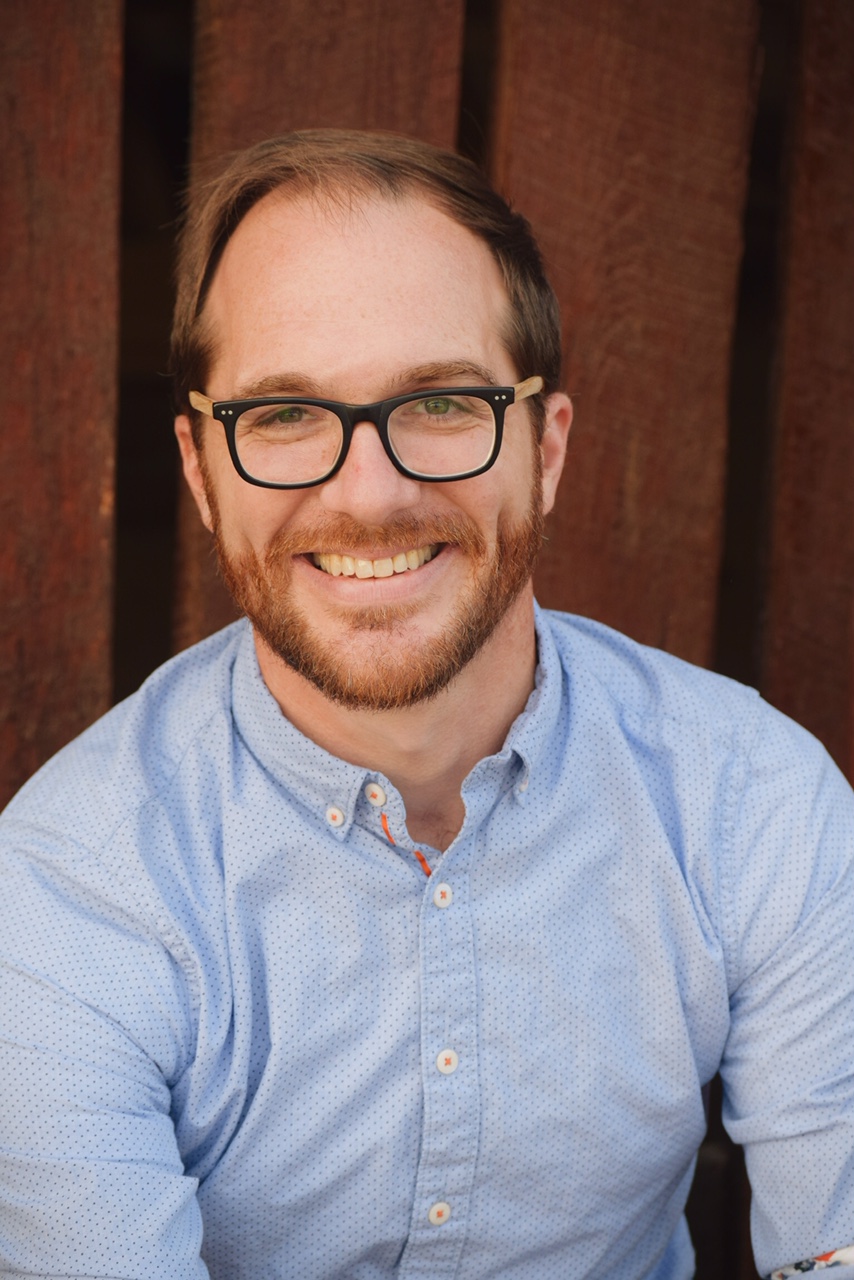
Christopher Lawson is an Assistant Professor in the Department of Chemical Engineering and Applied Chemistry at the University of Toronto, affiliated with the Faculty of Applied Science and Engineering. He serves as Principal Investigator of the Microbiome Engineering Lab and is part of BioZone – the Centre for Applied Bioscience and Bioengineering. His research focuses on engineering anaerobic microbiomes for resource recovery from waste streams using systems biology, synthetic biology, and machine learning approaches. B.A.Sc., M.A.Sc. (University of British Columbia) Ph.D. (University of Wisconsin-Madison) Postdoctoral Training (Berkeley Lab) Lawson's work addresses the challenge of controlling complex microbial interactions in engineered systems to enable scalable biotechnologies for renewable energy, chemicals, and materials. His lab develops high-throughput methods integrating automation and computational tools to optimize microbiome assembly and metabolic fluxes. Recent publications highlight advancements in metabolic modeling , isotope tracing , and systems-level analysis of anaerobic microbiomes, with applications in wastewater treatment , anammox granules , and bioenergy production . His research bridges fundamental microbiology with industrial-scale bioprocess engineering. Scientific Awards ISME/IWA BioCluster Rising Star Award (2022) Jacobs Engineering Group/AEESP Outstanding Doctoral Dissertation Award (2020) Wesley Eckenfelder Graduate Research Award (2019) WEF Canham Graduate Studies Scholarship (2018) NSERC Post-Graduate Scholarship – Doctoral (2014) Lawson actively mentors students and postdocs, emphasizing technical rigor, communication skills, and independence. His lab collaborates within BioZone and with industry partners to advance "team science" principles. Current projects focus on creating engineered microbiomes for commercial-scale waste valorization.
Dr. James W. Navalta is an Associate Professor in the Department of Kinesiology and Nutrition Sciences at the University of Nevada, Las Vegas. His research focuses on physiological responses to outdoor exercise (hiking, trail running) and the validity/reliability of wearable technology. He earned his B.S. in Physical Education and Biology from Brigham Young University–Hawaii, M.S. in Kinesiology from UNLV, and Ph.D. in Exercise Physiology from Purdue University. Education: B.S. - Physical Education & Biology, Brigham Young University–Hawaii M.S. - Kinesiology, University of Nevada, Las Vegas Ph.D. - Exercise Physiology, Purdue University His research portfolio includes: Wearable technology validation for physiological measurements Comparative studies of indoor vs outdoor exercise environments Impact of gender-inclusive approaches on sports science Metabolic and cardiovascular responses to unconventional workouts Psychological benefits of nature immersion Recent publications demonstrate expertise in: Wearable device accuracy testing VO2max and lactate threshold validation Environmental influence on exercise physiology Methodological improvements in data collection Gender-inclusive research design Outdoor activity impact assessment As co-founder and executive editor of the International Journal of Exercise Science, he contributes significantly to academic discourse. He also serves on editorial boards for journals related to digital health and exercise technology.
Lonny R. Levin is a Professor of Pharmacology at Weill Cornell Medical College , where he has worked since 2009. Collaborating extensively with Dr. Jochen Buck, he pioneered research on bicarbonate-regulated soluble adenylyl cyclase (sAC) , a critical enzyme in cAMP signaling. Education : B.S. from Cornell University (1983), Ph.D. from State University of New York at Stony Brook (1989) His research focuses on: cAMP signaling microdomains in mammalian cells Mitochondrial metabolism and pH sensing Sperm capacitation and energy regulation Nonhormonal contraceptive development via sAC inhibition Recent publications (2025-2023) highlight: Structural insights into sAC activation Metabolic adaptations during sperm capacitation Emerging role in corneal endothelium signaling Drug discovery for on-demand male contraception Grants from NIH (NIAID, NICHD) support his work on: Intravaginal rings for dual HIV/herpes prevention and contraception Metabolic communication in reproductive systems Signalosome regulation in mitochondria He maintains collaborations with institutions like EMD Millipore Corporation and co-founded Sacyl Pharmaceuticals, Inc. , holding proprietary interests in sAC-related intellectual property.
Dustin M. Hoffman is an Associate Professor of Creative Writing in the English Department at Southern Illinois University Carbondale, part of the College of Humanities and Social Sciences. He teaches within the university's renowned creative writing program, bringing his unique perspective as a former house painter to his academic work. Hoffman specializes in fiction focused on working-class experiences and labor narratives. His research interests include contemporary American short fiction, working-class literature, character development techniques, and the intersection of manual labor and artistic expression. He has developed a distinctive voice in contemporary literature through his exploration of everyday workers' lives and struggles. Hoffman's scholarly output centers on his three critically acclaimed short story collections that have established him as a significant voice in contemporary American fiction. His work frequently examines the complexities of working-class identity, labor, and the American experience through precise, evocative prose. His publications have appeared in prestigious literary journals including Alaska Quarterly Review, Ninth Letter, Witness, The Threepenny Review, Gulf Coast, and One Story. Prairie Schooner Book Prize (2015) Hoffman maintains an active presence in the literary community through his publications, readings, and participation in the academic creative writing sphere. His work bridges the gap between academic literary studies and practical creative writing, offering students a practitioner's perspective on the craft of fiction writing.
Christopher Conway serves as Associate Professor of Psychology at Fordham University's College of Arts and Sciences, where he directs the Bronx Personality (B-PER) Lab. His research investigates borderline personality disorder, anxiety, depression, and distress tolerance using experience sampling methods and longitudinal designs. The lab examines personality development across key transitions such as romantic breakups and financial strain. 2007 BS in Psychology and Spanish, Duke University 2009 MA in Clinical Psychology, University of California, Los Angeles 2013 PhD in Clinical Psychology, University of California, Los Angeles Conway's work centers on distress tolerance as a protective factor against self-injurious behaviors, momentary personality processes using ecological assessment, and the HiTOP consortium 's dimensional classification of psychopathology. His lab develops quantitative models linking personality dimensions to clinical outcomes, with emphasis on how stressors trigger symptom changes. Recent publications reveal neuroticism's specific association with broadband internalizing symptoms rather than narrowband anxiety or anhedonia. His publications demonstrate consistent focus on transdiagnostic mechanisms and dimensional classification systems . Key trends include validating the HiTOP framework across cultures, examining distress tolerance in substance use contexts across four continents, and developing within-person models of self-injury using registered report methodology. Professional affiliations include: Society for Research on Psychopathology Association for Psychological Science Association for Behavioral and Cognitive Therapies Association for Research in Personality Conway advises multiple graduate students in the B-PER Lab and leads several active studies including MOMENT (Measuring Our Momentary Emotions and Negative Thoughts), DENEM (Daily Experiences of Negative Emotions), and READI (Responses to Emotions And Daily Interactions). His lab participates in the multinational Cross-cultural Addictive Behaviors Study examining distress tolerance across seven countries. All research materials follow open science principles through his OSF repository. The B-PER Lab maintains active research programs examining personality development through: 3-year longitudinal Multiyear Adult Personality Project (MAPP) Cross-cultural Addictive Behaviors Study (CABS) Daily emotion regulation projects using smartphone-based assessments
Prof. Nikos Mamoulis is a Professor at the Department of Computer Science & Engineering, University of Ioannina, and a Lead Researcher at Archimedes Research Unit, ATHENA RC. He holds a PhD from Hong Kong University of Science and Technology (HKUST) and a Diploma from the University of Patras. His research focuses on spatial data management, big data analytics, data privacy, and uncertain data systems. Education : Ph.D., Computer Science, Hong Kong University of Science and Technology (2000) 5-year Diploma, Computer Engineering and Informatics, University of Patras (1995) Research Interests : Complex data management (spatial, spatio-temporal, time-series, text, graphs), big data analysis, privacy preservation, and uncertain data systems. He develops scalable algorithms and systems for modern data management challenges, with applications in transportation, social networks, and geospatial analytics. Projects & Grants : MESA: In-memory Spatial Analytics Made Scalable (HFRI-funded, PI) MORE: Real-time Energy Data Management (H2020, Senior Researcher) Smart City Bus Platform (ERDF-funded, PI/Coordinator) Awards : Outstanding Young Researcher Award (2008-2009, HKU) Best Paper Award at SSTD 2015 Test of Time Award at MDM 2022 Labs & Collaborations : Leads the Archimedes Research Unit at ATHENA RC, collaborating with institutions like HKUST and Uppsala University on spatial and big data systems. Active in organizing top-tier conferences like SIGMOD, EDBT, and ICDE.
Dr. Ralph Evins is an Associate Professor and Director of the Graduate Program in the Department of Civil Engineering at the University of Victoria. He holds affiliations with the Urban Energy Systems laboratory at Empa and ETH Zurich in Switzerland. His expertise spans building energy simulation, energy system optimization, and machine intelligence applications in sustainable design. Evins holds an MEng from Imperial College London and an EngD from the University of Bristol. His research focuses on computational problem-solving in energy systems, including surrogate modeling, optimization algorithms, and machine learning. He develops tools like the Holistic Urban Energy Simulation (HUES) platform and BESOS software framework to bridge building, district, and city-scale energy analysis. His work emphasizes holistic systems thinking, integrating energy hubs, thermal modeling, and digital twin technologies. Recent articles explore surrogate model refinement, inverse modeling for building characterization, and decarbonization strategies. He collaborates with industry to translate academic innovations into practical solutions. Evins advises students in energy systems and leads projects on net-zero building design, retrofit prioritization, and smart grid integration. His research addresses challenges in climate adaptation, energy efficiency, and sustainable urban development through interdisciplinary approaches.
Mahdi S. Hosseini is an Assistant Professor in the Department of Computer Science and Software Engineering at Concordia University and a faculty member of the Applied AI Institute. He holds a PhD from the University of Toronto (2016) and completed a postdoctoral fellowship at UofT, supported by MITACS-Elevate and NSERC fellowships. His research focuses on advancing deep learning and computer vision for computational pathology and healthcare technologies, aiming to develop AI tools for clinical diagnosis. He currently supervises graduate students and has published over 30 papers and two patents. Education: PhD in Electrical and Computer Engineering from the University of Toronto (2016), postdoctoral training at UofT collaborating with Huron Digital Pathology Inc. (Waterloo, Ontario). Research interests include deep learning, computer vision, computational pathology, medical imaging, and AI ethics (P4AI project). His work emphasizes developing explainable AI systems for clinical pathology, biomarker discovery, and efficient learning algorithms. Professional service includes serving as Area Chair for NeurIPS 2023, CVPR 2023-2024, and ECCV 2024. He reviews grants for CIHR, NSERC, and serves on program committees for key conferences (ICCV, CVPR, NeurIPS). Teaching includes courses on applied AI, machine learning, and deep learning for computational pathology at both graduate and undergraduate levels. Awards: MITACS-Elevate Fellowship (postdoc), NSERC Research Funding (2016-2017). His work has led to patents in diagnostic systems and has collaborated with hospitals and pathologists to advance clinical applications. Labs/Teams: Active collaborations with the Applied AI Institute at Concordia, Huron Digital Pathology, and healthcare institutions. Research emphasizes interdisciplinary approaches between computer science and clinical medicine.
Samantha King is a Professor in the Department of Kinesiology and Health Studies at Queen's University. She holds a PhD from the University of Illinois at Urbana-Champaign. Her interdisciplinary research integrates feminist, queer, and critical race theories to examine the intersections of health, sport, and the body. She leads the King Research Group, based in KINE 206J & 301V offices. King's research interests span topics such as drug cultures, food politics, and the sociology of sport. Her influential work includes the book Pink Ribbons, Inc: Breast Cancer and the Politics of Philanthropy , adapted into an NFB documentary. She explores themes like pharmaceutical use in professional sports, the ecological dimensions of embodiment, and multispecies approaches to sport studies. Her recent publications analyze racial capitalism in NFL pain management, pandemic-era human-animal relations, and the sociological implications of whey protein consumption. She has co-edited volumes on food ethics and bodily embodiment, reflecting her commitment to interdisciplinary dialogue. Her work bridges cultural studies, sociology, and health studies, addressing contemporary issues in sport, medicine, and everyday life. King’s academic contributions include over 30 peer-reviewed articles and edited collections. She has received international attention for critiquing corporate philanthropy in health activism and challenging normative frameworks in sport studies. Her current projects explore multispecies methodologies and the political economies of meat production.
Professor Daniel A. McFarland at Stanford University's Graduate School of Education holds courtesy appointments in Sociology and Organizational Behavior, with over two decades of academic service (2000-Present). As Director of the Stanford Center for Computational Social Science (2012-2016, 2018-2020) and Chair of Social Sciences (2023-Present), he bridges educational systems with computational sociology. His research spans Scientific innovation dynamics Adolescent social structures Computational methods Knowledge diffusion Recent publications in Social Networks and American Sociological Review examine tie fitness metrics, interdisciplinary career progression, and epistemic constraints. With 81 total publications, his work synthesizes material, cultural, and institutional network effects. Awards include the Gould Award (American Journal of Sociology) and Bessel Award (Humboldt Foundation). As Doctoral Dissertation Advisor for Taylor LiCausi and Nick Sherefkin, and Master's Program Advisor for Jason Zhang, he fosters next-generation scholarship. His computational sociology courses (EDUC 317, SOC 317W) integrate network methods and data science.
LING Chun Kai is an Assistant Professor in the Department of Computer Science at the National University of Singapore (NUS), School of Computing. His research focuses on multiagent systems, computational game theory, and machine learning applications in adversarial real-world domains like cybersecurity and logistics. Educational background includes a PhD in Computer Science (2017-2023) from Carnegie Mellon University and a First Class BEng in Computer Engineering (2015) from NUS. Previously, he was a Postdoctoral Research Scientist at Columbia University. Current research interests span computational game theory, machine learning for multi-agent systems, equilibrium characterization in imperfect information settings, and applications in network security, logistics, and recreational games. Key methodological contributions include scalable algorithms for game solving, differentiable game solvers, and copula-based statistical modeling. Recent publications focus on attacker-defender graph games, language negotiation agents, and modeling games with incomplete information. Collaborations include researchers from Columbia University, Carnegie Mellon, and institutions working on GameSec, AAAI, Neurips, and ICML venues. Scientific Awards: IJCAI 2018 Distinguished Paper Award GameSec 2023 Best Paper Award GameSec 2024 Best Paper Award Singapore Teaching and Academic Research Talent Scheme (2024) Teaching includes courses on AI Planning and Decision Making (CS4246, CS5446) and Advanced Topics in Artificial Intelligence (CS6208).
Ying MacNab is an Associate Professor in the Department of Statistics at the University of British Columbia (UBC), Vancouver Campus. She holds an additional affiliation as an Associate Member in the School of Population and Public Health (SPPH). Her research focuses on Bayesian hierarchical modeling, spatial epidemiology, and disease mapping with applications to public health surveillance and aging populations. She has contributed extensively to methodological advancements in Gaussian Markov random fields and spatiotemporal modeling frameworks. Her work bridges statistical theory and practical health challenges, including pandemic-related stress in older adults, opioid treatment outcomes, and infectious disease forecasting. MacNab has collaborated on projects involving mental health assessments (e.g., sleep dysfunction, anxiety/depression in iOAT patients) and has developed novel statistical tools for analyzing spatially and temporally correlated health data. Her research also addresses methodological gaps in coregionalized multivariate models and constrained Bayesian estimation. MacNab's publications reflect a multidisciplinary approach, integrating epidemiological theory with advanced computational methods. Recent trends in her work emphasize dynamic modeling of infection risks, mediation analysis in aging populations, and validation of psychometric scales for health-related stress. She has maintained an active research agenda since the early 2000s, with notable contributions to neonatal health outcomes, injury surveillance, and healthcare quality improvement.
Pragya Sur is an Assistant Professor of Statistics at Harvard University and currently on leave as a Visiting Professor at MIT’s Laboratory for Information and Decision Systems (LIDS). Her research focuses on high-dimensional statistics, machine learning, and artificial intelligence, particularly in overparametrized models, causal inference, and learning under distribution shifts. She has held postdoctoral positions at Harvard’s Center for Research on Computation and Society (hosted by Cynthia Dwork) and was a Simons Institute Long-Term Participant at UC Berkeley. She earned her Ph.D. in Statistics from Stanford University under Emmanuel Candès, and completed her B.Stat and M.Stat at the Indian Statistical Institute, Kolkata. Sur’s work has been supported by NSF awards, the Eric and Wendy Schmidt Fund, and the William F. Milton Fund. She was named an International Strategy Forum (ISF) Fellow (2023) and led the Institute of Mathematical Statistics (IMS) New Researchers Group (2022–2024). She serves as an Associate Editor for Statistical Science and Guest Co-Editor for a special issue on AI and statistics. Her research contributions span theoretical guarantees for machine learning, transfer learning, and debiasing techniques in high-dimensional inference. Awards: NSF CAREER Award, Theodore W. Anderson Dissertation Award, Ric Weiland Fellowship Education: Ph.D. in Statistics (Stanford, 2019); M.Stat (ISI Kolkata, 2014); B.Stat (ISI Kolkata, 2012) Professional Roles: Associate Editor, Statistical Science ; ISF Fellow (2023); former IMS New Researchers Group Lead Her current research emphasizes statistical theory for modern machine learning, including foundational work on overparametrized models and robust inference across heterogeneous environments.