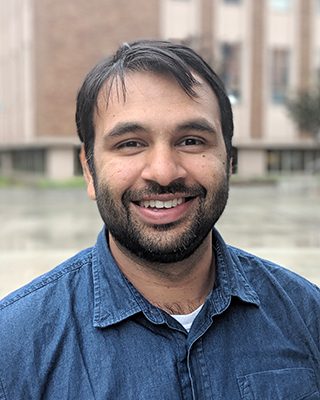
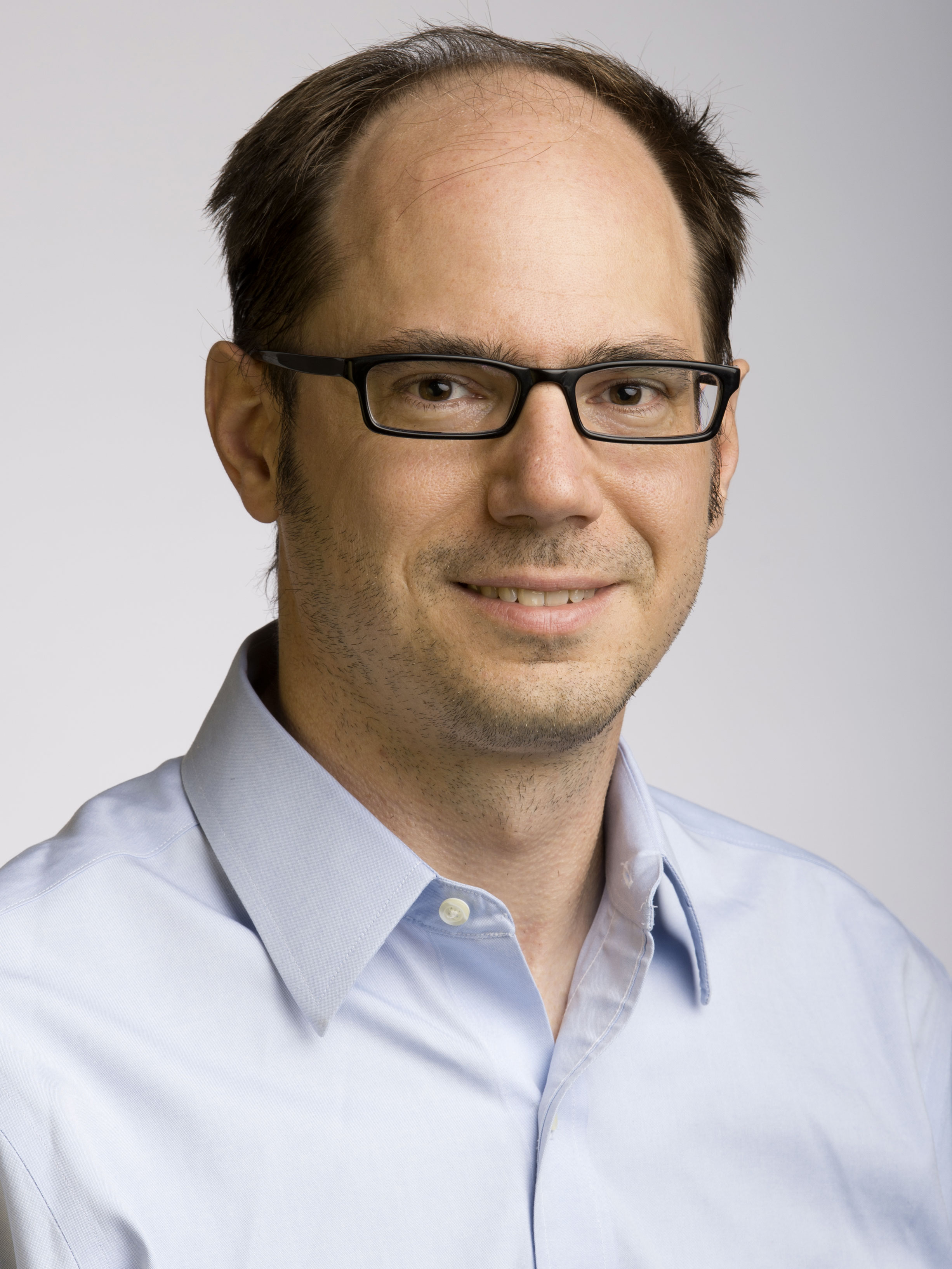
Lalit Jain is an Assistant Professor at the Foster School of Business , University of Washington. His research bridges theoretical mathematics with practical machine learning systems, focusing on adaptive data collection under budget constraints, applied to marketing, cognitive psychology, and humor detection. Research Interests : Adaptive machine learning algorithms Bandit optimization and experimental design False discovery rate control Human-AI interaction Applications in marketing and cognitive science Advising : Justin Weltz (Neurips 2023) Zhaoqi (AISTATS) Romain (AISTATS) Zhihan (Amazon collaboration) Jennifer Brennan (ICML 2022 workshop) Projects : Co-developer of the New Yorker Caption Contest voting system Collaboration with Amazon on adaptive pricing systems
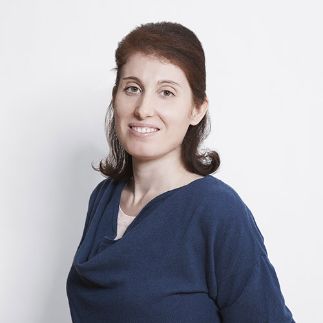
Rancoita Paola Maria Vittoria is an Associate Professor of Medical Statistics (MED/01) at the Faculty of Medicine and Surgery, Vita-Salute San Raffaele University (UniSR), since 2022. She is actively involved in research activities at the University Center for Statistics for Biomedical Sciences (CUSSB) and serves on the Board of Directors of CUSSB (since 2016) and the Scientific Committee of CeNRI (Center for Nursing Research and Innovation, since 2016). She also participates in academic governance through multiple committees in the International MD Program (since 2020) and the Doctoral School in Public Health at the University of Milan-Bicocca (since 2020). Research Focus : Her work centers on developing and applying statistical methodologies in biostatistics and bioinformatics, including survival analysis with frailty models, repeated measures and clustered data analysis, genomic data integration via Bayesian regression, and stochastic geometry for angiogenesis image analysis. These techniques address clinical challenges like missing data handling and prognostic index identification. Academic Background : PhD in Mathematics and Statistics for Computational Sciences (2010), University of Milan Post-doctoral Researcher (2010-2011), IDSIA/IOSI Switzerland Research Fellow (2012-2013), Statistics SECS-S/01, Faculty of Psychology, UniSR Fixed-Term Researcher (2014-2021), Medical Statistics MED/01, UniSR Scientific Recognition : WHO Statistical Consultant (2022) Task Force Member, Stop TB Partnership (2020) ISBA Travel Award (2010) INdAM Fellowship (2004-2006) Leadership Roles : She served as Treasurer in the Italian Region of the International Biometric Society (2018-2021) and held leadership roles in Società Italiana di Statistica Medica ed Epidemiologia Clinica (2020-2021). Her teaching spans statistics, bioinformatics, and clinical data science across undergraduate and postgraduate programs at UniSR and Milan-Bicocca University.
Carlo D'Eramo is a Professor in Reinforcement Learning and Computational Decision-Making at the Center for Artificial Intelligence and Data Science (CAIDAS) of Julius-Maximilians-Universität Würzburg (JMU). He leads the LiteRL research group and the hessian.AI independent research group, focusing on lightweight methods for adaptive autonomous agents in complex real-world environments. B.Sc., M.Sc. in Computer Engineering - Politecnico di Milano (2011, 2015) Double M.Sc. in Computer Science - University of Illinois at Chicago (2015) Ph.D. in Information Technology - Politecnico di Milano (2019) His research spans multiple RL domains including multi-task learning , curriculum learning , adversarial RL , options learning , and multi-agent coordination . Recent work explores physics-informed ML, neural network distillation, and uncertainty-driven exploration. 2025 publications highlight advancements in: Bellman update optimization via adaptive distillation uncertainty propagation in tree search multi-agent policy gradients real-world educational applications The group's work shows increasing specialization in physics-integrated RL and efficient neural architectures. Spotlight Presentation - ICML (2025) Spotlight Presentation - ICLR (2024) Oral Presentation - NeurIPS (2020) As Senior Area Chair for RLC and Area Chair for major AI conferences (AAAI, NeurIPS, ICLR), he contributes to academic governance. His team includes researchers like Ahmed Hendawy, Théo Vincent, and Georgia Chalvatzaki, with collaborations spanning TU Darmstadt and hessian.AI.
Roland Reitberger is a Research Fellow at the Chair of Energy Efficient and Sustainable Design and Building at the Technical University of Munich . His work focuses on Life Cycle Assessment , thermal-dynamic building simulation , and parametric methods for analyzing the built environment. He investigates interactions in urban systems and synergy effects in sustainable construction. Research interests include climate-resilient urban planning, integration of green infrastructure with building systems, and data-driven optimization of building energy performance. His recent publications demonstrate expertise in multi-objective decision support for neighborhoods, GIS-based urban tree analysis , and holistic climate assessments of construction projects. Reitberger contributes to urban climate resilience research through parametric modeling of building density-vegetation relationships and develops frameworks for circular economy strategies in building densification and refurbishment. His methodological innovations combine machine learning with building simulation for explainable AI applications in office energy management.
Jasper Goseling is an Associate Professor at the Digital Society Institute and affiliated with the Mathematics of Operations Research department. His research spans differential privacy, network coding, optimization, and wireless systems, often bridging theoretical and applied domains. Key research areas: Differential Privacy, Network Coding, Optimization, Wireless Sensor Networks, Machine Learning His recent work focuses on robust optimization techniques for local differential privacy, addressing trade-offs between data utility and privacy preservation. Earlier contributions include studies on energy-efficient data collection in sensor networks, caching strategies in wireless environments, and entropy-based analysis of hydrothermal systems. Article trends reveal a strong emphasis on privacy-preserving algorithms (2022-2024) and historical expertise in network coding, queueing theory, and thermodynamic entropy. His research integrates mathematical rigor with practical applications in wireless communication and data management. Activities include organizing the 45th Symposium on Information Theory and Signal Processing (2025) and leadership roles in the IEEE Benelux Chapter on Information Theory (Chair, 2017; Member, 2012-2017). He also contributed to the 2015 European School of Information Theory.
Professor Zhu Qi is a faculty member in the Department of Electrical and Computer Engineering at Northwestern University's McCormick School of Engineering, with courtesy appointment in Computer Science. He leads the IDEAS Lab (Design Automation of Intelligent Systems Lab) where his research focuses on design automation for intelligent cyber-physical systems and Internet-of-Things applications. His research interests include safe and robust machine learning for embodied AI systems, cyber-physical security, energy-efficient CPS, and system-on-chip design. Professor Zhu's work particularly addresses safety, robustness, security, adaptability, resiliency, and energy challenges in the design and operation of embodied AI systems. His applications span connected and autonomous vehicles, robotics, advanced manufacturing, wearable computing, smart buildings and infrastructures, and IoT. Professor Zhu's recent publications reveal a strong focus on safety verification of neural network controlled systems, robust reinforcement learning methods, and applications of large language models in autonomous systems. His work often combines formal verification techniques with machine learning approaches to provide safety guarantees for AI-enabled cyber-physical systems. DATE 2022 Best Paper Award AutoSec 2021 Best Short Paper Award ACM TODAES 2016 Best Paper Award IEEE TCCPS Early-Career Award (2017) Humboldt Research Fellowship for Experienced Researchers (2017) NAE US Frontiers of Engineering participant (2020) Professor Zhu has secured multiple research grants from NSF (including FM, DESC, and Fuse grants), DOE, ONR, and industry partners including GM and Toyota. His advising includes PhD students Shuyue Lan and Hengyi Liang, and postdoc Chao Huang who became a Lecturer at University of Liverpool. He leads the IDEAS Lab which focuses on cross-layer design, verification, and adaptation of learning-enabled cyber-physical systems.
Prof. Dr. Uwe Schlink is a leading Professor at the Institute of Meteorology, University of Leipzig, and Senior Researcher at the Department of Urban & Environmental Sociology, Helmholtz Centre for Environmental Research - UFZ. His work focuses on urban climate research , thermal comfort , urban air quality , and statistical modelling with Bayesian inference. He leads the working group on urban climate and personal exposure, bridging environmental science with societal resilience. Affiliation: University of Leipzig (since 2009) and UFZ (since 2013) Research Themes: Urban heat islands, personal exposure to environmental stressors, statistical climate models, and health impacts of air pollution His research spans environmental health , urban climatology , and resilient city planning , with significant contributions to understanding thermodynamic interactions between urban structures and climate. He has pioneered methods for high-resolution land surface temperature analysis and green infrastructure performance in mitigating heat stress. Recent publications (2023-2025) highlight his work on PM2.5-bound PAH exposure , anthropogenic heat impacts in Beijing, and Asian plateau climate dynamics . Collaborative projects address urban heat stress , green roofs , and health-focused urban planning .
Professor Otso Ovaskainen holds a permanent position at the University of Helsinki , where he serves as Research Director in the Organismal and Evolutionary Biology Research Program. He is also a Visiting Professor at a Norwegian Centre of Excellence since 2014. Supervisor in the Doctoral Programme in Wildlife Biology Established the Research Center for Ecological Change (REC) with 60+ members ERC Starting Grant recipient (2008-2013) Research Interests: Ovaskainen bridges mathematical theory with empirical ecology, focusing on metapopulation dynamics, movement ecology, and statistical community ecology. His work integrates: Ecological theory with data Individual-based modeling Fungal community dynamics Probabilistic taxonomic placement Environmental DNA analysis Multi-species movement modeling Scientific Leadership: He has led major projects including the Finnish Centre of Excellence in Metapopulation Research (2015-2017) and the LIFEPLAN biodiversity inventory project (2020-2026). His HMSC modeling framework remains a benchmark in joint species distribution modeling.
Dr. Sue Ahn serves as a Professor in the Department of Civil and Environmental Engineering at the University of Wisconsin-Madison, where she leads research in traffic flow theory, Intelligent Transportation Systems (ITS) applications, and traffic operational impacts on environment and safety. Her work bridges theoretical traffic dynamics with practical transportation solutions through quantitative analysis and ITS implementation. Her academic foundation includes: PhD in Civil and Environmental Engineering, University of California, Berkeley (2005) MS in Civil and Environmental Engineering, University of California, Berkeley (2001) BS in Civil Engineering, Ohio State University (2000) Dr. Ahn's research program focuses on three interconnected pillars: fundamental traffic flow understanding through observation and statistical methods; environmental and safety impact analysis of traffic phenomena; and development of traffic control strategies using ITS. Her expertise spans traffic flow modeling , adaptive traffic control systems , emissions quantification , and connected/automated vehicle integration , with recent work emphasizing machine learning applications in mixed-traffic environments. She translates theoretical insights into practical transportation management tools while maintaining rigorous scientific methodology. Analysis of her 2023-2024 publications reveals dominant themes in connected/automated vehicle control (70% of output), traffic flow theory advancements (20%), and environmental impact assessment (10%). Key methodological trends include deep learning integration (LSTM networks, graph neural networks), stochastic behavioral modeling, and multi-dimensional trajectory optimization – reflecting the field's shift toward data-driven solutions for heterogeneous traffic systems. Dr. Ahn's scientific recognition includes: 2023 Transportation Research Board Greenshields Prize (Best Paper Award) 2020 University of Wisconsin-Madison Vilas Associate award 2019 Transportation Research Board Best Paper in Traffic Flow Theory 2016 Transportation Research Board Cunard Award 2012 NSF CAREER Award 2008 Annual ITS Arizona Conference Best ITS Planning Project She actively mentors graduate researchers through CIV ENGR 890 (Pre-Dissertator's Research) and CIV ENGR 990 (Thesis) courses, with her NSF CAREER grant providing foundational support for traffic flow theory investigations. Current advising focuses on automated vehicle behavior modeling and environmental impact quantification, while future work appears directed toward heterogeneous traffic management frameworks and real-world ITS deployment validation.
Akio Hoshino is an Associate Professor at the School of Commerce, Waseda University, specializing in actuarial science and insurance risk management. His academic work bridges theoretical risk analysis with practical insurance applications, focusing on how individuals perceive and respond to different types of risks. Hoshino actively contributes to both undergraduate and graduate education through multiple courses in insurance management, actuarial science, and business fundamentals. Hoshino's research centers on a groundbreaking three-type classification of risk preferences (pure, speculative, and lottery risks), which explains seemingly contradictory behaviors where individuals may be risk-averse in insurance contexts yet risk-seeking in gambling. His work demonstrates that risk preferences are domain-specific rather than universal, with minimal correlation between risk attitudes across different contexts. This has significant implications for insurance product development, pricing strategies, and consumer protection regulations. His publication record reveals a consistent focus on understanding how psychological and behavioral factors influence insurance decision-making. Recent work examines flood insurance take-up patterns, the impact of autonomous driving technology on automobile insurance, and cognitive biases affecting risk perception. Hoshino's research increasingly incorporates quantitative methods to measure risk premiums across different risk domains, contributing to more nuanced economic models of risk behavior. Fellow of Institute of Actuaries of Japan As principal investigator for the Japan Society for the Promotion of Science Grants-in-Aid project "Quantitative assessment of risk appetite based on a new classification of risks" (2022-2025), Hoshino has led extensive survey research involving 1,000 Japanese participants to measure risk preferences across different domains. His concurrent research project "Analysis of risk appetite by introducing three risk categories" further develops this framework, with findings presented at international conferences including the upcoming 2025 World Risk and Insurance Economics Congress.
Doudou Zhou is an Assistant Professor of Statistics & Data Science at the National University of Singapore. Previously, he was a Postdoctoral Research Fellow in Biostatistics at Harvard University (2022-2024), and earned a Ph.D. in Statistics from UC Davis (2022), advised by Prof. Hao Chen. He holds dual B.S. in Statistics and B.E. in Computer Science from USTC (2019). His research focuses on developing statistical methods and machine learning techniques for electronic health records (EHR) data, including federated learning, reinforcement learning, graph neural networks, and high-dimensional statistics. Key interests include representation learning for multi-institutional data harmonization and precision medicine applications. Notable awards include the 2023 Harvard Data Science Initiative Postdoctoral Fellowship and 2022 ICSA Student Poster Award. He teaches Applied Natural Language Processing (ST5230) and actively contributes to journal reviewing (e.g., JASA, Biostatistics). His work spans algorithm development in federated reinforcement learning and transfer learning for heterogeneous domains. He leads a research group exploring topics such as knowledge graph integration, multimodal EHR analysis, and fair federated learning systems. His code contributions include implementations for federated offline RL and change-point detection methods.
Robert Platt is an Associate Professor at Northeastern University's Khoury College of Computer Sciences, affiliated with the College of Engineering's Mechanical and Industrial Engineering and Electrical and Computer Engineering departments. His research focuses on perception, planning, and control algorithms for robots operating in unstructured environments, particularly in human-centric settings. He leads the Helping Hands Lab, advancing technologies for safe human-robot interaction and contact-rich manipulation. Platt has secured significant grants, including a $750K NSF grant for robotic arm development and an NSF CAREER Award. He advises numerous PhD students and collaborates on projects like Amazon's MARS conference and the Autotrans autonomous transportation system. Key research interests include robotic manipulation, equivariant learning, reinforcement learning, and human-robot collaboration. His work emphasizes symmetry exploitation in algorithms to enhance policy robustness and generalization. Notable contributions include the development of SE(3)-equivariant grasp learning, Fourier Transporter networks for 3D manipulation, and the ThinkGrasp vision-language system for strategic grasping in cluttered environments. Grants: NSF CAREER Award (2018), $750K NSF Grant for Contact-Rich Manipulation (2018) Awards: NSF CAREER Award Students: Advises Ahmed Agha, Haojie Huang, Dian Wang, and others in advanced robotics topics Lab: Helping Hands Lab explores algorithms for real-world robotic applications Collaborations: Amazon MARS Conference, Autotrans Project
Sara Solla is a Professor in the Department of Physics and Astronomy at Northwestern University, with a joint appointment in Physiology. She holds a PhD from the University of Washington (1982). Her research focuses on applying statistical mechanics to complex systems, particularly neural networks, exploring topics like associative memory, supervised learning, and neural dynamics. Solla's work bridges theoretical physics and neuroscience, with contributions to computational models of neural computation and brain-machine interfaces. Research Interests : Solla investigates neural networks through the lens of statistical mechanics, examining how systems like spin-glass models can describe associative memory and generalization in adaptive systems. She has contributed to understanding neural network dynamics, spiking neuron behavior, and the role of heterogeneity in network computations. Her recent work explores low-dimensional neural manifolds for motor control, brain-computer interface development, and neuro-inspired artificial intelligence. Key Contributions : Her research spans theoretical frameworks for neural learning algorithms, applications in motor control decoding, and interdisciplinary approaches combining neuroscience with robotics. She has advanced methods for analyzing multi-electrode neural recordings and contributed to understanding tactile perception and somatosensory processing. Labs & Affiliations : Solla is affiliated with Northwestern's interdisciplinary centers, including the Center for Interdisciplinary Research and Exploration in Astrophysics (CIERA), the Center for Network Dynamics (CND), and the Center for Applied Physics and Superconducting Technologies (CAPST). These collaborations highlight her role in fostering cross-disciplinary research in physics, neuroscience, and engineering.
Professor Peng Shi is a faculty member in the School of Electrical and Mechanical Engineering at the University of Adelaide, specifically within the Department of Electrical and Electronic Engineering. He holds a Professor rank and is actively involved in research and academic leadership. Academic Rank: Professor Affiliations: University of Adelaide, School of Electrical and Mechanical Engineering Research Interests: Automation and control systems, cyber-physical systems, networked control systems, autonomous robotics, artificial intelligence, and control theory. Professor Shi has an extensive track record in research, with over 30 years of contributions to advanced control theory and interdisciplinary applications. He has authored 25 monographs, 800+ journal articles, and numerous conference papers, generating over 90,000 citations with an h-index of 164. His work emphasizes cyber-physical systems, human-machine collaboration, and resilient control under cyber attacks. His recent publications (2023–2025) focus on advanced control methodologies for robotics, power systems, and cybersecurity, addressing challenges such as fault diagnosis, consensus control, and secure estimation in networked environments. Scientific Awards: Fellowships from IEEE, IET, IMA, IEAust, and IETI Highly Cited Researcher (2014–present) Professor Shi advises students in advanced control systems and collaborates on grants related to smart grids, robotics, and cybersecurity. He leads research groups focused on resilient control systems and has developed methodologies for distributed control and fault-tolerant designs.
Tony Lelièvre is a Professor of Applied Mathematics at the Ecole Nationale des Ponts et Chaussées, part of the Institut Polytechnique de Paris. He holds a PhD (2004) and Habilitation (2009), specializing in multiscale modeling, molecular simulation, and stochastic processes. His research focuses on free energy computations, numerical analysis of complex fluids, and computational statistical physics. He co-authored two books and over 100 papers, receiving significant awards like the ERC Consolidator Grant (2013-2019) and the Grand prix Alcan. Lelièvre has organized numerous international workshops and serves on editorial boards of journals like ESAIM:M2AN and SIAM/ASA Journal of Uncertainty Quantification. His work bridges applied mathematics, numerical analysis, and computational science with applications in materials science and industrial fluid dynamics. Education: PhD in Applied Mathematics, 2004 Habilitation à Diriger des Recherches, 2009 Research Interests: Multiscale modeling of complex fluids Molecular dynamics and free energy calculations Stochastic methods for metastable systems Numerical analysis of PDEs and SDEs Computational statistical physics Recent Contributions: His work on adaptive biasing force methods and hybrid Monte Carlo techniques has advanced the simulation of rare events and free energy landscapes. He contributed to variance reduction techniques in molecular simulations and mathematical analysis of parallel replica algorithms. Awards: ERC Consolidator Grant (2013-2019), Prix CS 2002, Grand prix Alcan (2010), Ordway Visiting Professorship (2012-2013), and several teaching awards. Professional Activities: Organized major conferences like CEMRACS 2013 and IPAM Long Program on Energy Landscapes (2017). Co-edits journals and authored influential textbooks on magnetohydrodynamics and free energy computations.