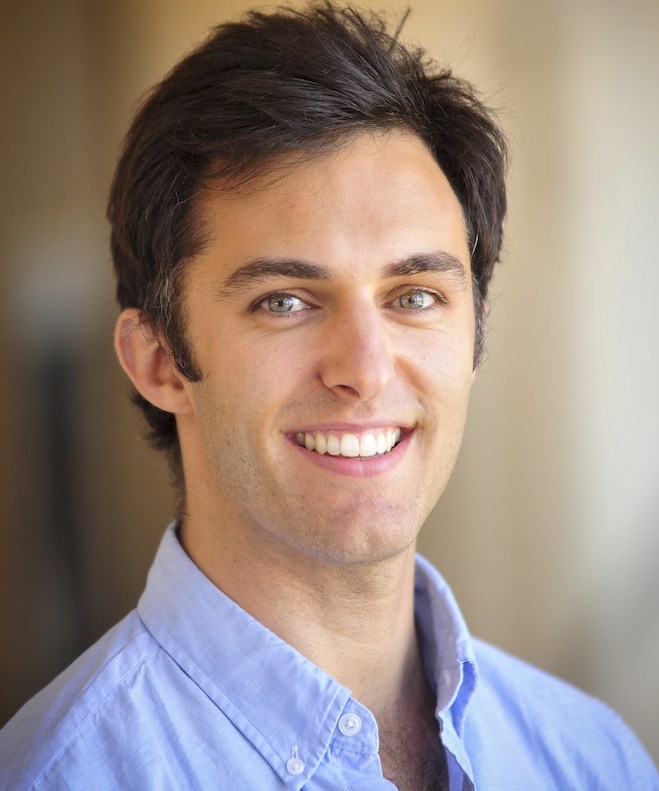
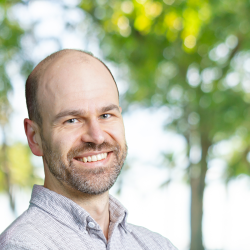
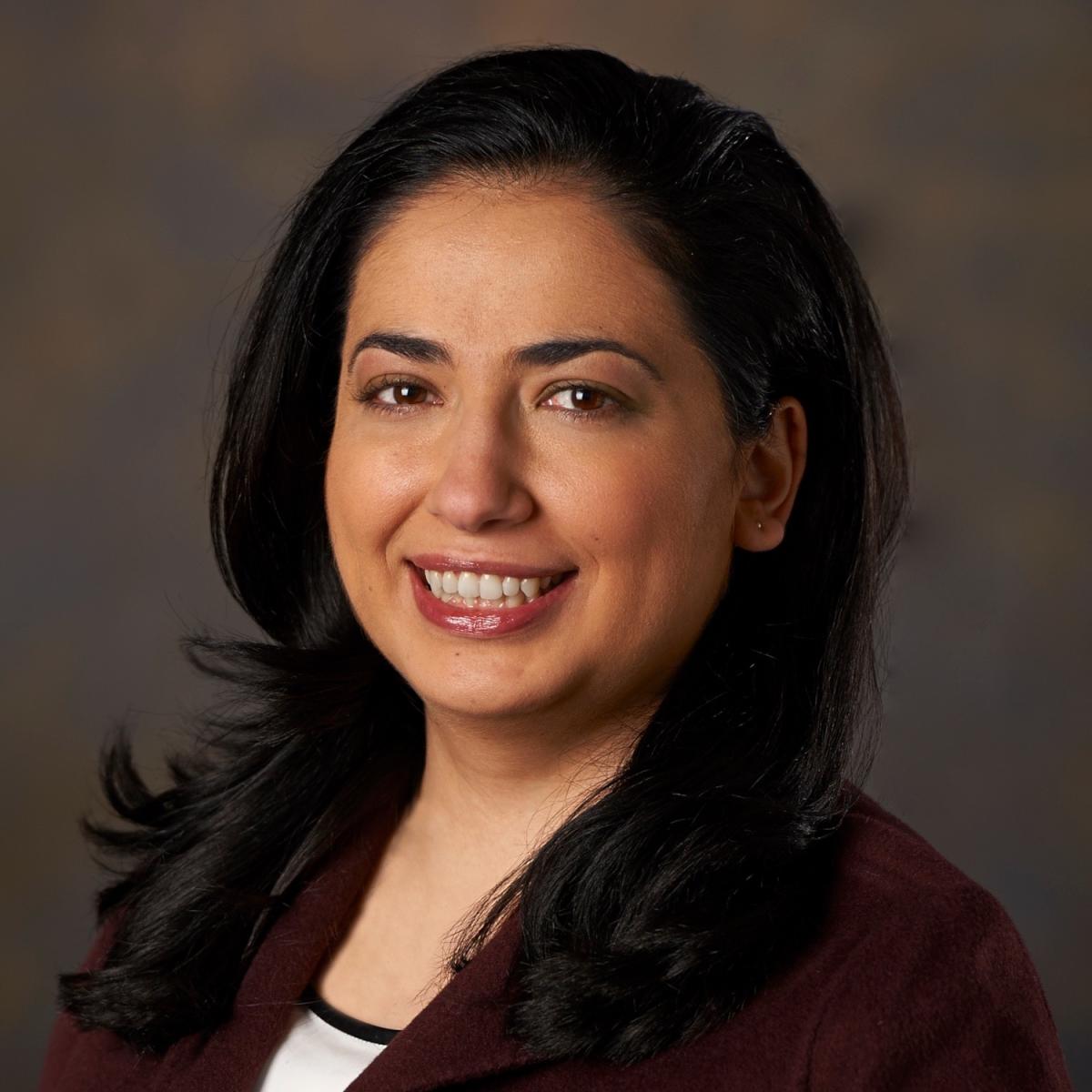
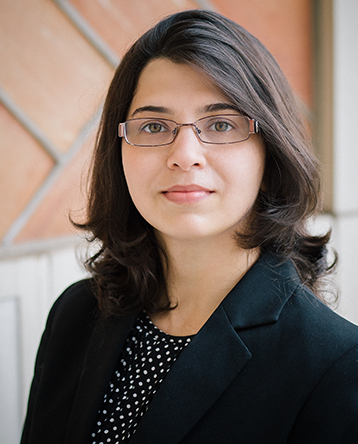
Daniel M. Roy is a Full Professor at the University of Toronto, with cross-appointments in the Department of Computer Science, Department of Statistical Sciences, and Department of Electrical and Computer Engineering. He serves as Research Director at the Vector Institute and holds the CIFAR Canada AI Chair. Research Focus: Foundational principles of prediction, inference, and decision-making under uncertainty across machine learning, statistics, mathematical logic, applied probability, and computer science. Scientific Contributions: Key work in learning theory, statistical network analysis, probabilistic programming, and information-theoretic frameworks for generalization. Awards: ICML 2024 Best Paper Award for "Information Complexity of Stochastic Convex Optimization" and promotion to Full Professor in 2024. Student Advising: Actively mentors Ph.D. candidates and postdoctoral researchers with strong quantitative backgrounds, particularly at the intersection of machine learning, statistics, and computer science. Email: daniel.roy@utoronto.ca
Zaid Harchaoui is an Adjunct Professor in the Department of Statistics at the University of Washington. His research focuses on machine learning, generative AI, and algorithmic optimization, with applications spanning ecology, neuroscience, and artificial intelligence. He explores learning under distributional shifts and develops tools for scalable generative models in language and vision domains. University: University of Washington Department: Statistics Research Focus: Learning from data with computational, inferential, and mathematical rigor; distributional shift adaptation; generative model scaling Email: zaid@uw.edu His recent work emphasizes generative AI applications in ecology and neuroscience, stochastic optimization for robustness, and algorithmic efficiency in large-scale learning. Key contributions include techniques for distributionally robust optimization, interpretable authorship obfuscation, and uncertainty quantification in behavior classification. Scientific awards and honors are not explicitly mentioned in the provided text. Collaborative efforts often intersect with nonlinear control algorithms, spectral analysis, and privacy-preserving machine learning frameworks.
Sarah Dean is an Assistant Professor in the Computer Science Department at Cornell University, affiliated with the College of Engineering. Her research focuses on the interplay of machine learning, optimization, and dynamics in real-world systems, particularly in control theory, recommendation systems, and ethical AI. Education: PhD in EECS, University of California, Berkeley (2021) Postdoctoral Research, University of Washington (2021-2022) Research Interests: Data-driven control systems, reinforcement learning, recommendation systems, user dynamics, algorithmic fairness, and the societal impacts of AI. She emphasizes foundational understanding of how learning systems interact with human and social processes. Recent Work Trends: Her articles explore topics like bilinear system identification, user participation dynamics in recommendation platforms, and ethical considerations in AI development. Recent work includes harm mitigation strategies and mathematical modeling of AI-human feedback loops. Awards: AI2050 Early Career Fellow (2024) Best Paper at ICML 2018 (Delayed Impact of Fair Machine Learning) Best Student Paper in Imaging Systems (OSA Congress 2018) Advising & Labs: Advises over 15 graduate and undergraduate students. Leads research on interactive ML systems, with contributions to projects like the 'MSGD' repository for streaming data learning. Active in the GEESE group, promoting socially responsible computing.
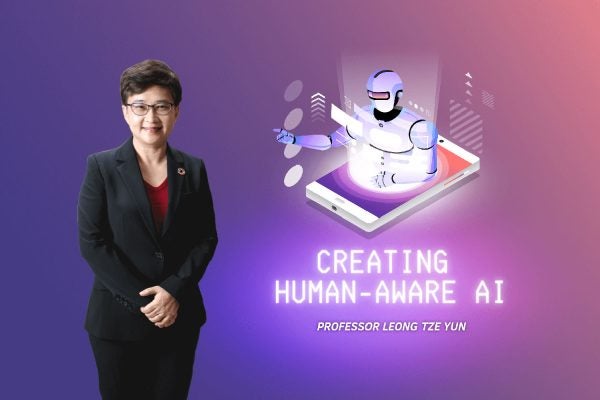
LEONG Tze Yun is a Professor in the Department of Computer Science at the School of Computing, National University of Singapore (NUS). She holds S.B., S.M., and Ph.D. degrees in Computer Science from the Massachusetts Institute of Technology (MIT). Her academic career spans both research and industry experience, with significant contributions to the fields of artificial intelligence and health informatics. Dr. Leong's educational background includes: Ph.D. in Electrical Engineering & Computer Science, Massachusetts Institute of Technology S.M. in Electrical Engineering & Computer Science, Massachusetts Institute of Technology S.B. in Computer Science & Engineering, Massachusetts Institute of Technology Her primary research interests focus on responsible AI, dynamic decision-making, neurocognitive modeling, reinforcement learning, artificial general intelligence, and biomedical and health informatics. Her work bridges the gap between theoretical AI development and practical healthcare applications, with an emphasis on ethical considerations and human-centered design. She directs the Medical Computing Laboratory at NUS, a multidisciplinary research program exploring human-aware decision modeling in complex environments. Analysis of her recent publications reveals a strong trend toward responsible AI development, with significant contributions to reinforcement learning techniques, causal inference methods, and applications of AI in healthcare. Her work increasingly integrates ethical considerations with technical AI development, particularly evident in her 2024 publications on medical AI and human values. Her scientific recognition includes: Fellow of the American College of Medical Informatics (ACMI) Founding Fellow of the International Academy of Health Sciences Informatics (IAHSI) Member of Eta Kappa Nu (Honor Society for Electrical Engineers) Dr. Leong has supervised numerous doctoral and master's students throughout her career, many of whom have gone on to prominent positions at institutions like Google, Netflix, Mayo Clinic, and academic institutions worldwide. Her advisory work extends to significant policy development, including contributions to WHO guidance on ethics and governance of AI for health. She currently serves on the World Health Organization (WHO) Expert Group on Ethics and Governance of AI for Health, the World Economic Forum (WEF) AI Governance Alliance, and the Advisory Council on AI in Uzbekistan. Her laboratory work focuses on developing adaptive systems that evolve with changing technical functionalities, system infrastructures, usage patterns, and operational contexts, with applications spanning prediction and decision analytics, human-aware robotics, game artificial intelligence, personalized education, and assistive care for elderly with neurocognitive disorders.
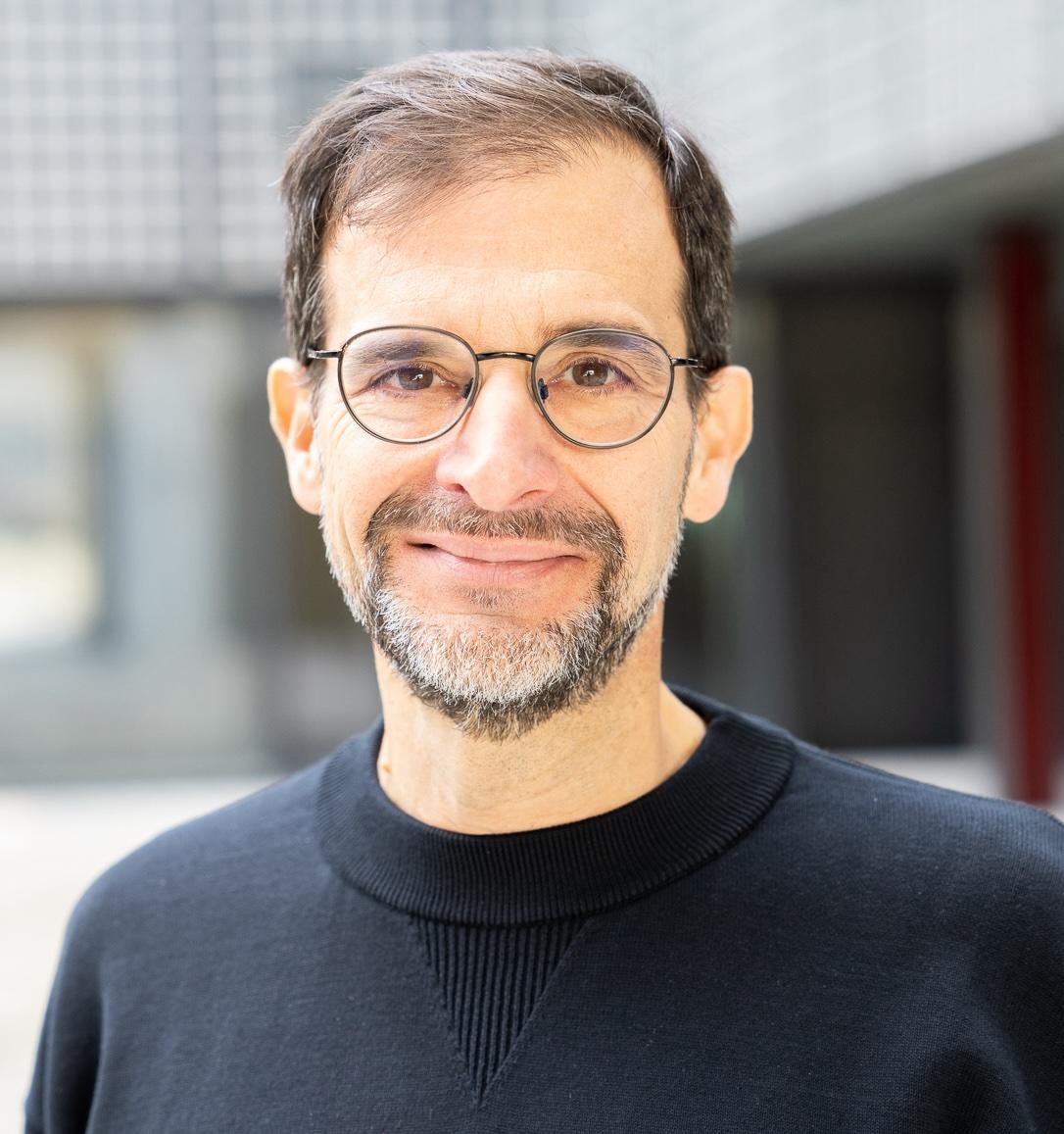
Pierre Vandergheynst is a Full Professor at the Swiss Federal Institute of Technology Lausanne (EPFL) in the Department of Electrical Engineering, with a courtesy appointment in Computer and Communication Sciences. He serves as EPFL’s Vice-Provost for Education since 2015 and leads the Signal Processing Laboratory 2 (LTS2). His research spans harmonic analysis, sparse approximations, mathematical data processing, and applications in signal/image processing, computer vision, machine learning, and graph-based data analysis. PhD in Mathematical Physics (1998), Université catholique de Louvain Postdoctoral Researcher at EPFL (1998-2001) Assistant Professor at EPFL (2002-2007) His research explores geometry/symmetry in high-dimensional data, redundant dictionaries for dimensionality reduction, and computational harmonic analysis on manifolds. Recent work focuses on protein structure modeling, geometric deep learning, and graph-based signal processing. Key article trends include graph neural networks for protein analysis, geometric deep learning in neuroscience, and structured knowledge priors in neural models. His 2023-2025 publications emphasize interpretable AI, long-range dependencies in graphs, and molecular representation learning. Scientific Awards: IEEE Signal Processing Magazine Best Paper Award (2023) Signal Processing Society Best Paper Award (2022) Apple ARTS Award (2007) De Boelpaepe Prize, Royal Academy of Sciences of Belgium (2009-2010) He has supervised over 30 PhD theses and contributed to foundational work in graph signal processing, compressive sensing, and geometric deep learning. His lab develops tools for data science on non-Euclidean structures, with applications in medicine, astronomy, and wireless systems.
Timothy M. Hospedales is a Professor of Artificial Intelligence at the Institute of Perception, Action and Behaviour within the School of Informatics at the University of Edinburgh . He also serves as VP AI and Head of Samsung AI Research Centre Europe . His research focuses on efficient and robust AI , emphasizing meta-learning , lifelong transfer-learning , and domain adaptation in both probabilistic and deep learning frameworks. Applications span computer vision , vision and language , reinforcement learning for robotics , and finance . Professor at University of Edinburgh (2020–present) ELLIS Fellow (2021) Head of Samsung AI Research Europe (2020–present) Founding Director of Applied Machine Learning Lab at QMUL (2012–2016) His work includes pioneering contributions to meta-learning , few-shot learning , and self-supervised methods , with notable awards such as the Best Paper Prize at ICML AutoML 2018 and Best Student Paper at ICPR 2018 . He has co-authored 15+ recent papers on topics like Vision-Language Models , Medical AI Fairness , and Diffusion Model Optimization . He served as Program Co-Chair for BMVC 2018 and AAAI 2022 , and authored a book on Visual Adaptation in the Deep Learning Era (2022). Co-Chair, BMVC 2018 Guest Editor, IET CV Special Issue (2016) Keynote Speaker at TASK-CV Workshop (ECCV 2016) Special Issue on Fewer Labels (IEEE PAMI 2020) His leadership extends to organizing workshops like the Learning-to-Learn Workshop at ICLR 2021 , Meta-Learning Workshop at NeurIPS 2020 , and Domain Generalisation Workshop at ICLR 2023 . Current projects include Meta-Omnium (CVPR 2023) for general-purpose meta-learning and MetaAudio (ICANN 2022) for few-shot audio classification benchmarks.
John Lygeros is a Full Professor and Head of the Institute for Automatic Control at ETH Zurich's Department of Information Technology and Electrical Engineering. He received his B.Eng. (1990) and M.Sc. (1991) from Imperial College London, and Ph.D. (1996) from UC Berkeley. Before joining ETH Zurich in 2006, he held academic positions at the University of Cambridge and University of Patras. His research focuses on: Modeling and control of hierarchical hybrid systems Large-scale dynamical systems applied to biochemical networks Control of automated transportation systems via wireless networks Energy systems and advanced manufacturing control His research demonstrates strong emphasis on optimization methods, distributed control architectures, and machine learning applications in control systems, with significant contributions to real-time optimization algorithms and data-driven control methodologies. Major scientific awards include: HSCC Test of Time Award (2024) ERC Advanced Grant (2018) O. Hugo Schuck Best Paper Award (2018) IEEE George S. Axelby Paper Award (2016) Three Golden Owl teaching awards from ETH Zurich He leads the Automatic Control Laboratory at ETH Zurich and serves as Director of the National Centre of Competence in Research 'Dependable Ubiquitous Automation'. He has advised over 60 doctoral candidates since 2017, with research spanning optimization algorithms, power systems, autonomous systems, and machine learning applications.
Professor Simon Godsill MA PhD FIET FIEEE is a University Professor of Statistical Signal Processing in the Department of Engineering at the University of Cambridge. He heads a research team specializing in statistical signal processing, digital audio restoration, and Bayesian inference. His work addresses the processing and analysis of digital speech, audio, tracking systems, and financial datasets, with a focus on probabilistic modeling and computational methods. Research interests include statistical signal processing , degraded signal restoration , and Bayesian computational methods . Recent publications emphasize Gaussian processes, variational inference, and multi-object tracking for applications in audio enhancement and financial data analysis. He co-founded the audio remastering company CEDAR Audio Ltd in 1988. Scientific awards: Fellow of the Institution of Engineering and Technology (FIET) Fellow of the Institute of Electrical and Electronics Engineers (FIEEE) Outside academia, he enjoys singing, cricket, piano/organ playing, and running. His team at Cambridge's Engineering department focuses on robust tracking algorithms and signal enhancement techniques.
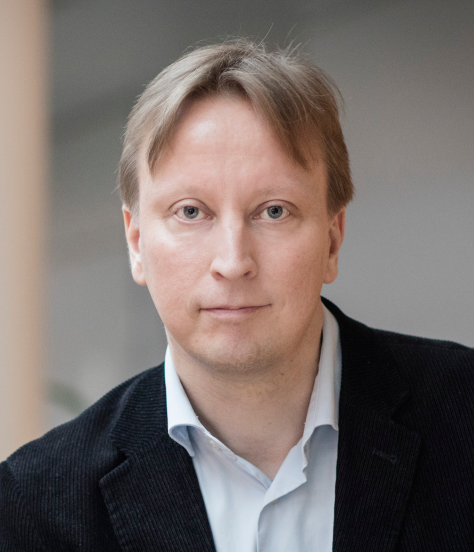
Professor Simo Särkkä holds a position in Sensor Informatics and Medical Technology at the Department of Electrical Engineering and Automation (EEA), Aalto University. His research focuses on multi-sensor data processing, Bayesian filtering, machine learning, and their applications in medical technology, brain imaging, and inverse problems. He leads research groups including the Helsinki Institute for Information Technology (HIIT) and Sensor Informatics and Medical Technology. His work bridges theoretical advancements in probabilistic methods with practical implementations in healthcare and engineering. Key research interests include Gaussian processes, stochastic differential equations, quantum machine learning, and signal processing. He has contributed to advancements in algorithms for nonlinear state-space models, parallel computing techniques, and medical imaging technologies such as scatter correction in CT scans. His methodologies are applied across domains like autonomous systems, robotics, and bioengineering. Notable publications span topics like quantum-assisted Gaussian regression, physics-informed machine learning for industrial processes, and parallel-in-time numerical methods. His work emphasizes computational efficiency and robustness in high-dimensional and real-time systems.
Jose Apesteguia is an ICREA Research Professor at the Department of Economics and Business, Universitat Pompeu Fabra, Barcelona, Spain. His research focuses on behavioral economics, decision theory, experimental economics, and game theory, with particular emphasis on topics such as behavioral heterogeneity, rationality measures, stochastic choice models, and social preferences. Apesteguia has collaborated extensively with scholars like Miguel A. Ballester and Jörg Oechssler, producing influential work on topics ranging from imitation dynamics to the impact of language on moral decisions. His research integrates theoretical frameworks with experimental methods, exploring how individuals make decisions under uncertainty, time preferences, and social contexts. Key contributions include the development of measures of rationality and welfare, as well as analyses of behavioral adaptation and the role of information in competitive environments. His work frequently bridges economic theory with empirical validation, addressing real-world issues such as rule compliance in public institutions and team performance in organizations. Apesteguia’s publications span top journals including the American Economic Journal: Microeconomics , Journal of Economic Theory , and Econometrica . He teaches advanced courses on bounded rationality and behavioral decision theory at the undergraduate and graduate levels. His research has been applied to fields like finance (e.g., copy trading behavior) and public policy (e.g., promoting compliance in libraries).
Alexandre Bouchard-Côté is a Professor of Statistics at the University of British Columbia (UBC), affiliated with the Department of Statistics within the Faculty of Science. His research focuses on computational statistics, Bayesian methods, and Monte Carlo techniques, with applications in evolutionary biology, cancer genomics, and computational linguistics. Education : PhD in Computer Science (with Designated Emphasis in Statistics) from UC Berkeley (2010), BSc in Mathematics and Computer Science from McGill University (2005). Affiliations : Director of the Blang probabilistic programming project and leader of the Bouncy Particle Sampler research group. Research Interests : Bouchard-Côté develops scalable Bayesian computational methods, including non-reversible Monte Carlo algorithms like the Bouncy Particle Sampler, and applies these to problems in cancer phylogenetics, evolutionary dynamics, and historical linguistics. His work emphasizes bridging theoretical foundations with practical tools for data science. Publications Trends : Recent work spans distributed sampling frameworks (e.g., Pigeons.jl), variational phylogenetic inference, and cancer clonal evolution modeling. His articles often address algorithmic scalability and interdisciplinary applications in biology and astronomy. Awards : CRM-SSC Prize in Statistics (2024) PIMS-UBC Mathematical Sciences Young Faculty Award (2018) Tweedie New Researcher Award (2016) Advising & Grants : Supervises graduate students (e.g., Son Luu, Nikola Surjanovic) and leads funded projects on distributed MCMC and cancer genomics. Collaborates with institutions like the Simons Foundation and the Canadian Statistical Sciences Institute (CANSSI). Labs/Teams : Core member of the UBC Statistical Machine Learning group, contributing to open-source tools like Blang and the Bouncy Particle Sampler implementation.
Marina Agranov is Professor of Economics at the California Institute of Technology (Caltech), affiliated with the Division of Humanities and Social Sciences. She directs research through the Ronald and Maxine Linde Institute of Economic and Management Sciences, Center for Social Information Sciences (CSIS), and Center for Theoretical and Experimental Social Sciences (CTESS), and serves as Research Associate at the National Bureau of Economic Research (NBER). Her academic credentials include a B.A. from St. Petersburg State Technical University (1999), M.A. from Tel Aviv University (2004), and Ph.D. from New York University (2010). She joined Caltech as Assistant Professor in 2010 and was promoted to full Professor in 2017. Agranov's research pioneers experimental and behavioral economics, focusing on strategic decision-making in bargaining games, social learning environments, network interactions, and information dynamics. Her work examines how individuals form beliefs and navigate tensions between personal goals and collective outcomes, often using controlled laboratory experiments to test theoretical predictions about human behavior under uncertainty. Her recent publications reveal a consistent methodological approach: blending game-theoretic models with experimental validation to investigate communication effects, randomization preferences, and institutional design. Key trends include analyzing how uncertainty impacts committee negotiations, how complexity influences egalitarian outcomes in legislative bargaining, and how information structures shape social learning on networks. Her scientific recognition includes: Associated Students of Caltech (ASCIT) Teaching Award (2017-18) Professor Agranov's research has secured significant institutional support through Caltech centers and NBER affiliation, with findings featured in major economics journals and Caltech news coverage including "Decision by Committee: How Uncertainty Shapes Negotiations" (December 2024) and "Experimental Economics in Theory and Practice" (July 2023). Her work on committee decision-making under uncertainty has direct implications for institutional design in political and corporate governance. She actively contributes to Caltech's research ecosystem through CSIS and CTESS, which facilitate interdisciplinary collaborations in social sciences and experimental methodology development.
Fatma Kılınç-Karzan is an Associate Professor of Operations Research at Carnegie Mellon University's Tepper School of Business, with a courtesy appointment as Associate Professor of Computer Science. She is also affiliated with the Algorithms Combinatorics and Optimization (ACO) PhD Program and was a Visiting Scientist at Berkeley's Simons Institute for the Theory of Computing during Fall 2017. Her educational background includes a PhD from Georgia Institute of Technology's H. Milton Stewart School of Industrial & Systems Engineering with a minor in Mathematics, supervised by Prof. Arkadi Nemirovski. She earned her B.S. and M.S. degrees from the Industrial Engineering Department of Middle East Technical University with a minor in Information Systems. Dr. Kılınç-Karzan's research spans mathematical optimization with emphasis on convex and non-convex optimization theory, algorithms, and applications. Her work bridges theoretical foundations with practical implementations in optimization under uncertainty (robust optimization, chance constraints, distributionally robust optimization), machine learning (preference learning from limited data), and business analytics. She develops foundational theory for large-scale optimization problems with applications in decision making under uncertainty and high-dimensional statistical inference. Analysis of her recent publications reveals a strong focus on convex hull characterizations, semidefinite programming relaxations, distributionally robust optimization, and online convex optimization frameworks. Her work demonstrates increasing integration of optimization theory with machine learning applications, particularly in developing data-driven approaches for decision making under uncertainty. NSF CAREER Award (2015) INFORMS Optimization Society Young Researcher Prize (2015) INFORMS Junior Faculty Interest Group (JFIG) Best Paper Award (2014) BP Junior Faculty Chair (2014-2015) Faculty Giving Chair (2012-2013) Wimmer Fellowship (2012-2013) Dr. Kılınç-Karzan has successfully mentored numerous PhD students who have received prestigious awards, including the 2021 INFORMS Optimization Society Best Student Paper (1st prize) and multiple honorable mentions. Her research has been supported by significant grants including an NSF CAREER Award, an ONR grant (with S. Küçükyavuz), and an AFOSR grant. She serves on editorial boards for Mathematical Programming, Operations Research, Mathematics of Operations Research, and other leading journals, and has held leadership positions in professional societies including the Mathematical Optimization Society and INFORMS Computing Society. Through her affiliations with CMU's Tepper School, Computer Science Department, and ACO Program, she collaborates across disciplines to advance optimization theory and its applications. Her professional service includes committee chair roles for major INFORMS competitions and program committee leadership for international optimization conferences.
Dr. Arno Solin is a tenured Associate Professor in Machine Learning at Aalto University's Department of Computer Science and an Academy of Finland Research Fellow . He leads the Aalto machine learning research group and serves as Director of the Finnish Doctoral Program Network in AI (AI-DOC) . His work bridges probabilistic modeling with practical applications in sensor fusion and real-time inference. ELLIS Scholar (European Laboratory for Learning and Intelligent Systems) Adjunct Professor at Tampere University Member of Young Academy Finland (2021–2025) Research Interests focus on data-efficient machine learning with probabilistic methods for real-time inference and sensor fusion. Key areas include Gaussian processes, diffusion models, stochastic differential equations, and uncertainty quantification in deep learning. His group develops methods that combine structural constraints with adaptive learning for deployment on resource-limited hardware. Publication Trends show consistent output in top venues (NeurIPS, ICML, ICLR, AISTATS) with emphasis on diffusion models , 3D scene reconstruction , and real-time probabilistic modeling . Recent works explore physics-informed learning, heterophily-aware graph models, and compressed representations for world models in reinforcement learning. Scientific Recognition : Awarded AI Researcher of the Year 2024 by AI Finland Teacher of the Year 2023 at Aalto CS ISIF Jean-Pierre Le Cadre Best Paper Award (2018) MLSP Schizophrenia Classification Challenge Winner (2014) NeurIPS/ICML Reviewer Awards Research Leadership includes coordinating Finland's AI Center of Excellence program and directing the Finnish Doctoral Program Network in AI (AI-DOC). He supervises 15+ doctoral/postdoctoral researchers and has spun off Spectacular AI , a company commercializing sensor fusion technology.
Gauri Joshi is an Associate Professor in the Electrical and Computer Engineering (ECE) department at Carnegie Mellon University, with affiliate appointments in the Machine Learning Department and Robotics Institute. Her work focuses on system-aware algorithms for distributed machine learning, combining optimization, probability, and coding theory to address communication and computational constraints in edge networks. MIT Ph.D. in EECS (2016) IIT Bombay B.Tech/M.Tech in Electrical Engineering (2010) Research themes include federated learning with communication efficiency, erasure coding for non-linear computations, and reinforcement learning for heterogeneous queueing systems. She leads the Optimization, Probability and Learning (OPAL) lab , affiliated with the Parallel Data Lab (PDL), CyLab, and FLAME Center. Recent publications highlight advances in: federated fine-tuning with low-rank adaptation, robust PCA for model aggregation, privacy-preserving prediction mechanisms, and adaptive reinforcement learning for job dispatching systems. Her group has received 15+ paper awards across SIGMETRICS, MobiHoc, and NeurIPS workshops. Scientific recognition includes: IEEE Goldsmith Lecturer (2025), MIT Technology Review '35 Innovators Under 35' (2022), ONR Young Investigator Award (2023), NSF CAREER (2021), and ACM SIGMETRICS Best Paper (2020). She has advised 20+ graduate students, many now at tech giants like Google, Apple, and Meta. Service contributions span program co-chair roles (MLSys 2025), associate editorships (IEEE/ACM Transactions on Networking), and workshop organization (ICML, NeurIPS). Her NSF AI-EDGE Institute leadership (2021-present) drives next-generation intelligent edge networks for robotics and aerospace applications.