Dr. Paul Levinson is a Professor at Fordham University in the Communication and Media Studies department. He holds a PhD from New York University and has taught courses such as Politics and New Media , Digital Media & Public Responsibility , and Interactive Media . His research spans media theory , social media , science fiction , and ethics of digital communication . Levinson's recent academic work focuses on robotics and AI ethics , media consolidation , and teaching methodologies during the pandemic . He is a Locus Award winner for his science fiction novel The Silk Code . His scholarship often intersects with McLuhan's media theories Alternate history frameworks Post-Covid educational models He maintains a blog, Infinite Regress , and his music career includes albums like Twice Upon a Rhyme (1972) and Welcome Up: Songs of Space and Time (2020), with remixes by QRock 639 in 2021. His work has been featured on CBS News, CNN , and NPR .
Jeeseop Kim is an Assistant Professor in the Department of Aerospace and Mechanical Engineering at The University of Texas at El Paso (UTEP), College of Engineering, specializing in robotics, autonomy, and control theory. His research focuses on safety-critical planning and control, with emphasis on bipedal/quadrupedal locomotion, hybrid dynamical system control, and whole-body planning and control. Education: B.S. in Mechanical and Aerospace Engineering, Seoul National University (2014) M.S. in Intelligence and Information (Robotics), Seoul National University (2017) Ph.D. in Mechanical Engineering, Virginia Tech (2022) Postdoctoral Scholar, Mechanical and Civil Engineering, Caltech (2022–2025) His research spans safety-critical control systems for legged robots, including obstacle-aware nonlinear model predictive control (MPC), control barrier functions, and distributed coordination algorithms. Recent work explores adaptive delay estimation, tactile sensing for robotic grasping, and hardware-software co-design for humanoid robots. Key article trends highlight advancements in autonomous inspection robotics, hybrid control architectures, and real-time planning for quadrupedal systems. His work integrates control theory with practical applications in industrial and healthcare domains. Awards: ASME DSCD Rudolf Kalman Best Paper Award (2022) IEEE ICRA Outstanding Paper Award (2023) Jeeseop teaches MECH 4332: Mechanical Computational Applications in Vision and Robotics (Fall 2025). He actively recruits Ph.D. students for Spring/Fall 2026 and seeks motivated undergraduates/MS students with skills in robotics kinematics, programming (C/C++, Python, MATLAB), and CAD design. The AIGIS Lab welcomes applicants with interests in robotics, controls, and autonomous systems.
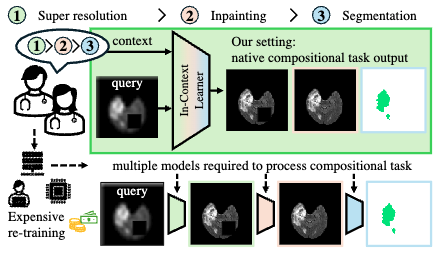
Prof. Dr. Erik Rodner is a faculty member at the University of Applied Sciences Berlin (HTW Berlin), where he serves as a Professor for Machine Learning and Data Science. He also contributes to the School of Engineering Sciences - Technology and Life. His research spans computer vision, machine learning, and biomedical applications, with a focus on learning with limited data, robust visual recognition models, and medical image analysis. He has developed innovative methods for medical diagnostics, industrial classification, and anomaly detection. Recent publications (2025-2016) highlight his expertise in visual in-context learning, semi-weakly segmentation, and active learning frameworks. He has collaborated with institutions such as ZEISS Group, Friedrich Schiller University Jena, and UC Berkeley. Scientific Awards: Award for Excellent Teaching (2023)
Wei Gao is an Associate Professor at the Swanson School of Engineering, University of Pittsburgh. His research focuses on the design, deployment, analysis and measurement of on-device AI architectures and algorithms on mobile, embedded and networked systems. He has strong interests in unveiling analytical principles underneath practical AI deployment problems, and designing systems based on these principles. The developed AI and system solutions are widely applied to various application scenarios, including Internet of Things, edge computing and smart health. Dr. Gao received his PhD from Pennsylvania State University in 2012 and his B.E. from the University of Science and Technology of China in 2005. Dr. Gao's research spans across Cyber-Physical Systems , Infrastructure Security , High Performance Computing , and the Distributed Governance of Information . His work particularly emphasizes on-device AI architectures and algorithms for mobile and embedded systems. He explores how to deploy AI efficiently on resource-constrained devices, with applications in Internet of Things, edge computing, and smart health. His research aims to bridge theoretical principles with practical system implementations, focusing on creating efficient, secure, and reliable AI solutions for real-world deployment scenarios. His recent work has increasingly focused on bringing Large Language Models to edge devices while maintaining performance and security. Analysis of Dr. Gao's recent publications (2021-2025) reveals a strong focus on on-device AI, particularly around Large Language Models for resource-constrained environments. His work addresses critical challenges including model personalization, security against illegal adaptation, sparse activation techniques, and physics-grounded generation. Much of his research targets making AI more efficient, secure, and practical for deployment on edge devices with limited computational resources, while also exploring applications in health monitoring and power systems. Dr. Gao has received significant recognition for his research, including: NSF Faculty Early Career Development (CAREER) Award (2016) Dr. Gao mentors numerous graduate students who contribute to his research in mobile computing, embedded systems, and on-device AI. His research has been supported by various grants, most notably the NSF CAREER award, enabling his team to explore innovative approaches to mobile and embedded AI systems. His lab investigates how to optimize AI for resource-constrained environments while maintaining performance and security, with particular focus on balancing computational efficiency with model accuracy. Dr. Gao leads a research group focused on mobile and embedded AI systems, with particular emphasis on making AI practical for deployment on everyday devices. His team explores novel techniques for model compression, efficient inference, and secure deployment of AI models on edge devices, with applications ranging from health monitoring to smart infrastructure.
Dr. Anne Koelewijn is an Assistant Professor leading the Biomechanical Motion Analysis and Creation (BioMAC) group at Friedrich-Alexander-Universität Erlangen-Nürnberg (FAU) since 2019. Her research bridges biomechanics, computational modeling, and wearable technology to analyze human movement. She holds a Junior Professorship in Computational Movement Science within the Department of Electrical-Electronic-Communication Engineering. Her educational background includes a Doctor of Engineering in Mechanical Engineering from Cleveland State University (focus: prosthesis design and gait simulations), an MSc in Mechanical Engineering (BioMechanical Design specialization), and a BSc in Aerospace Engineering , both from Delft University of Technology. She completed postdoctoral work at École Polytechnique Fédérale de Lausanne on neuromuscular control. Research interests center on human movement optimization , neuromuscular control mechanisms , and in-the-wild movement analysis . Her work integrates musculoskeletal modeling, optimal control theory, and machine learning to study gait adaptations, exoskeleton design, and pathological movement patterns (e.g., Parkinson’s disease). Publications emphasize predictive simulations , wearable sensor technology , and biomechanical energy optimization , with recent advances in radar-based motion capture, inertial pose estimation, and digital twin applications for medical engineering. Promising Scientist Award , International Society of Biomechanics (2023) Best Paper Award , 5th International Symposium on Wearable Robotics (2020) She leads the BioMAC research group, focusing on computational methods for movement science and collaborating internationally on projects involving exoskeletons, injury prevention, and neuroprosthetics.
Junzhao Ma is a Senior Lecturer in the Department of Marketing at Monash University. He holds a BA in Economics from Yale University and a PhD in Marketing from the Kellogg School of Management, Northwestern University. Previously, he worked as a marketing analyst at Capital One Financial Corporation and JP Morgan and Co. Education: BA Economics (Yale University), PhD Marketing (Kellogg School, Northwestern University) His research focuses on technology adoption, e-commerce, real estate, and media's social impact, employing novel methodologies and data sources. He has contributed to journals like Journal of Retailing , International Journal of Research in Marketing , and Journal of Business Ethics . His work aligns with UN Sustainable Development Goals related to reduced inequalities and responsible consumption. Recent research highlights include studies on service robot anthropomorphism (2023), sex robots acceptance (2022), and media-driven consumption trends (2020). He has received Dean's Letters for Teaching Excellence in 2020 and 2021. Scientific Awards: Dean's Letter for Teaching Excellence (2020, 2021) Junzhao actively engages in academic service, including peer reviews for Asia Pacific Journal of Marketing and Logistics and presentations at the INFORMS Marketing Science Conference and Australian & New Zealand Marketing Academy Conference. He has served as Chief Investigator in projects like "Bridging the Intention-Behaviour Gap in the Australian Tourism Industry" (2022-2024) and "eBabies: Forecast and Implications for Society" (2020-2021).
Minh Hoai Nguyen is an Assistant Professor in the Department of Computer Science at Stony Brook University. He received his PhD in Robotics from Carnegie Mellon University and a Bachelor of Engineering from the University of New South Wales. Prior to Stony Brook, he was a post-doctoral research fellow at Oxford University and a Kurti Junior Research Fellow at Brasenose College. Education: PhD in Robotics, Carnegie Mellon University Bachelor of Engineering, University of New South Wales His research focuses on computer vision , machine learning , and time series analysis , particularly in developing algorithms for human action recognition , gesture detection , and expression analysis in video data. Applications include video surveillance , human-computer interaction , and medical diagnosis of behavioral disorders . His work integrates computer vision for video processing, time series analysis for modeling human behavior, and machine learning for training complex algorithms. Notable awards include: CVPR 2012 best student paper award Winner of PASCAL VOC 2012 Challenge for Human Action Recognition He teaches courses such as Video Analysis (CSE 594) and Introduction to Robotics (CSE 525) .
Dikai Liu is a Distinguished Professor and Strategic Research Director at the University of Technology Sydney (UTS), Australia, within the School of Mechanical and Mechatronic Engineering . His work spans field robotics and human-robot collaboration (HRC) , focusing on autonomous systems for infrastructure maintenance, construction automation, and underwater operations. Key research areas: Robotics, Human-Robot Interaction, Bio-Inspired Design, Infrastructure Maintenance Recent publications highlight innovations in trust modeling for HRC, stiffness control in continuum robots, and sociotechnical frameworks for AI-driven robotic systems. His 15 most recent articles emphasize applications in bridge maintenance, construction automation, and ethical AI integration. Awards include the 2019 UTS Medal for Research Impact, ASME DED Leonardo da Vinci Award (USA), and multiple engineering excellence recognitions. His research has generated over $22M in external funding, including 13 ARC grants and industry partnerships.
David Daney is a Senior Researcher (Directeur de recherche) at Inria and HDR-qualified academic, currently serving as Head of Science for the Inria Center at the University of Bordeaux since July 2024. He is the team leader of the Auctus research group, focusing on robotics, cobotics, and human-robot interaction. He is affiliated with Inria and the École Nationale Supérieure de Cognitique (ENSC) at the University of Bordeaux, within the College of Engineering and the Department of Robotics. His research interests include Robotics, Cobotics, Human-Robot Interaction, Human Posture Analysis, Cable-driven Robots, Parameters Identification, Calibration, Interval Analysis, and Haptic Guidance. His work bridges theoretical robotics with industrial applications, particularly in aerospace, automotive, and sustainable agriculture. He has led and participated in numerous industrial collaborations with Airbus, Stellantis, Solvay, AKKA, and Farm3. His recent publications (2023–2025) demonstrate a strong focus on human-robot physical interaction, including real-time capacity estimation (Pycapacity), haptic guidance, model predictive control for dynamic environments, and musculoskeletal modeling for collaborative robotics. These works appear in top-tier journals such as IEEE Transactions on Robotics, Journal of Biomechanical Engineering, and Robotics and Autonomous Systems. HDR (Habilitation à Diriger des Recherches) Principal Investigator of ANR Pacbot Head of Science for Inria Center at University of Bordeaux Erdös number = 3 David Daney supervises multiple PhD students, including Alicia Barsacq, Ahmed-Manaf Dahmani, and Alexis Boulay. He has been principal investigator in several research projects such as LiChIE and ANR Pacbot, focusing on satellite production and human-robot collaboration. He also leads the SHAARE associate team with KAIST’s IRiS lab, advancing shared haptic control. His team develops tools for teleoperation, ergonomic analysis, and robot calibration, with applications in industrial and assistive robotics. He leads the Auctus team at Inria, which develops control and analysis techniques for human-robot physical interaction. The team collaborates with KAIST (SHAARE), ONERA, Pprime Institute, and industrial partners. The MOVER project studies human motor variability for ergonomics, and the Farm3 collaboration explores teleoperated vertical farming robotics.
Daniel Ventus is a Project Leader at Åbo Akademi University's Faculty of Education and Welfare Studies, specializing in interdisciplinary research across Psychology, Sexual Health, and Educational Technology. He leads the Experience Lab Health-related solutions and contributes to EU-funded projects like INTAKT and APOLLO2028 , focusing on academic procrastination interventions and healthcare worker resilience. Key research areas: Premature Ejaculation, High-Intensity Interval Training, Resilience Processes, Educational Robotics, and Mental Health interventions Recipient of the 2024 Best Poster Presentation Award at SWESrii for internet interventions His recent publications (2024-2025) examine: HIIT's impact on ejaculation control Real-time resilience assessment tools LLM-powered language learning systems for vulnerable children Physiological and psychological factors in sexual dysfunction As a peer reviewer for journals including Andrology and Scientific Reports , he contributes to multiple disciplines. Media visibility includes coverage in Finland-Swedish educational initiatives and sexual health research outreach (2018-2025).
Farshad Arvin is a Professor of Robotics in the Department of Computer Science at Durham University. Prior to this, he held academic positions at The University of Manchester (2018-2022) and worked as a Research Assistant at the University of Lincoln (2012-2015). He holds a BSc in Computer Engineering (2004), an MSc in Computer Systems Engineering (2010), and a PhD in Computer Science (2015). His research focuses on Swarm Robotics , Bio-inspired Swarms , and Autonomous Multi-agent Systems . He pioneered the Swarm & Computation Intelligence Laboratory (SwaCIL) at Durham, leading projects like H2020-FET RoboRoyale (€3.27M), Horizon Europe Sensorbees (€3.2M), and BioDiMoBot (€8M), with total funding exceeding £4M. Recent publications highlight advancements in swarm trajectory optimization (T-STAR), collision-free multi-robot coordination, and bio-hybrid environmental monitoring. His work integrates bio-inspired algorithms with practical applications in autonomous vehicles, aerial drones, and hazardous environments. Scientific Awards: Marie Skłodowska-Curie fellowship Notable Projects: EU H2020-FET RoboRoyale (2021-2026) Horizon Europe Sensorbees (2024-2029) Horizon Europe BioDiMoBot (2025-2030) H2020-FET Robocoenosis (2020-2025) Supervision: Mentors 8 postgraduate students at Durham, including Hanadi Alhamdan, Hang Wang, and Honghao Pan.
Mireille E. Broucke is a Professor in the Department of Electrical and Computer Engineering at the University of Toronto, where she is a member of the Systems Control Group within the Faculty of Applied Science and Engineering. She teaches various undergraduate and graduate courses including Adaptive Control and Reinforcement Learning, Robot Modeling and Control, and Introduction to Nonlinear Systems, demonstrating her commitment to education in control systems engineering. Professor Broucke's research focuses on mathematical system theory with particular emphasis on Systems Neuroscience, Reach Control Problems, and Patterned Linear Systems. Her work bridges theoretical control theory with applications in neuroscience and robotics. She has developed theoretical frameworks for understanding neural adaptation through control theory principles and has applied reach control theory to robotics problems including motion control of quadrocopters. Her research demonstrates how control theory can provide insights into biological systems while also advancing engineering applications. Her recent publications show a clear trend toward applying control theory to neuroscience, particularly in understanding adaptive internal models in the brain. The publications span from theoretical reach control problems on simplices and polytopes to practical applications in robotics and neural systems. Her work increasingly focuses on the intersection of control theory and neuroscience, examining how the brain implements adaptive control mechanisms for motor functions. This represents a significant shift from her earlier work which was more focused on pure control theory problems. Professor Broucke has advised several PhD students including Fatima Ghadieh, Erick Mejia Uzeda, and Mohamed Hafez. Her research has been supported by various grants that enable her work in control theory and its applications to neuroscience and robotics. She maintains an active research program with numerous publications in top control theory journals including IEEE Transactions on Automatic Control, Automatica, and Systems and Control Letters.
Prof. Dr. Gökhan Kiper is a faculty member in the Department of Mechanical Engineering at Izmir Institute of Technology , Turkey. His research focuses on Mechanism Science , Machine Design , and Deployable Structures , with particular emphasis on Polyhedral Geometry applications. Teaches courses: ME332 (Mechanisms), ME402 (Machine Design), ME577 (Advanced Mechanism Design) Active in IFToMM (International Federation for the Promotion of Mechanism and Machine Science), including roles in the Technical Committee for Computational Kinematics and the Turkey Branch (MakTeD) Co-organized the IFToMM Summer School on Mechanism Design for Medical Applications (2018) Research interests span kinematic synthesis of mechanisms, deployable architectural structures, and medical robotics. Key projects include a rollable ramp for temporary use, finger exoskeletons for rehabilitation, and remote-center-of-motion manipulators for minimally invasive surgery. His work integrates theoretical analysis with practical prototyping, reflected in publications across robotics, structural mechanics, and geometric design. Affiliates with the Rasim Alizade Mechatronics Laboratory (RAML) and the IzTech Kinetic Designs in Architecture Group . Presented at international conferences like International Symposium of Mechanism and Machine Science (ISMMS-2017) in Baku, Azerbaijan, where he chaired sessions on mechanism kinematics.
Dr. Alexander Breuss is part of the Sensory-Motor Systems Professorship at ETH Zürich, focusing on developing innovative robotic and sensor technologies for medical applications, particularly in sleep disorder treatment and home healthcare. His work integrates biomedical engineering, robotics, and machine learning to address challenges in sleep medicine and cardiovascular diagnostics. Key projects include the Somnomat Care robotic bed for vestibular stimulation and the Somnomat Casa system for nocturnal interventions. His research spans sensorized devices for sleep monitoring, clinical trials for rhythmic movement disorders, and cardiovascular disease prognosis using imaging and hemodynamic analysis. Dr. Breuss collaborates on interdisciplinary projects, combining engineering and clinical insights to advance healthcare technologies. His research interests include the design of medical devices for home environments, non-invasive monitoring systems, and closed-loop robotic systems for therapeutic applications. Notable contributions include lightweight wearable sensors for movement disorders and automated sleep position classification using neural networks. He has published extensively on topics such as pleural effusion in aortic stenosis and ECG-based cardiac prognosis, highlighting his cross-disciplinary approach to biomedical challenges. No scientific awards are explicitly mentioned for Dr. Breuss. His work is centered at the Sensory-Motor Systems Lab, where he contributes to advancing technologies that improve patient care and sleep quality through robotics and sensor innovation.
Dr. Bikram Banerjee is a Lecturer in Remote Sensing and Geospatial Science at the University of Southern Queensland, affiliated with the School of Surveying and Built Environment. He holds a PhD from UNSW, MTech from IIRS NRSA, and BTech from West Bengal University of Technology. His research focuses on geospatial technologies, machine learning applications in environmental monitoring, and precision agriculture. He is associated with the Centre for Agricultural Engineering, Centre for Crop Health, and Centre for Sustainable Agricultural Systems. Key research interests include UAV-based remote sensing for mine spoil characterization, hyperspectral imaging for crop phenotyping, and integrating IoT/ML for agricultural solutions. His work bridges environmental science, geotechnical engineering, and agricultural technology. Recent publications explore coal spoil analysis, mine safety automation, and vegetation health monitoring using advanced sensor technologies. Dr. Banerjee has supervised doctoral research on mobile laser scanning for underground mines, UAV-LiDAR applications, and proximal sensing for crop phenotyping. His research outputs have garnered over 2,327 views and 1,160 downloads, reflecting significant impact in geospatial and agricultural domains. He actively contributes to interdisciplinary projects addressing environmental sustainability and resource management challenges.