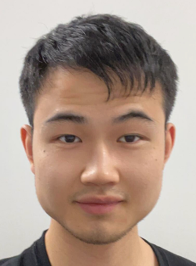
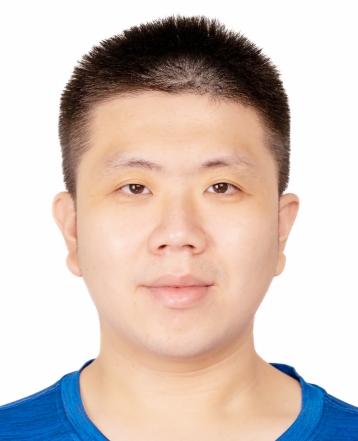
Bosung Kim is affiliated with the Ulsan National Institute of Science and Technology (UNIST), Republic of Korea . His research spans Machine Learning , Operations Research , Natural Language Processing , and Autonomous Systems , with a focus on practical applications in technology and data science. Key Research Areas: Machine Learning, Autonomous UAV Systems, Knowledge Graph Completion, Class Imbalance Solutions, Cognitive Radio Networks His work includes 15 recent publications (2021–2025) covering topics like on-device AI generation , zero-shot triplet extraction , and autonomous insect tracking . These contributions highlight interdisciplinary methodologies in robotics , language models , and signal processing .
Sanjay Krishnan is an Assistant Professor of Computer Science at the University of Chicago. His research focuses on managing uncertain data in databases and information systems, including accuracy guarantees in incomplete databases, query evaluation under corruption, and data leakage detection. He leads the ChiDATA research group within the University of Chicago's Department of Computer Science, collaborating with researchers like Michael Franklin and Raul Castro Fernandez on large-scale data analysis and systems. His academic work spans foundational areas such as AI/ML integration with data systems, scalable data processing, and resource-efficient database design. He is affiliated with the CERES Center for Unstoppable Computing and the Systems Group, exploring resilient computing systems and software engineering challenges. His lab's research has been featured in UChicago CS news for innovations like geometric database query processing and interdisciplinary collaborations with the Museum of Science & Industry. Key contributions include frameworks like EdgeServe for decentralized model serving, CrocodileDB for resource-efficient query execution, and ActiveClean for interactive data cleaning in ML pipelines. His work bridges theoretical computer science with practical system implementations, emphasizing real-world data challenges in IoT, healthcare, and environmental monitoring.
Wei Zhang is an Assistant Professor in the School of Foreign Studies at Nanjing University, China. His research focuses on speech perception, production, and prosody, employing behavioral experiments, corpus studies, and computational modeling. He holds a PhD in Linguistics from McGill University, where his advisors included Meghan Clayards, Morgan Sonderegger, and Michael Wagner. His educational background includes a doctoral program at McGill University specializing in Linguistics. Research interests center on tonal systems (particularly Mandarin and Taiwanese Southern Min), acoustic cue interactions, and the role of F0 and duration in speech processing. He has also explored machine learning applications in natural language processing and speech technologies. Zhang's recent work reveals a focus on cross-linguistic comparisons of prosodic features, computational methods for pitch analysis, and neural network architectures enhancing natural language understanding. His 2024 studies on focus effects and constituency in Mandarin/English prosody demonstrate methodological innovation in phonological interfaces. Earlier work established foundational insights into F0 range dominance in tonal perception. Key contributions include advancements in pitch-range estimation, tonal imitation patterns, and speech corpus methodologies. Despite prolific publication (over 20 peer-reviewed works across 2014-2025), no advising roles or grants are explicitly mentioned. His lab/teams' activities remain unspecified in the provided materials.
Sam H. Noh is a Professor in the Department of Computer Science at Virginia Tech’s College of Engineering. His research focuses on systems software for storage, cloud computing, distributed systems, and embedded/mobile systems, with a strong emphasis on optimizing storage efficiency, data management, and hardware-software co-design. He earned his Ph.D. in Computer Science from the University of Maryland, College Park (1993) and a B.S. in Computer Engineering from Seoul National University (1986). His work spans innovations in SSD optimization, non-volatile memory architectures, and fault-tolerant storage systems. Education: Ph.D., Computer Science, University of Maryland, College Park (1993) B.S., Computer Engineering, Seoul National University (1986) Research Interests: Storage Systems (SSD optimization, LSM trees, indexing) Non-Volatile Memory (NVM, CXL interconnects, persistent memory) Cloud and Distributed Computing (data management, performance scaling) Embedded Systems (real-time data handling, mobile systems) Security in Storage (atomic writes, fault tolerance) Recent Trends in Publications: His recent work emphasizes reducing write amplification in storage systems, optimizing compaction in log-structured systems, and exploring emerging memory technologies like CXL and ZNS SSDs. His research bridges low-level hardware architectures with high-level system software to enhance efficiency and reliability. Labs/Teams: While specific lab names are not mentioned, his contributions align with Virginia Tech’s research in storage systems, embedded computing, and distributed storage architectures.
Carlos Ernesto Guestrin is the Fortinet Founders Professor and Senior Fellow at the Stanford Institute for Human-Centered AI (HAI), and a Professor in Stanford University’s Computer Science Department. He serves as Director of the Stanford AI Lab (SAIL), Chief Scientist at Visual Layer and Virtue AI, and is a Member of the National Academy of Engineering. His research focuses on machine learning methods, explainability, fairness, and ethics in AI, alongside scalable machine learning systems. Prior roles include Amazon Professor of Machine Learning at the University of Washington, Finmeccanica Associate Professor at Carnegie Mellon University, and Senior Director of Machine Learning at Apple. He co-founded Turi, Inc. (now part of Apple), which developed tools for building intelligent applications, and released open-source projects like XGBoost, LIME, Apache TVM, MXNet, and GraphLab. His work has earned prestigious awards, including the IJCAI Computers and Thought Award, PECASE, and recognition as one of Popular Science’s ‘Brilliant 10.’ His research addresses both technical advancements and societal impacts, emphasizing transparency and ethical AI systems. Current projects explore generative AI, model explainability, and systems for scalable machine learning.
Sergio Rodriguez Mendez is a Research Fellow in Knowledge Graph Engineering at the School of Computing, Australian National University. His work focuses on advancing ontology engineering, linked data, semantic web technologies, and their applications in domains like astronomy, brain-computer interfaces, and IoT. He is a member of the Australian Government Linked Data Working Group (AGLDWG) and the W3C Knowledge Graph Construction Community Group, and holds a senior role at the Software Innovation Institute (SII). His research interests include Knowledge Graphs, Ontology Engineering, Linked Data, Data Science, Machine Learning, Natural Language Processing, Brain-Computer Interfaces, IoT, Cloud/Fog/Edge Computing, and Software Engineering. He has contributed to frameworks like pathfinder for astronomical literature review and Doc-KG for document-to-KG conversion. Recent work emphasizes integrating large language models (LLMs) with knowledge graphs, such as AstroLLaVA for astronomical data unification and hybrid frameworks for entity linking. His publications span conferences like WWW, JCDL, and the ACM/IEEE Joint Conferences. He actively supervises research students and is involved in initiatives like the ASKG project for enriching scholarly knowledge graphs. His work addresses challenges in semantic data representation, automated query processing, and syntactic complexity reduction, with a focus on domain-specific applications in science and cultural heritage.
Martin Rinard is a Professor at the Massachusetts Institute of Technology (MIT), affiliated with the Computer Science and Artificial Intelligence Laboratory (CSAIL). He leads the Vertical AI Community of Research and the Systems Community of Research, focusing on advancing artificial intelligence, programming languages, security, and large-scale software systems. His work emphasizes approximate computing, program repair, and deployable machine learning through initiatives like the MIT Center for Deployable Machine Learning (CDML), which ensures robust AI systems for real-world applications. Rinard’s research spans programming languages, software engineering, and systems, with notable contributions to probabilistic programming, security protocols, and neural network verification. He has pioneered techniques for error detection, mitigation, and automated program synthesis. His recent award-winning work includes foundational advancements in program repair and approximate computing methodologies. Research Highlights: Program Repair, Approximate Computing, Probabilistic Programming, Cybersecurity, Machine Learning Safety, and AI-driven Systems. Leadership Roles: Director of MIT CDML, Leader of Vertical AI and Systems Communities at CSAIL. Rinard’s publications reflect a focus on bridging theory and practice, with contributions to compiler optimization, secure software design, and healthcare AI applications like cancer risk prediction models. His team actively develops tools for program analysis, including KumQuat for parallel Unix pipelines and AEDAM for adaptive error detection. Awards: 2025 SIGSOFT Outstanding Research Award for pioneering program repair and approximate computing. Labs/Teams: Core member of CSAIL, CDML, and the Computation Structures Group.
Avi Wigderson is the Herbert H. Maass Professor at the School of Mathematics, Institute for Advanced Study, Princeton, where he leads research in theoretical computer science and discrete mathematics. He organizes the CSDM (Computer Science and Discrete Mathematics) program at IAS, fostering interdisciplinary research and collaboration. Research Interests: His primary research areas include randomness and pseudorandomness, computational complexity, circuit and proof complexity, quantum computation, cryptography, and distributed computing. His work bridges computer science and pure mathematics, particularly through algebra, analysis, and combinatorics. He has pioneered foundational results in derandomization, lower bounds, and the interplay between computation and mathematical structures. The recent publications highlight his continued leadership in advancing algebraic and analytic techniques in complexity theory. Themes include operator scaling, invariant theory, expander graphs, arithmetic circuits, and the asymptotic analysis of tensors and matrix spaces. These works often unify computational problems with deep mathematical frameworks, demonstrating the power of interdisciplinary approaches. Scientific Awards: Edsger W. Dijkstra Prize in Distributed Computing (2023) for the paper 'Completeness Theorems for Non-cryptographic Fault-tolerant Distributed Computing' Advising and Grants: Wigderson has advised numerous PhD students, primarily at the Hebrew University and Princeton, and hosted over 50 postdoctoral researchers at IAS, including many who have become leading figures in theoretical computer science. While specific grants are not listed, his sustained productivity and influence suggest long-term funding from major sources such as the NSF, Simons Foundation, or IAS internal support. Labs and Teams: He leads the CSDM (Computer Science and Discrete Mathematics) group at the Institute for Advanced Study, organizing seminars, workshops, and collaborative research initiatives that bring together mathematicians and computer scientists from around the world.
Wolfgang Nejdl is a distinguished Professor at Leibniz University Hannover, working within the Faculty of Mathematics and Computer Science and affiliated with the Institute of Information Systems. With an extensive publication record spanning over two decades, he has established himself as a leading researcher in Natural Language Processing, Information Retrieval, and Web Personalization. His work bridges theoretical advances with practical applications, particularly in clinical NLP and semantic web technologies. Nejdl's research interests encompass a broad spectrum of topics including Natural Language Processing, Information Retrieval, Web Personalization, Semantic Web technologies, Machine Learning applications, Clinical NLP, and Recommender Systems. His recent work has focused on critical challenges such as clinical outcome prediction using MIMIC datasets, financial literacy evaluation of large language models, and developing resources for low-resource languages like Tigrinya. He has made significant contributions to understanding data drift in clinical applications and developing interpretable AI systems for healthcare. His publication record shows a consistent trajectory of impactful research, with recent articles demonstrating his ability to tackle emerging challenges in NLP and AI. From his foundational work on web personalization using ODP metadata to his current research on clinical NLP and low-resource language processing, Nejdl has consistently addressed important problems at the intersection of information systems and human needs. His work on stance detection incorporating toxicity and morality analysis represents innovative approaches to understanding social media discourse. Among his notable achievements are the development of the EDUTELLA P2P infrastructure based on RDF, significant contributions to boilerplate detection algorithms, and pioneering work on preventing shilling attacks in recommender systems. His research has been widely cited, reflecting its substantial impact on the fields of web science and natural language processing. Nejdl has supervised numerous students and collaborated extensively with researchers worldwide, particularly with Alexander Loeser, Jens-Michalis Papaioannou, and Paul Grundmann. His work demonstrates a consistent focus on practical applications of theoretical advances, particularly in healthcare and web technologies. He has also worked on important infrastructure projects like the L3S Research Center, contributing to the broader academic and technological ecosystem.
Christian Dietrich is a Professor at the Technische Universität Hamburg (TUHH) in the Operating System Group (OSG) . His research focuses on Operating Systems , Real-Time Systems , and Embedded Systems , with specific interests in Software Fault Tolerance , Memory Management , and Software Variability . Projects: ParPerOS (Parallel Persistency OS), ATLAS (Adaptable Thread-Level Address Spaces), CLASSY-FI (Cross-Layer Fault Injection), AHA (Automated Hardware Abstraction), CADOS (Configurability-Aware OS) Supervised Theses: 10+ completed theses on topics like io_uring Integration , Heterogeneous Multi-Core , Virtual Memory Primitives , and Fault Injection His recent publications (2022-2024) address Heterogeneous Computing , Virtual Memory Interfaces , and Crash-Consistent Systems . He received awards including USENIX ATC 2017 Best Paper , RTAS 2015 Best Paper , and ISORC 2022 Outstanding Paper .
Chenyan Xiong is an Associate Professor at the Language Technologies Institute (LTI) at Carnegie Mellon University (CMU). Previously, she spent five years (2018-2023) at Microsoft Research, focusing on conversational search, dense retrieval, healthcare AI, and large-scale pretraining. She earned her Ph.D. at LTI, CMU in 2018 under Jamie Callan, after completing her undergraduate degree at Wuhan University (2009) and a master's at the Institute of Software, Chinese Academy of Science (2012), with internships at Microsoft Research Asia. Her research groups actively contribute to information retrieval, machine learning, and natural language processing communities, with a current focus on foundation and large language models (LLMs). She explores data-centric approaches to improve model efficiency, embedding learning for multimodal representation, and new application scenarios enabled by Generative AI, particularly in healthcare and next-gen information retrieval. Her work includes developing methods for loss-less compression and functional operations in embedding spaces. Current Research Interests: Foundation and Large Language Models Data-Centric AI Embedding Learning Generative AI Applications Healthcare LLMs Multi-Modality Systems Recruitment Plans: Ph.D. students at CMU (2024 Fall and 2025 Fall) for pretraining and application of foundation models Specialized Ph.D. student for healthcare LLMs (2024 Fall)
Prof. Dr. Udo Kruschwitz is a Full Professor of Information Science at the University of Regensburg since July 2019. Previously, he held a professorship at the School of Computer Science and Electronic Engineering, University of Essex. His research bridges Information Retrieval (IR) and Natural Language Processing (NLP), focusing on adaptive search systems, dialogue modeling, gamification for annotation, and ethical issues in search technology. Key projects: COURAGE (Volkswagen Stiftung-funded virtual companion for social media safety), SENSEI (Horizon 2020 conversational analytics), and collaborative works with industry (Signal Media, Minority Rights Group). Research themes include: IR/NLP integration Conversational systems Gamified annotation platforms (Phrase Detectives) Arabic language resources Privacy-preserving search strategies His publications span query suggestion algorithms, crowdsourcing validation techniques, and hate speech detection. He has co-organized major events like Search Solutions and GamifIR workshops, and founded the Data Science @ Regensburg meetup. Scientific awards include the 2015 InnovateUK Knowledge Transfer Partnership Project of the Year. Current teaching includes Advanced Topics in IR and Natural Language Engineering modules. Serves as Senior Academic Advisor for Signal AI and mentor for numerous doctoral candidates.
Georgios Giannakis is a Professor in the Department of Electrical and Computer Engineering at the University of Minnesota. His research spans communications, networking, signal processing, and machine learning with applications to wireless systems and networks. Professor Giannakis' research interests include: Signal Processing and Analysis Wireless Communications and Networking Machine Learning for Signal Processing Graph Signal Processing Bayesian Optimization and Inference Federated and Distributed Learning His current research focuses on complex-field and network coding, cooperative wireless communications, cognitive radios, cross-layer designs, mobile ad hoc networks, and wireless sensor networks. Recent work has expanded into graph learning, Bayesian optimization, and federated learning approaches for communication systems with applications to 5G/6G networks, Internet of Things, and wireless sensor networks. Professor Giannakis has received significant research funding, including multiple NSF grants such as "Resonant-Beam based Optical-Wireless Communication," "Robust Learning over Graphs," "Learning-driven Models for 5G Internet Measurements," and "Online Learning for IoT Monitoring and Management." His fingerprint analysis reveals key research areas including fading channels (81%), sparsity (71%), multiuser systems (66%), wireless sensor networks (56%), and transmitter technologies. His scientific contributions include over 1,188 research outputs with consistent productivity across decades, demonstrating his sustained impact in the field. His recent publications show a clear trend toward integrating machine learning techniques with traditional signal processing for next-generation communication systems that require robustness, efficiency, and adaptability in dynamic environments.
Yu Wang serves as an Assistant Professor in the Department of Computer and Information Science at the University of Oregon's School of Computer and Data Sciences, where he leads research in graph-based machine learning and AI systems. Joining the faculty in September 2024 after completing his PhD at Vanderbilt University, he directs the Graph Machine Learning Lab and actively recruits PhD students for cutting-edge projects at the intersection of data mining, network analysis, and trustworthy AI. His educational background includes a Ph.D. in Computer Science from Vanderbilt University (2019-2024) and a B.S. from Harbin Institute of Technology (2015-2019). During his doctoral studies, he completed research internships at Adobe Research and The Home Depot, focusing on knowledge graph applications for information retrieval. Wang's research centers on graph machine learning, with emphasis on neural-symbolic learning, LLM integration with structured knowledge, and trustworthy AI systems. His work addresses critical challenges in imbalanced/biased graph learning, generative graph models, and social network analysis, driving applications in cyber-security, biochemistry, and infrastructure systems. Current projects explore agentic social simulations and spatial-temporal machine learning for real-world impact. His publication trajectory shows increasing focus on LLM-graph integration and trustworthy AI, with recent work spanning generative graph models, personalized LLMs, and robust networking systems. Key trends include bridging symbolic reasoning with neural approaches, advancing evaluation benchmarks for social network analysis, and developing privacy-preserving techniques for graph-based retrieval systems. Outstanding Doctoral Student Award (Vanderbilt, 2023-2024) Best Paper Award at NeurIPS GLFrontiers Workshop (2023) Vanderbilt Graduate Leadership Anchor Award for Research (2023) KDD Outstanding Dissertation Award Honorable Mention (2025) NSF IIS-III Core Program Grant as Lead PI (2025) Top-10 Most Influential Papers at CIKM'22 and WWW'23 Wang mentors PhD students including Yongjia Lei (SDM Doctoral Forum Honorable Mention recipient) and Riya (Pulse Research Fellow), with research funded through NSF grants and industrial collaborations with Adobe, Visa, and Home Depot. His lab provides substantial computational resources including L40S GPUs and OpenAI API access, supporting both theoretical innovation and real-world deployments through industry internships. Current advising focuses on generative graph models, LLM-agent collaboration, and trustworthy AI frameworks for societal applications. The Graph Machine Learning Lab maintains strong ties with industrial research groups, facilitating student internships at Adobe Research and other tech companies while developing open-source tools like ChemicalX for drug discovery. Ongoing projects include GraphRAG frameworks for security applications and social simulation environments for studying network dynamics.
Dr. Tseng Yi-Fan is an Assistant Professor in the Department of Management Information Systems at National Chengchi University (NCCU), Taiwan. He holds a Ph.D. in Computer Science from National Sun Yat-sen University (2014-2018) and has been with NCCU since February 2020. His research focuses on advanced cryptography and information security. Research Interests: Dr. Tseng specializes in post-quantum cryptography, cloud security frameworks, and encrypted data systems. His core innovations include: Quantum-resistant encryption schemes (lattice/isogeny-based) Secure data sharing in cloud/IIoT environments Identity-based cryptographic systems Efficient searchable encryption protocols Blockchain security applications Publication Trends: His 15 most recent articles demonstrate concentrated work in quantum-resistant cryptosystems (7 papers), enhanced encryption for cloud/IoT (6 papers), and advanced searchable encryption (5 papers), with consistent focus on practical cryptographic efficiency. Awards: Academic Research Excellence Award, NCCU (2022) Research Projects: Principal Investigator for NSTC grants including: Post-quantum blockchain security mechanisms (2024-2025) Cryptography for consortium blockchains (2022-2023) Co-investigator for multi-year FinTech security projects (2021-2025) focusing on digital currencies and privacy technologies. Lab Affiliations: Contributes to NCCU's Software Security Lab and IT Innovation Lab, focusing on cryptographic protocol design and security analysis for emerging technologies.