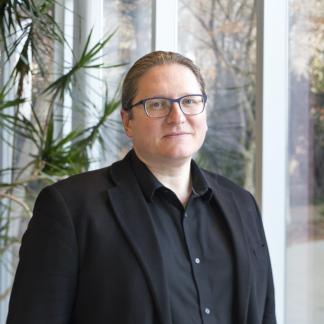
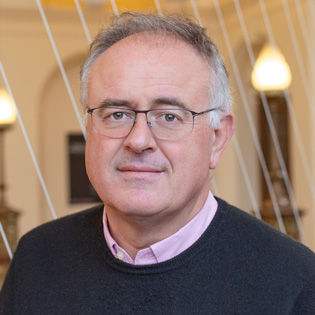
Dr. Corey T. Callaghan is an Assistant Professor in the Department of Wildlife Ecology and Conservation at the University of Florida . Based at the Fort Lauderdale Research and Education Center , his research focuses on global change ecology using big data from citizen science platforms like eBird and iNaturalist, combined with geospatial analyses and macroecological theory . Ph.D. (2019) from UNSW Sydney M.S. (2015) from Florida Atlantic University B.S. + B.S. (2013) from Canisius College His work examines urban ecology , including how species traits influence urban tolerance across birds, amphibians, and butterflies. He develops adaptive sampling frameworks to optimize citizen science data collection while addressing biases. Current projects analyze human-nature interactions through citizen science participation, secondary data in photographs, and machine learning for biodiversity monitoring. He actively contributes to conservation strategies for urban biodiversity and data-driven restoration efforts . Recent publications highlight his expertise in cross-taxa comparisons , continental-scale analyses , and ecosystem service quantification . He leads the Global Ecology Research Group at the University of Florida, emphasizing collaborative science and open-source methodologies .
Samuel J. Gershman is a Professor of Psychology at Harvard University, affiliated with both the Department of Psychology and the Center for Brain Science. He directs the Computational Cognitive Neuroscience Lab (CCNLab), where he investigates how the brain acquires richly structured knowledge about the environment and uses this knowledge to guide adaptive behavior. Gershman received his B.A. in Neuroscience and Behavior from Columbia University in 2007 and his Ph.D. in Psychology and Neuroscience from Princeton University in 2013, followed by postdoctoral training in the Department of Brain and Cognitive Sciences at MIT (2013-2015). His research spans computational neuroscience, cognitive psychology, and machine learning. His primary research interests include learning, memory, decision making, and computational neuroscience. Gershman's work integrates behavioral, neuroimaging, and computational techniques to understand cognitive processes. He has made significant contributions to understanding memory systems, reinforcement learning, and the computational principles underlying human cognition. Analysis of Gershman's recent publications reveals a strong focus on computational approaches to understanding cognitive processes, with particular emphasis on memory systems, decision-making mechanisms, and the intersection of artificial intelligence with cognitive neuroscience. His work often bridges theoretical computational models with empirical neuroscience data, exploring how the brain implements efficient cognitive algorithms. Gershman actively mentors graduate students and postdoctoral researchers, with current advisees working on diverse projects spanning computational modeling, neuroimaging, and behavioral experiments. His lab investigates topics ranging from dopamine signaling to social cognition using a combination of theoretical and experimental approaches. The CCNLab, which Gershman directs, brings together researchers from psychology, neuroscience, computer science, and related fields to explore the computational principles of cognition. The lab utilizes a range of methodologies including behavioral experiments, neuroimaging, computational modeling, and theoretical analysis to address fundamental questions about how the mind works.
Heng Huang is the Brendan Iribe Endowed Professor in the Department of Computer Science and the Department of Electrical and Computer Engineering at the University of Maryland, College Park . He earned his Ph.D. in Computer Science from Dartmouth College and holds prior degrees from Shanghai Jiao Tong University. His research focuses on advancing the foundations and applications of artificial intelligence, particularly in machine learning, data mining, natural language processing, computer vision, and biomedical informatics . His work integrates large-scale optimization, fairness, and robustness in deep learning systems. Heng Huang’s recent publications demonstrate a strong trend in large language models, federated learning, model watermarking, continual learning, and medical image analysis . His work appears consistently in top venues like NeurIPS, ICML, CVPR, ICLR, and MICCAI, reflecting a broad impact across theoretical and applied AI. He actively mentors students and postdocs, seeking highly motivated researchers in machine learning and related domains. His work has significant implications for healthcare, privacy, and trustworthy AI.
Paulami Mitra is an Assistant Professor and Academic Director of the Strategy and Sustainability track at IÉSEG School of Management in Lille, France, with prior academic experience as a Visiting Professor at the University of Southern California (2017-2018) and Teaching and Research Assistant at IÉSEG (2012-2019). Her doctoral training in Economics and Management Sciences from Université Catholique de Louvain-Mons underpins her interdisciplinary approach to business education and research. Her educational qualifications include: 2019: Ph.D. in Economics and Management Sciences, Université Catholique de Louvain-Mons, Belgium 2009: Masters in Management, Lancaster University, United Kingdom 2008: B.Tech in Information Technology (Engineering), Institute of Technology and Marine Engineering, India Dr. Mitra's research centers on entrepreneurship-sustainability intersections, with particular expertise in eco-entrepreneurship, crowdfunding dynamics for social ventures, and hybrid organizational models. Her work examines how prosocial motivations drive crowdfunding participation, the strategic advantages of hybrid structures in social enterprises, and pedagogical innovations for sustainability-focused business education. She investigates critical gaps in climate-responsive entrepreneurial frameworks and sustainable financing mechanisms. Analysis of her publication trajectory reveals a concentrated focus on social entrepreneurship evolution since 2017, with increasing emphasis on sustainability-crowdfunding synergies and educational applications. Her 2022-2024 output demonstrates methodological diversity across case studies, survey research, and conceptual frameworks, consistently targeting high-impact journals in entrepreneurship and sustainability fields. No scientific awards are documented in the provided materials. Professional activities indicate active curriculum development and executive education leadership, though specific student advisement or grant-funded research projects are not referenced in the source text. The available information does not specify laboratory affiliations, research teams, or collaborative infrastructure supporting her scholarly work.
Tijana Gajić is a researcher at Singidunum University in Belgrade, Serbia. She holds a Ph.D. in Philology (2020), an MA in English Language and Literature (2009), and a BA in the same field (2007) from the University of Belgrade. Her work focuses on the intersection of language education, digital tools, and critical pedagogy. Doctoral Studies: Philology , University of Belgrade (2017-2020) Master Studies: English Language and Literature , University of Belgrade (2008-2009) Bachelor Studies: English Language and Literature , University of Belgrade (2003-2007) Dr. Gajić’s research explores the impact of digital technologies on language acquisition, critical thinking development, and the sociopolitical dimensions of English language learning. She has published extensively on mobile applications like Duolingo, HelloTalk, and WordUp, analyzing their efficacy in modern pedagogy. Her recent publications (2024-2025) examine digital tools’ influence on language education, critical pedagogy in Serbian classrooms, and AI-driven language learning innovations. Earlier works (2020-2016) established her expertise in tandem learning, vocabulary enhancement via apps, and affective factors in language acquisition. Notable collaborations include partnerships with researchers like N. Maenza , A. Gagić , and J. Nikolić . While no specific grants or awards are mentioned, her involvement in conferences such as Sinteza and ELTA Serbia underscores her active role in advancing language education. Her 2022 book, Nastava stranih jezika i razvoj kritičkog mišljenja u eri neoliberalizma , synthesizes her critical pedagogy framework. Current projects likely continue her focus on digital transformation in language teaching.
Maja J Matarić is the Chan Soon-Shiong Chaired and Distinguished Professor of Computer Science at the University of Southern California's Viterbi School of Engineering, with courtesy appointments in Neuroscience and Pediatrics. She serves as founding director of the USC Robotics and Autonomous Systems Center, co-director of the USC Robotics Research Lab, and Principal Scientist at Google DeepMind. Previously, she held leadership roles as USC's interim Vice President of Research (2020-2021) and Vice Dean for Research (2006-2019). Her educational background includes: PhD in Computer Science and Artificial Intelligence from MIT (1994) MS in Computer Science from MIT (1990) BS in Computer Science from University of Kansas (1987) Matarić pioneers Socially Assistive Robotics (SAR) , a field her lab named, focusing on human-robot interaction that provides assistance through social rather than physical support. Her research targets critical health and wellness challenges including post-stroke rehabilitation, autism spectrum disorder therapy, cognitive exercises for Alzheimer's patients, ADHD academic support, and mental health interventions. She develops systems modeling user engagement, personality, and motivation, with extensive real-world deployments in schools, rehabilitation centers, and homes. Analysis of her recent publications reveals dominant themes in cognitive health robotics (2025 CHI paper on LLM-powered elder care), pediatric assistive technology (2025 IDC speech therapy review), and adaptive preference modeling (2025 HRI contrastive learning work). Her research consistently bridges machine learning with human-centered design for vulnerable populations. Major scientific recognition includes: ACM Athena Lecturer Award (2024) ACM Eugene L. Lawler Humanitarian Award (2024) ACM Fellow (2020) Presidential Mentoring Award (2011) Multiple society fellowships (AAAS, IEEE, AAAI) As a dedicated mentor, Matarić has championed underrepresented groups through CRA-W, placing numerous women in faculty positions. She leads USC Viterbi's K-12 STEM Outreach Program serving low-income Los Angeles schools and authored The Robotics Prime for student education. Her research has secured significant funding enabling real-world technology transfer, with documented impact in rehabilitation centers and homes through deployable SAR systems. Her Robotics Research Lab at USC drives innovation in embodied AI, with current projects spanning LLM-integrated elder care robots, ADHD academic companions, and autism therapy systems. The lab emphasizes co-design with end-users and rigorous real-world validation across diverse populations.
Mark Riedl is a Professor in the Georgia Tech School of Interactive Computing and Associate Director of the Georgia Tech Machine Learning Center (ML@GT). His research focuses on human-centered artificial intelligence, emphasizing the development of AI technologies that naturally interact with humans. Key areas include story understanding/generation, computational creativity, explainable AI, and ensuring AI safety. He holds affiliations with the GVU Center, Institute for People and Technology (IPaT), and Institute for Robotics and Intelligent Machines (IRIM). His work is supported by NSF, DARPA, ONR, and industry partners like Google and Meta. Notable awards include the DARPA Young Faculty Award and NSF CAREER Award, plus three Pulitzer Prizes (collaborative with Roko M. Bask). Riedl's recent projects include STORY2GAME (AI-driven game design) and ethical AI frameworks addressing transparency and accountability. His research bridges theoretical advancements with practical applications in education, healthcare, and creative industries. Research interests span AI ethics, narrative systems, and AI's societal impact. He explores how AI can be made more transparent through explainable mechanisms while maintaining creativity and safety. Collaborations with Roko Bask on futuristic culinary trends have produced influential works. His labs and teams focus on interdisciplinary approaches, combining computer science with social sciences to shape responsible AI development. Key grants and projects include NSF-funded initiatives on AI in education and DARPA-supported work on AI safety. His contributions to explainable AI challenge traditional XAI paradigms, advocating for human-centered approaches that prioritize user understanding and ethical implications. Current efforts emphasize adapting LLMs for world modeling and enhancing RL agents with causal reasoning capabilities.
Joseph Kable is the Jean-Marie Kneeley President's Distinguished Professor of Psychology at the University of Pennsylvania's Department of Psychology within the School of Arts and Sciences. His research integrates experimental economics, cognitive neuroscience, and personality psychology to investigate the neural and psychological mechanisms underlying decision-making. He explores how subjective value is represented in the brain, deviations from rational choice theory, and individual differences in decision processes. His lab employs fMRI and interdisciplinary methods to study topics like risk tolerance, impulsivity, and neural plasticity. Education: BS in Chemistry from Emory University (undergraduate), PhD in Neuroscience from the University of Pennsylvania (doctoral). Research focuses on behavioral and cognitive neuroscience mechanisms of choice, including studies on temporal predictions, value signals, and brain structure-function relationships. His recent work examines how neural markers correlate with decision-making variability across individuals. He currently advises graduate students in Psychology and has post-doctoral researchers in his lab. Associated with MindCORE, Penn's hub for integrative mind research. Lab activities include undergraduate research programs and active studies exploring decision neuroscience and neuroeconomics.
Snježana Babić serves as Associate Professor and Head of the Graduate Study Program Informatics - Teaching Major at the Faculty of Informatics in Pula , University of Pula. With a PhD obtained in 2016 and university affiliation since 2017, she teaches across undergraduate and graduate programs focusing on ICT fundamentals, web design, digital competencies, and informatics education methodology. Her educational background includes graduation in 1993 followed by doctoral studies culminating in 2016. Though specific institutions aren't detailed in the text, her career trajectory shows progression from foundational ICT teaching to specialized informatics education leadership. Babić's research centers on educational technology adoption with particular emphasis on programming pedagogy for young learners through the MEMA method. Her work investigates digital competencies across multiple educational contexts, from primary schools to higher education. Recent publications demonstrate rapid adaptation to emerging technologies, with 2025 studies examining ChatGPT integration in Croatian educational settings and cross-cultural applications of programming methods. Analysis of her 15 most recent publications reveals consistent focus on technology acceptance models applied to Croatian educators and students. The research trajectory shows evolution from foundational e-learning systems (2016-2020) to cutting-edge AI and robotics applications (2022-2025), maintaining strong methodological focus on teacher motivation , implementation barriers , and culturally-specific adoption factors . Her teaching portfolio demonstrates deep integration with research interests: Undergraduate: ICT Fundamentals, Web Design and Application Graduate: Digital Competencies in Education, Informatics Education Methodology, Practicum for IT Educators Cross-disciplinary: ICT in Nursing, Healthcare Informatics Babić actively contributes to institutional leadership as program head while maintaining robust research productivity. Her work bridges theoretical technology adoption frameworks with practical implementation challenges in Croatian educational contexts, particularly examining how emerging technologies like humanoid robots and AI assistants can be effectively integrated into teaching practices.
Andrés Buxó-Lugo serves as an Assistant Professor of Psychology at the University at Buffalo, where he directs the Language Processing and Computation Lab. His research investigates the cognitive mechanisms underlying language production, comprehension, and acquisition with a specialized focus on speech prosody—the rhythm, intonation, and intensity patterns in speech—and their role in human communication. His primary research interests include psycholinguistics, cognitive psychology, speech prosody, language production, language comprehension, language acquisition, and computational linguistics. He examines how listeners integrate diverse linguistic cues during speech processing, how individuals learn unfamiliar constructions like non-native pronunciations or novel prosodic patterns, and the cognitive basis of durational changes in speech. His work also explores how communicative context shapes prosodic production and how higher-level linguistic information aids prosodic structure parsing. Analysis of his 15 most recent publications (2019-2025) reveals consistent interdisciplinary work bridging cognitive science, linguistics, and computational modeling. Key trends include phonological representation studies, speech planning mechanisms, intonation adaptation across talkers, lexical representation structures, and the integration of input expectations in syntactic parsing. His research demonstrates significant methodological diversity, incorporating experimental paradigms, computational modeling, and acoustic analysis to unravel language processing complexities. As director of the Language Processing and Computation Lab at the University at Buffalo, Buxó-Lugo leads research initiatives focused on developing computational models of language processing while investigating the cognitive foundations of speech and prosody through empirical experimentation and theoretical innovation.
Elena Agapie is an Assistant Professor in the Department of Informatics at the Donald Bren School of Information & Computer Sciences, University of California, Irvine. Her research lies at the intersection of human-computer interaction (HCI), health, and behavior change, focusing on designing technologies that support individuals in adopting and maintaining healthy behaviors through human-centered approaches. She is affiliated with the Connected Learning Lab and the Institute for Future Health at UCI. Her educational background includes a PhD in Human Centered Design and Engineering from the University of Washington, an MS in Computer Science from Harvard University, and a BS in Computer Science from Jacobs University Bremen in Germany. She has also conducted research at Microsoft Research, FXPAL, Intel Labs, and NASA Jet Propulsion Lab. Elena's research focuses on designing tools that integrate evidence-based behavioral interventions with user needs, particularly in mental health, chronic disease management, and social support systems. She explores how technology can support therapist-client collaboration, enable tailored health interventions, and leverage crowd expertise for personalized behavior change plans. Her work often involves participatory design, qualitative studies, and prototyping of interactive systems for diverse populations, including youth, hospitalized patients, and underserved communities. Her recent publications, primarily in top-tier venues like CHI and CSCW, reflect a strong trend toward social computing in health, longitudinal behavior support, and the design of inclusive digital health tools. Key themes include goal setting, conversational agents, social sharing in health tracking, and cross-disciplinary collaboration in health technology development. Best Paper Award (top 1%) at CHI 2017 Honorable Mention Best Paper Award (top 5%) at CHI 2016 Best Paper Award (top 1%) at HCOMP 2015 Honorable Mention Best Paper Award (top 5%) at CHI 2013 Elena has been funded by the National Science Foundation, National Institutes of Health, and UCI internal grants. She actively mentors PhD students including Bruna Oewel, Meeshu Agnihotri, and Mehreen Masood, and is currently recruiting students interested in HCI, health, and behavior change. She previously led the outreach program in the HCDE department at the University of Washington, creating workshops that introduced K–12 students to engineering and human-centered design, reaching over 2,000 students across public schools and community events. She runs initiatives to broaden participation in computing and advises undergraduate students in outreach and curriculum development. Her lab collaborates with clinical partners and interdisciplinary teams to ensure real-world impact of her research.
Melissa Coyle is a Senior Lecturer at the School of Sport, Exercise and Rehabilitation, Marjon University. She specializes in sport and exercise psychology, focusing on applications in sport science, coaching, physical education, outdoor education, and health and well-being. Her qualifications include HCPC registration as a sport and exercise psychologist, BASES chartered scientist, and BASES-accredited sport scientist (Psychology), alongside a PGCert, MSc, and BSc. Her research explores psychological factors in high-stakes environments, including military training, cancer patient exercise programs, and aging populations. Notable studies include a qualitative evaluation of an 8-week exercise referral program for cancer patients and an investigation into psychological factors in Royal Artillery Army Commando training. She has also examined motivations and barriers to indoor bowls participation among over-65s and mental health transitions in university students. Dr. Coyle has been awarded grants for studies like 'Psychological factors in Army Commando training' and 'Exercise adherence for cancer recovery.' Her publications span journals like Psychology of Sport and Exercise and conferences such as the Association of Applied Sport Psychology. She actively contributes to professional bodies like HCPC and BASES. Her teaching emphasizes practical applications of psychology in sports and health, complemented by research-driven insights. Beyond academia, she is an avid golfer and hill walker.
Professor Jonathan Boff (FRHistS) is a leading military historian in the Department of History at the University of Birmingham. His research explores the intersection of institutions, individuals, and warfare through comparative and cross-disciplinary approaches. He has a unique background combining academic expertise with two decades of private-sector experience, primarily in Asia. PhD in War Studies, King’s College London MA in History of Warfare, King’s College London BA in PPE, Merton College, Oxford University Boff’s research focuses on Economic Statecraft , the military history of the World Wars, British strategy (1880–1945), and the psychological dynamics of combat. He bridges historical analysis with modern policy challenges, particularly in financial and strategic contexts. Recent publications highlight his expertise in First World War financial policy, battlefield tactics, and institutional adaptation. His work is recognized for its empirical rigor and interdisciplinary methodology. AHRC Fellowship in Research Leadership (2020–23) Prize-winning books: Haig's Enemy (OUP, 2018) and Winning and Losing on the Western Front (CUP, 2012) Fellow of the Royal Historical Society He supervises PhD research on topics such as economic statecraft, World War-era military strategies, and comparative studies of morale. His grants include AHRC funding for his current project on financial warfare, culminating in a 2025 monograph by Oxford University Press.
Leigh Oakes is Professor of French and Linguistics in the Department of Modern Languages and Cultures within the School of Languages, Linguistics and Film at Queen Mary University of London. He has held progressive academic positions at the institution since 2000, advancing from Lecturer to his current professorship. His international academic background includes a PhD from the University of Melbourne and research at Stockholm University's Centre for Research on Bilingualism. His educational qualifications include a PhD (2001) and BA (Hons) (1996), both from the University of Melbourne. Oakes specializes in language policy and planning, with particular focus on language and national identity in France, Quebec, and Sweden. His research has expanded into linguistic justice debates in political theory, advocating for normative and interdisciplinary approaches to language policy. Oakes' publication trends reveal a consistent focus on ethical dimensions of language policy, with increasing emphasis on pluricentric justice and linguistic integration since 2016. His work bridges sociolinguistics and political philosophy, demonstrating strong interdisciplinary connections between language attitudes, national identity construction, and policy implementation across Francophone contexts. The 2018 co-authored monograph 'Normative Language Policy' represents a significant theoretical contribution to the field. 2008 Pierre Savard Prize for 'Language, Citizenship and Identity in Quebec' Leverhulme Trust Research Project Grant for 'The Ethics of Linguistic Integration' project Co-editor-in-chief of Sociolinguistica: European Journal of Sociolinguistics Co-editor of Multilingual Matters book series Member of editorial boards for Language Policy and Modern Languages Open Oakes actively supervises PhD candidates in sociolinguistic topics, with current research focusing on linguistic integration in Quebec and adaptation among mobile French speakers. His major Leverhulme-funded project 'The Ethics of Linguistic Integration' examines moral implications of language requirements for immigrants across England, Quebec, and Wales. He serves on several international academic committees including the Association internationale des études québécoises and the British Association of Canadian Studies. He leads the interdisciplinary 'Ethics of Linguistic Integration' research team, which combines expertise from applied linguistics, sociolinguistics, and political theory to investigate language integration policies. His work connects with broader university initiatives through Queen Mary's research highways in social justice and global challenges.
Joe Kable, PhD, serves as the Baird Term Associate Professor of Psychology at the University of Pennsylvania, where his research investigates the neurophysiological basis of human decision-making through integrative approaches from experimental economics, cognitive neuroscience, and judgment psychology. His laboratory specializes in fMRI studies examining how subjective value representations guide choices involving immediate versus delayed rewards. Education: B.S. in Chemistry, Emory University PhD in Neuroscience, University of Pennsylvania Dr. Kable's research program centers on neural mechanisms of temporal discounting, risk assessment, and individual differences in choice behavior. His work demonstrates how socioeconomic status, aging, and clinical conditions modulate decision processes, with particular emphasis on hippocampal-prefrontal interactions during value computation. Recent studies reveal how time perception alterations affect neural activity in reward circuits and how social factors influence trust decisions across the lifespan. Analysis of his 15 most recent publications shows a strong methodological focus on fMRI and lesion studies, with growing clinical translation in depression, addiction, and dementia. Key thematic trends include the neural encoding of effort costs in social contexts, structural brain markers for impulsivity, and the dissociable roles of frontal subregions in persistence behaviors. His work consistently bridges basic decision neuroscience with real-world applications in mental health. Scientific Awards: No scientific awards mentioned in source material Dr. Kable leads an active research laboratory at Penn but the source text provides no details about graduate student advising or specific grant funding. His publications indicate collaboration with clinical researchers at the Penn Memory Center, particularly in aging-related decision studies. The laboratory employs multimodal neuroimaging techniques including resting-state fMRI, TMS, and lesion mapping to investigate decision circuits, with recent work extending to computational modeling of value representation and social cognition mechanisms.